Dr. Ethan Miller - Nephrologist, MD
Dr. Ethan Miller - Nephrologist, MD Facebook ad: “Reactivate your body.”
Ran for 10 days, from March 19 to March 29, 2026, the last day Crush saw it.
Run by Dr. Ethan Miller - Nephrologist, MD on Facebook. Crush is not the advertiser and does not verify its claims. See this ad in Meta's Ad Library(opens in a new tab)
Want an ad like this for your product?
Crush makes new ad images for your product from this ad: your logo, your product photo, your offer.
Trials from $19.95 USD, then $79.95 USD a month. Cancel anytime.
About this ad
- Meta Ad Library ID
- 985868017103418
- Platforms
- Facebook, Instagram and Messenger
- Relaunches
- 2
Ad text
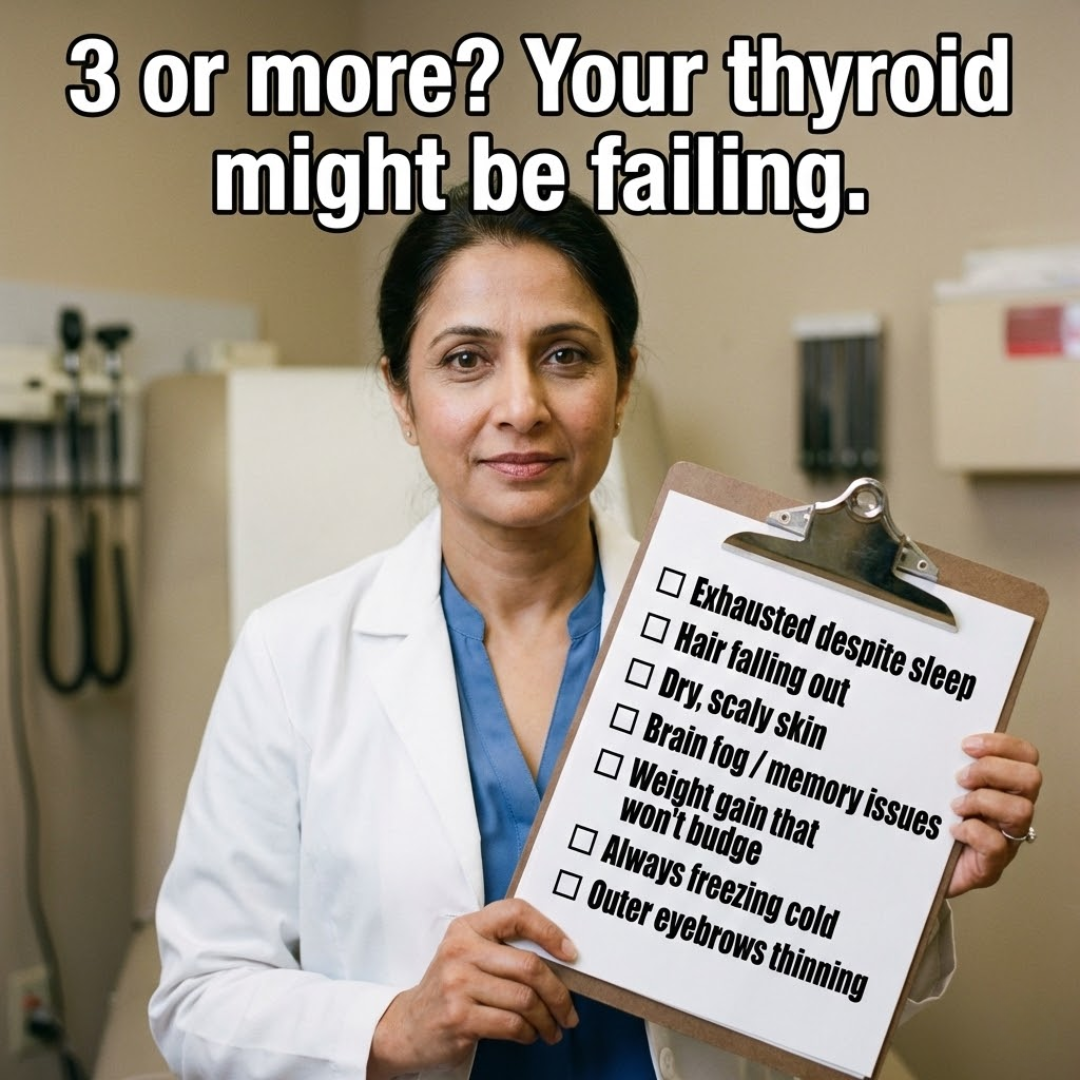
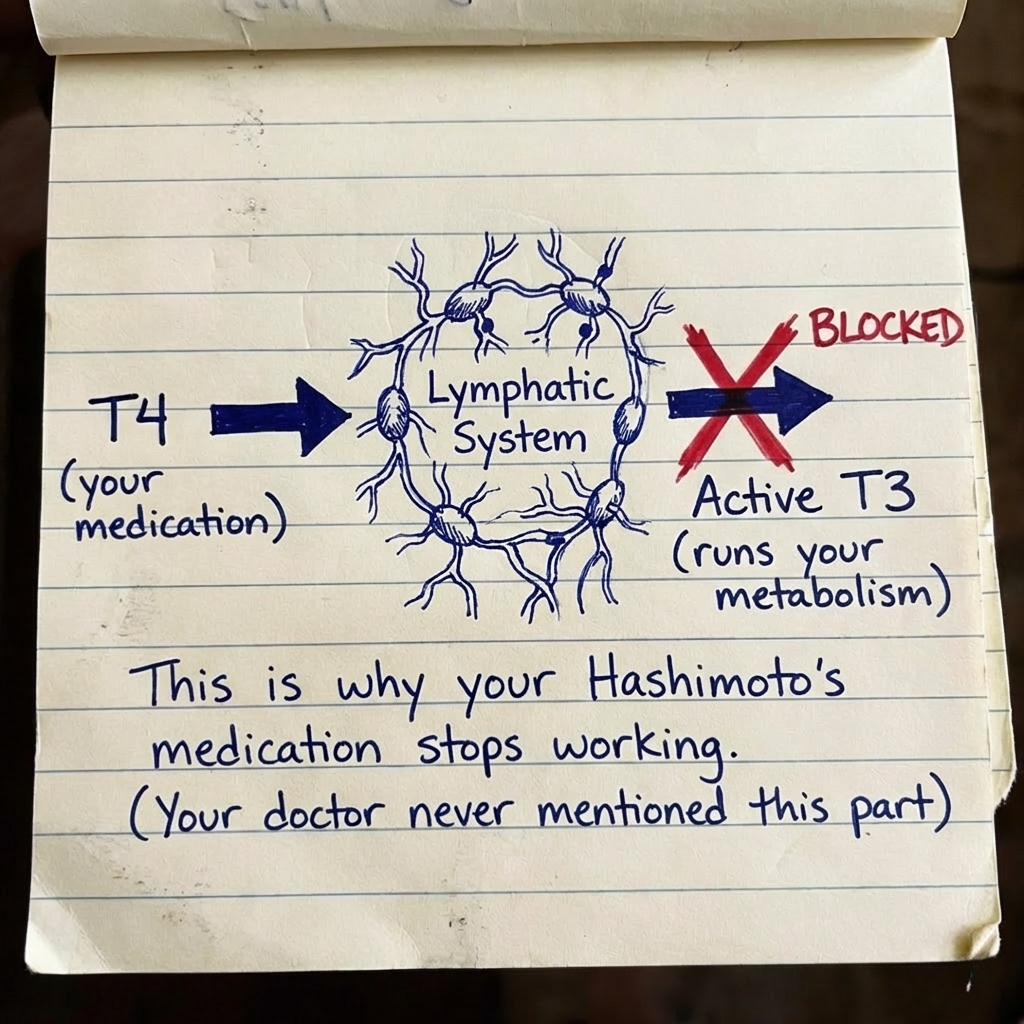
If you're a woman who enjoys wine — maybe a glass or two with dinner, drinks with girlfriends on weekends, nothing crazy — and lately you've noticed your hair coming out in clumps, your weight won't budge no matter what you eat, and you're so exhausted by 2pm you can barely function... I'm about to tell you exactly what's happening inside your body that nobody warned you about. And by the end of this, you're going to be furious. Because there are three things happening right now: One — Your thyroid is telling you that 10 or 15 years of "moderate" drinking has quietly caught up with you. Two — Nobody calls it a problem because you're not an alcoholic — so you have no idea how much damage has accumulated. And three — Cutting back isn't fixing it, because the damage isn't from last month's wine. It's from years of buildup that's now choking the drainage system wrapped around your thyroid gland. Let me tell you my story, because it's probably gonna sound familiar. I was never a big drinker. A glass of wine with dinner most nights. Maybe two on weekends. Drinks with girlfriends once a month. Rosé in the summer. A cocktail at work events. Maybe a few too many at weddings or holidays, but who doesn't? Normal stuff. What everyone does. What every woman I know does. Nothing that ever felt like a "problem." Nothing that ever made me think I needed to worry. But somewhere around 43, things started changing. The first thing I noticed was my hair. It had always been thick — the kind women comment on. But suddenly I was watching it circle the shower drain every morning. I started pulling it out by the handful. My ponytail went from a full fist to barely two fingers. I started parting differently to hide the thinning at the top. Stopped pulling my hair back altogether. The outer third of my eyebrows started disappearing. I thought I was imagining it, that I was being dramatic. Then my husband mentioned it — gently, carefully, the way you mention something you've been afraid to bring up — and I burst into tears. My weight started climbing even though nothing in my life had changed. Same diet. Same exercise. Same everything. But I kept gaining. Ten pounds. Fifteen. Not the kind you can explain with a bad month. The creeping, constant kind that doesn't respond to anything. I'd cut calories and the scale wouldn't move. I'd add a workout and nothing would happen. My doctor ran a thyroid panel and told me my TSH was "normal" — so she shrugged and told me to try harder. Try harder. I was already trying harder than I'd tried at anything in my life. Brain fog so bad I'd lose words mid-sentence. I'd be talking to a colleague and just... stop. The word I needed would vanish. I'd stand there searching my brain for vocabulary I'd known for twenty years. I started writing everything down because I couldn't trust my own memory anymore. I used to be sharp. I built my career on being the person who remembered everything, who could recall details from meetings six months ago. Now I was forgetting conversations from yesterday. My husband would tell me something and I'd have zero recollection of it 24 hours later. I started genuinely worrying it was early dementia. Exhausted by 2pm every single day. Didn't matter if I slept six hours or nine. I'd hit this wall in the early afternoon where my brain just shut off. I'd come home from work and collapse on the couch, too tired to do anything, and then lie awake at 3am staring at the ceiling. Exhausted but couldn't sleep. That specific combination of wrecked during the day and wired at night that nothing seemed to fix. Cold all the time. Not normal cold — bizarre cold. I'd be wearing a sweater in July while my husband was in a t-shirt. I'd sit with my hands wrapped around a mug of hot tea trying to warm up at room temperature. My coworkers would ask if I was okay because I was visibly shivering. And half a glass of wine — ONE glass — would leave me feeling like I'd been hit by a bus. Not just the next morning. For two full days. Like my body was shutting down. Not "I drank too much" hangover. "I had ONE glass" hangover. The kind where you question if someone slipped something in your drink because there's no way a single glass should make you feel this destroyed. I blamed perimenopause. Stress. Not sleeping enough. Working too hard. "Just getting older." That's what women are told, right? Every symptom we have gets blamed on hormones or age. My friends were all dealing with similar stuff. We'd joke about how we couldn't drink like we used to. Normal 40s stuff, we told ourselves. Then I got bloodwork done — full panel this time, insisted on it — and my doctor called me with results that stopped me cold. My TSH was "technically normal." My T4 looked fine. But my Free T3 — the active thyroid hormone that actually runs your metabolism, your hair, your energy, your brain — was sitting at the very bottom of the range. And my doctor looked at the numbers, looked at me, and said, "Your thyroid function appears normal. You might want to talk to someone about depression." Depression. I wasn't depressed. I was suffering. There's a difference. I went home that day and started crying in the shower. Not because I was sad. Because I was so tired of being dismissed. So tired of my body not working and being told, by the people supposed to help me, that nothing was wrong. So I started researching. Not wellness blogs. Not influencers hawking detox teas. Actual medical journals. Endocrinology research. Studies on thyroid hormone conversion. I needed to understand what was actually happening inside my body. And what I found made me furious that nobody had ever explained this to me. Here's what's actually happening inside your body after years of "moderate" drinking: Your thyroid gland is wrapped in one of the densest lymphatic networks in the entire human body. Lymphatic vessels run through the thyroid tissue itself, through the spaces between the follicles — the tiny fluid-filled sacs that produce your thyroid hormone. These vessels connect to cervical lymph nodes sitting directly around your thyroid. Their job is to clear inflammatory waste, transport immune cells, and flush metabolic debris out of the gland so it can function. When that drainage system works efficiently, your thyroid can produce T4, your liver converts T4 into the active T3, and T3 reaches every cell in your body. Hair grows. Metabolism runs. Brain fires. Energy stays constant. But here's what nobody tells you. Alcohol is directly toxic to thyroid tissue. Not in a dramatic, obvious way. In a slow, accumulating way. Every time you drink, alcohol and its metabolic byproducts — including a compound called acetaldehyde — trigger an inflammatory response inside the thyroid gland itself. Your immune system sends cells to the area. Inflammatory proteins accumulate in the tissue. Debris builds up. Your lymphatic drainage system clears it. That's its job. When you're young and your drainage system runs efficiently, this process works beautifully. Drink tonight, your lymphatics clear the damage overnight, your thyroid wakes up fine. But here's what happens over 10 or 15 years of regular drinking. Each round of inflammation leaves a tiny bit of residue in those lymphatic channels. Fibrin proteins. Immune cell debris. Inflammatory waste that didn't get fully cleared before the next glass arrived. One drink? No problem. A thousand drinks over fifteen years? The buildup becomes significant. And slowly, year by year, glass by glass, the lymphatic vessels wrapped around your thyroid become congested. Sluggish. Packed with accumulated debris that never got fully cleared. At the same time, alcohol is impairing the liver's ability to convert your thyroid hormone. Here's the part your doctor almost certainly never explained. Your thyroid makes T4 — a largely inactive storage hormone. For T4 to become the active hormone your cells actually use, it has to convert to T3. Most of that conversion happens in your liver. Years of moderate drinking damage the liver's conversion machinery. Your liver is still functioning — your labs look "normal," your doctor doesn't flag anything. But the enzyme systems responsible for that T4-to-T3 conversion are running below capacity. Your thyroid is producing hormone. Your labs look fine. But the conversion isn't happening the way it should. So your Free T3 sits at the bottom of the range. Your doctor looks at your TSH and says everything's normal. And you feel like you're dying. This is why cutting back doesn't fix it. The damage isn't from last month's wine. It's from 15 years of accumulated congestion around your thyroid and impaired conversion in your liver. You stopped adding new damage, which was smart. But you didn't clear what was already there. You were protecting a thyroid gland sitting inside a clogged lymphatic network. Like trying to hear music through speakers packed with foam. The signal is there. It just can't get through. And this is what made me lose my absolute mind. Doctors KNOW about thyroid lymphatic drainage. It's in the research. The fact that Hashimoto's thyroiditis — the most common thyroid disease in women — was originally named struma lymphomatosa, literally a "lymphatic tumor of the thyroid," is in the medical textbooks. Hakaru Hashimoto described it in 1912 as a disease of lymphatic congestion. That was the original diagnosis. The lymph was the story. Then somewhere along the way, the medical system forgot that. Because there's no pharmaceutical drug for thyroid lymphatic drainage. You can't patent botanical compounds. There's no billion-dollar molecule to prescribe. There IS money in keeping you on levothyroxine at $40 a month — the medication that gives you more T4 you can't convert and can't deliver because the drainage system is blocked. There's money in the follow-up blood panels to "monitor" your TSH while your Free T3 stays low. In the antidepressants they offer when they can't explain why you still feel terrible. In the specialists. The ultrasounds. The endless cycle of management without actually fixing anything. Your endocrinologist looks at your TSH, says "normal," and sends you home. Your integrative medicine doctor adds selenium and says "we'll see." Your functional medicine practitioner puts you on AIP diet and charges you $400 a month in supplements. None of them addresses the lymphatic congestion wrapped around your thyroid. None of them touches the drainage system that alcohol quietly clogged over fifteen years of "normal" drinking. So your TSH stays normal while your Free T3 stays crashed while your hair keeps falling out while you feel like a person wrapped in wet blankets trying to think through fog. That's why selenium doesn't fix it. That's why going gluten-free didn't fix it. That's why cutting back on wine didn't fix it. Those things protect cells or reduce one inflammatory input. They don't drain years of accumulated lymphatic congestion. You've been fueling an engine whose delivery system is completely blocked. So I kept digging. I needed to find what actually restores thyroid lymphatic drainage. I'm reading endocrinology journals now. Research on cervical lymphatic congestion. Studies on herbal compounds documented to move stagnant lymph fluid. Papers on what actually restores T3 conversion in an alcohol-damaged liver. And I found specific botanical compounds that have been used — some for centuries, some validated in modern clinical trials — to actually clear the congestion sitting around your thyroid and restore the conversion system that delivers hormone to your cells. Four compounds kept coming up again and again: Echinacea purpurea — this is the one that matters most for the thyroid specifically. It's not just "immune support" the way they market it at the drugstore. It's a documented lymphagogue — it activates and modulates immune function at the lymph nodes. And here's what stopped me cold: the cervical lymph nodes in Levels III and IV — the exact nodes Hashimoto's research shows are enlarged and congested in thyroid disease — are precisely where Echinacea's mechanism operates. It doesn't just reduce inflammation. It specifically clears the immune cell debris that's accumulating at those nodes and choking the drainage around your thyroid. Cleavers — literally called "the lymphatic tonic herb" in the British Herbal Pharmacopoeia. Used since ancient times specifically for stagnant cervical lymph. While Echinacea works at the nodes, Cleavers works in the channels between them — the vessels that carry debris away from the gland. The research calls it "nature's lymphatic broom." It sweeps what's been sitting in your thyroid drainage channels for years. Bromelain — a proteolytic enzyme from pineapple that breaks down the fibrin proteins and inflammatory debris physically blocking your lymphatic vessels. A systematic review of randomized controlled trials confirmed it significantly reduces the specific inflammatory markers — IL-6, COX-2, CRP — that drive lymphatic congestion in the thyroid. It doesn't just reduce inflammation. It dissolves the physical blockage that's been building up year after year. It's the enzymatic pipe-cleaner for your thyroid drainage system. Dandelion Root — and here's where the alcohol connection closes the loop. Your lymphatics drain the waste. But the waste then has to exit through your bile and digestive system. Dandelion root is clinically documented to increase bile production and flow — opening the final elimination channel so everything the lymphatics have cleared can actually leave your body. One study showed dandelion root reduced liver injury markers more effectively than silymarin — the active compound in milk thistle. It doesn't just protect liver cells. It opens the exit door. And critically, it restores the bile flow that alcohol disrupted, which means it's working on BOTH the drainage and the conversion side simultaneously. And these aren't the only compounds that matter. The research pointed to several others that are essential to complete the protocol: Burdock Root — eliminates the toxic debris that accumulates when lymphatics can't drain. Documented to work through the AMPK pathway, directly inhibiting the inflammation cascade that alcohol sets off in thyroid tissue. Used for centuries as a blood purifier. Now we understand why it works. Rutin — a five-year clinical study showed it strengthens fragile lymphatic vessel walls. Your drainage channels have been under chronic stress for years. Weak vessels leak fluid back into tissue instead of carrying it away. Rutin rebuilds the vessel infrastructure so the drainage system can actually hold and move what it's clearing. Lemon Peel — contains D-limonene which activates both Phase I AND Phase II liver detoxification simultaneously. This matters for the thyroid more than most people realize. T4-to-T3 conversion depends on the same liver enzyme systems involved in detoxification. Phase I converts compounds into intermediates. Phase II completes the process. Alcohol chronically impairs Phase II — which is why T4 sits unconverted and your Free T3 is low even when your TSH looks fine. Lemon Peel restores both phases. It's directly working on the conversion failure that's leaving you with inactive hormone. Kelp Extract with Fucoxanthin — and this is the one that made my jaw drop. A randomized controlled trial. 151 women. With non-alcoholic fatty liver disease. Fucoxanthin significantly reduced liver fat, body weight, liver enzymes, AND triglycerides over 16 weeks. Not theory. Not lab rats. Measured results in actual women. Published in Diabetes, Obesity and Metabolism. Kelp also provides iodine — the raw material your thyroid uses to build hormone in the first place. Congestion blocks the drainage. Impaired liver blocks the conversion. Iodine deficiency blocks production. Kelp addresses the third failure point most thyroid protocols completely ignore. I finally understood what had to happen. I needed to clear the lymphatic congestion around my thyroid, restore my liver's conversion capacity, and give my body the building blocks it was missing — not just take more T4 that couldn't be converted and couldn't reach my cells anyway. So I started taking these compounds. All eight of them. And here's the thing that surprised me — I didn't even have to quit drinking completely. I kept having an occasional glass of wine. Maybe once or twice a week. Because I'd learned that the problem wasn't really about the occasional drink. The problem was 15 years of accumulation that had never been cleared. And after about two weeks? Something in my face changed. My husband asked if I was wearing something different. I wasn't. The puffiness that had settled into my face and neck was starting to ease. I'd gotten so used to it that I'd forgotten what I looked like without it. After three weeks? The brain fog started lifting. Not all at once — gradually, like a window being cleaned. I was in a meeting and realized I'd been following the thread of a conversation for an hour without losing it once. I remembered what I'd said to my colleague on Monday. Small things. But they felt like miracles. After six weeks? My hair. The clumps in the shower slowed. I started noticing the same pieces coming back — those fine wisps along the hairline that I hadn't seen in years. My ponytail started to feel fuller. I stood in front of the mirror and cried — but different than before. Not the defeated crying. The other kind. After eight weeks? The weight started moving. Not dramatically — but moving. Six pounds in two months without changing anything else. My body was responding to effort for the first time in years. After twelve weeks I ran full labs. TSH still normal. But my Free T3 — the number my previous doctor had seen at the bottom of the range and dismissed — had climbed significantly. Into the upper half of normal, where it should be. Where it needs to be to actually feel human. My new doctor pulled up the previous results and sat quietly for a moment. Then she asked me what I'd changed. I told her about the thyroid lymphatic drainage compounds. She'd never connected those specific ingredients to the thyroid mechanism. Wrote down the names. Said she'd look into it. That's the state of medicine. The lymphatic connection to thyroid disease is in the research — Hashimoto originally described his disease as a lymphatic condition in 1912. And most doctors have never connected those dots. My thyroid wasn't failing. It was drowning in fifteen years of accumulated lymphatic congestion, with a conversion system damaged by years of wine I was told was completely fine. Now here's the thing — when I first started this protocol, I had to source all these compounds separately. Eight different bottles from eight different companies. Some from Amazon where the quality was questionable. Some from health food stores with inconsistent concentrations. I was measuring doses. Trying to figure out which brands were legitimate. Spending over $250 a month just on supplements. Exhausting and unsustainable. Then I found a company that had actually put it all together properly. I spent weeks researching supplement companies. Looking at ingredient quality. Clinical dosing. Third-party testing. Whether the people behind the formula actually understood the thyroid-lymphatic mechanism — not just "these herbs are good for detox" but the specific cervical lymph drainage pathway and the T4-to-T3 conversion failure. Because the supplement industry is a disaster. Most companies slap "thyroid support" on a bottle of iodine and selenium and charge whatever they want. No lymphatic targeting. No conversion support. No understanding of the alcohol connection. Just marketing to women who are desperate for anything that might work. I'm scrolling through a thyroid health forum late one night — still researching, still trying to find a better solution than eight separate bottles — and someone mentions a company called Sculptique. So I go to their site. Ready to be disappointed like I had been with every other thyroid supplement I'd looked at. And I almost dropped my phone. They had a lymphatic drainage formula with EVERY SINGLE COMPOUND. Echinacea purpurea at 500mg. Dandelion Extract at 250mg. Burdock Root at 200mg. Cleavers Extract at 100mg. Rutin at 100mg. Bromelain at 100mg standardized to 2400 GDU/g. Lemon Peel at 50mg. Kelp Extract at 30mg standardized to 10% Fucoxanthin. Clinical doses. Every one of them. But that's not even the part that got me. When I looked into who formulated this — they had people who actually understood the science. People who understood the cervical lymph drainage mechanism. Who understood that thyroid problems in women who drink moderately aren't being caused by their thyroid in isolation. That there's a lymphatic network wrapped around that gland that's been congested for years. And that you can't fix the hormone without fixing the drainage. They weren't throwing random herbs in a bottle with "lymph support" on the label. They'd mapped every ingredient to either thyroid function, lymphatic drainage, or liver conversion capacity. Nothing random. Nothing filler. Every compound targeting the exact mechanism that had been making me miserable while my labs looked "normal." And here's where I really lost it: When I was buying those eight compounds separately? $250+ a month. Questionable quality. Inconsistent dosing. Exhausting to manage. Sculptique had ALL of them. In one bottle. At clinical doses. For a fraction of that. And right now they're running buy two get one free. That's three months — which is exactly the window where the research shows the biggest shift in Free T3 levels and lymphatic drainage — and you're saving over $115. I've been taking it for six months now. My Free T3 has been in the optimal range for four consecutive months. The hair loss has stopped. The hair is coming back. The exhaustion is gone. The brain fog is gone. The puffiness is a memory. I can have a glass of wine at dinner without paying for it for two days. My husband says I'm like a different person. My friends have asked what I'm doing because I look "more like myself." One of them started taking Sculptique after I told her about it — she'd been dealing with the same exhaustion and hair loss for two years, told by her doctor everything was "normal." Last weekend I caught my reflection in a shop window and actually stopped and looked. Not because I was horrified. Because for the first time in years, I recognized the person looking back. I'd spent years thinking my body was just falling apart. That this was what the 40s felt like. That I'd have to give up wine and live on supplements and still feel terrible. I wasn't falling apart. My thyroid was drowning in accumulated lymphatic congestion that nobody bothered to drain. And my liver was struggling to convert the hormone my thyroid was making, damaged year by year by wine nobody warned me could do this. Here's what I need you to understand: You're not an alcoholic. You're not a "heavy drinker." You're a woman who enjoyed wine like millions of other women. Book clubs and happy hours and dinner parties and holidays. Celebrating and unwinding and socializing the way our entire culture encourages us to. Nobody warned you that even moderate drinking triggers repeated inflammatory responses in your thyroid tissue. Nobody explained that your lymphatic drainage network would eventually become congested. Nobody told you that your liver — the organ doing the critical work of converting inactive thyroid hormone into the form your cells can actually use — would slowly lose that capacity from years of casual drinking. The damage doesn't announce itself. It builds quietly. Glass by glass. Year by year. Until one day you realize you can't tolerate alcohol like you used to. Your hair is coming out in the shower. Your weight won't respond to anything. Your brain doesn't work the way it did. And your doctor looks at your labs and says everything's fine. Cutting back helps stop NEW damage. That's important. But it doesn't clear the 10 or 15 years of buildup already sitting in your lymphatic channels. It doesn't repair the conversion pathway your liver lost. It doesn't reach into the congested network wrapped around your thyroid and flush out what's been accumulating since your 30s. You need to drain it. And restore the conversion. Your thyroid forgave your 20s. All those college parties and wild nights? Cleared and forgotten. It forgave most of your 30s. The wine phase, the craft cocktails, the bottomless brunches? Handled. It's not forgiving your 40s. Because the drainage system is full. The channels are clogged. The liver's conversion capacity is depleted. There's no more room for forgiveness. But here's the thing — you don't have to quit completely. You don't have to become a teetotaler. You don't have to give up wine forever. You have to clear the buildup. Restore the drainage. Repair the conversion pathway. Give your thyroid hormone the ability to actually reach your cells. And once you do? You might find you can enjoy a glass of wine without feeling destroyed for two days. You might find your hair stops falling out. Your weight starts responding. Your brain works again. You recognize yourself in the mirror. That's what happened to me. That's what's happening to the women I've shared this with. Link below. See if they're in stock. Because nobody else is going to tell you this. Your doctor will look at your TSH, say it's normal, and send you home. Your friends will say "you're not that bad." And your thyroid will keep struggling — its lymphatic network clogged, its hormone sitting unconverted — while you wonder why nothing helps. You have to drain your own thyroid. 👉 https://trysculptique.com/products/sculptique-lymphatic-drainage-capsules-otp
Where the ad sends people
trysculptique.com
Reactivate your body.
Clinically formulated 7 active ingredient formula developed to make you feel good about your cellulite. First ever solution for thighs that works from within. 🍑 Strengthens skin and connective tissue, smoothing out the appearance of cellulite.❤️ Enhances blood flow to help tighten and firm yo...
Learn more: trysculptique.com(opens in a new tab)