Dr. Rachel S. Goldstein
Dr. Rachel S. Goldstein Facebook ad: “Feel Like Yourself Again”
Ran for 31 days, from April 15 to May 16, 2026, the last day Crush saw it.
Run by Dr. Rachel S. Goldstein on Facebook. Crush is not the advertiser and does not verify its claims. See this ad in Meta's Ad Library(opens in a new tab)
Want an ad like this for your product?
Crush makes new ad images for your product from this ad: your logo, your product photo, your offer.
Trials from $19.95 USD, then $79.95 USD a month. Cancel anytime.
About this ad
- Meta Ad Library ID
- 986334450488024
- Platforms
- Facebook, Instagram, Messenger and Threads
- Relaunches
- 0
Ad text
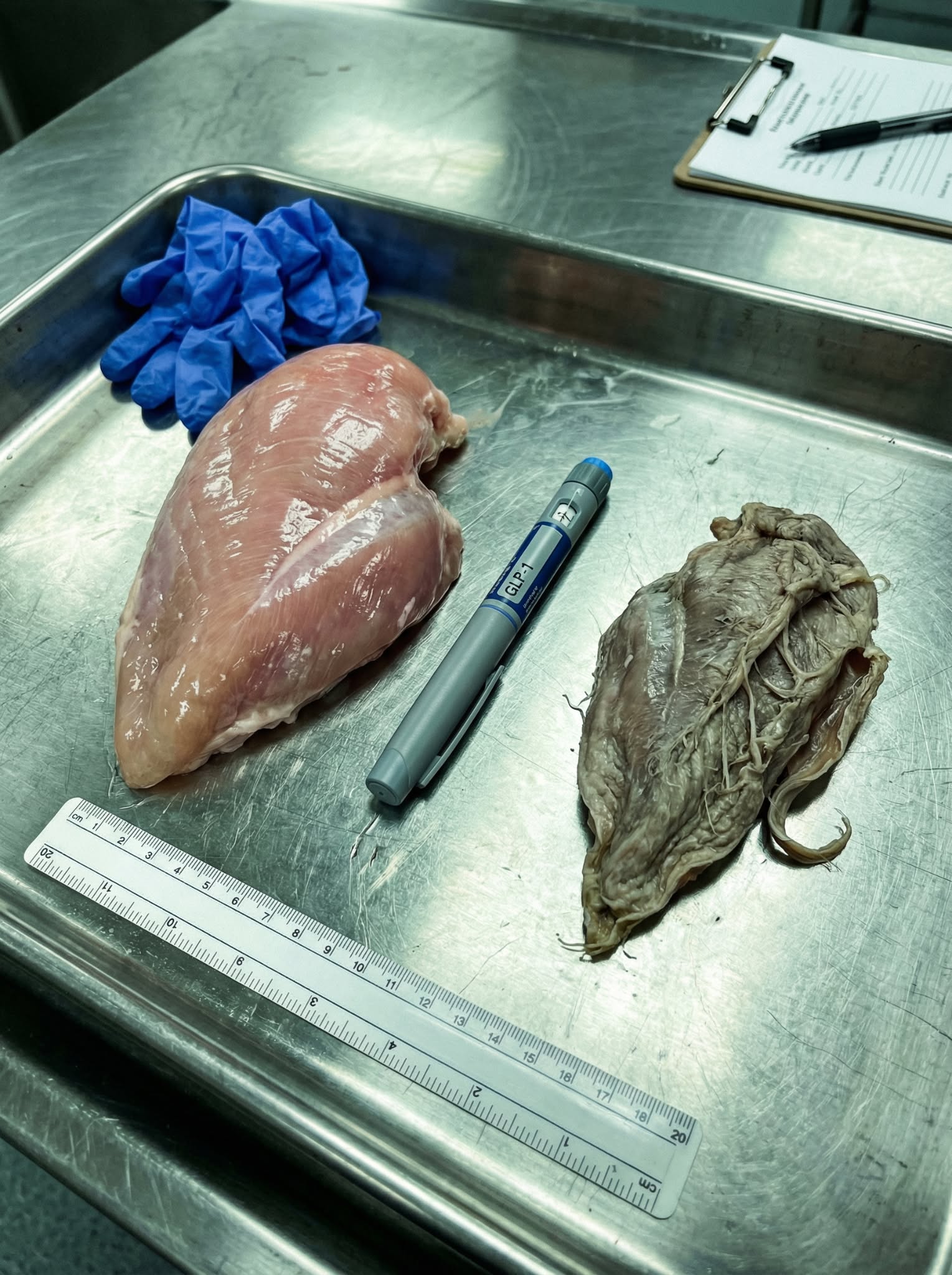
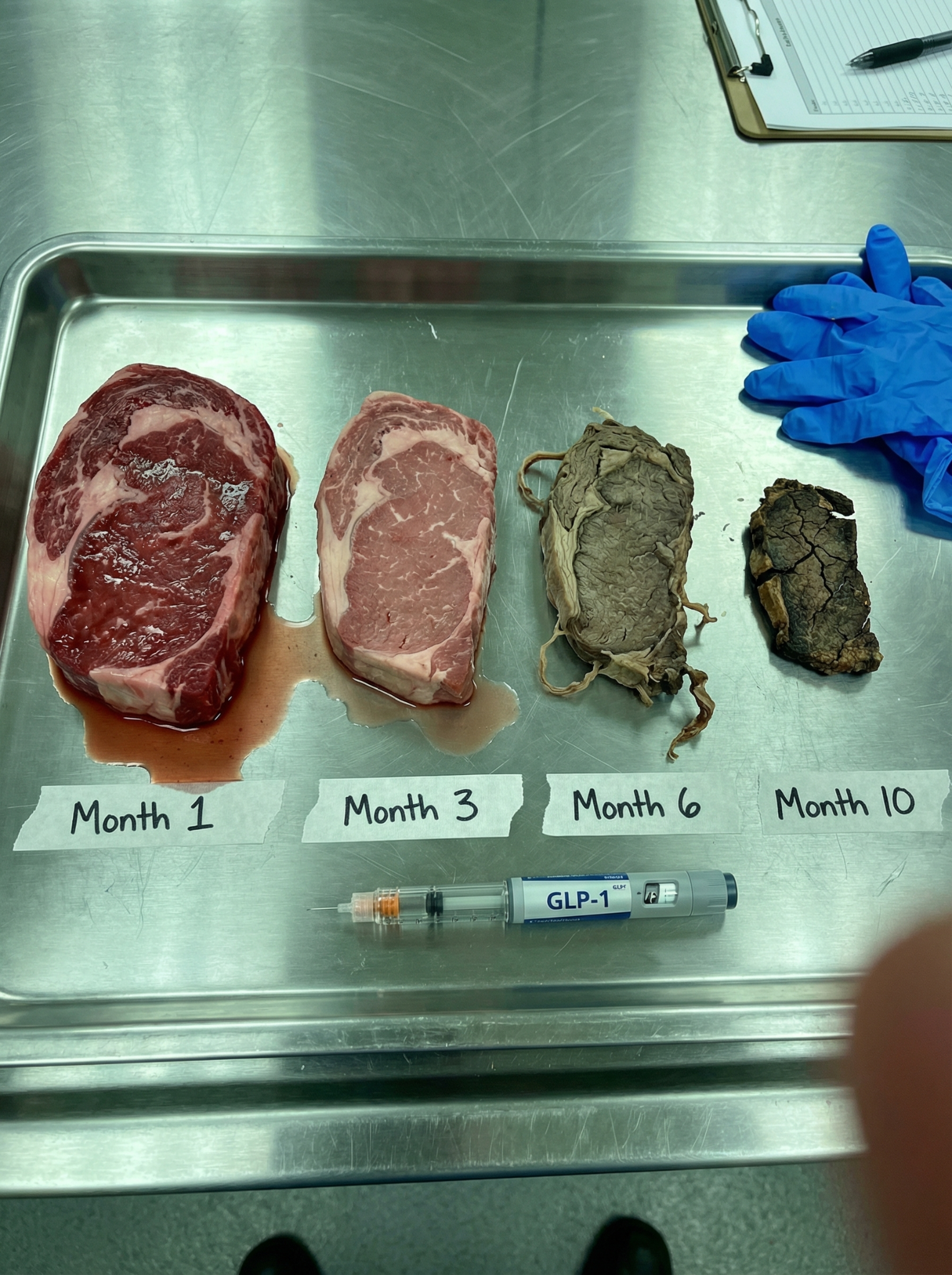
I’m an endocrinologist, and I owe my GLP-1 patients an apology. For five years I’ve been telling them to “eat protein and stay active” after they stop their medication. Last month, a patient proved me wrong. Not because she gave up on my advice. Because something had changed that I have never seen in a post-GLP-1 patient. I’ve been treating obesity and metabolic disease for 22 years. I’ve prescribed GLP-1 medication to over 800 patients. I’ve watched the scale drop 40, 60, 80 pounds. I’ve watched A1C numbers normalize. I’ve celebrated these outcomes with patients who cried in my office because they finally felt like themselves. And then I’ve watched them stop the medication. Insurance denials. $2,000 a month they couldn’t afford. Side effects they couldn’t tolerate. Shortages. Or just wanting to see if their body could hold the weight on its own. Every single time, the same result. The weight comes back. 60% within a year according to the Lancet meta-analysis — 48 studies analyzed, the most comprehensive data on post-GLP-1 weight outcomes ever collected. And every single time, I said the same thing. “Keep eating well. Stay active. You’ve built good habits.” Last month, that changed. Because of Rachel. Rachel is 51. She’s been my patient for three years. She started a GLP-1 medication at 218 pounds after a lifetime of failed diets. Weight Watchers at 19. Keto through her 20s. A personal trainer that cost $400 a month and moved the scale eight pounds in twelve weeks. She’d lost and regained her own body weight twice over by the time she hit 40. The medication was different. The food noise — her words — went quiet for the first time in her life. She told me it was like someone turned off a radio she didn’t know was playing. She could sit through a meal and not think about the next one. She could drive past a McDonald’s and feel nothing. She could go to bed without her stomach keeping her awake. She came in at seven months and she’d lost 60 pounds. She cried. Not sad tears. She told me, “I finally feel like a person and not a problem.” That was February. In September, her insurance stopped covering it. No warning. No taper plan. Just a letter and a $2,000 monthly bill she couldn’t pay. I told her what I told every patient in that situation. Keep eating the way you’ve been eating. Stay active. You’ll be fine. She wasn’t fine. She tried. She kept her meals the same. Same portions. Same walks. She did everything I told her to do. The hunger came back within two weeks. Not the hunger she’d had before the medication. Not even the hunger she’d had her whole life as an overweight woman. Something she’d never experienced before. She told me later: “It didn’t even feel human. I couldn’t not eat. It consumed my every thought. I’d eat a full meal and twenty minutes later my brain was screaming at me to eat again. I was lying in bed at 2am with my stomach growling so loud my husband could hear it. I’d go stand in front of the fridge and just hate myself for being there. Because I knew I shouldn’t eat. But my body wasn’t giving me a choice.” She didn’t binge. She didn’t fall off. She maintained the same diet. And in four months she gained every pound back. Plus twelve. She described it like this: “It was like a cruel trick that had been played on me where the weight disappeared, and I finally felt happy about my body, but with a blink of an eye, the fat came rushing back like ‘Surprise!! You thought you could get rid of me that easily? Gotcha!!’” When she came back into my office in January, she was wearing a coat zipped to her chin. She sat down with her hands wrapped around her purse strap, knuckles white, and she was shaking. “I did everything right,” she said. “Why didn’t it work?” I told her the same thing every endocrinologist says. “We’ll adjust your plan. We’ll increase protein. We’ll look at your activity levels.” She looked at me and said something that stopped me. “I have dieted and exercised my entire life. Don’t give me another plan.” She left. And I sat in my office for a long time. Because Rachel wasn’t wrong. She wasn’t asking for another plan. She was asking why the plan doesn’t work. And I didn’t have an answer. After she left, I pulled her body composition scans. I’d been running them every three months as part of her treatment. I’d been so focused on the total weight number that I’d never looked closely at what was underneath it. When Rachel started the medication at 218 pounds, she had roughly 76 pounds of lean mass. Muscle, bone, organ tissue. Seven months later at 158 pounds, she had 56 pounds of lean mass. She hadn’t just lost 60 pounds. Twenty of those pounds were muscle. A third of her lean tissue. Gone. I’d celebrated her weight loss. I’d never once mentioned the muscle. And this wasn’t just a Rachel problem. The Lancet published a paper in November 2024 showing that up to 39 percent of total weight lost on GLP-1 medications is not fat. It’s lean mass. The authors called it a serious clinical concern. I’d read that paper when it came out. I’d nodded at my desk. I hadn’t changed a single thing about how I treated Rachel or any of my 800 patients. Now I was staring at her scans and the math was obvious. But that number only tells half the story. Rachel is 51. Which means the drug wasn’t attacking a full tank. Aging had already been taking muscle for two decades. Menopause had accelerated it. Women over 40 lose 3 to 5 percent of their muscle every decade naturally — and menopause accelerates that loss significantly. By the time most of them start a GLP-1 medication, they’re already running depleted. When Rachel started at 218 pounds, she had 76 pounds of lean mass. That 76 wasn’t her baseline. That was what was left after years of age and menopause had already taken their share. In her early 30s she likely had closer to 95 to 100 pounds of lean mass. Then the drug took 20 more pounds from whatever was left. Not from a healthy starting point. From whatever was left. Each pound of muscle burns roughly 13 calories per day at rest. Combined — what age and menopause had already taken, plus what the drug stripped on top — Rachel was burning roughly 400 fewer calories per day than her body should have been. 400 calories. Every single day. Just existing. This is why women over 40 make up the majority of regain stories. They’re not starting from the same place as everyone else. They’re starting already behind — and the drug doesn’t know that. It just keeps taking. So when the appetite came back — Rachel’s body was running a smaller engine against louder hunger. She was doing everything right. The math was never going to work. When the weight came back, it didn’t come back the way it left. The fat returned. The muscle did not. Rachel regained 72 pounds, and nearly all of it was fat. Her body now had more fat and less muscle than before she’d ever started the medication. She was heavier. Weaker. Her metabolism was significantly slower. Her body fat percentage was higher than when she began. And she thought it was her fault. That’s what I owe an apology for. Not for prescribing the medication. It worked. It gave Rachel seven months of feeling like a person. I’d prescribe it again. But for five years I watched patient after patient lose muscle on these drugs, and I never did a single thing about it. I told them to eat protein and exercise while they were too nauseated and exhausted to do either. “On the medication I was sleeping 10 to 12 hours during the week and up to 16 hours per day on the weekend,” Rachel told me. She could barely stay awake. She wasn’t going to the gym. I was prescribing exercise to a woman who couldn’t stay conscious through a workday. After Rachel left that day, I stopped asking “how do I help patients keep the weight off” and started asking a different question. Why does the body cannibalize so much muscle during GLP-1 treatment? And is there anything that can stop it? Not “eat more protein.” Not “lift weights.” Rachel had heard that from every doctor she’d ever seen. Something that works at the molecular level, at the site where muscle tissue is being broken down. Here’s what I found. During caloric restriction — which is exactly what GLP-1 drugs create through appetite suppression — the body upregulates a protein called myostatin. Myostatin is a brake on muscle growth. It signals your muscle tissue to break down. The body does this deliberately: when food is scarce, muscle is expensive to maintain. It burns calories just to exist. So the body destroys its own engine to conserve fuel. It’s an evolved survival mechanism. Except Rachel wasn’t surviving a famine. She was on a prescription medication. And her body was responding to the caloric deficit by eating its own metabolic engine. That’s why the weight comes back. That’s why it comes back even when diet and exercise stay the same. That’s why 60% is regained within a year. The engine that was supposed to sustain the lower weight was consumed on the way down. I needed something that blocks myostatin. Something that tells the body to keep the muscle even during caloric restriction. The pharmaceutical industry already knows this is the answer. Regeneron, a $90 billion company, ran a Phase 2 clinical trial testing anti-myostatin antibodies combined with GLP-1 medication. Their results: patients who got the myostatin inhibitor preserved 81 percent more muscle than the medication alone. And preserving the muscle also increased fat loss by 27 percent. More engine means more burn. Their solution is an injectable antibody. Years from approval. Will cost thousands. Will need insurance — the same insurance that cut Rachel off. The mechanism is validated at the highest level of pharmaceutical research. The only question is why anyone should wait years and pay thousands when the same pathway is already accessible today. There’s a compound called epicatechin. A flavanol found in cocoa. It accesses the same mechanism through a different door. I almost didn’t look into it. “Cocoa flavanols” sounds like something from a wellness blog. Not a clinical intervention. I nearly closed the browser. Then I read the data. Researchers at UC San Diego gave subjects epicatechin at 25 milligrams twice a day. In seven days, hand grip strength increased and the muscle-preservation signal shifted measurably. A 2019 randomized controlled trial in 62 older adults confirmed it. A 2024 systematic review in Nutrients confirmed it again. The pattern is consistent. Epicatechin blocks the protein that breaks muscle down. One more thing. In the UC San Diego study, subjects saw results without exercise. Epicatechin triggers some of the same signals your body normally needs a workout to produce. The protection starts even if you can’t make it to the gym. For Rachel, who had been sleeping 16 hours on weekends and couldn’t stay conscious through a workday, that mattered. This wasn’t wellness. This was clinical data targeting the exact pathway Regeneron was spending hundreds of millions to hit with injectable antibodies. Except this was oral, daily, and available without a prescription. I called Rachel. “I need to tell you something. I found what’s actually happening to your body and why the weight came back. And I want you to try something.” She was quiet. She’d been quiet with me since January. I’d lost some of her trust. “It’s not a drug. It’s not going to suppress your appetite. Nothing over the counter will do what the medication did and I’m not going to tell you otherwise.” “Then what does it do?” I told her everything. The myostatin mechanism. Why her body had eaten its own engine. Why the weight came back even though she did everything right. And what we were going to do about it. Silence. “I lost 20 pounds of muscle?” “Yes. I should have been monitoring it. I should have done something about it while you were on the drug. I didn’t.” More silence. “So the weight came back because I lost my metabolism?” “The weight came back because the tissue that runs your metabolism was eaten by the caloric deficit the drug created.” “Can’t I just lift weights? Start going to the gym?” “You could. Heavy resistance training five to six days a week would slow it down. But it won’t stop it — not while myostatin is elevated. And you told me you were sleeping 16 hours on weekends. Most women in your situation can barely get off the couch. The fatigue alone makes that unrealistic. This works at the cellular level before you ever set foot in a gym.” “Rebuild the muscle, and the math changes. That’s what I’m asking you to try.” She agreed. I think mostly because I’d finally given her an answer that matched what she’d been experiencing. Not “try harder.” Not “eat more protein.” An actual mechanical explanation for why her body had betrayed her. Then she asked the question I should have expected. “Is this going to be another thing I can’t stop taking?” She’d been on one drug that felt like a lifeline she couldn’t afford to lose. She wasn’t doing that again. I told her it was a flavanol — the same family of compounds found in green tea and dark chocolate — and that I had no more concern recommending it than vitamin D. And no, she wouldn’t need it forever. The muscle she built while taking it stays when she stops. I told her to focus on 90 to 120 days and see how she felt. What I didn’t tell her — because I didn’t know it yet — was that most patients who get that far don’t want to stop. Not because they have to. Because they’ve felt what protected muscle does for their energy, their metabolism, and the way their body looks. She’d find that out herself. She asked me what to get. I told her not all cocoa flavanol products are the same — most are processed with high heat that destroys 90 percent of the active compound before it ever reaches the label. I’d already done the research. I knew which one matched the clinical dose. I pointed her to Nuvie. She ordered it the same day. Week one. She noticed nothing dramatic. “Maybe I’m sleeping a little better? I honestly can’t tell if it’s real or if I just want it to be.” I told her that was consistent with the research timeline. The myostatin shift begins within days at the cellular level but subjective changes take longer to accumulate. Week two. She called me. “I have energy. Not caffeine energy. I woke up at 7 and I didn’t need to go back to sleep. I’ve been sleeping 10, 11 hours and waking up exhausted for months. Today I slept 7 and I feel fine.” That’s consistent with what epicatechin does beyond myostatin inhibition. It improves mitochondrial function — the energy production inside every cell. When the mitochondria work more efficiently, the cellular fatigue lifts. Not because of stimulation. Because the power generators are actually producing what they should. Week three. “My legs don’t feel like concrete anymore. I did my usual walk and I could have kept going. I did 40 minutes instead of 30 and I wasn’t winded at the end.” Better muscle function. Better energy production in the muscle cells. Her muscles were beginning to function like muscles again instead of depleted tissue running on fumes. Month one. She came in and I ran her body composition. Her lean mass had stabilized. Since starting Nuvie, the muscle erosion that had been happening every month since she stopped the medication — stopped. The number on the scale hadn’t moved much. But the bleeding had stopped. The muscle was holding. Month two. The lean mass number ticked up. Two pounds of muscle gained. At the same time, she’d lost four pounds of fat. The scale showed a two-pound drop. Underneath, the shift was dramatic — the body doing exactly what it’s supposed to do when myostatin stops running the show. She also told me something I hadn’t expected. “The hunger is still there. I’m not going to pretend it isn’t. But it’s different now. When I was first off the medication, it felt like something was running my body that wasn’t me. Now it feels like mine again. I can think around it. I can make a decision instead of just reacting. That hasn’t happened since I stopped.” I don’t attribute that to appetite suppression. Epicatechin isn’t an appetite suppressant. But more functional muscle means a higher resting metabolic rate. The body isn’t in the same state of caloric emergency. When the engine is bigger, the hunger signal doesn’t need to scream as loud. The math shifts. Month three. She stepped on the scale. Down 12 pounds since starting Nuvie. When I ran her composition, 10 of those pounds were fat. Her muscle mass had increased by nearly four pounds. Her body was rebuilding what the drug had taken. Month five. Down 22 pounds. Eight pounds of lean mass recovered. Her metabolism was running at a level I hadn’t seen since she first walked into my office three years ago. She came in for that visit wearing a fitted top. No coat. She sat down in the chair and for the first time in a year she didn’t look like she was bracing for bad news. “I need to tell you something,” she said. “What?” “When I was on the medication, I was thinner. But I was exhausted. I was nauseous. My hair was falling out. I was sleeping 16 hours on weekends. I couldn’t exercise. I was losing weight but I wasn’t getting healthier. I was just getting smaller and weaker.” She paused. “This is the first time in my life I’ve lost weight and actually felt stronger. Not lighter. Stronger. Like my body is actually working instead of just shrinking.” I’ve since recommended Nuvie to every GLP-1 patient I see. For patients currently on the drug — to protect the muscle while the weight comes off. So that when they stop, their metabolism isn’t gutted. For patients who’ve already stopped and are watching the regain happen — to shift the myostatin ratio back toward preservation and start rebuilding the engine. For patients who can’t afford the drug anymore and need something that addresses the actual metabolic damage. Not the appetite. The muscle. It won’t replace a GLP-1. Nothing will. But the reason the weight comes back isn’t appetite. It’s that the tissue that was supposed to sustain your new weight got eaten on the way down. Rebuild that tissue, and the math changes. When patients ask me where to find it, I direct them to Nuvie — the only formulation I’ve found that matches the clinical dose and publishes third-party testing. They stand behind it with a 30-day guarantee, which I respect — but honestly, most patients know within two weeks whether it’s working. The limited quantities are a practical concern. I’ve had patients come back six weeks later unable to reorder. If you’re still on a GLP-1 medication and you’re counting down the days until your coupon expires or your insurance changes or you just can’t afford it anymore. If you’re watching the clock on a drug that finally worked and you’re terrified of what happens when it runs out. If your insurance already cut you off and you’re doing everything right and the weight is coming back anyway. If the hunger came back so intense it doesn’t feel like yours anymore. If it keeps you awake at night. If you stand in front of the fridge at 2am hating yourself for opening it. If you feel exhausted and weak and your body is softer than it was before you ever started the medication. You’re not broken. You didn’t fail. Your body lost the muscle it needed to sustain the weight loss, and nobody told you it was happening. Rebuilding that muscle is the one thing that changes the math. The same 400 calories a day that were working against Rachel — now working for her. That’s the difference between the math that made regain inevitable and the math that makes maintenance possible. And the pathway to do it is the same one a $90 billion pharmaceutical company is betting their pipeline on. Rachel thought she was a hopeless case. She’d been dieting since she was 14. Lost and regained hundreds of pounds across decades. Every failure confirmed what she’d always believed about herself. It wasn’t her. It was never her. And it’s not you either. The only question left is what you do with that. 👉 https://trynuvie.com/products/cocoa-flavanols-daily-powder
Where the ad sends people
trynuvie.com
Feel Like Yourself Again
"This actually worked, thank you!" - Sarah M.
Learn more: trynuvie.com(opens in a new tab)