
Active· since Jun 22, 2026
- 88
- days running
- 0
- relaunches
Ad copy
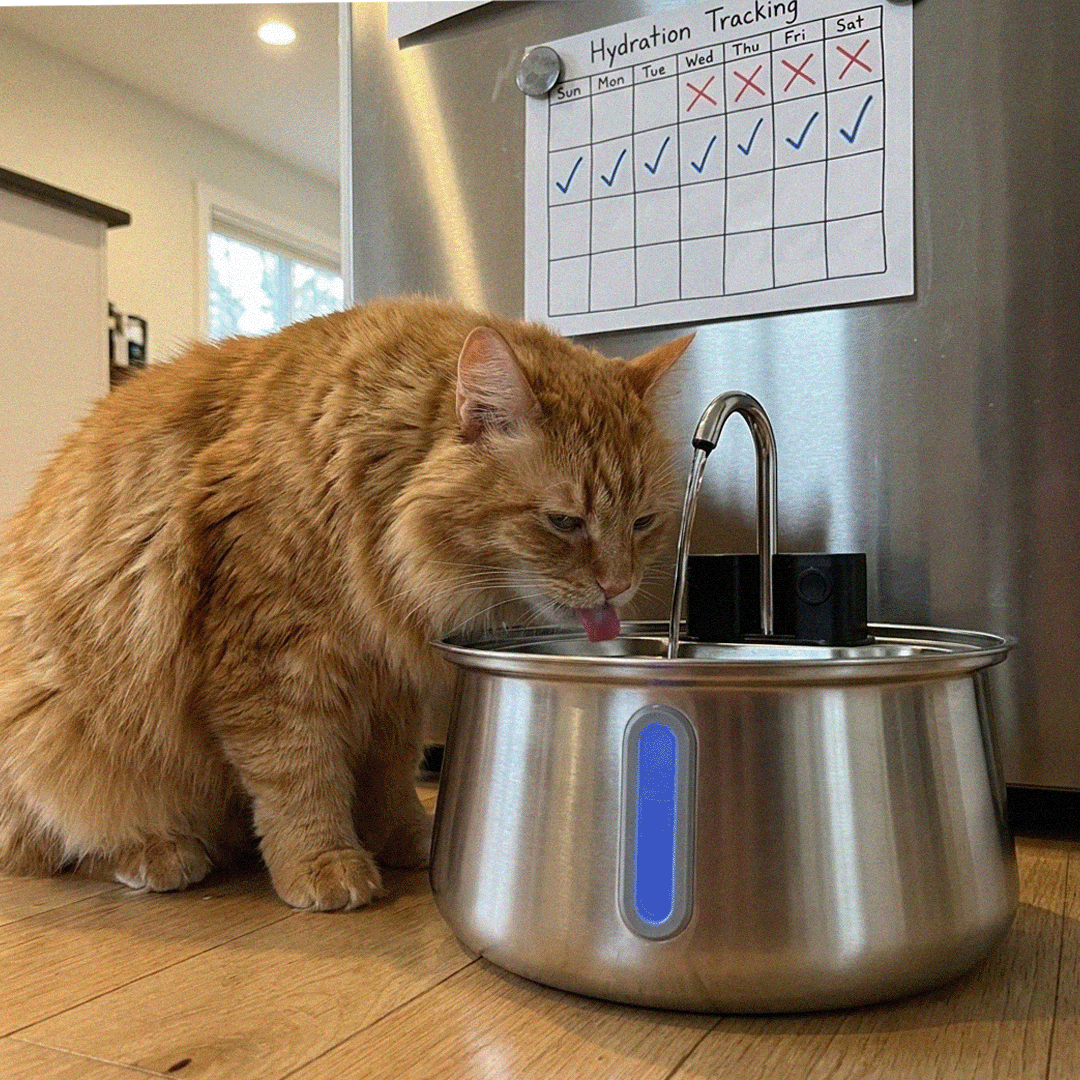
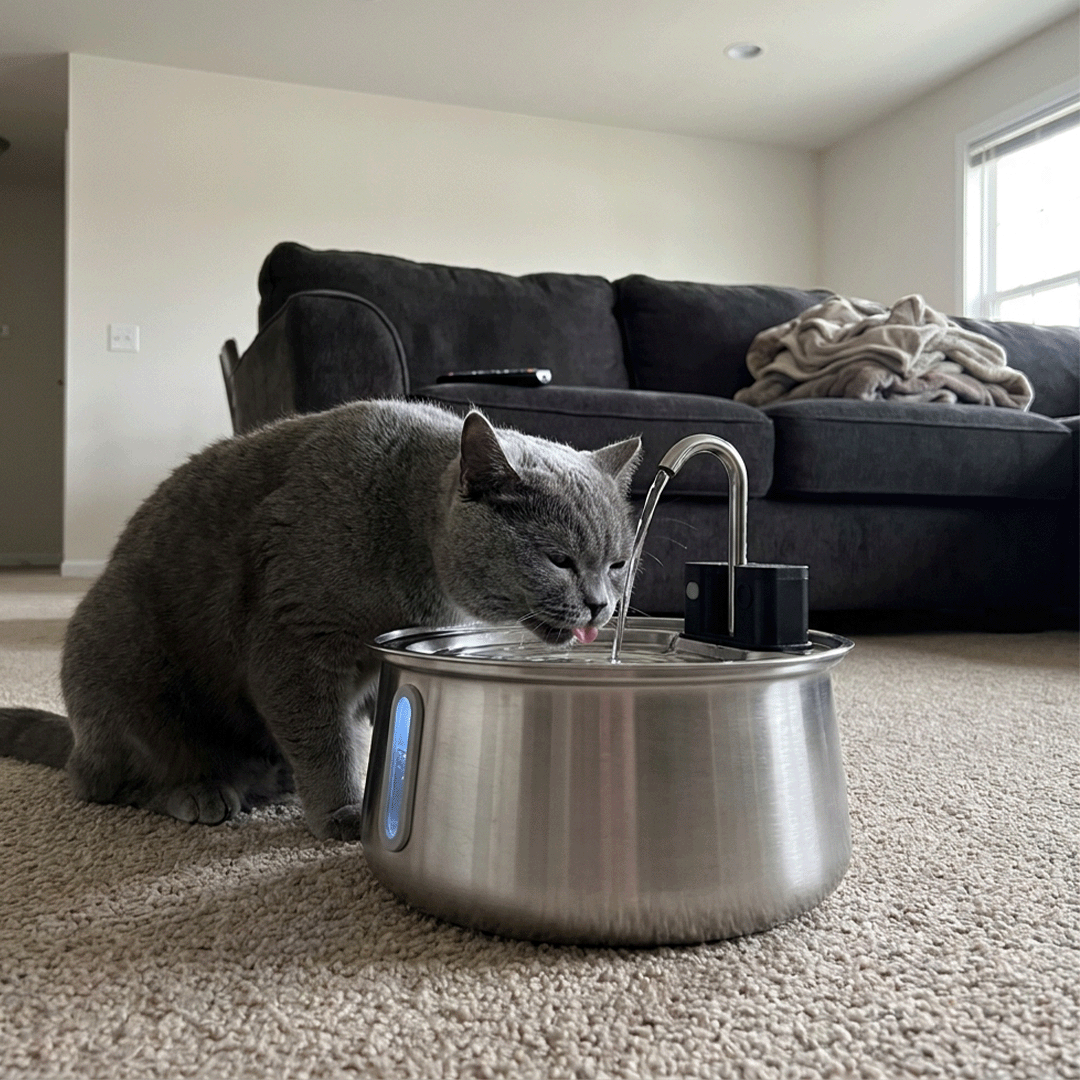
My Cat Has Been Crying at My Kitchen Faucet Every Morning and Every Night for Five Years. My Vet Told Me It Was Cute. Last Month I Found Out What It Actually Meant. I'm writing this for anyone whose cat has one of those daily rituals at the kitchen sink that you have been laughing about for years and that at least one veterinarian has told you was nothing to worry about. There is a chance the laughing was the wrong response. I want to tell you why, because I had to find out for myself the harder way, and I would have wanted somebody to write this post for me five years ago. A little about me. My name is Maya. I'm forty-four, I work as an ER nurse at a hospital in Nashville, and I have lived alone since my divorce five years ago. The cat I want to tell you about is named Marbles. She is a seven-year-old adopted from a coworker's litter when I moved into my apartment after the divorce. She is the first cat I have lived with as an adult, and she has been the steadiest presence in my life for the last five years. I want you to understand that before you read the rest of this, because she is not just a pet to me. For five years, Marbles has had the same ritual every morning and every evening. She wakes up before I do, walks to the kitchen, jumps up onto the counter next to the sink, and sits there. When I come in to make coffee, she cries at me until I turn on the kitchen faucet. She drinks from the running stream for maybe thirty seconds, jumps down, and goes about her morning. Around nine at night, before I get ready for bed, she does it again. She will jump onto the counter, cry, drink from the running faucet, and jump down. I thought it was charming. I have a folder of videos on my phone. I have texted these videos to my sister, to my best friend, to the coworker who gave me Marbles in the first place. I had not, in five years, considered the possibility that this was anything other than a personality quirk. Her water bowl sat on the floor in the corner of the kitchen, refilled every morning. As far as I had been able to tell she rarely drank from it. I had assumed she did at night while I was asleep. I had no real evidence for this assumption other than the fact that she was alive and the water level in the bowl went down. I had mentioned the faucet thing to my vet at Marbles' annual checkup when she was two. The vet was a friendly woman about my age who I had been seeing for a couple of years. I described the morning ritual. I asked if it was normal. She laughed and said some cats just like running water, that Marbles was probably a faucet personality, that as long as she was drinking it was fine. I remember exactly what she said because I went home and told my friends about it like it was a diagnosis. Marbles has a faucet personality. I tried a few things over the years, more because the morning routine was inconvenient than because I thought anything was wrong. I bought a wide ceramic bowl that the pet store told me was the gold standard for cats. Marbles ignored it. I bought a stainless steel bowl that was advertised as the kind serious cat owners use. Marbles ignored it. I bought a plastic water fountain, the popular flower-top kind, thinking that if she liked running water then a small running stream in the corner of the kitchen would solve the problem. She used it for two weeks and then went back to crying at the kitchen sink every morning and night. By year four I had stopped trying. The bowls and the fountain went into a closet. What changed my mind was something I read at one in the morning on a Tuesday a couple of months ago. I had been falling down a rabbit hole on cat kidney disease because a patient I had cared for that week had reminded me of something my mother told me about her cat when I was in nursing school, and the rabbit hole landed me on a feline veterinary journal article about silent kidney decline in indoor cats. Most of it was familiar. One footnote was not. The footnote referenced a chart review by a feline kidney specialist who had reviewed thirty-nine of her patients whose owners had described faucet-seeking behavior. Cats who would not drink from their water bowls and who preferred to drink from running taps, from glasses, from showers, from any source other than the bowl. Of those thirty-nine cats, twenty-six had elevated kidney markers on their next bloodwork panel. Sixty-seven percent. I sat up in bed and read that paragraph three times. I work in an ER. I read studies for a living. I understood exactly what that number meant. Sixty-seven percent of cats with the behavior my own veterinarian had told me was a personality quirk had been showing measurable early kidney disease, and the behavior had been the only externally visible signal an owner could have caught. The faucet was the warning. The vet had told me it was cute. I made an appointment with a different vet the next morning. The new vet was a woman named Dr. Reyes who had been recommended by another nurse at my hospital whose cat had been through chronic kidney disease the previous year. I told her everything. The morning ritual, the night ritual, the five years, the old vet, the chart review I had read at one in the morning. Marbles sat in the carrier on her exam table. Dr. Reyes did not laugh. She asked me a series of careful questions about Marbles' water intake, her urination, her weight history. Then she explained what the old vet had not. Cats are descended from desert animals, and their thirst drive is naturally low. They were built to extract most of their water from prey. An indoor cat eating commercial food is in a hydration situation her body was not designed for, and she needs to make up the difference by drinking from a bowl. The trouble is that a cat's nose is somewhere between fourteen and forty times more sensitive than a human's, and a cat can detect things in standing water that a human physically cannot. What a cat detects in a still bowl is biofilm, a thin film of bacteria that forms on the surface of any container in contact with standing water. It develops within twenty-four to forty-eight hours of the bowl being filled. People cannot see it or smell it. Cats can. To a cat, the water in a bowl that has been sitting for a day smells the way slightly spoiled milk smells to a person. The faucet, where the water has not been sitting in contact with anything, is appealing because it is the only source in the kitchen that has not failed her safety check. She is not being dramatic. She is making a rational evaluation of two water sources, one of which her nose has flagged as unsafe. Dr. Reyes told me the chart review I had read was, in her view, undercounting the problem. Most cats who develop faucet-seeking behavior do so years before any abnormal kidney values show on bloodwork, because by the time the kidney markers move on a panel, two-thirds of kidney function is already gone. The cat may be giving the early signal for years before the lab catches up. She told me what she recommends. A fountain made entirely of medical-grade 304 stainless steel. The same grade hospitals use for surgical instruments, the same grade that runs through the autoclaves at my own hospital. Non-porous at a molecular level. Biofilm cannot grip it. She told me the brand her clinic uses for clients in this situation is called Cattasaurus. She also told me to schedule a kidney panel for Marbles before the recheck. I ordered one in the parking lot before I drove home. The fountain arrived three days later in a heavier box than I expected. I set it up on the kitchen counter that night, next to the sink, in the spot where Marbles had been crying at the faucet for five years. The pump was so quiet I had to touch the water to confirm it was running. Marbles approached it the next morning. She did not cry at the sink. She walked up to the new fountain, smelled the falling stream, and drank from it for over a minute without lifting her head. I stood in the kitchen in my pajamas and watched her. Her kidney panel came back two weeks later. Her creatinine was at the high end of the normal range. Her SDMA was slightly elevated. Not into the disease range yet, but moving in the wrong direction for a seven-year-old cat, and exactly consistent with the pattern Dr. Reyes had told me to expect. Three months later, after the fountain had been her primary water source for ninety days, her recheck showed the markers had stabilized and her hydration values had moved into the better part of the normal range. Dr. Reyes told me we had caught it in the window where I could still change the trajectory, and that most owners do not get that window because most vets do not flag faucet-seeking as an early signal. The morning ritual has been gone for two months. Marbles drinks from the fountain on her own schedule. She has not cried at the kitchen faucet since the week I set up the new one. What I want to say to anyone whose cat has a faucet ritual is this. The behavior is documented in the feline veterinary literature as a reliable early signal of impaired hydration, and impaired hydration in indoor cats is one of the most modifiable risk factors for the chronic kidney disease that one in three cats develops over a lifetime. If your veterinarian has waved it off, please consider asking for a kidney panel anyway. If your vet will not run one, find a different vet. The behavior is not nothing. It is a small daily message from a cat who has been making the best evaluation she can of the water you have given her, and she has been telling you, every morning and every night for however many years, that the bowl is not working. The fountain I bought is the Cattasaurus one Dr. Reyes recommended. Honestly, I've seen my friends use this a lot, but I didn't think it'd be this effective until Dr. Reyes vouched for it. Link is below if you want to check it out. Marbles is at the foot of my bed as I'm typing this. The kitchen is quiet. For five years I woke up to the sound of her crying at the faucet, and for the last two months I have woken up to nothing. I had not realized how much that sound had been part of my apartment until it stopped. I am glad it stopped. I am sorry it took me five years.
Like this ad? Make it yours.
Crush rebuilds this exact creative around your product — your brand, your colors, your offer — in about a minute.