
Inactive· since May 23, 2026
- 31
- days it ran
- 0
- relaunches
- 13
- EU reach
Ad copy
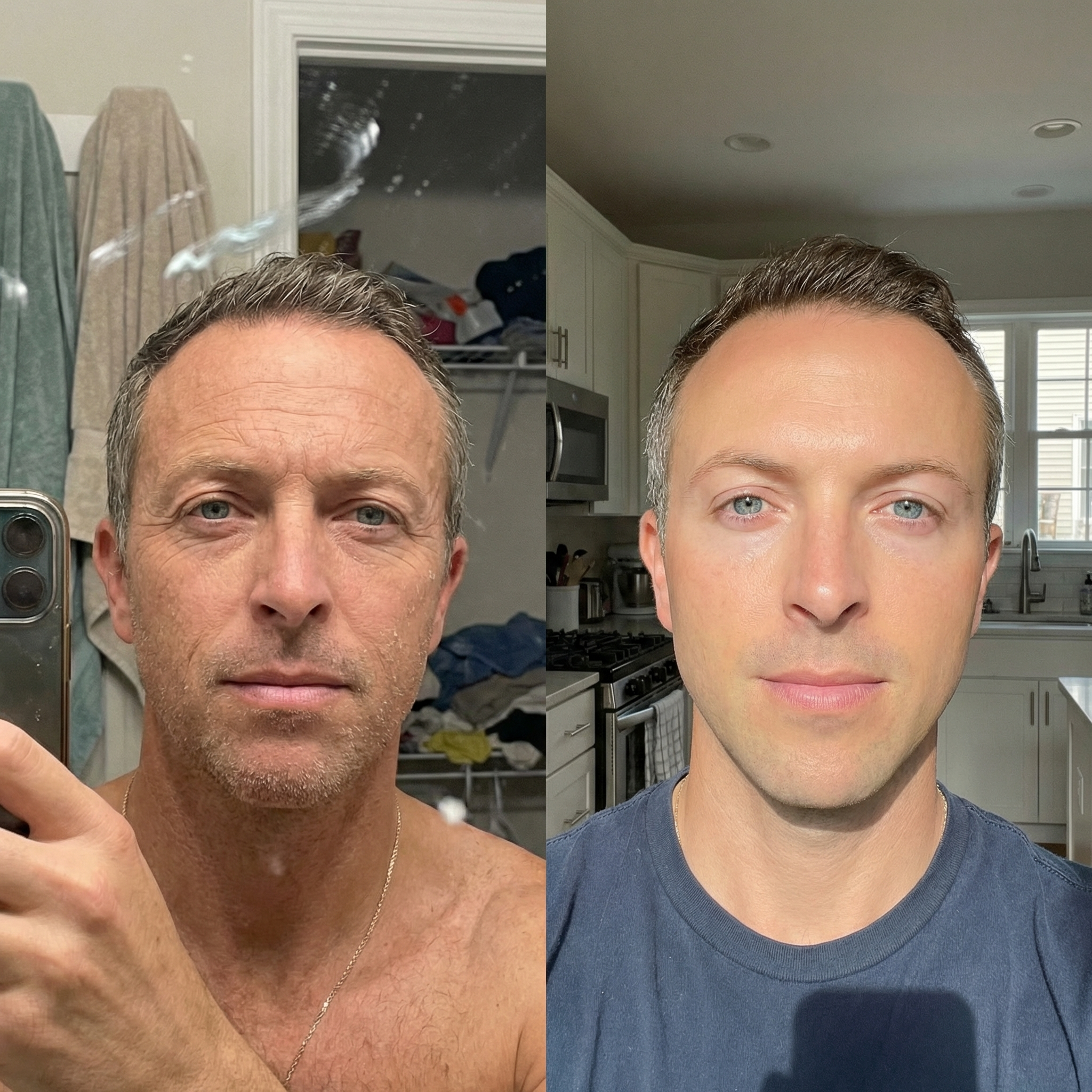
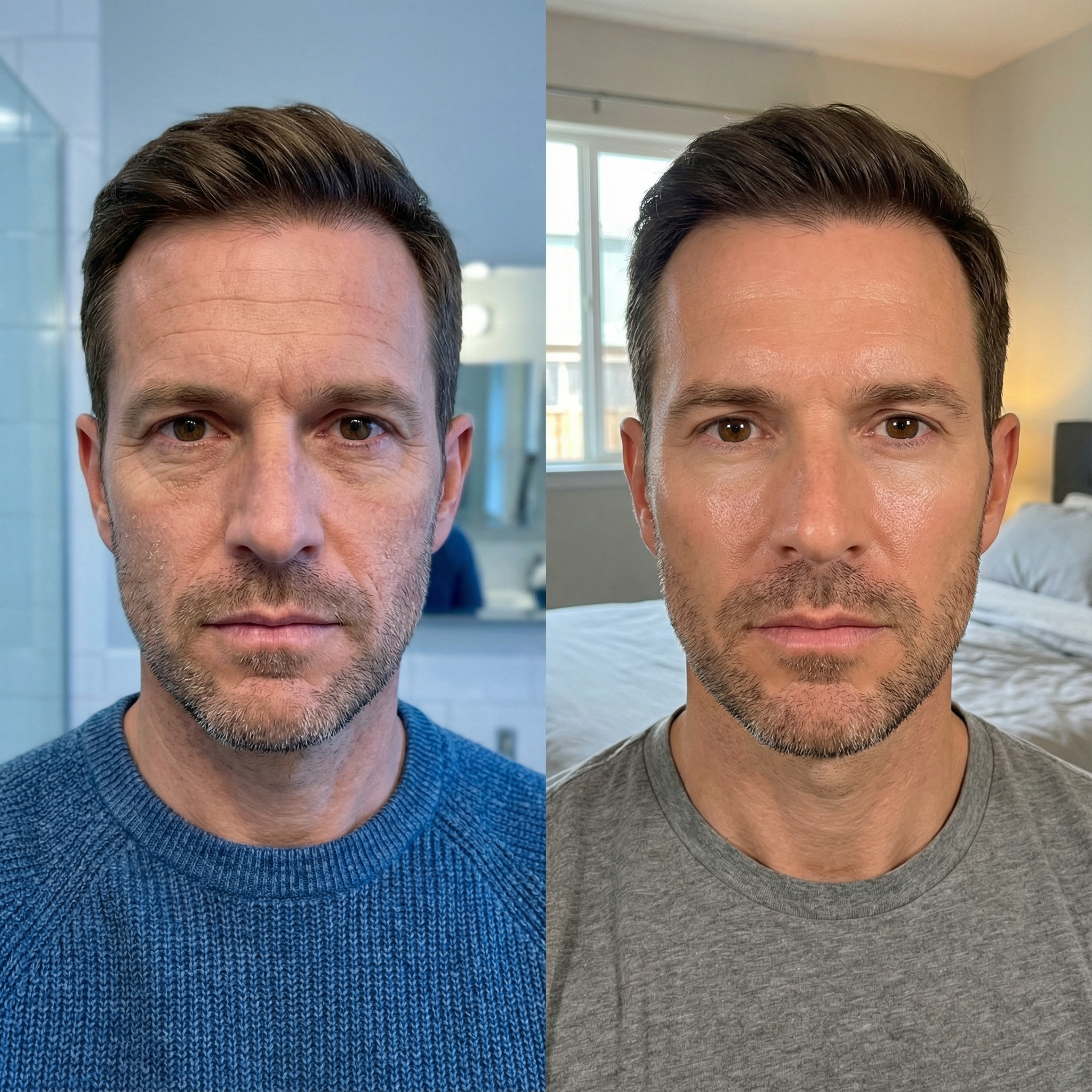
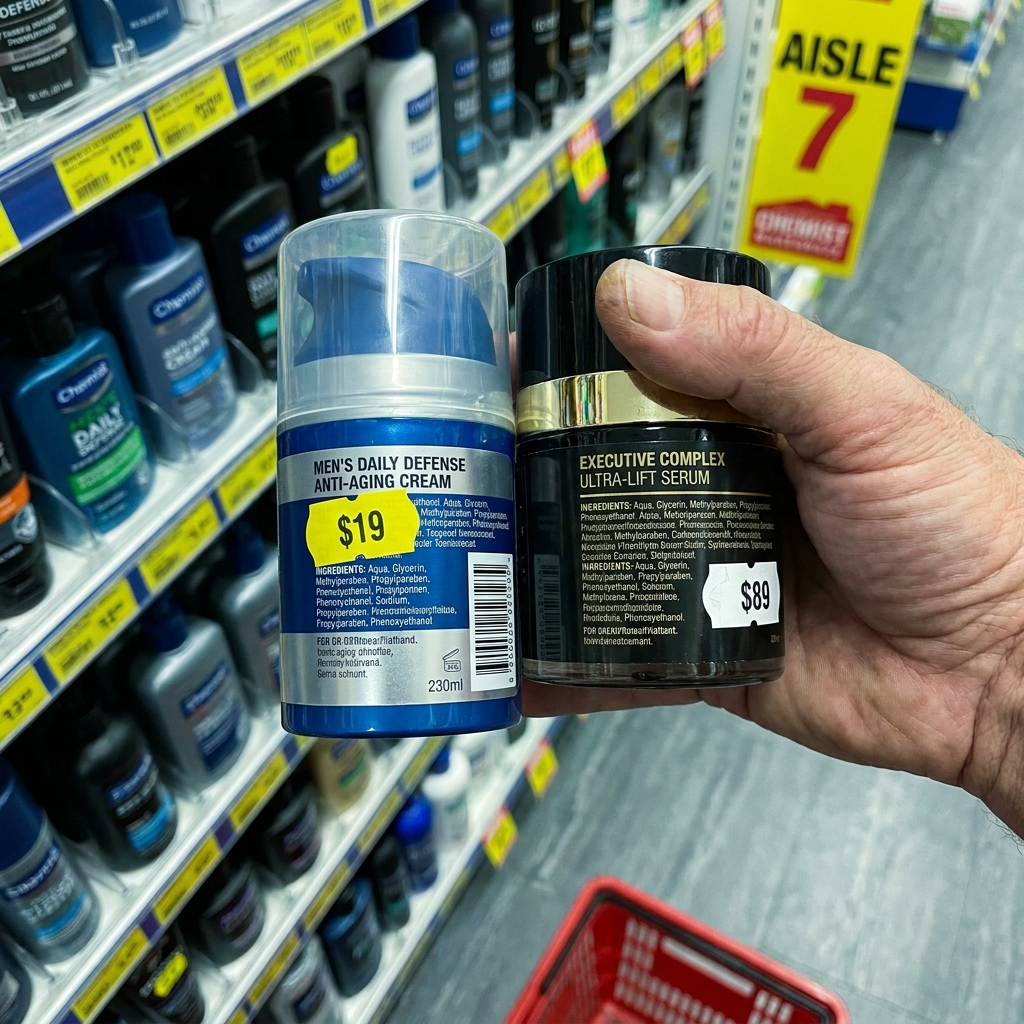
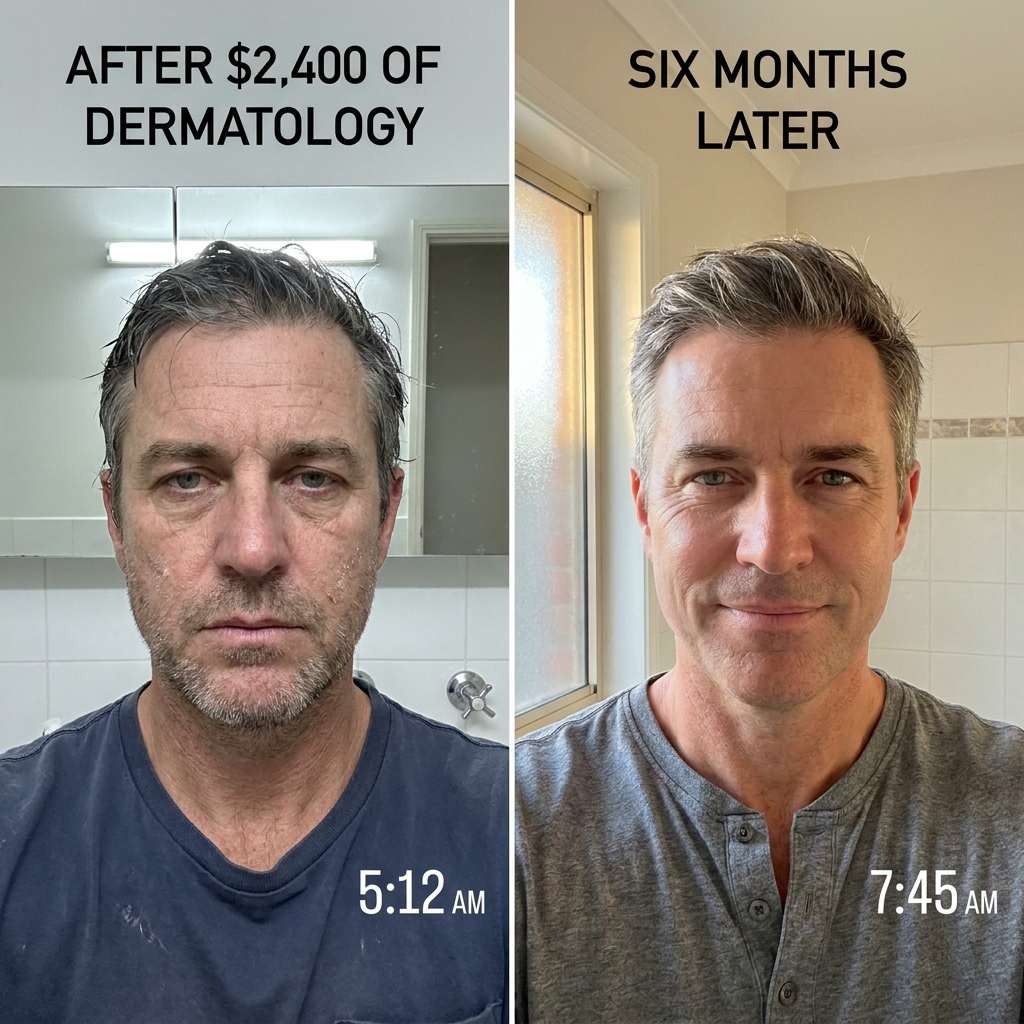
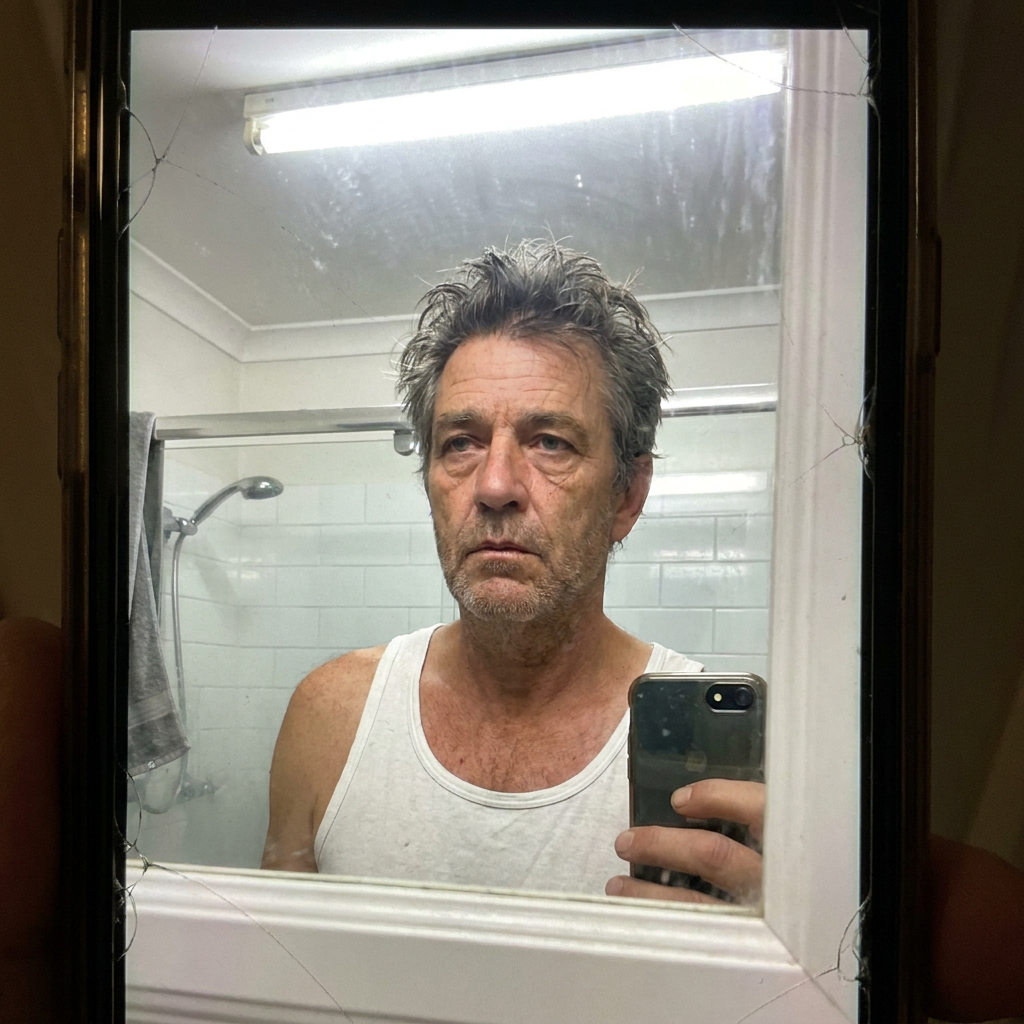
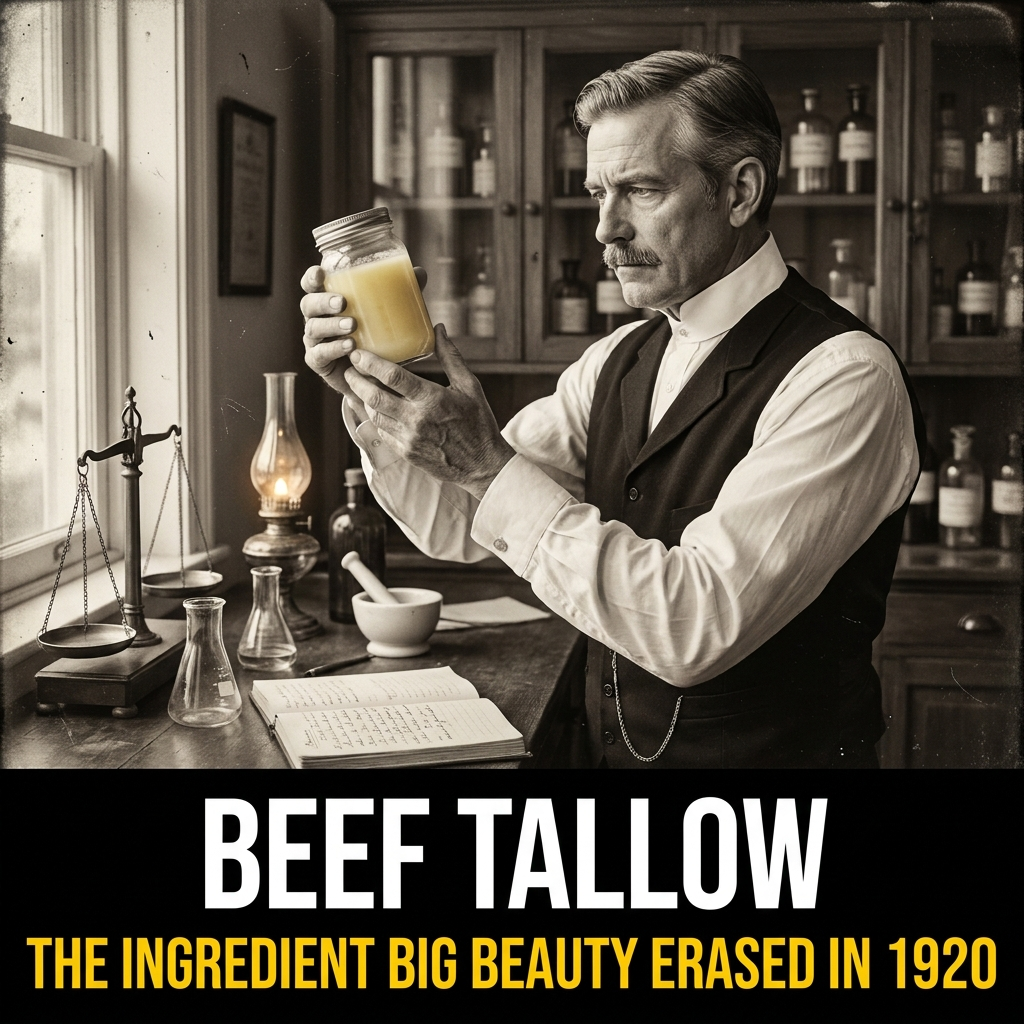
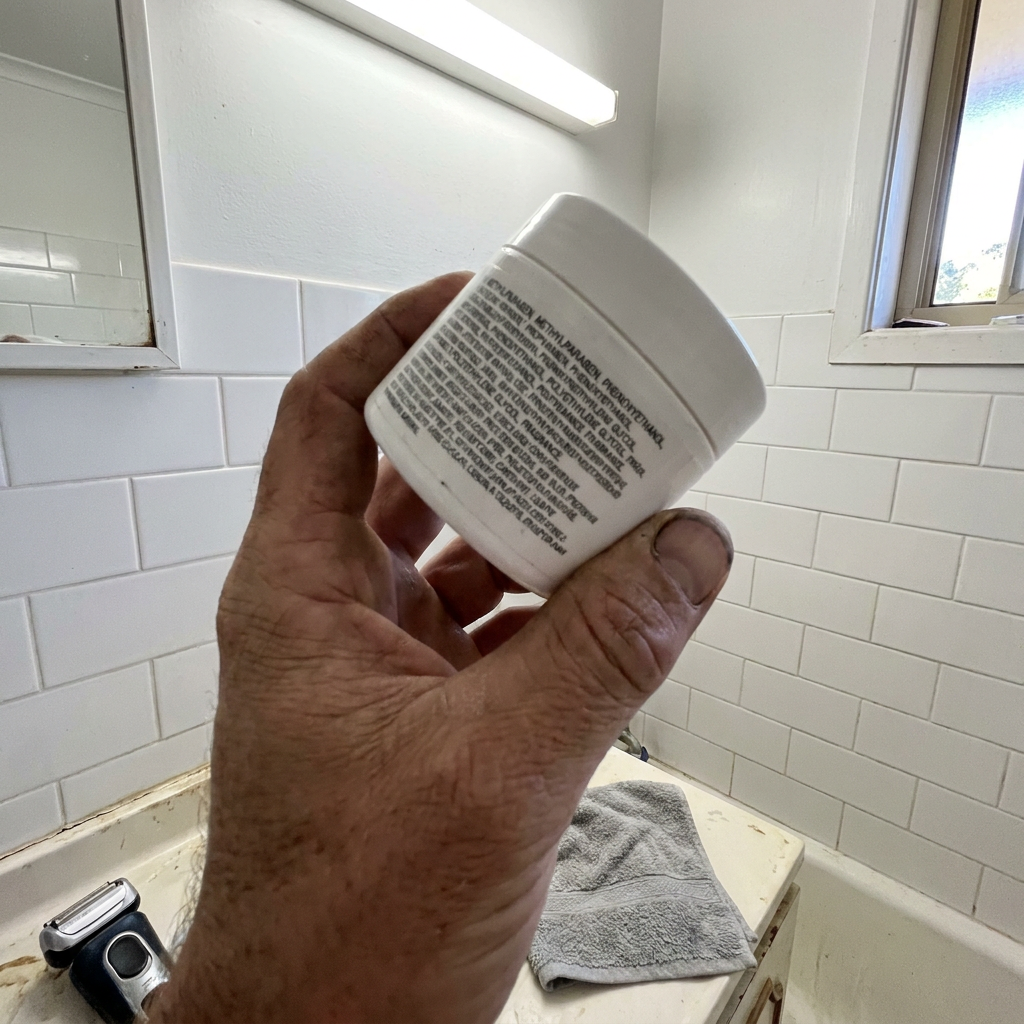
If you're a man over 40 and your face has started feeling like sandpaper—rough texture along the jaw, canyon lines around the eyes, skin that won't hold moisture no matter what you put on it—I'm about to tell you exactly why that's happening. And once you understand this, you're never going to look at the cream on your bathroom counter the same way again. Because there are three things happening right now: One — Your face has started showing wear you didn't expect this early, and nothing you've tried is actually working. Two — Every product on the shelf claims to fix it, but the texture and lines keep getting worse, not better—and there's an actual biological mechanism causing this that nobody's told you about. And three — The grooming industry keeps selling you 27-ingredient synthetic creams that sit on your face... but they can't replace what your skin actually stopped producing. So let me tell you what happened with my brother-in-law Mick, because his story is going to open your eyes to how rigged this whole industry really is. For three years—I mean a thousand mornings straight—Mick was dealing with this. His face during the day? Fine if he didn't look too closely. Manageable if he didn't have to stand under a bathroom light. But the second he caught his reflection in the bathroom mirror at 5am? Every. Single. Line. Visible. He's 51. Foreman on commercial builds for 26 years. And suddenly he couldn't look at his own face in the morning without thinking he looked ten years older than he was. By the end of every week, his jaw felt like 80-grit sandpaper when his wife touched it. Not "a bit dry" rough. I'm talking about actual sandpaper texture, the kind you feel through your fingertips, the kind a partner notices before you do. His cheeks had that washed-up, crepey look he'd only ever seen on the old fellas at the RSL. Things that were just background noise in his 30s—the lines around his eyes, the dryness along his jaw—became impossible to ignore at 51. He started calling himself the leather man. Stand in front of the mirror—lines. Step into natural light—worse. Catch his reflection in a shop window at midday—worst of all. All. Day. Long. By the end of every week, he'd avoid mirrors. Avoid HD photos. Avoid being in the family Christmas card shot because he hated how he looked in it the year before. He stopped going to weekend barbecues because he didn't want to see photos of himself tagged on Facebook the next morning. Started making excuses to skip his son's engagement photos because he knew he'd look washed up next to the kid. His wife thought he was being vain. His mates thought he was overthinking it. But Mick was doing everything the industry told him to do and his face was getting worse. And the products? He'd spent close to $600 on creams, serums, "men's face moisturisers"—and his skin was rougher and tighter than when he started. Zero result. Zero recovery. Just the sensation of having "used product" without any of the actual benefit. His texture got so bad his wife stopped running her hand along his jaw the way she used to. He'd lean in for a kiss in the morning and she'd turn her cheek. She'd never say anything. But Mick noticed. Men always notice that one. Because here's what nobody tells you: synthetic skincare products don't just fail to work. They actively make the problem worse over time. The hormone-disrupting compounds in most pharmacy creams accelerate the exact decline they claim to reverse. So obviously, he goes to professionals, right? Multiple ones. His GP. A dermatologist. A men's "skin clinic" in the city. We're talking $400+ in appointments and prescription products. And you know what every single one of them told him? "It's just part of getting older." "Try a retinol cream." "Have you considered Botox?" "Use sunscreen daily." "Drink more water." Oh, drink more water! Right! Because Mick's problem was that he hadn't tried hydrating properly, or wearing SPF, or "establishing a routine." He'd been doing all of that for three years. But here's where it gets worse—and this is the part that made me lose my mind. They put him on a prescription retinoid. You know what happened? His skin peeled. Great. But the canyon lines were still there. And now he was raw and red on top of being rough. The retinoid burned the surface layer—but the underlying problem didn't move. His skin couldn't hold moisture because the actual thing it needed was missing. And no amount of stripping the top layer was going to fix that. So they tried a hyaluronic serum. Same thing. A peptide cream. Same thing. A $220 jar from a "luxury men's line." Same. Thing. Every single product promised results. But none of them addressed why his face was deteriorating in the first place. So at this point, I'm fucking furious. Because I'm watching my brother-in-law—who's doing everything the dermatologists tell him, buying all the products, following all the advice—get worse. Not better. Worse. And that's when I started asking questions that nobody in the industry wants you to ask: Why is his skin worse after three years of using their products than it was before he started? Why do dermatologists never explain what's actually happening to a man's face after 40? And why the fuck does nobody ever talk about what his skin stopped producing that's causing all of this? So I went down a rabbit hole. And I mean a DEEP rabbit hole. I started reading dermatology research while Mick was at work one day—and every mainstream source was giving me the same recycled advice. "Hydrate. Use retinol. Apply sunscreen. Establish a routine." But then I found research from a biochemist who actually studies the lipid composition of human skin, not just the symptoms of aging. And he mentioned something I had literally never heard of in my entire life. The Sebum Decline. Now pause for a second. You know what's insane? We learned about cholesterol in school. The endocrine system. The cardiovascular system. But nobody—and I mean NOBODY—ever taught us about sebum and what it actually does to keep a man's face functional. And that's not an accident. Because once you understand what sebum decline does, you realise why every product on the shelf failed Mick. Here's what sebum actually is: It's the natural oil your skin produces. It's literally the substance that kept your face functional for the first four decades of your life — the thing that gave you smooth, resilient skin in your 20s and 30s without you ever thinking about it. When it's being produced properly? Sebum maintains the lipid matrix of your skin. The barrier that holds moisture in. The texture that feels like skin, not sandpaper. The thing that made your face work without effort. But when sebum production drops—and it does, significantly, after 40? That's when shit hits the fan. The lipid matrix breaks down. The skin barrier fails. And every line, every patch of dryness, every rough patch you barely noticed in your 30s suddenly floods through at full intensity. It's not that you're aging faster. It's that the substance keeping your skin functional is no longer being produced. And here's the key thing I learned: Synthetic creams cannot replace sebum. Synthetic creams sit on top. They make your skin feel hydrated for an hour. But they don't do anything about the underlying lipid deficiency that's causing the decline. Mick's problem wasn't that he wasn't hydrating. His problem was that his skin had stopped producing the oil it needed to function, his lipid matrix was breaking down, and no amount of synthetic substitute was molecularly capable of fixing that. The retinoid stripped his skin—but that was just treating the wrong problem. The sebum decline? It wasn't going anywhere. Because it's not a "needs more cream" problem. It's a sebum problem. And sebum production drops naturally after 40. For every man. But for men with naturally lower production—or with years of synthetic disruption from pharmacy products—that drop accelerates the slow fade and makes synthetic products useless. And here's the part that made my blood boil: The grooming industry KNOWS about this. They know sebum decline exists. They know synthetic substitutes can't replace it. But unless you're willing to walk away from a $500-billion-a-year industry, they don't give a single fuck about telling you the truth. Why? Because there's no patentable synthetic compound that's molecularly identical to human sebum. You can't patent the substance your skin actually recognises. There's no money in telling you to use ancestral ingredients that have been working for 4,000 years. There IS money in keeping you on a treadmill of creams, serums, retinoids and procedures—products that treat the surface but ignore the root cause. See how that works? So I kept researching. I'm reading lipid biochemistry journals now. Studies on fatty acid composition in human sebum. Talking to blokes in ancestral health forums who'd found something that actually worked... And I found out there's an actual substance that's molecularly almost identical to human sebum. One the industry replaced around 1920—right when synthetic chemistry took over personal care. Grass-fed beef tallow. The fatty acid profile is the closest match to human sebum that exists in nature: 1. Oleic Acid (42-50%) — The dominant fatty acid in your skin's own oil. It penetrates the lipid matrix and integrates instead of sitting on top. 2. Palmitic Acid (25%) — Critical for barrier function. Your skin uses this exact fatty acid to maintain its structure. 3. Stearic Acid (18%) — Provides the structural lipid layer that holds everything together. Stops moisture loss without forming a synthetic film. 4. CLA — Conjugated Linoleic Acid. This is the BIG one. It's only present in grass-fed tallow—not grain-fed. Potent anti-inflammatory. Reduces the redness and irritation that synthetic products cause. 5. Vitamins A, D, E and K — Vitamin A stimulates collagen production. Vitamin D supports skin immunity. Vitamin E neutralises free radical damage. Vitamin K reduces dark circles and improves elasticity. All four are fat-soluble and only deliverable through a lipid-based carrier — exactly what synthetic water-based creams cannot do. Now here's what's crazy: I found peer-reviewed studies—actual research—showing that human sebum and grass-fed tallow share nearly identical fatty acid profiles, and that the skin recognises and integrates tallow the way it recognises its own oil. But you'll never hear a dermatologist mention it. Because there's no prescription pad for "use the substance your skin actually recognises." So I finally convinced Mick to try it. And for the first time in three years, something actually made sense to him. But here's the problem... He had to render the tallow himself the first time. Buy the suet from a butcher. Render it down on the stove. Filter it. Mix it with raw honey and beeswax to stabilise it. The kitchen smelled like a slow cooker for two days. He was buying ingredients from five different places, trying to figure out the right ratios, some recipes said 70% tallow, some said 85%—which one was right? And he was spending half his Saturdays on it. Every single weekend. Just to have something his face actually responded to. But you know what? He did it. Because he was desperate. And after about a week? The sandpaper texture along his jaw started softening. After three weeks? His wife ran her hand along his face on a Saturday morning and didn't pull away. First time in over a year. After six weeks? He looked like a completely different bloke. His jaw was smooth again. The canyon lines around his eyes had softened. His skin was holding moisture without him having to layer product. Three different fellas at the site asked what he was doing. So now I'm thinking: Okay, this protocol works. It's literally changing his face. But why the fuck is it so expensive, time-consuming and complicated? Turns out, a bloke named Finn Hendriks was thinking the same thing. He's a small business owner from Australia who'd watched his old man go through the exact same decline—pharmacy creams, dermatologist appointments, a face that just kept getting worse despite "doing everything right." He'd watched his father give up. He spent close to a year developing Bare Ritual Beef Tallow Honey Balm. The goal was simple: The exact ingredients men have used for thousands of years, in the right ratios, in one jar — no rendering, no mixing, no Saturday afternoons on the stove. No retinoids. No parabens. No 27-ingredient synthetic cocktails. He formulated it with grass-fed Australian beef tallow (the only source with the full CLA and Vitamin K2 profile). Raw honey (natural antibacterial, locks in the lipid matrix). Organic beeswax (stabilises the formula without synthetic emulsifiers). Cold-pressed olive oil (adds Vitamin E and squalene, the substance your skin co-produces with sebum). And most importantly: No hormone hijackers. Because parabens and phthalates in synthetic products mimic estrogen and have been linked to declining testosterone in men over 40. A few months later, I kept seeing Bare Ritual mentioned in men's health groups online. I went to their site, ready to be disappointed like every other "men's skincare" product I'd looked at. And I almost fell out of my chair. They had EXACTLY what Mick was making himself—but in one jar. All four ingredients. The right ratios. Third-party tested. Grass-fed sourced. Made in small batches. Australian. No synthetic emulsifiers, no parabens, no fragrance, no industrial sludge. The jar is a 60-day supply. A pea-sized amount, morning and night — takes 30 seconds. I've been using Bare Ritual for five months now. The lines around my eyes are 70% softer. My jaw doesn't feel like sandpaper anymore. My wife noticed before I did and asked what I'd switched to. I look in the bathroom mirror at 5am and I actually recognise myself. Mick's been on it for eight months. He's thrown out every other product in his bathroom cabinet for the first time in 20 years. His face has held its texture through an entire Australian summer on building sites. His daughter said he looks five years younger in the engagement photos than he did in the family Christmas card a year earlier. His doctor at his last check-up: "Your skin looks healthier than it did three years ago. Whatever you're doing, keep doing it." Here's what you need to understand: Sebum decline gets worse with age. After 50, production drops even further. The lipid matrix continues to fail. The skin gets rougher. And that's when men panic. They face decades of looking washed up. Face never recognising themselves in the mirror. Face their wife pulling away. Face seeing themselves in a Christmas photo and being unable to do anything about it. Because nobody told them about sebum decline and how to support their skin with the substance it actually recognises. I'm putting the link below. Even if you're skeptical—I was too, and most of the 470,000 men who've bought a jar were too—grab one. Try it for three weeks. See if your face responds the way Mick's did. The grooming industry won't save you. They profit from keeping you on 27-ingredient synthetic creams that fail, dermatologist visits that go nowhere, and procedures that create dependency while never addressing the root cause. You have to save yourself. Here's what happens when you start Bare Ritual: Days 1-3: Apply a pea-sized amount morning and night. It smells faintly of honey — not beef, despite what you'd expect. You'll notice: "My face actually feels nourished instead of coated." The lipid matrix starts absorbing the molecularly-matched fatty acids immediately. Days 4-7: The sebum-mimicking effect is building. You'll notice: "The sandpaper texture along my jaw has softened." Or if your skin was tight and dry, the moisture-holding capacity has come back. Your skin is starting to function the way it did before the decline. Weeks 2-4: The cumulative effect of daily lipid matrix support kicks in. You'll notice: "The canyon lines around my eyes have softened" and "my face actually looks like skin again, not paper." Your partner notices. People start asking what you're doing. Month 2+: This is when men report the biggest change. You'll notice: "I look in the mirror and recognise myself again." Some men report cutting out every other product in their bathroom cabinet. Most men buy a second jar before they finish the first. 90-Day Money-Back Guarantee. If your face hasn't changed significantly, full refund. No return required. No forms. Just email [email protected]. You risk nothing except staying in the slow fade forever. Your rough texture, your canyon lines, your washed-up reflection — it isn't "just getting older" or "just genetics" or "just what happens after 40." It's your sebum dropping. Your lipid matrix breaking down. Every line and every patch of dryness flooding through at full intensity because the substance keeping your skin functional is no longer being produced. And it's 100% addressable. The solution: Replace what your skin stopped producing. Use the substance it actually recognises. Allow your face to integrate the lipid matrix it was designed to run on. Sandpaper texture and canyon lines soften in two to four weeks. It's that simple. Go get it. Stop spending money on 27-ingredient creams that fail. Stop seeing yourself in the bathroom mirror and not recognising the man looking back. You deserve to look in the mirror and see yourself again. ✅ Grass-fed beef tallow ✅ Raw honey ✅ Organic beeswax ✅ Cold-pressed olive oil 470,000+ jars sold. Buy one get one free. Free worldwide shipping. 90-day money-back guarantee — no return required. 👉 Tap learn more. P.S. — Your sandpaper jaw and canyon lines aren't normal. They're not "just how your face is now." It's your sebum production dropping after 40 — and you can replace it at the molecular level in weeks. Stop using 27-ingredient creams that sit on top of the problem. Start using the substance your skin actually recognises as its own. P.P.S. — Still skeptical? That's why Bare Ritual offers a 90-day money-back guarantee with no return required. If your face hasn't changed and you're not recognising yourself in the mirror again, you get every cent back — just email [email protected]. You literally risk nothing except staying in the slow fade forever.
What They're Hiding About Aging Skin ☝️
"I'll be honest — I thought this was a gimmick. My face looked like sandpaper and I'd tried enough things that didn't work. The only reason I bought was the 90-day guarantee. Figured I had nothing to lose. Two weeks in my wife asked what I'd changed. I hadn't told her I was using it. That was all ...
LEARN MORELike this ad? Make it yours.
Crush rebuilds this exact creative around your product — your brand, your colors, your offer — in about a minute.