Barbara Turner
Barbara Turner Facebook ad: “I Placed 1,412 Cardiac Stents. Then I Got One.”
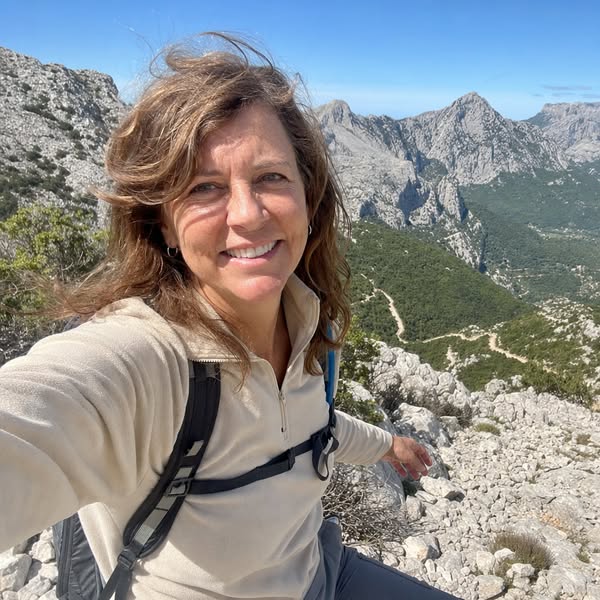
Ran for 18 days, from August 22 to September 9, 2026, the last day Crush saw it.
Run by Barbara Turner on Facebook. Crush is not the advertiser and does not verify its claims. See this ad in Meta's Ad Library(opens in a new tab)
Want an ad like this for your product?
Crush makes new ad images for your product from this ad: your logo, your product photo, your offer.
Trials from $19.95 USD, then $79.95 USD a month. Cancel anytime.
About this ad
- Meta Ad Library ID
- 990973980652149
- Platforms
- Facebook, Instagram, Audience Network, Messenger and Threads
- Relaunches
- 0
- Niche
- Food & Beverage
Ad text
I don't f*cking care if this upsets you. I am going to say something that nobody who has been sent home from a hospital with a stent and a bag of prescriptions wants to hear. ⠀ I placed my 1,412th coronary stent on November 28th, 2024. ⠀ Sixteen days later, at 2:47 AM on December 14th, I was on the receiving end of one. ⠀ I was 58 years old. ⠀ I am a board-certified interventional cardiologist. Twenty-two years of practice. Two stents placed in my own left anterior descending artery by a fellow I had trained three years earlier. ⠀ I coded on the table for eleven seconds. ⠀ The hospital bill was $71,000. Cardiac rehab was another $9,200. ⠀ They will let me operate again. My hospital privileges are intact. But I will never place a stent again without remembering that I was on that same table with someone I had trained running a wire into my own coronary artery because everything I had been prescribing for my own cholesterol had not been enough to save me. ⠀ I want to tell you exactly what that stent in your chest did, because placing them is what I have done for a living and I now have two of my own. ⠀ A stent opens one artery. The one that had already closed. A wire, a balloon, and a small metal scaffold go into a segment of pipe that has failed, and that segment is held open. It is a good operation. It stops chest pain, it saves lives, and I would put one in you tomorrow if you needed it. ⠀ Here is what it does not do. ⠀ It does not touch the other arteries. The lining inside all of them is the same on the day you are discharged as it was on the day you came in, and nothing in that procedure reaches it. ⠀ The bag of prescriptions does not reach it either. Those drugs bring the number down. That is their job and they do it. What they do not change is the vessel the number is coming from. ⠀ I walked out of that hospital telling myself the operation had handled it. I had been sending patients home thinking the same thing for twenty-two years. ⠀ I am writing this because I know exactly what my colleagues will say when they see it. I do not care. ⠀ If you have a stent in your chest, and a prescription list you came home with, and you have been told your cholesterol is under control now, please read the entire thing. And if someone you love came home the same way, read it for them. ⠀ Fifteen months ago I would have given anything for someone with my credential to sit me down and tell me what I am about to tell you. ⠀ Nobody did. ⠀ I was diagnosed with high cholesterol six years ago at 52. LDL 168. Total cholesterol 246. Twice, three months apart. ⠀ The diagnosis surprised me and it did not. My father had died of a myocardial infarction at 64. He had been on a statin for eleven years, and on Lisinopril by the end of 4 of them. His cholesterol and his blood pressure had both been "well controlled" for a decade before the heart attack that killed him. I had watched the pattern in my own family, and I had built my entire practice on treating cardiac events in patients who looked like my father. ⠀ I did what any cardiologist would prescribe. ⠀ I started atorvastatin 20 milligrams at diagnosis. My internist, a colleague at my own hospital, increased it to 40 the following year when my LDL would not come below 130. He added lisinopril the year after that, when my blood pressure started climbing. ⠀ Two medications. Both medications I had personally prescribed to hundreds of my own patients. ⠀ I walked four miles a day. I gave up alcohol. I lost 22 pounds in the first year of the diagnosis and kept it off. I ate the protocol I recommend to every patient after a diagnosis. Lean protein. Olive oil. Leafy greens. I stopped eating the pasta and bread I grew up on in a South Boston kitchen. I ordered a coronary calcium scan on myself the year I was diagnosed. Score of 18. ⠀ I checked every box on my own protocol. ⠀ By last September, my LDL was sitting at 104. My total cholesterol was 176. My triglycerides had been at 128 for three visits. My fasting glucose was 96. My blood pressure was 128 over 78 in the office and averaging 126 over 76 at home. ⠀ By the standard of the guidelines I had helped write for our hospital's cardiology group, I was managed. ⠀ Managed. ⠀ That word again. ⠀ I need you to understand what that word actually means. Because it is the most dangerous word in medicine for anyone taking a pill for their cholesterol. ⠀ Managed means the numbers on the chart look acceptable. The statin brought the LDL down. The lisinopril brought the blood pressure down. Two medications. Two numbers. A chart that had moved in the right direction for six years. ⠀ But here is what managed does not mean. ⠀ It does not mean the artery has healed. ⠀ Most people believe that when you take a statin and the number drops, the cholesterol problem is handled. That is not what is happening. Every artery in your body is lined on the inside with a single layer of living cells. One cell thick. That lining has one job that matters here. It stays smooth and non-reactive, and it releases a signal called nitric oxide that keeps the vessel relaxed and open. In a healthy body the lining stays smooth. Blood moves through a pipe that is clean. The cholesterol floating past does not stick. ⠀ But that lining sits in the most hostile position in the body, taking the force of every heartbeat of your life. Under years of oxidative stress from modern processed foods and the daily blood sugar spikes from refined carbs, it stops being smooth. It becomes rough. It becomes inflamed. The nitric oxide production drops. ⠀ The lining is damaged. ⠀ And once the lining is damaged, every LDL particle floating past gets caught on the damaged spots. It gets pulled into the vessel wall. It oxidizes. Turns rancid. Your immune system responds to it as damage. Plaque forms. With every heartbeat, your vessels stiffen and start filling with plaque, and eventually one of them ruptures into the heart attack that puts you on the table. ⠀ That damaged endothelium is what causes every cardiovascular complication. Not the LDL. The damaged endothelium. ⠀ The statin I had been taking for six years lowered the amount of new cholesterol my liver was producing. That is what it was designed to do. What it was not designed to do was heal the lining underneath. Lowering the supply does not heal the lining. It just hides how damaged it is. ⠀ That is what managed actually looks like underneath the chart. ⠀ I did not understand this on the day I stared at my managed numbers and felt safe. ⠀ I understand it now. ⠀ I ordered a second coronary calcium scan on myself last September, six years after the first one. I did it because a hunch would not leave me alone. ⠀ The number came back at 692. ⠀ For context, I have called patients over the phone with scores half that size and used the sentence, we need to talk today, not tomorrow. ⠀ I called my interventionalist partner and asked him to do a stress test on me. He did. It was equivocal. He recommended a CT angiogram to be safe. ⠀ I scheduled it. And then I did not go. ⠀ I want to tell you why. ⠀ Because sitting in my office at 6 PM staring at my own calcium score on my own screen, I recognized something. I was doing exactly what my father had done. He had been managed for eleven years before the heart attack that killed him. Eleven years of controlled LDL and a chart that looked fine. Then in that last year the number started creeping up anyway, and they answered it the way I had been taught to answer it. They added a second cholesterol drug. I was standing where he had stood for eleven years, looking at a chart that looked fine. ⠀ And he had died at 64 in the emergency room of the hospital where I did my cardiology fellowship. ⠀ I did not go to my own CT angiogram because I already knew what it would show. I did not want to see it in writing. I told myself I had time. ⠀ Twenty-four days later I woke my husband at 2 AM. ⠀ The pain started in my chest at 1:52 AM. I remember the time because I looked at my bedside clock and thought, this is not indigestion. ⠀ It was not. ⠀ It was the pressure I had described to a thousand patients in follow-up appointments. Central. Substernal. Radiating into my left jaw. My husband, a professor of engineering, sat up before I could finish the sentence. He is not a clinician but he has heard me describe this exact presentation at our dinner table for twenty years. ⠀ He drove me. ⠀ We went to a competing hospital, not my own. Because I did not want the fellows I had trained to see me on that gurney. ⠀ They saw me anyway. ⠀ The interventionalist on call was a young man I had trained through his fellowship in 2021. He walked into the room, saw me on the gurney, and his face did the thing. ⠀ He said my name. ⠀ I said, I need a cath. LAD occlusion. Ninety-five percent or better. Get me in the lab. ⠀ Yes, Dr. Turner, he said. ⠀ They wheeled me down the corridor I had walked down thousands of times going the other direction. I looked at the ceiling tiles and counted them because I did not want to look at the fellow who was about to run a wire into my heart. ⠀ I coded on the table forty seconds after they got me on it. My fellow later told me my rhythm went ventricular fibrillation, then flatlined for eleven seconds before they shocked me back. ⠀ Two stents in the left anterior descending. Both in the same twenty-minute window I had done for other patients four hundred times. ⠀ I was in the ICU for three days. Cardiac step-down for four. My husband drove me home on December 21st. Four days before Christmas. I walked into our kitchen with a cane, two stents in my chest, and a bag of prescriptions I had personally recommended to hundreds of patients over twenty-two years. I sat down at the table and looked at the chair where I sit every Christmas morning. That chair almost stayed empty this year. ⠀ I did not want the full workup my colleagues were suggesting. ⠀ I ran it on myself anyway. ⠀ Because I knew that if I did not, in eighteen months I would be reading somebody else's autopsy from an outside institution and seeing my own name on it. ⠀ The nephrology consult was with a colleague I had trained with in residency. She pulled my last four creatinine readings up on her screen. They had been climbing quietly for three years. My eGFR was 68 and had been 89 four years earlier. She used the phrase, atherosclerotic renal disease. Nobody had flagged it because my numbers had come back managed and a creatinine of 1.2 does not trigger a nephrology referral in the standard-of-care algorithm I had signed off on for our hospital. ⠀ The retinal specialist found narrowing in the arteries at the back of both eyes and cholesterol deposits along one branch of the right retina. He used the phrase, arteriosclerotic retinopathy. I had been squinting to read echocardiogram reports for eight months. I had blamed my reading glasses. ⠀ The vascular surgeon ran an ultrasound of my carotid arteries. Both were showing plaque. The right had a 40 percent narrowing. Nobody had ever looked. My primary care never ordered a carotid duplex on me because my lipid panel came back managed. ⠀ The neurologist ordered an MRI of my brain. It came back with scattered white matter changes and one old lacunar infarct in the left basal ganglia. A stroke. A small one, in a quiet part of the brain. I never knew it happened. I had been losing words for a year, drug names I have written ten thousand times. I had blamed my age. ⠀ My own echocardiogram, read by a colleague and not by me, showed that the walls of my left ventricle had thickened from working harder against stiffened arteries. I had been stopping halfway up the stairs to the cath lab for months. I had blamed the stairs. ⠀ Every one of my organs was showing the pattern I had watched in hundreds of my own patients after a first cardiac event. ⠀ Same disease. Same silent lining. Damage in my kidneys. Damage in my eyes. Damage in my carotid arteries. Damage in my brain. Damage in the muscle of my heart. And finally, the plaque in the arteries feeding it that put me on the table. ⠀ Five places. Five specialists. Five diagnoses. ⠀ But it was one problem. ⠀ The same damaged endothelium that my medications had never touched had been grinding through every vessel in my body for six years. Scarring the small filters in my kidneys. Narrowing the vessels at the back of my eyes. Building plaque in the arteries feeding my brain. Thickening the muscle of my heart against stiffening pipes. And roughening the coronary arteries that feed it. ⠀ And every one of my medications had been aimed at one number on the chart. Two medications, one LDL between them, and not one of them aimed at anything the five specialists had just found in my body. None of them had been addressing the upstream failure driving all five. ⠀ I thought about the waiting rooms I walk through every morning. Filled with men and women my age, my father's age, holding the same two prescriptions I was holding. Told the same thing I was told. You are managed. ⠀ I am a cardiologist. I am supposed to be the person who knows how to prevent this. I had prescribed the exact statin-plus-ezetimibe protocol I was on to a thousand patients who looked like my father. Every one of those prescriptions had passed peer review. Every one had followed the guidelines. Every one had been clinically appropriate for what it was designed to do. ⠀ But none of them had been designed to do the one thing that mattered most. Heal the lining. ⠀ I sat at my desk that night at 11 PM after my husband had gone to bed and I did something I had not done since medical school. ⠀ I opened PubMed and I searched for the actual mechanism. ⠀ Not the management guidelines. Not the drug metabolism papers. The mechanism. ⠀ I read for four hours. ⠀ Every paper confirmed what I had begun to piece together from my own body. Endothelial dysfunction. Loss of nitric oxide availability. Chronic inflammation from modern processed foods. Daily blood sugar spikes from refined carbs. Oxidative load outrunning what the lining is still able to make. Arterial stiffness that progresses independently of what the lipid panel reads. ⠀ None of it was hidden. It sat in journals I had had access to for twenty-two years. Circulation. The New England Journal. European Heart Journal. ⠀ I had read those journals every month. I had read them for the interventional trials. I had never read them for the mechanism papers because my training had focused on managing the measurement, not on what was happening upstream of it. ⠀ That was the gap. Not in the science. In how I had been trained to apply it. ⠀ I closed my laptop at 3 AM. I sat at my kitchen table. I could not sleep. ⠀ But this time I was not sleeping for a different reason than grief. I was not sleeping because a question had taken hold of me and would not let go. ⠀ If a lining that had stopped functioning was the upstream failure driving damage in five sites, was there anything in the published research that could support that lining? ⠀ Not lower the number below it. Support the lining itself. ⠀ I spent the next six weeks reading. Not as a cardiologist prescribing for a patient. As a patient trying to understand her own disease at the level her training had never taken her. ⠀ I read every paper I could find on endothelial recovery. On nitric oxide availability under oxidative load. On arterial stiffness in treated patients whose lipid panels looked fine. ⠀ Let me tell you what I did not do. I did not go searching for supplements. I did not open a health food website. I did not type "natural cholesterol cure" into a search bar. I am a board-certified interventional cardiologist. I have spent twenty-two years in evidence-based practice. My instinct was to look for a pharmaceutical pathway, a receptor target, a drug mechanism I had missed. ⠀ What I found instead was a plant that had been studied in the same journals I had been reading my entire career. Studied for the exact pathway I was looking at. Endothelial function. Nitric oxide. Vessel wall repair. ⠀ Two things kept appearing across papers from separate research groups. One was a compound that gives the plant its smell. The other was a second compound in the same plant that reduced the daily blood sugar spikes that were damaging the lining meal after meal. ⠀ Both came from the same plant. Cinnamomum verum. True Ceylon cinnamon. ⠀ I want you to understand my reaction. Because if you are reading this and you just thought the word cinnamon and felt your skepticism rise, I need you to know that I had the same reaction. ⠀ Cinnamon. The spice on the shelf at the grocery store next to the nutmeg. ⠀ I almost closed the papers. I almost went back to PubMed and started over. ⠀ I did not. Because the research was not coming from supplement companies. It was coming from the same journals I had trusted for twenty-two years. The same peer-review process. The same institutional affiliations. And the mechanism it described was specific. Not vague. Not "supports overall wellness." Specific. ⠀ The compound is called cinnamaldehyde. It is the compound that gives cinnamon its smell. Peer-reviewed research documented it directly repairing the vessel lining that had stopped producing nitric oxide. The endothelium that had stopped functioning started repairing again. The LDL trapped in the vessel walls got flushed out and processed by the liver the way it was designed to. ⠀ The cholesterol is what is stuck. The endothelium is the lock. Cinnamaldehyde is the only natural compound documented to bypass the broken vessel lining and repair it directly. ⠀ The second compound is called MHCP. From the same plant. It reduces the daily blood sugar spikes that keep damaging the vessel lining meal after meal. Because here is the part almost nobody names. It is not just the LDL grinding on the lining. It is the sugar spikes from every carb-heavy meal, damaging the endothelium faster than it can repair itself. ⠀ Two compounds. From one plant. One heals what is broken. The other stops the daily damage from adding to it. ⠀ A 2003 trial in Diabetes Care, the American Diabetes Association's own flagship journal, showed significant reductions in LDL, triglycerides, and total cholesterol in patients over 40 days. A 2024 meta-analysis pooling twenty-eight controlled trials across more than three thousand patients confirmed simultaneous reductions in fasting glucose, cholesterol, and triglycerides. ⠀ One plant. Two compounds. Studied in the same journals I had been reading for twenty-two years. ⠀ But here is what the research also showed, and this is where most people get it wrong. ⠀ Ninety percent of what is sold as cinnamon in America is not even true Ceylon. It is cassia. Cinnamomum cassia. A completely different tree from China. The compounds your vessels actually need to heal are barely present in it. And cassia contains coumarin, a compound that damages the liver at daily doses. The European Food Safety Authority documented this years ago. As little as a quarter teaspoon per day pushes daily coumarin intake past safe limits. ⠀ So the cheap cinnamon most patients buy to support their heart is actually damaging the organ that regulates the cholesterol they are trying to lower. ⠀ And even when the product is real Ceylon, it is usually in a dry capsule or powder form. Which is also a problem. The active compounds are fat-soluble. They have to be carried into your bloodstream by a fat. A dry powder has no carrier. So the compounds reach your gut, find nothing to transport them across the cell wall, and pass straight through you. ⠀ I read that at 2 AM and I understood why most of what is sold as cinnamon is beside the point. Wrong plant. Wrong delivery. Wrong dose. ⠀ I also understood what a correct formulation would require. It would have to be DNA-verified as true Ceylon at the species level, not cassia. It would have to be concentrated to match the clinical trial doses, not the sprinkle amount in a grocery-store bottle. It would have to be suspended in a fat that could actually deliver it across the cell wall. And it would have to be third-party tested for purity by a laboratory that did not work for the company selling it. ⠀ I did not know if such a product existed. I was not sure I believed what I was reading. And I want to be straight with you about the one thing I could not resolve. Most of the research had been run on patients with elevated blood sugar, and the parallel work on endothelial repair was mechanistic rather than at the scale of the lipid trials. What I had was a mechanism that was real, an effect measured across multiple markers, a plant whose active compounds were well documented, and five places in my own body proving that everything else I had tried was not enough. ⠀ Two weeks later I saw a patient in follow-up who should not have been in the numbers she was in. ⠀ Her name was Priya. Sixty-one. High cholesterol for twelve years. She had been my patient for three years after transferring to me following a stent placement. Her lipid panel at intake three years earlier had been total cholesterol 258, LDL 172, on a statin and lisinopril. ⠀ I pulled her chart before she came in expecting to add PCSK9 next. ⠀ Her total cholesterol was 168. LDL was 96. Triglycerides down 94 points. Her blood pressure had come down from 148 over 92 to 122 over 76. ⠀ She had come off the statin eight months earlier at her own insistence, her internist made the change, and her numbers had not moved back up. ⠀ I sat in the exam room staring at her chart for a long time before she walked in. I had seen thousands of patient charts in twenty-two years. I had never seen numbers move in this direction without a medication change. Numbers go down when you add a drug. They go down when you increase a dose. They do not go down when a patient stops a medication and changes nothing else on the chart. ⠀ I looked at her across the exam room and asked her what she was doing. ⠀ She was quiet for a moment. Then she said, Doctor, my sister-in-law's aunt Chandra has been telling our whole family for years about how they use cinnamon at home. Not the powder. Not the capsules at the drugstore. She says the medicine is in the bark of the tree they grow in Sri Lanka, and the compounds have to be in an oil or your body cannot use them. I did not bring it up because I did not think you would take it seriously. ⠀ Two months earlier I would not have. ⠀ But I had just spent six weeks reading about the exact pathway she was describing without knowing the scientific name for it. The right plant. The right delivery. The mechanism. ⠀ I leaned forward. ⠀ I asked her exactly what form she was taking. Whether it was capsule or softgel. Whether anybody outside the company had tested it. Whether it was standardized to the research dose. ⠀ She looked surprised that I was asking. She told me it was a softgel. The cinnamon was suspended in MCT oil. It had been tested by an outside lab. The bag listed a concentration of 12 to 1, which she had asked her nephew about because he was a chemistry PhD and he had told her that was consistent with the doses in the published research. She told me Chandra's niece in Boston had helped a small US company set up the production standard. ⠀ Every one of the specifications I had written down, answered across an exam room by a woman who had never read a paper on any of it. ⠀ I asked her for the name of the company. ⠀ NoraLife. ⠀ I went home that night and I verified every claim against the published research. A DNA-verified true Ceylon cinnamon extract, not cassia. A serving carries the equivalent of 12 to 1 concentration to match the dosing in the trials. Third-party tested per batch for species and potency. Suspended in organic MCT oil. Made in the USA. One plant in the softgel and nothing else. ⠀ I called the company directly before I ordered. That is how I was trained. You do not put your name behind a supplement the way you would not put your name behind a medication. You verify the source. You read the lab work. ⠀ I asked for the Certificate of Analysis. I asked for the DNA verification at the species level. I asked about the concentration and the carrier oil. I asked about coumarin levels. They sent me everything within the day. ⠀ DNA-verified Cinnamomum verum, sourced directly from Sri Lanka. Concentrated 12 to 1. Suspended in organic MCT oil, which is the carrier the compounds need to actually cross the cell wall. Third-party tested per batch. Made in the USA. No fillers. ⠀ I sat at my kitchen table at midnight, the same table where I had sat six weeks earlier unable to sleep, and I ordered three bottles. ⠀ They arrived the following Wednesday. ⠀ I took two softgels with my breakfast the next morning. ⠀ Week one. ⠀ My afternoon energy returned. I had been napping in my office between afternoon consults since the heart attack. On day five, I read the medical journals I had let stack up for six weeks. I read all four in one sitting without dozing off. I sat at my desk at 4 PM and I recognized that I felt awake for the first time in five weeks. My husband noticed before I did. He said, You sound like yourself again. ⠀ Week two. ⠀ The headaches I had been waking with since discharge stopped. I had been keeping ibuprofen in my desk drawer and taking two most mornings before my first consult. That week I did not open the drawer. ⠀ Week four. ⠀ The chest tightness I had been noticing when I took the stairs to the cath lab had cleared. I had blamed it on the stairs for months. That week I took the stairs three times in one day and made it to the fifth floor without stopping at the landing. ⠀ Week six. ⠀ My cravings for anything sweet after dinner had gone quiet. The bloating I used to feel after a heavy meal was not showing up anymore. And I had dropped four pounds without changing anything in what I was already doing. ⠀ Week twelve. ⠀ Full lipid panel plus a repeat renal panel plus a repeat carotid ultrasound. ⠀ Total cholesterol 148. LDL 84. Down from 176 and 104 twelve weeks earlier, and I had not been the highest to start with. ⠀ Triglycerides down 68 points. Blood pressure 116 over 72. Down from 128 over 78. ⠀ Fasting glucose 87. ⠀ Creatinine 1.0. eGFR climbed from 68 to 79. ⠀ The carotid ultrasound showed the plaque was unchanged, but the narrowing had not progressed either. My colleague told me that a plaque halted at twelve weeks is what a fifty-year-old on optimal therapy hopes for at three years, and that I should not sit around expecting further reversal on that timeline. ⠀ The words still go sometimes. A stroke that has already happened does not un-happen, and I am not going to pretend otherwise. I still stop halfway up the stairs to the cath lab some days. My colleague told me not to read anything into that either. ⠀ I called my nephrology colleague back and asked her to repeat the renal panel. She did. Same numbers. ⠀ I sat in my office at 6 PM staring at my own labs on my screen and I understood that I was looking at a reversal I had not seen in a cardiology chart in twenty-two years. ⠀ I brought the labs to my practice partner. Another interventional cardiologist. Fifteen years of practice. Someone I had trained. ⠀ I put the discharge panel next to the twelve-week panel on his desk and I did not say anything. ⠀ He read them. ⠀ He looked at me. ⠀ Barbara. What did you do. ⠀ I told him. ⠀ The endothelial research. The two compounds. Priya's chart. All of it. ⠀ He listened for forty minutes without interrupting. When I finished he sat there without speaking. ⠀ Then he said, I have not been trained on this. But I want to see this in my own patients. Tell me the name of the product. ⠀ I gave it to him. ⠀ He has been running it with fourteen of his post-stent patients for the last three months. He called me last week. Nine of them have brought their LDL under 100 without a change in dose. Three have come off ezetimibe at their internists' recommendation. ⠀ I am still on the two stents. I am still on the atorvastatin. My internist took me off the lisinopril at week fourteen and is talking about cutting the statin dose in half at week thirty. He takes them off in the order he is willing to, and this far out from two stents the statin is the last one he will touch. Nobody in this story stopped a medication on their own, and nobody should. Every reduction, mine and Priya's and all three of his, was made by the doctor who wrote the prescription.⠀ I ate a plate of my mother's Sunday pasta last week for the first time in six years. Half portion. Real Parmigiano. The way she made it before the diagnosis, in the same pan, at the same table. ⠀ My reading this morning, my labs from two days ago, my walk this morning. All of it better than it has been in six years. ⠀ I came within eleven seconds on the table of dying at 58. ⠀ I am writing this because I still have my practice. I still have my husband. I sat in that chair on Christmas morning. And every part of me that damaged endothelium had scarred has either started to come back or stopped getting worse. I have watched a colleague I trained look at my labs and say the word I had waited eleven months to hear. ⠀ Improving. ⠀ Not managed. ⠀ Improving. ⠀ I am also writing this because I understand now what was missing from my training. ⠀ My medications were not wrong. My statin did what it was designed to do. My ezetimibe did what it was designed to do. Two levers on one real measurement that needed managing. ⠀ But there was an upstream layer none of them were designed to reach. The lining. The signal. The reason my arteries kept accumulating plaque even when every number on the chart said I was fine. ⠀ I placed 1,412 stents before I received one myself. ⠀ I know now that the standard of care was treating the measurement it could see. What it was not addressing was the mechanism underneath it. I have five sites' worth of scan reports in my own body that prove this gap is real. And my father's and mother’s death proves it was real too. ⠀ If your husband, your father, your mother, your sister, or you take a statin for cholesterol and have been told the number is managed while your body is quietly falling apart, please listen to what I am telling you. ⠀ The lining is what may be driving everything. Not the number on the chart. ⠀ The statin lowers the LDL. It does not heal the lining. It does not repair the vessel wall that has been taking the daily oxidative load for years. It reduces the supply of new cholesterol for as long as it is in you, and not one minute longer. ⠀ Cutting the carbs does not save you. I did that for six years and it did not stop what was coming. ⠀ The over-the-counter cholesterol supplements on the shelf do not save you either. Same idea. Different lever. They push at a lining that has lost the ability to respond. Neither one heals the lining. ⠀ There is one thing I know of that may help support that lining and may help ease the daily damage that keeps it from healing. The two compounds in the bark of true Ceylon cinnamon. Cinnamaldehyde may help support the vessel lining and its own nitric oxide production. MHCP may help reduce the daily blood sugar spikes that keep damaging the lining meal after meal. Together, at the right concentration, they may help address what my two prescriptions did not touch. ⠀ NoraLife. ⠀ DNA-verified Cinnamomum verum, sourced directly from Sri Lanka. Concentrated 12 to 1 to match the exact dose in the published research. Suspended in organic MCT oil so the fat-soluble compounds actually reach the bloodstream. Third-party tested per batch. Made in the USA. No fillers. ⠀ Two softgels every morning with your first meal. That is the whole protocol. ⠀ 60-day money-back guarantee. Two full months to see if it works for you. If nothing has changed, a single email returns the entire purchase, and you are not asked to send anything back. ⠀ One practical thing. They make it in small batches, and the supply runs dry. Getting more means making another batch rather than pulling one off a shelf. I am not telling you that to rush you. I am telling you because I put off one appointment for twenty-four days, and I have thought about those twenty-four days every morning since. ⠀ 👉 https://secure.trynoralife.com/noralife-chl-lis-us ⠀ My training gave me excellent tools for managing the measurement. It did not give me this. ⠀ It is reaching you now. ⠀ The stent bought you time. This is what the time is for. ⠀ ~ Dr. Barbara Turner, Interventional Cardiologist, 22 years ⠀ P.S. My father was on a statin for eleven years, and by the end on two of them, before he died in the emergency room at 64. His cholesterol kept creeping up that last year. His doctor said, We need to keep an eye on this. They kept an eye on it. They added another pill. Nobody looked at the vessel wall that cholesterol was catching on. Nobody looked at the lining that had stopped functioning years earlier. I built my entire cardiology practice on the assumption that I would prevent for my patients what I could not prevent for my father. Instead I have watched myself walk the same trajectory in my own body. The difference is that I got the eleven-second warning my father did not get. I made it back to my chair on Christmas morning. He never made it back to his. Please do not let your family's warning be shorter than mine was. ⠀ P.P.S. I do not work for NoraLife. I do not receive a penny from this. I am writing this at 11:20 PM on a Sunday, alone in my office, because a patient came in Friday whose LDL had come down 42 points in nine weeks and I recognized my own labs on her paper. She had been taking it since her sister put a bottle in her hand at church, and she had never once mentioned it to me either. Please share this with anyone you love who takes a statin. Even one pill. Even if the number reads fine. Even if it keeps creeping up and nobody can explain why. Even if they think they are managed. I promise you they are not. ⠀ P.P.P.S. Please do not go and buy cheap cinnamon off the shelf or off Amazon and believe you have done the same thing I did. Almost all of it is cassia, and the coumarin in cassia damages your liver at daily doses. Twenty of those capsules do not add up to one softgel of the real DNA-verified Ceylon in the right delivery. ⠀ 👉 https://secure.trynoralife.com/noralife-chl-lis-us
Where the ad sends people
secure.trynoralife.com
I Placed 1,412 Cardiac Stents. Then I Got One.
Why I Threw Out Every Other Cholesterol Supplement for These 100% True Ceylon Cinnamon Soft Gels in 2026 (And Why You Should Too)
Learn more: secure.trynoralife.com(opens in a new tab)