Frank Richardson
Frank Richardson Facebook ad: “Wrinkle-Free Sheets Right Out The Dryer”

Ran for 40 days, from April 30 to June 9, 2026, the last day Crush saw it.
Run by Frank Richardson on Facebook. Crush is not the advertiser and does not verify its claims. See this ad in Meta's Ad Library(opens in a new tab)
Want an ad like this for your product?
Crush makes new ad images for your product from this ad: your logo, your product photo, your offer.
Trials from $19.95 USD, then $79.95 USD a month. Cancel anytime.
About this ad
- Meta Ad Library ID
- 993995083154743
- Platforms
- Facebook and Instagram
- Relaunches
- 1
Ad text
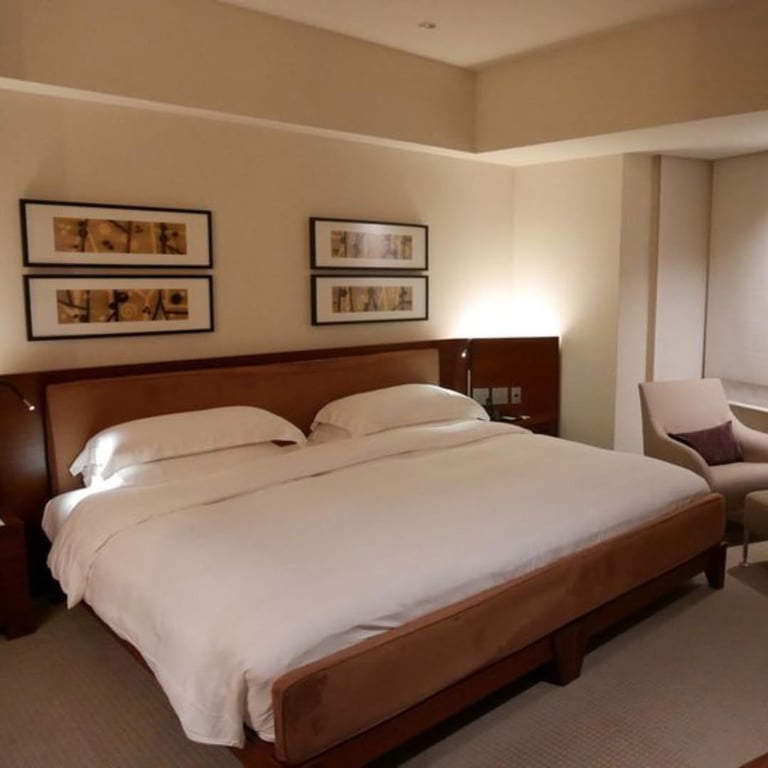
My wife is going to kill me for posting this. She made me promise I wouldn't. I'm doing it anyway because I almost lost her this year and if even one husband reads this and pays attention to what I missed for 14 months, then she can be mad at me forever. My wife Linda is 58. Elementary school librarian for 31 years. The kind of person who organizes our spice rack alphabetically and remembers every kid's birthday on her block. She has run the show in our house since the day we got married — meals, schedules, holidays, our daughters' weddings, the family Christmas card every December. She has never once in 34 years of marriage said the words "I'm too tired." That's how I knew something was wrong. It started in September of last year. I'd come down for breakfast and she'd already be at the kitchen table, but instead of the crossword and her tea, she'd just be staring out the window. Coffee untouched. When I'd say good morning she'd kind of jolt — like she'd forgotten I existed. She started skipping book club. Then Bunco night. Then our Sunday calls with the grandkids on FaceTime where she'd always do the funny voices. By Halloween she was going to bed at 7:30. Our 4-year-old grandson called her on FaceTime and she fell asleep mid-call. He thought it was a game. It wasn't a game. I'd wake up at 2 AM and the bed beside me would be empty. I'd find her on the couch in the dark, just sitting there. Not watching anything. Not on her phone. Just sitting. When I'd ask what was wrong she'd say "I just couldn't sleep, go back to bed." Then in the morning she'd be soaked in sweat. Sheets damp. Pillowcase yellowing in patches I'd never seen before. The bedroom started having this smell — sour, kind of metallic, like wet pennies left in a basement. I'd never smelled anything like it in our bedroom. In 34 years. She lost 19 pounds without trying. Her hair started thinning at the part. Her hands trembled when she held her morning tea. The light in her eyes — that thing you marry someone for — it just dimmed. My grandson asked me at Thanksgiving, "Pop, why does Nana look so sad all the time?" She wasn't sad. She was DRAINED. There's a difference. We saw four doctors in eight months. Dr. Patel did the full workup. CBC, thyroid panel, B12, vitamin D, cortisol, fasting glucose, A1C, liver function, kidney function, full hormone panel. Three tubes of blood. Everything came back "normal range." She actually said the words "Linda, you're remarkably healthy for 58." Linda walked out of that office and cried in the parking lot for 20 minutes. She tried Ambien ($89/month with insurance). Trazodone ($31). Then a low-dose antidepressant her doctor said would "help with the sleep architecture" ($142). Made her groggy until lunchtime but she still woke up at 3:14 AM every night. We started joking that her brain had set a personal alarm. Then came the supplements. Magnesium glycinate ($28). L-theanine ($34). Ashwagandha ($44). A "sleep stack" some functional medicine guy on Instagram pushed for $89. Melatonin in three different doses. CBD gummies ($65 a jar). We bought a $2,400 mattress. The salesman said her old one was "off-gassing chemicals." Linda lay on it for three nights, sweat through it just like the old one, and we returned it within the trial window for an 80% refund. So we were out $480 for nothing. Add it up: north of $2,200 in eight months on solutions that didn't solve anything. And my wife was still disappearing in front of me. Then came February 11th. Linda was driving to her sister's place in Schenectady. About 90 minutes from us. Two-thirty in the afternoon. Bright sunny day. She told me later she remembers driving past the Cumberland Farms in Rotterdam and then... nothing. Black. She woke up to her car in a culvert off I-890. Front bumper crushed against a guardrail. Airbag deployed. She'd drifted off the highway at 65 miles an hour and somehow the only thing she hit was the rail. The state trooper who pulled her out told her if she'd drifted left instead of right, she would've crossed three lanes of oncoming traffic. He said the words "ma'am, you're a very lucky woman" and she repeated them to me on the phone in this flat, hollow voice that didn't sound like her at all. I drove to the scene shaking so bad I couldn't get my key in the ignition the first three tries. When I got there she was sitting in the back of an ambulance with a blanket on her shoulders, looking at her hands. They were checking her for concussion. She had a bruise on her shoulder from the seatbelt and a small cut on her temple from the airbag. That was it. That was IT. She looked up at me when I climbed in next to her and said, "Frank, I don't remember the last hour. I don't remember leaving the house." She'd been awake for maybe 4 hours total in the previous 48. Her body had given up on the highway. I made her a promise that night in the ER. I told her I would not stop until I figured out what was wrong with her. I didn't care if I had to fly her to the Mayo Clinic, mortgage the house, or talk to a hundred doctors. We were going to figure this out. Three weeks later, our daughter flew us out to a resort in Sedona, Arizona. She'd been saving for a vacation but said the universe had other plans for that money. She wouldn't take no for an answer. Five nights at a place called L'Auberge. Spa, hiking trails, the whole thing. I figured the desert air would be good for Linda. Maybe the change of scenery would unstick whatever was stuck. First night, I lay awake for hours waiting for her to start tossing. She didn't. I checked her at 1 AM, 3 AM, and 5 AM like a paranoid new father. Slept like a stone. The next morning she came to breakfast and said "Mark, I don't think I moved all night." Night two. Eight hours. She woke up before me, which hadn't happened in over a year. She was on the patio drinking coffee and reading the paper. ACTUALLY reading it. Not staring at the same paragraph for 20 minutes. Night three I started getting suspicious. We did the same things every day — coffee, hike, lunch, pool, dinner — but she was sleeping like a teenager. The dampness was gone. The metallic smell was gone. She was eating breakfast. She did 4 miles on the Bell Rock trail and didn't have to sit down once. Night four she laughed at something I said over dinner. Like really laughed, the way she used to when we were dating. I had to look away because I didn't want her to see me get emotional. Night five — and this is the one that broke me — she initiated. We hadn't been intimate in nearly a year. She just took my hand on the way back to the room. Didn't say anything. I told my doctor about that part and even he got a little misty. We flew home on a Tuesday morning. I remember the exact moment we walked into our bedroom. Linda dropped her suitcase, stood there for about ten seconds looking at our bed, and said something I'll never forget. "Frank... I'm scared to sleep in this bed." I told her she was being dramatic. I shouldn't have. By Thursday — about 48 hours back home — every single symptom was back. The sweating. The sour smell. She was up at 2:47 AM staring at the bedroom wall. Friday morning she didn't get out of bed until 11. Saturday she cried while folding laundry because she "couldn't remember why she came into the laundry room." I sat on our back deck Saturday afternoon with a beer I wasn't drinking and I said it out loud to nobody: "It's something IN this house. It's not her body. It's something in this house." I tested everything. Replaced the carbon monoxide detectors. Had the HVAC guy come out and check for mold. Got the water tested. Checked for radon. Threw out every candle and air freshener in case it was VOCs. Had an industrial hygienist friend come over and walk through the bedroom with a meter — he found nothing. But she'd slept 8 hours a night for 5 nights in a row in Arizona. And within 48 hours of being home she was right back to the highway-grade exhaustion that almost killed her. That night, while she slept on the couch (she'd actually started preferring it, which crushed me), I sat at the kitchen table with my laptop and went into research mode. I'm not a doctor. But I'm an electrical engineer. I know how to systematically isolate variables. What was different about the resort vs. our house? Different bed (we'd already replaced ours). Different pillow (already swapped). Different temperature (we matched it). Different mattress (we tried that). Different food, but she'd been eating the same things at home for weeks before symptoms returned. Then I noticed it. I'd taken a picture of our hotel room because Linda wanted to remember the layout. I zoomed in on the bed. White sheets. Crisp. But there was a small label tag I could just barely make out on the corner of the pillowcase. It read: "Antimicrobial silver thread — replace by [date]." I called L'Auberge the next morning. They transferred me to engineering, who transferred me to housekeeping, who transferred me to their head of operations. I told her I knew it was a strange call but I'd had a medical situation at home and wanted to ask about their bedding. She paused. Then she said, "Sir, all our linens are antimicrobial silver-thread. Most upper-tier hotels switched over the last decade. With the volume of guests we cycle through, standard cotton bedding becomes a sanitation issue within hours of housekeeping turnover. The silver eliminates bacteria on contact. It's not optional anymore." I wrote down everything she said. That night I started reading. Here's what I found, and what infuriated me — most of this is in published research that anybody can read for free if they think to look for it. Your skin sheds approximately 500 million dead cells every 24 hours. The majority of those land in your bedding. They mix with body oils, sweat, saliva, and the bacterial film that lives on every human's skin. Within 24 hours of a fresh wash, bacterial colonies start multiplying inside your sheets and pillowcase. By day three, your pillowcase has more bacteria per square inch than the average toilet seat. That's a published University of Manchester finding, not internet folklore. But here's the part nobody is telling people: Standard laundering does NOT eliminate the bacteria embedded in cotton fibers. It washes the surface. The deeper colonies survive in the weave. So if your sheets are even six months old, you're sleeping on bacterial layers that have been compounding for hundreds of nights, no matter how religious you are about laundry day. And these bacteria don't just sit there. Here's the two-part mechanism that nobody connects, and this is where I had to read peer-reviewed papers at 2 AM with a chemistry textbook open next to me: PART ONE: The bacteria themselves trigger an immune response. Your body activates inflammatory cells to fight the colonization the moment your skin touches contaminated fibers. So your immune system is in active combat mode for the entire 8 hours you're supposed to be resting. That's why people wake up exhausted — their body never got the night off. PART TWO: Some of these bacterial strains produce volatile compounds called BIOGENIC AMINES as they metabolize body oils and sweat. Those biogenic amines are what create the sour, metallic smell. They also disrupt sleep-stage architecture. Specifically, they suppress deep slow-wave sleep — the stage where your body actually does cellular repair, hormone regulation, and memory consolidation. It's not that the bacteria are KEEPING you awake. It's that they're preventing the kind of sleep that restores you. You can be in bed for 8 hours and your body never gets a single hour of restorative sleep. You wake up looking like you've been at war because biologically, you have. And nobody is screening for this. Not your GP. Not your sleep doctor. Not the $2,400 mattress salesman. Because the entire bedding industry has spent decades convincing us the issue is thread count, fabric blend, mattress firmness, anything except the one variable they don't want you looking at: contamination accumulating in textiles they keep selling you. If they told you the truth — that your sheets are functionally toxic after 18 months — they'd sell a fraction of the sheets they sell now. I sat back in our kitchen at 4 AM and I felt something I hadn't felt in over a year. I felt the answer click into place. Linda slept fine in Sedona because the resort's antimicrobial silver-thread bedding kept bacteria from colonizing in the fibers. Her body got actual restorative sleep for the first time in fourteen months. Five nights of cellular repair was enough that she could initiate intimacy with her husband for the first time in a year. Then she came home and climbed into a bed with sheets we'd been using since 2018. Sheets that had compounded six years of bacterial colonization that no amount of Sunday laundry could touch. She wasn't sick. She was being POISONED in her own bed every night. I started looking for what regular people could buy with the same antimicrobial silver-thread technology. The hospital and luxury hotel suppliers I found were charging $600 to $900 a set. Linda would have killed me. I kept seeing the same name come up in research-backed articles and verified buyer reviews: Miracle Sheets. Real silver thread woven directly into the fabric — not a spray coating that washes out, which is the scam most Amazon dupes are running. Same antimicrobial technology that the resort and hospital systems use. Independent third-party testing showed 99.7% reduction in bacterial growth on contact, and because the silver is structural to the thread itself, it keeps performing through hundreds of washes. I ordered a set on a Tuesday. Two-day shipping. They arrived Thursday. I waited until Linda went to her sister's place on Saturday. Stripped our bed. Threw the old sheets directly into a black trash bag and into the outdoor garbage. (I didn't even want them in our laundry — I was that done with them.) Made the bed with the new ones. She came home at 5 PM. Walked into our bedroom an hour later and said, "Frank. What did you do? These feel different." "Just sleep on them. One week. That's all I'm asking." Night one. She slept 5 hours and 22 minutes. That doesn't sound like much, I know. But she hadn't slept more than 3 consecutive hours in over a year. I knew because I'd been tracking it on my phone with one of those sleep apps. I had the data. Night three. Six hours and 51 minutes. No sweating. No sour smell in the morning. Night six. SEVEN HOURS AND 18 MINUTES. She woke up before me and brought ME coffee in bed. I sat there with the cup in my hand and I just... I couldn't speak. I'm 66 years old and I sat in our bed and cried in front of my wife for the first time in our marriage. She didn't know yet what I'd done. I told her that morning. Showed her the box. Showed her the research I'd printed out. Showed her the photo of the resort tag I'd zoomed in on. She read for about ten minutes without saying anything. Then she looked up and said, "Frank... we almost lost me over THIS?" I had to leave the room. Now — here's the part where I want to be honest because I've read enough of these to be skeptical when it sounds too clean. Week two, she had a bad night. About 3 hours of sleep, some sweating returned, that metallic smell faintly came back on her side of the bed. I panicked. I thought we'd been chasing a coincidence the whole time and it was about to crash. Then I checked the laundry room. We'd run her dance recital costumes and a load of towels through earlier that day. The new sheets had been washed with a bottle of fabric softener Linda always used. I'd never thought about it. I researched it that night and found out fabric softener coats fibers with a waxy residue that can interfere with the silver-thread surface. Specifically, the company recommends washing without softener to preserve the antimicrobial action. I re-washed the sheets twice on hot, no softener. That night she slept 7 hours and 4 minutes again. That false dawn ended up convincing me MORE that this was real, not less. Because if it was just placebo or coincidence, the bad night should have meant nothing. Instead, when I corrected the mistake, the fix came right back. That's not placebo. That's a mechanism. Week three. Linda gained back 4 of the 19 pounds she'd lost. Her hands stopped shaking. The bags under her eyes were visibly fading — I had a photo from January and a photo from March 8th and the difference is almost embarrassing. Week five. She went back to book club. Cooked Easter dinner for 14 people without sitting down once. Her best friend Carol pulled me aside in the kitchen and said, "Frank, what did you do? She looks ten years younger." Last weekend — this was eight weeks in — Linda drove herself to Schenectady to see her sister. Same drive that almost killed her. She called me from the parking lot when she got there. Said, "I just wanted to hear your voice. I made it. I'm okay." I sat on the deck again with that same beer I never drink. And I cried. She's been sleeping on those sheets for 11 weeks now. We've replaced every bed in our house — the guest room, our daughter's old room when the grandkids visit, even my workshop daybed where I used to nap. We bought my mother-in-law a set after she watched Linda recover. She's 81 and had been on Ambien for 15 years. She called me three weeks later in tears asking what brand it was. Same story. And — this is going to sound weird — but I had this persistent sinus pressure for years. Every morning, congested. Doctors said allergies. I switched to the new sheets myself a month ago. Gone in a week. My ENT is going to have me back next month and I'm going to ask him to read what I learned. I'm posting this because I spent over $2,200 and 14 months of my wife's life chasing the wrong problem. Because four doctors couldn't see what an electrical engineer figured out at 4 AM with a free internet connection. And because Linda almost died on I-890 in a culvert because nobody — not the medical industry, not the bedding industry, not the sleep industry — wanted to tell us what's actually in our beds. Your sheets are either working FOR you or AGAINST you for 8 hours a night, every night of your life. For most people, they're a bacterial petri dish you marinate in for a third of your life. And the worse you sleep, the more sweat and oils your sheets accumulate, and the worse the colonization gets. It's a feedback loop that compounds for years until your body breaks under the inflammatory load. That's exactly what happened to Linda. They have a 30-night trial. Order a set. If you don't sleep better in the first week, send them back. I'm betting you won't. And I'm begging the men reading this — if your wife is fading, if she's losing weight she shouldn't be losing, if she's pacing the house at 3 AM and the doctors keep telling her she's "remarkably healthy" — please. Don't wait for the phone call I almost got. Spend $109 before you spend $2,400 like I did. Or $2,400 before you spend a wife. P.S. — Linda doesn't know I'm posting this. She's at the grocery store right now. She's going to murder me. Worth it. P.P.S. — A few people have asked about the smell since I posted my first version of this. The sour metallic smell on the pillowcases — yes, that's the biogenic amines I described. It went away within five nights of switching for both of us. If your bedroom has that smell and you've been blaming the AC unit or the cat or the laundry detergent, please reread what I wrote about bacterial metabolism. P.P.P.S. — Warning. There are knockoff "silver-infused" sheets all over Amazon and TikTok shop now. Most of them use a sprayed silver coating that washes off completely after 4 to 6 wash cycles. Then you're paying premium prices for ordinary cotton. The real ones have silver woven INTO the thread itself, structurally. My brother-in-law tried to save $40 with an Amazon dupe and reported zero difference. Get the real ones — link with the discount: https://tinyurl.com/5dfpftm3 P.P.P.P.S. — Linda just got home. She read this over my shoulder. She's not mad. She said "if it saves one woman, post it." So here we are.
Where the ad sends people
thegrannyblog.com
"Wrinkle-Free" Sheets Right Out The Dryer
Click Here To Get 46% OFF Miracle Sheets Today
Learn more: thegrannyblog.com(opens in a new tab)