
Active· since May 19, 2026
- 119
- days running
- 1
- relaunches
Ad copy
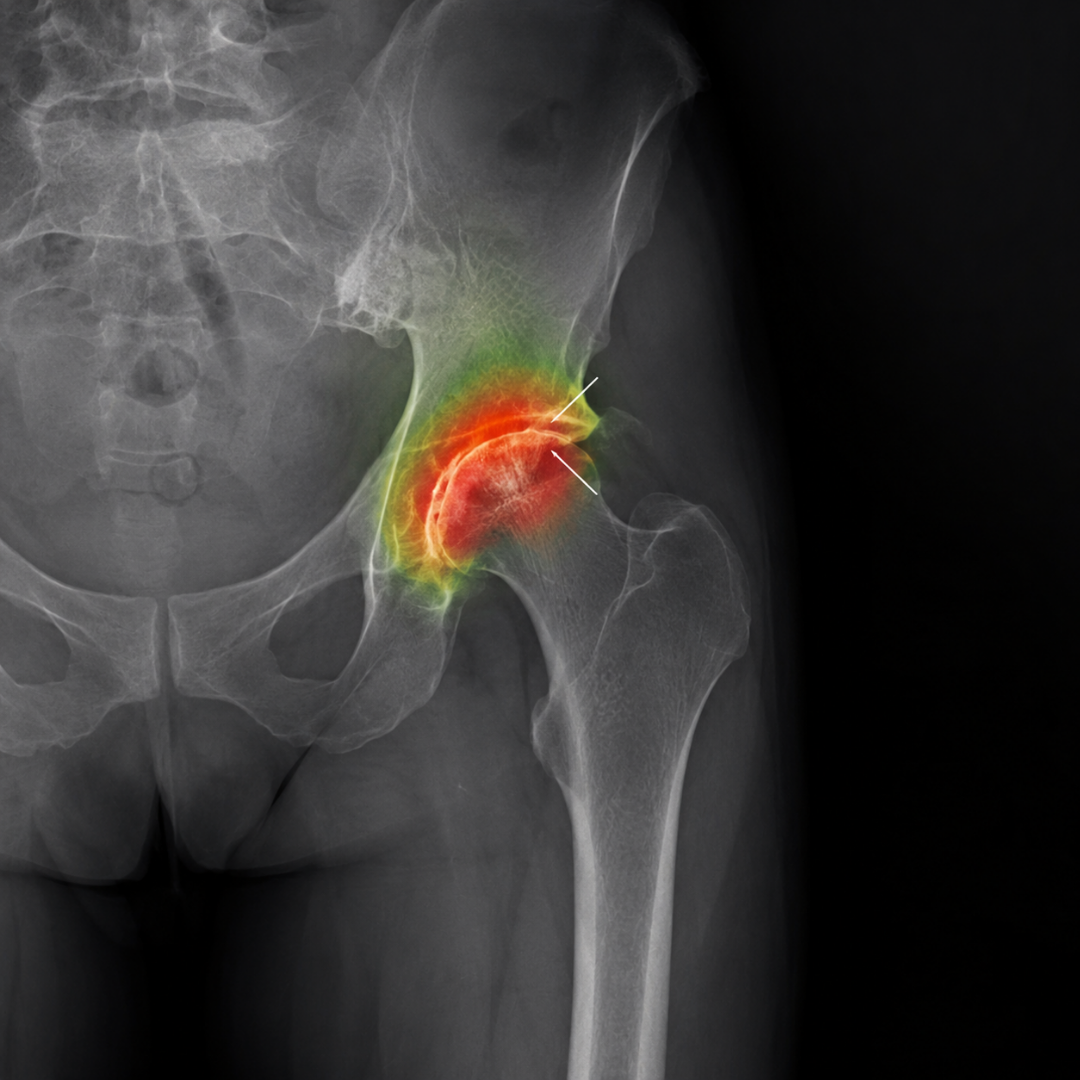
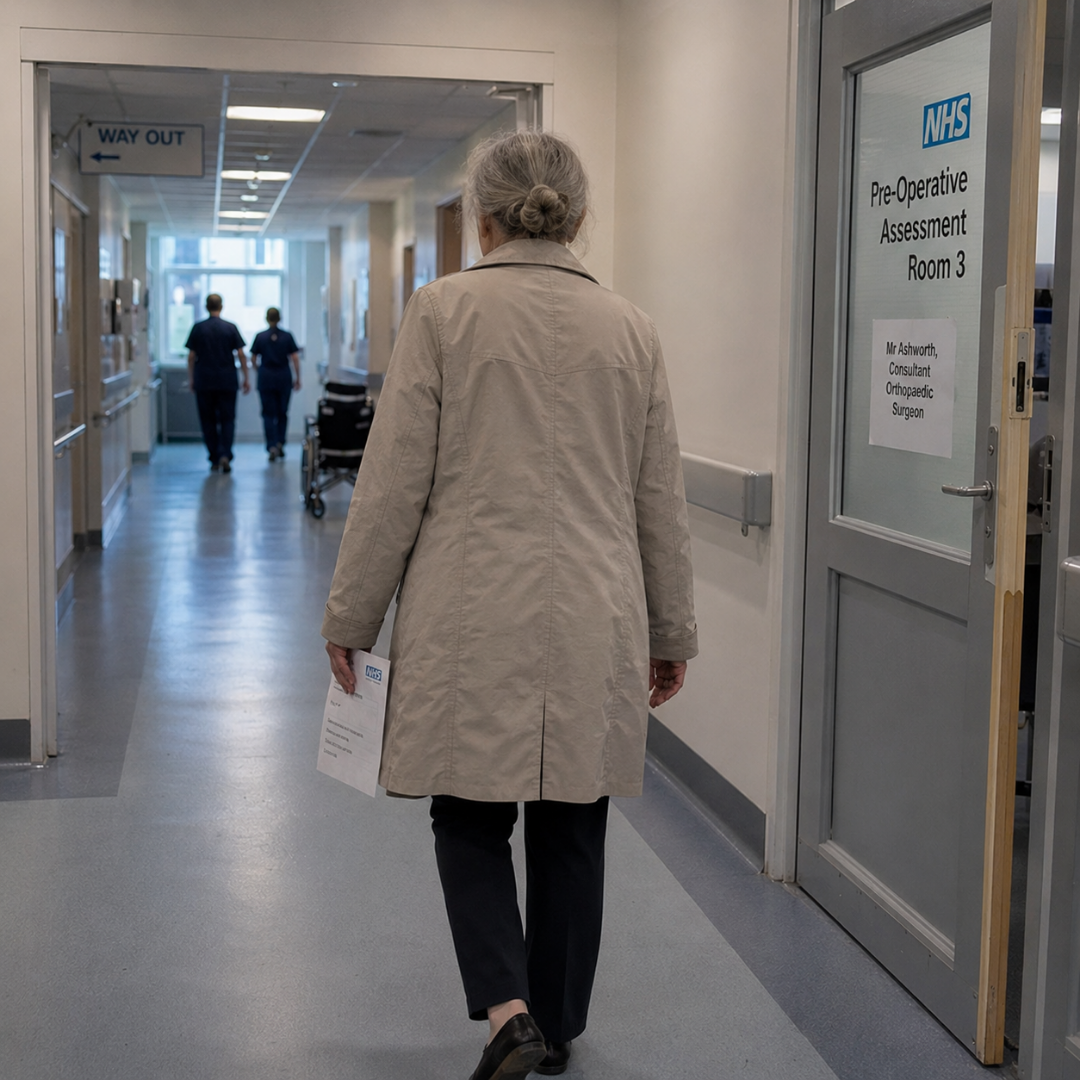
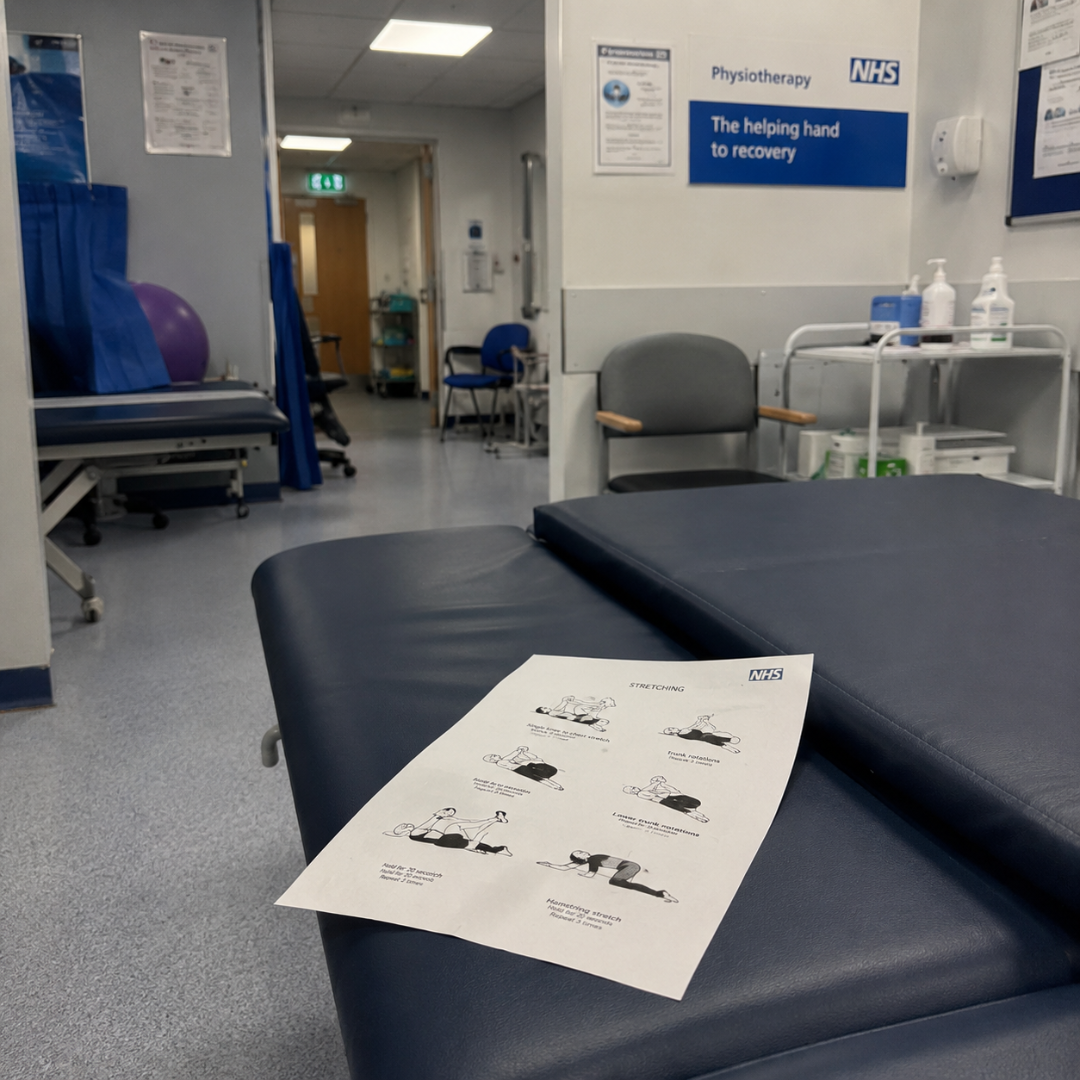
If you've been on the NHS hip replacement waiting list for more than nine months and the occupational therapist has been to your house at least once, then I want you to read this carefully. I spent twenty-eight years as one of those occupational therapists in Cardiff. I now know what I was actually delivering to those houses, and what I should have been able to say at the door. My name is Patricia. I'm sixty-four. I retired from the NHS in 2023 after twenty-eight years as a band six occupational therapist working out of the University Hospital of Wales. I want to tell you something that nobody at your GP surgery and nobody at your consultant's office is going to tell you. Because nobody sees what I saw. The GP sees you in an eight-minute appointment. The consultant sees you in twelve. I was in your house for forty-five minutes at a time, four visits in fourteen months, and I saw what happened in the rooms. The first thing you need to understand is that the yellow plastic accumulates in a pattern. I'm not saying this to upset you. I'm saying it because I delivered the pattern. Hundreds of times. In hundreds of houses. Across the city of Cardiff and the valleys above it. Month four of the wait, I came round with the sock aid. Twelve pounds on the NHS supply schedule. The patient was always grateful. They had stopped being able to bend the hip enough to put their own socks on, and the sock aid let them keep doing it themselves. Month seven, the raised toilet seat. The patient could no longer lower onto the standard toilet without the deep groin pain catching them halfway down. Month nine, the perching stool for the kitchen. The patient could no longer stand for the time it took to prepare a Sunday lunch. Month twelve, the bath board. They had stopped being able to step into the bath at all. By the time the operation came, there was a sock aid in the bedroom, a raised seat in the bathroom, a perching stool in the kitchen, and a bath board across the tub. Four pieces of yellow plastic. In four different rooms. A husband who had quietly taken over the cooking, the shopping, and the dog walk. That was the pattern. Every time. What I started to realise, somewhere around year fifteen of my career, was that the yellow plastic was not a solution. I'm not saying it was useless. The sock aid kept dignity in the bedroom. The raised seat kept dignity in the bathroom. The perching stool let the patient stay in her kitchen, which is the room most women I worked with cared about more than any other. But the yellow plastic did not address what was happening to the hip during the wait. It worked around the hip. It helped the patient cope with the loss of function. It didn't slow the loss down. It didn't reverse any of it. And the system never asked it to. The yellow plastic existed because the NHS needed something to deliver into the gap. There was nothing else. By the time the operation came, the patient had lost between thirty and fifty percent of her functional range during the wait. The cartilage had worn further. The deep gluteal and hip flexor muscles had locked up trying to compensate. The opposite hip was now starting to ache from the limp. The lower back was complaining. The patient had often put on a stone in weight from the inactivity. The yellow plastic was still in the rooms. The operation fixed the joint. The yellow plastic stayed in the cupboard for the rest of her life, because she no longer trusted her hip to do what it used to do. We delivered. The system measured the delivery. Nobody measured the rest. In November 2024 a former patient of mine, Glenys, who I'd been visiting on and off for two years, rang me at home. She wanted me to come and collect the sock aid, the raised seat, the perching stool, and the bath board. I went round expecting to find her post-operation. The letter had finally come. It hadn't. The letter still hadn't come. Glenys was still on the list. But she wanted me to take the yellow plastic away. She told me she was using a hip therapy belt that had been formulated by a retired NHS consultant orthopaedic surgeon. A man she'd come across because he had written about exactly this. About what happens to the hip during the wait, and what could be done at home in the meantime. The product was called HipCore. She wore it twenty minutes morning and twenty minutes evening. The mechanism worked on four things at once. Medical-grade heat at three controlled levels to release the locked deep gluteal and hip flexor muscles. Two independent massage motors at six thousand RPM driving circulation back into the starved peri-articular tissue. An adjustable compression wrap holding the joint in continuous gentle pressure. And one hundred and five medical-grade red-light LEDs at six hundred and sixty nanometres, penetrating two to three inches into the soft tissue around the joint. She had read what the consultant had published before she ordered it. I'm an occupational therapist by training. I'm cautious. I checked the consultant on the GMC register before I read his article. He was there. Recently retired. Thirty-eight years in the NHS. I read what he had written. It described, in plain English, the four things that happen to the hip during the gap that I had been working around for twenty-eight years. The locked muscle. The collapsed circulation. The stiffened fascia. The inflamed peri-articular nerves at two inches below the skin. The yellow plastic addressed none of those four. The Voltarol gel addressed none of those four. The supplements addressed none of those four. The cortisone addressed one of them, briefly. The operation addressed the joint surface. Not the four mechanisms around it. Glenys had been on the belt for eleven weeks when she rang me. She was sleeping on her left side again. She had walked from her house to the corner shop and back without stopping the previous Sunday. She had stood at the cooker for an hour on the Tuesday and made a shepherd's pie. She wanted the yellow plastic out of the rooms because she did not want to look at it any more. I went home that evening and ordered one for myself. My own right hip had been complaining for the better part of two years. I'd been quietly ignoring it the way OTs always ignore their own bodies. Sock aid for other people, paracetamol for me, on with the day. That was sixteen months ago. I'm not on the list yet. My GP has referred me for the consultation. The consultation is some time in late 2026. What's different is that I have not bought a sock aid. I have not put a raised seat in the bathroom. I have not bought a perching stool. I have walked the cocker spaniel round the village every morning for the last eleven months. I will have the operation when they call me. I'm not avoiding it, I'm not refusing it, I'm not anti-surgery. I worked alongside excellent orthopaedic surgeons for nearly three decades and I will be glad of one when my date arrives. But I will arrive at that theatre list with the function I have today. Not the function the gap would have left me with. If you've already got the yellow plastic in your rooms and the NHS letter still hasn't come, the consultant who developed the belt has published exactly what he saw across thirty-eight years of NHS hip work. I've left the link to what he published below. Read it before your next occupational therapy visit. Read it before the bath board is delivered. Read it tonight if you've been awake at four in the morning with the deep burning in your groin again. I'm telling you this because I sat on the other side of this system for twenty-eight years and nobody told the women whose houses I was visiting what I'm telling you now. They didn't tell us because we didn't know. You know now.
Like this ad? Make it yours.
Crush rebuilds this exact creative around your product — your brand, your colors, your offer — in about a minute.