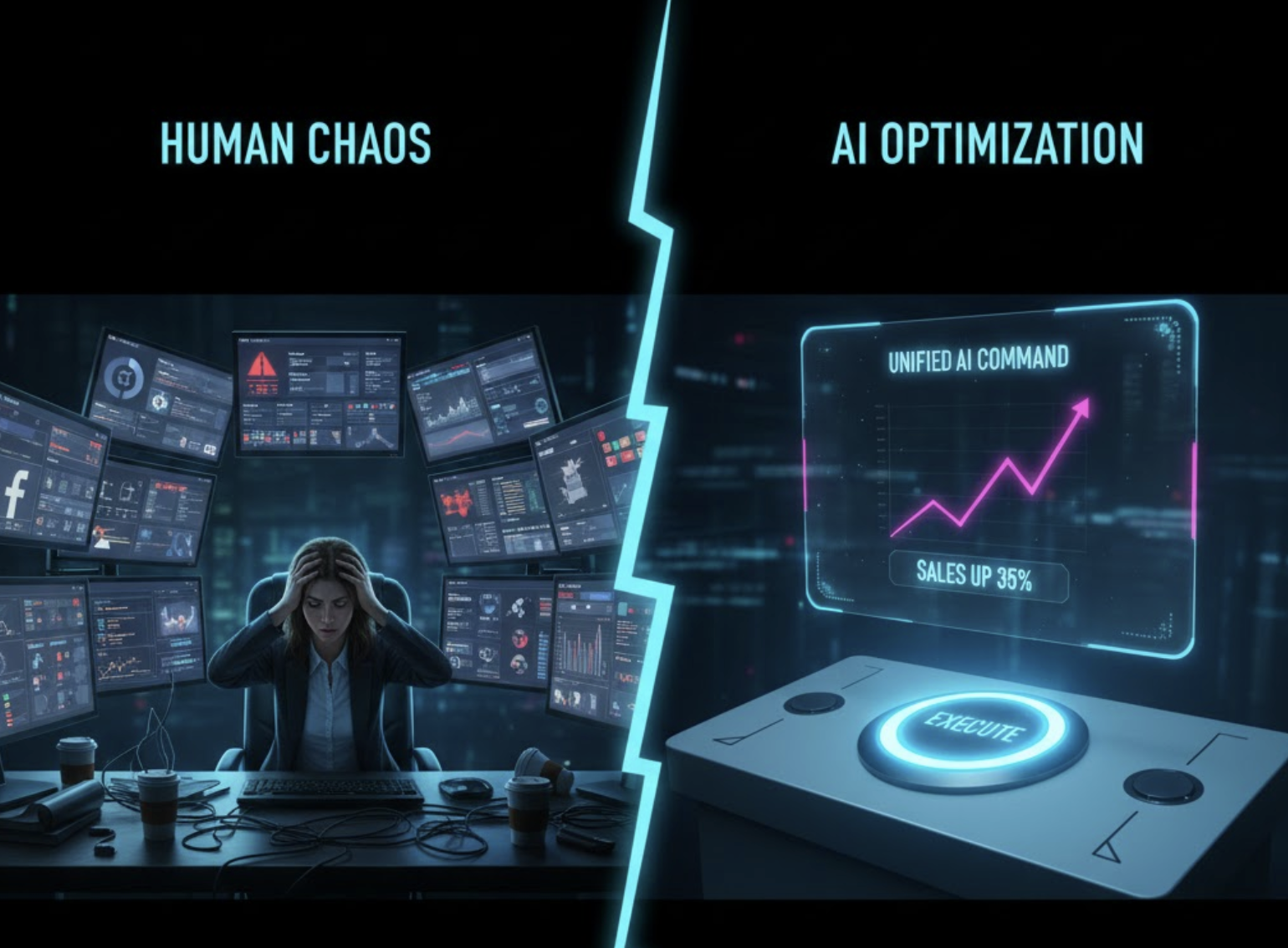
Key Takeaways
- 1Avoid the Tool Trap by replacing disjointed apps with unified AI
- 2Layer 3 autonomous AI creates, launches, and optimizes campaigns
- 3The best AI for business aligns software actions with revenue goals
- 4Test dozens of creative variations weekly for consistent scaling
- 5Integrated AI platforms analyze data instantly to maximize ROAS
Are you stuck in the tool trap with disjointed AI apps? The future belongs to autonomous, Layer 3 AI platforms. Discover why integrated AI is the ultimate competitive advantage for businesses scaling in 2026.
Stop me if you've heard this one before.
You sign up for an AI writing tool. Then you sign up for an AI image generator. Then you get an AI tool for SEO. Before you know it, you have 15 subscriptions, 15 passwords, and a credit card bill that looks like a mortgage payment.
And the worst part? Your marketing isn't actually getting better. It's just getting more complicated.
This is the "Tool Trap." And in 2026, it's the number one reason businesses fail.
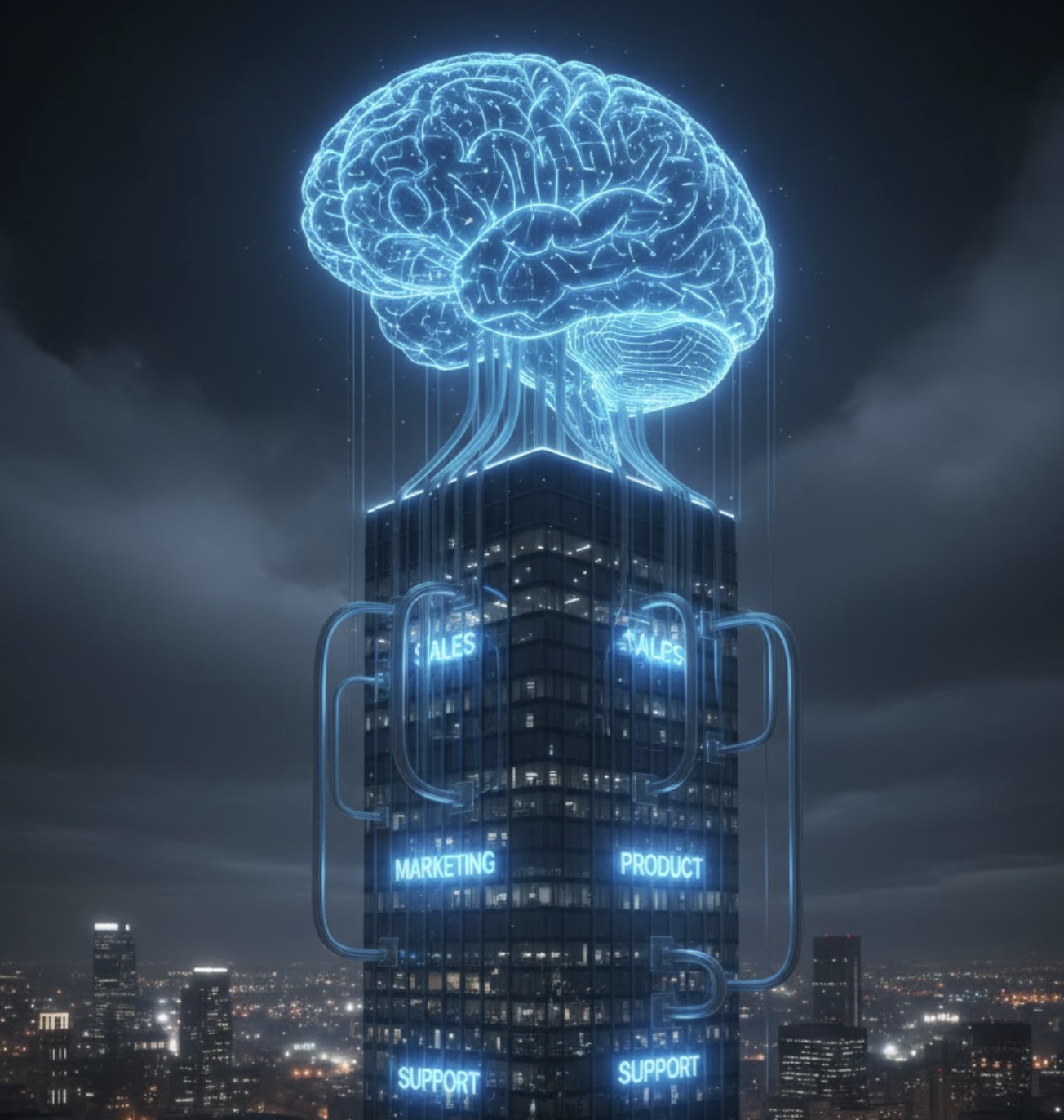
The search for the best ai for marketing isn't about finding another chatbot. It's about finding a brain. In fact, to truly transform your business, you must treat AI marketing as your new operating system, not just a collection of disjointed apps.
Most "AI tools" are just features. They help you write an email faster or crop an image, but they don't think.
The real revolution is happening in platforms that don't just assist you, they replace the entire manual workflow. We're talking about systems that can conceive, create, launch, and optimize campaigns without you lifting a finger.
If you are still stitching together point solutions, you are bringing a knife to a nuclear war.
The 3 Layers of the AI Marketing Stack
To truly understand why the landscape is shifting, we need to break down the "AI Stack". Most businesses are stuck at Layer 1. The winners are operating at Layer 3.
Layer 1: Generative Assistance (The Past)
This is where tools like ChatGPT and Midjourney live. They are incredibly useful for creating raw assets. You ask for a blog post, you get a blog post. You ask for an image, you get an image.
But the problem with Layer 1 is that it still requires a human operator. You have to write the prompt, copy-paste the output, and judge the quality. It speeds up the creation process, but it doesn't solve the strategy problem.
Layer 2: Agentic Automation (The Present)
This is where things start getting interesting. Layer 2 tools can perform sequences of actions. For example, "Scrape this website, summarize the content, and write a LinkedIn post about it."
These agents can handle workflows, but they still lack the "big picture" context. They are good at following instructions, but they aren't good at making decisions.
Layer 3: Autonomous Intelligence (The Future)
This is the holy grail. This is what TryCrush.ai is building.
At Layer 3, the AI doesn't just wait for instructions. It has a specific goal (e.g., "Maximize ROAS" or "Get leads under $20"). It then autonomously figures out the best way to achieve that goal.
It might decide to run a video ad on Monday, switch to a static image on Tuesday, and rewrite the landing page copy on Wednesday. It learns from its own actions and is completely self-correcting.
This is the best ai for marketing because it aligns the incentives of the software with the incentives of the business owner. You want measurable results, not just creative output.
The Fragmentation Problem in AI Marketing
Let's look at the current landscape of AI Marketing.
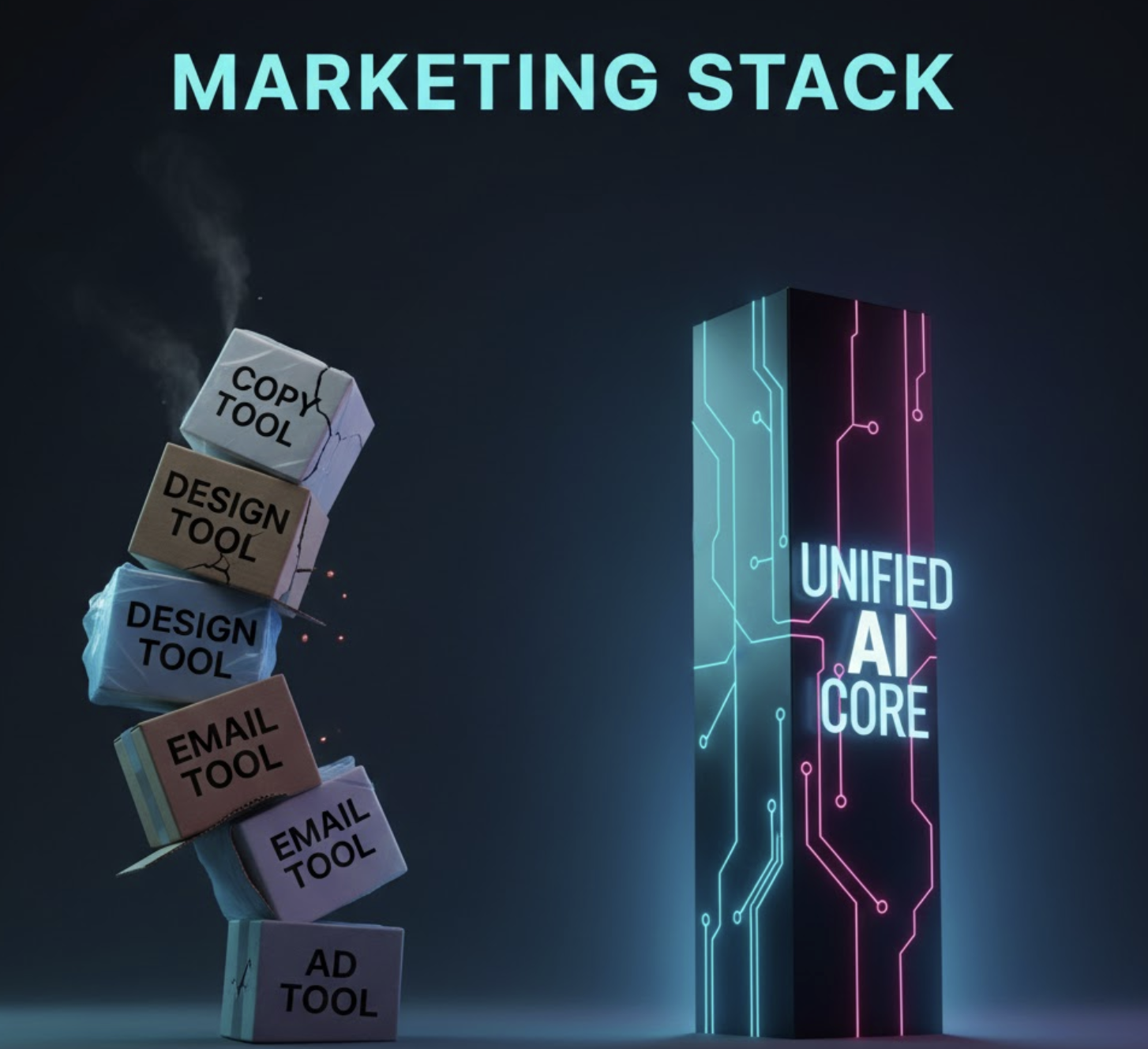
You have tools for copy, tools for design, and tools for analytics. But none of them talk to each other.
Your copy AI doesn't know that your design AI just created a blue image. Your analytics AI doesn't know that your copy AI used a specific emotional hook. The result is disjointed, schizophrenic marketing.
The best ai for business is one that integrates all these functions into a single, cohesive intelligence.
Imagine a system that writes a headline, generates a matching image, launches the ad, tracks the sales, and then, crucially, uses that sales data to write a better headline for the next ad.
That is the feedback loop that human teams used to manage. But humans are slow, biased, and they get tired.
An integrated AI platform does this loop thousands of times a day, operating as a 24/7 employee that never stops optimizing.
Why TryCrush.ai is the Only Logical Choice
When we built Crush, we didn't want to build another "tool." We wanted to build an employee.
We looked at what the best ai for marketing should actually do. It shouldn't just generate assets; it should generate revenue.
TryCrush.ai isn't a wrapper for ChatGPT. It's a vertically integrated marketing engine. It understands your brand voice, your visual identity, and most importantly, it understands your performance data.
While your competitors are copying and pasting prompts between three different windows, Crush is running multivariate tests on autopilot.
Case Study: The $0 to $1M Journey
Let's look at a hypothetical example of how this plays out in the real world.
Business A: The Traditionalist
Business A launches a new e-commerce store. They hire a freelancer to write copy ($500). They hire a designer to make ads ($500). They set up Facebook ads themselves.
They launch 3 ads. After a week, they have spent $1,000 and made 2 sales. They don't know why. Was it the copy? The image? The targeting? They panic and pause the ads.
Business B: The AI Native
Business B launches the same store. They plug their product URL into TryCrush.ai.
The AI immediately generates 50 ad variations testing 5 different angles (Social Proof, Urgency, Benefit-Driven, Storytelling, and Minimalistic). It launches all 50 ads with micro-budgets.
Within 24 hours, the AI identifies that "Storytelling" combined with "Minimalistic Design" is getting a 3% CTR, while everything else is getting 0.5%.
It kills the 45 losers. It reallocates the budget to the 5 winners. It then generates 20 new variations based on the winning elements.
By the end of the week, Business B has spent $1,000 and made 50 sales. Their ROAS is 4.0. They are profitable and ready to scale.
This is the difference between guessing and knowing. By relying on a scientific framework for predictable scaling, Business B eliminates the emotional rollercoaster of manual testing.
The "Best AI for Business" is Speed
Speed is the new currency. In 2024, it was okay to launch a campaign in a week. In 2026, if you aren't launching daily, you are invisible.
The best ai for small business owners is the one that levels the playing field against the giants.
Coca-Cola has an army of marketers. You have... you.
But with the right AI, "you" is enough.
When you use a platform like Crush, you are effectively hiring a team of 50 world-class specialists for the price of a software subscription.
You get a copywriter who has read every high-converting ad in history.
You get a designer who can generate photorealistic images in seconds.
You get a media buyer who watches your budget 24/7/365.
This is not about "saving time." It's about survival.
Common Mistakes When Choosing AI Tools
We see businesses make the same mistakes over and over again when trying to adopt AI. Here is what you need to avoid:
Chasing the "New Shiny Object": Signing up for every new tool on Product Hunt. Stick to one integrated platform.
Ignoring Data Privacy: Using free tools that train on your data. Use enterprise-grade solutions that protect your IP.
Expecting Magic Without Input: AI is a multiplier. If you give it garbage input (bad product, unclear offer), you will get garbage output (bad ads). You still need to define the strategy.
Underestimating the Learning Curve: Even the best AI requires some setup. Don't quit after 5 minutes. Give the system time to learn your brand.
Stop Playing With Toys
The market is flooded with toys, cute little apps that do one cool thing.
But you are running a business. You don't need toys. You need heavy artillery.
The best ai for marketing is the one that makes you money. Period.
Stop looking for the "best writing tool" or the "best image tool." Look for the "best revenue generation system."
That system is Crush. And the sooner you switch, the sooner you stop competing and start dominating.
The era of the fragmented tool stack is over. The era of the unified AI agent is here.
Frequently Asked Questions
Common questions about this topic
1What is the best AI for marketing?
2What are the 3 layers of the AI marketing stack?
3What is the 'Tool Trap' in AI marketing?
Written by

Rokas Steponavičius
Founder, CEORokas is the Founder and CEO of TryCrush.ai, an ex-IBM professional turned entrepreneur focused on building AI-driven growth platforms. With a strong background in ecommerce, performance marketing, media buying, and artificial intelligence, Rokas specializes in creating scalable, data-led systems that drive measurable revenue. His mission is to help modern businesses leverage AI to optimize acquisition, conversions, and long-term profitability.
Stop Guessing.
Start Crushing.
AI Ad Manager trained by world-class media buyers to generate your creatives and optimize your ads 24/7.
Learn more
Related articles
AI Marketing is Not a Tool. It's Your New Operating System.
Most businesses use AI as a basic productivity tool. True transformation happens when you treat AI marketing as an Operating System that connects data, breaks down silos, and runs your company autonomously. Learn the 5 phases of AI maturity.

Small Business, Big Impact: How AI Levels the Playing Field in 2026
Big budgets no longer guarantee success. In 2026, artificial intelligence is the ultimate equalizer. Learn how agile e-commerce brands use autonomous AI agents to automate ad testing, optimize budgets, and outmaneuver slow-moving corporate giants.
The 2026 Digital Marketing Specialist: Adapt or Die
The skills that got you hired in 2020 are now automated. To survive as a digital marketing specialist in 2026, you must evolve from a media buyer into an AI-driven Growth Architect. Discover the essential skills, tools, and strategies to future-proof your career today.
Growth Marketing is Dead. Long Live AI Growth Systems.
Growth hacking is officially dead. In 2026, the best digital marketing strategies rely on AI growth systems rather than manual tactics. Discover how to transition from tactical execution to strategic AI management and build a sustainable growth engine.