

Key Takeaways
- 1The best AI for small business acts as an autonomous growth agent.
- 2Automate ad workflows to output the work of a 200-person team.
- 3Allocate 20% of your budget to testing and 60% to scaling winners.
- 4Hyper-local targeting and global expansion are now simultaneous.
- 5Train AI on your brand DNA to avoid generic, low-converting ads.
Big budgets no longer guarantee success. In 2026, artificial intelligence is the ultimate equalizer. Learn how agile e-commerce brands use autonomous AI agents to automate ad testing, optimize budgets, and outmaneuver slow-moving corporate giants.
For decades, the rule of business was simple: Big eats Small.
If you were a small business, you were fighting a losing battle. Walmart could out-spend you. Amazon could out-price you. The big agencies could out-market you.
You had passion, sure. But they had armies of employees and billion-dollar budgets.
But in 2026, the rules have changed.
We are witnessing the greatest democratization of power in economic history. The weapon? Artificial Intelligence.
The best ai for small business isn't just a tool for efficiency; it is a tool for asymmetric warfare. It allows a team of two to output the work of a team of two hundred.
The Old Math vs. The New Math
In the old world, marketing was a function of headcount. To run Facebook ads, Google ads, TikTok ads, and email campaigns, you needed a specialist for each. That's $300k a year in salaries before you even spend a dollar on media.
For a small business, that math never worked.
But AI changes the denominator. With the best ai for small business platforms, one person can manage an omni-channel strategy that rivals a Fortune 500 company.
You don't need a copywriter; the AI writes the copy.
You don't need a designer; the AI generates the creatives.
You don't need a data scientist; the AI analyzes the trends.
Suddenly, your overhead drops to near zero, while your output skyrockets.
The E-Commerce Revolution
Nowhere is this shift more visible than in online retail. The search for the best ai for ecommerce is the defining race of this decade.
Consider the tasks an e-commerce owner has to juggle:
Product photography
Product descriptions
Customer support
Inventory management
Ad creative testing
In the past, these were restrictive bottlenecks. Today, they are automated workflows.
Tools like TryCrush.ai allow e-commerce brands to test hundreds of ad variations per week. This was previously impossible for anyone without a million-dollar ad budget. If you are still relying on a few static images, it is time to understand why you need 100 ad variations to truly find winning combinations.
The result? Small brands are finding "winning" ads faster than the big giants. Because big giants are slow. They have compliance departments. They have brand guidelines. They have meetings about meetings.
You have speed. And with AI, you have scale.
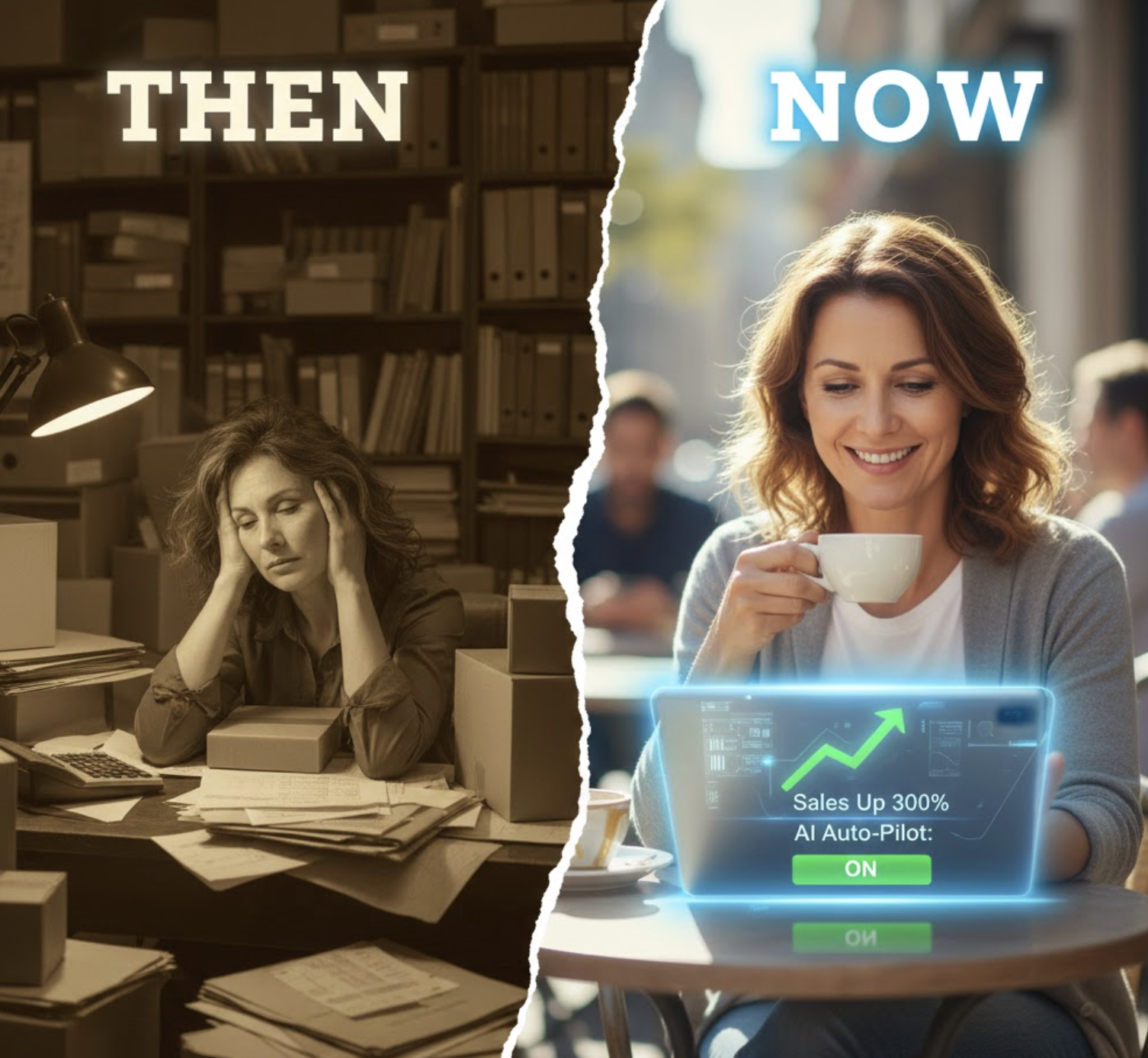
Budget Allocation Strategy for Small Businesses
One of the most common questions we get is: "How should I spend my limited budget?"
Here is the AI-driven approach to budget allocation in 2026:
1. The Testing Phase (20% of Budget)
Use AI to generate low-cost static image ads. Run them on broad targeting. Your goal here is not immediate profit; it is data collection. You are buying information about what hooks and visual angles work best for your audience.
2. The Scaling Phase (60% of Budget)
Once the AI identifies a winning concept, move the majority of your budget there. Let the AI manage the bids to ensure you maintain your target ROAS. For a deeper dive into this progression, check out our complete roadmap for scaling e-commerce ads.
3. The Retargeting Phase (20% of Budget)
Use AI to deliver personalized follow-up ads to people who visited but didn't buy. AI is particularly good at this because it can remember exactly which product a user looked at and show them a specific review for that product. Mastering your Facebook retargeting strategy ensures these follow-ups act as a gentle nudge rather than an annoyance.
Local SEO vs. Global Ads
For small businesses, the choice used to be binary: Focus on your local town or try to sell to the world.
AI allows you to do both simultaneously with unprecedented precision.
Hyper-Local Targeting: AI can continuously optimize your Google Business Profile and run geo-fenced ads that target people within a 1-mile radius of your physical store.
Global Expansion: Simultaneously, you can use the same product assets to run ads in other countries. If domestic growth has slowed, AI makes breaking into new markets completely frictionless. The AI can even translate your ads into other languages automatically.
The best ai for small business removes geographic limitations entirely.
The 5-Step AI Implementation Checklist
Ready to get started? Don't just dive in blindly. Follow this checklist to ensure a smooth transition:
Audit Your Bottlenecks: Where do you spend the most time? Is it writing emails? Making graphics? Answering support tickets? Pick one area to automate first.
Choose an Integrated Platform: Don't buy 10 different, disconnected tools. Buy one unified platform like Crush that handles the core marketing functions.
Input Your Brand DNA: Spend time training the AI on your brand voice, colors, and core values. The output is only as good as the input.
Start Small, Then Scale: Launch one campaign. Let the AI optimize it. Once you see consistent results, increase the budget.
Review and Refine: Schedule a weekly review to look at the high-level data. Let the AI handle the daily micro-optimizations.
Critical AI Mistakes to Avoid
Mistake #1: Micromanaging the AI.
We see owners trying to manually adjust bids every hour. Stop it. You cannot beat the algorithm. Set your constraints (e.g., "Max CPA $20") and let the machine work.
Mistake #2: Using Generic Prompts.
If you ask an AI to "write an ad for coffee," you will get a generic, boring ad. If you ask it to "write a witty, sarcastic ad for a strong dark roast coffee targeting tired parents," you will strike gold.
Mistake #3: Ignoring the Creative.
AI can optimize the delivery, but the core creative concept still matters. Use the AI to generate variations, but use your human insight and empathy to guide the overall direction.
How to Choose the Right Weapon
The market is noisy right now. Every software company claims to have the "best AI."
But be careful. Many of these are just "wrappers", thin layers over basic technology that don't add real, autonomous value to your workflow.
The best ai for small business is an "Agent," not an "Assistant."
An Assistant waits for you to tell it what to do. "Write me an email." "Make me a logo."
An Agent knows what needs to be done and acts proactively. "I noticed your conversion rate dropped on mobile. I have generated 10 new mobile-first creatives and launched them. Here are the results."
This is what TryCrush.ai does. It acts as an autonomous growth partner. When you upgrade from an assistant to an agent, you realize that AI marketing is not a tool; it's your new operating system.
The Future Belongs to the Agile
The giants are scared. They should be.
They are built for a world that no longer exists. They are built for mass production, not mass personalization. They are built for slow, deliberate movements, not rapid-fire experimentation.
You have the ultimate advantage. You can pivot in a day. You can adopt the best ai for ecommerce strategies while the big guys are still waiting on legal approval.
Don't be intimidated by their size. In the age of AI, size is a liability. Agility is the only asset that matters.
Equip yourself with the right AI. Automate the grunt work. Focus on your overarching vision.
The playing field hasn't just been leveled. It's been tilted entirely in your favor.
Frequently Asked Questions
Common questions about this topic
1How should a small business allocate its ad budget with AI?
2What is the difference between an AI agent and an AI assistant for business?
3What are common mistakes when using AI for small business marketing?
Written by
Albertas Pocius
Co-founder, CMOAlbertas is the Co-Founder and CMO of TryCrush.ai, bringing elite-level performance marketing expertise to the platform. With over $50M+ in combined Facebook and TikTok ad spend, Albertas has launched and scaled dozens of projects from zero, driven by a deep obsession with data and experimentation. He has trained 20+ media buyers, consulted 100+ companies, and is widely recognized as one of Europe’s early TikTok pioneers, likely the first to scale campaigns beyond $100K per day. Today, he also teaches advertising strategy at two colleges, shaping the next generation of media buyers.
Stop Guessing.
Start Crushing.
AI Ad Manager trained by world-class media buyers to generate your creatives and optimize your ads 24/7.
Learn more
Related articles
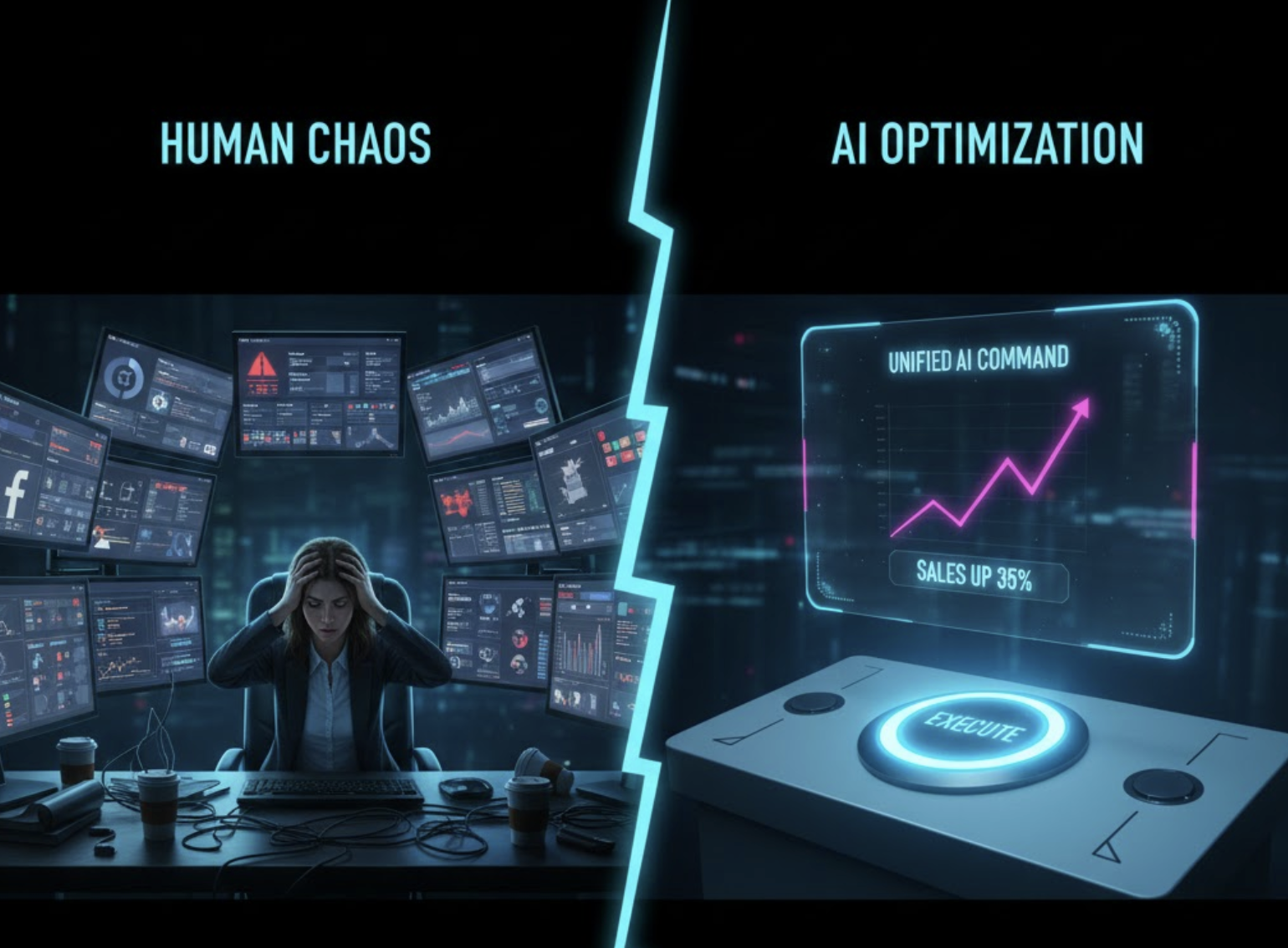
The Best AI for Marketing: Why Humans Can't Compete in 2026
Are you stuck in the tool trap with disjointed AI apps? The future belongs to autonomous, Layer 3 AI platforms. Discover why integrated AI is the ultimate competitive advantage for businesses scaling in 2026.

ROAS Funnels: The Secret to Predictable Revenue
Looking at account-wide ROAS is a quick way to kill your ad performance. Discover why building dedicated ROAS funnels for TOFU, MOFU, and BOFU stages, powered by AI, is the true secret to scaling predictable, profitable revenue.
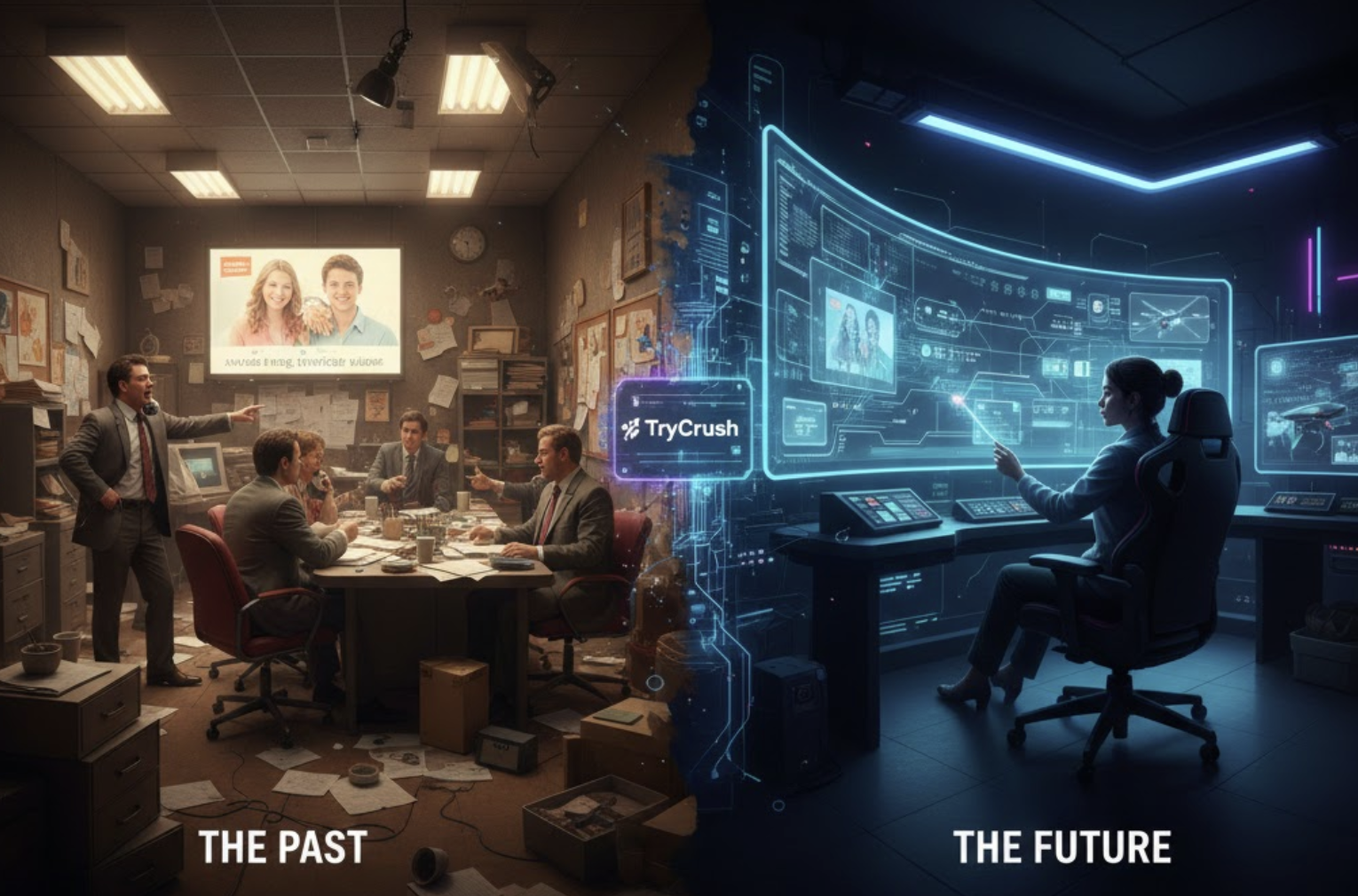
What is Media Buying in 2026? The AI Revolution
The digital revolution changed advertising forever, but AI is completely rewriting the rules. Learn what media buying is today, why manual bidding is dead, and how modern marketers use creative strategy and AI algorithms to scale profitably.
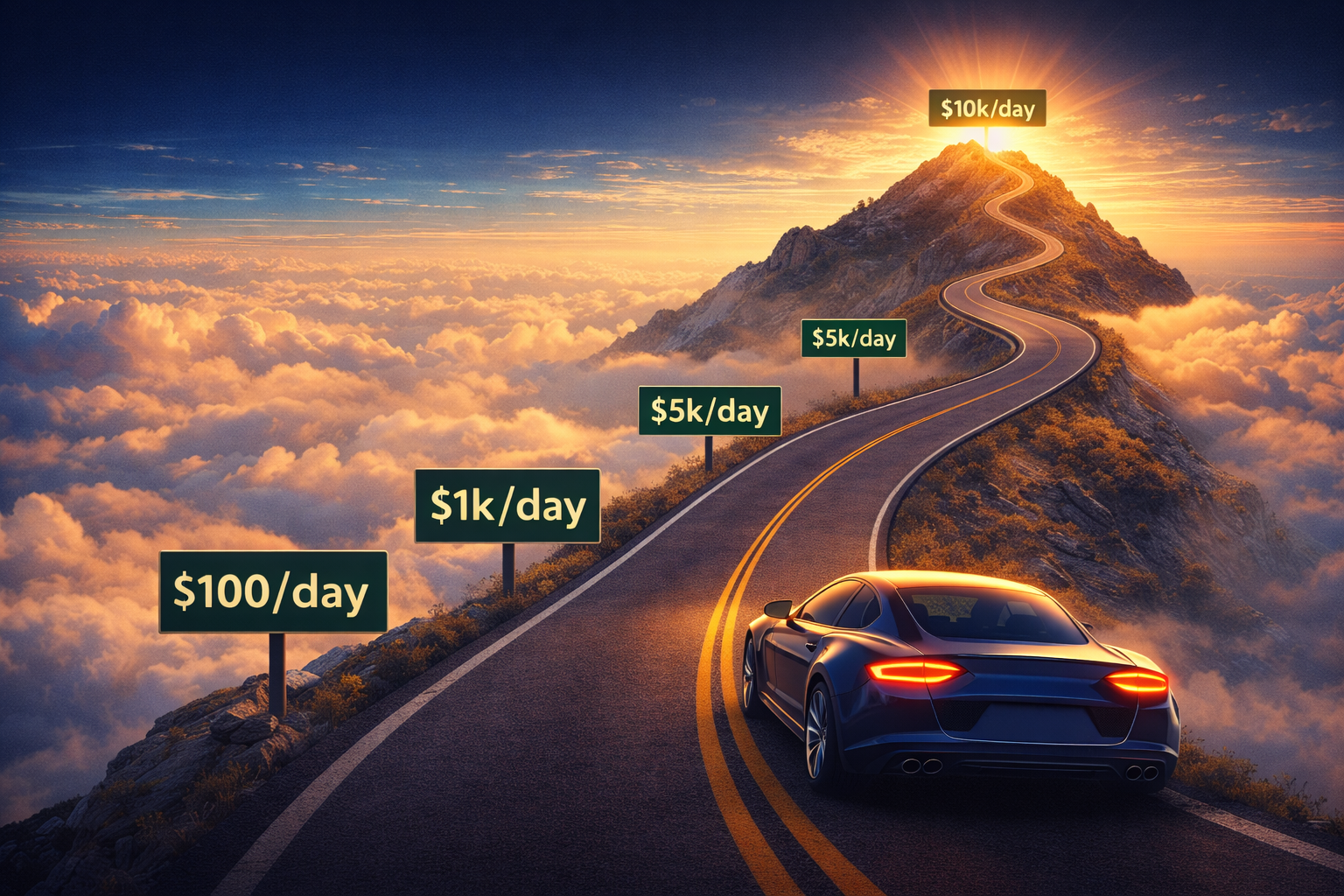
From $100 to $10k/Day: The Complete Roadmap for Scaling E-commerce Ads
Scaling isn't a sprint; it's a climb. Discover the four essential phases of scaling e-commerce ads from validation to international expansion. Learn how to turn $100 budgets into $10,000 days without crashing your ROAS.