
Key Takeaways
- 1Ad creative now acts as the primary targeting mechanism on algorithmic platforms.
- 2Test dozens of creative variations weekly to optimize ad spend and scale efficiently.
- 3Leverage AI to generate ad assets rapidly and eliminate creative production bottlenecks.
- 4Transition from manual dashboard operation to automated, AI-driven media buying systems.
The digital revolution changed advertising forever, but AI is completely rewriting the rules. Learn what media buying is today, why manual bidding is dead, and how modern marketers use creative strategy and AI algorithms to scale profitably.
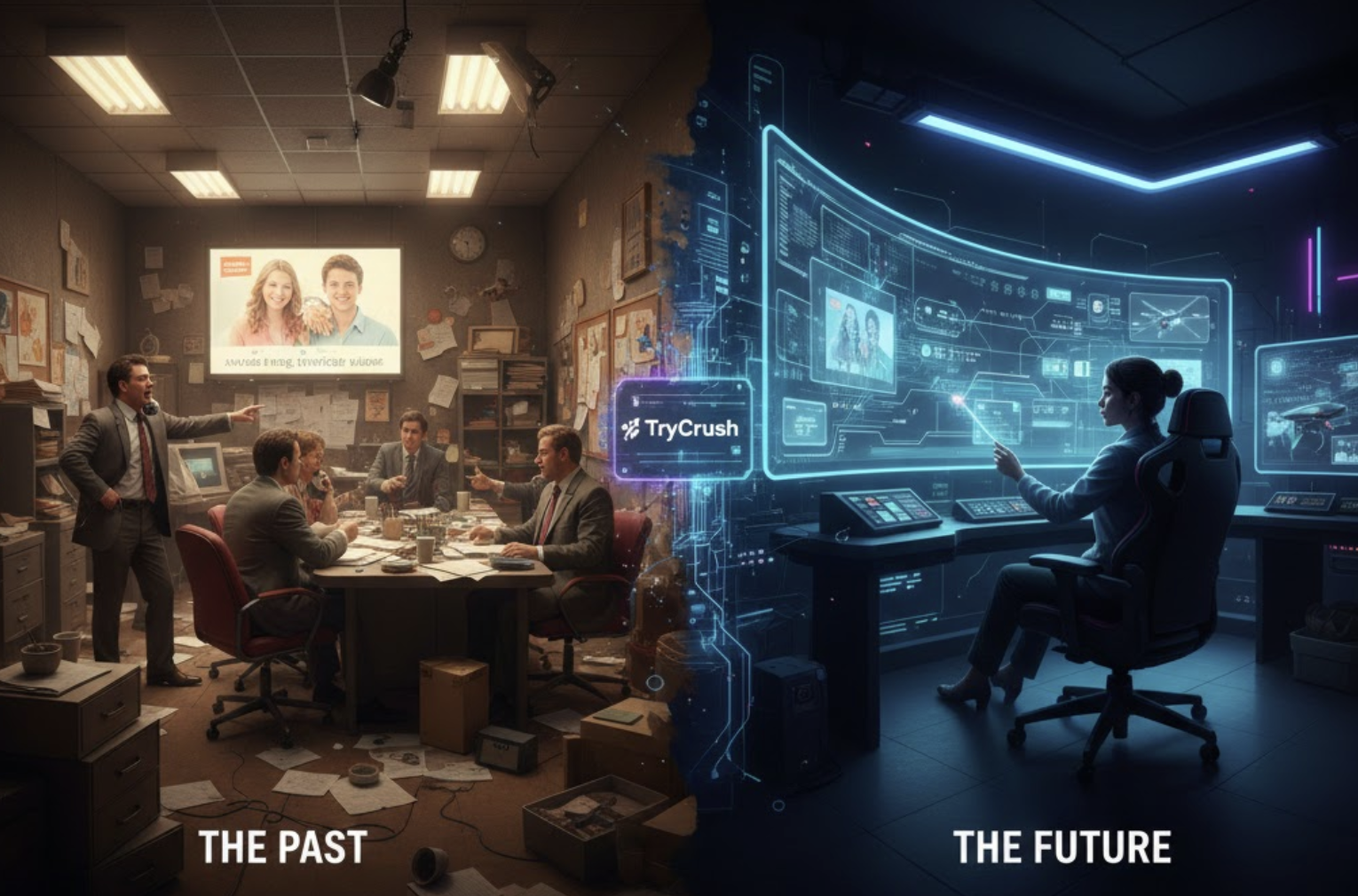
If you ask a traditional advertising executive, "what is media buying?", they will likely give you a definition rooted in the past. They will talk about negotiating with television networks for commercial slots, purchasing billboard space on busy highways, or securing a full-page ad in a Sunday magazine.
While those activities technically still exist, they represent a fraction of what media buying has become. The digital revolution changed the landscape entirely, moving the industry from relationship-based negotiations to algorithmic bidding on platforms like Meta, Google, and TikTok.
However, we are currently experiencing a second, even more disruptive revolution: the integration of Artificial Intelligence. To understand what is media buying today, you have to throw away the old rulebook. It is no longer about just buying space; it is about engineering profitable revenue systems at scale.
The Evolution of the Media Buyer
To fully grasp the current state of the industry, we must look at how the role of the media buyer has evolved over three distinct eras.
Era 1: The Negotiator (Pre-2010)
In the beginning, media buying was a relationship game. Success depended on who you knew at the TV station or the publishing house. You had a budget, you bought a block of impressions, and you hoped for the best.
Measurement was notoriously difficult. John Wanamaker famously said, "Half the money I spend on advertising is wasted; the trouble is I don't know which half."
Era 2: The Dashboard Operator (2010 - 2023)
With the rise of Facebook Ads and Google AdWords, the "Dashboard Operator" was born. Media buying became a highly technical, manual process.
You spent hours adjusting bids, testing 50 different lookalike audiences, and duplicating ad sets to trick the algorithm into spending money efficiently. The barrier to entry was high because the platforms were complex and required constant human babysitting.
Era 3: The System Architect (2024 - Present)
This is where we are today. The algorithms on major ad platforms have become so advanced that manual targeting (like "people who like dogs and live in Texas") is largely obsolete.
The platforms want broad audiences. They use machine learning to find your customers for you.
So, if the platform does the targeting, what is media buying in this new era?
The answer is Creative Strategy and System Management.
The New Definition of Media Buying
In 2026, media buying is the strategic deployment of capital into algorithmic platforms, using highly engineered creative assets as the primary targeting mechanism. The ultimate goal is acquiring customers at a lower cost than their lifetime value.
Let's break down the three core pillars of modern media buying.
1. Creative is the New Targeting
Because you are no longer manually selecting your audience, your ad creative does the targeting for you. If you show a video of a high-end sports car, the algorithm will naturally show it to people who engage with luxury automotive content. If your video speaks directly to tired mothers, the algorithm will find tired mothers.
Therefore, modern media buying requires a deep understanding of human psychology, visual hooks, and persuasive copywriting.
2. High-Velocity Testing
Because creative is so important, you cannot rely on one "hero" video. You must test constantly. A modern media buyer launches dozens of creative variations a week, testing different hooks, angles, and formats to see what resonates mathematically.
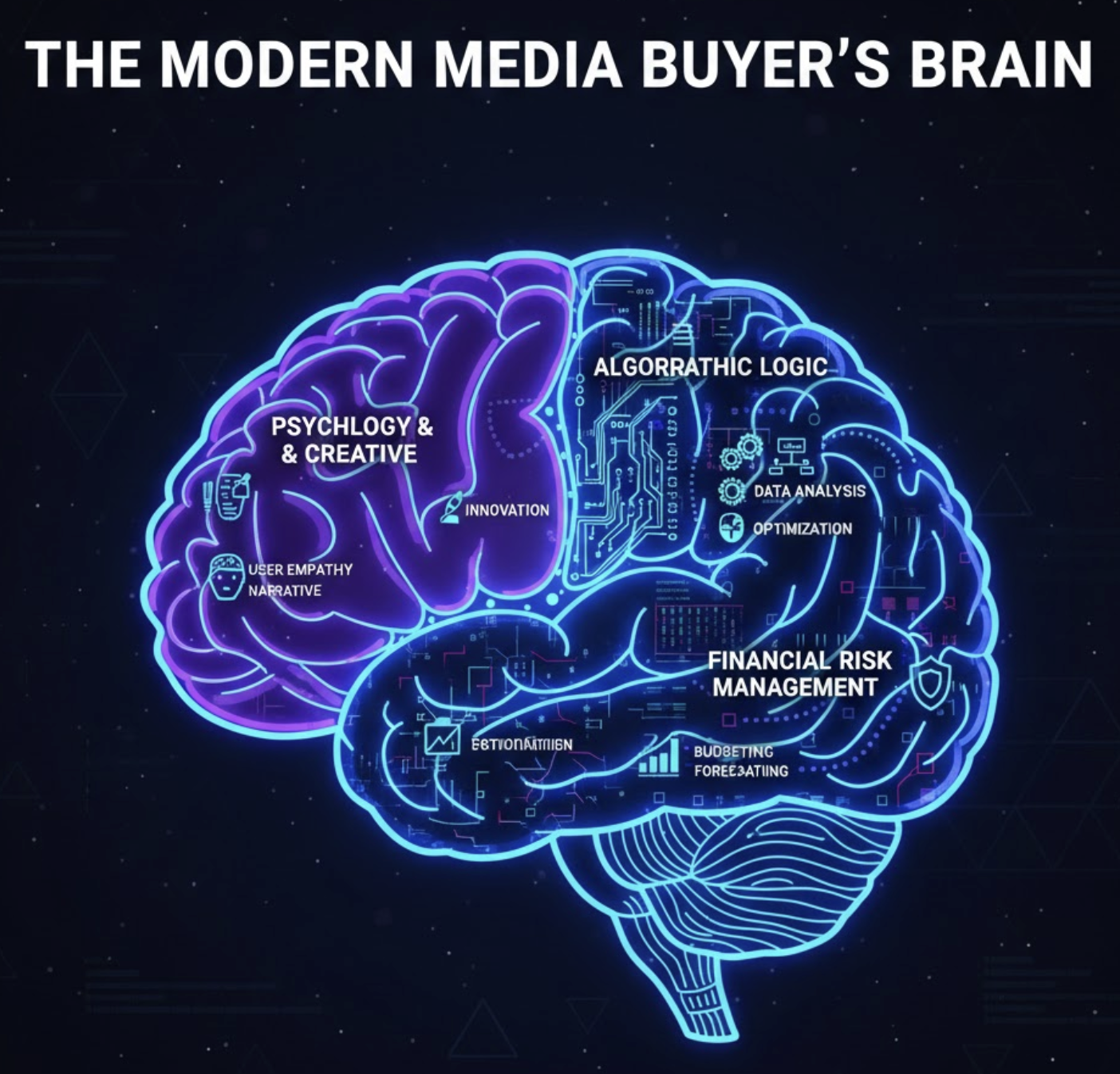
3. Data Interpretation and Risk Management
A media buyer today is essentially a day trader. You are analyzing real-time data to determine which "stocks" (ads) to buy more of, and which to sell (kill).
You must understand complex metrics like ROAS, CPA, hook rates, and conversion rates to protect your budget and stop wasting budget on unprofitable ads.
The Role of AI in Media Buying
The sheer volume of creative testing and data analysis required to succeed today is beyond human capacity. This is why Artificial Intelligence (AI) has become the defining technology of modern media buying.
If you ask a top-tier agency "what is media buying without AI?", they will tell you it is a surefire way to go bankrupt.
AI transforms media buying in three critical ways:
Asset Generation: AI can generate hundreds of video and image variations in minutes, completely removing the production bottleneck that used to slow down testing.
Predictive Analytics: Advanced AI systems can analyze historical data to predict which creative angles are most likely to succeed before a single dollar is spent.
Autonomous Execution: The most significant advancement is autonomous media buying. Systems can now deploy ads, monitor spend, kill losers, and scale winners 24/7 without human intervention.
Why Manual Media Buying is Dying
The transition from manual dashboard operation to AI-driven system management is painful for many traditional marketers. They are used to pulling levers and pushing buttons.
But the math is unforgiving. A human cannot monitor an ad account at 3:00 AM on a Sunday. A human gets emotionally attached to a video they spent a week editing, letting it waste budget because they "believe" in it.
A human cannot analyze 10,000 data points across 50 ad sets simultaneously to make a micro-budget adjustment. This is exactly why algorithms beat humans at media buying every time.
This is why platforms like TryCrush are becoming essential infrastructure. TryCrush acts as the ultimate execution engine for the modern media buyer. It handles the creative generation based on data, it deploys the tests autonomously, and it executes the ruthless kill switches necessary to maintain a profitable ROAS.
Conclusion
So, what is media buying today?
It is the intersection of high-level business strategy, psychological creative direction, and advanced artificial intelligence.
If you are still logging into Ads Manager every morning to manually adjust budgets by 10%, you are not media buying; you are fighting a losing battle against machines that can do it millions of times faster.
The future belongs to the architects, the marketers who understand the strategy, feed the right inputs into their AI engines, and let the system handle the execution. Upgrade your definition of media buying, and you will upgrade your business's ability to scale.
Frequently Asked Questions
Common questions about this topic
1What is media buying in 2026?
2How has the role of the media buyer evolved?
3Why is manual media buying dying?
4How does AI transform media buying?
Written by

Rokas Steponavičius
Founder, CEORokas is the Founder and CEO of TryCrush.ai, an ex-IBM professional turned entrepreneur focused on building AI-driven growth platforms. With a strong background in ecommerce, performance marketing, media buying, and artificial intelligence, Rokas specializes in creating scalable, data-led systems that drive measurable revenue. His mission is to help modern businesses leverage AI to optimize acquisition, conversions, and long-term profitability.
Stop Guessing.
Start Crushing.
AI Ad Manager trained by world-class media buyers to generate your creatives and optimize your ads 24/7.
Learn more
Related articles
The "Media Buyer" is Dead. Long Live the Operator
Manual media buying is obsolete. Meta's AI algorithms now outperform human technicians. Learn how to escape the "Technician's Trap" and become a strategic Operator who leverages automation for massive scale.

What is a Burn Rate and How to Prevent It From Destroying Your Ad Budget
Are losing ad tests destroying your profit margins? Learn the true definition of advertising burn rate and discover how AI-driven micro-testing can act as a financial bodyguard for your ad spend.
Invideo AI vs TryCrush: Why Media Buyers Are Switching
While Invideo AI excels at organic content creation, performance advertisers need tools built for revenue. Explore the Invideo AI vs TryCrush comparison to see why media buyers are migrating to autonomous, data-driven ad scaling.

The Silent Takeover: How AI Advertising is Replacing Agencies
The Mad Men era is over. Welcome to the Math Men era, where AI advertising is rapidly replacing traditional agencies. Discover how algorithms are driving higher ROAS, testing hundreds of creatives, and transforming the future of digital marketing.