
Key Takeaways
- 1Replace costly ad agency retainers with scalable AI advertising platforms.
- 2Test hundreds of generative creative variations to find winning ad concepts.
- 3Leverage predictive analytics and RTB to adjust bids in milliseconds.
- 4Audit your agency's change history to ensure active campaign management.
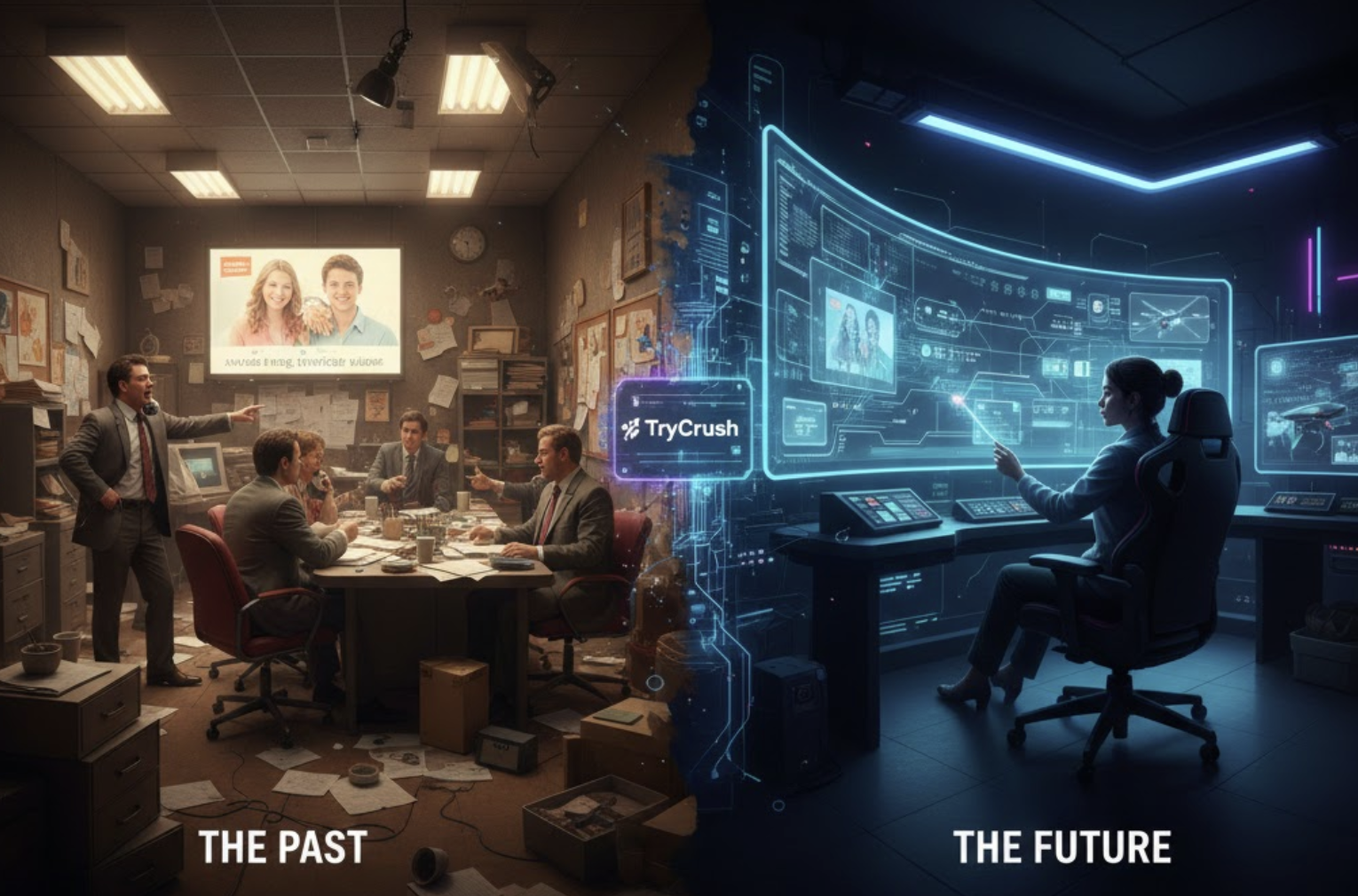
The Mad Men era is over. Welcome to the Math Men era, where AI advertising is rapidly replacing traditional agencies. Discover how algorithms are driving higher ROAS, testing hundreds of creatives, and transforming the future of digital marketing.
There was a time when advertising was an art form. It was about three-martini lunches, big ideas, and gut feelings.
That was the "Mad Men" era.
Today, we are living in the "Math Men" era.
The takeover of ai advertising has been swift, silent, and brutal. While agencies were busy arguing about font sizes, algorithms were busy learning how to predict human behavior with frightening accuracy.
This isn't just a trend. It's an extinction event driven by the AI ad revolution.
The Efficiency Gap in Traditional Agencies
The problem with traditional agencies is friction. There are simply too many humans in the loop.
To launch a campaign, you need a strategist, a copywriter, a designer, a media buyer, and an account manager. That's five people to do one job.
With artificial intelligence ads, you need... a prompt.
AI platforms can generate the strategy, write the copy, design the creative, and buy the media in milliseconds. And they can do it for a fraction of the cost.
Why pay a retainer of $5,000/month for a team that works 9-5, when you can pay a subscription of $500/month for a system that works 24/7?
The 4 Pillars of AI Advertising
To understand why this shift is happening, you need to understand the four core capabilities of modern AI systems:
1. Predictive Analytics
AI doesn't just look at what happened; it predicts what will happen. It can forecast sales trends, inventory needs, and customer churn with 95% accuracy.
2. Generative Creative
This is the visible part. Tools like Midjourney and DALL-E, integrated into platforms like Crush, can generate infinite variations of visual assets. No more waiting 3 days for a designer to crop an image.
3. Real-Time Bidding (RTB)
AI can adjust bids thousands of times per second based on market conditions. A human buyer adjusting bids once a day is bringing a knife to a gunfight.
4. Natural Language Processing (NLP)
AI can analyze thousands of customer reviews to understand the exact language your customers use. It then writes ad copy that mirrors that language back to them, increasing trust and conversion.
The Creative Renaissance
Critics argue that AI kills creativity. They are wrong. AI unleashes it.
When you remove the drudgery of resizing images, formatting text, and managing spreadsheets, you free up the human mind for high-level concepting.
The intersection of advertising and ai allows for "generative testing."
Instead of betting your entire budget on one "Big Idea," you can test 1,000 "Small Ideas." You can test different angles, different tones, and different visual styles.
The AI tells you what works. You don't guess. This is exactly why you need 100 ad variations to find breakthrough winners in today's landscape.

Case Study: Agency vs. AI Platform
We ran a head-to-head test. We took a client spending $10k/month on Facebook ads.
Month 1 (Agency Managed): Cost: $2,000 retainer + $10k ad spend. Results: $18k Revenue (1.8 ROAS). Ads Tested: 4.
Month 2 (AI Managed with Crush): Cost: $497 software + $10k ad spend. Results: $35k Revenue (3.5 ROAS). Ads Tested: 140.
The difference wasn't talent. The agency had smart people. The difference was volume. The AI could simply test more ideas faster.
The End of the "Black Box"
For years, agencies have operated as "black boxes." You put money in, and you hope results come out. You never really knew what they were doing.
AI brings transparency. Platforms like TryCrush.ai show you exactly what is happening. You can see which headlines are winning. You can see which audiences are converting.
There is no hiding behind jargon. There is only data.
The Ethics of AI in Ads
With great power comes great responsibility. As we hand over control to machines, we must be careful. Key ethical pillars include:
Bias: AI can inadvertently learn biases from training data. It is crucial to monitor the output to ensure fair representation.
Truth: AI can "hallucinate" facts. Always verify claims before they go live.
Privacy: Respect user data. The best AI platforms rely on first-party data and contextual targeting rather than invasive tracking.
The Future is Autonomous
We are moving towards a world of autonomous advertising. Just as self-driving cars will replace human drivers, self-driving ad platforms will replace human media buyers.
The best marketers of 2026 won't be the ones who can set up a Facebook campaign. They will be the ones who stop being a media buyer and start being an AI architect.
The tools are already here. TryCrush.ai is leading the charge.
The question is: Are you going to be the one operating the machine, or the one replaced by it?
How to Audit Your Agency in 15 Minutes
If you are currently paying an agency, do this right now. Log into your ad account and check the "Change History." Look out for these signs:
Red Flag #1: No changes in the last 7 days. This means they have "set it and forgotten it." You are paying a management fee for zero management.
Red Flag #2: Only budget changes. If the only thing they are doing is increasing or decreasing the budget, an algorithm could do that better.
Red Flag #3: No new creative testing. Go to the "Ads" tab. Filter by "Created Date." If they haven't launched a new ad in the last 30 days, fire them immediately. Creative is the #1 driver of performance.
An AI system never sleeps, never gets lazy, and always tests new creative.
Key Definitions Glossary
Algorithmic Buying: The use of automated systems to purchase ad inventory.
Dynamic Creative Optimization (DCO): Technology that automatically assembles ad creative in real-time.
Machine Learning (ML): A subset of AI that allows systems to learn from data without explicit programming.
Neuromarketing: Using AI to predict consumer reactions based on brain science.
Frequently Asked Questions
Common questions about this topic
1Why is AI advertising more efficient than traditional ad agencies?
2What are the core capabilities of AI in advertising?
3Does artificial intelligence kill creativity in advertising?
4What are the ethical concerns of using AI in ads?
Written by
Albertas Pocius
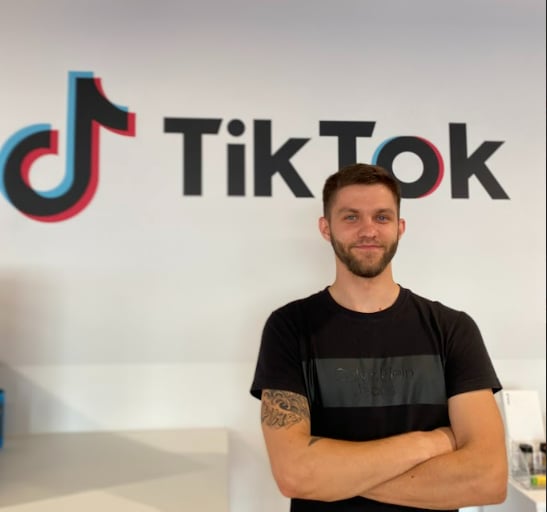
Co-founder, CMOAlbertas is the Co-Founder and CMO of TryCrush.ai, bringing elite-level performance marketing expertise to the platform. With over $50M+ in combined Facebook and TikTok ad spend, Albertas has launched and scaled dozens of projects from zero, driven by a deep obsession with data and experimentation. He has trained 20+ media buyers, consulted 100+ companies, and is widely recognized as one of Europe’s early TikTok pioneers, likely the first to scale campaigns beyond $100K per day. Today, he also teaches advertising strategy at two colleges, shaping the next generation of media buyers.
Stop Guessing.
Start Crushing.
AI Ad Manager trained by world-class media buyers to generate your creatives and optimize your ads 24/7.
Learn more
Related articles
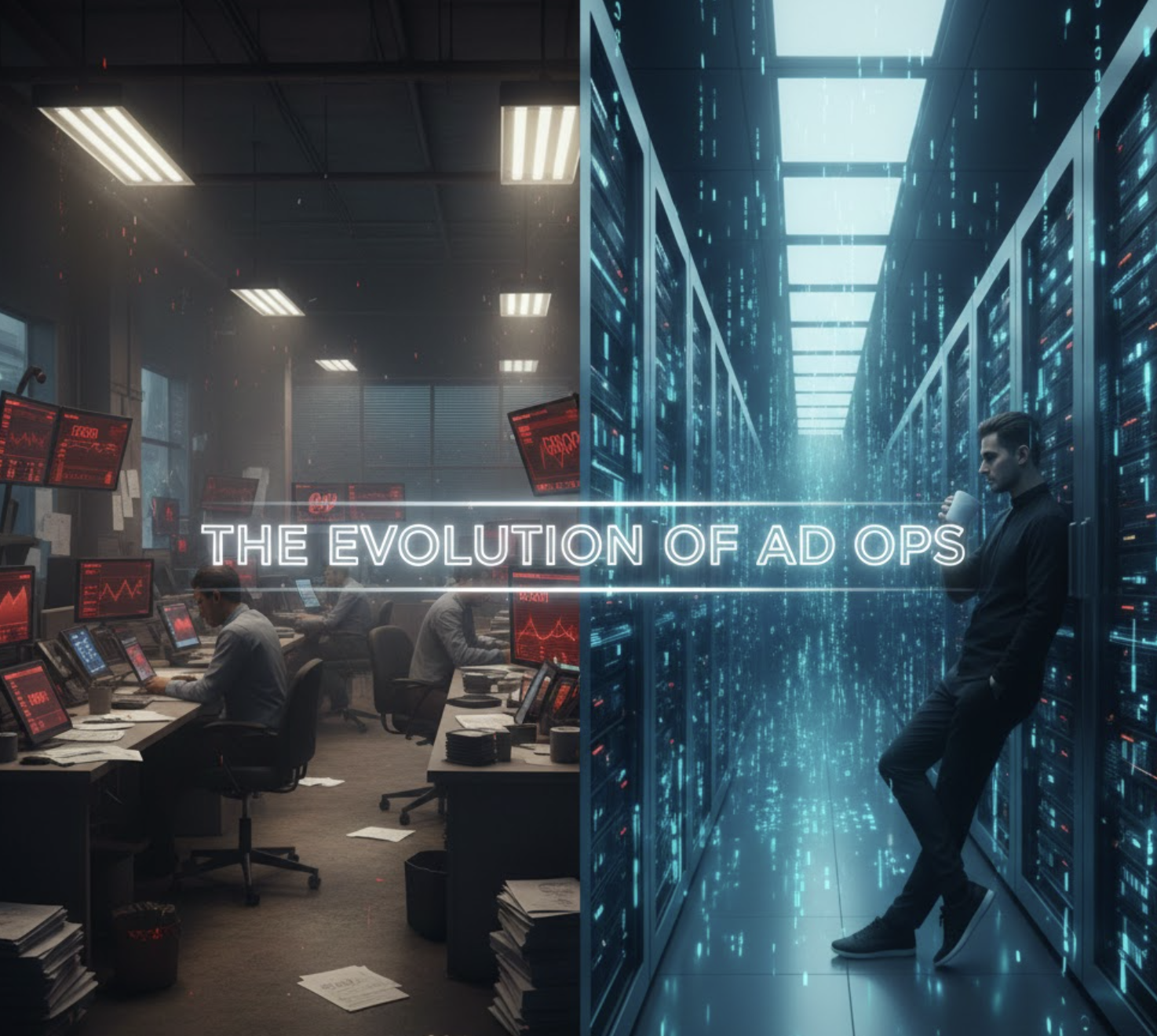
The "AI Ad" Revolution: Why 90% of Agencies Will Go Bankrupt in 2026
Traditional agencies are dying as the AI Ad Revolution takes over. Learn why AI marketing platforms outperform human teams in speed, data processing, and cost-efficiency. Discover how to pivot your strategy before the 2026 shift.
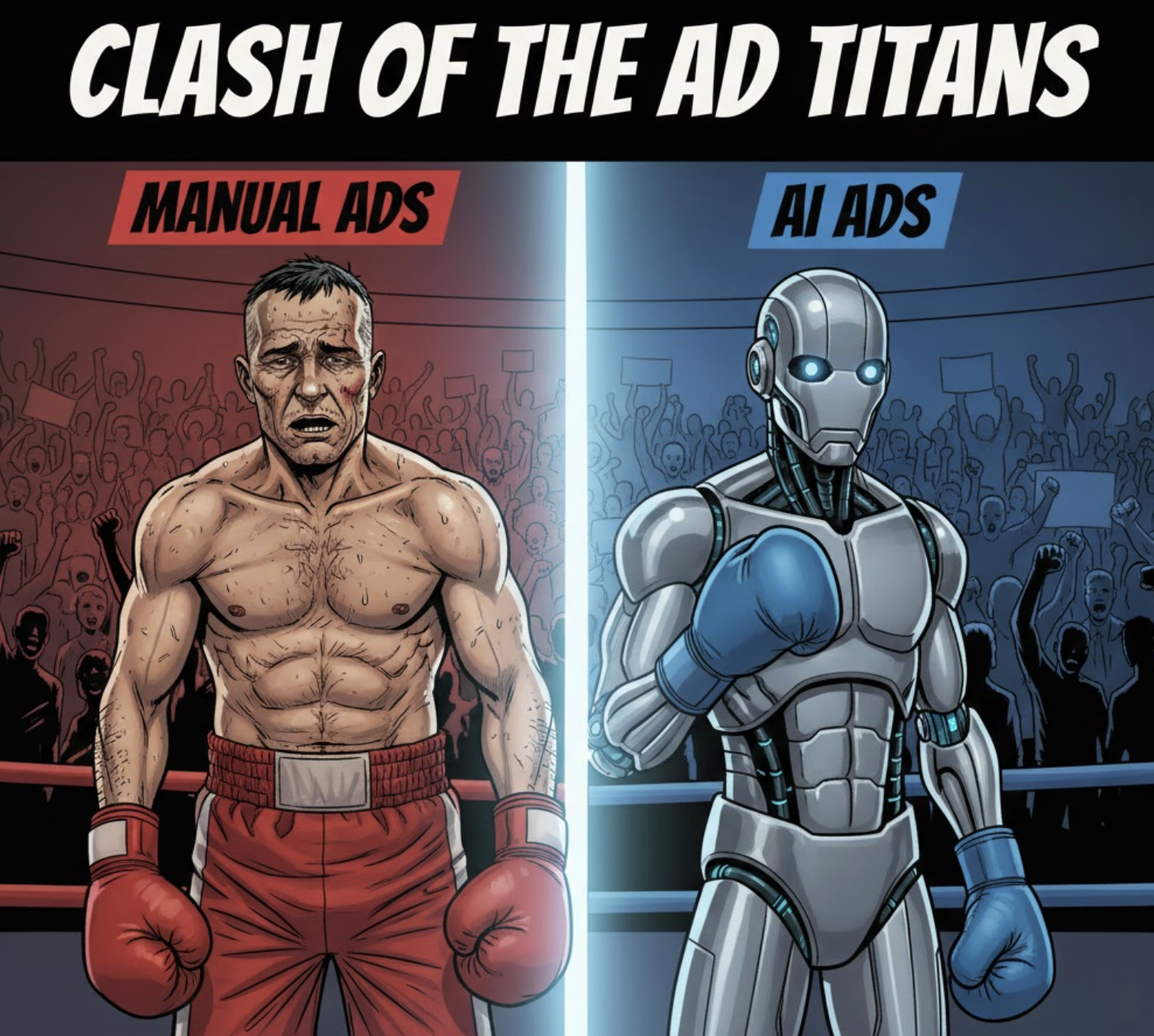
Facebook Ads vs. AI Ads: The 2026 Showdown
Manual media buying is dead. We pit traditional Facebook Ads against the new wave of AI Ads in a 5-round battle covering setup time, optimization, and scalability. Discover why autonomous agents are the future of advertising.
What is Media Buying in 2026? The AI Revolution
The digital revolution changed advertising forever, but AI is completely rewriting the rules. Learn what media buying is today, why manual bidding is dead, and how modern marketers use creative strategy and AI algorithms to scale profitably.

The Truth About Facebook Media Buyers (And Why You Don't Need One)
The era of the "button-pusher" is over. Meta's Advantage+ tools have automated targeting, making traditional media buyers obsolete. Learn why you should shift your budget to Creative Strategists and AI automation.