Deborah Rustad
 Facebook ad: “The surgeon said titanium or wheelchair by 70”
Ran for 60 days, from September 8 to November 7, 2026, the last day Crush saw it.
Run by Deborah Rustad on Facebook. Crush is not the advertiser and does not verify its claims. See this ad in Meta's Ad Library(opens in a new tab)
Make your own version of this ad
Crush makes it, launches it in your own Meta ad account, scales the winners and pauses the losers.
About this ad
- Meta Ad Library ID
- 1021768674192202
- Platforms
- Facebook, Instagram, Audience Network, Messenger and Threads
- Relaunches
- 0
Ad text
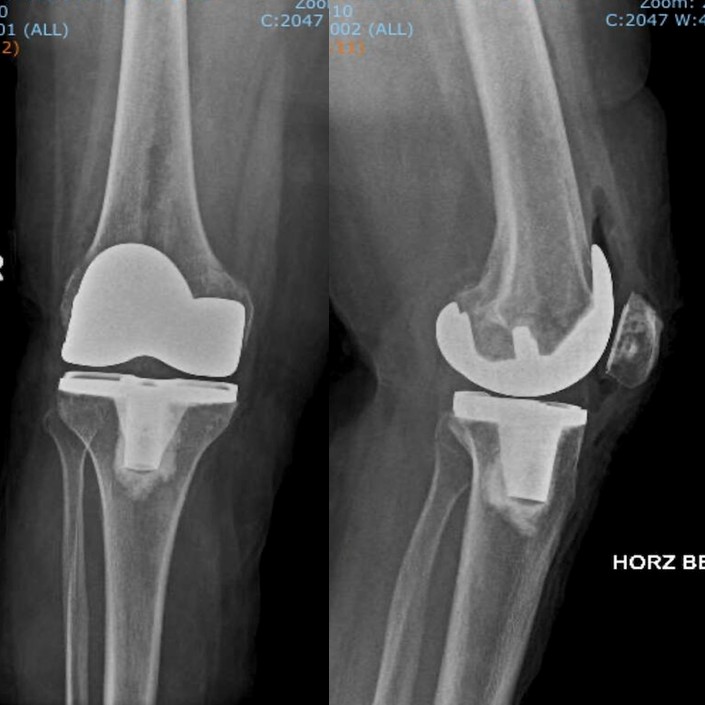
I'm 63 years old and last month a surgeon told me I had two choices… Let him cut open both my knees and replace them with titanium, or accept that I'd be in a wheelchair by 70. I told him to go f*ck himself. Not out loud. But in my head, sitting there in that cold little exam room with the plastic skeleton in the corner and the diplomas on the wall, I said it loud and clear. Because here's what that surgeon didn't know, what none of them knew, what I didn't know until my sister called me six weeks later and told me something that made me pull over on the side of the highway and sit there shaking with my hazards on for twenty minutes. There's a reason my joints were failing. And it wasn't age. And it wasn't genetics. And it wasn't "just arthritis" like every doctor had been telling me for the last four years while they handed me prescriptions and shrugged and sent me home to hurt. I'm going to tell you what my sister told me. I'm going to tell you why it made me so angry I couldn't drive. And I'm going to tell you what happened to my knees, my hands, my hips, and my entire sh*tty relationship with my own body over the eight weeks after that phone call. But first I need to tell you about the moment I realized the medical system had completely failed me. My name is Gloria. I'm 63. I live outside Albuquerque in a little adobe house with a garden I can't kneel in anymore and a husband named Ray who retired from the post office six years ago and now watches me struggle to get out of chairs without saying anything because he knows I hate being watched. I was a school librarian for 31 years. I shelved books. I stamped cards. I helped kids find stories with hands that moved like hands are supposed to move, without thinking, without negotiating, without that grinding bone-on-bone feeling that makes you wince before you've even finished reaching for something. Now I think about my joints constantly. Every movement is a conversation. Every step is a negotiation. Every morning is a hostage situation where my body holds me ransom until it decides to loosen up enough to let me function. Here's what arthritis actually feels like when nobody's asking and you're too tired to pretend: You wake up and your hands are curled into loose fists like you've been gripping something in your sleep. You lie there for fifteen, twenty, thirty minutes waiting for them to unlock, waiting for the wet sand packed into your knuckles to dissolve enough that you can flatten your fingers. Your husband asks if you're coming to breakfast and you say "in a minute" because you can't explain that your hands aren't yours yet, that you're waiting for them to come back online like some kind of machine that needs to warm up before it works. You swing your legs over the side of the bed and your knees announce themselves. Not pain exactly, or not just pain. It's the grinding. The grit in the hinges. The feeling that the cartilage that used to cushion everything has been replaced with sandpaper and every bend is bone scraping bone with nothing soft between. You stand up and your hips creak so loud your husband can hear it from the kitchen. You walk to the bathroom and your feet hit the floor like they're made of broken glass and swollen meat, puffy and hot and wrong. You grip the counter to steady yourself and your fingers don't close all the way. You look in the mirror and the woman looking back moves like she's 80. By noon it loosens up. By noon you can almost pass for normal. By noon you've forgotten enough of the morning that you can tell yourself it's manageable. Then you wake up the next day and it starts again. I've been doing this for four years. Four years of mornings where I age thirty years overnight and then slowly, grudgingly, come back to something I can use. Four years of watching the window of "good hours" get shorter. Four years of doctor's appointments where I describe exactly what I just described to you and they nod and say "that's just arthritis" and "that's just aging" and "have you tried ibuprofen" like I haven't been eating ibuprofen like candy for half a decade. Four years of being dismissed. Let me tell you about being dismissed. The first doctor, my GP, told me it was "wear and tear" and that I should "take it easy." I was 59. I asked him what I was supposed to do when taking it easy still hurt and he said "that's just part of getting older." The second doctor, a rheumatologist my GP referred me to, ran some blood tests and told me my inflammation markers were "slightly elevated but nothing crazy" and that I should try turmeric. Turmeric. Like I was going to spice my way out of not being able to button my own blouse. The third doctor, another rheumatologist because I refused to give up, told me I didn't have rheumatoid arthritis, I had osteoarthritis, and that there wasn't much to do except "manage the symptoms." I asked her what that meant and she said "pain management and eventually surgery." Eventually surgery. She said it like it was inevitable. Like my knees were ticking time bombs and the only question was when, not if. I went home that night and I couldn't sleep. Ray found me at 2am sitting at the kitchen table googling "alternatives to knee replacement surgery" and "how to avoid joint surgery naturally" and "is knee replacement surgery worth it" and falling down rabbit holes of horror stories about people whose replacements failed, whose infections never cleared, whose mobility never came back. I didn't want someone to cut me open and replace parts of my body with metal. I didn't want to spend months in recovery learning how to walk again. I didn't want to wake up from anesthesia at 63 and wonder if this was the surgery that would kill me because every surgery at this age is a roll of the dice. But I also didn't want to end up in a wheelchair. That's the box they put you in. Surgery or suffering. Titanium or decline. Those are your options. Pick one. I picked neither. I picked keep looking. The surgeon was the fourth doctor. My GP referred me to him after I reported that the pain was getting worse, that the mornings were getting longer, that I'd started sleeping in the recliner because I physically couldn't get out of bed some days, couldn't swing my legs over the side, couldn't push myself up, couldn't do the basic mechanical operations required to get a human body from horizontal to vertical. The surgeon did imaging. He showed me pictures of my knees on a lightbox, pointing to the places where the cartilage was gone, where it was "bone on bone," where the joint space had narrowed to almost nothing. He said, "You're looking at bilateral knee replacement within the next two to three years, or you're looking at significant mobility loss. Those are the options." I said, "There has to be something else." He said, "There isn't. This is degenerative. It only goes one direction." I said, "What about supplements? What about physical therapy? What about anything other than cutting me open?" He looked at me like I was a child who didn't understand how the world worked. He said, "Mrs. Reyes, supplements don't rebuild cartilage. Physical therapy can help with strength but it won't reverse structural damage. I know this isn't what you want to hear but surgery is the gold standard for a reason." I sat there nodding because what do you do when a man with diplomas on his wall tells you your body is broken in a way that can only be fixed with a scalpel. I drove home and I didn't tell Ray what the surgeon said. I parked in the driveway and I sat there for a long time watching the light change on the mountains and I thought about my mother. My mother's hands stopped working when she was 65. She had the same thing I have. The same morning stiffness, the same grinding, the same slow theft of everything that makes a body functional. She took glucosamine for twenty years and it did nothing. She took fish oil until she died and her hands still curled up like claws by the end. She was in a nursing home for the last two years of her life. Not because of dementia. Because she couldn't take care of herself anymore. Because her joints had failed so completely that she couldn't dress herself, couldn't feed herself, couldn't get from the bed to the bathroom without help. I visited her every Sunday. I watched her try to hold a cup of coffee with hands that shook so bad she spilled more than she drank. I watched her cry from the pain of just existing in a body that had turned against her. I sat in that driveway thinking about the nursing home. Thinking about the surgeon. Thinking about wheelchairs and walkers and titanium knees and all the ways this could go and none of them looked like a life I wanted to live. I'm 63. My mother was 65 when it really started to take her. I can count to two. Then my sister Carmen called. Carmen is 60, lives in Santa Fe, has always had better joints than me and never lets me forget it. We talk every few weeks but not about anything deep because that's just how we are. This call was different. She said, "Gloria, I need to tell you something and I need you to actually listen instead of dismissing it like you dismiss everything that isn't from a doctor." I said, "Okay." She said, "I've been watching you. The way you lower yourself into chairs now like you're defusing a bomb. The way you stopped coming to my house because you can't do the stairs. The way you've gotten so small in your body, like you're scared of it, like you're just waiting for it to hurt you." I didn't say anything because she was right and I didn't want to cry on the phone. She said, "Do you remember cousin Patricia? Rosa's daughter in Tucson?" I did. Patricia is 67. I saw her at a funeral five years ago and she was a wreck. Walking with a cane. Hands curled. Moving like every step cost her something she couldn't afford. Carmen said, "I had coffee with Patricia last month. Gloria, she's completely different. No cane. Hands work. She was shuffling cards at her kitchen table like it was nothing. I asked her what happened." I said, "What happened?" Carmen said, "She found out about a mineral that nobody had ever mentioned to her in 67 years of doctor's appointments. She started taking it every night. Six weeks later she felt like a different person." I said, "What mineral?" She said the word. Magnesium. I almost hung up on her. I'd tried magnesium. Some chalky pill from the drugstore years ago that did absolutely nothing except upset my stomach. I took it for three months, felt zero difference, and wrote off the whole thing as another supplement scam. I told Carmen this. She said, "That's because you took the wrong form. Patricia told me most magnesium supplements are basically useless because your body can't absorb them. You swallow the pill and it goes straight through you. The kind Patricia found is different, it's called bisglycinate, it's bound to amino acids that actually carry it into your cells. She takes it in a gummy form, full therapeutic dose, and her doctor told her at her last physical that her inflammation markers had dropped lower than they'd been in fifteen years." I said, "Carmen, I just had a surgeon tell me I need both knees replaced. I don't think a gummy is going to fix that." She said, "Did any of your doctors ever test your magnesium levels?" I tried to remember. Blood tests, imaging, inflammation markers, ANA panels. Nobody had ever mentioned magnesium. Carmen said, "Gloria, I've been taking it for four months. The crackling in my knees when I go up stairs is gone. I sleep through the night for the first time in years. I didn't tell you because I wanted to make sure it wasn't placebo. It's not placebo. Something is actually different." She said, "Just look into it. That's all I'm asking. Before you let someone cut you open, just look into it." I spent the next week researching. I'm a librarian. Research is what I do. When someone tells me something that sounds too good to be true, I don't just believe them. I dig. Here's what I found that made me pull over on the side of the highway and sit there shaking. Magnesium is involved in over 300 enzymatic processes in the human body. Muscle function. Nerve transmission. Inflammation regulation. Cartilage maintenance. Bone density. Cellular energy production. When you're deficient, and most Americans are, especially women over 50, your muscles can't relax properly. They stay clenched around your joints like a fist that won't open. Your inflammation runs unchecked because the systems that regulate it need magnesium to function. Your cartilage breaks down faster than it rebuilds because cartilage repair is magnesium-dependent. Your nervous system stays wired because magnesium is what calms it down. What doctors call "arthritis" and "joint degeneration" and "wear and tear" is often, at the cellular level, tissue that's been starved of a mineral it desperately needs. And here's the part that made me so angry I couldn't drive. Most magnesium supplements don't work because most magnesium supplements use forms your body can barely absorb. You swallow a pill and maybe 4% of it actually makes it into your cells. The rest passes through your gut and you pee it out and nothing changes. So you try magnesium, feel nothing, and conclude that it doesn't work. But it wasn't that magnesium doesn't work. It was that the magnesium you took never actually reached your joints. There's a form called bisglycinate that absorbs completely differently. It's bound to amino acids that escort it through your gut lining and into your bloodstream. Studies show absorption rates around 90%. The crap I took from the drugstore twenty years ago? My body never used it. Patricia's gummies? Her body actually absorbed them. And her joints responded. I sat on the shoulder of I-40 with semis blowing past me thinking about every doctor's appointment I'd ever had. Every time I'd described my symptoms and been told "that's just aging." Every prescription for pain management that never addressed why I was in pain. Every shrug, every dismissal, every "have you tried ibuprofen." Nobody ever tested my magnesium. Nobody ever mentioned it. Nobody ever said "hey, before we start talking about replacing your joints with metal, let's make sure your cells have the basic mineral they need to function." Four doctors. Years of appointments. Thousands of dollars in specialists and imaging and blood panels. And not one of them thought to check if my body had the raw materials it needed to maintain itself. I found the same gummies Patricia was taking. Pharmaceutical grade magnesium bisglycinate. Full therapeutic dose. Tastes like raspberry so you actually want to take it. I ordered a bag. Two gummies every night before bed. Week one, my sleep shifted. Deeper. Less waking up at 3am with my hips screaming and my mind racing. I didn't connect it to the magnesium at first. Thought maybe I was just exhausted. Week two, the morning hostage situation started to ease. I woke up on a Wednesday and my hands weren't curled into fists. They were just hands. I lay there waiting for the familiar squeeze and it didn't come. I flexed my fingers and they flexed. Like fingers are supposed to. Week three, the grinding in my knees went quiet. I walked to the kitchen one morning and I was halfway there before I realized I hadn't thought about my joints once. They were just carrying me. The way they used to. Week four, I got out of bed without negotiating. I swung my legs over the side and I stood up and I walked to the bathroom and I didn't grip the counter and I didn't wince and I didn't have a conversation with my body about what it was willing to do that day. I just moved. I stood in the bathroom and I cried. Ray found me and he didn't ask what was wrong because he knew. He'd been watching me disappear into pain for four years. He'd been watching me shrink away from my own body. He just held me and let me cry and when I was done I said "I think it's working" and he said "I know, I've been watching you walk." Week six, I went back to the surgeon for a follow-up. He asked how I was managing the pain. I told him I wasn't in as much pain. He looked surprised. He asked what I was doing differently. I told him about the magnesium. He said, "Supplements don't rebuild cartilage." I said, "I know. But I can get out of bed now. I can walk to the mailbox without wanting to cry. I can sleep in my own bed instead of the recliner. Whatever is happening, something is different." He didn't have a response to that. He just made a note in my chart and told me to come back in six months and we'd "reassess the surgical timeline." The surgical timeline. Like my body was on a schedule he'd already written. I walked out of that office and I felt something I hadn't felt in four years. I felt like my body might not be a prison sentence. I felt like the math I'd been doing, counting down to wheelchairs and nursing homes and the same ending my mother had, might not be the only math available. It's been eight weeks now. My knees aren't perfect. I'm not running marathons. But the grinding is 80% gone. The morning stiffness that used to take an hour to work through now takes ten minutes. My hands close all the way. My feet don't feel like swollen meat when I step out of bed. I'm sleeping in my bed again. With my husband. Like a person instead of a patient. Carmen came to visit last weekend. We sat in my garden, the one I couldn't kneel in for two years, and I knelt. I knelt in the dirt and I pulled weeds and I got back up without help and Carmen watched me with tears in her eyes because she remembered what I looked like six months ago and she could see what I looked like now. She said, "Mom never knew about this." I said, "I know." We didn't say anything else for a while because there was nothing to say. Two sisters in their 60s realizing that the script we'd been following, the one that said we'd end up like our mother, hands curled, independence gone, wasn't the only script available. I want to share something with you. A few weeks after I started taking the magnesium, I posted my story in an online group for women with joint pain. Just sharing what happened, not expecting much. A woman named Dolores commented. This is exactly what she wrote: "Oh my gosh this is me. I just went to a specialist because my ANA is off the charts. He said I have a gland that is misfunctioning and I need it removed. It's taking the calcium out of my bones and replenishing it back in my bloodstream then depositing it in my other organs. Not good. He thinks this is why I'm in constant pain, stiff, hands and feet swell. I can't even sleep in my bed because I physically can't get out of bed because of the pain. I've been in pain for a couple of years and all my blood work has been normal until 2 months ago. I am going to research magnesium deficiency. What do I have to lose. Maybe then I can walk without help, and the swollen hands and feet will stop. I never make plans because I don't know if I can function the next day. He did rule out Lupus. Thank you from the bottom of my heart for this article. It gives me hope." I read that comment and I sat at my computer and I cried. Because that was me. That was exactly me a few months ago. Can't sleep in the bed. Can't get out of bed. Can't make plans. Swollen hands. Swollen feet. Constant pain that nobody can explain and doctors who keep running tests and shrugging. Dolores isn't alone. There are thousands of women like her. Like me. Like you, maybe, if you're still reading this. Women whose bodies are failing and nobody knows why. Women who've been dismissed and minimized and told "that's just aging" so many times they've started to believe it. Women who are doing the math on their mothers and their grandmothers and counting down to the day they lose their independence. What if the math is wrong? What if your joints aren't failing because of age or genetics or inevitable degeneration? What if they're failing because they're starving for something nobody ever thought to give them? The gummies come with a 30 day guarantee. If your joints don't feel different within a month, you send the bag back and you don't pay. I didn't need to send mine back. Eight weeks in and I'm kneeling in my garden. Eight weeks in and I'm sleeping in my own bed. Eight weeks in and a surgeon's "timeline" is sitting in a file somewhere gathering dust because I'm not following his script anymore. My mother didn't have this option. She took the supplements that were available and they didn't work because her body couldn't use them. She followed the script all the way to the nursing home. I'm not following that script. If you've been dismissed by doctors who don't listen. If you've been told your only options are surgery or suffering. If you've been doing the math on your mother's hands and wondering how long you have left. There might be another option. Two gummies. Every night. A mineral your body has been starving for in a form it can actually absorb. That's what changed the math for Patricia. For Carmen. For me. And maybe for Dolores, if she's brave enough to try. What happens to your joints next is up to you. → https://spnutrition-us.com/pages/advertorial-magnesium P.S. The 30 day guarantee is what made me willing to try. I'd wasted so much money on supplements that did nothing over the years. The guarantee meant I could test it for real, give it four weeks, and get my money back if nothing changed. By week three I knew I wouldn't need the refund. But having that safety net let me try without feeling like a fool for hoping. P.P.S. The surgeon's office called last week to schedule my "surgical consultation." I told them I wasn't ready to schedule anything yet. The receptionist sounded confused. She said, "But Dr. Martinez said this was time-sensitive." I said, "Tell Dr. Martinez my timeline has changed." She didn't know what to say to that. Neither did I, honestly. I just knew that four months ago I was counting down to being cut open, and now I'm counting up from the day I started taking something my body actually needed. P.P.P.S. If you're reading this and you're in the place I was, making peace with surgery, watching your mother's script play out in your own body, sleeping in a recliner because you can't physically get out of a regular bed, I need you to know that I was exactly there. I was resigned. I was doing the math. I was wrong. The math isn't fixed. Find the right form of magnesium and give your body what it's been begging for. See what happens. You have nothing to lose but the countdown you've been living under. → https://spnutrition-us.com/pages/advertorial-magnesium
Where the ad sends people
spnutrition-us.com
The surgeon said titanium or wheelchair by 70
Read more
Learn more: spnutrition-us.com(opens in a new tab)