Carol Goldberg
Carol Goldberg Facebook ad: “Worst Cruise Trip Ever: I had the worst flareup…”

Ran for 17 days, from August 8 to August 25, 2026, the last day Crush saw it.
Run by Carol Goldberg on Facebook. Crush is not the advertiser and does not verify its claims. See this ad in Meta's Ad Library(opens in a new tab)
Make your own version of this ad
Crush makes it, launches it in your own Meta ad account, scales the winners and pauses the losers.
About this ad
- Meta Ad Library ID
- 1031567103099732
- Platforms
- Facebook, Instagram and Messenger
- Relaunches
- 2
Ad text
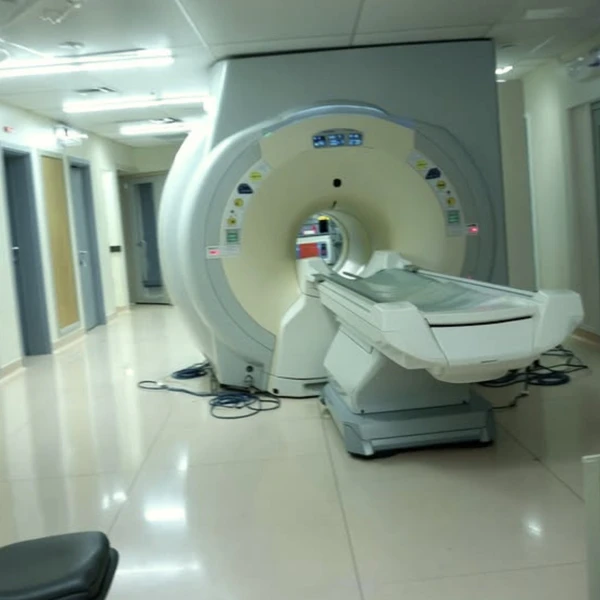
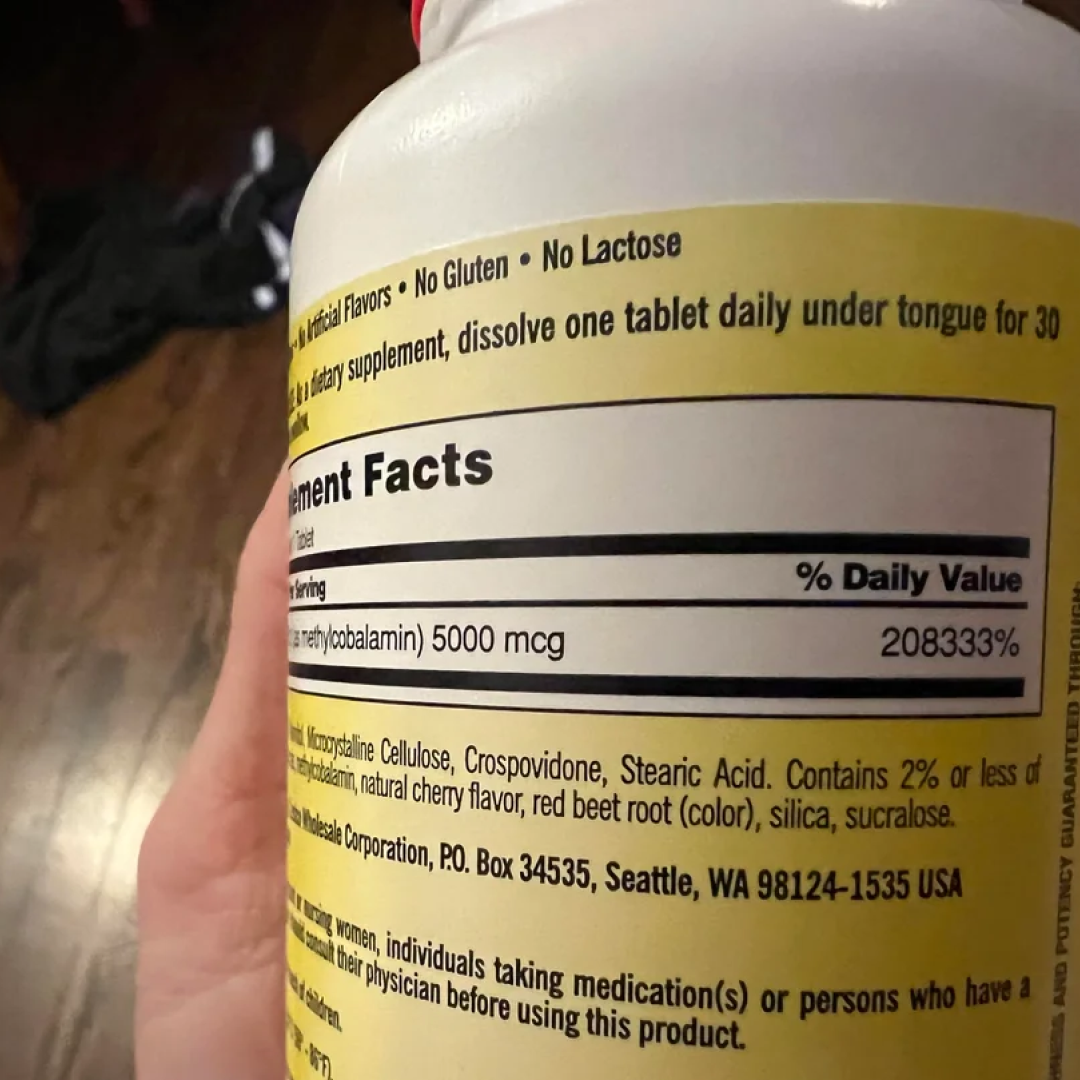
I had an MS flare on a transpacific cruise. The ship's doctor was Japanese. He asked me one question that made my American neurologist look twenty years behind. I'm 58 years old. My husband Marty and I had been saving for this trip for almost four years. Fifteen days at sea, round trip. Los Angeles to Yokohama and back, straight across the open Pacific out and the same way home, with just a short stop in port before we turned around. We wanted the kind of trip where nobody could reach us. No phone signal for most of it. Just open water and time. We'd talked about this crossing since the year I was diagnosed. The kind of trip you plan for the years while you can still do it. Day nine, somewhere past the International Date Line, we lost a full day and gained back the strangest feeling. Like time had folded in on itself. That evening we walked up to the top deck to watch the sunset. Nothing around us but water in every direction, the kind of view you'd frame a photo from if you weren't sitting on that same deck an hour later. Marty was a few steps ahead of me. Phone out, trying to catch the colors on the water. Laughing about something the bartender had told him earlier. I was about thirty feet behind him. I'd noticed it climbing the stairs to the top deck. My legs were heavy. Not the normal heavy you'd expect from a few flights of stairs. The deep heaviness I'd been feeling at home for months walking up to our own bedroom. It had been warm all day. Warmer than any day of the crossing so far. I'd been telling myself it was just age. Just a winter of sitting at a desk. I'd told Marty the same thing. I stopped at the railing. Put my hand on it. Waited for my legs to feel lighter. They didn't. The heaviness got worse. My right leg started to go numb from the knee down. Not painful exactly. I could not feel my hand when I touched it. I started to sweat through my blouse. I felt the color drain out of my face. I sat down right there on the deck. I tried to call out to Marty. My voice came out too quiet for him to hear. A few other passengers walked past. Someone glanced over, kept walking, assumed I was just resting. I sat there with my hand on my leg thinking about my mother. My mother had MS. She was in a wheelchair at 60. She spent her last four years in a nursing home, and by the end she could not hold a cup. I was 34 when she went into that chair. And here I was, 58, in the middle of the Pacific Ocean, four days from the nearest port in either direction, sitting on a deck because I could not stand up. Marty turned around. I will never forget his face. Laughing one second. The next second his phone was in his pocket and he was running back to me. "Carol. Carol what's happening." I couldn't get the words out. He got his arm around me and started calling for help. A crew member nearby heard him and radioed it in immediately. Within minutes there were two staff members with a wheelchair. Marty held my hand the whole way down to the medical center. He didn't say anything. Just held my hand and looked at me with the face I'd been seeing in nightmares for twenty-four years since my mother went into that chair. I told him I was okay. I wasn't. The ship's doctor was already prepping the room when we got there. The call had come through ahead of us. His name was Dr. Morita. Quiet voice. Gray at the temples. Maybe late fifties. He had me lie down on the exam table. Checked my reflexes. Ran a pin along my leg and asked me where I stopped feeling it. Took my temperature. Then he had me stand and walk twenty-five feet down the corridor outside while he timed it. "You are having a relapse," he said. "A small one. The heat brought it forward." I was lying there with Marty next to me holding my hand. I just looked at the ceiling. "That walk took you eleven point two seconds. Do you have your last visit summary with you?" I did. I'd packed it out of habit, the way you pack a passport. He read through it slowly. "Your neurologist times this same walk at every visit. Two years ago you were at nine point one seconds. Four years ago, seven point six. You are on an infusion?" "For six years. He says my scans are stable." Dr. Morita looked at me for a moment. Then he set down the paperwork. "How long has your neurologist back home been telling you your scans are stable while this number kept climbing anyway?" I tried to answer. Couldn't. Because the honest answer was years. That number had been creeping at every single annual visit for at least six of them. My neurologist kept saying the scans looked good. Maybe add something for the walking if it got worse. It never stopped getting worse. Dr. Morita pulled a chair closer to the table. "I want to tell you something I have spent years quietly frustrated by," he said. "I trained in Osaka. I practiced neurology there for almost eighteen years before I took this ship contract. And what I see when American passengers come through this medical center is the same story every time." He set my paperwork down. "American patients come to me from all over your country. Different states. Different insurance. Different neurologists. And every one of them tells me they are stable. Their doctor has been watching them for years. They are doing everything they were told." "And every one of them is sitting in front of me with legs that go weak in the heat, hands that drop things, energy that is gone by early afternoon, and nerves that have been losing their coating for a decade." "Your healthcare system has decided that watching a scan is the same as treating a disease. It is not. Watching is recording the damage as it happens. Treating means addressing what is causing the damage in the first place." He paused. "That is not a criticism of your neurologist personally. He is doing what he was taught. He looks at your scan. He counts your lesions. He adjusts your infusion. He writes the next prescription. That is the protocol. And the protocol is what has been failing you." I asked him what I should have been told. "You should have been told that lesions are not really the disease. They are what shows up on a picture. What is actually happening underneath is that your immune system has been stripping the coating off your nerves for years, everywhere, not only in the places big enough to photograph. That coating is called myelin. Think of it like the plastic coating on an electrical wire. It is what lets the signal travel fast and clean." He held up his hand. "Your body is rebuilding that coating right now. On every nerve you have, every day of your life. But rebuilding it takes two things, and both have to be inside the cell. Raw material to build the coating out of. Energy to do the work. Your repair cells do not get enough material. Your nerve cells do not have enough energy to spare, because a nerve with no coating uses far more of it just to carry a signal." "So the repair falls behind. Every year there is a little less coating on your nerves than the year before. The signal takes longer to arrive. Your legs get heavier. Your hands get clumsier. Your energy runs out earlier. And almost none of it is ever big enough to show up as a new lesion on a scan. It is not a separate problem from your lesions. It is the same problem, compounding." I felt a tingle in my fingers, hearing it laid out like that. "The weakness in your legs when you get too warm," he said. "Does it happen often?" "Every summer. For years." "The things you drop when you reach for them." "Almost daily." "And the energy that is gone by two or three in the afternoon, no matter how much you slept." I just looked at him. He was reading me like a chart. "And now, the leg. What just happened to you on that staircase was the same disease that has been stripping the coating off the nerves in your hands and draining your energy for years. It simply reached that nerve today. The nerve running down to your right leg has less coating on it than it should for a woman your age. The climb and the heat together demanded a signal your nerve could no longer easily deliver." Marty was silent next to me, gripping my hand. "My mother had MS," I said. "She was in a wheelchair at 60." Dr. Morita nodded slowly. "Then you already know what this looks like. And you have been walking toward it for years while your scans were called stable." I asked him what the infusion I'd been getting every six months for six years had actually been doing, if all of this was happening underneath it. "That infusion stops your immune system from stripping more coating off. That is useful. Your scan stays clean. Your neurologist is satisfied. But it does nothing for the coating that is already gone. It does not rebuild a single bit of what was stripped off before you started, and it does not help the repair keep up with what is still being stripped now. It manages the picture while the disease keeps finishing what it started years ago." "You can stop anything new from stripping the wire. If the wire is still bare where the coating was stripped off ten years ago, the signal still struggles to get through." I sat with that. "And the second prescription," I said. "The one for my walking." He nodded slowly. "That one helps a nerve that has already lost its coating carry a signal a little better. It can genuinely help in the moment. But it does not put any coating back. It does not rebuild anything. It manages how you walk today while the nerve underneath stays exactly as bare as it was." He let that sit for a moment. "Two prescriptions. Two readings that look better. And the actual disease, your nerves losing their coating faster than your body can replace it, completely untouched by either one." I asked him the obvious question. If neither one rebuilds the coating, what does? Dr. Morita sat back in his chair. He took a moment before answering, like he was deciding how much to say. "There are three vitamins that do something neither of your prescriptions can do. They do not manage a picture or a symptom. They give your body the two things the rebuilding actually runs on." "B1, B6 and B12. In the nerve regeneration research they are not called B vitamins. They are called the neurotropic vitamins, because they act on nerve tissue specifically. In Japan they have been standard treatment for nerve damage for decades. You can walk into a pharmacy in Osaka and buy them. My mother took them for years." He continued, choosing his words carefully. "B12 is the raw material myelin gets rebuilt out of. B1 is what the cells make their energy with. B6 is what those cells need to send a clean signal once the coating is back. Material. Energy. Signal. Studies have shown that when all three are taken together, they are 26 times more effective than any one of them on its own." "When the repair gets all three, several things happen at once. The cells that rebuild the coating finally get enough material. The nerve cells get the energy to do the work. Coating gets rebuilt on nerves that have been bare for years, and the signal speeds up again. And the weakness in the heat, the things you drop, and the energy that runs out at two are all slow signals speeding back up." "They do not manage a number the way prescriptions do. They address the thing that has been failing underneath the number." I asked him why my neurologist had never once mentioned this to me in thirteen years of appointments. He was quiet for a moment, looking at the monitor beside my bed rather than at me. "Most of what is sold under that name in your country never reaches the nerve at all. The research showing real change in nerve tissue uses all three together, in the natural forms, in a liposomal delivery. Most retail products, the ones you would find at a pharmacy or a big box store, are one vitamin on its own, in the synthetic form, in a pill that only ever reaches your blood. Some are blended with eight or nine other ingredients so there is barely a meaningful dose of anything in the capsule at all." "In that form it may do something small for a young person with a healthy nervous system trying to stay ahead of the problem. But for someone your age, with years of coating already stripped off, it does essentially nothing. It reaches your blood, your next blood test comes back normal, and nothing about how you feel changes. It is the difference between a vitamin that reaches your bloodstream and a vitamin that reaches the inside of the nerve cell. The ingredient is not wrong. The delivery is wrong." I asked him what brand he'd recommend. He shook his head, almost apologetically. "I do not endorse products. I am a physician on a ship in the middle of the Pacific, not a salesman. What I can tell you is what the research requires. All three together, not one on its own. The natural forms, not the synthetic ones. The doses used in the studies. And a liposomal delivery. Beyond that, it is your responsibility to look closely at what is actually in the bottle before you trust it with your health." That answer stuck with me more than if he'd just handed me a name. He wasn't selling me anything. He had no reason to. He would be back in Osaka in a few months, and I would be one of hundreds of American passengers he'd never see again. He checked me again before we left the medical center that evening. Told me to rest for the remaining days at sea. No more stairs I didn't need to take, no more rushing to catch a sunset. He told me to stay out of the sun, keep cool, drink more water than I thought I needed, and eat light. He said the numbness would likely go away on its own over the next week or two, and that he would check on me again before we reached Yokohama. Marty and I went back to our cabin in silence. I sat on the edge of the bed for a long time and just stared at the wall. The porthole showed nothing but dark water, no lights anywhere, just black ocean in every direction. Marty sat next to me without saying anything for a while. He kept glancing at me like he was checking I was still breathing. Finally he said, "Your mom was in a wheelchair at 60. That's two years from now." I told him I knew. I'd been doing the math myself since the moment I sat down on that deck. We skipped the trivia night we'd planned on for that evening, the one we'd circled in the daily schedule the first morning of the cruise. We sat out on the small balcony instead and watched the black water go by under more stars than either of us had ever seen from home. The rest of the crossing was different. Quieter. Marty kept checking on me more than usual. I found myself thinking about my mother more in those four days than I had in the last decade combined. I kept turning over what Dr. Morita had said. About the coating. About my nerves losing it faster than my body could replace it, everywhere, not just in the spots big enough to photograph. About how the same disease that stopped my leg on that staircase had been stripping the coating off the nerves in my hands and draining my energy for years, and I had never once connected any of it to the scans I kept being told were fine. The hands that dropped things I had blamed on being clumsy and rushing. The weakness every summer I had blamed on the heat itself, the way anyone gets tired in July. The energy that ran out every day around two or three in the afternoon, no matter how much sleep I'd gotten, I had blamed on simply not sleeping well anymore at my age. The walking test my neurologist had timed at every visit for six straight years, one appointment after another, always some version of "your scans look good." Dr. Morita had connected all of it in twenty minutes, in a medical center on a ship in the middle of the ocean, with nothing to gain from telling me any of it. My American neurologist had been seeing me twice a year for over a decade. He had never once connected any of it. We reached Los Angeles four days after leaving Yokohama, sixteen days after we'd first pulled out of this same port. Marty and I picked up our car from the long-term garage and drove straight home, exhausted, quiet, both of us still turning the whole thing over in our heads. That night, back in our own bed, I couldn't sleep. Marty was already out beside me, worn down from the travel and the time change. I lay there staring at the ceiling fan for almost an hour before I finally gave up, went downstairs, and opened my laptop at the kitchen table. It was 11:40 PM. I typed in everything I could remember Dr. Morita saying. Neurotropic vitamins. Myelin. B1, B6, B12. Liposomal. Japan. And I started reading. The first thing I found was a study that stopped me cold. Published research, not a blog, not a forum post. Clinical and MRI data from more than 27,000 patients, followed for up to 15 years. People with MS get worse mostly between their relapses, not during them. That worsening happens while the scans come back clean and the infusions keep going in. Fifteen years. Twenty-seven thousand people. Not a supplement company's marketing page. A real tracked population. I sat there at my kitchen table reading it over three times. Then I found the other one. The 2025 study Dr. Morita had mentioned, testing the three vitamins against each other on nerve tissue. The three together were 26 times more effective than any one alone. Not 26 percent. 26 times. I thought about Japan. About methylcobalamin being standard there for nerve damage for decades, sitting on pharmacy shelves in Osaka, while my own neurologist had never once brought it up in thirteen years. I kept reading. I found more on the forms and the delivery Dr. Morita had described, the difference between what most products sell and what the actual studies used. He'd been right. Almost everything on the shelf at my local pharmacy was one vitamin on its own, in the synthetic form, in a pill that only ever reaches your bloodstream. I am not a person who trusts supplements easily. I'd tried things before that did nothing. A year on the Wahls protocol, no gluten, no legumes, no red wine. Vitamin D every day for three years because half my support group swore by it. I went into this expecting to find another overpriced bottle of nothing. I spent almost two hours cross-referencing brands against what the research actually called for. Most of what I found was exactly what Dr. Morita had warned me about. Blended formulas with eight or nine other ingredients, each one probably too diluted to do much of anything. Synthetic forms. Nothing liposomal. Then I found Nuvel Liposomal Neurotropic Vitamins. All three neurotropic vitamins together. The natural forms, methylcobalamin and P-5-P, not the synthetic ones. The doses used in the research. And a liposomal delivery, third-party verified, so it actually reaches the nerve cell. Every single thing Dr. Morita had listed on that exam table in the middle of the Pacific. I read everything I could find about it before I let myself believe it. I checked what other people were saying who'd actually tried it, not just the marketing copy. I looked at it again against the research three separate times to make sure I wasn't seeing what I wanted to see. It matched. Every time I checked, it matched. I ordered it that night, sitting there at my kitchen table at nearly 2 AM, Marty asleep upstairs, the whole house quiet around me. One dose a day, in the morning with food. That was the whole regimen. The bottle arrived a few days later. I started that same morning. I won't pretend the first week felt like anything dramatic. No sudden burst of energy, no dramatic before and after. It's not that kind of product. I just took my dose every morning with breakfast and went about my day. By the second week, I dropped less. I got a full mug of coffee from the counter to the table without both hands. Small thing. I almost didn't mention it to Marty because it felt too minor to matter. Into the third week, my energy lasted longer. Some days I got to four o'clock before I had to sit down. By the fourth week, I realized I'd gone through an entire day without having to stop at two. I'd made it through grocery shopping, cooking dinner, and a walk with Marty in the evening without needing to lie down in between. I kept a small notebook, jotting down anything I noticed, the same instinct that had made me pack my visit summary out of habit before the cruise. By week six, I scheduled a follow-up with my regular neurologist, the same one who'd had me on an infusion for six years. I didn't tell him why I wanted to come in early. I just asked. He ran everything he usually runs. My timed twenty-five foot walk that day was eight point four seconds. Down from eleven point two on that ship, and faster than anything he'd recorded in his own office in four years. My nine-hole peg test had come down from thirty-one seconds to twenty-six. He looked at the numbers on his screen, then back at me. "Carol. What have you been doing differently?" I told him. The cruise. The leg on the staircase. Dr. Morita. The coating. The gap between what's sold in stores and what the actual research uses. He didn't say much. He looked at the chart for a long moment, then said quietly that he wasn't familiar with the specific research, but that whatever I'd changed, the numbers didn't lie. He didn't take me off my infusion. He said we'd keep going and revisit at the next visit. I was fine with that. I wasn't trying to replace anything. My infusion is still doing its job, and I am still doing it. I just finally understood what it had actually been doing this whole time, and what it hadn't. It has been a few months now. I drop things far less than I used to. I get through most afternoons. I don't dread stairs the way I did on that ship. Marty and I are already talking about another trip, something closer to home this time, nothing crossing an ocean for a while. I think about my mother sometimes, in that chair at 60, in that nursing home at the end, unable to hold a cup. I think about how close I came to the same thing, sitting on a different deck on a ship somewhere in the middle of the Pacific. I think about how it took a doctor with no reason to sell me anything, a man I will likely never see again, to explain in twenty minutes what my own neurologist hadn't connected in thirteen years. If your scans have been "stable" for years while you're still dealing with legs that go weak in the heat, hands that drop things, energy that runs out by two in the afternoon, or stairs you used to take without thinking about them, please hear this. A treatment that stops new damage is not the same as one that rebuilds what you already lost. I learned that the hard way, in the middle of an ocean, four days from land in either direction. Nuvel Liposomal Neurotropic Vitamins is all three in the natural forms and a liposomal delivery, matching what the research uses instead of the diluted synthetic versions sold nearly everywhere else. Right now you can buy two and get a third free, and every order comes with a 90-day guarantee. You can find it at https://trynuvel.com/products/vitamin-b-complex-limposal I wish someone had told me about the delivery gap years before a staircase in the middle of the Pacific had to do it for me. - Carol G.
Where the ad sends people
trynuvel.com
Worst Cruise Trip Ever: I had the worst flareup…
Clinical-grade dosed formula proven in studies
Learn more: trynuvel.com(opens in a new tab)