Carol Goldberg
Carol Goldberg Facebook ad: “My mom's MS scans have been stable for 8 years. She's…”
Ran for 9 days, from September 21 to September 30, 2026, the last day Crush saw it.
Run by Carol Goldberg on Facebook. Crush is not the advertiser and does not verify its claims. See this ad in Meta's Ad Library(opens in a new tab)
Want an ad like this for your product?
Crush makes new ad images for your product from this ad: your logo, your product photo, your offer.
Trials from $19.95 USD, then $79.95 USD a month. Cancel anytime.
About this ad
- Meta Ad Library ID
- 4375313869465262
- Platforms
- Facebook, Instagram, Audience Network and Threads
- Relaunches
- 2
Ad text
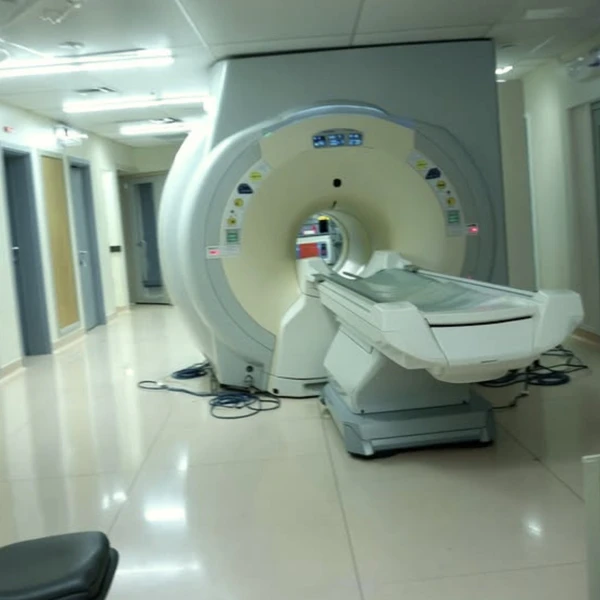
If your mother is on an MS infusion, her scans keep coming back "stable," and her body is still getting worse every year… I'm about to tell you exactly what nobody warned my mom about before they wrote her prescription. And by the end of this, you're going to be angry. Because there are three things happening right now. One — Your mother isn't getting worse because the DMT is failing. Her body is losing something for a completely different reason, and it's a reason the disease causes directly — but not one thing she's been prescribed in ten years is aimed at it. Two — Nobody told her this was coming. Not her neurologist, not the infusion clinic, not the pharmacist. They talked about attack rates. They talked about lesion counts. Not one of them told her what happens to a nerve between attacks. Three — There is a billion-dollar industry that profits every single day she keeps believing the answer is another supplement bottle. So let me tell you what happened with my mother. Because her story is going to open your eyes to how broken this actually is. My mom Diane has been on her infusion for eight years. She's 63. Relapsing MS, diagnosed at 51. She'd built her whole life around the words "no new lesions" for almost a decade, and by every measurement anybody at her clinic tracked, the DMT was doing its job. No new attacks. No new lesions. Every six months her neurologist would turn the screen and say the word every MS patient is trained to want. Stable. He was thrilled. Blood work clean. MRI clean. He shook her hand at her last visit and said, and I'm quoting her exactly, "keep doing what you're doing." She went to my daughter's sixth birthday party the next weekend. She told me later it was the worst afternoon she'd had in years. Because when she tried to lift my daughter for a photo — my daughter who weighs 42 pounds — her arms started shaking. She got her about waist-high and had to put her down. My daughter looked confused. My mom sat down in the folding chair by the cake table and said, quietly enough that only I heard it, "she's getting too big for me." She isn't. My daughter is a small six-year-old. My mom stayed in that chair for the rest of the party. She watched from a chair while the other grandmother chased the kids around the yard. When it was time to sing, she couldn't stand up on her own — my dad had to pull her up by the elbow so she could see over the table. When it was time to leave, she couldn't get out of the folding chair without pushing off both armrests. Eight years of "stable." Eight years of no new lesions. And she's stopped asking anyone to take pictures of her holding her granddaughter. So she did what all of us do. She asked. Her neurologist told her that gradual decline can happen between relapses and that her scan looked great and she should stay the course. She stayed the course. She hired a physical therapist, who told her she needed more work on her balance and her core. Twice a week. Bosu balls, single-leg stands, resistance bands, timed walks. The full program. She did it for two years on the shot. Nothing. Her timed walk went from seven seconds to ten and a half. Her grip strength dropped every quarter. She kept going because the therapist kept saying it would help, but every visit her numbers were a little worse and her therapist kept adjusting the goals down. Then came the shopping list. A vitamin D, because the MS forums said it was essential. Alpha lipoic acid, because someone in a Facebook group swore it stopped the burning at night. Magnesium at bedtime. A fish oil she choked down every morning. A biotin, back when everyone was saying that was the one. A pharmacy B-complex she'd been on for six years and never once noticed a thing from. Almost $180 a month across six bottles on her bathroom counter. Two of them she couldn't even remember why she'd started. She kept taking them because stopping felt worse than continuing. And not one person in that entire chain ever explained to her what was actually happening inside her body. Pause here for a second. Because you know what's insane? Everybody talks about what the DMT stops. The attacks. The lesions. The new activity. Nobody — and I mean NOBODY — talks about the fact that people with MS get worse mostly between the relapses, not during them. That's not a fringe claim. It's been measured. Twenty-seven thousand patients tracked for fifteen years. The scans stayed clean. The infusions kept going in. And the bodies kept getting worse. There is an entire industry making billions treating what shows up on a picture, and not one part of it is responsible for the body you're left in when the picture keeps saying stable. That part's your problem. Try harder at PT. See how that works? So my mom stopped asking her neurologist. And I started reading. And what I found explained every single thing I'd been watching for the last four years. First thing. MS strips the fatty coating around your nerves — the myelin sheath. That's the visible damage. That's what shows up on the MRI when there's enough of it in one spot for the machine to see. But underneath the visible damage, there's a second, quieter thing happening on every nerve she has. And it's happening whether her scan shows a new lesion or not. She'd known that part. Her neurologist had said something about it years ago. Here's the part nobody had ever told her. A nerve wrapped in myelin fires cheap. The signal jumps from gap to gap. Ninety-nine percent of the nerve does nothing on any given firing — the coating handles it. That's why a healthy nerve is fast and uses almost no energy. A nerve with the coating stripped off has to do the work itself. Every inch of it. Every time it fires. That takes far more energy than firing a healthy nerve. Not slightly more. Far more. And at the same time — the same immune attack that stripped off the coating also damages the mitochondria inside the nerve. The mitochondria are the parts of the cell that make energy. So the nerve suddenly needs much more energy, and the machines that make that energy are damaged. Doctors have a name for what happens next. They call it virtual hypoxia. The nerve behaves like it's suffocating even though there's plenty of oxygen. It isn't short of air. It's short of energy. Which means she could do PT three times a week for two years and never see her balance come back — because she was working a nervous system that had nothing left to fire with. And then I found the part that made me sit down. A nerve without energy can't repair its own coating. Rebuilding myelin is one of the most energy-hungry things the human body does. And a bare nerve — the exact kind of nerve MS is producing all over her nervous system — is running at a deficit before the repair even starts. So the coating stays thin. The signal stays slow. The MRI shows nothing. And her body keeps getting worse. That's the mechanism nobody says out loud. The DMT doesn't fix this. It was never built to. It stops the attack coming in. It has never once put any coating back onto the nerve. My mom didn't have two problems. She had one — and she'd been seeing it in a dozen places. In her arms at that birthday party. In her legs on the folding chair. In her grip. In her afternoons that disappeared by 2 p.m. In her feet at 3 in the morning. But then why hadn't the pharmacy B-complex worked? She'd been taking one for six years. This is the part that made me furious on her behalf, because the answer takes ninety seconds and nobody had bothered. A B vitamin cannot walk into a nerve cell on its own. It has to be in the right form. And that pharmacy B-complex uses cyanocobalamin instead of methylcobalamin, and pyridoxine hydrochloride instead of P-5-P. Those are the synthetic forms. Cheaper to manufacture. Nowhere near as bioavailable. Your body has to run a conversion step to make either of them usable — and in MS that conversion step is one of the things running at half speed. So the vitamin passes through her. And the pyridoxine hydrochloride, at the doses drugstores sell it in, doesn't just fail — it causes nerve damage on its own. There are nerve formulas in every pharmacy in this country at 100 milligrams. The daily requirement is one to three. It has to be at a therapeutic dose. The 2 milligrams of B12 in her pharmacy multivitamin was the maintenance dose for a healthy adult. It was never the dose the Japanese researchers used when they were trying to actually rebuild a coating. That number was 5,000 micrograms. Anything less has never once shown a change in a measurable nerve conduction test. And it has to reach the actual cell. Most of a swallowed B12 pill is destroyed in the stomach. What survives ends up in the blood, where a next blood test will read normal, and where her doctor will tell her her levels are fine. Almost none of it ever crosses into the nerve cell where the coating gets built. Liposomal delivery is what closes that gap — a microscopic sphere built from the same material as her cell membrane, so it fuses instead of getting turned away at the door. So a $12 pharmacy B-complex with none of that gave her the exact result the biology predicts. Her blood levels looked great. Her body kept losing things. And her neurologist told her to keep doing what she was doing. Her body was never the problem. She'd been handed the raw material with no vehicle to carry it — while on a disease that was starving her nerves in the first place. Why does nobody sell it that way? Because a bottle of cyanocobalamin costs almost nothing to make, and the label doesn't have to explain anything. Because "active forms in a liposomal delivery" doesn't sound like a breakthrough, it sounds like an inconvenience. And because if you understood that the whole thing failed over a $12 pill made with the wrong form of B12, you'd stop buying the next bottle, and the one after that. Six bottles a month. Almost $180. Not one of them designed to work with the others. Not one of them aimed at the thing actually failing. What my mom takes now is one drop under her tongue. It's called Nuvel Liposomal Neurotropic Vitamins, and it's the only formula I've found built as a complete system instead of a single ingredient in the wrong form crossing its fingers. ✓ 5,000 mcg methylcobalamin — the active form of B12, at the therapeutic dose used in the Japanese research. Not 2 mg. Not a proprietary blend. The number that has actually shown a change in nerve conduction studies. ✓ P-5-P — the active form of B6, held at a dose where it feeds the nerve instead of damaging it. The dose almost every drugstore nerve formula gets catastrophically wrong. ✓ Benfotiamine — the fat-soluble form of B1 that actually crosses into the nerve cell. Not the water-soluble thiamine that passes through you. This is the one that gives the nerve the energy to run the repair. ✓ Methylfolate — the active form of folate, for the roughly half of the population who carry an MTHFR variant and can't efficiently convert regular folic acid into the form the body can use. ✓ Niacinamide at a clinical dose — the cofactor the nerve cell uses to build the energy currency the repair runs on. ✓ Liposomal delivery — phospholipid spheres that fuse directly with the nerve cell membrane and release the vitamins inside the cell, not in the blood. Third-party verified. The step nearly every B-vitamin product silently skips. ✓ Sublingual, ninety seconds a day — bypasses the gut entirely. Absorption is not a question anymore. ✓ Made in the USA, GMP-certified facility, third-party tested every batch. ✓ No proprietary blends. Every dose printed on the label. They tell you exactly what's in it and exactly how much, because they have nothing to hide. And it's under the tongue, ninety seconds, which sounds like a small detail until you remember my mom has been swallowing bottles for six years and almost none of it ever made it past her stomach. Here's how it went for her. Weeks 1–2. Nothing visible. The first thing she noticed was that she stopped waking at 3 a.m. with her feet burning. Just… slept through. That hadn't happened in over a year. Weeks 3–4. Her energy stopped falling off a cliff at 2. Some afternoons she made it to 5 before she had to sit down. Weeks 5–6. This is when I noticed it. She stood up from the dinner table on her own. My dad reached to help her and she waved him off. She didn't even think about it. It just happened. Weeks 8–12. Her timed walk at her PT went from ten and a half seconds down to seven and a half. Her grip strength climbed for the first time in six years. She held my daughter at Thanksgiving — a full lift, both arms, and didn't put her down for over a minute. She went back to her neurologist for her follow-up and he asked what she'd changed, because she moved better than she had at her last visit — at exactly the same scan. Exactly the same scan. The MRI had nothing left to tell either of them. So here's where you are. The DMT is working. Nobody can take that away from her and nobody should try. If your mother is on one and her attacks are being stopped, she should stay on it for the rest of her life. But if she's standing in front of the same MRI wondering why her body keeps getting worse when the picture says stable, she is not imagining it, she is not being ungrateful for a treatment that's working, and she is not going to PT her way out of it — because the problem isn't the training, it's that there's nothing left inside the nerve to fire with. My mom lost eight years to that. Eight years of scans that said stable while her body kept losing things. Eight years of bottles on the bathroom counter that were never designed to work in isolation. Eight years of watching her grandchildren grow bigger than she could lift. You don't have to lose eight years. The DMT stopped the attacks. It also left the repair for someone else. Only one of those was supposed to happen. You decide. 👉 https://trynuvel.com/products/vitamin-b-complex-limposal 90-day money-back guarantee. Give it three months, and if her body doesn't change, they refund every dollar. If it doesn't work, it doesn't cost her. P.S. — If you're about to close this and think about it later, do one thing first. Go get your mother's B-complex bottle off her bathroom counter and read the label. If it says cyanocobalamin instead of methylcobalamin, or if the word liposomal isn't printed anywhere on it, that bottle was never going to reach her nerves, and now you know exactly why. That's the whole thing. That's what nobody told my mom for six years. Link: https://trynuvel.com/products/vitamin-b-complex-limposal
Where the ad sends people
trynuvel.com
My mom's MS scans have been "stable" for 8 years. She's still getting worse.
What happens to MS patients between the relapses matters more than what happens during them.
Learn more: trynuvel.com(opens in a new tab)