Dr. Robert Whitaker
Dr. Robert Whitaker Facebook ad: “Explore the power of aged garlic today!”
Ran for 2 days, from July 30 to August 1, 2026, the last day Crush saw it.
Run by Dr. Robert Whitaker on Facebook. Crush is not the advertiser and does not verify its claims. See this ad in Meta's Ad Library(opens in a new tab)
Want an ad like this for your product?
Crush makes new ad images for your product from this ad: your logo, your product photo, your offer.
Trials from $19.95 USD, then $79.95 USD a month. Cancel anytime.
About this ad
- Meta Ad Library ID
- 1034482305992238
- Platforms
- Facebook, Instagram, Audience Network, Messenger, WhatsApp and Threads
- Relaunches
- 0
Ad text
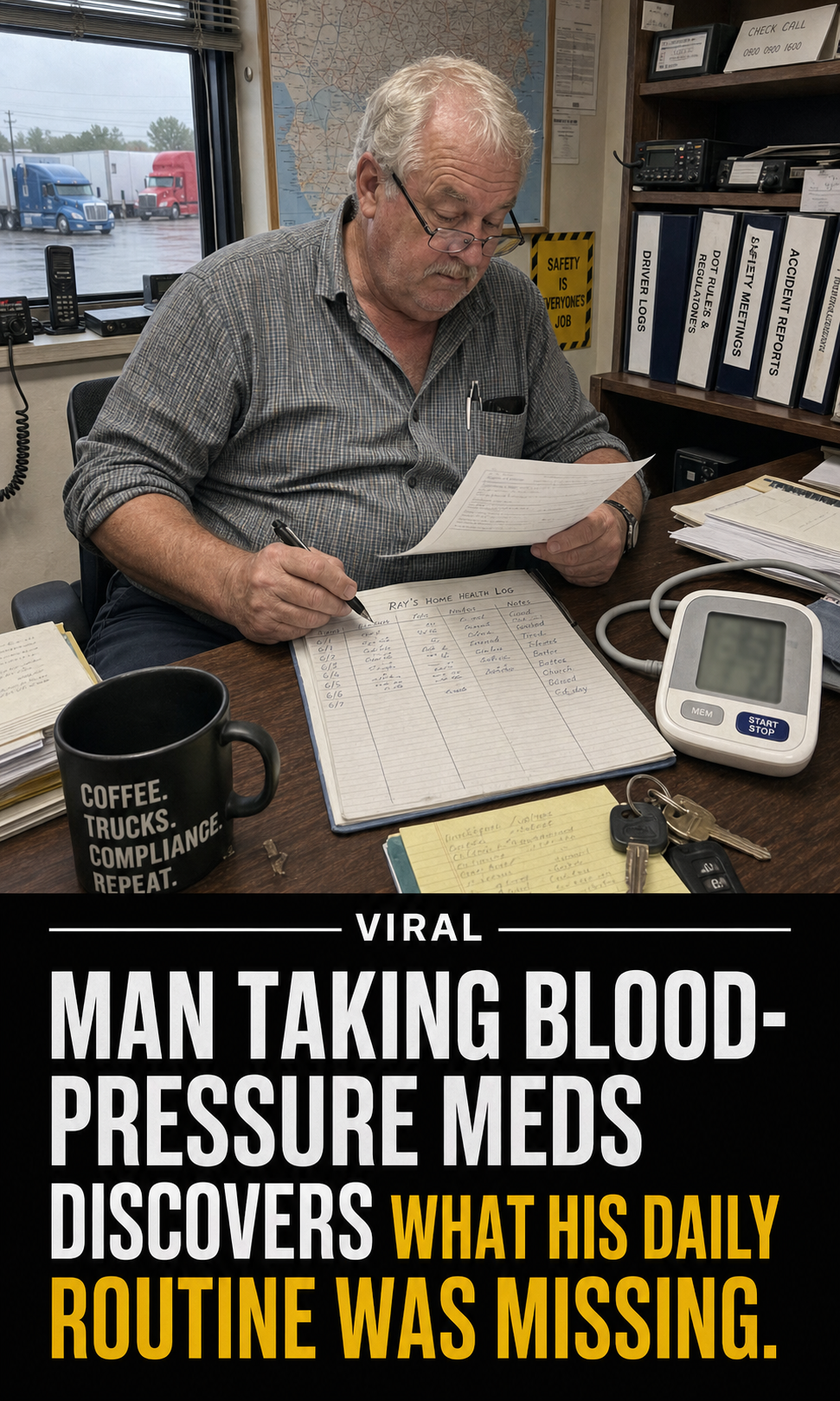
If you’re taking medication for blood pressure but haven’t checked an actual reading in months, you’re not managing anything. You’re swallowing something and hoping the rest takes care of itself. I can say that because I did it for almost two years. My name is Ray Donnelly. I’m 62, and I handle compliance for a regional trucking company outside Indianapolis. I spend my day asking grown men for documentation. Driver logs. Inspection reports. Fuel receipts. Repair records. Proof that a cracked mirror was replaced when somebody said it was replaced. Our drivers hate seeing me walk toward them with a clipboard because they know I’m about to ask a simple question that ruins a perfectly good excuse: “Where’s the record?” If it isn’t written down, timestamped, photographed, signed, or entered into the system, I don’t count it. A driver can swear he checked his brakes. Great. Show me the inspection. A shop can say it torqued the lug nuts. Great. Who did it, when did they do it, and where’s the ticket? I built an entire career around the principle that remembering something vaguely is not the same as verifying it. Then I went home every night and became the least documented man in Indiana. I had been taking blood-pressure medication since I was 57. One tablet every morning. I was religious about it. Kept the bottle beside the coffee maker. Filled it on time. Never skipped doses on purpose. If I traveled, I counted out exactly what I needed and put it in one of those little plastic organizers I used to make fun of my father for owning. So whenever anyone asked about my blood pressure, I gave the same answer. “It’s managed.” That answer sounded responsible. It also saved me from admitting I had no clue what my actual readings were. My wife, Teresa, bought me a home monitor after my doctor suggested tracking them between visits. I used it for about ten days. At first, I checked constantly. Morning. Evening. Before coffee. After coffee. After an argument. After watching the Colts blow another game they should have won. I had no system. I was just collecting numbers and reacting emotionally to every one. If the reading looked good, I felt healthy. If it looked high, I sat there staring at the machine like it had personally betrayed me and checked again three minutes later. Eventually, the novelty wore off. The monitor moved from the kitchen table to the counter. Then from the counter to the junk drawer. Then Teresa put it in the cabinet above the refrigerator, which is where household objects go when nobody wants to throw them away but nobody intends to use them again. That was the end of my “monitoring.” But I kept taking the tablet. And because I kept taking the tablet, I kept saying the situation was managed. There were clues that my definition needed work. I was tired by three most afternoons. My fingers were cold in an office where everyone else complained about the heat. I had started parking near the dispatch entrance instead of in my assigned space because my assigned space required walking the length of the lot. I told myself I needed to get inside quickly. Apparently, the eight seconds I saved were critical to regional freight operations. At home, I had developed a routine I called relaxing. Teresa called it becoming part of the recliner. I’d get home, loosen my belt, eat dinner, sit down, and spend the next three hours rejecting every activity proposed to me. Walk around the neighborhood? Long day. Go look at patio furniture? Not tonight. Help carry storage boxes down from the spare bedroom? My back was acting up. Go upstairs early with my wife? Tired. I had become very skilled at protecting myself from unnecessary life. None of this felt dramatic enough to count as a health problem. That’s how a lot of men get stuck. We think a problem has to knock us onto the floor before it deserves an investigation. Until then, we call it age. Or work. Or stress. Or “I’m just not sleeping great.” Anything that allows tomorrow to look exactly like today. My moment came during a quarterly driver-safety meeting. We had fifty-three drivers in the conference room. Half of them were pretending to listen. The other half were openly eating doughnuts while our insurance representative talked about preventable risk. She put a slide on the screen showing the difference between completing a requirement and actually managing the underlying risk. The example was tire pressure. A driver could check a tire once, write down a number, and technically complete the inspection. But if the same tire kept losing air and nobody tracked the pattern, the record became theater. One acceptable reading did not mean the tire was healthy. It meant the tire had an acceptable reading at one moment. I’d used some version of that line myself hundreds of times. Then the insurance representative said: “Compliance without current information is just confidence.” I wrote it down. Not because it was brilliant. Because it pissed me off. That sentence followed me home. Compliance without current information is just confidence. I took my medication. That was compliance. What was my current information? No idea. When had I last checked? No idea. What was the trend? No idea. Had my doctor asked for home readings? Yes. Had I provided them? No. What exactly was I managing? Apparently, the location of one pill between a bottle and my stomach. After dinner, I dragged a chair into the kitchen and opened the cabinet above the refrigerator. Teresa watched from the doorway. “What are you looking for?” “The blood-pressure monitor.” She didn’t say anything. That annoyed me immediately. “You know where it is?” “Behind the waffle maker.” “Why didn’t you tell me?” “You didn’t ask.” I found it behind the waffle maker. The batteries were dead. Of course they were. I replaced them, sat at the kitchen table, and wrapped the cuff around my arm. The first reading was higher than the version of myself I had been describing. I waited. Took another. Still not the comfortable little number I had apparently invented. I checked a third time. Teresa sat across from me. “You’re making it worse by getting worked up.” “I’m verifying it.” “You’re panicking at it.” “I’m not panicking.” “You’ve checked three times in six minutes.” That was true. I wanted a reading that would allow me to put the monitor back above the refrigerator and return to my evening. The machine refused to cooperate. I checked again the next morning. Then the next evening. The readings varied. Some were better than others. I didn’t know what the pattern meant, and I had no business interpreting it alone. What I did know was that “managed” had been a story I told without records. So I called my doctor. At the appointment, I brought six days of readings written on the back of a company inspection form. He looked at the form. “Vehicle number?” “Me.” He laughed. Then he asked how I had taken the readings, what time, whether I’d been sitting quietly, where my feet were, whether I’d had caffeine, and why I sometimes took four readings in a row. Apparently, “until I got one I liked” was not the recommended method. We went through my medication, weight, activity, food, sleep, alcohol, and family history. Then came the question I’d been hoping he wouldn’t ask. “Any changes in sexual function?” “No.” That answer came out fast. Too fast. He looked up from the computer. I corrected myself. “Some.” “How long?” I shrugged. “A while.” “How long is a while?” “Maybe a year.” It was closer to two. The problem wasn’t that nothing ever worked. The problem was that I didn’t trust whether it would. That turned every intimate moment with Teresa into a test. If things went well, I felt relieved. If they didn’t, I avoided trying again long enough for both of us to feel awkward. I’d quietly converted our bedroom into another part of life where I didn’t want current information. My doctor didn’t declare that every complaint had one cause. He didn’t tell me the monitor explained my hands, energy, weight, or bedroom problem. He did the irritatingly responsible thing and looked at the whole situation. We discussed what needed evaluation, what I needed to track, what habits weren’t helping, and which changes made sense for me. Keep taking my prescribed medication. Use the monitor correctly. Record the readings. Bring the record back. Move more. Work on my weight and sleep. Stop pretending walking around an office constituted exercise. Call if certain symptoms appeared. Simple. Not easy. Simple. I left without a miracle and with a clipboard. That part was my idea. At work, every tractor has an inspection sheet. So I made one for myself. Date. Morning reading. Medication taken. Evening reading when requested. Minutes walked. Sleep. Notes. I printed thirty copies and put them on a clipboard beside the coffee maker. Teresa saw it and said, “You made yourself a truck inspection.” “Basically.” “Do I have to check your headlights?” “That costs extra.” It was the first time we’d joked about my body in a while without the joke covering embarrassment. The clipboard worked because it removed my ability to negotiate with myself. Either the line was filled in or it wasn’t. Either I walked or I left the box blank. Either I had current information or I was back to confidence pretending it was management. The first week looked bad. The second looked slightly less bad. I stopped checking repeatedly whenever I disliked a number. I followed the method my doctor had given me and recorded what appeared. I walked for fifteen minutes after dinner. Not five miles. Not a mountain. Fifteen minutes around a subdivision where the most threatening obstacle was a golden retriever named Kevin who barked at recycling bins. The first few walks were unpleasant. My legs felt heavy. My lower back complained. Teresa walked at a pace she considered normal and I considered unnecessarily competitive. But the boxes got checked. That mattered to me. About six weeks into this, we received a freight claim involving a shipment of aged garlic extract. I know how conveniently that fits into this story. It was still my job. A manufacturer rejected part of the load because several drums arrived with damaged seals. The carrier argued that the material was “just garlic” and should be inexpensive to replace. The customer disagreed. Strongly. I got copied on the claim because compliance had to review the chain of custody. The documents described a controlled aging period measured in months, not days. The finished material also carried specifications tied to the processing and compound profile. This was not a load of garlic powder somebody scooped from a restaurant-supply bin. The process was part of the ingredient. I remember asking the customer’s quality representative why aging mattered so much. She said, “Because the finished extract isn’t defined only by what plant it started as.” That sentence made sense to me immediately. Trucking works the same way. “Truck” could mean a day cab, sleeper, refrigerated trailer, tanker, flatbed, or dump truck. Same broad category. Completely different equipment. You wouldn’t hire a tanker because it technically satisfied the word truck when you needed to move frozen chicken. Yet I had looked at supplements exactly that way. Garlic was garlic. The word was familiar, so I assumed the products were equivalent. They weren’t. Raw garlic, ordinary garlic powder, allicin-focused products, generic odorless garlic, and properly aged garlic extract can begin with the same plant without ending as the same preparation. The controlled aging process changes the compound profile and creates stable compounds such as S-allyl cysteine. That preparation—not merely the word “garlic”—was the distinction used in the material I was reviewing. I started reading. Not at two in the morning. Not because somebody whispered about a secret doctors didn’t want me to know. I read because I had a freight claim open and forty-eight pages of documentation sitting in front of me. The more I reviewed, the more I understood why saying “I tried garlic” was nearly meaningless without knowing the form. Tried what? Raw powder? An allicin product? Something deodorized? Something actually aged under controlled conditions? For how long? Standardized how? I wasn’t looking for a replacement for my prescription. I wasn’t looking for a capsule that would walk Kevin’s neighborhood for me. I had finally stopped using one tablet as an excuse to avoid participating in my own care. I wanted to know whether aged garlic extract could make sense as an additional piece of the cardiovascular routine I was already building. That was the opening Elare eventually filled. By then, I had a specification in mind. I wanted properly aged garlic extract, not a generic powder borrowing credibility from the plant name. I wanted the aging period to be clear. I wanted a simple format I could place into the routine I was already following. Elare used garlic aged for 24 months—a 730-day process designed to produce the aged-garlic profile I had been investigating. I brought the information to my doctor because I was already taking medication and didn’t see any value in surprising the person managing my care. Once we had that conversation, I added Elare. It went beside my prescription. Not in front of it. Not in place of it. Beside it. The clipboard stayed beneath both. That arrangement made the roles obvious. My medication didn’t fill in the log. Elare didn’t lace my walking shoes. The monitor didn’t improve dinner. The walk didn’t replace follow-up. Each piece had a job. For the first time, so did I. The changes did not arrive like a movie montage. I didn’t wake up one morning with dramatic music playing while I sprinted past Kevin. My progress looked more ordinary. The fifteen-minute walk became twenty. I stopped choosing the closest parking space at work. My home readings gave my doctor something useful to review. I became less afraid of the monitor because I was no longer treating every result like a verdict. I lost some weight. I slept better once I stopped eating half the kitchen at nine o’clock and addressed the habits disrupting my nights. My afternoon energy improved. And Teresa stopped asking if I wanted to walk. At 7:15, she simply put on her shoes. I followed. That was our arrangement. One evening, we came home after thirty-five minutes and stood in the kitchen drinking water. Teresa tapped the clipboard. “You’re going to need a new form.” I had filled every line. Thirty days. No blank boxes. I was ridiculously proud of that sheet. Not because the month was perfect. Some readings were better than others. Some walks were slow. I missed one evening because work ran late and another because it was raining sideways. But there was a record. The record showed participation. A few months earlier, all I had was a prescription refill history and a confident answer. Now I had information my doctor could use and a routine I could actually describe. The bedroom part improved too. Again, I’m not going to turn one softgel into a sex story it didn’t earn. What changed between Teresa and me happened inside a larger shift. I had more energy. I was less anxious about my body. We were spending time together without a television between us. I had finally discussed the issue honestly with my doctor. And I no longer treated physical intimacy as a surprise audit I was destined to fail. One Saturday morning, Teresa rolled toward me and put her hand on my chest. My first thought wasn’t, “What if this doesn’t work?” That may have been the biggest improvement of all. I was present instead of grading myself. Afterward, we stayed in bed talking about absolutely nothing. At some point, she said, “You seem less worried.” “I have better records.” She laughed. “That is the least romantic answer you could’ve given.” It was also true. Information gave me something better than false reassurance. It gave me a way to participate. I still take my prescribed medication. I still use the monitor according to the plan my doctor gave me. I still carry the clipboard habit, although Teresa bought me a notebook because she was tired of my health records looking like truck inspections. And I still take Elare as the aged-garlic component of my cardiovascular routine. Not because it completes the assignment. That belief is what got me into this mess. I take it because I investigated the preparation, understood why 24-month-aged garlic extract was different from ordinary garlic powder, and decided it had a sensible supporting role beside the rest of my plan. That’s the point I’m trying to make. If you filled your prescription on time, good. If you take it as directed, good. Those things matter. But if you haven’t checked a reading since your last appointment, don’t know what your recent pattern looks like, and can’t remember the last time you gave your body anything besides another day in a chair, be honest about what “managed” means. You may be compliant with one instruction. That is not the same as actively managing the whole situation. I confused the two because one required swallowing a tablet and the other required me to change how I lived. A pill bottle gave me proof that I had done something. The dead monitor above the refrigerator proved how carefully I had avoided finding out whether it was enough. So start with current information. Use the equipment correctly. Keep the appointments. Ask the questions you’ve been editing out. Then look at what belongs around the care you already follow. If aged garlic interests you, don’t stop at the word garlic. Look at the preparation, the aging period, and what distinguishes properly aged extract from the generic powders sharing the shelf. That’s what led me to Elare. Not a promise that it would take care of everything. The realization that nothing should be expected to. P.S. The old monitor still sits on our kitchen counter. Teresa asked if we could put it somewhere less visible. I told her no. I spent too long hiding it above the refrigerator, and I know exactly what happens when I stop seeing the evidence.
Where the ad sends people
elare.store
Explore the power of aged garlic today!
Elaré Aged Garlic Extract - 7500mg Odorless Premium aged garlic extract dietary supplement for adults 50+. Each capsule contains 7500mg equivalent of - Elare
Shop now: elare.store(opens in a new tab)