Dennis Callahan
Dennis Callahan Facebook ad: “I Spent $1,100 on Prostate Supplements Over 4 Years…”
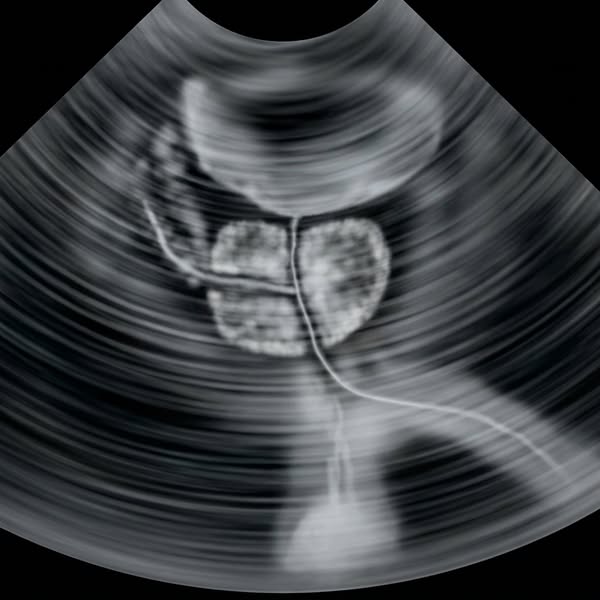
Ran for 1 day, from June 17 to June 18, 2026, the last day Crush saw it.
Run by Dennis Callahan on Facebook. Crush is not the advertiser and does not verify its claims. See this ad in Meta's Ad Library(opens in a new tab)
Want an ad like this for your product?
Crush makes new ad images for your product from this ad: your logo, your product photo, your offer.
Trials from $19.95 USD, then $79.95 USD a month. Cancel anytime.
About this ad
- Meta Ad Library ID
- 1035051312810918
- Platforms
- Facebook, Instagram, Audience Network, Messenger and Threads
- Relaunches
- 3
Ad text
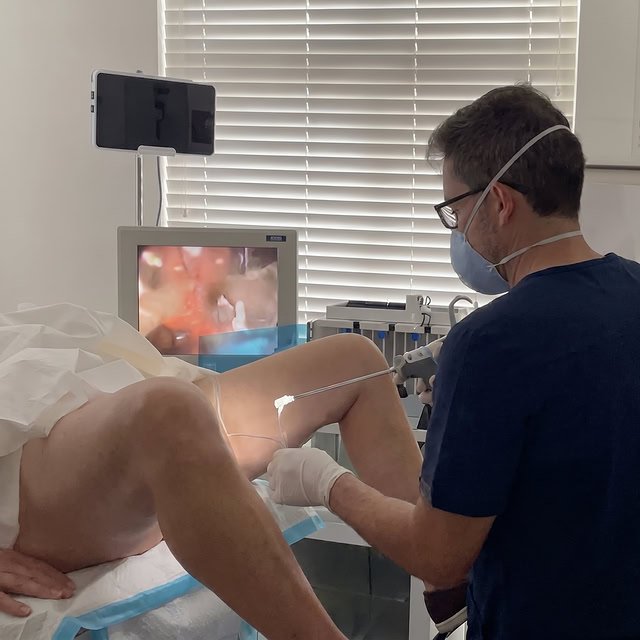
I want to tell you about the worst family dinner of my life. Not because anything dramatic happened. Nobody fought. The food was fine. My daughter made the pot roast she makes every time we come over, the one my wife always asks for the recipe and never writes down. It was bad because of what my son-in-law said. And how right he turned out to be. And how long it took me to admit that. His name is Brian. He's 34. He has a PhD in molecular biology from Johns Hopkins and he works at a research institute outside Baltimore where he reads clinical studies the way other men read box scores. He is not someone who talks about things he doesn't know. He is also not someone who lets a good opportunity to be the smartest person at the table go to waste. I have a complicated relationship with Brian. He's good to my daughter. I'll give him that first because everything else is easier after that. He's good to my daughter and he's a good father and on most days I genuinely like him. But he has a way of explaining things — the slight pause before he answers, the way he tilts his head like he's deciding how simple to make it — that has been getting under my skin since the rehearsal dinner. The night everything changed, I got up from the table twice before the pot roast was cleared. Brian watched me come back the second time. He didn't say anything right away. He waited until my wife and my daughter were in the kitchen and it was just the two of us at the table. Then he said: "How long has that been going on?" I told him it was nothing. Four years of doctors telling me it was nothing. He nodded slowly. That head tilt. "Can I show you something?" But to understand why that dinner mattered I need to tell you what four years of monitoring had actually done to my life. The urgency first. Not a suggestion. A hard, sudden clench that felt like someone had reached inside and made a fist around my bladder. No warning. No runway. I started clocking every men's room at every hardware store, every rest stop on 95, every restaurant I'd walked into for thirty years. I learned which tables at my regular places were closest to the back hallway. I stopped ordering the second beer before I'd finished the first because I didn't want to do the math. It became a thing my wife noticed before it became a thing I admitted. She stopped commenting. That was worse than the comments. The nights. Up twice before three. Sometimes three times. Stand at the toilet and push and get a thin trickle — two minutes of effort for two ounces — then lie back down and spend twenty minutes waiting for my heart rate to drop. After eighteen months of that the tiredness stopped being tiredness and became just the baseline of existing. The flow. Any man reading this knows. You stand there and wait. It starts. It stops. It starts again. You finish and you're not convinced you actually finished. You wait. You shake and wait again. Like a garden hose with a kink somewhere you can't reach — pressure behind it, nothing coming through the way it should. You wash your hands and walk out and before you've sat back down you're already running the calculation again. The pressure. A dull, low weight in the lower belly. Constant. I stopped registering it as a symptom because it had been there long enough to become part of what it felt like to be me. I did everything they told me to do. Saw palmetto first — my doctor mentioned it in passing the way doctors mention things they don't actually believe in. Six months. Nothing moved. Beta-sitosterol next. Eight weeks. The twelve-ingredient Advanced Prostate Formula with the clinical research printed in a font size I needed reading glasses for. The German one at $58 a bottle. The Costco blend with the man hiking on the label. Four years. Eleven products. Over $1,100. My urologist, a man named Dr. Finch who I genuinely respect, told me at every visit that my numbers looked normal. BPH was common. We'd monitor it. I monitored it for four years while it quietly took things from me one at a time. Brian slid his phone across the table. I almost didn't look at it. I want to be honest about that. My first instinct was to tell him I appreciated it but I'd been dealing with this for four years and I'd done my research. My second instinct was to remind him that I was 63 years old and had been managing my own health since before he was born. I looked at the phone. It was a clinical study. Published journal. I could see it was real before I read a word — the formatting, the abstract, the author list. This wasn't a supplement company's blog post. Brian said: "I came across this about eight months ago. I've been waiting for the right time to mention it. I wasn't sure how you'd take it." He said: "Every supplement you've been taking works outside the gland. Hormones, flow mechanics, receptor activity. They're all working on things that are downstream of the actual problem. None of them reach the tissue directly." I asked him what the actual problem was. He picked the phone back up, looked at it for a second, then looked at me. "Inflammation," he said. "Chronic, low-grade inflammation inside the prostate tissue itself. The tissue around the urethra swells — not a lot, but persistently. Enough to compress the channel. Enough to send false signals to the bladder. Enough to make every bathroom trip feel incomplete and every night feel interrupted." He said: "The inflammation is the leak. Everything else you've been taking — saw palmetto, beta-sitosterol, all of it — is mopping the floor. The tissue is still swollen. The channel is still compressed. Nothing you've tried has ever gotten inside the gland where the problem actually lives." I sat there and thought about eleven products over four years. All that money. All those mornings. All of it aimed at the wrong place. Brian was watching me. He said: "I know this is a lot. I almost didn't bring it up." I told him to keep going. He turned the phone back toward me and walked me through the study. Researchers ran a controlled clinical trial on men scheduled for prostate surgery. One group took pomegranate extract capsules — concentrated, standardized, not juice — for four weeks before the operation. The other group took a placebo. When they analyzed the prostate tissue after surgery, the pomegranate compounds were physically measurable inside the gland itself. Not in the bloodstream. Not working on hormones at a distance. Inside the tissue. Where the inflammation actually lives. Brian said: "That's never been shown for any other supplement compound. Saw palmetto doesn't reach the tissue. Beta-sitosterol doesn't reach the tissue. This is the only compound with a controlled human study showing direct tissue penetration at measurable concentrations." Once those compounds reach the tissue they work on the inflammation directly. The swelling that's been compressing the channel eases. The false signals to the bladder quiet down. The flow stops fighting itself. Not managing the downstream effects. Reaching the source. I asked him why pomegranate. He said the active compounds — concentrated in the peel and rind — are unlike anything else studied for this application. When extracted correctly and standardized for potency they survive digestion and reach tissue that other compounds never access. "I've been sitting on this for eight months," he said. "Every time you got up at dinner I thought about saying something." I told him I wished he'd said something eight months ago. He smiled. That head tilt. "I wasn't sure you'd listen." He wasn't wrong about that either. I asked him what to actually look for. He said most pomegranate supplements on the market are cheap dried fruit powder with no standardization — no specification of active compound content, no third-party testing, processed at high heat that destroys the active compounds before the capsule is ever sealed. "Heat processing is the key issue," he said. "The active compounds are heat-sensitive. High-temperature manufacturing destroys them. What's left will still say pomegranate extract on the label. It just won't do anything. You can take the wrong version for six months, feel nothing, and conclude pomegranate doesn't work. That's what most people do." He had a list. Of course he had a list. Standardized for active compound content — not just "pomegranate extract" with nothing behind it. Third-party tested for potency. Low-temperature extraction. No fillers cutting the active dose. "All four," he said. "If a brand doesn't hit all four you're buying the version that was designed to fail quietly." I spent two evenings going through every brand I could find. Most failed immediately — no standardization on the label, fillers in the supplement facts, no certificate of analysis anywhere on the site. One brand had a clinical advisor listed on their about page. I looked him up. He didn't exist. The only brand that hit every criteria on Brian's list was Avoria. Organic. Standardized for active compound potency. Third-party tested. Low-temperature extraction. No fillers. Made in the USA. I ordered it that night without telling him. I wasn't ready to give him that yet. The first week I kept my expectations flat. Eleven products had trained me not to feel anything before there was something to feel. The urgency was still there. The nights were still interrupted. The pressure was still sitting where it always sat. End of week two something shifted. The pressure — that dull low weight in the lower belly I'd stopped calling a symptom — had eased. Not gone. Eased. Enough to notice it was different when I sat down in the morning. Week three I got through my morning coffee without the hard clench that usually came around the forty-minute mark. Once. Then twice. Then most mornings. Week four the flow had changed. The stop-and-start that I'd accepted as permanent had smoothed out. I stood at the sink one morning and thought: that was different. I didn't say anything to my wife yet. I didn't want to make something of it before I was sure. By week six I was sure. The urgency was manageable. The kind you notice, respond to, and it listens. Not the kind that runs the schedule. The nights had changed. Once instead of two or three times. Then most nights not at all before five. The flow was consistent. Not fighting itself. Not the kinked hose I'd been living with for four years. Just — working. I told my wife. She said she'd noticed the sleep two weeks earlier and hadn't said anything because she didn't want to jinx it. At ten weeks I saw Dr. Finch for my regular checkup. He looked at his notes. Looked at me. He said: "Whatever you changed, keep doing it." I told him what I'd found. He wrote it down. That was eight weeks ago. I'm at eighteen weeks on Avoria now. Last Sunday we went to my daughter's for dinner again. Same pot roast. Same table. Brian made a comment around the main course — some joke about whether I needed the bathroom schedule printed on the menu. He said it the way he always says things, that slight smile, waiting to see if it lands. I let it go. Not because it still stings. Because it doesn't anymore. And he doesn't know that yet. I got up once the entire evening. To say goodbye. He'll figure it out eventually. Brian always figures things out. I'm going to enjoy the time before he does. If you've been through saw palmetto, beta-sitosterol, the Costco blend, the twelve-ingredient Advanced Prostate Formula — you are not crazy and you are not failing. That entire category was built around mechanisms that sit downstream of the actual problem. The inflammation was always there. The tissue was always compressed. Nothing you took ever reached it. Pomegranate extract reaches it. That's been confirmed in a controlled clinical study on human prostate tissue. No other prostate supplement has shown the same thing. But only the right extract. Standardized and tested. No fillers. Low-temperature processing. Avoria checks every box. Two capsules every morning with water. A man named Gary — 61, retired electrician, same carousel I was on for three years — told me he noticed the pressure easing around week two. "I'd been carrying that weight so long I forgot what it felt like without it," he said. "Then one morning I sat down and it just wasn't there the same way." His doctor told him at his next visit to keep doing whatever he'd changed. Avoria offers a 30-day money-back guarantee. If you take it for 30 days and don't notice any change in urgency, flow, or sleep — they'll refund every cent. After four years and over $1,000 on things that never reached the tissue, that guarantee is the first time the risk is on someone else's side. Take it for 30 days. Give the inflammation somewhere to go. 👉 https://getavoria.com/products/pom-2 P.S. What Brian showed me at that dinner table is what four years of urologist appointments never covered. The supplements on the shelf work on hormones and flow mechanics downstream of the inflammation. The tissue is still swollen. The channel is still compressed. Until something gets inside the gland and addresses that directly you're mopping the floor. Pomegranate extract gets inside the gland. That's been shown in a controlled clinical study. Nothing else in the prostate supplement category has demonstrated the same thing. P.P.S. Most pomegranate supplements on Amazon will not do what Avoria does. Cheap powder with no standardization on the label is not the same compound the researchers studied. Heat processing destroys the active compounds before the capsule is sealed. If a brand doesn't specify what it's standardized to, doesn't have third-party testing, and doesn't use low-temperature extraction — you're buying the version that was designed to fail you quietly. Brian's four criteria are not optional. All four or none. P.P.P.S. The 30-day guarantee covers the window where most men first notice the shift — pressure easing around week two, urgency becoming manageable by week four, flow following after that. After four years on things built around the wrong mechanism, 30 days with a full refund is the easiest decision I've made in this space. Brian was right about the research. He doesn't need to know that yet either. 👉 https://getavoria.com/products/pom-2
Where the ad sends people
getavoria.com
I Spent $1,100 on Prostate Supplements Over 4 Years. Here's the Only Thing That Actually Worked.
Avoria
Learn more: getavoria.com(opens in a new tab)