
Inactive· since Aug 27, 2026
- 15
- days it ran
- 1
- relaunches
- 5,718
- EU reach
Ad copy
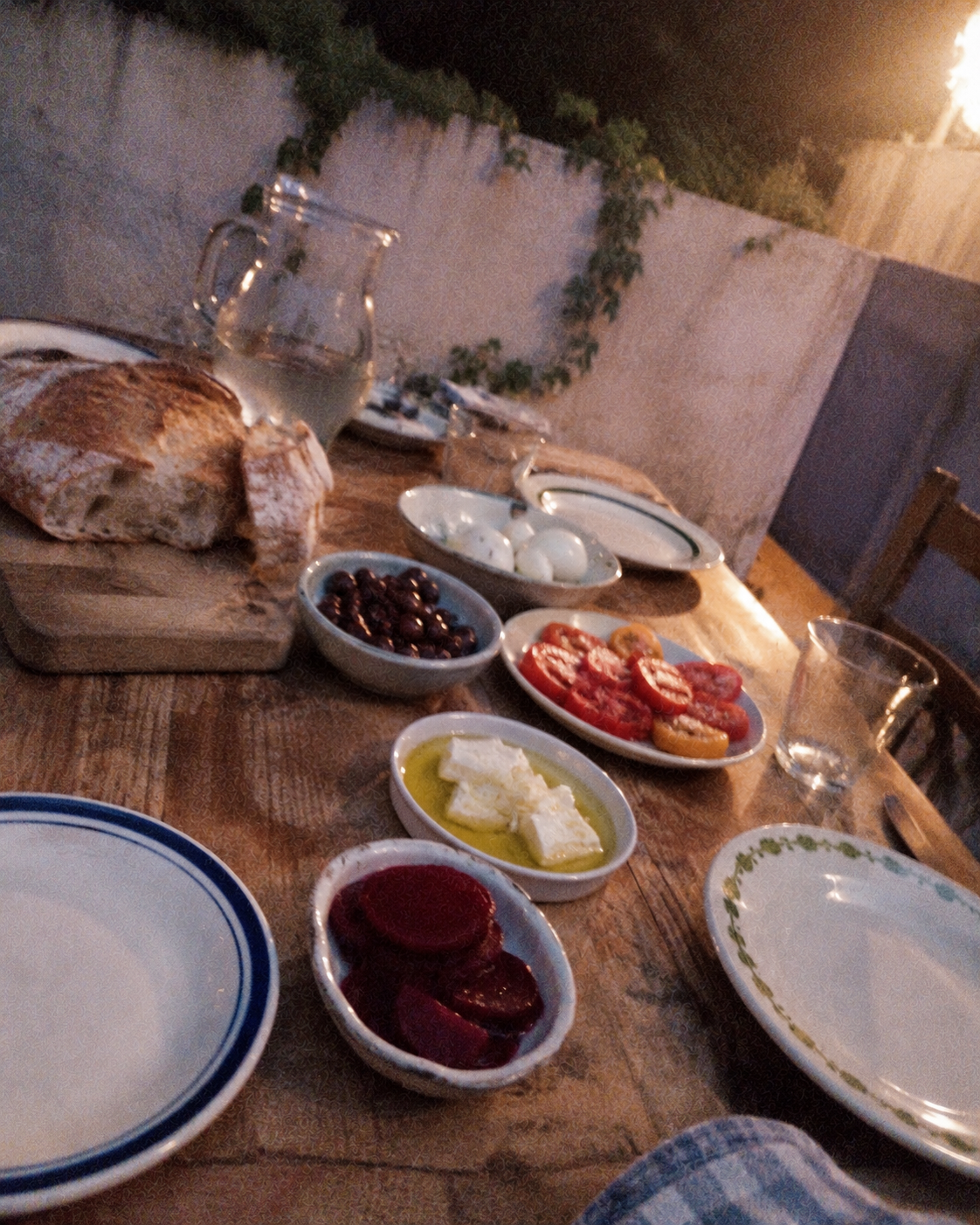
Picture a Town Where Dinner Takes Ten Minutes Every Night — and Takeout Barely Seems to Exist. This is an illustrative story about a woman named Sylvia, a neighbor named Rina, and a town where dinner takes ten minutes every night. Picture that town — in a warm old country we're not going to name, where the houses share walls, the streets share shade, and every house has a courtyard out back with a table in it. Picture Sylvia arriving there in early summer, for a whole month, with her husband and a suitcase of sensible shoes. And picture Rina, the neighbor over the low courtyard wall — seventy-some, a dish towel over one shoulder like a uniform. What Sylvia watches Rina do at seven o'clock every evening for a month is going to fly home with her and quietly rearrange one shelf of her refrigerator, one night of her week, and one belief she has held, professionally, for forty years. Let me back up. You need Sylvia first, and you have met her. Sylvia is sixty-two, and for thirty-three years she taught home economics — the last home-ec teacher in her county, as it turned out, and she'd tell you that with a little iron in it. Which means Sylvia doesn't just cook dinner. Sylvia believes in dinner. A real dinner, made from scratch, every single night — a protein, two sides, something green, everything from actual ingredients. It's not a chore to her. It's a position. Boxed anything is a small defeat. Takeout is for emergencies, and there have been maybe nine emergencies since the Clinton years. And Sylvia is good. Let the record show it. Thirty-three years of teaching it, forty of doing it — the woman can cook. But here's the private arithmetic of Sylvia's retirement, the thing she'd only admit while drying the last pan at eight-fifteen: Dinner has become the largest thing in her day. Not the fanciest. The largest. It starts, honestly, around four — the defrosting, the deciding, the peeling. It ends at eight-fifteen with that last pan. Four hours, at the center of every single day, three hundred sixty-five days a year. And the things she retired to — the watercolors, the long walk, the novel her daughter keeps recommending — all live in the space dinner leaves. Which is the corner of the evening, when the evening's mostly spent. It isn't a crisis. It's a hum: a standing puzzlement about why doing everything right, every night, by a woman trained to do it right, leaves so little room for everything else. She has concluded that's simply what a real dinner costs. Keep that. The courtyard is about to overturn it. So: the month. The trip was the retirement dream — one town, one month, live like locals, none of that three-cities-in-nine-days nonsense. They rented a small house with a courtyard, and the courtyard shares a low wall with Rina's. And on the first evening, at seven o'clock, over that wall, Sylvia watches Rina make dinner. Except that's not what she sees. That's the whole point. What she sees makes no professional sense at all. Rina walks out with a board of bread — good bread, from the morning, from the baker three doors down. Then a bowl of olives from a crock by her kitchen door. Then cheese out of a jar of golden oil. A plate of tomatoes, cut, with salt. Boiled eggs from a bowl on the counter, made that morning with the coffee. And a dish of pickled beets, deep crimson, glowing, out of one of the jars that line her pantry shelf like stained glass. Ten minutes. Maybe twelve. Nothing is cooked — nothing touches a flame — and yet the table, when her family sits down at it, is abundant. Varied, colorful, complete, unhurried. Sylvia watches this happen the second night. The third. A week in, she's checked her professional instinct to look for the trick — the freezer full of prepared food, the daughter doing prep — and found nothing. There's just the shelf, the crock, the baker, and ten minutes. By the second week the families are sharing the wall most evenings, the way that happens, and Sylvia finally asks the question she's been holding with both hands. "Rina. I taught cooking for thirty-three years. I have watched you put a beautiful table in front of your family every night for two weeks, and I have never once seen you cook. How?" And Rina — who has been waiting for this question since approximately the first evening, because visitors always ask it eventually — wipes her hands on the towel, leans on the wall, and gives Sylvia the seminar. "You're looking at seven o'clock," she says. "That's your mistake. Nothing happens at seven o'clock. Seven o'clock is too late for anything to happen." She ticks the table off with one finger, dish by dish. "The bread — that happened this morning, at the baker's, while I drank my coffee. The eggs happened this morning too, in the same pot of water, next to the coffee. The cheese in oil — that happened in the autumn. The olives happened last year. The beets happened in September, in one afternoon, with my sister — we did thirty jars, we argued the whole time; it was wonderful." She shrugs, the shrug of a woman stating the obvious. "At seven o'clock, I introduce them to each other. That's all dinner is here. Dinner is not made at dinnertime, dear. Dinner is made all year. Seven o'clock is just when it sits down." And then the line Sylvia will carry home through two airports and straight into her own kitchen: "A dinner made at dinnertime is a race — every night, forever, against the same clock. A dinner made all year is a table. You cook dishes, I keep components. You start from zero every evening at four o'clock. I have never once started from zero in my life." Somebody's grandchild needs something then, and the seminar's over. But Sylvia spends the rest of the month watching it prove itself, evening after evening — and doing, you knew she would, the arithmetic. Because she is not thinking about olives. She's thinking about four o'clock. The daily starting-from-zero. Thirty-three years of teaching students to execute the dish — and forty years of executing it herself, every night, as a race run from a standing start, against a seven o'clock gun. She has been placing all her effort at the moment of need — the most expensive hour there is. The town places its effort ahead of the need — in September, in the morning, at the baker's — where the same effort, spent once, feeds a hundred evenings. The town doesn't cook less than Sylvia. That's the discovery hiding inside the whole month. The town still does real work — thirty jars in an afternoon is real work. It just does it earlier, in season, in bulk, in company — and then coasts on the standing components for the rest of the year. Effort at the moment of need is retail. Effort ahead of the need is wholesale. Sylvia has been paying retail for dinner every night of her adult life. That's the discovery, and it's worth saying plainly: A life runs better on components than on productions. Effort spent at the moment of need is the most expensive effort there is — every evening a race from zero. Effort spent ahead of the need is cheap, calm, and already done when the clock hits seven. The trick was never doing more. It's doing it earlier, once, and letting the shelf hold it. Keep components. Assemble at the hour. Race nothing. And that is where the beet enters the story. Because of the dish Sylvia couldn't stop going back to, all month, on that table where nothing was ever cooked: the pickled beets, out of the September jars, glowing like stained glass. The beet was on Rina's table every single night for a month, and nobody cooked it once. The beet may be a remarkably practical standing component: patient, familiar, and quiet on a shelf. Beetroot naturally contains dietary nitrates, and the body converts those into nitric oxide, a molecule that helps support healthy blood flow.* Beets also carry betalains — the deep crimson pigments that made Rina's jars glow. But here's Sylvia's honest situation. She doesn't have a September. That's what can't be packed in a suitcase. Rina's beet jars assume the whole apparatus: the sister, the afternoon, the thirty jars, the pantry that holds them, the culture that taught her hands. For Sylvia, the classic forms of the beet all bill the expensive hour — the roasting is a four-o'clock race, the pickling is a Saturday she'd have to invent alone, the juicing is a machine and a crimson sink. Rosabella Beetroot is the beet as a standing component: two capsules, once a day. Already on the shelf. Nothing to make at the moment of need. No race, no starting from zero — the work sits done, the way Rina's jars sit done, waiting for the hour to arrive. It stands by the coffee maker — which is to say, inside the one part of the morning that already runs on components: the water, the grounds, the cup, assembled half-awake in two minutes because nothing about it has to be invented daily. What's in it reads in one breath. 1,300mg of organic beetroot powder per serving — a serving being those two capsules. One active ingredient, with the dose printed plainly on the label, nothing to decode. Non-GMO, third-party lab tested, produced under GMP, made in the USA from globally sourced ingredients. It contains no caffeine. Sixty capsules in a bottle; thirty days. And now the part you don't usually read in something like this, so read it twice: Nobody here is going to promise you a transformation. We're not going to tell you what you'll feel or when. Bodies are different, and yours doesn't owe an advertisement anything. We're not going to dress it up in a story either — Sylvia and Rina are illustrations, and we said so in the first lines, because that's the only honest way to use them. And let's state the ceiling the way a home-ec teacher would insist: a capsule is not Rina's table. It won't feed a family, fill a courtyard, or taste like September. It's one component — the beet, in the one form that needs no apparatus at all. What we sell is what's on the label, at the dose on the label, sitting done on a shelf. One thing before anything goes in a cart: talk to your doctor or pharmacist before adding any supplement, especially if you take any medication. This goes alongside the rest of a routine — the meals, the walks, the sleep — not in place of any of it. Before adding it to the morning routine, Sylvia checked with her doctor or pharmacist, then put the bottle beside the coffee. On Amazon, Rosabella Beetroot sits at 4.4 out of 5 across 14,330 ratings as of August 12, 2026. The story's ending is small, and it's in two places, because two parts of Sylvia's week changed. The first is Thursday. Thursday dinner at Sylvia's house is now assembled. One night a week — she's not dramatic, and the other six dinners are still dinners, because the woman likes to cook and retirement should keep what you like. But Thursday is the courtyard night. The good bread bought that morning. A crock of olives that lives in the refrigerator now, bought, not made, without one ounce of professional guilt. Boiled eggs from the coffee's pot of water. Tomatoes, salt, the oil with the good cheese in it. And a jar of pickled beets from the farmers' market — bought from a woman who does her own September, because Sylvia decided the component matters more than who ran the race. Ten minutes. The table looks abundant, because it is. And the evening it doesn't eat — the whole long light of it — goes to the watercolors, which is what it was always supposed to be for. The second place is the counter. A bottle, beside the coffee maker, inside the two minutes that already run on components. The one part of the beet that now happens the way Rina's whole table happens: earlier, elsewhere, already done — just waiting for the hour to sit down. P.S. If your own dinners have become a nightly race from zero — the four o'clock start, the eight-fifteen last pan, the good things living in the corner the evening leaves — the finding of this story, plainly: you were never doing it wrong. You were doing all of it at the most expensive hour there is. Do what the courtyard does: move the effort earlier. Keep components — bought ones count. Assemble at the hour. And give one night a week back to whatever you retired to. P.P.S. What it is, plainly: organic beetroot powder in capsules — 1,300mg per two-capsule serving, one active ingredient, dose on the label, no caffeine, non-GMO, third-party lab tested. Thirty days a bottle. That's the whole story. P.P.P.S. If you're not satisfied for any reason, return the product within 90 days of delivery for a full refund. Individual experiences vary. These statements have not been evaluated by the Food and Drug Administration. This product is not intended to diagnose, treat, cure, or prevent any disease.
Support stamina and heart health every day
LEARN MORELike this ad? Make it yours.
Crush rebuilds this exact creative around your product — your brand, your colors, your offer — in about a minute.