The Pet Ear Health Foundation
The Pet Ear Health Foundation Facebook ad: “Every Ear Product I Tried Had One Flaw”
Ran for 1 day, from June 29, 2026, the last day Crush saw it.
Run by The Pet Ear Health Foundation on Facebook. Crush is not the advertiser and does not verify its claims. See this ad in Meta's Ad Library(opens in a new tab)
Want an ad like this for your product?
Crush makes new ad images for your product from this ad: your logo, your product photo, your offer.
Trials from $19.95 USD, then $79.95 USD a month. Cancel anytime.
About this ad
- Meta Ad Library ID
- 1052180700805177
- Platforms
- Facebook, Instagram, Messenger and Threads
- Relaunches
- 0
Ad text
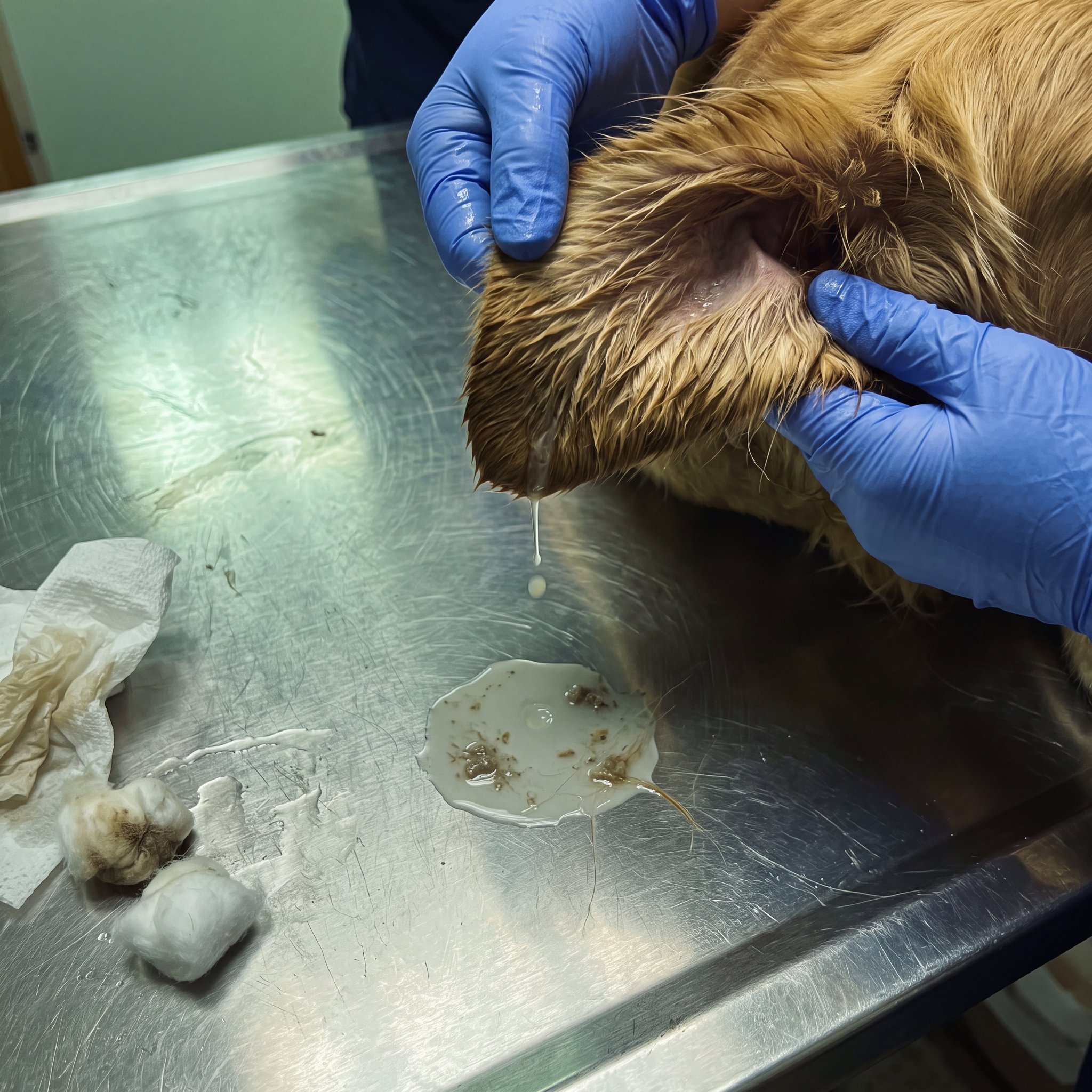
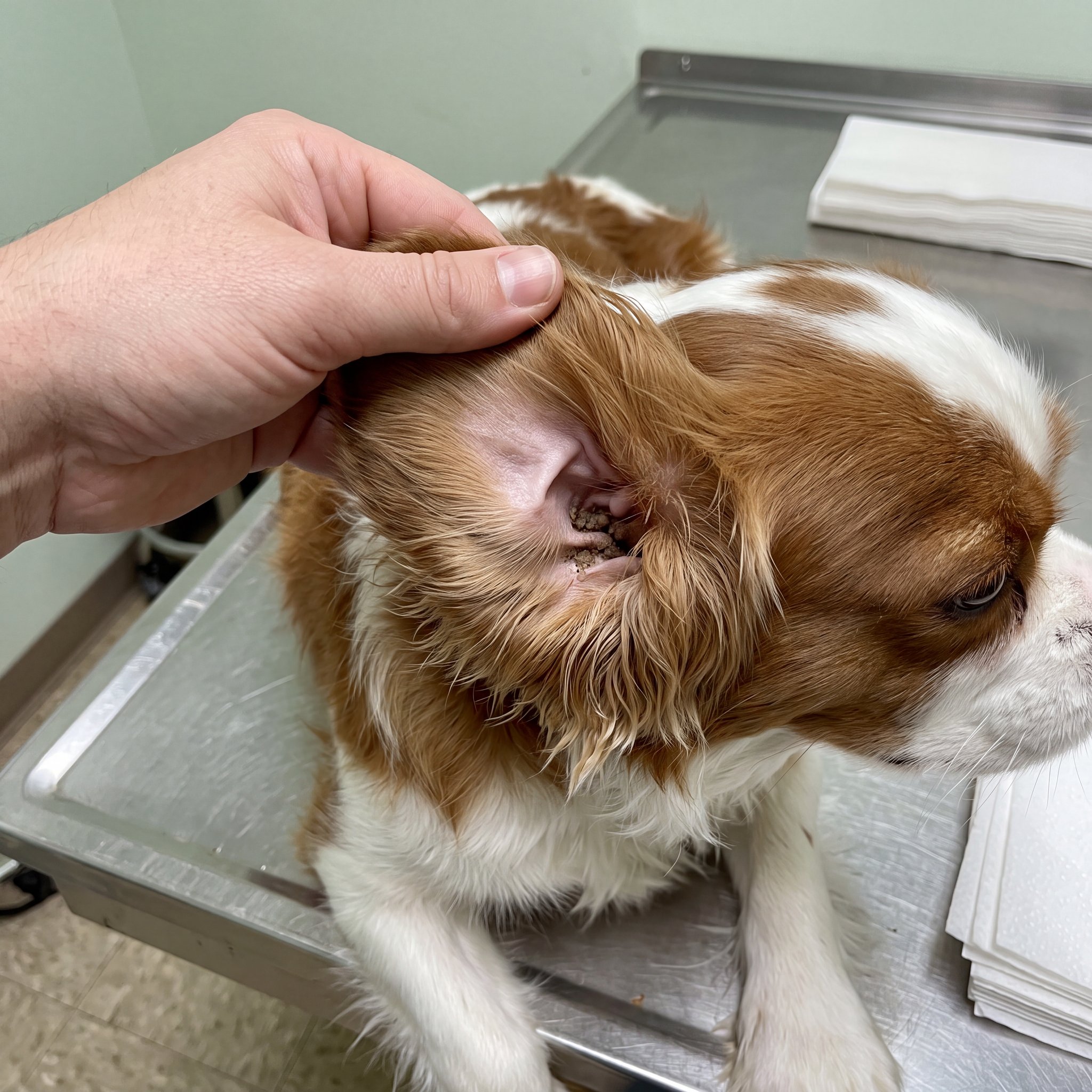
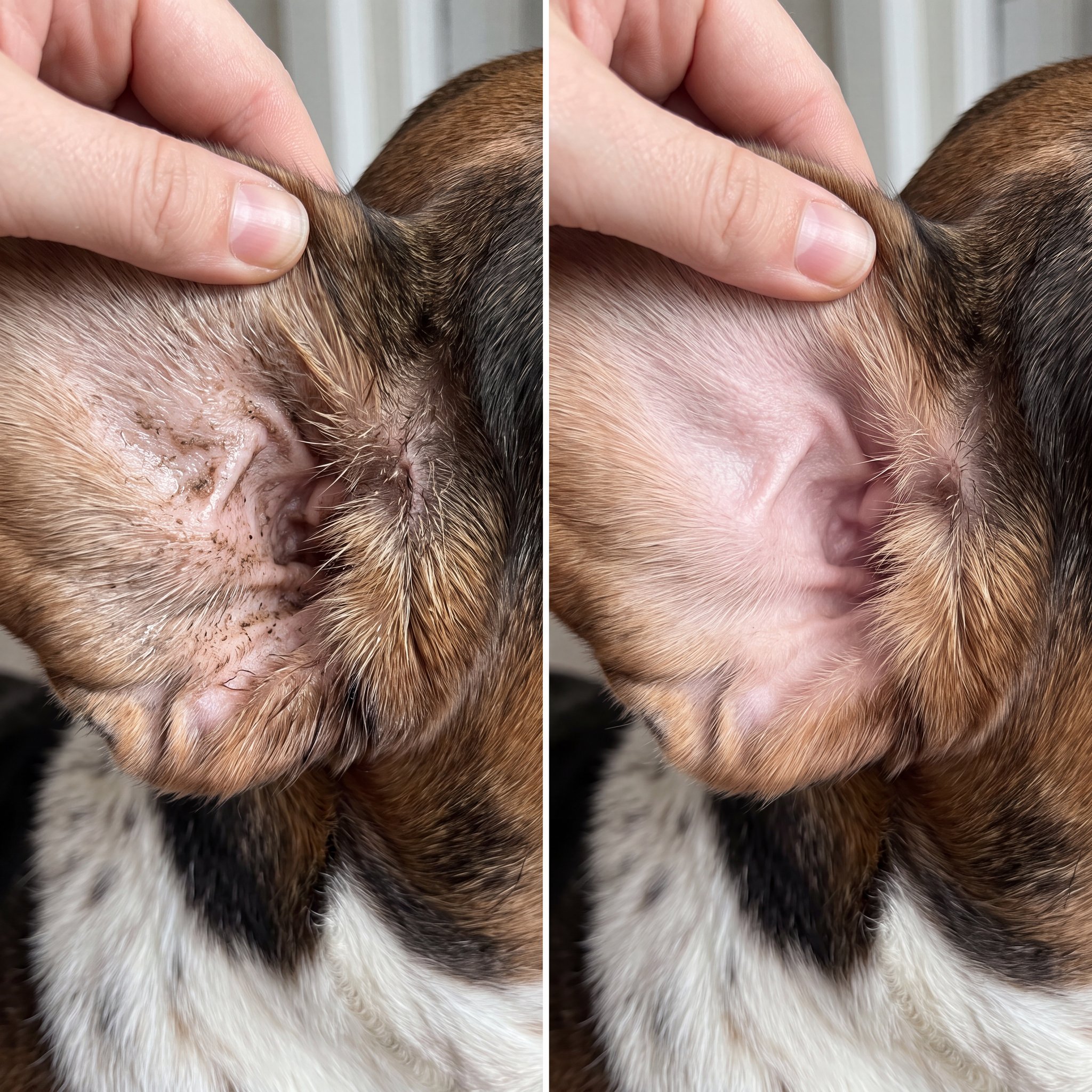
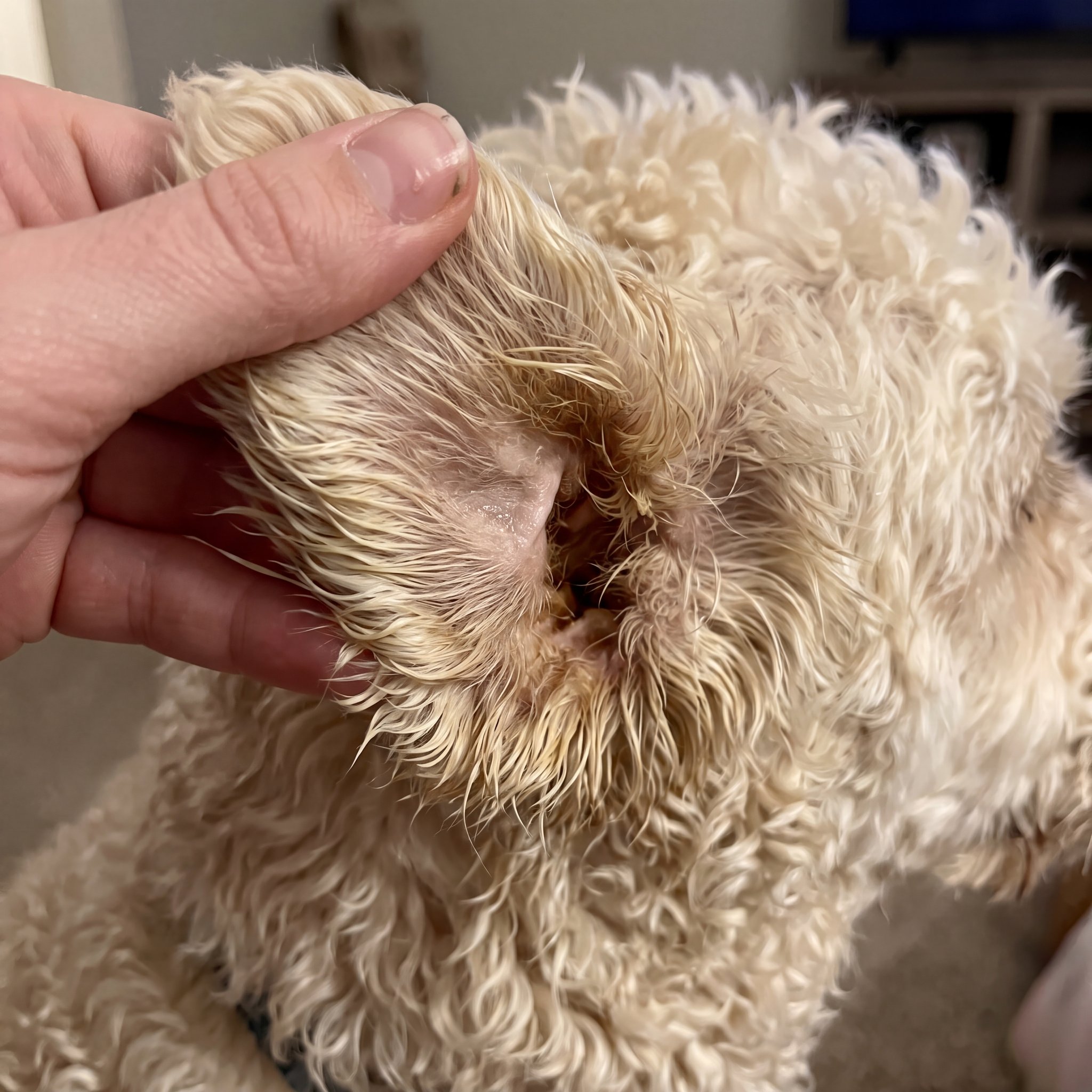
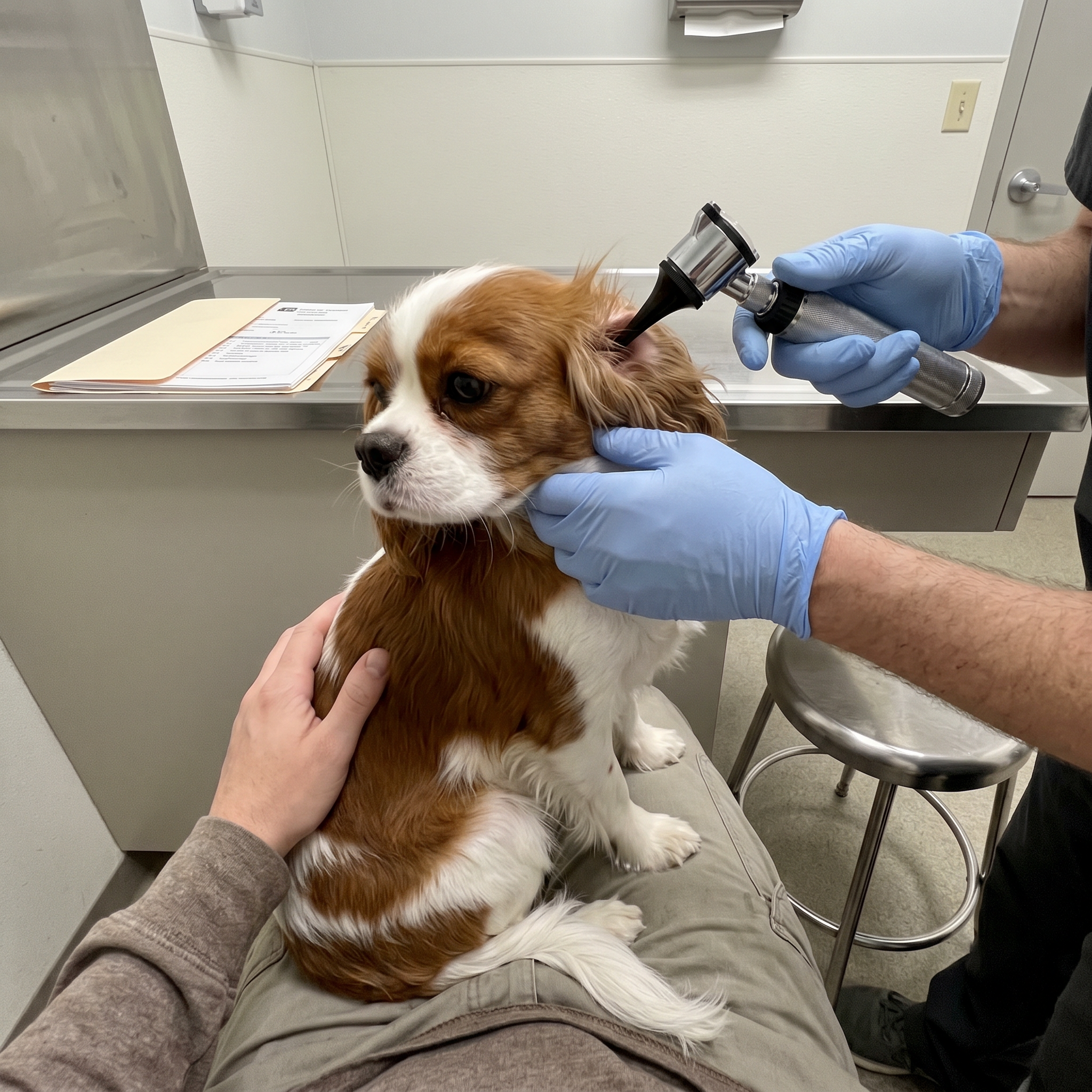
Every ear product I'd ever tried on my Cavalier had the same hidden flaw, and I didn't see it until I was three days away from booking a specialist consultation that was going to cost me $500 just to walk in the door. I'm not a vet, I'm a freelance designer who got too obsessed with her dog's ears, and what I figured out at 11 pm on a Wednesday is the reason Ruby still has both of hers. Let me show you what I mean. I want to say up front, I am not a vet, I am not a vet tech, and I do not have a single hour of medical training. I'm a freelance graphic designer in Asheville, North Carolina. The reason I'm telling you any of this is that I spent 90 nights at my kitchen counter reading veterinary dermatology research the same way I research a branding project, which is obsessively, until I understand the mechanism well enough to explain it to a five-year-old. I did that because I had to. My dog was about to lose her ears, and the person I trusted most in the world to fix it had just told me, gently, that she had run out of moves. This is what I found, and why I'm telling you instead of keeping it to myself Her name is Ruby, she's a five-year-old Cavalier King Charles, and by the time we got to that exam room appointment, she'd had four ear infections in two years, and we'd spent something like $1,400 on a problem that kept coming back no matter what I did. I sat on the metal stool with Ruby on my lap, and my vet, who is genuinely a good vet, said it gently, the way people say "hospice" or "stage three." She said, “I think it's time we talk about a specialist referral.” And I nodded like I was hearing her, but I wasn't hearing her, I was hearing a loop in my own head that just said, I am running out of moves, I am running out of moves, I am running out of moves. I want to tell you what I'd already done, because if you're reading this, you've probably done most of it too. I'd done Zymox, I'd done Epi-Otic Advanced, I'd done TrizUltra, I'd done three rounds of Mometamax, I'd done an Apoquel trial, I'd done a limited-ingredient food trial that lasted twelve weeks and cost a small fortune, I'd added the groomer's ear cleaning service onto every appointment, I'd tried ear powder, and in two moments of real desperation I'd tried witch hazel and apple cider vinegar, the second of which I will regret for the rest of my life because of the look Ruby gave me. I had a graveyard of half-empty bottles under my bathroom sink, and I had a dog who flinched every time she saw me coming with anything in my hand. That night, I sat at my kitchen counter with a glass of wine and my laptop, and I did the thing none of us should do, which is type into a Cavalier Facebook group, "Has anyone here had TECA surgery?” If you don't know what TECA is, it's a total ear canal ablation - they remove the ear canal entirely, and the replies came in fast. Photos of cones, photos of partially-shaved heads, one woman wrote, best decision we ever made, he's a different dog now, and another woman wrote, don't, mine has facial nerve damage. I closed the laptop at one in the morning and lay in bed listening to Ruby scratch in her crate downstairs, and that sound was the loudest it had ever been. Three days later, Saturday morning, I came downstairs, and there was a small red smear on Ruby's bed because she'd scratched her left ear bloody overnight. I sat on the floor of her crate area, and I did not do the controlled crying I'd done before, I did the other kind, and my husband found me there and said, very softly, " Maybe it's time for the specialist.” And I said, “I can't do another vet right now, I just need a week.” If you've done the 1 am Facebook scroll on a breed group, you already know what I'm about to say next, which is that I did what I do for every design problem I take on in my career: I went deep. I'm going to say something here that's going to make some vet on the internet mad, but it saved my dog, so I'll say it anyway. I stopped reading product reviews, and I started reading the actual veterinary dermatology research. I read Veterinary Dermatology journal abstracts at my kitchen counter for weeks. I read about mechanical debridement under anesthesia, which is what they actually do when they clean a dog's ears at the vet - they put her under, and they clean it physically. I read about Malassezia biofilms and a 10,000-fold overgrowth threshold. I read a research summary about chelating agents and biofilm disruption that I had to read three times because I am, again, a graphic designer, not a scientist. And somewhere around 11pm on a Wednesday, with Ruby asleep on my feet, I had the thought that changed everything, and it was so simple it almost made me angry. Every product I had ever tried on Ruby was a liquid. Every single one. The Zymox, the Epi-Otic, the TrizUltra, the witch hazel, the apple cider vinegar I will not forgive myself for, all of it. And the vet, the one and only time she actually got Ruby's ears properly clean, she did it mechanically, with the dog sedated. What if the format was the variable? Here is what I figured out, in language I can actually explain because I had to learn it from scratch. Liquid cleaners work by chemical loosening - they soften the debris, and the biofilm and then the dog is supposed to shake her head and physically eject the softened stuff. That is the entire design assumption behind every bottle you've ever bought. The dog shakes, the debris comes out. Cavaliers cannot do that. Our dogs cannot do that. The flap covers the canal opening, the canal itself is L-shaped, and the debris, once softened, just slides back down into the bend and sits there, where the biofilm anchors back onto the canal wall within days. We are not failing at the protocol. The protocol was never designed for the anatomy of our dogs. I went looking for a mechanical option I could use at home, and what I found was a textured finger-shaped wipe, where you slide your index finger inside it like a small glove and the wipe itself is pre-soaked. The two ingredients that actually mattered, once I read what they did, were CHA, which is caprylhydroxamic acid, and GLDA, which is a chelator. CHA starves the bacteria and yeast of the iron and copper they need to metabolize, and GLDA breaks apart the mineral scaffold that the biofilm uses to anchor to the canal wall. The texture does the physical part that the liquid was asking my dog to do for herself. I want to tell you what the first 90 days actually looked like, because I don't want to oversell this and I don't want to lie to you. Day one, Ruby flinched when she saw me approaching with anything, so I just put the wipe on the kitchen counter and let her sniff it for ten minutes before I touched her ear. Day three, I cleaned both ears in under a minute with no wrestling, which had never happened in two years. Week two, the smell that had lived in my living room couch for two years was gone, and my husband noticed before I did. He walked into the house after work and said, did you light a new candle, and I cried a little bit in the kitchen because I hadn't lit a candle, the smell had just stopped being there. Week four, Ruby stopped scratching at night. I realized this at 3am on a Tuesday when I got up for water and didn't hear the jangling of her collar tags from her crate, the sound I had stopped consciously hearing because it had become the soundtrack of our house. Week eight, I called the specialist's office and cancelled the consultation. The receptionist asked why, and I said, I think we figured it out, and she paused and said, okay, good luck. Month three, Ruby went in for her annual. My usual vet was out that day, so we saw the substitute, a younger guy who didn't know her history. He looked in her ears with the otoscope, and then he looked down at her chart, and then he looked back in her ears, and he said, “Mrs Lindqvist, these are not the ears of a Cavalier with chronic otitis. What changed?” I sat there on the metal stool with Ruby on my lap, in the same exam room where someone had said specialist referral to me three months earlier, and I told him exactly what I'm telling you now. So look, if you're reading this at 11 pm with your Cavalier or your Cocker or your Bulldog or your Doodle snoring next to you, and you've got a graveyard of half-empty bottles under your bathroom sink, and your vet has started using the soft voice with you about next steps, I want you to hear me on this. It's not you. It's not your dog. Every liquid product you've tried has had the same fundamental design flaw, which is that it asks your dog to do a thing her anatomy cannot do. What I want for the dog sleeping next to you right now is what Ruby has now. A dog who doesn't scratch at 3 am. A house that doesn't carry the smell you stopped consciously noticing because it had become the background noise of your life. A An annual checkup where a vet who doesn't know your dog's history says, these are not the ears of a dog with chronic otitis. And the quiet confidence, every time you reach for the canister on the counter, that you are not running out of moves anymore. The product that got Ruby there is called Uproot Ear Wipes. It is the only ear product I have ever used that was actually designed around the anatomy of my dog's ear instead of the convenience of a clinic protocol. The format does the mechanical work the liquid was asking Ruby to do for herself, and the chemistry handles the part Ruby could never do on her own. 30 seconds per ear, two or three nights a week, while she's lying next to me on the couch. Tap here to see the wipe and the 90-day routine that saved Ruby's appointment https://uprootclean.com/products/uproot-ear-wipes The brand stands behind it with a 30-day guarantee, so if your dog won't tolerate it or you don't see a difference, you send it back. No risk to finding out. I am not telling you to skip your vet. I am telling you what I wish someone had told me before the fourth infection, before the specialist conversation, before the night I sat on the floor of Ruby's crate and cried the ugly kind. If a graphic designer in Asheville with no veterinary training can figure this out from journal abstracts and a kitchen counter, you can absolutely do it too. Order it tonight if your gut is telling you to. That's the only piece of advice I have left
Where the ad sends people
uprootclean.com
Every Ear Product I Tried Had One Flaw
Ingredients and Their Benefits Aqua/Water/Eau: Base for a smooth, gentle formula. Propylene Glycol: Hydrates and prevents dryness. Caprylyl Glycol: Moisturizes with antimicrobial benefits. Glycerin: Softens and conditions sensitive ear skin. Citric Acid: Balances pH for gentle, non-irritating cleani...
Shop now: uprootclean.com(opens in a new tab)