Migraine Relief Blog
 Facebook ad: “My Daughter Is 15. Her Pediatrician Offered Her Topamax. I…”
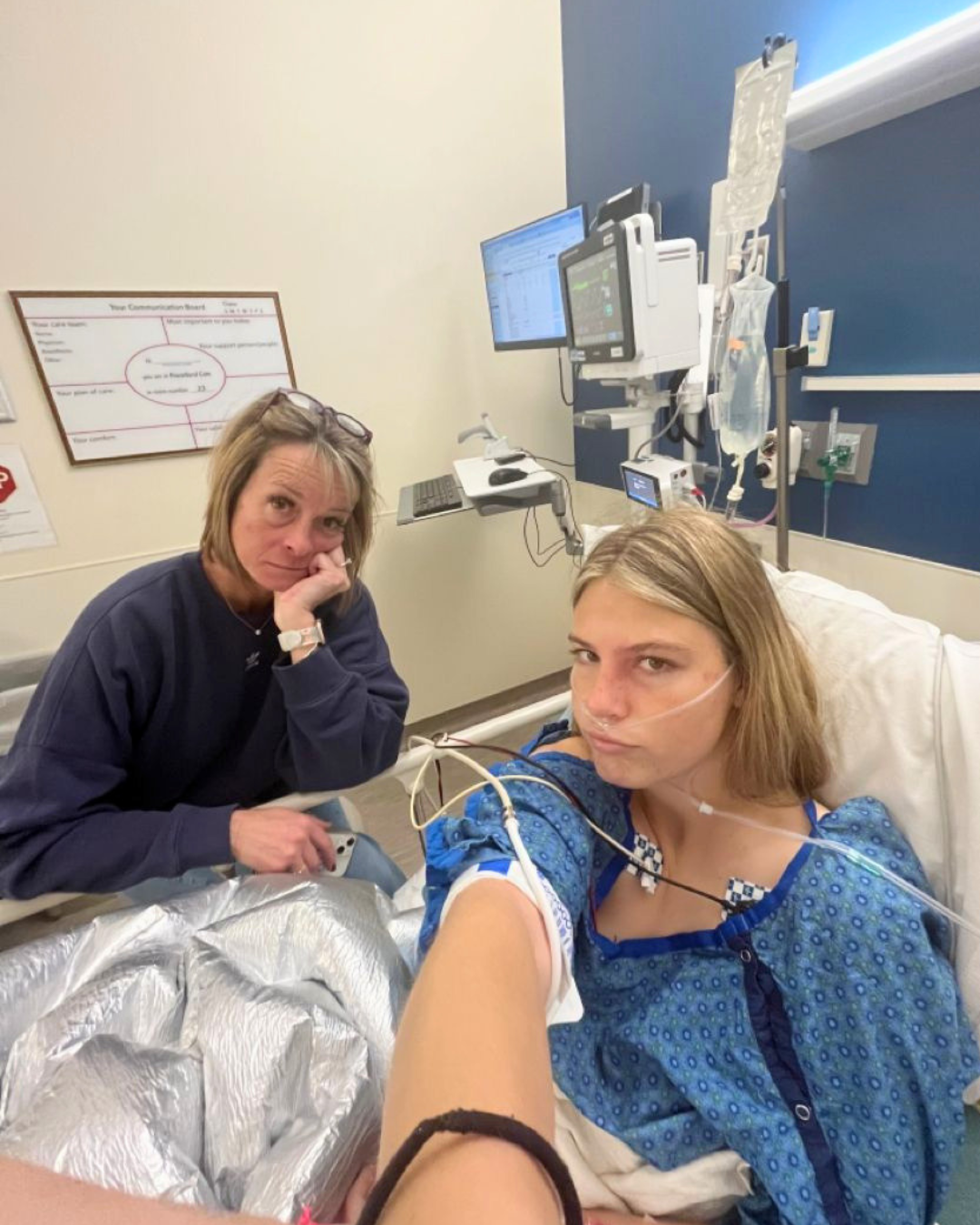
Ran for 74 days, from July 30 to October 12, 2026, the last day Crush saw it.
Run by Migraine Relief Blog on Facebook. Crush is not the advertiser and does not verify its claims. See this ad in Meta's Ad Library(opens in a new tab)
Make your own version of this ad
Crush makes it, launches it in your own Meta ad account, scales the winners and pauses the losers.
About this ad
- Meta Ad Library ID
- 1053371630403998
- Platforms
- Facebook, Instagram, Audience Network, Messenger and Threads
- Relaunches
- 0
Ad text
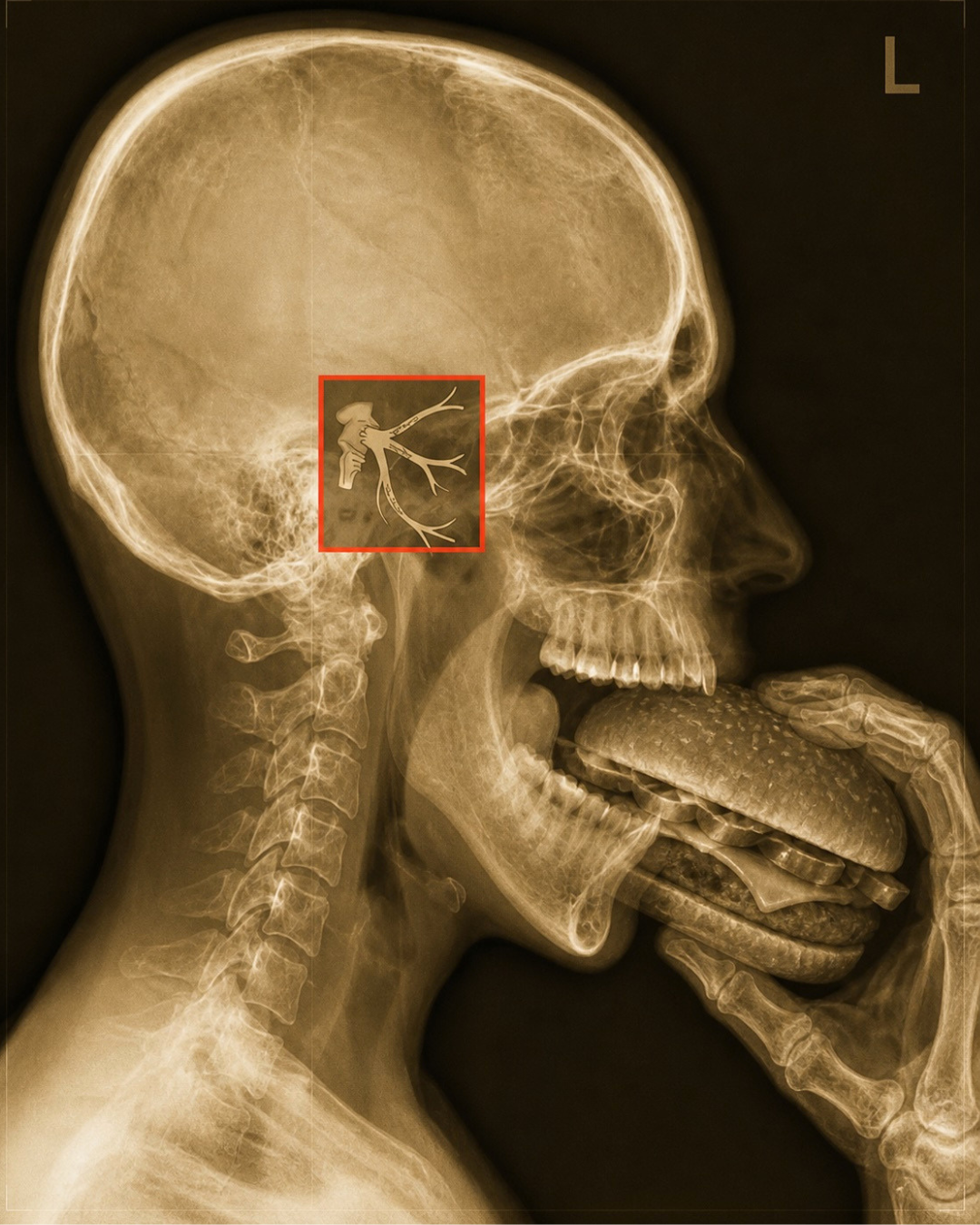
My daughter is fifteen. She had her first Migraine last September. Her pediatrician offered her a preventive medication called Topamax at her follow-up appointment two months later. I refused. I want to tell you what I did instead, because I am the fourth generation of women in my family to have Migraines, and I want to be the last one who spent her forties on medication. My name is Susan. I am forty-three. I have had Migraines since I was thirteen. My mother has had them since she was thirty-one. My grandmother had them until she died at seventy-nine. My great-grandmother, according to family stories, "took to her bed with her nerves" for two days at a stretch her whole adult life. That is what Migraines were called in 1932. Migraine is approximately sixty percent heritable. I have known this since my daughter, Emmeline, was born. I have watched her all fifteen years for the warning signs. I have known this day was probably coming since she was two. It came in September. She came home from soccer practice on a Thursday. She sat down at the kitchen table. She said Mom. Something is wrong with my eyes. There is a shimmer. I sat down across from her. I said sweetheart. I know what that is. I got her Sumatriptan from my nightstand. I gave her a quarter of a tablet. She had her first full Migraine that night. A level seven. She threw up twice. She missed school Friday. I sat on the edge of her bed at 11 p.m. holding a cold cloth to her forehead and I thought about my own thirteen-year-old self on the exact same edge of a bed with my own mother holding the exact same cold cloth to my forehead thirty years earlier. I made an appointment with her pediatrician for the following Monday. Her pediatrician is a good woman. She has been Emmeline's pediatrician for eleven years. Her name is Dr. Sanchez. She sat with us for forty minutes at the follow-up. She confirmed the diagnosis. She said Susan. With the family history and Emmeline's presentation at fifteen, we usually start preventive treatment early. Topamax is well-tolerated by most adolescents. I want to tell you about my mother's Topamax. My mother, Grace, is sixty-eight. She was put on Topamax at thirty-nine. She has been on it for twenty-nine years. She has forgotten what she was saying mid-sentence for as long as my daughter has been alive. Her friends have adjusted to her rhythm — pausing to let her find the word, filling in for her when she cannot. Her book club stopped assigning novels years ago because she could not track long-form narrative anymore. She reads short stories now. My mother is one of the smartest women I have ever met. She has spent the last twenty-nine years managing her cognition around a medication. I sat in Dr. Sanchez's exam room with my fifteen-year-old daughter, and I looked at that prescription pad, and I heard my mother searching for a word at the dinner table last Thanksgiving. It took her thirty-seven seconds. It was "pumpkin." I told Dr. Sanchez no. She was patient. She said Susan. That is your choice. We can try lifestyle interventions first. Sleep hygiene. Trigger identification. Hydration. But I want to warn you — untreated adolescent Migraine has a documented tendency to establish central sensitization patterns that are harder to reverse in adulthood. The reason we start Topamax at fifteen for a patient with Emmeline's family history is to prevent that. I said I understand. Give me three months. I will come back and we will reassess. We went home. That night after Emmeline went to bed I did what I had done twenty-eight years earlier when I was fifteen and my own mother sat me down and gave me my first migraine talk — I read. But at forty-three I read differently than I read at fifteen. I have a graduate degree in neuroscience I never used because I went into corporate education instead. I read the primary literature. Here is what I found in three weeks of reading. The trigeminal nerve is the largest cranial nerve in the face. In Migraine, it becomes sensitized — meaning it fires more easily, more often, at lower thresholds. The sensitization happens over time and is worse in patients who have their first Migraines young. Central sensitization is exactly what Dr. Sanchez was worried about. She was correct. The research is solid. What she did not tell me — because it is not standard pediatric neurology curriculum — is that central sensitization is preventable through mechanisms other than daily oral medication. Specifically: if you can interrupt the trigeminal cascade during the prodrome window — the twenty to forty minutes before the Migraine pain arrives, when the nerve is beginning to fire but has not fully deployed — you prevent the reinforcement cycle that produces central sensitization. Every Migraine you stop in the prodrome is a Migraine that does not train the nerve to fire again more easily. The problem is that oral abortive medications like Sumatriptan take about forty-five minutes to reach the trigeminal nerve through the bloodstream. Adolescents typically feel their Migraines arriving twenty to forty minutes in advance. There is not enough time for the pill to catch the prodrome window. Topical intervention is different. A topical compound applied to the three surface points — temples, behind the ears, base of the skull, where the trigeminal nerve sits two millimeters under the skin — reaches the nerve in ninety seconds. That is time enough to interrupt the cascade in the prodrome window. I found a topical roll-on developed by a neurologist named Dr. Fiora Laurent. Five ingredients chosen for trigeminal calming — magnesium glycinate, wild peppermint, menthol crystals at the TRPM8 activation concentration, chamomile, and feverfew extract for chronic reactivity reduction over months of use. It was called Florus. I called Dr. Sanchez's office before I ordered it. Her nurse called me back the next day. Dr. Sanchez had said this was a reasonable adjunct for a fifteen-year-old, no known interactions with anything Emmeline was on, and to log everything for the three-month reassessment. I gave Emmeline the bottle two weeks after her first Migraine. I told her exactly what I have told you above. The trigeminal cascade. The prodrome window. Central sensitization. Why I did not want her on Topamax. I told her about her grandmother searching for the word "pumpkin." Emmeline is fifteen. She is smart. She listened. She said Mom. I do not want to forget my words when I am forty. She has used the bottle at every prodrome since. Month 1: Emmeline had four prodromes. Three of them did not develop. One broke through at a level three. Month 2: Three prodromes. Two stopped. One broke through at a level four. Month 3: Two prodromes. Both stopped. We went back to Dr. Sanchez at the end of December. She looked at Emmeline's log. She read it for a long time. She said Susan. This is very good data. Emmeline's Migraine frequency has dropped from her initial rate and the ones that break through are milder than expected for a new adolescent Migraine patient. I do not want to start preventive medication right now. I sat in the exam room and I cried the way you cry when your daughter's next fifty years become a different fifty years than they were going to be. Emmeline is now nine months into using Florus. Her Migraine frequency has held at approximately one full Migraine every six weeks. All of them have been under a level five. She has not missed a day of school since October. I want to tell you about one specific afternoon. In April, Emmeline came home from school. She sat at the kitchen table. I asked her how her day was. She said Mom. I felt a prodrome during third period. I put the roll-on on before Spanish. I got a hundred on my Spanish quiz. She said it the way a fifteen-year-old says something that is genuinely important without making a thing of it. I made her a snack. I sat down at my desk that night and I called my mother. I told her about Emmeline. I told her about the roll-on. I told her about central sensitization prevention. My mother listened for a full minute. She said Susan. I want to try it too. She has been on Topamax for twenty-nine years. She is sixty-eight. She has central sensitization from a lifetime of unmanaged Migraines in her twenties and thirties. She is not going to un-sensitize. But she started using Florus at every prodrome three months ago. She has caught seven of them since. Her breakthrough Migraines have dropped by half. She is talking to her neurologist about slowly weaning her Topamax dose. She may still forget the word "pumpkin" at Thanksgiving. But she may not. I am writing this to the mother of a teenager who is starting the same journey her mother went on. To the woman with a family history who has been watching her daughter for warning signs since she was two. If your daughter — or your son — is fifteen and starting to have Migraines. If your pediatrician has offered a preventive medication. If you are looking at your own mother searching for a word at Thanksgiving and wondering if there is another way. There is a window. It is fifteen to twenty-five. If you can interrupt the trigeminal cascade in the prodrome window during those years, you can prevent the central sensitization that leads to a lifetime on daily medication. Florus is designed for that window. Skin to nerve in ninety seconds. Five ingredients. Three application points. Applied at every prodrome. 7,405 five-star reviews. Ninety-day money-back guarantee. Please call your child's pediatrician or their prescribing neurologist before you add it. Adolescent central nervous system care requires supervision from a doctor who knows your child. 👉 Read the five reasons a neurologist recommends it: https://florusrelief.com/blogs/news/5-reasons-i-recommend-this-roll-on-to-every-migraine-sufferer P.S. Emmeline made varsity soccer this year. She was a starter in the last three games. She played the full ninety minutes of the championship. Her coach did not know she has Migraines. I am not going to tell him. P.P.S. There are Amazon knockoffs of Florus. They are synthetic peppermint fragrance oil in a tube. Real Florus is only from florusrelief.com. I checked before I gave my daughter anything. P.P.P.S. To my mother. Thank you for sitting on the edge of my bed when I was fifteen. I am doing the same for my daughter now, but with better tools than you had. That is how generations get better. I love you.
Where the ad sends people
florus.com
My Daughter Is 15. Her Pediatrician Offered Her Topamax. I Refused.
A mother on early-intervention Migraine care for the next generation.
Learn more: florusrelief.com(opens in a new tab)