Carol Ellison
Carol Ellison Facebook ad: “Feel Like Yourself Again”

Running for 10 days since September 22, 2026. Crush last saw it on October 2, 2026.
Run by Carol Ellison on Facebook. Crush is not the advertiser and does not verify its claims. See this ad in Meta's Ad Library(opens in a new tab)
Want an ad like this for your product?
Crush makes new ad images for your product from this ad: your logo, your product photo, your offer.
Trials from $19.95 USD, then $79.95 USD a month. Cancel anytime.
About this ad
- Meta Ad Library ID
- 1057860880449172
- Platforms
- Facebook, Instagram, Audience Network, WhatsApp and Threads
- Relaunches
- 0
Ad text
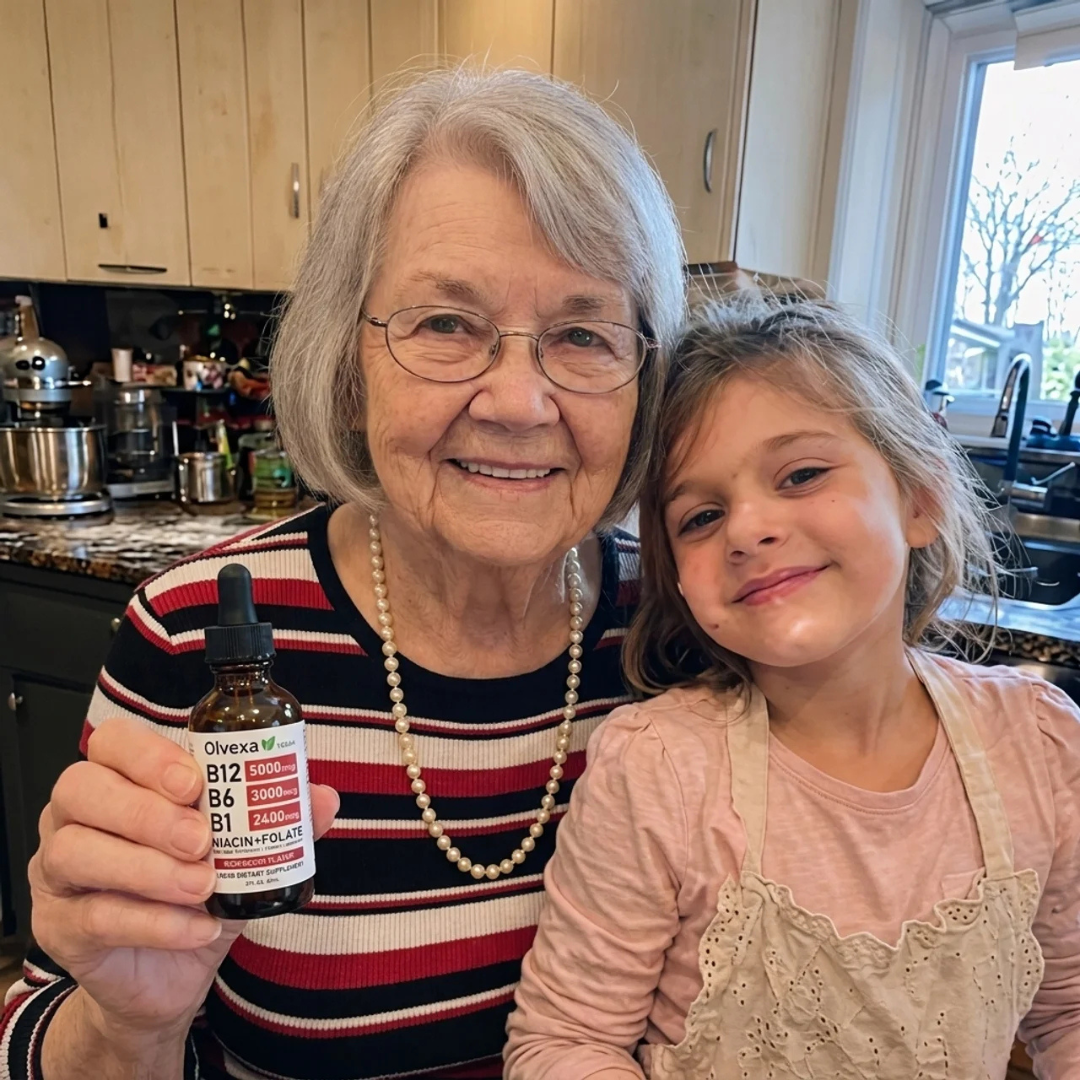
I was told my neuropathy was permanent at 53. I'm 62 now. Turns out my nerve cells were never actually dying. They were starving. For seven years, I "managed" a condition my doctor never actually explained to me. Seven years of compression socks that helped for an hour during the day and did absolutely nothing when the burning woke me up at 3 AM. Seven years of capsaicin creams that burned like fire for twenty minutes and wore off before I finished my morning coffee. Seven years of soaking my feet, propping them up, sleeping with them outside the covers, trying every position that might quiet them down for one night. Seven years of "excellent work, Margaret" at every appointment, because my A1C kept coming down, while the one thing I actually came in about kept getting worse. Seven years of doctors who looked at my feet, ran their tests, nodded slowly, and told me it was expected at my glucose levels and would improve as my numbers came down. My numbers came down. The burning didn't. I did everything they asked. I joined the water aerobics class at the Y, Tuesdays and Thursdays. I switched to Splenda. I checked my blood sugar before breakfast every morning and wrote it down in the little notebook my daughter Sarah bought me. My A1C went from 8.4 to 7.4 to 6.8. My doctor shook my hand. I spent a small fortune on supplements. Fish oil. Magnesium. Alpha lipoic acid at the clinical dose. Expensive bottles with long ingredient lists that added up to nothing. When that didn't stop the burning, they sent me to a neurologist. She ran tests on the nerves in my feet and legs. Afterward, she sat down across from me and said the damage was real, it was progressing, and it was consistent with everything I'd been describing for years. More tests after that. Your nerves are thinning, they told me. Which sounded serious but still explained nothing about what to actually do about it. "This is just what diabetic neuropathy does," she said. "We try to slow it down and manage the symptoms." She mentioned gabapentin. Said it was the standard of care. That it would help with the burning and the electric sensations. I told her I'd think about it. I'd done my research. I knew what gabapentin did to people over time. The brain fog that settled in and never fully lifted. The weight gain that crept up regardless of what you ate. The dizziness that made falls, already a real risk with numb feet, even more dangerous. And the dependence. The way doses climbed. The way stopping it became its own ordeal. I wasn't ready for that. Not yet. Not if there was anything else. Because I had already watched where this road ends. My mother was diagnosed with Type 2 at 54. She did everything they told her too. Took her metformin every single day. The foot tingling started around year four. The burning that kept her up at night came around year nine. By year fourteen, she couldn't feel her feet at all. She fell in the kitchen at 71 and broke her hip and never walked again without a walker. The last years were a wheelchair and a string of foot ulcers that wouldn't heal, and then a below-the-knee amputation on her right foot at 76. I was in the hospital room. I remember exactly what the surgeon was wearing. She died eighteen months after that. So when I sit with my own feet burning at 3 AM, there is a small voice underneath it that says, every single time, not me. So I kept trying. It was during one of those 3 AM stretches, lying there with my feet burning and my phone turned all the way down so I wouldn't wake Jim, that I found the first real clue. I'd typed "diabetic neuropathy feet won't stop burning" into the search bar for the hundredth time. But this time I ended up in a diabetes group, forty thousand people, and someone had written something I'd never heard from a single doctor in seven years. Metformin depletes B12. The drug I took every morning, the one keeping my sugar down, had been quietly draining one of the nutrients my nerves needed. It was right there in the prescribing information, people were saying. Had been for decades. And almost no one ever gets tested for it. I went back to my own doctor and asked him directly. Did he know metformin depletes B12? He said yes. It's a known side effect. I asked why I'd never been tested in seven years. He said it was something they "should monitor." Should. Not "we have been monitoring." Should. I drove home and sat in my driveway with the car off for twenty minutes before I went inside. So I did the obvious thing. I bought B12. The CVS bottle, every morning for three months. Got retested. The number hadn't moved. So I bought a more expensive "nerve support" formula off a forum, the whole B-complex on the back of the bottle, and took that for four more months. Maybe a little better for a while. Then nothing. Then the same. I had found the metformin piece myself, the piece my doctor never mentioned. And I had still gotten nowhere. I'd found the cause and treated it, and my feet kept burning. I couldn't understand it. That was the thing that broke me, more than the burning itself. Not the pain. Watching it spread while everyone told me my numbers looked great, even after I'd found the answer myself and it still hadn't worked. It had started in my left foot, at night, like a phone vibrating two rooms away. By the second year, it was both feet. By last winter, the whole sole, up to the ankle, and starting to creep up. I couldn't feel temperature reliably anymore. Hot water that should have felt warm felt like nothing. I had to be careful in the shower, careful in the kitchen, because I couldn't trust my feet to tell me when something was dangerous. I stopped walking barefoot anywhere. Even my own bathroom felt unsafe. I held the railing on every staircase. My husband Jim watched all of this and didn't say much, because what was there to say. He just quietly started doing things I used to do and standing close behind me on the stairs, close enough to catch me. I hated that. I hated needing that. I hated becoming someone who needed to be caught. And my next appointment was in eight weeks, and I knew what was going to happen. The tests would be worse. The prescription pad would come out, and this time I wasn't going to have a good argument against it. I had stopped believing anything would help. I had started doing the math on gabapentin, on what "managed but not fixed" looked like for the next thirty years, on whether that was just my life now. On whether I was simply watching my mother's story happen again, to me. Then one Tuesday at the Y, a woman from my water aerobics class sat down next to me at the edge of the pool. We'd known each other a couple of years, the way you know someone from a class. Type 2, like me, which is how we'd first started talking. But that morning she was moving differently. Easier. No hesitation on the wet tile. I asked her how she was doing. She looked at me for a second and said, "Honestly? Better than I've been in years. I've been meaning to tell you about it." We sat down on the bench by the lockers. She got straight to it. "I know you've been struggling," she said. "I know because I was exactly where you are. A1C perfect, feet getting worse, the doctor reaching for the gabapentin and me wondering if I was out of options." "I actually figured part of it out myself," I said. "The metformin. It depletes B12. I found it online, I asked my doctor, I bought the B12. Took it for months. Nothing happened. So I don't know what to tell you. I already tried that." She nodded like she'd been waiting for me to say exactly that. "You found the hardest part to find, and almost nobody's doctor tells them. So you're already ahead of where I was. But here's what took me forever to understand, and it's the reason the B12 you bought did nothing." She paused. "You were taking the right nutrient. You really were. B12 is exactly what your nerves were crying out for. But it never reached them. And there are two reasons why, on top of the metformin, that nobody ever told you." "Two reasons?" "First, the form. Almost every B12 on the shelf is cyanocobalamin, the cheap, inactive kind your body has to convert before a nerve can use it. And that conversion only gets weaker with age, and weaker still on metformin. So even the part you absorbed, your body often couldn't turn into the form your nerves actually run on." "And the second?" "After fifty, your stomach stops making the one protein that carries B12 out of your gut and into your blood. So a swallowed B12 pill mostly passes straight through you. The nutrient was showing up at the front door of a house with no doors. It's like watering a plant in a sealed pot. The water is right there. Not a drop of it reaches the roots." She let that sit. "So think about what was actually happening to you. The metformin was draining your B12. Your stomach couldn't absorb the pills you were taking to replace it. And the form was wrong to begin with. Three things working against the exact same nutrient, all at once. You weren't failing the treatment. The treatment was failing you, three different ways, and you only ever found out about one of them." That hit me harder than anything anyone had ever said about my condition. "So this isn't just another nerve supplement," I said. "No. And here's the other thing most people get wrong, even the ones who figure out the B12 part. They think it's only about B12. B12 is the one that rebuilds the protective coating around the nerve, yes, that's the headline. But a nerve isn't repaired by one nutrient working alone. It takes a team, and they only work when they're together." "What do you mean, a team?" "Think about everything that's actually going wrong in a damaged nerve. The coating is breaking down, that's the B12 problem. But the nerve is also misfiring. The burning, the electric shocks, the pins and needles that go off when nothing is even touching you. That's a different job, and that's B6. B6 is what regulates when a nerve is allowed to fire and when it stays quiet. Starve a nerve of B6 and it fires constantly, even at rest. That's your three in the morning burning, right there." She kept going. "Then there's the energy. A nerve cell is one of the most energy hungry cells in your body, and rebuilding a damaged one takes an enormous amount of fuel. That fuel runs on B1 and B3. Without them, the nerve simply doesn't have the power to carry out the repair, even when the B12 is finally arriving. And B3 does one more thing. It opens up the tiny blood vessels that feed the nerve, the same little vessels diabetes damages first, so everything else can actually be delivered to the damaged stretch instead of pooling at the edges." "And folate?" "Folate is the one that completes the cycle. B12 can't finish rebuilding that coating unless folate is there to complete the methylation step. Without folate, the B12 gets stuck halfway through the repair. That's why taking B12 all on its own so often stalls out. It isn't that the B12 is wrong. It's that it's missing the rest of its team." That hit me almost as hard as the first part. "So when you took B12 alone, in a pill," she said, "you had one player on the field. Wrong form, your stomach couldn't absorb it, your metformin was draining it, and no team around it even if you could. Of course nothing happened. The nerve needs all of it at once. The B12 to rebuild the coating. The B6 to stop the misfiring. The B1 and B3 to power the repair and open the blood supply. The folate to finish the job. Give it all of that together, in the form your body can actually use, and the nerve finally has everything it needs in the same place at the same time." I sat there for a long time. "So what actually fixes it?" I asked. "The whole complex, finally delivered the way your nerves can take it in. The active form of B12, methylcobalamin, already converted, so nothing has to be turned into anything first. B6 in its active form, ready to use. The rest of the B vitamins alongside it, all in the forms the body doesn't have to work to activate. And under the tongue instead of swallowed, absorbed straight into the bloodstream through the tissue under your tongue, completely bypassing the stomach that stopped cooperating years ago." "That's it? The same vitamin I'd already tried?" "The same vitamin you'd already tried. Except this time in the right form, as a complete team, finally reaching the nerve, instead of being drained out by the metformin and washed through a stomach that couldn't absorb it. You did the hard part already. You found the cause. You just never had the version that could actually get in." "But what about the damage that's already done? The numbness that has already spread?" "That's the part that gave me hope. Nerves can rebuild that coating. But only while there's still living fiber to rebuild from, and only if the whole team finally starts arriving. Get it in, the right forms, all together, and the nerve starts resurfacing the wire and firing properly again. And because the longest nerves, the ones running all the way down to your feet, were starved first and worst, they're often the first to register it when the supply finally comes back." She pulled out her phone. "Look at the research. The trials that actually showed nerve repair in diabetic patients didn't use a cheap single B12 pill. They used the active form, methylcobalamin, at a real dose, alongside the supporting B vitamins, absorbed the way the body can use it. That's the whole difference. Not some different vitamin nobody's heard of. The complete set, in a version that actually gets in." I looked at the screen. Then I looked at her. "So this isn't just another bottle of B12." "No. It's the whole repair team your nerves were always asking for, finally in the forms and the delivery that actually reach them. It doesn't mask the pain. It doesn't numb anything. It gives the nerve back everything the metformin and the years had been draining, all at once, so it can start rebuilding itself." I left that conversation and couldn't think about anything else. That night I went looking for everything I could find. What I found kept pointing back to the same thing. When the B vitamins can't reach the nerve, the wrong forms, drained out by metformin, or blocked by a stomach that's stopped absorbing them, it doesn't matter how faithfully you take them. Nothing gets through. And B12 alone, without the rest of the team, stalls out even when it does. I found people online who sounded exactly like me. Diabetic, on metformin, A1C under control, feet getting worse anyway. People who had even found the metformin connection, like I had, and bought the B12, like I had, and gotten nowhere, like I had. Then they switched to the full complex, in the active forms, taken under the tongue, and the burning started to quiet. I texted her that night. "Okay. I believe you. What do I actually get?" She called me the next morning. "This is the part that matters most. Most B supplements on the market are built to be cheap, not to work. The inactive forms, because they cost a fraction of the active ones. A single vitamin alone in a bottle, because it's cheaper than formulating a real complex. A pill, because it's easier to make than a liquid. And tiny doses, because the good forms are expensive. Every one of those shortcuts is another reason it never reaches your nerves. It's probably exactly what was wrong with both bottles you already tried." "So how do I know which one actually works?" "Four things." "One, the active forms. Methylcobalamin for the B12, not the cheap cyanocobalamin your body has to convert, and on metformin after fifty mostly can't." "Two, the complete complex. B12 together with B1, B6, B3 and folate, not B12 sitting on its own." "Three, sublingual. Under the tongue, into the blood directly, not a pill your stomach won't absorb." "Four, a real dose. The research uses 5,000 micrograms of methylcobalamin, not the few hundred buried on a drugstore label." "Get those four right, and the whole team finally arrives where it's been needed for years." She told me one brand kept coming up, over and over. Olvexa. I looked them up that night. The active form of B12, methylcobalamin, 5,000 micrograms, already converted, nothing for a tired body to activate. B6 to quiet the misfiring. B1 and B3 for the cellular energy the repair runs on, and to open the blood supply to the nerve. Folate to complete the cycle so the B12 can finish its work. All of it in the forms the body can use immediately, none of the cheap versions that have to be converted. And all of it delivered sublingually, held under the tongue, absorbed straight into the bloodstream, around the stomach entirely. Third-party tested, with the certificates published on their site. No fillers. No "proprietary blend" nonsense hiding tiny doses behind a marketing label. Just the complete repair team your nerves were always asking for, in the forms and the delivery that finally get it in. 90-day money-back guarantee. Full refund if it doesn't work. None of the "send back the unused portion" runaround. I thought about my mother in that wheelchair. I ordered it that night before I'd talked myself out of it. I started the next morning. A dropper under my tongue with my coffee. I expected nothing. I had trained myself to expect nothing. I had two dead bottles in my cabinet to prove it. Week Two: I slept through the night. The burning that had been waking me at 3 AM didn't wake me. I woke up naturally, in the same position I'd fallen asleep in. I hadn't done that in over a year. Week Three: Jim said something over breakfast. "You're moving differently." He wasn't trying to be kind. He looked almost puzzled. "You're not watching the floor the way you do." Week Five: I stepped into the shower and felt the temperature change when the warm water hit my feet. Felt it. Not perfectly, but something was there that hadn't been there in years. I turned the water warmer and cooler, back and forth, just feeling my feet register the difference. I started crying and couldn't have told you exactly why. It was just such an ordinary thing. Week Six: My follow-up appointment. The neurologist did the monofilament test, the one where they touch different spots on your feet and you say whether you can feel it. She started at my toes. Moved to the ball. The arch. The heel. She stopped. Checked her notes. Went back to my toes. "When did your sensation change?" she asked. "About three weeks ago," I said. "Maybe four." She did the test again, slower. Then she sat back and looked at me with an expression I hadn't seen on a doctor's face in seven years. Not the slow nod. Something closer to genuine surprise. "Your sensation scores are better than your last visit," she said. "Not dramatically. But meaningfully. That isn't the direction this usually goes." I told her about the B12. About the metformin draining it. About the active form, the sublingual delivery, the rest of the complex. She typed while I talked. Asked me which brand. Then she closed her laptop and looked at me. "Keep your metformin exactly as it is. But whatever else you're doing, keep doing it. No gabapentin today." That was eight months ago. Most mornings now I have to remind myself I ever lay awake with my feet on fire. And it isn't spreading anymore. I check every week, the way I used to check my blood sugar. I note where I can feel and where I can't. For eight months, that line hasn't moved forward. For eight months, the thing that had been marching up my feet for seven years has simply stopped. I'm still on my metformin. My A1C is still right where my doctor wants it. Nothing about my diabetes changed. The only thing that changed is that my nerves are finally getting what the metformin had been quietly taking out of them. Last month I wore a normal shoe to Sarah's birthday dinner. Just for the evening, nothing special. But I wore it, and it wasn't agony, and I drove home without thinking about my feet the entire way. Here's what I need you to understand. If you're diabetic, on metformin, and you've tried B12 and it didn't work, it wasn't your fault and it wasn't that your nerves are too far gone. Maybe you even found the metformin connection yourself, the way I did, and it still didn't work. That's because finding the cause was only the first piece. The metformin was draining the B12, your stomach couldn't absorb the pill, and the form was wrong to begin with. Your nerves kept starving no matter how faithfully you took it. You weren't failing the treatment. The treatment was failing you. The right B-complex fixes that. Not by masking anything. By giving your nerves back the exact thing the metformin has been draining for years, in the active forms, all together, delivered the one way your body can actually absorb. When that supply finally comes back, the nerves that were starved first, the ones in your feet, are the first to respond. But only if it's the active form. Only if it's the full complex. Only if it goes under the tongue instead of through a stomach that stopped absorbing it years ago. And only at a real dose. Olvexa is the only one I've found that gets all four right. Active methylcobalamin, 5,000 micrograms. The full complex, B1, B6, B3 and folate, in the forms the body can use immediately. Sublingual delivery that bypasses the stomach entirely. Third-party tested, with the certificates published so you can read them before you buy. No fillers. No proprietary-blend nonsense. 90 days to try it. If nothing changes, full refund. No questions asked. But if it works? If by week two it stops waking you at 3 AM? If three weeks in you step into the shower and feel the warm water on your feet again? If a month from now your doctor is running the filament test twice because something changed in a direction she didn't expect? If eight months from now you're wearing a normal shoe to a family dinner, sleeping through the night, living without bracing for 3 AM? You'll wish you'd started the day you were diagnosed. I know I do. And I think about my mother every time I take it. 👉 https://tryolvexa.com/products/olvexa-vitamin-b-complex Olvexa is a small batch operation. When they sell out, it's usually a few weeks before the next batch is ready. I waited 11 days for my second bottle last month. If it's in stock right now, that's your window. Your nerves aren't dying. They're starving. There's a difference.
Where the ad sends people
tryolvexa.com
Feel Like Yourself Again
“This actually worked, thank you so much.” — Carol Ellison.
Learn more: tryolvexa.com(opens in a new tab)