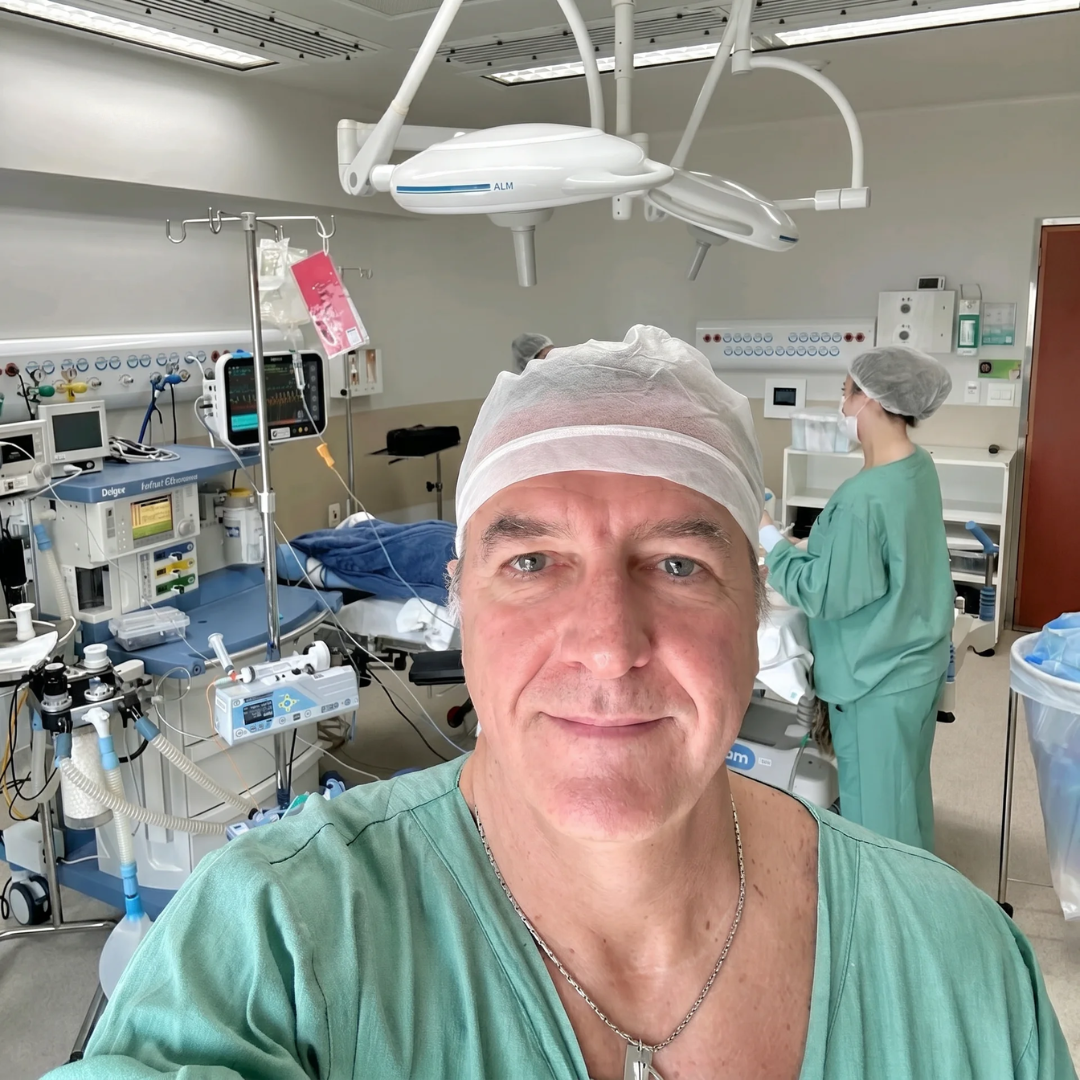
Dr. Cornelius Carter
 Facebook ad: “Ceylon Cinnamon 7200mg Equivalent with MCT Oil”
Running for 38 days since October 2, 2026. Crush last saw it on November 8, 2026.
Run by Dr. Cornelius Carter on Facebook. Crush is not the advertiser and does not verify its claims. See this ad in Meta's Ad Library(opens in a new tab)
Make your own version of this ad
Crush makes it, launches it in your own Meta ad account, scales the winners and pauses the losers.
About this ad
- Meta Ad Library ID
- 1074297342046704
- Platforms
- Facebook, Instagram, Audience Network and Threads
- Relaunches
- 0
Ad text
I'm a nephrologist. I've spent 18 years studying kidney disease and the damage it does to the filtering system inside your body. The first thing you learn in my field is that a heavy diet is one of the fastest ways to destroy a kidney. Then I traveled to Sweden. The country that eats more smoked salmon, sausage, and aged cheese per person than almost anywhere on earth. What I found there broke everything I thought I knew. Let me back up. I run a nephrology clinic at a large hospital. Doctors send patients to me when their kidney numbers have been slipping for years and nobody can stop the slide. Patients whose creatinine keeps creeping up, whose urine tests keep coming back worse, who have done everything they were told and are now sitting in front of a specialist wondering why their kidneys are still failing. By the time a chart hits my desk, I already know what it is going to say. Because it always says the same thing. Patient presents with trace protein in the urine. Doctor's notes: probably nothing. Recheck in six months. Patient returns. Protein still there. Creatinine up a tenth of a point. Doctor's notes: start ACE inhibitor. Watch the sodium. Patient returns. Creatinine up again. eGFR dropping. Doctor's notes: probably not responding well. Increase the dose. Cut the red meat. Patient returns. Ankles swelling by the afternoon. Fatigue that sleep does not fix. Doctor's notes: probably fluid retention. Add a diuretic. Refer to nephrology when the next panel comes back. Patient returns. eGFR below 45. Foam in the toilet every morning. Wife noticed his face looks puffy. Doctor's notes: urgent nephrology referral. Patient does not make it to my office on his own terms. He is wheeled in through the emergency department at 2 AM. Potassium through the roof. Fluid backing up into his lungs. His wife is standing in the hallway holding a plastic bag with his medications in it. Five visits. Five years. Five dismissals. And a sixth visit where someone else had to make the call. Then the ultrasound lands on my screen. I pull it up. And in under a minute I see what explains every one of those visits. Kidneys that should be the size of a fist, now shrunken. Cortex thinning. The outer layer where the filters live, wasting away year after year while everyone watched the numbers and nobody looked at the organ. Scarring through the tissue from a filtration membrane that stopped functioning properly years ago. Echogenicity increased, meaning the tissue is denser than it should be. That is fibrosis. Scar tissue replacing healthy kidney where the filters used to be. And blood flow restricted through vessels that have been quietly stiffening for a decade. That is the rising blood pressure. The kidneys regulate your blood pressure, and when they start failing, the pressure climbs. And the climbing pressure damages the kidneys further. A loop that feeds itself. Every visit. Every lab result. Every dismissal. And nobody ever looked at the organ that was breaking down underneath the numbers. I see this every single day. It never changes. So when I got invited to a nephrology conference in Stockholm last spring, I added a week to the trip. Something had been bothering me for years. Sweden eats heavy. Salted herring at breakfast. Cured meats on dark bread. Aged cheese at every meal. That is the exact diet we tell American kidney patients is destroying their filters. Salt raises the pressure on the kidney. Protein increases the workload on every nephron. Phosphorus in aged cheese accelerates the mineral imbalance we spend years trying to control. But Sweden has some of the lowest rates of kidney failure in the developed world. Their elderly keep their kidney function deep into their eighties and nineties. Their nephrologists are managing a fraction of the dialysis caseload American nephrologists are managing every week. Based on my training, that makes no sense. They should have more of what I see every day. Not less. I needed to understand why. After the conference I took a train north to Uppsala to spend three days shadowing a senior nephrologist a colleague had introduced me to. His name is Dr. Erik Lindgren. He is 72 years old. Still practicing three days a week at a university hospital just outside Uppsala where he has been for over 35 years. His mother was a physician before him and lived to 94 with both kidneys functioning on their own. Dr. Lindgren is measured. Deliberate. Not the type to waste a word. He met me at the entrance of the renal unit, shook my hand once, and told me to observe the morning clinic without interrupting. Questions at lunch. I sat in on his appointments. What I saw stopped me cold. Patient after patient came in with the kind of numbers that would have triggered an American medication escalation in the first ten minutes. Rising creatinine. Protein in the urine. Falling eGFR. Family history of kidney failure. The pattern I know by heart. Dr. Lindgren did not increase a single prescription. He asked about their meals. He asked about their sleep. He asked what their kidneys were being asked to filter every day. And in every consultation, he pulled out a small laminated photograph of a healthy glomerulus and a damaged one and pointed at the difference. Your creatinine is not the disease, he told a 63-year-old man in the second appointment I sat in on. Your creatinine is what is leaking through because the disease is here. He tapped the damaged photograph. Nobody has repaired this membrane in you for fifteen years. We start with this today. At lunch I could not hold my questions anymore. Erik, how are your patients not on dialysis? He looked at me for a moment. Then he smiled. Not warm. Patient. Of course some are. When the damage is severe enough that the kidney cannot recover, yes, we have no choice. But most of my patients? No. Because we treat the filter first. The number corrects itself once the membrane is doing its job again. He set his fork down. Do you know why Swedes eat salted fish and aged cheese and keep their kidneys into their nineties? Because we learned a long time ago that food is not the enemy of the kidney. A damaged filtration membrane is. Food comes through and leaves. A damaged glomerular lining stays broken for decades if nobody helps it heal. He shook his head. In America you have taken the number on the lab report and made it the enemy. So you spend every consultation lowering the creatinine, chasing the eGFR, adding the ACE inhibitor, restricting the protein. In Sweden we take the filtration membrane and make it the priority. We ask what damaged it. We help it repair. Then the numbers take care of themselves. You must protect AND heal. Two jobs. Always. I sat there staring at him. I have spent 18 years studying kidney disease. Published on glomerular dysfunction. And this 72-year-old man had just described in one sentence what the entire American nephrology protocol misses. He continued. ACE inhibitors lower the pressure on the filter. Yes. Good. But if the filtration membrane is still damaged, every molecule of glucose that comes through the blood still grinds on the broken lining. ACE inhibitors reduce the force. They do not fix the filter. Every one of my American colleagues knows this and keeps prescribing anyway. Because there is no drug for the filter. He reached into the drawer of his desk and pulled out a small brown glass jar. Amber. Label in Swedish. Ceylon cinnamon extract. Standardized. Suspended in MCT oil. This, he said. This is what I take every morning. What my mother took for the last 30 years of her life. What most of my colleagues in this department take. Not the powder from the grocery store. That is decoration. This is the concentrated extract with the two compounds the kidney actually needs. He set the jar on the desk between us. There are two compounds in true Ceylon cinnamon. Not one. Two. And they do two different jobs. Which is why one alone will not work, and why the pill your colleagues want to prescribe will not either. The first compound is called MHCP. It reduces the daily blood sugar spikes that damage your filtration membrane meal after meal. Because here is what your American training does not emphasize enough. It is not the salt grinding on your glomeruli. It is the sugar spikes from every carb-heavy meal, tearing at the membrane lining faster than it can repair itself. Every spike sends a wave of glucose through the filter at a concentration the membrane was never designed to handle. MHCP softens that wave at every meal. The second compound is called cinnamaldehyde. The one that gives cinnamon its smell. He said it slowly. He knew I was a nephrologist and he knew I would want to hear it exactly. Cinnamaldehyde supports the lining of the blood vessels inside the kidney that have been damaged for years. The glomerular endothelium. It helps the lining reduce the inflammation that has been quietly scarring the filter from the inside. And it supports nitric oxide production in the renal vessels, which is what tells those vessels to relax and let blood flow through the kidney the way it is supposed to. When blood flow returns to the kidney, the filter starts working again. The creatinine comes down. The protein stops leaking. The eGFR stabilizes. Not because you forced the number with a drug. Because the organ started healing. He picked up the jar. Two compounds. From one plant. One reduces the daily damage from what you eat. The other helps repair what was already broken and restores the blood flow the kidney needs to filter properly again. That is why the men and women in my hospital walk through their nineties with their own kidneys. Not because we prescribe better ACE inhibitors. Because we know a kidney with two problems needs two solutions. I sat there for a long time. Because I had spent 18 years chasing numbers on a lab report while two compounds in a plant on a Swedish nephrologist's desk were doing the two things my prescription pad could not. I flew home the following week. I had known about cinnamon academically for a long time. Nephrology and endocrinology journals ran papers on glucose-mediated kidney damage and antioxidant intervention every year. I had skimmed them for headlines and never opened them. I opened them that week. The peer-reviewed research documented exactly what Dr. Lindgren had described. A 2003 landmark study published in Diabetes Care demonstrated that cinnamon significantly reduced fasting glucose in patients with elevated blood sugar, the same glucose spikes that damage the glomerular membrane at every meal. A 2013 meta-analysis in the Annals of Family Medicine, pooling ten randomized controlled trials across thousands of patients, confirmed cinnamon significantly lowered fasting glucose, total cholesterol, and triglycerides. And MHCP, from the same plant, was first identified as an insulin-mimetic compound in a 2001 paper published in the Journal of the American College of Nutrition. It reduces the postprandial glucose surges that had been grinding on the filtration membrane at every meal for the last decade. Cinnamaldehyde had been studied for its effects on vascular endothelial function and nitric oxide production. A 2011 study published in Vascular Health and Risk Management showed it relaxed damaged vessels by triggering nitric oxide release in the endothelial lining. The same lining that forms the filtration barrier in the kidney. Two compounds. Two jobs. From one bark. I sat at my desk with the studies open and thought about the man wheeled into the emergency department at 2 AM. Every one of my patients whose creatinine I have been chasing for years while their filtration membrane kept deteriorating underneath. There was something that could have been protecting them this whole time. And nobody told them. Before you go and buy cinnamon capsules from the drugstore, I tried that first. Here is what happened. I bought two different brands from a major online retailer my first month back. Highly rated. Thousands of reviews. Six weeks. My fasting glucose did not budge. My kidney panel stayed flat. I was ready to conclude that Dr. Lindgren had oversold it. Then I actually looked at what I had bought. Ninety percent of what is sold as cinnamon in America is not true Ceylon. It is cassia. A completely different tree from China. Cheaper. And it contains almost none of the compounds your kidneys actually need to heal. Cassia also contains coumarin, a compound that damages the liver at daily doses. The European Food Safety Authority documented this years ago. In Sweden, cassia has been restricted from daily supplement use for over a decade. In the United States, nobody enforces the difference. So the cinnamon most of my American patients are buying to protect their kidneys is actually damaging the liver. And here is why that matters more than most people realize. Your liver and your kidneys work as a team. The liver processes toxins. The kidneys filter the blood. When one fails, the other picks up the load. Damage your liver with daily coumarin from the wrong cinnamon, and your kidneys are now doing two jobs instead of one. You are accelerating the exact decline you are trying to stop. And even when the product is real Ceylon, it is usually in dry capsule or powder form. Which is also a problem. The active compounds are fat-soluble. They have to be carried into your bloodstream by a fat. A dry powder reaches your gut, finds nothing to transport it across the cell wall, and passes straight through you. The two brands I tried had failed for one reason or both. I needed a brand with real Ceylon, DNA-verified at the species level, concentrated to match the clinical trial doses, and suspended in a fat that could actually deliver it into my bloodstream. The brand Dr. Lindgren recommended when I called him from home was called Metabolae. I called the company directly before I ordered. That is how I was trained. You do not put your name behind a supplement the way you would not put your name behind a medication. You verify the source. You read the lab work. I asked for the Certificate of Analysis. I asked for the DNA verification at the species level. I asked about the concentration and the carrier oil. I asked about coumarin levels. They sent me everything within the day. DNA-verified Cinnamomum verum, sourced directly from Sri Lanka. Concentrated 12 to 1 to match the dosing in the published research. Suspended in organic MCT oil, which is the carrier the compounds need to actually cross the cell wall. Third-party tested per batch. Made in the USA. No fillers. That was the brand I ordered. I started the following Monday. One softgel with breakfast. That was the whole protocol. Week 1. Steady energy through the day. The post-meal crashes I had been feeling for months were gone within four days. Week 2. Sleeping through the night without waking up. The bloating I used to feel after a heavy meal was not showing up anymore. The puffiness around my eyes in the morning was less noticeable. Week 4. My blood pressure at a routine check came back lower than it had been in over a year. The swelling in my ankles that I had written off as standing all day at the hospital was fading. Week 6. The foam I had been noticing in my urine for the past year was gone. I checked every morning out of habit. Clear. Week 12. My lab panel came back for the first time since I started. I sat in my office and pulled it up on the screen. I stared at it for a full minute before I believed what I was looking at. My eGFR had climbed from 62 to 78. Up 16 points. I had crossed back above the threshold that separates a healthy kidney from one that is starting to fail. My urine albumin-to-creatinine ratio dropped from 168 to 38. My serum creatinine dropped from 1.3 to 1.0. My fasting glucose was 84. Down from 106. My blood pressure at that visit was 122 over 76. Down from 148 over 94 at my last physical. I brought the panel to my colleague. He looked at it. Then he looked at me. Then he looked at it again. What did you do? I told him. One softgel every morning with breakfast. That was it. He listened without interrupting. Then he wrote it down. I am 12 weeks in. My energy is steady through the whole day. My ankles are normal. My urine is clear every morning. My latest panel four weeks ago showed eGFR 82, creatinine 0.9, blood pressure 118 over 74. I never started dialysis. My nephrologist rechecks me at six months instead of six weeks. I am writing this because after 18 years of watching the same blind spot destroy the same organ in the same patients I cannot stay quiet anymore. If your creatinine keeps creeping up no matter what you cut from your diet. If your eGFR keeps dropping and your doctor keeps saying we will watch it. If you have noticed foam in the toilet that was not there a year ago. If you are waking up two or three times a night and your ankles are swollen by dinner. If your doctor has started talking about a nephrology referral and you are not sure what that means but you know it is not good. I hear you. I told my patients that line for 18 years before I understood what I was missing. Metabolae. One softgel every morning with breakfast. It supports the two things a decade of sugar spikes and daily metabolic wear have been quietly destroying in your kidneys. The membrane that filters your blood. And the daily damage that keeps it broken. Metabolae has a 90-day money-back guarantee. If you do not see a difference, you get a full refund. No questions asked. In 18 years of medicine I have never once seen a drug company offer to give your money back if their medication did not work. Think about that for a second. Here is what I would do with that guarantee. Get your kidney panel drawn this week, before you start. Ask for creatinine, eGFR, and a urine albumin test. Then get it drawn again at eight weeks. You will know, with a number, whether it worked. And if it has not moved, you send the bags back and every dollar comes back. That is what your doctor's plan never gives you. Twelve weeks of waiting and no way to tell if anything is happening. Metabolae is small and they sell out regularly. If you have a nephrology appointment or a routine physical in the next 30 to 60 days and you want to give your kidneys a real chance before that visit, check availability now. Do not wait. Every day the filtration membrane stays damaged is another day the creatinine climbs and the eGFR drops. Another day closer to the conversation about dialysis that nobody wants to have. You still have time. Do not wait until the conversation with your doctor is about the dialysis schedule instead of the lab report. ~ Dr. Cornelius Carter, MD, Nephrology, 18 years P.S. About the wrong cinnamon. Almost all of it on the shelf and from major online retailers is cassia, and the coumarin in cassia damages your liver at daily doses. When your liver is damaged, your kidneys pick up the extra workload. Twenty of those capsules do not add up to one softgel of DNA-verified Ceylon in the right delivery. Do not think you are doing the same thing I did by buying the cheap version. You are adding a burden to the organ you are trying to save. P.P.S. Do not stop your ACE inhibitor or ARB on your own if you are on one. Tell your nephrologist you are adding Metabolae and ask them to recheck your kidney panel in eight weeks. The point is not to fight your doctor. The point is to give your body the one thing the prescription pad was never designed to reach. The filter itself.
Where the ad sends people
metabolae.com
Ceylon Cinnamon 7200mg Equivalent with MCT Oil
Metabolae
Learn more: metabolae.com(opens in a new tab)