Dr. Matthew Walker
Dr. Matthew Walker Facebook ad: “Ceylon Cinnamon 7200mg Equivalent with MCT Oil”
Ran for 13 days, from August 20 to September 2, 2026, the last day Crush saw it.
Run by Dr. Matthew Walker on Facebook. Crush is not the advertiser and does not verify its claims. See this ad in Meta's Ad Library(opens in a new tab)
Want an ad like this for your product?
Crush makes new ad images for your product from this ad: your logo, your product photo, your offer.
Trials from $19.95 USD, then $79.95 USD a month. Cancel anytime.
About this ad
- Meta Ad Library ID
- 1083136654662131
- Platforms
- Facebook, Instagram, Audience Network, Messenger and Threads
- Relaunches
- 0
Ad text
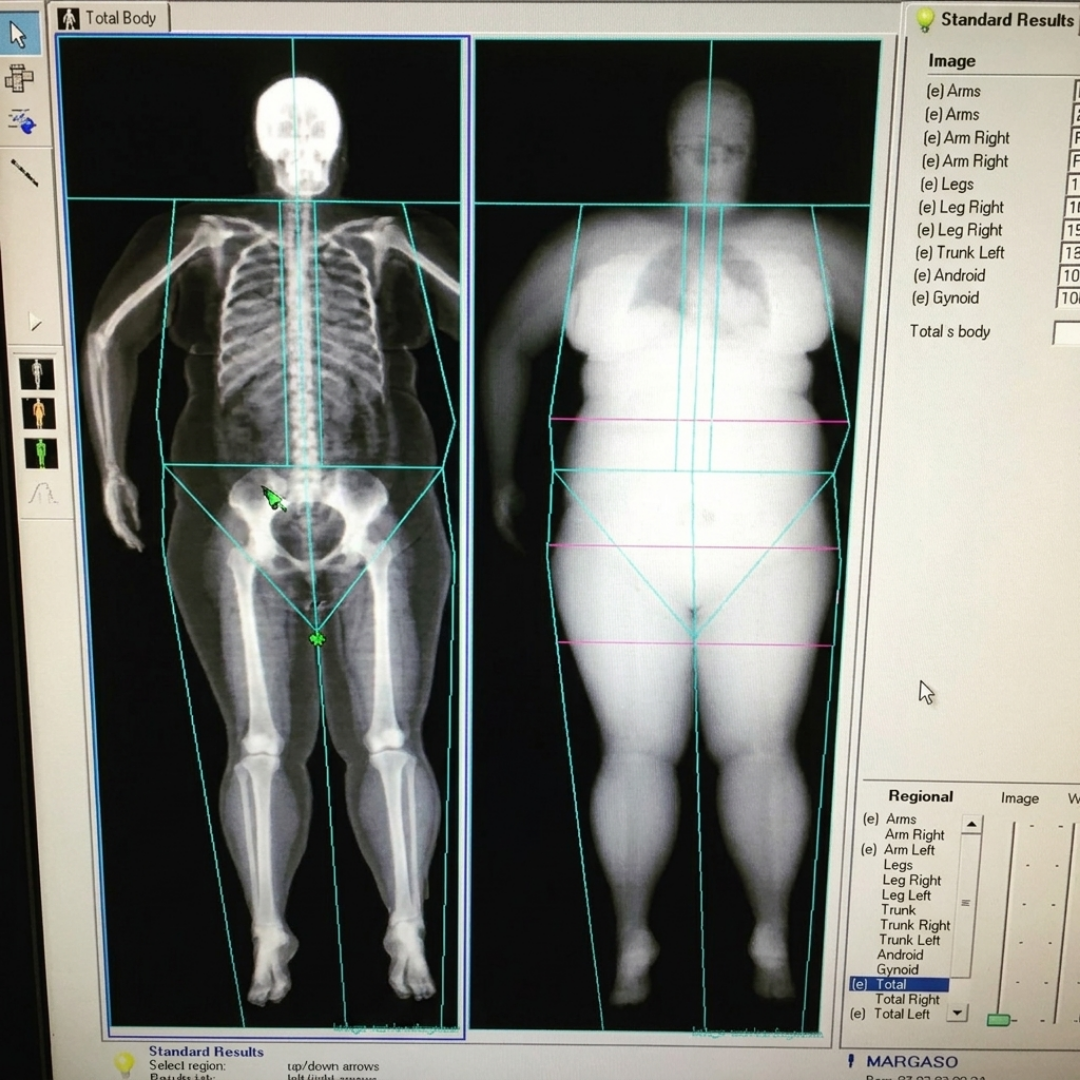
I am a cardiologist and I am sure this is going to make you angry. I stopped prescribing GLP-1s to my Type 2 diabetic patients after I had to take Ozemp!c myself. I wrote 400 of those prescriptions before I wrote one for me. Thirteen months later I was admitted to my own hospital at 2:14 in the morning with a creatinine of 2.4 and a potassium of 5.9, being told by a fellow I had trained that I was a few hours from a dialysis catheter. I was 57 years old. I am a board-certified cardiologist. Twenty-four years of practice. Two hundred beds in the hospital where I was admitted and I had privileges on every floor of it. I lost 41 pounds on that drug. My A1C read 5.9. Everyone in my practice called it a miracle. Fourteen months after I stopped, my A1C was 7.4. Higher than the day I was diagnosed. I am writing this because I know what my colleagues will say when they read it. I have already heard some of it. I do not care. If you are over 50 with Type 2 diabetes, or you are on one of these shots right now, or someone you love is, please read all of it. I know it is long. I know you are scrolling. I know you have somewhere to be. Two years ago I would have paid anything for a physician with my credential to sit me down and explain what I am about to explain to you. Nobody did. I was diagnosed with Type 2 diabetes at 51. Fasting glucose 148. A1C 7.1. It did not surprise me. My father was a Type 2 diabetic, managed on M*tformin and a water pill for thirteen years, and he died of heart failure at 62 in a hospital forty minutes from the one where I trained. My entire career was built on the belief that I would prevent for my patients what nobody had prevented for him. I did exactly what a cardiologist would do. M*tformin at diagnosis. Lisinopril the following year when my pressure crept to 142 over 88. A statin the year after that when my LDL hit 156. Three medications. All three of which I had personally prescribed to hundreds of patients who looked like my father. I walked. I lifted three days a week. I cut refined carbohydrates down to almost nothing. I lost 12 pounds and held it. By year five I was still climbing. A1C 7.3. Weight 231. So in the spring of 2023 I did what the entire field was doing. I put myself on a GLP-1. I want to be honest about how good it was. Within three weeks food stopped being loud. That is the only way I know how to describe it. The constant negotiation in my head about what I was going to eat, and when, and how much, simply went quiet. I dropped 41 pounds in nine months. 231 down to 190. My A1C came in at 5.9. My triglycerides fell 90 points. My internist took me off the statin. My pressure came down enough that we cut the Lisinopril in half. I stood in front of our cardiology group in November of 2023 and presented my own labs as a case study. I told a room of eleven physicians that we had finally been handed the tool that would change the trajectory of this disease. Then I went back to my clinic and wrote it for everybody. Post-stent patients. Prediabetics. Patients whose A1C was 6.4 and who had never taken anything in their lives. If they had a pulse and a BMI I could justify, I wrote it. Four hundred prescriptions in fourteen months. Here is what happened to me. In January of 2025 I started vomiting. Not the nausea everyone talks about in the first month. This was different. Eight days. I could not keep water down by day four. I lost 9 pounds in a week and told myself it was a stomach virus going around the peds floor. On February 11th at 2:14 AM my wife drove me to my own emergency department. Acute kidney injury. Creatinine 2.4, up from 1.0. Potassium 5.9. Severe volume depletion. Delayed gastric emptying on the study they ran the next morning. The nephrology fellow who admitted me was a man I had taught on rounds three years earlier. He stood at the foot of my bed with my labs on a tablet and he could not look directly at me. He said, 'Doctor Walker, I want to be straight with you. If your potassium moves another half point tonight we are putting in a line.' I spent four days on that floor. My kidneys came back. They stopped the drug on admission and never restarted it. And then the part nobody warned me about started. Food got loud again. Not gradually. Within about five weeks the volume came all the way back up and then it came back louder than it had ever been before I started. I regained 48 pounds in eleven months. I want to be precise about that number because it matters. I did not go back to 231. I went to 238. My A1C was drawn on January 9th of this year. 7.4. At diagnosis, six years earlier, it had been 7.1. I had spent nine months on the most powerful metabolic drug my profession has ever produced, and I had come out the other side worse than I went in. That is when I ordered the scan that broke my career in half. I asked our radiology department for a DEXA body composition study. I had one on file from June of 2023, two months into the drug, because I had been running myself as my own case study for the group presentation. I put the two studies side by side on my office monitor at 6 PM on a Thursday. On the drug I had lost 41 pounds of total mass. Sixteen of those pounds were lean tissue. Muscle. Off the drug I had regained 48 pounds. Three of them were lean. Net result. I was 7 pounds heavier than the day I started and I was carrying 13 fewer pounds of muscle than I had been carrying when I was diagnosed at 51. I sat in that office and I did the arithmetic that I should have done before I wrote a single one of those 400 prescriptions. Skeletal muscle is where the majority of the sugar in your bloodstream is supposed to go. It is the largest disposal site in the human body for glucose. It is the drain. I had spent nine months making my drain smaller. I ran the rest of the workup on myself over the following six weeks. I did not want to. I did it because I knew that if I did not, somebody at an outside institution would be reading my chart in three years and I would not be there to explain it. Nephrology. My eGFR was 68. It had been 91 five years earlier. Early diabetic nephropathy. Nobody had flagged it because my A1C had read fine during the drug year and a creatinine of 1.1 does not trigger a referral under the algorithm I had personally signed off on for our department. Retina. Small hemorrhages in both eyes. Early background retinopathy. I had been holding echo reports at arm's length for seven months and blaming my glasses. Liver. Grade 2 hepatic steatosis on ultrasound. ALT 52 for two years running. Three separate colleagues had written keep an eye on it in my chart. Nobody kept an eye on it. Podiatry. Nerve conduction study showed measurable peripheral neuropathy in both feet, right worse than left. I had been waking at 3 AM with burning in my toes since the previous summer and blaming my running shoes. Cardiology. My own department. Coronary calcium score 612. I have called patients at home with scores half that number and used the sentence, I need to see you this week, not next month. Five organs. Every one of them showing the exact pattern I had spent twenty-four years watching in other people's bodies. I sat at my desk on a Tuesday night in April with all five reports fanned out in front of me and I finally understood something I had spent my entire career not understanding. The M*tformin was treating my liver's glucose output. The Lisinopril was treating my blood pressure. The statin had been treating my LDL. And the GLP-1 had been treating my appetite. Four drugs. Four levers. Not one of them had touched the thing that was doing this to five organs at the same time. I opened my laptop at 11 PM and I did something I had not done since my fellowship. I searched for the mechanism. Not the outcome trials. Not the prescribing data. The mechanism. I read until 3 in the morning. GLUT4. The transporter protein that sits inside your cells and has to physically move to the cell surface before a single molecule of sugar can enter. Insulin receptor substrate signaling. The specific failure point where insulin knocks and the door does not open. None of it was hidden. It was sitting in Diabetes Care and Circulation and the New England Journal, journals I had subscribed to for twenty-four years. I had read those journals every single month. I had read them for the intervention trials and the outcome data and the prescribing guidance. I had never read them for mechanism, because my training had told me the mechanism was settled and my job was to manage the downstream numbers. My training was wrong. I closed the laptop and sat in my kitchen in the dark and understood that I had written 400 prescriptions for a drug that turns off the faucet in a house where the drain has been closed for fifteen years. And in a meaningful number of those patients, I had made the drain smaller on the way through. Six weeks later I saw a patient in follow-up who should not have looked the way she looked. Her name is Nirosha. Type 2 diabetic, twelve years post-diagnosis. She had come to me three years earlier after an abnormal stress test. Her A1C at intake was 8.1. She was on M*tformin and Lisinopril and she had declined a GLP-1 twice when I offered it, which at the time I had noted in her chart with a certain amount of frustration. I pulled her labs before I walked into the room, expecting to have that conversation again. A1C 5.5. LDL 79. Blood pressure 118 over 72. She had come off the Lisinopril fourteen months earlier at her internist's recommendation and her pressure had not moved back up. I sat down across from her and asked her what she was doing. She was quiet for a second. Then she said, 'Doctor, my mother has been telling our whole family this for years. I did not bring it up with you because I did not think you would want to hear it from me.' I asked her what her mother had told her. She wrote a name and a town on the back of my prescription pad. Malini Wickrama. Eighty-one years old. A house outside Allentown, Pennsylvania. I drove there that Saturday. I did not tell my wife where I was going. I did not tell my practice partner. I did not tell one single person in my institution that a board-certified cardiologist was driving two hours and forty minutes to sit in a stranger's kitchen because everything my medical school and my board certification and my twenty-four years of practice had taught me about this disease had failed in my own body. I pulled up at 10:50 in the morning. There was a garden running the length of the front walk. Curry leaf. Gotu kola. A small cinnamon tree in a pot by the steps, wrapped for the winter. Plants I had last thought about in a pharmacognosy lecture in 1997. She was on the porch with a wooden bowl in her lap, sorting bark. Small woman. Thin. Eighty-one. Hands moving steadily with no swelling in the knuckles and no brace on either wrist. I introduced myself. Not as a cardiologist. As Matthew. She looked up with very clear eyes and asked me why I had driven all that way. I told her. I told her I had put myself on the same drug I had prescribed 400 times. That it had taken 41 pounds off me and put 48 back. That my kidneys had nearly quit in February. That five organs in my body were showing the same pattern I had spent my career watching in other people. That her daughter was my patient. She listened the whole way through without interrupting me once. When I stopped she set the bowl down and said, 'Come inside, doctor.' Her kitchen smelled like cardamom. She poured tea without asking me whether I wanted any. Then she sat down across the table and said, 'Your medicines are fighting the wrong half of the problem. You already know this. That is why you are sitting in my kitchen instead of your office.' I did know it. She said, 'Think of your body as a bath with the tap running. For fifteen years the drain has been shut. The water climbs. Your doctors watch the water line and they write it in your chart. That number is your A1C.' She turned her hand over. 'The shot you took did not open the drain. It turned the tap down. That is all it did. The water line dropped and everyone congratulated you. Underneath it, the drain was still shut and the water was still standing in your vessels every heartbeat of every day.' I said, 'And when I came off it the tap opened again.' She said, 'Worse than that. The drain in your body is your muscle. That is where the sugar is supposed to go. You spent nine months on a drug that emptied the bath by starving you, and your body took the muscle with it. You came off with less drain than you started with. That is why your number is higher now than the day they told you that you had this.' I have sat in cardiology grand rounds for twenty-four years. I have never heard the mechanism explained more accurately than it was explained to me at that table by a woman with no medical degree. Then she picked five pieces of bark out of the bowl and laid them on the table in front of me. 'Your feet. Your kidneys. Your eyes. Your liver. Your heart.' She tapped each one. 'Five specialists have told you that you have five problems. You have one problem. Standing sugar, grinding through the lining of every vessel in your body, for fifteen years. You were trained to write a separate prescription for each one of those five. Not one of those prescriptions opens the drain.' I could not answer her. She said, 'Now here is the part your medical school did not teach you. In my grandmother's village the women have used one thing for this for a thousand years. My grandmother grew it. Her mother grew it. I am eighty-one. I have never taken a medication in my life. My A1C has never been high. Neither of my daughters is diabetic.' She got up and took a dark glass jar down from a shelf. Inside were tight curls of red-brown bark rolled like paper. 'True Ceylon cinnamon,' she said. 'Cinnamomum verum. Not the cinnamon in your grocery store. That is cassia, from China and Vietnam. Different plant. Cheaper. It carries almost none of the active compounds and up to two hundred and fifty times more coumarin, which is hard on the liver at daily doses.' She set the jar down between us. 'Real Ceylon carries two compounds. The first is MHCP. That is what moves the GLUT4 you were reading about at three in the morning. It opens the drain. The standing sugar finally leaves your blood and goes into your cells where it becomes energy instead of damage.' She held the jar up. 'The second is cinnamaldehyde. The compound you smell. It repairs the lining of the vessels the standing sugar has been grinding at for fifteen years. The vessels in your feet. Your kidneys. Your eyes. Your liver. And the arteries around your heart, the ones with a calcium score of six hundred.' She looked straight at me. 'One opens the drain. The other repairs what the flood damaged while the drain was shut. That is why the women in my village do not have hearts like your father's.' I asked her whether the form mattered. She said three things and I wrote all three on the back of a receipt in her kitchen. 'Most people fail at the species. They buy cassia and they think they are taking cinnamon. They are not.' 'Most of the rest fail at the dose. What is in a grocery jar is a seasoning amount. The research uses a concentrated amount. Those are not the same thing.' 'And nearly everyone fails at the delivery. These compounds are fat-soluble. Dry powder in a capsule mostly passes through you and never crosses into the blood. In Sri Lanka we have never eaten cinnamon without coconut. Every dish. My grandmother could not have told you the biochemistry. She knew that in our kitchen those two things go together.' She said there was a company her nephew in Boston had found for her. That they source the real species, DNA-verified out of Sri Lanka. That they concentrate the bark twelve to one so a single softgel carries the equivalent of 7,200 milligrams, which is the amount used in the published work. That they suspend it in organic MCT oil, which is coconut derived, so the compounds actually absorb. Third-party tested. Coumarin-free. Made in the USA. She wrote the name on the receipt under my three notes. Metabolae. I ordered three bags from her kitchen table before I got back in the car. I drove home and did not tell my wife where I had been. The bags came the following Thursday. Softgels, not powder. One with breakfast. That was the whole instruction. Week one. My afternoon energy came back. I had been putting my head down in my office between two and three o'clock every day since February. On the fifth day I read four weeks of accumulated journals in one sitting at 4 PM and did not once feel my eyes go heavy. Week two. The burning in both feet started to quiet. I had been sleeping with my feet outside the blankets since the previous August. That week I pulled the blanket over them and slept through. Week three. I ran a home cuff twice daily. I had been sitting at 138 over 86 since the hospital admission. That week I was 124 over 78. I had not changed a single dose of anything. Week four. I ordered my own lipid panel through our outpatient lab. LDL 88. Triglycerides down 71 points from my February labs. I ran it a second time because I did not believe the first one. Both matched. Week six. Fasting glucose 96, down from 141 in February. Week eight. A1C 5.8, down from 7.4 in January. Week twelve. Full panel. Metabolic, lipid, renal, hepatic. A1C 5.4. Fasting glucose 88. LDL 74. Triglycerides down 96 points from February. Creatinine 0.9. eGFR climbed from 68 to 80. ALT back in range for the first time in three years. Blood pressure 116 over 74 with no change to my medication. And then the one I have thought about every day since. I ordered a third DEXA. I was down 22 pounds from January, and 6 of the pounds I had regained since April were lean tissue. Down 22 pounds while my muscle was going back up. The drain was opening again. I printed the January panel and the twelve-week panel and I walked them into my practice partner's office. Michael. Another cardiologist, sixteen years in, a man I had helped recruit. I put both sheets on his desk and I did not say anything. He read them twice. Then he looked up at me. 'Matthew. What did you do.' I told him. The vomiting. The DEXA. The five reports. The two hour and forty minute drive. The kitchen table. The bath with the drain shut. All of it. He listened for the better part of an hour and did not interrupt once. When I finished he said, 'I was not trained on any of this either. Send me the name. I want to watch it in my own patients.' He has been running it with nineteen of his post-event patients for four months. He called me nine days ago. Fourteen of them have dropped out of the range they were sitting in. Eleven of them have come off a GLP-1 at their internist's recommendation and none of the eleven have regained past their starting weight. Three weeks ago I sat down with my wife at a restaurant and ate a plate of rice for the first time in six years. My fasting glucose the next morning was 91. My most recent A1C, drawn eleven days ago, was 5.3. Lower than any number I have had since I was 44 years old. I am 59. I have my kidneys. I have my practice. I have watched five organs in my own body turn around in a direction I have not seen a chart move in twenty-four years of cardiology. And two weeks ago Michael stood in my doorway holding my panel, and he used the word I had been waiting fifteen years for somebody to use about me. Improving. Not managed. Improving. If you are diabetic, or prediabetic, or your husband is, or your mother is, and you have been told your numbers look controlled while your body quietly comes apart underneath them, I need you to hear the mechanism and not the marketing. The standing sugar is what is doing the damage. Not the number on the chart. The shot turns down the tap. It does not open the drain. And for a great many people it takes the drain with it on the way through, which is why the number comes back higher than where it started. Cutting carbs does not open the drain. I did that for six years and it did not stop one thing that was coming for me. There are two compounds I know of that address the actual failure. MHCP moves the GLUT4 and opens the drain. Cinnamaldehyde repairs what the flood damaged while it was shut. Both of them come out of one plant, and only out of the real one. Metabolae. DNA-verified Cinnamomum verum out of Sri Lanka. Concentrated twelve to one to a 7,200 milligram equivalent per softgel to match the amount used in the research. Suspended in organic MCT oil so it actually crosses into your blood. Coumarin-free. Third-party tested. Softgels in a bag, made in the USA. One softgel with breakfast. That is the entire protocol. Ninety-day money-back guarantee, and there is a reason it is ninety days and not thirty. A red blood cell lives about three months. Your A1C is a ninety-day average of what those cells have been sitting in. Ninety days is the shortest honest window in which a real change can show up on a lab report. If your numbers have not moved by then, you pay nothing. The system that trained me had twenty-four years to hand me this and it never did. It is reaching you now. P.S. My father was a Type 2 diabetic, managed on M*tformin and a water pill for thirteen years, and he died in heart failure at 62. He was told he was controlled at every visit for over a decade. I built my whole career on the promise that I would catch for my patients what nobody caught for him, and then I spent fourteen months writing 400 prescriptions for a drug that made my own drain smaller. I got a warning at 2:14 in the morning in February. My father never got one. Please do not wait for yours. P.P.S. I have no financial relationship with this company. Nobody pays me anything. I am writing this at 11:40 on a Sunday night alone in my office because a patient sat in my chair on Friday whose A1C had come down 1.8 points in ten weeks and I recognized my own labs on her chart. She told me she had found it herself after reading something a cardiologist in another state had written about her own heart attack. That is the second time this year I have found one of my patients inside a story written by a stranger. Please send this to anyone you love who has been told they are managed. I promise you they are not. ~ Dr. Matthew Walker, MD, FACC, age 59, cardiology
Where the ad sends people
metabolae.com
Ceylon Cinnamon 7200mg Equivalent with MCT Oil
Metabolae
Learn more: metabolae.com(opens in a new tab)