Dr. Matthew Walker
Dr. Matthew Walker Facebook ad: “Ceylon Cinnamon 7200mg Equivalent with MCT Oil”
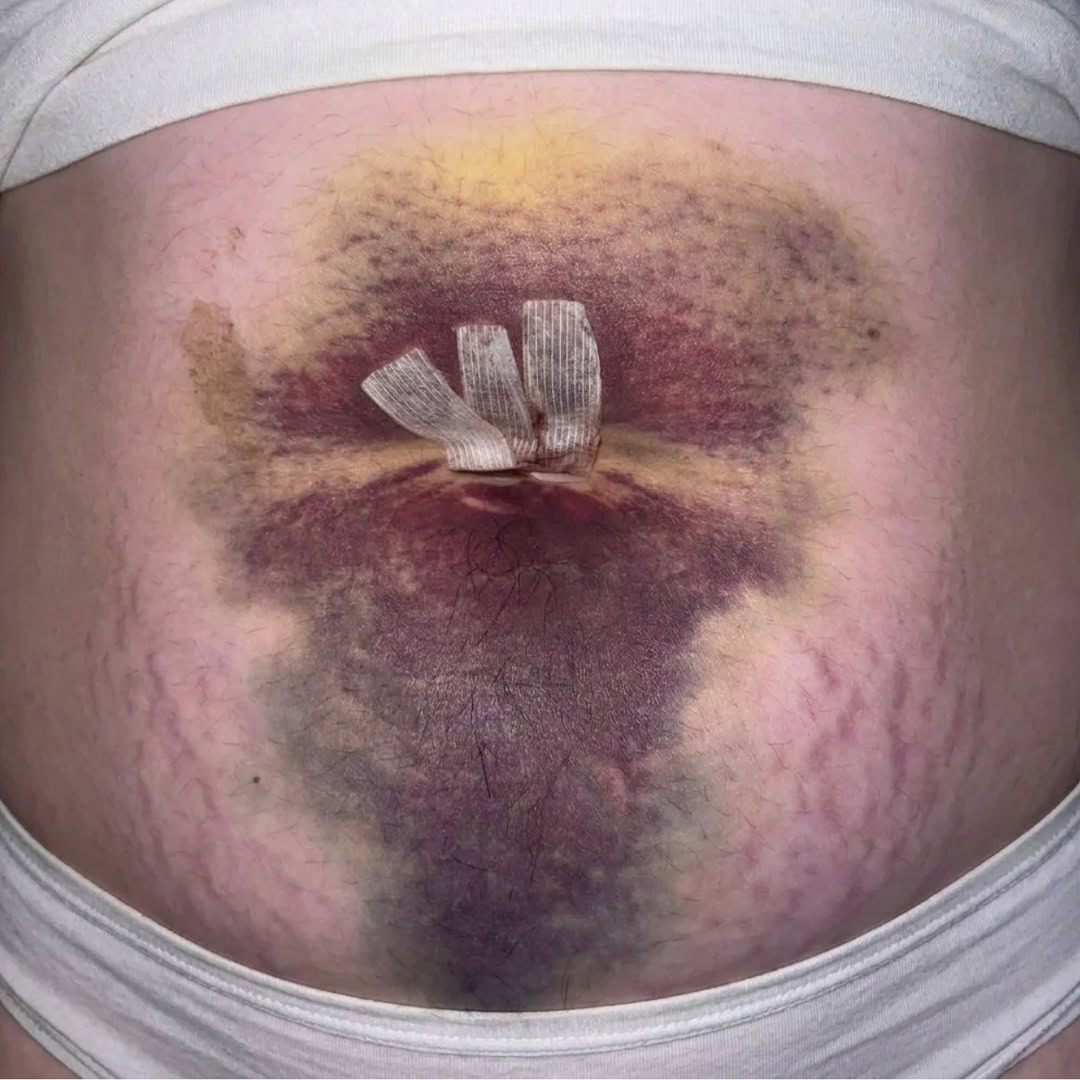
Ran for 20 days, from September 8 to September 28, 2026, the last day Crush saw it.
Run by Dr. Matthew Walker on Facebook. Crush is not the advertiser and does not verify its claims. See this ad in Meta's Ad Library(opens in a new tab)
Want an ad like this for your product?
Crush makes new ad images for your product from this ad: your logo, your product photo, your offer.
Trials from $19.95 USD, then $79.95 USD a month. Cancel anytime.
About this ad
- Meta Ad Library ID
- 1101966309076617
- Platforms
- Facebook, Instagram, Audience Network, Messenger and Threads
- Relaunches
- 2
Ad text
I spent 31 years as a county coroner. I opened over 500 type 2 diabetic bodies with my own two hands. And I'm about to tell you something I should have said 20 years ago. My wife told me to leave it alone. I'm retired now. Nobody's career is on the line anymore, not mine, not the endocrinologists', not the hospital's. But I'm 62 years old, and I held too many hearts in my hands knowing the truth and saying nothing. So here it is. When you open a body, you don't just see it. You handle what's inside. You feel the difference between blood vessels that were healthy and vessels that had been strangling from the inside while their owner was still walking around, still going to work, still telling his wife his A1C was managed. And in 31 years, in diabetic body after diabetic body that came across my table, I found the same thing. Blood vessels turned stiff and glassy, hardened from the inside like sugar cooked down in a pan and left to set. Vessels feeding the feet strangled shut. Coronary channels narrowed to the width of a coffee stirrer. Kidneys shrunk down to half their size. Retinas bled through. Livers full of fat and early scarring. Hearts thickened and struggling in men and women who should have had twenty more years. Damage that had been building for years. Sometimes decades. I found it in men on Metformin. I found it in women on Ozempic. I found it in the ones who'd been on Jardiance for a decade and the ones whose doctors were still trying to "manage" it with diet. I found it in the school teachers and the truck drivers and the grandfathers whose grandchildren were still in car seats. I found it in people whose families stood in my office and told me, "but his A1C was fine. His doctor said the numbers looked great. He was doing everything right." Everything right. Every certificate I signed said the same thing. Cardiac event. Sepsis. Complications. Natural causes. Never what I actually found. Never the truth. I want to tell you about the two times I almost said something. And why I didn't. It was 1997. Four years into the job. His name was David Cooper. 53 years old. Delivery route driver for a bread company. Type 2 diabetic diagnosed six months earlier, and his doctor had told him what doctors told newly-diagnosed T2 patients in 1997. Lose the weight. Cut the sugar. Walk every day. We'll retest in six months and talk about Metformin if we need to. David did it. He lost 19 pounds. He walked three miles every morning before his first delivery. He hadn't touched anything with sugar since March. His last A1C had come down from 7.4 to 6.8. His doctor told him he was doing everything right. David's wife found him slumped over his workbench on a Saturday morning. He'd been out there since 6am building a birdhouse for his granddaughter. The death certificate said acute myocardial infarction. When I opened him, his left anterior descending artery was glazed and hardened. Twenty years of sugar had turned the inside of that artery into something you could tap with a fingernail. The wall had been thickening the whole time underneath an A1C nobody had been watching until six months ago. The blood vessels feeding his feet were already strangled down to threads. His kidneys were half the size they should have been. His retinas were bled through in both eyes. Six months of doing everything right, on the disease that had been quietly wrecking him for two decades before anyone noticed. David's wife sat in my office three days later and asked me, quietly, if I had any idea why a man who'd just lost the weight and eaten right for six months had died on a Saturday morning at 53. And I almost told her what I'd seen. The vessels glazed like glass. The strangled circulation in his feet. The kidneys already gone. The retinas that would have taken his sight within the year if the heart hadn't gone first. But I didn't have an explanation that fit on a form, and it wasn't my place to offer one. I was 35. I had two kids and a mortgage and a job in a small county where the hospitals sent me my work. I'd been told, not in writing, never in writing, just understood, that a coroner's job is to find the cause of death, not to second-guess the treatment that led to it. So I told David Cooper's wife I was sorry for her loss. And I signed the certificate as written and carried a question I couldn't shake. I went home that night and started a notebook. Not for anyone. Not for court. Just for me, because I couldn't carry it in my head anymore. Every diabetic body. The date. The age. What the certificate said. What the vessels said. What the person had been told to do. Fourteen years later, I opened another chest that made me want to walk out of the room. His name was Richard. It was 2011. 49 years old. High school basketball coach. Married 23 years. Three kids, two in college, one still at home. Big man. The kind who made a room feel safe just by walking into it. Richard was not David. Richard had been Type 2 for twelve years. On Metformin twice a day the whole time. His endocrinologist had added Ozempic eighteen months earlier when his A1C climbed to 7.4. The Ozempic had brought it down to 6.6. He'd lost 22 pounds on the shot. His endocrinologist had told him, at his last three-month check, that his A1C was "the kind of number I wish every Type 2 patient in this practice had." He was going to be fine. Richard died on a Sunday morning. His heart stopped while he was standing at the stove making pancakes for his youngest daughter. She was 16. She was sitting at the kitchen table when it happened. Cause of death on the ER report: cardiac arrest. He came to my table on Tuesday. When I opened him, his left anterior descending was worse than David's had been. Not a little worse. The wall was thicker. The plaque was harder. The channel had narrowed to something you couldn't have threaded a coffee stirrer through. He'd had a full rupture and a second, older one his cardiologist had never picked up on any test. His kidneys were half the size they should have been. His retinas were damaged in both eyes. His liver was swollen and yellow with the fat that had been building for years. The small vessels feeding his feet were strangled down to threads and the nerves in his lower legs were dead tissue. Not dying. Dead. I stood at that table for a long time. Because the certificate had changed. The medication had changed. The number on Richard's chart looked better than David's ever had. And the blood vessels were the same. It was worse. Fourteen years of the profession's best answer, and the man on the table was in worse shape than a man who'd never gotten the answer at all. That was the moment I understood the pill had never been aimed at what was actually killing him. The number came down. The disease kept building. And nobody was watching for the disease. They were all watching the number. I added a new column to the notebook that night. Whether he'd been on the medication. And which one, or which combination. By the time I retired six weeks ago, that notebook had 2,700 entries. 2,700 diabetic families who shook my hand and thanked me for my care and never once heard what I was really thinking. That's what I carried for 31 years. Here's where it stopped being something I carried and became something I could not live with. My wife, Susan. We've been married 34 years. She's 60. Retired kindergarten teacher. Walks three miles every morning. The healthiest person in any room she walks into. Type 2 diabetic since she was 48. On Metformin twice a day for twelve years. Her A1C had sat between 6.7 and 7.1 for those twelve years. Her endocrinologist called it managed at every visit. Said she was doing great. Two months ago, Susan's A1C ticked up to 7.6 at her regular check-in. Her endocrinologist told her it wasn't dangerous, but he wanted to add a low dose of Jardiance to hold the number down before it climbed further. Ten milligrams, once a day, with breakfast. Susan came home and asked me what I thought. I looked at the number. I thought about the 2,700 entries in my notebook. I thought about David Cooper's A1C coming down from 7.4 to 6.6. I thought about Richard's coming down to 6.4 on the Ozempic. I told her to take it. I want you to sit with that. Because it is the single decision in 31 years of this work that I would give anything to have back. I had 2,700 entries in a drawer telling me the A1C wasn't the disease. And when my own wife was standing in the kitchen asking me if she should add another pill to the one she was already on, I told her to trust her doctor. She took it faithfully. Ten milligrams every morning with her coffee. Six months in, it started. The tiredness after meals. Not bad at first. Just enough that she'd sit down after dinner and be asleep in the chair by eight. She joked about it. "Getting old." I didn't joke back. Then the feet. She started waking at three in the morning, sitting on the edge of the bed rubbing the soles of her feet. She said it felt like she was wearing socks she couldn't take off. Numb and buzzing at the same time. Then the bathroom. She was getting up three, four times a night. She'd never done that. She blamed the Jardiance and told herself it was doing its job. Then her eyes. She started holding the menu farther away. Squinting at the crossword she used to do in pen. Asking me to read the prices on the shelf. Then the liver enzymes on her last panel. Her doctor pointed to them and said they were "creeping up a little, very common with Type 2, we'll keep an eye on it." Then the kidney numbers on the same panel. Her creatinine had ticked up. Her doctor said her eGFR was still fine, nothing to worry about at her A1C. Then her blood pressure. 134 over 86 at her follow-up. Her doctor said it was a little elevated but common with Type 2, cut back on the salt, we'll recheck it next time. Managed. Of course it was. I knew what I was looking at. God help me, I knew. I knew because everything Susan was showing me was the front end of what I'd been pulling out of diabetic bodies for 31 years. The numb feet. The kidney numbers ticking up. The liver enzymes climbing. The blood pressure creeping. The exhaustion after meals. The blurred vision. Susan was starting the story. I'd only ever seen the end of it. I sat in our living room that night watching Susan hold the newspaper at arm's length and give up on it. And I felt the full weight of 31 years of silence. I was not going to write complications of diabetes on my wife's death certificate. Not Susan. Not after everything I'd seen. Not after I was the one who told her to add the Jardiance in the first place. I did what any husband would do when his wife was disappearing in front of him. I tried the two things I'd heard of. Berberine, because I'd heard people mention it my whole career. If the medication was only lowering the number without touching the damage, I figured a natural compound aimed at the same target might at least do less harm. 500 milligrams three times a day. And chromium, because every diabetes book I'd ever picked up had chromium in it. Susan took both of them faithfully every morning and every evening with her meals, alongside the Metformin and the Jardiance she was still on. She trusted me. I told her I was figuring it out. Six weeks. Her feet still went numb at night. She was still getting up three, four times a night. Her A1C came down another 0.2 points and her vision was still blurring. She was still waking up at 3am rubbing her calves. I sat at the kitchen table one morning with those two bottles on the windowsill above the sink and I understood I was guessing. I had spent 31 years around the exact damage those two bottles were supposed to prevent, and I had no idea if either one of them was capable of reaching it. I was the right man to catch this. I was not the right man to fix it. I needed help. That's when I called Rachel. Rachel Henderson. She'd been a coroner in the next county over for 38 years before she retired. Old school. The kind of woman who said exactly what she thought regardless of consequence. Rachel was the only coroner I'd ever known who talked openly about what we find in diabetic bodies. Not publicly, but between us, over coffee. "Another one today," she'd say. "44 years old. Type 2. On Metformin and Ozempic. A1C 6.9. Vessels like spun glass. Wrote cardiac event." She'd shake her head. Take a sip. Move on. I called her and told her about Susan. Told her what I'd tried. Told her none of it worked. She was quiet for a long moment. Then she said, "Matthew, you've been thinking about this wrong your whole career." "Come on, Rachel." "I'm serious. You keep looking at the A1C. You of all people know the A1C isn't the disease. You've had your hands on the disease. You've been pulling it out of diabetic bodies for 31 years." "So what am I missing?" "Everything the pill was never built to reach. Grab a pen." I grabbed a pen. "Type 2 diabetes is not really an A1C problem. The A1C is just the surface measurement. It tells you nothing about what that sugar has already been doing." "Then what has it been doing." "After years of constant carbs and elevated insulin, your cells stopped responding. The doors on your muscle cells, your liver cells, your organ cells. The doors that are supposed to open when insulin knocks. They stop responding." "So the sugar from every meal cannot get into your cells where it is supposed to be burned for energy. It stays in your blood. Trapped." "And once it is trapped, it does not sit politely. It moves with every heartbeat. It grinds against the inside lining of every blood vessel in your body. It coats the proteins. It hardens the linings. It strangles the blood vessels feeding your nerves, your kidneys, your eyes, your liver, and eventually your heart." "That trapped sugar is what causes every diabetic complication. Not the A1C. The trapped sugar. And it has been damaging Susan for years before her doctor told her anything was wrong." "Her nerves. That's the numbness and the buzzing." "Her eyes. That's the vision loss." "Her kidneys. That's why so many diabetics end up on dialysis." "Her liver. That's the enzymes creeping up. That's the fatty liver." "And the arteries feeding her heart. That's what took Richard." "Five different organs. All being damaged silently. Every meal. Every heartbeat. For decades. While her doctor watches the number and shakes her hand and says she's right where we want her." "That's what you and I have been pulling out of diabetic bodies our whole careers." I didn't say anything for a long time. Then I asked her what the Metformin had been doing for Susan if all of this was happening underneath it. "Metformin tells your liver to make less new sugar. It reduces the supply coming in. The number on her chart drops. Her doctor is satisfied. But it does not open the cellular doors. It does not move the sugar already trapped in her blood. The grinding through her vessels continues whether she takes the pill or not. It manages the number while the disease finishes what it has been doing the whole time." "You can shut off the faucet. If the drain is still clogged, the water does not drain." I sat with that. "And the Jardiance her doctor added six months ago." "Jardiance forces your kidneys to dump the extra sugar out through your urine. The number drops. But it does not open the cellular doors. The sugar in her blood is still trapped. The grinding does not stop." "And it wears the kidneys down while it does it. That sugar has to pass through them every day for the rest of her life. Susan's kidney numbers were already ticking up. Jardiance just gave them more work." "And the Ozempic. Her doctor said Ozempic is the next step if the Jardiance doesn't hold." She let that land. "All the GLP-1 shots everyone is calling a miracle right now. Ozempic. Mounjaro. Wegovy. They slow how fast your stomach empties so less new sugar enters your blood after a meal. They take some weight off. Some patients see real benefits. But what they cannot do is open the cellular doors that have stopped responding to insulin. The trapped sugar is still trapped. The grinding does not stop." "And the lawsuits stacking up against them right now, the gastroparesis, the muscle wasting, the bone density loss, are real problems showing up in people who took the shots and trusted they were safe. GLP-1s are like draining a flooded basement while the pipe is still leaking." I asked her what actually works if the medications don't. "You have to get the sugar out of Susan's blood the way her body is supposed to. Not tell her liver to make less new sugar. Not force it out through her urine. Not slow her digestion. You have to get the cellular doors opening again. Every meal. So the sugar finally moves out of her blood." "There is one plant that does that. True Ceylon cinnamon." "Cinnamon." "I know how it sounds, Matthew. I told you I knew how it sounded when I found this. And I want you to hear me out because it took me two years to accept it. Grab your pen again. There are four things a real Ceylon cinnamon has to be, and almost nothing on a supplement shelf hits all of them." I grabbed the pen. "One. It has to be true Ceylon. Cinnamomum verum. DNA-verified. Not cassia. Ninety-five percent of what calls itself cinnamon on a supplement shelf is cassia, a completely different tree from China. Cassia does almost nothing for blood sugar and contains a compound called coumarin that damages the liver at daily doses." "Two. It has to be grown in Sri Lanka, not Vietnam or China. Sri Lanka is where true Ceylon originated and where the plant has the highest MHCP content, the compound that opens the cellular doors. Ceylon grown elsewhere has been measured with a fraction of the MHCP the studies were built on." "Three. It has to be concentrated. Twelve to one at minimum. That's what matches the dose in the research. Regular cinnamon powder isn't concentrated enough. You could eat a spoonful every day for a year and not get what she needs." "Four. It has to be suspended in MCT oil. Not a dry capsule. Not a powder. The active compounds in true Ceylon, both MHCP and cinnamaldehyde, are fat-soluble. Without an oil carrier they cannot cross the intestinal wall into the bloodstream. Dry capsules pass through the body unabsorbed. Almost every supplement on the shelf is a dry capsule. Almost none of it reaches her blood." I asked her how MHCP actually opens the doors if the medications can't. "MHCP signals the cellular doors in her muscle cells to start responding to insulin again. Like a key turning in a lock that had been jammed for years. Once the doors open back up, the trapped sugar finally moves out of her blood and into her cells where it gets used. Published in Diabetes Care, the American Diabetes Association's own journal, twenty years ago. Our doctors still don't recommend it." "And the second compound?" "Cinnamaldehyde. The one that gives cinnamon its smell. Cinnamaldehyde supports the lining of the blood vessels that have been damaged for years. Helps the lining start doing its own repair. That's what restores the blood flow to the places that stopped getting it. Her feet. Her kidneys. Her eyes. Her liver. And the arteries feeding her heart." "Two compounds. One plant. One opens the doors. The other helps the damage already done start to repair." "Rachel. How long have you been doing this." "Twelve years. My husband too. He's 74, Type 2 since he was 55, and in remission for over a decade. His A1C sits at 5.6. His doctor stopped calling him diabetic three years ago." "And you never told me." "You never asked. And honestly? A retired coroner telling people to take cinnamon every morning. Nobody wants to hear that from the woman who cuts open the dead for a living." I got off the phone with Rachel and I did the obvious thing. I drove to the pharmacy. I went to the same aisle I'd stood in six weeks earlier when I bought the berberine. This time I knew what I was looking for. Ceylon cinnamon. Not cassia. With MCT oil. There were four brands of cinnamon capsules on the shelf. I stood there and read every label. I picked the two that looked the most serious, a bigger dose, an "organic" seal, one that even said "Ceylon" on the front, and I brought them home. Susan was skeptical this time. She'd been swallowing bottles for two months and her feet still went numb at 3am. I told her Rachel had explained the mechanism and this was different. Six weeks. Nothing changed. Her feet still went numb. She was still getting up to pee three, four times a night. Her vision was still blurring. I called Rachel back. "You bought commercial cinnamon, didn't you." "I bought the two most serious-looking bottles on the shelf. One of them said Ceylon on the label." "Doesn't matter what the label says. Almost none of them are DNA-verified. Almost none of them are grown in Sri Lanka specifically. Almost none of them are concentrated to the research dose. And exactly none of them are in MCT oil, because MCT oil costs money and dry capsules are cheap. The label is designed to look serious. The product inside is the same commodity cassia dust as the cheap ones." "So how do I find one that actually hits all four?" "There's a company that makes it the way it actually has to be made. Only one I've found. My husband's been on theirs for years." She told me the name. Metabolae. I ordered it that afternoon. The cheap cinnamon capsules I'd bought Susan the first time were still on the counter. I went and got one. Twisted it open over a white saucer. A fine, gray-brown dust spilled out. Almost no smell. When the Metabolae arrived four days later I opened the bag and twisted a softgel over the same white saucer I'd used for the cheap one. Where that powder had been a dead gray-brown dust, this was deep amber MCT oil that beaded across the plate. The cinnamon suspended in it, alive, ready to absorb. And it smelled like actual cinnamon. Warm and sweet, like a bakery. A completely different thing, in every way that mattered. I read the paperwork that came with it. DNA-verified Cinnamomum verum, grown in Sri Lanka. Concentrated 12 to 1 to match the dose in the research. Suspended in organic MCT oil so both compounds actually reach the bloodstream. Third-party tested per batch. One softgel every morning with breakfast. Susan took the first one that morning with her coffee. Week 3: The crash she always hit after dinner, the one that put her in the chair asleep by eight, didn't come. She sat up reading a novel. First time in months. She didn't say anything about it. I noticed because she was still awake when I came in to say goodnight. Week 5: The buzzing in her feet started to quiet. And late one night she pressed her thumb into the sole of her own foot and told me, carefully, like she didn't quite believe it, that she could feel it a little more than she could a month ago. Also that week, the getting up at night to pee dropped from three times to one. She slept the stretch from midnight to five for the first time in nine months. Week 8: The three a.m. wake-ups had stopped completely. Clean through the night. I'd wake at three out of thirty-one years of habit and look over at her. Sound asleep. Breathing steady. Still. Week 12: Her sister came by for dinner. Halfway through the meal she stopped and stared. "Susan. What have you done? You look ten years younger." Susan smiled and looked at me. I couldn't say anything. I was thinking about every diabetic family I'd sat across from and lied to. Every husband. Every wife. Every daughter waiting for pancakes. All the ones whose person had these same symptoms, the same dismissals, the same "your A1C is 6.9, we'll check it in six months." The only difference was that I knew what to look for. And this time I'd looked in time. Her eyes cleared. She did the crossword in pen again. The bloating after meals was gone. She could sit through dinner without loosening her belt. The woman who'd been asleep in her chair by eight, six months earlier, was reorganizing the garage at noon and asking if I wanted to go for a bike ride after lunch. She said she felt like herself for the first time in two years. Because she was herself again. The damage had stopped. Her body was doing what a body does when you finally get the sugar out of the way. That same week, her endocrinologist ran her full panel. Her A1C had come down from 7.3 to 5.6. Right into the non-diabetic range. Her liver enzymes were back in normal range for the first time in years. Her kidney numbers were back to where they had been ten years ago. Her blood pressure was 122 over 78. Her triglycerides had dropped by more than half. Every number moved the right direction. Every single one. He asked her what she'd changed. She told him she'd added a Ceylon cinnamon supplement Rachel had recommended. He took her off the Jardiance entirely. Cut her Metformin from twice a day back to once. Told her whatever she was doing, she should keep doing. Remission. But I'll be honest with you. I've never cared less about a number in my life. Because I finally understood it was never the number that was going to take her. It was the damage the sugar was doing on its way through her body every day. And the damage stopped. And then there was the thing I still have trouble putting into words. The thing that, after 31 years, I did not believe I would ever see. The feeling came back into Susan's feet. Not a little. All the way back. She can feel the floor under her again. She can feel the water in the shower. She can feel my hand on her ankle. I have opened more than five hundred diabetic bodies. I have held dead nerve tissue in my hands more times than I can count. And I will tell you the one thing I never once had to wonder about in 31 years: Nerve does not come back. Once it's gone, it's gone. Every doctor who ever dismissed one of the people in my log said the same thing, in the same tired voice. Diabetic neuropathy. Nothing to be done. It only goes one direction. Susan's went the other direction. I started taking it myself the following week. The first morning, about twenty minutes after I swallowed it, I felt something I hadn't felt in years. A lift, a clarity, like someone had wiped a film off a window I didn't know was dirty. The rest came the way it came for Susan. The low-grade fatigue I'd blamed on 31 years of night calls and autopsies, gone. I sleep through the night. I have energy I haven't felt since my 40s. I'm 62 years old and I feel better than I did at 45. We both take it every morning now. One softgel on a saucer next to the coffee. It's the last thing either of us will ever skip. I've been retired for six weeks. I don't open bodies anymore. I don't sign certificates. I don't sit across from widows in my office and say "I'm sorry, ma'am" and keep what I saw to myself. But I think about David Cooper. And Richard. And their wives sitting in my office with the same question and me giving them the same silence. The notebook in my desk drawer with 2,700 names in it. The diabetic families I sent home without ever telling them what I'd seen, because I was told that was my place. And I think about Susan. How close she came to being entry 2,701. How her symptoms lined up, line for line, with what I'd been finding on my table for 31 years. How her tests came back "a little creep" and "very common with Type 2" while a life I loved was quietly being taken apart at the same time from two different directions. The only difference was that I finally spoke up. To Rachel. And then to her. And then to her endocrinologist through her. That's why I'm telling you now. Because I finally can. The feet you can't feel at night. The cut that should have healed two weeks ago and just sits there. The four o'clock exhaustion that drops you in a chair with the evening still ahead of you. The words on the page that swim when the light gets low. The bloating after every meal that has you loosening your belt an hour later. The bathroom trips at 3am you tell yourself are just the medicine doing its job. Those aren't separate problems. Those are warnings. Something is happening inside you right now, 24 hours a day. Sugar circulating in your blood after every meal, damaging your heart, your kidneys, your eyes, your nerves, your liver. Silently. Under an A1C your doctor calls managed. Your tests will come back fine. Your doctor will say age. Or neuropathy. Or "your A1C is 6.9, this is exactly where we want you." I've read those exact words in the charts of Type 2 diabetics I've opened up on my table. Hundreds of them. Diabetics whose organs were destroyed silently, because everyone was watching the wrong thing. The A1C measures how much sugar was in your blood on average over the last three months. It does not measure the damage. It never has. And the pill your doctor hands you does the very same thing the number does. It lowers the amount of sugar and touches none of the damage it's already causing. Metformin does nothing to it. Jardiance does nothing to it. Ozempic does nothing to it. When one stops holding the number they add a second, then offer you the weekly shot, and not one of them goes within a mile of the actual thing taking your feet, your eyes, and your kidneys. I'm not telling you to stop taking what your doctor prescribed. That conversation belongs to you and your doctor. What I'm telling you is that the pill only ever did half the job. And the half it skips is the half that ends up on my table. That reassurance is the same lie I signed 2,700 times. The comfortable number on the chart and the comfortable cause on the certificate are the same lie, told at two ends of the same disease. The only thing that works opens the cellular doors so the trapped sugar finally moves out of your blood at every meal. And it restores the blood flow to the organs the sugar has already been damaging. MHCP opens the doors. Cinnamaldehyde does the repairing. Both compounds. From true Ceylon cinnamon. Suspended in MCT oil so they actually absorb. That's what Metabolae makes. DNA-verified Cinnamomum verum from Sri Lanka. Concentrated 12 to 1 to match the dose in the research. Suspended in organic MCT oil so both compounds actually reach the bloodstream. Third-party tested per batch. One softgel every morning with breakfast. That's the whole protocol. 90-day money-back guarantee. If your numbers don't move, if your feet don't start coming back, if the fog doesn't lift, you send it back, empty or full, and every penny comes back with it. Most of what calls itself cinnamon at the drugstore will do nothing for you, and now you know why. It's cassia. A cheap tree from China with almost none of the active compounds and a coumarin load that damages your liver on top of everything the sugar is already doing. I spent 31 years watching what happens when diabetics wait. I documented it 2,700 times in a log nobody was ever supposed to see. I'm not carrying it anymore. I'm 62. I'm retired. And for the first time in 31 years, I'm telling the truth. The numbness won't lift on its own. The nerves won't come back on their own. I'd have told you that myself six months ago, and I'd have been wrong. None of it turns around until you stop watching the number and start stopping the damage. Stop measuring the fire. Put it out. Matthew Walker, age 62, retired coroner P.S. I need to say this as plainly as I can, because Susan came off her Jardiance in this story and I do not want you doing the same thing on your own. She came off it because her endocrinologist looked at her bloodwork at Week 8, an A1C drop from 7.3 to 6.1 she had never seen on any medication, and made that call himself. That is the only version of coming off a diabetes medication I would ever defend. If you are on Metformin, Jardiance, Ozempic, or any combination, do not stop them on your own. Bring your bloodwork to your doctor after 60 or 90 days on Metabolae and let your doctor decide. The point is not to fight your endocrinologist. The point is to put the thing on the table that the prescription pad wasn't allowed to. P.P.S. Do not quit early on this. The first few weeks are quiet. What the MHCP does in those weeks happens inside your muscle cells, where you can't feel anything, before the trapped sugar starts moving out of your blood. Rachel told me at the start what to expect and it landed exactly the way she said it would. The energy usually turns first, a few weeks in. The bloodwork moves next, around Week 8. The nerve comeback is the slowest of everything because nerve tissue is some of the slowest-healing tissue in the body. Give it the full 90 days. That is exactly what the guarantee window covers. P.P.P.S. The guarantee is the part I keep coming back to. A small company selling a DNA-verified Ceylon cinnamon in MCT oil softgels will bet its own money that this helps you. If your numbers don't move and your symptoms don't lift in 90 days, you send it back, empty or full, and every penny comes back with it. The Metformin Susan took every morning for twelve years never came with a promise like that. Nobody ever offered her a refund on the Jardiance her doctor added to it. You can decide for yourself what that tells you. I've decided what it tells me. P.P.P.P.S. Metabolae is not on Amazon. It's not in stores. DNA-verified true Ceylon in MCT oil softgels is expensive to make and impossible to fake at drugstore prices, which is why the company sells it direct from the site and nowhere else. If you see a "Metabolae" listing on Amazon or eBay, it is not the real product. I don't work for Metabolae. I don't get a penny from this. I'm writing this at 1:40 AM because I can't sleep and my log of 2,700 entries is in a drawer in my desk and every one of them is a Susan who didn't get the warning in time. Share this with anyone you love who is Type 2. Even the ones on Metformin and doing fine. Especially those. Because "doing fine" was what every single one of them was told, right up until the end.
Where the ad sends people
metabolae.com
Ceylon Cinnamon 7200mg Equivalent with MCT Oil
Metabolae
Learn more: metabolae.com(opens in a new tab)