Greg Ellison
 Facebook ad: “Support healthy urine flow and restful nights, every day”
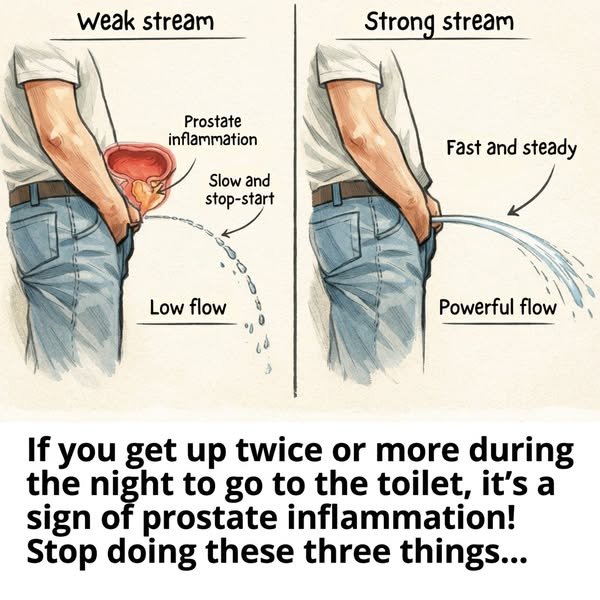
Ran for 20 days, from October 6 to October 26, 2026, the last day Crush saw it.
Run by Greg Ellison on Facebook. Crush is not the advertiser and does not verify its claims. See this ad in Meta's Ad Library(opens in a new tab)
Make your own version of this ad
Crush makes it, launches it in your own Meta ad account, scales the winners and pauses the losers.
About this ad
- Meta Ad Library ID
- 1089875900599447
- Platforms
- Facebook, Instagram, Audience Network and Threads
- Relaunches
- 3
Ad text
The Prostate Fix My Urologist Didn't Want Me to Find My urologist said if I didn't start Flomax immediately, he'd flag my chart for surgical referral. I had eleven minutes with him. He'd never looked at my file before that morning. Dr. Patterson retired on a Friday. No phone call. No visit. A form letter in the mailbox. "After 34 years of practice, I will be closing my office effective April 15th. Your records will be transferred to Dr. Nathan Reeves at Summit Urology Associates." I read it standing in the driveway with the rest of the mail in my hand. Twenty eight years. I'd been seeing Dr. Patterson for twenty eight years. I practiced family medicine for thirty one years before I retired. They say doctors make the worst patients. Patterson never held it against me. He knew my history. Knew my father's reaction to Flomax. Knew I'd rather lose sleep than lose myself to a pill. And he'd always worked with me, always said the same thing: "We'll keep an eye on it, Greg. Your PSA is stable. You're doing the right things. Let's not overreact." Now he was gone. My first appointment with Dr. Reeves was May 6th. Routine referral. Transfer of records. Meet the new urologist. I sat in the exam room, fluorescent lights buzzing overhead, anatomical poster of the male urinary tract on the wall, a plastic prostate model on the counter. Dr. Reeves walked in. Young. Maybe 38. Tablet in hand. "Dr. Ellison." Quick handshake. Sat down immediately. "I've been reviewing your records." He swiped through my chart, and his expression tightened. "Your symptom history." He turned the tablet toward me. "2021, getting up twice a night. 2022, three times. 2023, three to four times. 2024, four to five times. Last night you told the intake nurse five to six. PSA is stable, I'll give you that. But the digital rectal exam confirms moderate enlargement." He set the tablet down. "Four years of progressively worsening lower urinary tract symptoms. Prostate growing. No pharmacological intervention prescribed." "Dr. Patterson and I had a plan. Lifestyle changes. Less caffeine. Fluid restriction at night. He was monitoring it every six months..." "Monitoring it?" His voice sharpened. "Dr. Ellison, you're getting up five to six times a night. Your quality of life score is a 22 out of 35. Your prostate is twice the size it should be. You of all people know where this goes. I don't know what your previous doctor was thinking, but this should have been treated aggressively two years ago." My chest tightened. "Dr. Patterson knew my family history. My father had serious reactions to..." "Your father's history doesn't change your prostate size. It doesn't change the fact that you haven't slept through the night in years. It doesn't change the risk of acute urinary retention." He was already writing. "We're starting tamsulosin. 0.4 milligrams daily. If we don't see improvement in eight weeks, we add finasteride." "I'd rather try..." "This isn't optional. You're past the watchful waiting stage. If you decline treatment, I'm required to document it in your chart and refer you for surgical consultation." The printer behind him hummed. He tore off the prescription and set it on the counter. "Follow up in eight weeks. We'll reassess symptoms and discuss the next step." He stood. Left the room. The door clicked shut behind him. The whole appointment took eleven minutes. I'd run that exact appointment myself. Hundreds of times. Full waiting room, fifteen minute slots, a prescription pad. I'd just never been the one in the paper gown. I sat there holding that prescription with both hands, the words "surgical consultation" and "declined treatment" circling in my head like a sentence. In the parking lot, I called my wife Carol. "How'd the new doctor go?" "He says Dr. Patterson should have put me on Flomax years ago. He wants me on it immediately." Silence. Then: "What?" "He said four years without medication was negligent. And if I don't take it, they're referring me to a surgeon." "But Dr. Patterson always said you were fine as long as..." "I know what he said. This guy doesn't care. I either take the pill or it goes in my chart that I refused." That night I lay in bed staring at the ceiling. Carol's breathing steady beside me. I'd gotten up to use the bathroom twice already and it wasn't midnight yet. Dr. Patterson had respected my concerns. We'd worked together for almost three decades. Cut the evening fluids. No beer after dinner. Limited caffeine. Kegel exercises. Regular bloodwork every six months. My symptoms had worsened, yes. But gradually. No emergency. No retention event. No catheter. Was he wrong to be patient? Was I walking around with a prostate slowly choking off my urethra and just accepting it as aging? At 2 AM, after my fourth trip to the bathroom, I didn't go back to bed. I went downstairs, sat at the kitchen table with my laptop, and started searching. enlarged prostate risks without medication BPH progression untreated men over 55 acute urinary retention risk prostate Every article said the same thing. Progressive obstruction. Bladder wall thickening. Kidney backpressure. Urinary retention requiring emergency catheterization. Maybe Dr. Reeves is right, I thought. Maybe I've been reckless. Then I pulled up the side effect list for Flomax. I'd recited it to patients for thirty years. It reads differently when the bottle has your name on it. Dizziness. Fatigue. Retrograde ejaculation. Low blood pressure. Nasal congestion. Headaches. Sexual dysfunction. And my father's face flashed into my mind. He'd been on Flomax for years. Started right after his diagnosis at 58, the same medication sitting on my counter right now. The dizziness came first, within the first month. Not the kind where the room spins for a second. The kind where you stand up from a chair and have to grab the wall. Where you can't turn your head quickly without the floor shifting underneath you. He fell in the garage six weeks in. Caught himself on the workbench. Didn't tell anyone for a week. By the time he'd been on it two years, the Flomax was barely keeping up. The urologist added finasteride. The nighttime trips dropped from five to three. And then he went quiet. He never talked about it directly, but my mother mentioned it to Carol once, quietly, the way women talk about things their husbands won't say out loud. She said it was like he'd been switched off. Not just the function. The desire. The closeness. Like that part of him just went dark. Then the fatigue. This was a man who fished every Saturday morning before dawn. Who built the cabin at the lake with his brother over two summers. Who was always the first one up and the last one to sit down. By 66, he was napping after lunch every day. Couldn't stay awake through a movie. Lost interest in the boat, the workshop, the grandkids' games. He said he felt like he was watching his life through a window instead of living it. And here's the part nobody warns you about. The Flomax never touched the growth. It relaxed the muscle around the prostate so the urine could pass, but nothing in that bottle addressed why the prostate was getting bigger in the first place. The finasteride did go after the cause. That was the drug that switched him off. That was the deal he was offered. Manage the symptom and keep growing. Or go after the cause and lose the man. At 70, he had the surgery anyway. TURP. Transurethral resection of the prostate. The procedure they'd told him the medication would help him avoid. Twelve years of side effects. Twelve years of dizziness and fatigue and feeling like a shadow of himself. And he ended up in the operating room anyway. I closed the laptop. Rubbed my eyes. Sat there in the kitchen with the prescription on the counter staring at me from across the room. I didn't fill it. One week passed. Then two. Dr. Reeves' office called. "Dr. Ellison, our records show you haven't picked up your prescription. Dr. Reeves wants to confirm you're taking your medication as directed." "I'm not starting it yet. I'll be at the follow-up." "Sir, Dr. Reeves noted this as urgent. He strongly recommends..." "Then put it in the chart. I'll be there in six weeks." I hung up. Carol found me at the kitchen table that evening. "Greg. Talk to me." "I'm looking for options." "Options? The doctor said your prostate is twice the size it should be." "He said Dr. Patterson was wrong for not putting me on Flomax. But Dr. Patterson knew me for twenty eight years. He saw what that drug did to my father. He was being careful." "But what if this doctor's right? What if you end up with a catheter? What if you..." Her voice caught. "I hear you getting up all night. Every night. That's not nothing." "You won't lose me. I just need to find another way." "What other way?" I didn't have an answer. That weekend I searched everything. Saw palmetto. Beta-sitosterol. Pygeum. Stinging nettle. Zinc. Every prostate supplement with any clinical evidence behind it. I'd spent thirty years telling patients most of this stuff was a waste of money. Now I was the one ordering it. I ordered the top-rated saw palmetto on Amazon. Took it faithfully for six weeks. Every morning without fail. The nighttime trips didn't change. Five times. Sometimes six. Maybe one night I only got up four times, but I couldn't tell if that was the supplement or the glass of water I skipped at dinner. Switched to a high-dose beta-sitosterol capsule. Pharmaceutical grade, supposedly. Eight weeks. Nothing. Tried a full prostate stack from a specialty supplement store. Saw palmetto, beta-sitosterol, pygeum, zinc, stinging nettle, lycopene. The most expensive thing on the shelf. Six weeks in: still getting up four to five times a night. Stream still weak. Still standing at the toilet waiting for something to happen. Hundreds of dollars. Months of disciplined dosing. Basically unchanged. I was running out of time and running out of ideas. Three weeks before my follow-up appointment, I was back at my laptop at 3 AM, the blue light hurting my eyes, reading the same supplement forums, the same Reddit threads, the same dead ends. Then I changed the search. I stopped searching for supplements and started searching for the mechanism. The basic question I'd stopped asking years ago. Why does the prostate actually keep growing in the first place? And I found something that changed the way I understood everything I'd been doing wrong. It was in a paper on androgenic mechanisms in prostate hyperplasia. Basic endocrinology. Not hidden. Not controversial. I'd learned it in medical school. I'd drawn it on a whiteboard for patients. I'd just never sat down and applied it to my own body. The nighttime trips aren't the problem. The hormone strangling your prostate is the problem. I read that line three times. Your body produces testosterone. That's normal. That's healthy. But your body also contains an enzyme called 5-alpha reductase, and this enzyme takes your normal testosterone and converts it into something called DHT, dihydrotestosterone. DHT is a different animal. When DHT reaches your prostate, it binds to the receptors on your prostate cells and tells them to multiply. One cell becomes two. Two becomes four. Slowly. Year after year. Your prostate wraps around the tube that carries urine out of your bladder. A ring around a pipe. When the prostate is normal sized, the pipe is wide open. Urine flows easily. You go when you need to go, the stream is strong, and you sleep through the night. But every year, DHT is telling those prostate cells to multiply. The ring gets thicker. The pipe gets narrower. A little at a time, so gradually you don't notice it happening. Then one day, the pipe is half closed. Your bladder pushes harder to get the urine through. You feel urgency because the bladder is under constant low-grade strain. You can't fully empty it, so two hours later the signal fires again. That's why you're getting up at 1 AM. And 2:30. And 4. And 5:15. It's not your bladder failing. It's your prostate squeezing the pipe shut, and DHT is the reason it keeps squeezing tighter. Every day your body produces more DHT. Every day it binds to more prostate receptors. Every day the ring gets a little thicker, the pipe gets a little narrower, and the next night is a little worse than the last. A cycle that feeds itself. I sat back in my chair. Your symptoms get worse not because of any one night, but because DHT is being converted and binding to your prostate cells around the clock, and the growth compounds over time. That was why my nighttime trips kept increasing. That was why the basic saw palmetto didn't work. That was why the beta-sitosterol capsule didn't work. That was why the full prostate stack didn't work. Every single one of those supplements was doing one job, at most. Some went after inflammation after the growth had already happened. Some nudged the enzyme a little and left the receptors wide open. Some blocked a few receptors and let the enzyme keep pumping out DHT. None of them shut the cycle down at both ends. I was trying to widen the pipe while ignoring the ring that was crushing it. That image hit me like a physical thing, because it was exactly what I'd been doing. Real work. Genuine effort. Hundreds of dollars of supplements and months of disciplined dosing. All of it aimed at managing symptoms while the actual hormone driving the growth ran unchecked. And the Flomax? The Flomax would relax the smooth muscle around the prostate so urine could pass more easily. The nighttime trips would decrease. Dr. Reeves would be happy. But every day, DHT would still be converting, still binding to prostate receptors, still telling the cells to multiply. The prostate would still be growing. The drug would ease the flow. It wouldn't stop the growth. That's why men on Flomax still progress to finasteride. Then to combination therapy. Then to surgery. That's why my father did. His flow numbers looked better on the chart. His symptom score improved. And twelve years later he was on an operating table. We were treating the pipe while the ring kept tightening. So I started searching for something else. Something that went after the DHT without switching me off the way finasteride switched off my father. And I went down a hole I didn't come out of for two nights. What I was looking for was something that could slow DHT from being made in the first place, and keep it from binding to prostate receptors even if some got through. Stop it being made. Then stop it landing. Most prostate supplements don't do this. They work on smooth muscle relaxation, or on inflammation, or on antioxidant support. None of which stop the DHT conversion cycle that's driving the growth. I found studies on individual extracts. Saw palmetto alone. Beta-sitosterol alone. Pygeum alone. All showed modest effects in isolation. All had some research behind them. But the gains were small, and here's why: Saw palmetto can partially inhibit 5-alpha reductase, the enzyme that converts testosterone to DHT. But it's only one piece. It slows the production, but it doesn't stop the DHT that's already been produced from binding to prostate receptors. Beta-sitosterol can block DHT from binding to prostate cell receptors. But most beta-sitosterol supplements are synthetic or poorly absorbed, and they don't address the production side at all. Neither one, by itself, breaks the cycle. Then I found it. A body of clinical research going back decades on cold-pressed pumpkin seed oil. Not roasted pumpkin seeds from a bag. Not grocery store pumpkin seed oil. Cold-pressed virgin pumpkin seed oil, the kind that's been used for centuries in Styrian Austria, where prostate problems in older men were historically rare. The research showed that cold-pressed pumpkin seed oil is one of the richest natural sources of beta-sitosterol on earth. And not just beta-sitosterol. Delta-7 sterols, a full profile of plant sterols, and fatty acids, all carried inside the oil itself, all working on the DHT pathway together. The beta-sitosterol and delta-7 sterols in cold-pressed pumpkin seed oil block DHT from binding to prostate cell receptors. They physically occupy the receptor site so DHT can't attach and can't trigger cell growth. But it was the combination studies that stopped me. When cold-pressed pumpkin seed oil was paired with saw palmetto, the results jumped dramatically. Because the saw palmetto slows 5-alpha reductase, which means less DHT is being made in the first place. And the sterols in the pumpkin seed oil block whatever DHT does get through from binding to the receptors. Production slowed. Binding blocked. The cycle breaks. The prostate stops getting the constant signal to grow. The ring stops tightening. The pressure on the pipe eases. Urine moves. The bladder isn't straining. The urgency fades. You sleep through the night. Not because something relaxed the muscle for a few hours. Because the hormone that was feeding the growth stopped reaching it. The cycle, finally broken. This wasn't fringe science. This was peer-reviewed research sitting in urology and nutritional journals. In thirty one years of practice, I never once heard it in a lecture or a continuing education course. Because the standard clinical approach is to prescribe a drug that manages the flow and schedule the surgery for when it stops working. I almost stopped there and ordered the first pumpkin seed oil I could find. Bought a bottle off Amazon that weekend. Pale yellow liquid capsules. Fourteen dollars. Carol saw the bottle on the counter. "Pumpkin seed oil? Since when?" "Since now. Maybe." I took it for ten days. Didn't feel different. Didn't expect to. But I went back to the research and noticed something I'd skimmed past the first time. The studies that showed results weren't using any random pumpkin seed oil. They specified cold-pressed virgin extraction. Verified sterol content. Low-temperature processing. Organic sourcing. One paper noted that heat processing, the standard commercial method for cheap pumpkin seed oil products, degraded the beta-sitosterol content dramatically. The compounds that mattered were heat-sensitive. The industrial process that makes pumpkin seed oil cheap also makes it therapeutically useless. And here's the thing nobody tells you: you can see the difference with your own eyes. Real cold-pressed virgin pumpkin seed oil produces deep, dark red softgels. That color comes from the intact sterols and the full fatty acid profile preserved by cold extraction. Heat-processed pumpkin seed oil? Pale yellow. Almost clear. Because the heat has destroyed the very compounds you're paying for. I held the Amazon bottle up to the light. Pale yellow. Nearly translucent. Then I read the label again. 300 milligrams per serving. I checked every other bottle I could find after that. Almost all of them sat somewhere between 250 and 500. Underdosed and cooked. I'd been swallowing empty capsules for ten days. That explained the nothing. It didn't tell me where to find the real thing. At 4 AM I searched: cold pressed virgin pumpkin seed oil saw palmetto 1000mg. One brand kept coming up in the research-oriented forums. Not wellness blogs. People citing studies. Posting symptom logs. Tracking week by week. Men in their 50s and 60s who'd clearly done the same deep dive I was doing. Elivora. Elivora Pumpkin Seed Oil. 1,000 milligrams of cold-pressed pumpkin seed oil per serving. Two to four times what most bottles on the shelf carry. Paired with saw palmetto. Deep red softgels. Organic. Third-party lab tested. Made in the USA. Small-batch, cold-press extraction that keeps the beta-sitosterol and delta-7 sterols intact. Both sides in one. The oil that blocks DHT at the receptor, and the saw palmetto that slows it being made. At a dose most brands won't touch. No fillers. No heat damage. No pale yellow capsules. 30-day money-back guarantee. I ordered it immediately. The package arrived four days later. Clean label. I opened it and shook a few softgels into my palm. Deep red. Almost burgundy. Like the color of actual pumpkin seed oil is supposed to be before the machines cook it to death. Two softgels with breakfast. That's the whole protocol. I took the first dose on a Monday morning. Didn't expect much. I'd been wrong three times already. I couldn't measure my prostate that day. Can't check DHT levels at home. But I noticed something by the end of the first week that I almost didn't believe. I got up twice. Twice. In one night. Could be noise. Could be that I skipped the evening water. I wasn't counting it yet. Week two. Three nights out of seven, I slept until 4 AM without getting up. One night, I slept straight through until 5:30. Carol noticed before I said anything. "You didn't get up last night." "Once. Around 4." "Greg, you've been getting up five times a night for three years." She was right. And the difference wasn't subtle. The stream was stronger. Not what it was at 30, but noticeably better. Less waiting. Less straining. Less of that feeling like you're forcing it through something half shut. Week three, the brain fog lifted. I didn't have a word for it until it was gone. That hazy, heavy feeling I'd been carrying around for years, like my head was wrapped in cotton, like I couldn't quite get my thoughts moving in the morning. I assumed it was aging. It wasn't. It was my body running on four hours of broken sleep every night for years. When you actually sleep, your brain works differently the next day. I'd forgotten what that felt like. Week four, I stood at the bathroom mirror and the puffiness under my eyes was gone. Carol said my face looked different. "Less swollen. Less tired." She paused. "You look like you again." That one hit harder than I expected. Week six, I noticed less hair in the shower drain. I'd been losing hair gradually for years, the front thinning out, the part getting wider. I'd blamed genetics. But DHT doesn't just grow your prostate. It attacks your hair follicles too. Same hormone. Same enzyme. Same mechanism. When you block DHT at the source, your hair gets the benefit too. By week eight, I was sleeping through the night five or six days out of seven. Getting up once on the other nights. Stream was consistent. Urgency was gone. No more planning every outing around bathroom proximity. No more scanning for the restroom the second I walked into a restaurant. I felt like I'd gotten five years of my life back. Two days before my follow-up with Dr. Reeves, I prepped. I had my symptom log. I had my sleep data from the app Carol made me download. I had everything written down. At the appointment, I sat in the same exam room. Same anatomical poster. Same plastic prostate model. Different feeling. Dr. Reeves walked in. Opened my chart. Looked at the intake questionnaire I'd filled out in the waiting room. "Symptom score dropped from 22 to 8." He looked up. "That's significant." "Yes." "Nighttime frequency down to one, sometimes zero?" "Most nights I sleep straight through." He paused. "You started the tamsulosin?" "No." He set the tablet down. "No?" "Cold-pressed pumpkin seed oil with saw palmetto. I know how that sounds coming from a doctor. But there's a real mechanism. DHT is being converted from testosterone by 5-alpha reductase and binding to prostate cell receptors, causing the growth. The sterols in cold-pressed pumpkin seed oil block DHT at the receptor. Saw palmetto slows the enzyme that produces it. Together they break the cycle at both ends. The research is published. I can send you everything." Long pause. He looked at my symptom scores again. Then at the intake from my first visit. "What specifically are you taking?" "Elivora. Cold-pressed pumpkin seed oil with saw palmetto. 1,000 milligrams. Two softgels daily." He typed. Read. Looked at the sourcing. "Continue what you're doing. I want you back in twelve weeks. If the scores hold, we move to quarterly monitoring. No medication for now." I walked out of that office and sat in my car for ten minutes. Called Carol. "Symptom score dropped from 22 to 8." She went quiet. Then: "No medication?" "No medication. Quarterly monitoring if it holds." She didn't say anything for a moment. When she did, her voice was tight. "I knew you'd find something." That was five months ago. Last week I had my quarterly follow-up. Symptom score: 6. PSA: stable. Prostate: stable on exam. No medication. No surgical referral. No compliance flag in my chart. I sleep through the night most nights. When I do get up, it's once, and I'm back asleep in three minutes. My stream is strong. My energy is back. The brain fog is gone. The puffiness in my face cleared up months ago. The hair thinning slowed down. I feel like myself for the first time in years. Just results. If you're reading this, you're in the same position I was. Cornered. Pressured. Feeling like Flomax is the only option your urologist will accept. Here's what I learned after months of failed supplements and two nights of actual research. The reason most prostate supplements don't work is that they're aimed at the wrong system. They're trying to relax smooth muscle or reduce inflammation, but they don't address the DHT that's actually causing your prostate to grow in the first place. Your symptoms keep getting worse because every day, 5-alpha reductase is converting testosterone into DHT, DHT is binding to your prostate receptors, and your prostate cells are multiplying. Until you stop that cycle, the growth doesn't stop, the pipe keeps narrowing, and the nighttime trips keep increasing. The Flomax relaxes the muscle so urine can pass, but it doesn't stop the growth. Which is why men on Flomax still progress to finasteride, then to combination therapy, then to TURP surgery. And why my father did. And why his "improved" flow score didn't keep him out of the operating room. Elivora was the only product I found that put both sides of the mechanism in one bottle: cold-pressed pumpkin seed oil rich in beta-sitosterol and delta-7 sterols to block DHT at the receptor, and saw palmetto to slow the enzyme that produces it. 1,000 milligrams. Cold-pressed. Organic. Deep red softgels with the sterols intact. Third-party lab tested. Made in the USA in small batches. Not 300 milligram pale yellow capsules from Amazon that have had every active compound cooked out of them. My symptom score dropped from 22 to 6. My urologist monitors me quarterly. No medication. No surgery. No compliance documentation. Just numbers he can't argue with. If you feel cornered, give it 90 days. Track your nighttime trips on a notepad by the bed. Log your symptoms weekly. Then walk into your next appointment with the data. One thing, doctor to reader. If you're already on Flomax or finasteride, don't stop on your own. Bring your numbers to your doctor and make the call together. That's how I did it. Right now Elivora is running up to 70% off, with Buy 2 Get 1 Free and Buy 3 Get 2 Free on the larger orders. Elivora offers a 30-day money-back guarantee. If you don't see improvement in your symptoms, if you don't sleep better, if you're not satisfied for any reason, contact their customer service for a full refund. No questions asked. You risk nothing. Elivora makes everything in small batches to preserve potency, which is why it works when most others don't, and why they sell out regularly. Numbers are the only thing that changes a doctor's mind. 👉 https://elivorahealth.com/pages/prostate Dr. Greg Ellison P.S. I noticed sleep improvement by the end of week one. Stream improvement by week two. Brain fog cleared by week three. By week eight I was sleeping through the night. My urologist backed off on the spot. Your timeline may vary, but 90 days is the window, and you risk nothing. P.P.S. The research exists. The mechanism is real. Cold-pressed pumpkin seed oil is deep red because the sterols are still intact. If your capsules are pale yellow, you're swallowing nothing. If the label says 300 milligrams, you're barely swallowing that. Now you know what to look for. 👉 https://elivorahealth.com/pages/prostate
Where the ad sends people
elivorahealth.com
Support healthy urine flow and restful nights — every day
How a 63-year-old man went from an emergency catheter to urinating like he was 20 again , after discovering why his doctor's pills were making his prostate worse.
Learn more: elivorahealth.com(opens in a new tab)