Greg Ellison
 Facebook ad: “Support healthy urine flow and restful nights, every day”
Ran for 31 days, from September 5 to October 6, 2026, the last day Crush saw it.
Run by Greg Ellison on Facebook. Crush is not the advertiser and does not verify its claims. See this ad in Meta's Ad Library(opens in a new tab)
Make your own version of this ad
Crush makes it, launches it in your own Meta ad account, scales the winners and pauses the losers.
About this ad
- Meta Ad Library ID
- 4659347697724128
- Platforms
- Facebook, Instagram, Audience Network, Messenger, WhatsApp and Threads
- Relaunches
- 1
Ad text
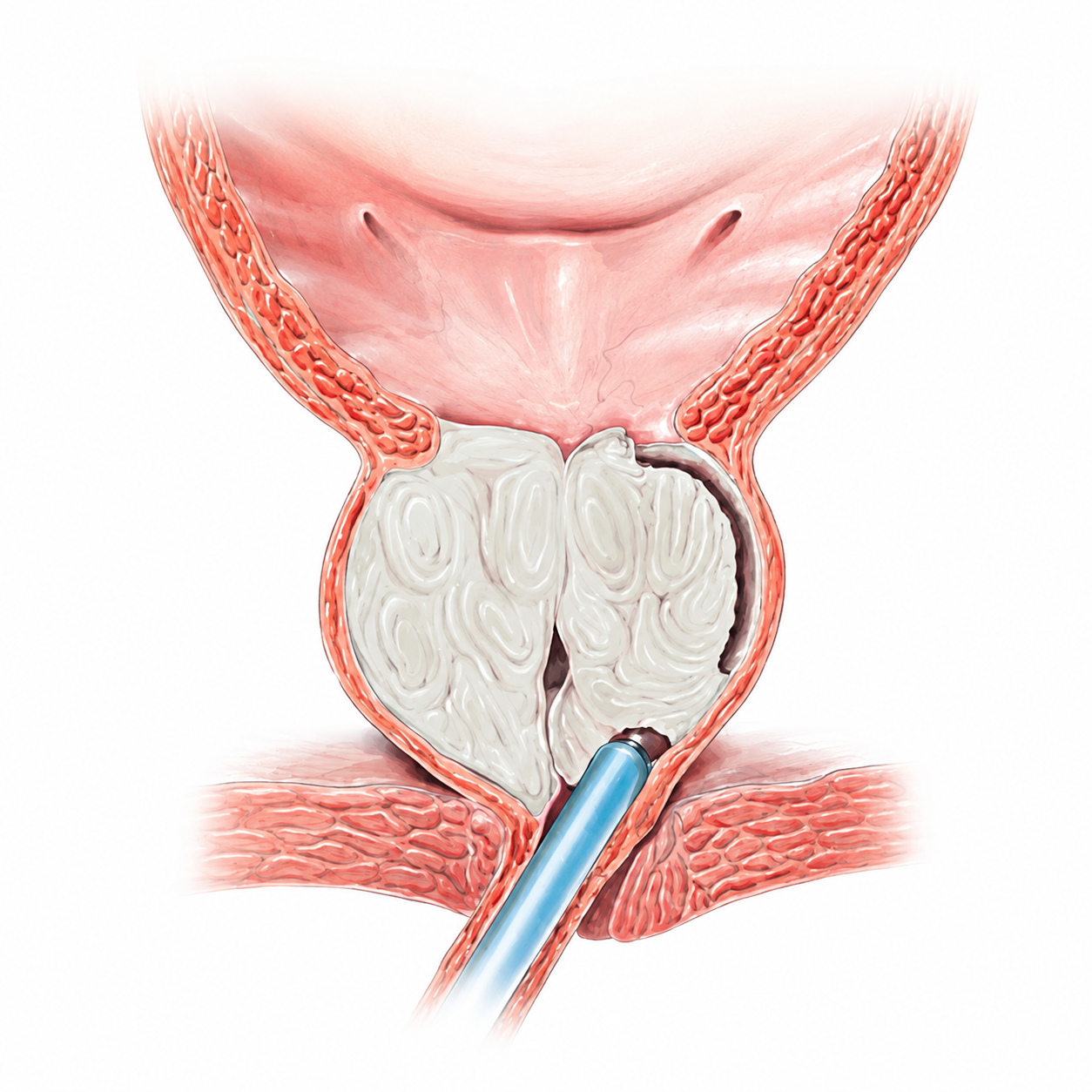
I put off the TURP surgery for 14 months. Then my flow test came back at 7 mL/sec and my colleague said, "We need to talk about resection." I'm Dr. Greg Ellison. I've been a urologist for 21 years. I've treated men with severe benign prostatic hyperplasia. I've watched an enlarged prostate rob men of their sleep, their confidence, whatever dignity they had left standing at a urinal for two minutes and passing nothing. I've seen the trajectory from both sides of the chart. So when my own PSA hit 4.2 and my flow rate dropped to 9, I knew exactly what my colleague was going to say before he said it. "We should start talking about a TURP." I smiled. I nodded. I took the referral slip. And I threw it in the trash three days later. Not because I'm reckless. Not because I'm in denial. But because I've scheduled that surgery for hundreds of men, and I've seen what comes after. The retrograde ejaculation nobody warns them about until it's done. The incontinence that doesn't always come back. The ones who need it done again in five years anyway. Both roads lead somewhere I didn't want to go. I was trying to find a third option. For fourteen months, I tried everything else. I cut caffeine completely. I stopped drinking anything after 7 p.m. I did the pelvic floor exercises. I took stinging nettle. I took pygeum. I took zinc. I took a saw palmetto capsule off the pharmacy shelf. I timed my fluids like a science experiment. My flow came up from 9 to 11. My PSA settled to 3.8. Better. But not good enough. Not even close. And the cost? I was exhausted. I was still up three times a night. Still standing there at 3 a.m. waiting for a stream that trickled and stopped and started again. Still feeling like I never fully emptied, that heavy pressure that sat there an hour after I left the bathroom. I'd get four hours of broken sleep and drag myself through a full day of clinic seeing patients with the exact problem I couldn't fix in my own body. I was doing everything right and my prostate was still squeezing that pipe shut. My wife found me sitting on the edge of the tub one night at midnight, head in my hands. "Just get the surgery," she said. "I can't," I whispered. "I've done that surgery on hundreds of men. I know what they don't get told." But I was running out of options. Then something happened that changed everything. I was reviewing a chart before a follow-up. Severe BPH, 66 years old, prostate volume 82 grams, IPSS symptom score of 27 at his last visit, already scheduled for surgery. A textbook resection candidate. But this time, something was different. He walked in lighter. Not just physically. He had that look men get back when they've finally slept. He was cracking jokes with my nurse in the hallway before I even opened the door. I pulled up his flow test from that morning: 18 mL/sec. IPSS down to 11. Three months ago: 8 mL/sec. IPSS of 27. I looked up from the screen. "Frank. Your flow. Your symptom score. What changed?" He grinned. "You're not gonna believe me." "Try me." "My daughter got me these softgels. Elivora. Cold-pressed pumpkin seed oil with saw palmetto. Took about ten days and I stopped getting up at night. By two months I was emptying all the way for the first time in years. Cancelled the surgery. My other doc ran the flow test twice because he didn't trust it." I sat there staring at his chart. "Are you telling me pumpkin seed oil took your flow from eight to eighteen?" "I'm telling you I sleep through the night now. I don't dribble. I don't stand there waiting. And your office took the surgery off the table." I went home that night and couldn't sleep. Not because I was up peeing. Because of what he'd said. I've been a doctor for 21 years. I don't believe in magic supplements. I don't trust testimonials. I trust mechanisms and evidence. So at 1:30 a.m., still awake, I started digging. And what I found rearranged everything I thought I knew about prostate enlargement, even after practicing urology for two decades. Most men, and plenty of doctors, think an enlarged prostate is just something that happens with age. Like it's random. It isn't. There's a specific hormone driving it, and it's been driving it the whole time. It's called DHT. Dihydrotestosterone. Here's what almost nobody explains. Your testosterone is fine. That's not the problem. The problem is an enzyme called 5-alpha-reductase that converts your testosterone into DHT, a hormone that's about five times more potent. And DHT has one favorite place to collect: your prostate. DHT binds to receptors in your prostate tissue and tells those cells to multiply. Year after year. Cell after cell. The gland swells. It wraps tighter around your urethra, the tube your urine flows through. Until the pipe is squeezed so narrow that a strong stream becomes a trickle. Your PSA tracks one thing. How much protein your prostate is leaking into your blood, which rises as the gland grows and gets irritated. It's a flood gauge. It tells you the water's rising. It doesn't touch the reason it's rising. Standard urology touches the symptoms. Alpha-blockers like Flomax relax the muscle so you can squeeze urine past the blockage. But they don't shrink anything. The prostate keeps growing underneath. That's why the dose creeps up. That's why the surgery is always waiting at the end of the road. That's where cold-pressed pumpkin seed oil comes in. And once I understood what it actually does, I understood why Frank's numbers moved the way they did. It works on two fronts at once. And nothing in my toolbox does both. Front one: the saw palmetto. It goes upstream and slows down that 5-alpha-reductase enzyme, the one converting your testosterone into DHT in the first place. Less conversion. Less DHT being made. Front two: this is the part I'd never understood. Cold-pressed pumpkin seed oil is naturally rich in two compounds, beta-sitosterol and delta-7 sterols. And these go downstream to the prostate itself, to the receptor sites where DHT docks and does its damage. They occupy those sites. So the DHT that does get made has nowhere to bind. You're cutting the supply and blocking the delivery. At the same time. A study in the Lancet on beta-sitosterol found significant improvement in urinary flow and symptom scores in men with BPH. A trial of over 1,400 men on pumpkin seed oil found a 35 percent improvement in IPSS symptom scores, from a 15.8 average down to 10.4. And a head-to-head against tamsulosin, that's the generic for Flomax, found pumpkin seed oil delivered equivalent symptom relief with none of the side effects. This is published research. Sitting in databases the entire time my flow rate was dropping and my colleague was scheduling my surgery. Here's what I later watched happen inside my own body. After your first softgel, the oil-soluble compounds get absorbed. Beta-sitosterol and the delta-7 sterols cross into your system, carried by the oil they're naturally suspended in. Because here's the thing most people miss: these are fat-soluble sterols. They need the oil to reach the tissue. A dry powder can't deliver them. After the first few days, a lot of men describe getting up one less time at night. That first uninterrupted stretch of sleep. After a couple of weeks, the sterols are occupying receptor sites, the conversion upstream is slowing, and the pressure inside the gland starts to ease. The stream gets stronger. You start emptying more completely. That heavy full feeling that sat there all day starts to lift. After 60 to 90 days, the changes show up in real life, and eventually in real numbers. You're sleeping through the night. The dribble stops. Your flow test moves for the first time in years. Some men watch their IPSS drop by half. Their urologists run the flow test twice because they can't explain the trajectory. Because for the first time, you're not just muscling urine past a blockage. You're addressing the hormone that built the blockage in the first place. Cold-pressed pumpkin seed oil works differently than anything in a urologist's toolbox. It doesn't just relax the muscle and hope. It goes after the DHT that's driving the whole thing, from both directions. It's not forcing the pipe open. It's easing what's squeezing it shut. I ordered a bottle that morning. A generic pumpkin seed oil capsule off Amazon. $14.99. One capsule a day. I wasn't expecting much. Two weeks later, I was getting up maybe one less time some nights. Better than nothing, but not life-changing. My flow test hadn't moved. I figured maybe Frank just got lucky. But the research kept nagging at me. Because the studies that showed real movement used cold-pressed oil at a real dose. 1,000 milligrams of cold-pressed oil, with the saw palmetto paired in. Mine was 500 milligrams of who-knows-what. And there was something else. The extraction. The active sterols in pumpkin seed oil are fragile. Heat destroys them. Most cheap supplements are heat-processed or solvent-extracted, which strips out the exact compounds that occupy the DHT receptors. The studies used cold-pressed oil, pressed without heat, specifically to preserve those sterols. I went back and read what Frank's daughter had gotten him. Cold-pressed pumpkin seed oil. 1,000 mg. Paired with saw palmetto. Third-party tested. Made in the USA. Called Elivora. That's when I understood why the generic barely moved my numbers. Right ingredient. Wrong extraction. Wrong dose. Missing the saw palmetto entirely. I ordered Elivora that same day. That night, I got up once. Just once. I figured it was a fluke. The next night, I slept from 10:45 to 6. I hadn't done that in over a year. Day three: the stream felt stronger. Less stopping and starting. Day seven: I was getting up once a night, sometimes not at all. That heavy pressure after I finished was easing. Week two: I was emptying all the way. I stood there and it just... went, and finished, and I was done. Week three: I slept through the night four nights running. The urgency, that sudden gotta-go-now feeling that used to hit me in the car, was fading. I felt like myself again. Three months later, I walked into my colleague's office for my labs and my flow test with a printout of my symptom log. He ran the flow test. Stared at the number. "Your flow's at 19. It was 9." "Yes." "PSA's 2.6. Down from 4.2." "Yes." He looked at me. "What did you do?" "I didn't schedule the TURP." His face hardened. "Greg—" "I'm taking cold-pressed pumpkin seed oil with saw palmetto. 1,000 milligrams. There's published research, the Lancet, a tamsulosin head-to-head. I brought it for you." I slid the bottle across the desk. He picked it up. Read the label. Set it down. "Your flow improved and your gland pressure came down. That's not usually the direction this goes." I nodded. "Once you're symptomatic at your size, the goal is to manage it until surgery. But whatever you're doing is moving the right way." "I know." He leaned back. "Keep doing it. And keep coming in." That was six months ago. My flow's holding around 19. My PSA sits around 2.6. I sleep through the night. I empty all the way. The 3 a.m. trips are gone. The urgency is gone. The pressure that sat in me all day is gone. I feel the way I felt ten years ago. I've quietly recommended Elivora to seven of my BPH patients so far. Every one has come back telling me the same thing: getting up less at night within the first week or two. Stronger stream. Emptying more completely. Steadier sleep. One man teared up telling me he'd slept eight hours straight for the first time in three years. He'd been up four and five times a night. Another man's flow came up from 8 to 15 in four months. His colleague told him to keep taking whatever he was taking. But here's what I need you to understand. I tried the cheap version first. A generic pumpkin seed oil capsule off Amazon. After two weeks it barely moved anything. Better than nothing, but not life-changing. Most pumpkin seed oil supplements fail for the same reasons: They're heat-processed. The active sterols, the beta-sitosterol and delta-7 sterols that actually occupy the DHT receptors, are fragile and heat-sensitive. Most cheap supplements are heat-extracted or solvent-extracted, which destroys them. What's left is oil with the working parts cooked out of it. The clinical benefits were all with cold-pressed oil. They're underdosed. The research used 1,000 milligrams of cold-pressed oil daily. Most capsules contain 250 to 500 milligrams. That's the difference between a therapeutic dose and a decorative one. They skip the saw palmetto. Pumpkin seed oil works downstream, occupying the receptors. Saw palmetto works upstream, slowing the DHT conversion. You need both fronts. A pumpkin seed oil capsule with no saw palmetto is fighting the fire from one side while the fuel keeps pouring in. They're not tested. Most supplements aren't third-party tested. No certificate of analysis. No potency verification. You have no idea whether the oil was even cold-pressed or whether the dose on the label is real. The pumpkin seed oil that actually worked for me, the one Frank told me about, the one I switched to after the generic barely moved the needle, is Elivora. It's cold-pressed. Pressed without heat, specifically to preserve the fragile beta-sitosterol and delta-7 sterols the research depended on. Not a claim on the label. The whole reason it works. It's clinically dosed. 1,000 milligrams of cold-pressed pumpkin seed oil per serving. The dosing range that corresponds to the published research. It's paired with saw palmetto. So you're hitting the DHT from both directions, upstream and downstream, not just one. That's the combination the cheap single-ingredient capsules miss. It's third-party tested. GMP certified. Made in the USA. Every batch verified for purity and potency. It's not the cheapest bottle on the shelf. But after trying the cheap version and watching it barely work, I understand why. Either you're getting cold-pressed oil at a clinical dose with the saw palmetto paired in, or you're taking 500 milligrams of heat-stripped powder that won't move anything. The difference between the generic I tried first and Elivora was the difference between getting up one less time some nights and getting my flow from 9 to 19. Same ingredient category. Completely different product. Completely different results. I'm not against urology. I am a urologist. If your current plan is working and your symptoms are stable, stick with it. But if you're like me, if you're up three and four times a night, if you're standing there waiting for a stream that won't come, if they're prepping you for a surgery you don't want, if you never feel like you fully empty... this is worth trying. My patient told me about it. I tried it. It worked. I told seven patients. It worked for all seven. That's not a coincidence. That's a pattern. I'm sharing this because I hope it helps someone the way it helped me. Here's where I got mine: Elivora, cold-pressed pumpkin seed oil with saw palmetto, 1,000 mg, third-party tested, Made in the USA. https://elivorahealth.com/pages/prostate I just ordered three more bottles last week because they're a small company and they run out. I am not going back to standing at the toilet at 3 a.m. P.S. A few things I wish I'd known before I ordered: They offer a 30-day money-back guarantee. If your stream doesn't strengthen, if your sleep doesn't improve, if you don't feel a difference, you pay nothing. Take one softgel a day. The cold-pressed oil and saw palmetto are delivered in oil-form softgels. Don't substitute a generic powder capsule; the extraction, the dose, and the saw palmetto pairing aren't comparable. Timeline: Most men notice getting up less at night within the first week or two. The stronger stream and fuller emptying come in around weeks two to four. The bigger changes, the flow and symptom-score movement, typically show up between weeks 8 and 12. Full benefit takes 60 to 90 days of consistent use. They run out. Elivora is a small operation. Every time word gets out about a restock, it goes fast. If the buy button is active, I'd order now. There's a promo running right now. Save up to 70%, buy 2 get 1 free or buy 3 get 2 free, which is the commitment window where the symptoms actually shift. If you're going to try it, now's the time. If you're dealing with: Getting up two, three, four times a night to pee A stream that trickles, stops, and starts Standing at the toilet waiting for something to happen That heavy, never-fully-empty feeling that sits there all day Sudden urgency that hits you in the car or the store A flow rate that keeps dropping no matter what you cut from your diet Rising PSA your doctor is "keeping an eye on" Fear that surgery is what's next... And especially if your urologist is "managing it until surgery" instead of moving you toward something that feels like your old self, the way mine was... Try this. Give it 90 days. See what happens to your sleep. See what happens to your stream. See what happens at your next flow test. If it doesn't work, you get your money back. But if it works the way it worked for me, for Frank, for the seven patients I've recommended it to... You'll wonder why you didn't try it sooner. I went from prepping for a resection to a flow rate I hadn't seen in a decade. From four trips a night to sleeping straight through. From standing there waiting to emptying all the way. From a rising PSA to numbers I hadn't seen in years. If there's even a chance this could support your prostate, it's worth trying. ~ Dr. Ellison, Urologist, 21 years P.P.S. Frank, the patient who first told me about this, tried three different prostate supplements before his daughter found Elivora. Wasted money on heat-processed pumpkin seed oil that had the active sterols cooked out of it. Underdosed capsules with no saw palmetto. Wrong extraction, wrong dose, missing half the mechanism, wrong results. Don't make the same mistake. If you're going to try pumpkin seed oil for your prostate, get the version that actually works: cold-pressed, 1,000 mg, paired with saw palmetto, third-party tested. That's Elivora. That's the only one worth taking.
Where the ad sends people
elivorahealth.com
Support healthy urine flow and restful nights — every day
How a 63-year-old man went from an emergency catheter to urinating like he was 20 again , after discovering why his doctor's pills were making his prostate worse.
Learn more: elivorahealth.com(opens in a new tab)