
Active· since Aug 29, 2026
- 19
- days running
- 0
- relaunches
- 7,238
- EU reach
Ad copy
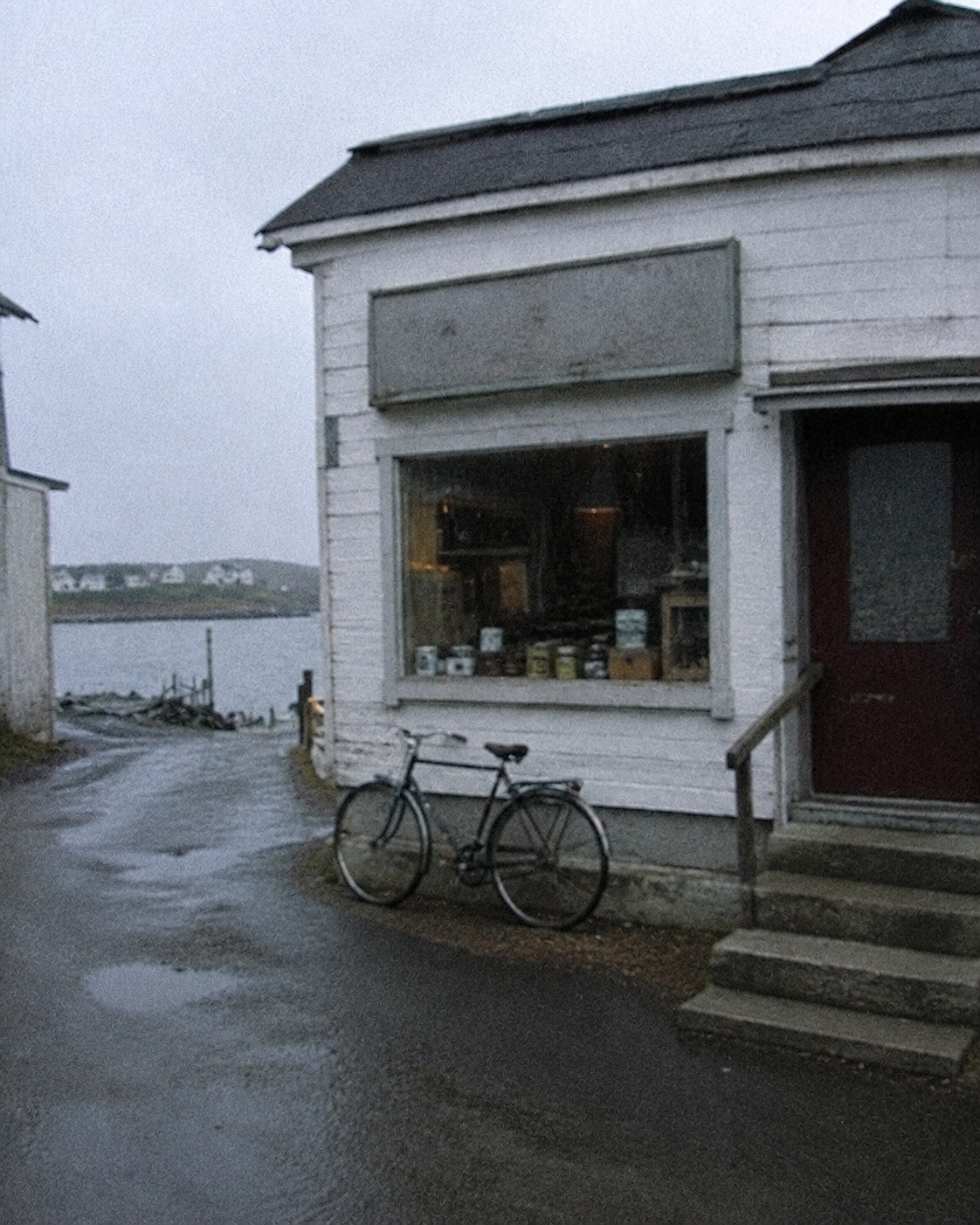
Picture an Island Where Nobody Has Ever Once Said "Amazing" — and Everybody Means Every Word. This is an illustrative story about a woman named Joan, a shopkeeper named Tilda, and an island where words still cost something. Picture the island — a small one, off a cold coast we're not going to name, where the ferry runs twice a day and the weather is a serious subject. Picture Joan arriving on the morning ferry in September, for two weeks, with a rolling suitcase and a phone full of screenshots. And picture Tilda, who runs the island's one general store — sixty-some, cardigan, reading glasses on a cord, a woman who wastes nothing, including syllables. What Joan learns in that store over two weeks is going to ride home with her on the ferry and quietly retune every word she reads for the rest of her life. Let me back up. You need Joan first, and you have met her. Joan is sixty-one. For twenty-eight years she sold houses — good ones, mostly, to people she mostly liked — and if you've read a listing in her county, you've read Joan. Stunning. Charming. Must-see. A rare gem. Joan wrote ten thousand of those sentences, and she'd be the first to tell you, with a realtor's dry laugh, that maybe forty of the houses were actually stunning. It was the dialect of the trade. Everyone wrote it, everyone read it, everyone silently subtracted thirty percent. Nobody was lying, exactly — the words were just spent. And here's the thing about spending words professionally for twenty-eight years: you go home at night to a world spending them just as hard. Look at Joan's life as a buyer, because it's a portrait of doing everything right. She reads reviews. All of them. Five-star this, life-changing that. She researches. She cross-references the best-of lists. She has never once bought carelessly. Her house is full of the winners: the best kettle of 2023, the mattress a thousand reviews called transformative, the amazing knife, the incredible pillow, the revolutionary pan. Every purchase diligent. Every source consulted. And the private arithmetic of it — the thing she'd admit on a long ferry ride — is that she can't feel anything about any of it. Not disappointment, exactly. Static. When every kettle is amazing, no kettle is. The words all arrive pre-spent, and a woman who did all her homework stands in her kitchen full of five-star objects feeling like she bought them through a wall. It isn't a crisis. It's a hum: a standing puzzlement about why a careful reader in a world of maximum words can no longer hear anything through them. She has concluded she's just hard to please. Keep that. The island is about to overturn it. So: the island. Her sister honeymooned there forty years ago and never stopped talking about it, and this September, with the license retired and the calendar finally hers, Joan books the cottage for two weeks. The cottage is fine. That's the first data point, though she doesn't know it yet — the listing said fine. Clean, warm, kettle works, wind gets in under the door if it's from the north. Every word of it turns out to be exactly true, including the wind. And on the first morning she walks to the store, because on an island with one store, everybody does. The store is Tilda's, and the store is the island, and the island runs on a dialect Joan has never heard in her professional life. She hears it first at the bread shelf, asking what's good. "The brown bread is good," says Tilda, not looking up from her ledger. "The white is fine. The jam is dear for what it is." Joan waits for more. There is no more. That was the whole review — and it is, she will learn over two weeks, a generous one by island standards. She hears the dialect everywhere after that. The ferryman, asked about tomorrow's crossing: "Should be all right." (It is.) A fisherman, asked about the season: "Not bad." (His boat, she later learns, had its best year in a decade.) A neighbor, of a gale that took shingles off three roofs: "Some wind last night." Nobody performs. Nobody inflates. The words are small, and — this is the part that starts rearranging Joan — they are all exactly the size of the facts. "Fine" means fine. "Good" means good. And because good means good, it buys something when it's said. The proof arrives in the second week, at the wool shelf. Joan is looking at socks — hand-knit, island wool, priced like they know it — and she asks Tilda the question she's asked ten thousand times in her spending life: are they worth it? And Tilda looks up from the ledger, looks at the socks, and says the strongest sentence Joan hears in fourteen days: "Those are worth having." That's it. Three words — four counting the pause. And Joan, a woman who has read transformative about a pillow, feels the sentence land like thunder. Because she has been on the island long enough to know the exchange rate now. From this woman, in this dialect, worth having is a decorated review. It has thirty years of unspent words behind it. She buys the socks. The socks are worth having. Of course they are — the sentence was fully funded. And on the last morning, waiting for the ferry with her coffee, Joan asks Tilda the question she's been assembling all week. "How does the whole island talk like this? Nobody seems to oversell anything. At home everything is amazing, and I mean everything — I wrote that language for a living, I know what I'm describing. How did all of you keep the small words?" And Tilda closes the ledger, and gives Joan the sentence she'll carry onto the ferry and the rest of the way home. "Because we're still here tomorrow, dear." She nods at the shelves, the harbor, the whole small world of it. "You can spend a big word on a stranger you'll never see again. On an island, there are no strangers you'll never see again. If I tell you the jam is wonderful and the jam is fine, you're back Thursday, and I've spent something I don't get back. So nobody spends what a thing isn't worth. A word is a promise, dear — the island just never forgot that a promise has to be kept in person." The ferry horn sounds. The seminar's over. And Joan rides home across the cold water doing the arithmetic. You knew she would. So did she, before the island was out of sight. Because she is not thinking about socks. She's thinking about currency. Twenty-eight years of stunning-charming-must-see — and a house full of amazing-incredible-transformative — and all of it, she now sees, is the same single event: words spent past their facts, by people who would not be there tomorrow. Nobody was wicked. The listings weren't crimes; her purchases weren't foolish. It's just that a word, spent at maximum everywhere, buys nothing anywhere — and a careful woman doing everything right inside that economy was researching her way through a currency collapse. That's why the five-star house feels like static. Not because the things are bad. Because the words that sold them were already empty when they arrived. That's the discovery, and it's worth saying plainly: Words are a currency, and they hold their value exactly as long as they're kept to the size of the facts. A world that spends "amazing" on kettles has nothing left to spend on anything real. The people worth listening to are the ones still using the small words — because small words, kept honest, are the only ones that can still buy anything. Listen for the small words. Trust the people who are still there tomorrow. And that is where the beet enters the story. Because the beet is a small-word food, and it always has been. A beet doesn't need to be called amazing. It's a root. It's good, in the island's sense of the word — plainly, repeatably, without a campaign. It sat in Tilda's store, in a crate by the door, priced like it knew what it was, which wasn't much. Beetroot naturally contains dietary nitrates, and the body converts those into nitric oxide, a molecule that helps support healthy blood flow.* Beets also carry betalains — the deep crimson pigments that give them their color and stain a cutting board for a week. Small words. Sized to facts. That's the whole botany. But here's Joan's honest situation. The beet's traditional forms all ask for the kitchen hour her days spend elsewhere — the roasting, the stained board, the juicer, the canning Saturday. She knows the beet is a good, plain thing. The forms just never fit an ordinary Tuesday. Rosabella Beetroot is two capsules, once a day. That's the size of it. And we're going to describe it in the island's dialect, because after that story, anything else would be embarrassing. 1,300mg of organic beetroot powder per serving — a serving being those two capsules. One active ingredient, with the dose printed plainly on the label, nothing to decode. Non-GMO, third-party lab tested, produced under GMP, made in the USA from globally sourced ingredients. It contains no caffeine. Sixty capsules in a bottle; thirty days. That's the whole label. Small words, sized to facts. And now the part you don't usually read in something like this — the island version: Nobody here is going to promise you a transformation. That word is spent, and we wouldn't have spent it anyway. We're not going to tell you what you'll feel or when. Bodies are different, and yours doesn't owe an advertisement anything. We're not going to dress it up in a story either — Joan and Tilda are illustrations, and we said so in the first lines, because that's the only honest way to use them. You will not find "amazing" anywhere on our label. You'll find a vegetable, a dose, and a short list of checkable facts. Good, in the island's sense of the word — and we'll leave the bigger words unspent, so that everything we do say still buys something. What we sell is what's on the label, at the dose on the label. One thing before anything goes in a cart: talk to your doctor or pharmacist before adding any supplement, especially if you take any medication. This goes alongside the rest of a routine — the meals, the walks, the sleep — not in place of any of it. On Amazon, Rosabella Beetroot is rated 4.4 out of 5 across more than 14,000 ratings as of August 2026. The ending is small, and after that island, it had better be. Nothing dramatic happened to Joan. The amazing kettle still boils water; she kept it. The house didn't get purged, the reviews didn't get sworn off, and she still reads them — she just reads them now the way the island taught her, subtracting the spent words, listening for the small ones. The socks live in the top drawer and get worn on the cold mornings, and they are still, in the island's fully funded sense, worth having. And on the kitchen counter, next to the coffee maker, there's a bottle. It was there in October, when she got home. It's still there now. Not because anything about it is amazing — nothing about it is, and that's rather the point. Because it's good, in the island's sense: plainly, repeatably, without a campaign. A small routine, kept daily, by something that says exactly what it is. The kettle was transformative, allegedly. The bottle just stayed. Small words. Kept promises. That's the whole ending — and on the island, they'd call that a rave. P.S. If your own house is full of five-star static — the amazing things you researched thoroughly and can't feel anything about — the finding of this story, plainly: your care was never the problem. The currency was. Words spent past their facts buy nothing, no matter how carefully you count them. Do what the island does: listen for the small words. "Good" from someone accountable beats "life-changing" from someone who won't be there tomorrow — in kettles, in socks, and in everything else. P.P.S. What it is, plainly: organic beetroot powder in capsules — 1,300mg per two-capsule serving, one active ingredient, dose on the label, no caffeine, non-GMO, third-party lab tested. Thirty days a bottle. That's the whole story. P.P.P.S. If you're not satisfied for any reason, return the product within 90 days of delivery for a full refund. Individual experiences vary. These statements have not been evaluated by the Food and Drug Administration. This product is not intended to diagnose, treat, cure, or prevent any disease.
Support stamina and heart health every day
LEARN MORELike this ad? Make it yours.
Crush rebuilds this exact creative around your product — your brand, your colors, your offer — in about a minute.