Alice Williams
 Facebook ad: “My Nurse Didn't Know She Was Weighing Her Mom”
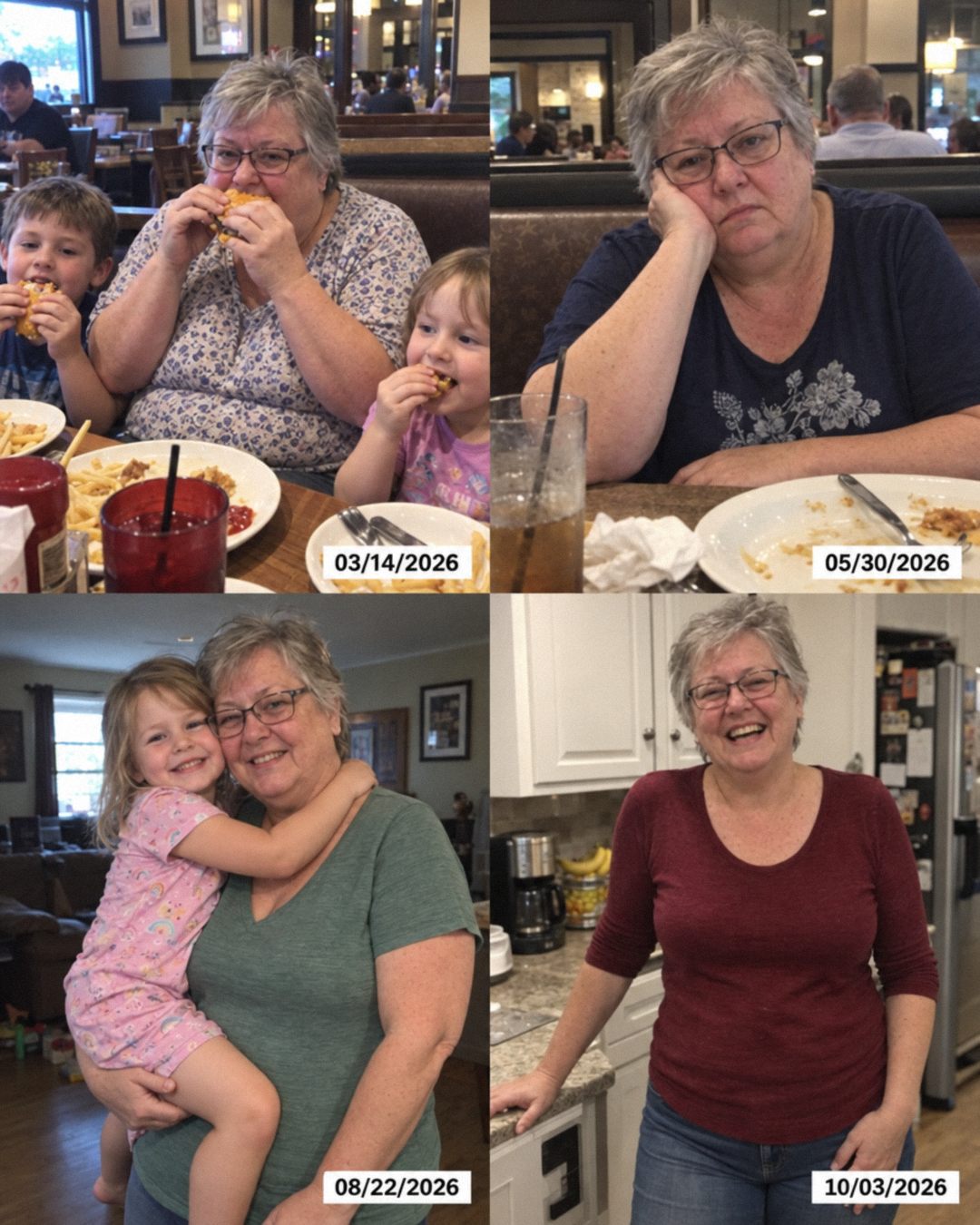
Running for 28 days since October 9, 2026. Crush last saw it on November 6, 2026.
Run by Alice Williams on Facebook. Crush is not the advertiser and does not verify its claims. See this ad in Meta's Ad Library(opens in a new tab)
Make your own version of this ad
Crush makes it, launches it in your own Meta ad account, scales the winners and pauses the losers.
About this ad
- Meta Ad Library ID
- 1096063516134785
- Platforms
- Facebook, Instagram, Audience Network and Threads
- Relaunches
- 0
Ad text
For eleven weeks, the nurse who weighed me at the weight-loss clinic was my daughter. She didn't know. I did. Not one word left my mouth, because of what her father told her the night he took her. He told her I chose pills over her. The first Thursday, I didn't even look at her. I was looking at the scale. I'd been on the shot five weeks and I was praying the number had moved. "Step up for me, hon," she said. "Shoes off is fine." I stepped up. She leaned over to read the number. And that's when I saw it. A thin white scar running through her left eyebrow. She fell off our porch swing when she was two. Caught the edge of the step. I held a bag of frozen peas on that eyebrow for an hour while she cried into my neck, and I told her it would make her look tough. Thirty-one years later, there it was, a foot from my face. I looked at her badge. CAITLIN, RN. I named her Caitlin after my grandmother. I didn't know if he'd let her keep it. He let her keep it. "241.6," she said, and wrote it on my chart. "Down point two. Every little bit counts, right?" She smiled at me the way you smile at a stranger. I said yes. I put my shoes back on. I walked out to my car and sat in the clinic parking lot for forty minutes with my hands shaking on the steering wheel. I know it was forty minutes because the bus barn called asking why I hadn't checked in for my afternoon route. My name is Gail. I'm 61. I've driven a school bus in Fort Wayne for 24 years. Route 14, the one out past Coliseum. I know every kid by their backpack. Thirty-one years ago I had a little girl. After she was born I got sick. Sick in my head, the way some women do after a baby, and back then nobody had a nice word for it. My doctor put me on medicine and sent me to a hospital for two weeks to get steady. When I came home, the house was empty. No note. Her crib still had the sheets on it. Her stuffed rabbit was still in the corner. Wayne took everything else. I spent four years looking. I spent every dollar I had on a man who said he could find anyone. He couldn't. Wayne's family said they didn't know where he'd gone. After four years I stopped looking. The looking was killing me. Every dead end was another funeral for the same little girl. So I drove the bus. I came home. I ate in front of the TV. I put on a hundred pounds over thirty years and stopped going to the doctor, because who was I staying healthy for? I stayed alive out of habit. Then last spring my doctor said the word diabetes. And he referred me to a weight-loss clinic on Coliseum Boulevard, because he said I was a good candidate for the shot. And the clinic had just hired a new nurse. For eleven Thursdays I got weighed by my own daughter. I learned things about her the way you learn things about a stranger. She hums when she's writing. She calls everybody hon. She has a picture of two little kids taped to her clipboard. And every Thursday she wrote my number down. Down point two. Up point four. Same as last week. Eleven weeks. Three pounds. "You're doing everything right, hon," she said on week nine, looking at my food log. "Some people's bodies are just slower to respond." I wanted to tell her so badly I couldn't breathe. And I couldn't. Because the only thing she knew about her mother was that her mother chose pills over her. And here I was, a hundred pounds overweight, on the shot, and failing at it right in front of her. I thought, she'll look at me and think he was right. On week twelve I couldn't do it anymore. I waited in the parking lot after her shift. I'm not proud of it. I sat in my car for an hour with an old photograph on the seat next to me. When she came out to her car, I got out of mine. She looked up. Nurse eyes. Already reading me. "Gail?" she said. "Is everything okay? Did you have a reaction?" "Caitlin," I said. "My name used to be Gail Brooks. You were born on April 2nd, 1994 at Lutheran. You weighed seven pounds even. When you were two you fell off our porch swing and split your eyebrow open, and I held frozen peas on it for an hour." Her face went white. All at once. Like somebody pulled a plug. "You need to go," she said. "I have a picture." She stood there with her keys in her hand. I could see her deciding. Patient. Chart. Knows things she shouldn't. Possibly telling the truth. "One picture," she said. "Then you go." I handed it to her. I've carried it in my wallet for thirty-one years. The corners are soft. It's me at 30, on our porch swing, holding a two-year-old with a little white bandage on her eyebrow. She looked at the picture. She looked at me. Then she touched her own eyebrow. Without thinking. The way you touch something that suddenly means something different than it did a minute ago. "Dad said you chose pills over me," she finally said. "He said you couldn't stop taking them. He said you didn't want us." "I was sick after you were born," I said. "I went to a hospital to get better. When I came home, you were gone." She was quiet for a long time. "I became a nurse because of that," she said. "I work at a weight clinic because I wanted to help women who couldn't help themselves. I've had your chart in my hands every Thursday for three months." We stood between our two cars in that parking lot until the security light came on. She didn't call me Mom. She called me Gail. That was fine. Gail was more than I'd had in thirty-one years. Coffee became dinner. Dinner became Sundays. She had two kids. Mason, seven. Ivy, four. The first time I met them, Mason hid behind Caitlin's leg and asked who I was. "This is Gail," Caitlin said. "She's my mom." "How come we never met her?" Caitlin looked at me. I looked at her. "I got lost," I said. "Your mom found me." Ivy didn't care about any of it. She walked straight up to me, threw her arms around my middle, squeezed, and said, "You're soft." Then she went back to her coloring book. That night I sat in my car in their driveway and cried for twenty minutes. Every day since has felt borrowed. But borrowed time has a price. You have to be alive to spend it. It was a Wednesday night. Shot night. Dinner at Caitlin's. Ivy fell asleep on the couch halfway through a movie and Caitlin asked me to carry her up to bed. I picked her up. She weighed nothing. Her head fell against my shoulder, boneless, the way sleeping children trust you. I made it to the fourth step. My heart started pounding so hard I could feel it in my throat. The edges of the hallway went gray. My legs went soft under me. I stopped. I stood on the fourth step holding my granddaughter and waited for my body to decide what it was going to do. Ivy shifted against my neck. "Gail? Go." I couldn't go up. I couldn't go down. I couldn't let go of her, because if my legs folded she'd hit the stairs. Ten seconds. The longest ten seconds of my life. Then the gray pulled back. I climbed the rest of the way holding the railing so hard my knuckles hurt, and laid her in her bed. When I came out, Caitlin was standing at the bottom of the stairs. She'd seen all of it. Nurse eyes miss nothing. She didn't say a word. She sat down on the bottom step. I sat down next to her. She put her hand on my back. The next morning she brought it up. "Who's your provider at the clinic?" "You know who." "Gail. Your heart was racing on my stairs. You've lost three pounds in four months on a medicine that works for almost everybody. Something's wrong." "I'm fine." "You're not fine." Her voice cracked on the next part. Just barely. "I just found you. I'm not losing you on my staircase." The provider at the clinic ran my labs. Everything came back normal. "You're what we call a slow responder, Gail," he said. "Let's take you up to the next dose. If that doesn't move it, there's the other medication, and we start the titration over." "No," I said. He blinked. I was saying no because of my sister Patty. Patty went on the shot two years before me. When she stalled, they took her up a dose. When she stalled again, they took her up again. All the way to the top. At the top she couldn't keep food down. Her hair came out in the shower. She got so weak she couldn't carry her own laundry basket up from the basement. Last winter she fainted in the checkout line at Meijer and spent four days in the hospital for dehydration. Her doctor said her weight loss looked great. I'd sat by Patty's hospital bed and made myself a promise. I would rather stay heavy than end up in a hospital bed like that. So when he said the next dose, I saw Patty on the floor at Meijer. And then I'd lie awake at night and see the fourth step. Go up a dose and end up like Patty. Stay where I was and end up on Caitlin's stairs again, with Ivy in my arms. I couldn't see a third way. So I tried everything else. I walked every morning before my route. I drank protein shakes and electrolyte packets. I logged every bite. I ate less than the kindergartners on my bus. Three months. And every Thursday my daughter weighed me. Now she knew whose number she was writing down. Down point four. Same as last week. The worst part was watching her face. She'd smile at me and say, "It'll come, Mom," which is the first time she ever called me Mom, and then she'd look at the number and I'd watch her try not to look worried. The answer came from the waiting room. Lorraine had the 9:00 slot every Thursday, right before mine. She's 67. Short silver hair, big laugh, always in a Notre Dame sweatshirt. She'd been coming for two years and she was down fifty-eight pounds. One Thursday she watched me come out from the scale and sit down hard in the waiting room chair. "Same number?" she said. I nodded. She scooted over two chairs. "I was a nurse for thirty-one years," she said. "ICU at Parkview. You want the real conversation or the one where somebody tells you to drink more water?" "The real one." "I pulled women off bathroom floors for thirty years," she said. "And the last few years, half of them were on these shots. Heart racing. Dizzy. Shaky. Everybody said dehydration. Every one of them had normal labs." She picked up one of the clinic's appointment cards off the side table and turned it over. "Your provider is watching your scale," she said. "Nobody's watching your tank." She drew a little dial on the back of the card. Like the thermostat on a wall. "Your stress response is a thermostat," she said. "It turns up when life gets hard and turns back down after. Magnesium is the fuel that turns it back down." She drew the needle pinned all the way to the right. "Run low on magnesium and the thermostat sticks on high. Your body reads that as an emergency. And an emergency means storage mode. Hold onto everything. Release nothing." "The shot turns off your appetite," she said. "It doesn't touch storage mode. You can take your foot off the gas all day long. Stress is still standing on the brake." Then she drew a circle with an arrow chasing its own tail. "Here's the part that gets you. Almost all your magnesium comes from food. The shot cuts your food in half, so it cuts your magnesium in half. Less magnesium means the thermostat sticks higher. Higher stress burns through even more magnesium. And round and round it goes." She tapped the circle. "That's why every dose increase buys you less. Every time they take you up a dose, you eat even less, and the wheel spins faster. That's what happened to your sister. The top dose is where the tank is emptiest." I sat there in that waiting room chair and thought about Patty on the floor at Meijer. "My labs were normal," I said. "They checked your blood," Lorraine said. "Almost all your magnesium lives inside your cells. A blood test doesn't look there. You can be running on fumes and pass every test they've got. I watched it in the ICU for thirty years." My phone buzzed in my purse. It was Caitlin, from down the hall. A picture of a drawing Ivy had made. Two stick figures holding hands on a staircase. The big one had grey hair. "She says this is you and her," Caitlin had written. "Going up to bed." "How do you know all this?" I asked Lorraine. She laughed. "Because I was you. Month five, my number stopped. I was up every night at 3am with my heart going like a hummingbird. They wanted to take me up a dose. I'd watched enough women in my ICU to say no." "So I did what I should have done on day one. I read. Not the Facebook groups. The actual journals." "And I already took magnesium," she said. "The drugstore kind. Which turned out to be the joke of the whole thing." I went home that night and bought magnesium. The drugstore kind. A big white jar, two hundred and fifty tablets, buy one get one. I figured magnesium was magnesium. Two weeks. Two tablets a night. By the third night I felt calmer. I really did. I thought, Lorraine was right, this is it. Then I spent the next two weeks running to the bathroom. Before my morning route. After my morning route. I learned where every gas station bathroom was on Route 14. And the next Thursday, my daughter weighed me. Up point six. I brought the jar to the waiting room the next week and set it on the chair next to Lorraine. "It doesn't work," I said. She picked it up and read the back. She didn't get halfway down the label before she sighed. "Oh, Gail. Magnesium oxide." She took one tablet out, got up, filled a little paper cone from the water cooler, and dropped the tablet in. It broke apart into a cloud and sank. We sat there and watched it. Ten minutes later there was a layer of white chalk sitting at the bottom of that paper cup. The water above it was clear. "That's what they give people who can't go to the bathroom," she said. "Your body takes in maybe four percent. The rest stays in your gut and pulls water. You didn't refill your tank. You flushed it." "And that little calm you felt? That was you wanting it to work. The feeling isn't the proof, hon. The scale is the proof. And the scale told you the truth." "Four things," Lorraine said. "Write them down." One. Bisglycinate. Magnesium bonded to glycine. If it says oxide or citrate, it's for your bowels. Two. A real dose. Four hundred milligrams, all of it the good kind, with nothing cheap blended in. Three. Zero sugar. "You didn't start a weight-loss shot to eat candy at bedtime." Four. Third-party tested, every batch. "Anybody can buy five stars. Nobody can fake a lab sheet." She texted me the name that night. But she told me to check it against her four things myself first. So I did. Two nights at my kitchen table with my reading glasses and my laptop. Most of the shelf was oxide or citrate. The ones that said glycinate either had a hundred milligrams in them or mixed it with oxide so you couldn't tell how much you were getting. Half the gummies had three or four grams of sugar. Hardly any of them showed who tested them. One brand kept coming up. In Lorraine's text. In the GLP-1 groups. SPNutrition. Magnesium bisglycinate, fully bonded to glycine. The form that crosses the blood brain barrier, absorbed at up to ninety percent. Twenty-two times what that chalk in the paper cup gives you. Four hundred milligrams in two gummies. Zero sugar. Third-party tested, every batch. Four for four. And it was a gummy, which mattered more than I thought. You chew it, so it breaks down like food. The shot slows your stomach way down, and a tablet can sit in there half the day. I took two that night before bed. I didn't expect anything. I'd been disappointed too many times. I was asleep in ten minutes. I woke up at 6:10 the next morning with the light coming in and lay there waiting for my heart to start up the way it had every morning for a year. It didn't. By the end of the first week I was sleeping through the night, even shot night. And the second Thursday, I stepped on the scale and my daughter leaned over to read the number. She didn't say anything for a second. Then she said, "Down two." And she looked up at me. And she smiled like a little girl. I need to be precise about this part. Nothing about my shot changed. Same medicine. Same dose. Same Wednesday night. The medicine had been working the whole time. My body finally had the fuel to stop fighting it. Weeks three and four, a pound, sometimes two. A hard week came, the kind that used to send me to the pantry at nine at night. Wayne called Caitlin out of nowhere for the first time in years, and she cried in my kitchen for an hour. The food noise stayed quiet straight through it. That's when I believed it. At week six the provider sat down with my chart. "Gail," he said. "I had you down for a dose increase today. I don't see a reason for one. What are you doing differently?" I told him. He wrote it in my chart. "Keep me posted," he said. That Sunday I went to dinner at Caitlin's. Ivy fell asleep on the couch again. Caitlin looked at me. She didn't ask. I picked Ivy up. I carried her up all fourteen stairs. I didn't stop on the fourth one. I didn't need the railing. I laid her in her bed and pulled the blanket up and stood there listening to her breathe. When I came down, Caitlin was standing at the bottom of the stairs again. This time she was smiling with her whole face. "Thank you," she said. "For doing this." Then, quieter: "I'm glad you're okay, Mom." The word hung there in the hallway. Neither of us corrected it. The next Thursday I stepped on the clinic scale and Caitlin wrote down my number. Down nineteen pounds since the night in the waiting room. When I went to put my shoes back on, there was a yellow sticky note stuck to the top of the scale. In her handwriting. "Proud of you, Mom." I still have it. It's in my wallet, next to the picture of a little girl on a porch swing with a bandage on her eyebrow. I'm writing this because I almost didn't make it to Ivy's bedroom that second time. A scale can tell you a number. It took my daughter on the bottom step to see what was really happening to me. If you're on one of these shots and the number stopped moving... If they keep offering you a bigger dose or a whole new drug... If your heart pounds at night and every lab comes back normal... If you already take magnesium, the drugstore kind, every single night... If somebody you love watched you hold the railing a little too tight... I'm not saying you definitely have a magnesium deficiency. I drive a school bus. But Lorraine spent thirty years in an ICU, and she says the women who stall on these shots are running on an empty tank, and the shot keeps draining it. Before you let anybody take you up another dose, drop one of your drugstore magnesium tablets in a cup of water and watch where it ends up. The gummies I take are SPNutrition Magnesium Bisglycinate. Two before bed. Absorbed at up to ninety percent. Four hundred milligrams. Zero sugar. Third-party tested, every batch. Over 120,000 customers. Here's an article that explains the magnesium link better than I can. Take two minutes and read it. 👉 https://spnutrition-us.com/pages/advertorial-magnesium Gail Fort Wayne, Indiana P.S. Lorraine said something to me in that waiting room I think about every Wednesday night. "Don't fight the scale, hon. Fill the tank." SPNutrition has a money-back guarantee of up to 90 days, and you don't even have to send the bag back. That's longer than it took my number to move. P.P.S. What to expect. The first thing you'll notice is sleep, usually in the first few nights. The scale comes after, usually around week two. I felt calmer on the drugstore oxide too, and it did nothing. The scale is the proof. P.P.P.S. About Patty. I took her a bag and she took it to her doctor first. They lowered her dose together, slowly, and her doctor watched her the whole way. Please don't stop or change your shot on your own because of anything I wrote. That's between you and your doctor. Patty is keeping food down again. Last weekend she carried her own laundry up the basement stairs. P.P.P.P.S. For the daughters. If your mom is on the shot and she's stuck, and she's tired, and she's quietly stopped doing the stairs, you might be the one who makes her try this. Don't send her a link and hope. Put two gummies next to her glass of water and say, "Just try it. For me." Caitlin did. P.P.P.P.P.S. SPNutrition sold out twelve times last year, and when it's gone there's a four to six week wait. I keep two bags in my kitchen now, one open and one waiting. First-time customers get up to 35% off the three-bag bundle, plus a free bag of D3 and K2. I sent the extra bag to Lorraine's friend from her church, who just started her shot. I told her to start both on the same day. 👉 https://spnutrition-us.com/pages/advertorial-magnesium
Where the ad sends people
spnutrition-us.com
My Nurse Didn't Know She Was Weighing Her Mom
Read more
Learn more: spnutrition-us.com(opens in a new tab)