Daily Gut Health
Daily Gut Health Facebook ad: “I hadn't gone in 11 days.”
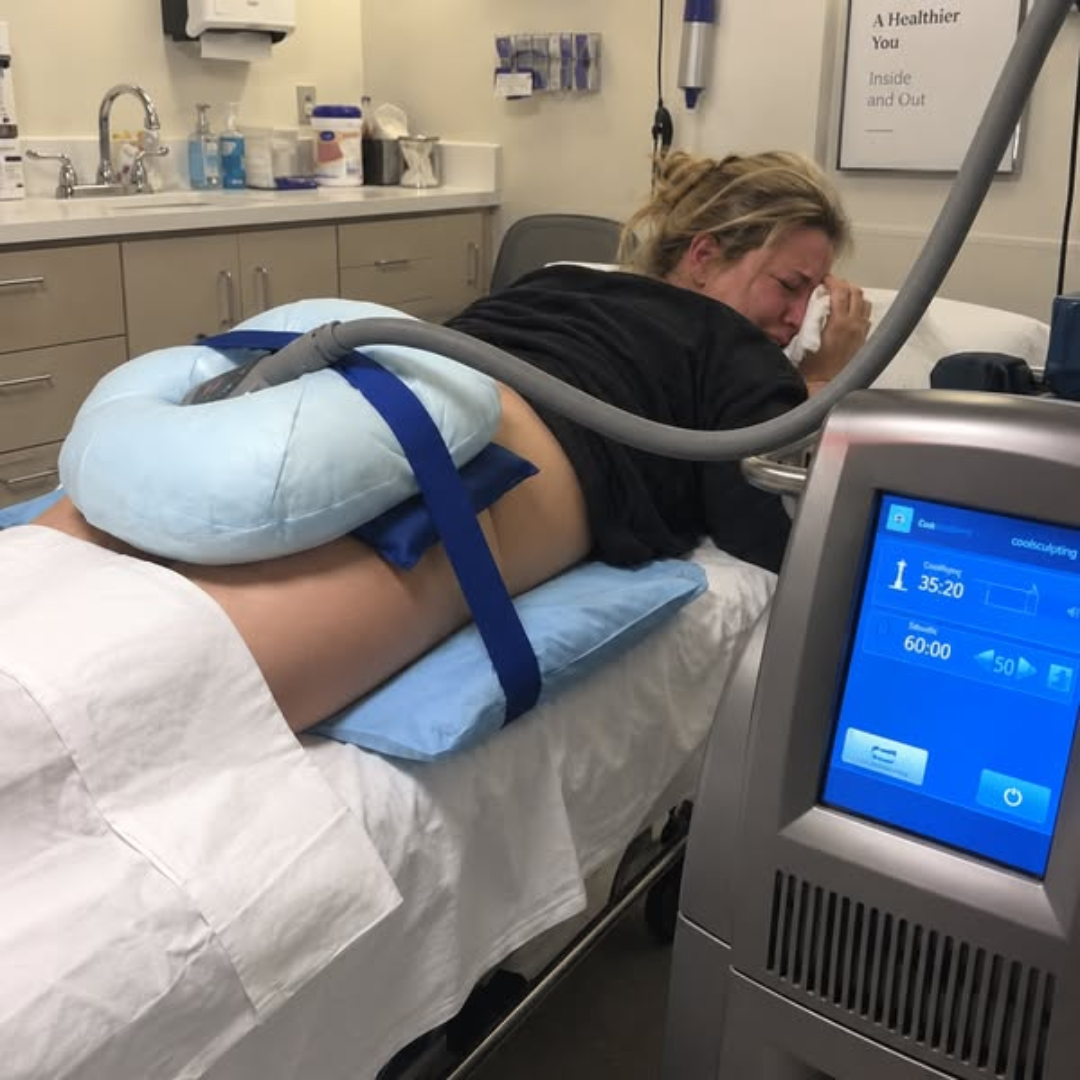
Running for 19 days since September 17, 2026. Crush last saw it on October 6, 2026.
Run by Daily Gut Health on Facebook. Crush is not the advertiser and does not verify its claims. See this ad in Meta's Ad Library(opens in a new tab)
Want an ad like this for your product?
Crush makes new ad images for your product from this ad: your logo, your product photo, your offer.
Trials from $19.95 USD, then $79.95 USD a month. Cancel anytime.
About this ad
- Meta Ad Library ID
- 1099117009265977
- Platforms
- Facebook, Instagram, Audience Network, WhatsApp and Threads
- Relaunches
- 0
Ad text
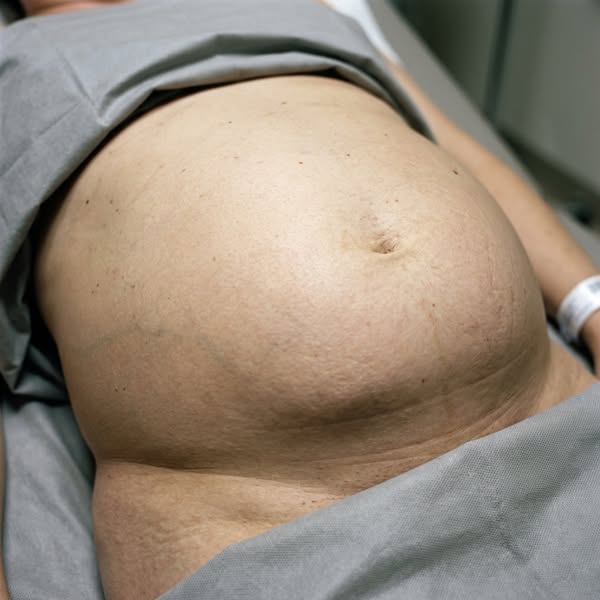
I haven't had the urge to use the bathroom in 4 years. I could go weeks and not even think about it. That is not normal. And no one has been able to tell me why. I had seen 3 gastroenterologists. I had seen 3 gastroenterologists, tried everything available both over the counter and prescribed, and the only thing any of them ever said to me was "just stay on the Movicol, it is safe for long-term use." On a Wednesday morning in March, after 11 days without a single bowel movement, after swallowing enough laxatives to knock out an animal, my husband Michael helped me out of our bedroom wrapped in a robe at 3 in the morning and drove me to the emergency room while I leaned against the passenger door barely conscious. What an ER doctor I had never seen before told me at 6:30 that morning, and what unfolded over the next 6 weeks, reversed 5 years of misery and gave me my body back. If you are a woman who has tried what I tried and still cannot go properly, please read every word of this. I am writing this for you. My name is Melissa. I am 49. I live in Geelong with my husband Michael and our 19-year-old daughter Grace, back from uni for the summer. And I have been quietly dependent on laxatives since I was 44. I am not ashamed anymore. I used to be. Not anymore. Because I now understand that what was going on inside my body was not a willpower issue. It was not an "IBS-C" issue. It was not a "sluggish gut" issue. It was not a "you need more water and more fibre" issue. It was a specific, biological, well-documented mechanism that 3 gastroenterologists missed one after another. And I want to explain exactly what it was. But first I need to share a few things about my life over the past 5 years, because I would put money on you recognising at least one. I have been stirring Movicol into my coffee every single morning for 4 years. If you mix a capful into hot black coffee with a little cream, it disappears. No taste. No trace. The only person who knows it is in there is the woman holding the spoon. I have done this every morning for 4 years and I never once mentioned it to my husband. I have stood in my own bathroom at 9 at night with a box of senna in one hand and a bottle of Dulcolax in the other, calculating which to take and how many. I have swallowed the dose, crawled into bed, then gotten back up at 11pm to take more because I was not confident the first round would be enough. I have stashed laxative bottles in the back of my underwear drawer. In a bag tucked inside the glove box of my car. In a canister pushed to the back of the pantry. In the lining of a coat I had not touched since winter. I have bailed on my closest friend's birthday dinner because I was on day 8 and I could not trust my body outside the house. I have unfastened my jeans beneath my desk at 4 in the afternoon because I looked 6 months pregnant before lunch was over. I have stopped joining my husband at the café on Saturday mornings, something we had done together every weekend for 18 years, because I could not be further than 8 minutes from a toilet. I have been awake at 3 in the morning with a gripping heaviness in my gut that I could not put into words for anyone. I have woken up to a dull headache I had stopped registering because it had been there so long it just blended in. I have caught my reflection at the end of a day and not recognised the bloated, worn-out, hollow woman staring back. If any of that sounds like your life, what comes next is going to shift how you see your own body. Because all of it, every single item on that list, was being driven by one specific thing happening inside me that not one of my 3 doctors ever bothered to explain. I want to be exact about how much I tried. I saw 3 gastroenterologists across 5 years. The first put me on Movicol and said to take it indefinitely. He told me his own mother took it. He said the 7-day limit printed on the box was wrong. The second ordered a colonoscopy that came back completely clear and told me I had "slow transit" and there was nothing surgical they could do. He wrote me a prescription for a motility tablet. That cost me $280 every month. It worked for roughly 6 weeks. Then my body adjusted and it weakened. Six weeks after that, it stopped entirely. The third ordered another colonoscopy. Also clear. Switched me to another prescription. Did absolutely nothing. That was $300 a month for the 3 months I stuck with it before I gave up. On top of that, 3 specialist consultations, two colonoscopies only partly covered, 5 years of chemist runs for Movicol and senna and magnesium every few weeks, and a pile of discarded probiotics I tried at $40 to $60 a bottle. By the time I quit keeping track, I had spent nine thousand dollars trying to make my body do something it used to do on its own. Every laxative on the shelf. Movicol. Senna. Dulcolax. Milk of Magnesia. Magnesium in every form. Citrate gummies. Glycinate capsules. The cheap oxide from the chemist that accomplished nothing. Every herbal remedy. Smooth Move tea. Cascara. Aloe juice. Castor oil. Apple cider vinegar. Every fibre. Psyllium husk. Ground flax. Chia seeds. Metamucil. Every probiotic available. Every device and physical approach. A toilet stool. Pelvic floor therapy. Every diet. Low-FODMAP. Intermittent fasting. Elimination. Digestive enzymes. Peppermint oil capsules. None of it delivered. Some of it made things worse. By March of this year, I was 49 years old and staring down the next 30 years thinking, is this what my life is now? Am I going to be on Movicol until the day I die? Am I going to spend the rest of my years organising my entire schedule around my own bathroom? That is when it became dangerous. I want to tell you about the 11 days. I am not going to overdramatise this. I am just going to tell you what happened. It started on a Monday. By Thursday I realised I had not gone since the Monday before. That is 7 days. I doubled my Movicol. Took 6 senna instead of 4. Drank a full bottle of magnesium citrate. Friday. Nothing. Saturday I stacked Dulcolax on top and drank another bottle of magnesium citrate. I sat on the toilet for an hour Saturday morning and passed a few hard pieces the size of pencil erasers. I convinced myself that counted as going. It did not. By the following Thursday I was at day 11. Nothing in my wardrobe would close around my waist. I could not draw a full breath without a sharp stab behind my ribs. I was so foggy I was mixing up words mid-conversation. Michael kept asking whether I was alright. I kept insisting I was fine. That night I got out of bed at 2 in the morning to dig out an extra bottle of Dulcolax I had hidden inside a shoe at the back of the wardrobe. I was going to take 6. I made it 4 steps and my legs buckled. Michael woke up to me on the floor, white, drenched in sweat, unable to get a word out. He did not ask a single question. He lifted me up, wrapped me in a robe, walked me to the car, and drove to the emergency room. By 3:30 I was inside a CT scanner. By 4:15 I was in a hospital bed with an IV line in my arm. By 4:45 the ER doctor, a woman named Dr Anita Menon, roughly my age, sat down in the chair beside my pillow and held the CT scan where I could see it. She said: "Melissa. I need to show you what I am looking at on this scan, and then I need to tell you something that is going to change how you understand your own gut." I had 11 days of impacted stool packed into my colon. It was so compressed that no laxative on earth was going to budge it. They had to clear it by hand, in the hospital, that night. I am not going to describe what took place over the next 90 minutes. It is the most humiliating thing I have ever been through and I already made myself a promise that I would only write about it once, which is now, and never again. By 6 in the morning the impaction was removed. I was drained, aching, mortified, and all I wanted was to go home. But Dr Menon came back to my bedside at 6:30 carrying two coffees. She handed me one. She sat down. And she said: "Now I am going to explain the part that is going to make you furious." She started with a question. "How many doctors have you seen about this?" "Three." "How many of them have ever explained to you what is actually happening to your stool while it sits inside your colon for days?" "None." She nodded as though she had already known the answer. She mentioned she had completed a fellowship in GI motility research before deciding that emergency medicine worked better around her young children. She was not a regular ER physician. She was just filling in for a colleague who had called out sick. She was the right person in the right room at the right time. She grabbed a notepad off the rolling cart and sketched a simple tube. "This is your colon," she said. "Its only function is to pull water out of your food before it exits your body. That is all it does. All day, every day." She drew arrows pointing outward from the tube. "When material moves through at a normal pace, your colon removes the right amount of water. Not too much. Not too little. Everything stays soft. Easy to pass." "But when things slow down, from stress, from hormonal shifts, from perimenopause, from sitting at a desk all day, from certain medications, your colon gets additional time to do its work. And it overdoes it. It pulls out too much water." She drew the tube narrowing. The inside growing darker. "Your stool goes from soft and moist to bone dry. Hard as stone. And once it reaches that state, it is lodged. Your colon contracts against it but nothing shifts. And every day that stone remains, more water gets extracted. The stool hardens further. The passage dries out. The cycle accelerates." I felt my stomach drop. Because she was describing exactly what it felt like inside me. Every single time. "And here is the part that infuriates me because no one ever brings it up with patients like you. The water you drink does not resolve this." "What do you mean?" "You could drink a litre a day. That water gets absorbed in your small intestine, long before it ever reaches your colon. Your colon never sees a drop of it. So when your doctor tells you to hydrate more, he is offering advice that sounds logical but is biologically irrelevant for this particular problem." She sketched on the pad. A stone jammed inside a dry pipe. "Picture a stone wedged inside a dry pipe. You can stack more fibre behind it. The blockage grows. You can try to crush the pipe with force. That is senna. You damage the walls. You can pour water in from the top. That is drinking more water. It never makes it to the stone. What you actually need is something that delivers water to the stone from the inside. Through the pipe walls. Directly to the spot where it dried out." "So why does senna cause so much pain?" "Because senna forces your colon muscles to clench violently against stone. You are making soft tissue contract against rock. Of course it is excruciating. And over time, those forced contractions break the muscles down. They grow weaker. More reliant on the stimulant. Not less." I felt something tightening behind my ribs. "Not one of my doctors explained any of this. In five years." Dr Menon nodded slowly. "It is rarely discussed in standard care," she said. "Most physicians default to Movicol and fibre. If those fail, they prescribe a motility tablet. But the underlying issue, the water being stripped from the stool, the dehydration, the stone forming day after day, is almost never addressed directly." "In Japan, where several of my research colleagues trained, they have been treating chronic constipation as a colon hydration problem for decades. Magnesium oxide has been a first-line prescription there since before Movicol existed." "The question is not how to force the stool out. The question is how to get water back to the stone so it softens and your colon starts functioning on its own again." I asked the question every woman in my position would ask. "So how do I fix this?" She said: "First I need you to understand why everything you have already tried failed. Because if you do not understand that, you will just grab the next thing off Chemist Warehouse and end up back in this hospital bed a year from now." So we went through them. Every single one. "Movicol." "Polyethylene glycol. An osmotic. It draws some water into the colon. But your body adjusts to it. It weakens. And even while it is active, the water moves around the dried mass, not through it. You get thin, partial movements. The centre of the stone is still stuck. You are flushing past the problem without ever touching it." "Senna." "A stimulant. It forces your colon muscles to clench against stone. Powerful enough to override the stall temporarily. But over time, those muscles deteriorate. You go from 1 pill to 2 to 4 to 6. That is not the senna failing. That is your muscles being ground down by force." I thought about the 4 senna sitting in my bathroom cabinet at home. "Magnesium citrate." "Same osmotic principle as Movicol in a different bottle. Pulls some water in. Weakens over time. Does not reach the stone itself." "What about the cheap magnesium oxide from the chemist?" She paused. "This is critical. The magnesium oxide you picked up at the chemist was likely 200 milligrams in a tablet full of fillers and binding agents. A token amount. At a real clinical dose, magnesium oxide is one of the most effective osmotic agents available. It barely enters your bloodstream. About 4% absorbs. The other 96% stays right there in your intestines." She tapped the sketch. "And when 96% of a mineral remains in your gut, it does one thing. It pulls water through your intestinal walls and directly into the space where the stool is drying out. Not around it. Through it. Softens the stone from the inside. Rehydrates what your colon stripped." "That is why it has been the frontline prescription in Japan for decades. Not Movicol. Not a prescription motility tablet. Magnesium oxide." "But here is the part that makes the difference between the bottle you grabbed at Chemist Warehouse and one that actually works." She leaned forward. "Most magnesium oxide sold here is generic powder compressed into tablets. Low purity. Loaded with magnesium stearate, silicon dioxide, binding agents. It barely dissolves in your gut. It passes through mostly intact. You swallow it, your body never fully uses it, and you conclude magnesium oxide does not work." "Japanese pharmaceutical-grade magnesium oxide is not the same product. Japan has been manufacturing it to a completely different standard for decades. Different purity. Different dissolution. Different performance in the intestinal environment. That is the source that matters." "But even that is not the complete answer." I looked at her. "Magnesium oxide on its own, even the Japanese grade, can pass through your system without fully completing the osmotic process. A portion of it does not fully dissolve and release where it needs to. It needs an activator. Natural citric acid. When citric acid reacts with magnesium oxide inside your gut, it helps the mineral fully break down and release right in the large intestine. Right where your colon is stripping the water. Without that activator, you are leaving a significant portion of the magnesium oxide unused. With it, the entire dose unlocks." "Most supplements do not include it. Most companies do not understand the mechanism well enough to know it is necessary." "Probiotics." "Beneficial bacteria. Your gut needs them. But they do not address why the stool is stone. They serve a completely different function. Taking probiotics for constipation caused by dehydrated stool is like putting premium fuel in a car with a flat tyre. Good fuel. Wrong problem." "More fibre." "That is the worst recommendation you can give a woman whose stool has already dried to stone. You are adding bulk to a passage that is already blocked. The stone does not move. New material stacks behind it. Bloating worsens. Transit slows further." "Yes." "That is why." "Prescription motility tablets." "Prokinetics. They stimulate motility receptors to push things along. They override the stall. They do not touch why the stool is stone. The moment you stop them, you are back where you started, minus the bill." She set the notepad down. "Melissa, listen to me. Your gastroenterologists were not deceiving you. They were not being careless. The standard tests they ordered were not built to explain why your stool was dehydrating. They were built to rule out cancer and structural abnormalities. And they accomplished that. But nobody paused to explain the mechanism. Nobody said your colon is extracting too much water and the stool is turning to stone and everything you have been taking either flows around the stone or tries to ram it through by brute force." "In a 14-minute appointment, that conversation does not happen." I just stared at her. I was thinking about every $280 monthly script, every $40 bottle of probiotics, every 14-minute appointment where a man behind a desk told me to drink more water. Five years. Then I asked the question. "So how do I fix it?" She rested her hand on my arm. "You need to get water directly to the stone. Not from a glass. Not from Movicol that weakens after two weeks. You need something that stays in your gut and pulls water through your intestinal walls every single night." "Japanese pharmaceutical-grade magnesium oxide paired with natural citric acid as the activator. A proper clinical dose. Not the 200mg chemist tablet. Not generic powder with fillers. The form that Japan has been prescribing for decades, combined with the compound that ensures it fully dissolves and releases in your large intestine." "96% stays in your intestines. The citric acid unlocks the full dose. And together they draw water through the intestinal walls and directly into the stool. Softens it from the inside. Breaks it apart. It passes gently. No forcing. No cramping." "And because osmosis is a law of chemistry, your body does not adapt to it. It does not weaken. Same dose on day 1 and day 100." She paused. Then added: "Five years on products that fade after a few weeks without addressing why the stool is stone is not treatment. It is watching the backup get worse." I asked the obvious follow-up. "What exactly do I look for?" She held my gaze for a long moment. "You want Japanese pharmaceutical-grade magnesium oxide at a real dose. 1400 milligrams. Paired with 90 milligrams of natural citric acid as the activator. Not a blend with 12 other ingredients where you cannot tell what is doing what. Not a gummy with 100 milligrams and a bunch of sugar. The right source. The right activator. The right dose. Third-party tested so what is printed on the label is what is inside the capsule." She wrote it on the notepad. Active mineral. Japanese pharmaceutical-grade magnesium oxide. Activator. Natural citric acid. Form. Capsule. Not tablet. Not gummy. Dose. 1400mg magnesium oxide. 90mg citric acid. Label. Two ingredients. No blends. No fillers. Testing. Third-party verified. She handed me the paper. "I cannot recommend a specific brand to you inside a hospital. What I can do is tell you exactly what to look for. If a formulation meets every one of these, it will work. If it misses on any single one, it will not. Most will not." "Two capsules before bed with a full glass of water. Give it an honest chance. But you should feel the difference within the first few days. When it is dosed correctly with the right activator, it works quickly." I took the paper. I ordered it from the hospital car park at 8 in the morning, after Michael had pulled the car to the entrance and helped me into the passenger seat. I sat in that car park with my phone for nearly 40 minutes before I pressed buy. I checked every magnesium oxide product I could find against the criteria Dr Menon had written down. Most failed immediately. The chemist brands were 200mg loaded with fillers and no activator. The gummy brands were 100mg with sugar. None of the generic versions used Japanese pharmaceutical-grade sourcing. Two of the online brands did not disclose third-party testing. One brand met every criterion. 1400mg Japanese pharmaceutical-grade magnesium oxide. 90mg natural citric acid. Capsule form. Third-party tested. Nothing else on the label. It was called Oxyvera™. I ordered three bottles from the hospital car park. The bottles arrived two days later. Here is exactly what happened over the next 6 weeks. I am going to be specific, because I know how these stories typically read, and I know how exaggerated they usually are. Week 1. Day one, two capsules before bed with a full glass of water. I lay there bracing for cramps. For the senna feeling. For the violence. Nothing. No cramps. No urgency. Nothing. Day two. Morning. Something different. Low in my abdomen. A gentle pressure. Not forced. Not aggressive. A signal. I walked to the bathroom. Sat down. And it came out soft. No straining. No gripping the seat. No pain. Soft. Easy. Done. I sat there for a moment afterward just breathing. By day 5 I had gone every single morning. Soft. Complete. No laxatives. Just two capsules at bedtime. I am so glad I did not quit. Week 2. The afternoon bloat went from unbearable to noticeable. Not eliminated. Just reduced. I could feel my waistband loosening by midweek. I was going to the bathroom every morning without thinking about it. Like it was nothing. Like that was just what my body did now. Michael looked at me across the breakfast table and said, "Something is different about your face." It was. The puffiness had disappeared. Week 3. I woke up on a Tuesday and lay in bed for about 20 minutes before I figured out what had changed. My head did not hurt. I had carried a low-grade headache for so long I had stopped noticing it existed. It was just the texture of every morning. It was gone. I lay there in the dark trying to remember the last morning I had woken up without it. I could not. That was the morning I first believed my body was actually returning. Week 4. I stopped the senna. I had been taking 4 senna tablets every night for 2 years. I asked Michael to remove them from the bathroom and put them in his car so I could not reach for them in a panic at 11pm. The first 2 nights without them were difficult. I felt uneasy without my routine. Night 3, I went to bed without them and woke up the next morning and went to the bathroom on my own. A normal, complete, painless bowel movement. I sat on the toilet and cried. It was the first time in 5 years I had gone without any chemical assistance besides the magnesium and citric acid. I did not know my body was still capable of that. Week 5. Steady. Going every morning. The bloating was largely gone. I could button my jeans at 9pm. I had forgotten that was possible. I dropped a few kilos of what I now know was water retention and inflammation. Not weight loss. Decompression. Grace asked me at dinner why I had been "different lately." I asked what she meant. She said: "You smile more. You are actually at dinner. Like, present. You used to just sit here and stare at nothing." I had not realised that was how I had been showing up to my own family. Week 6. I stopped the Movicol. I had been putting a capful into my coffee every single morning for 4 years. I told Michael at breakfast that I was going to try a morning without it. He set his coffee down. He looked at me for a long moment. Then he said: "I know." I had no idea he knew. He said he had known for roughly 2 years. He had never brought it up because he did not want to embarrass me. He said he had been waiting for me to be ready to talk about it. We sat at the kitchen table and held hands across the table while the coffee went cold. The Saturday after, Michael and I drove to the café. We sat in the same booth we had sat in for 18 years. We ordered the same stack of pancakes we had been splitting for 18 years. I drank the coffee, black, nothing stirred in, and I read him the headlines from the paper. When we got home, I packed an overnight bag. We drove to the beach house we had not visited in 2 years because I had been too afraid to be further than 8 minutes from a bathroom. We watched the sun come up over the water on Sunday morning. Michael made coffee on the stove. I drank it with nothing added. He looked over at me and said 3 words. "There you are." Just like that. "There you are." As though I had been gone for 5 years and just walked back through the door. And reader, I had been gone. I just did not know it until that moment. I am writing this from my kitchen table on a Sunday night. Grace is asleep upstairs. Michael is reading beside me on the couch. There are no laxatives in this house anymore. Not in my underwear drawer. Not in the glove box. Not in the canister in the pantry. Not in my purse. Not in the pocket of my winter coat. I have nothing left to hide. I am writing this because I know what it is to be a woman who has tried everything. I know what it is to pour $9,000 across 5 years into products and end up worse than where you started. I know what it is to stand in your bathroom at 9 at night gripping 2 boxes of laxatives and bargaining with yourself. I know what it is to lose 2 years of Saturday mornings with your husband. I know what it is to watch your mother live her final years this way and quietly realise you are walking the same road she did. My mother spent the last 20 years of her life on a daily laxative. Senna at first. Movicol once it became available. Magnesium citrate when her doctor changed his mind. Whatever happened to be on her bedside table that month. She missed my uni graduation because she said she was "having stomach trouble." She told me toward the end of her life that she felt like she had "missed a lot." I am not going to spend my years that way. And neither should you. The first bottle of Oxyvera™ is $39.99. For perspective: I was paying $280 a month for a prescription that quit working after 6 weeks. Right now it is 50% off. Oxyvera™ backs every order with a 60-day money-back guarantee. If you take it for 60 days and you are not having complete, daily, painless bowel movements, if the bloating has not dropped, if your mornings have not changed, you send the bottles back. Even the empty ones. Every dollar refunded. I am 49 years old. I had 11 days of stool compacted inside me on a Wednesday in March. My colon had been drying everything to stone for 5 years before anyone explained what was actually happening. And two capsules before bed, Japanese pharmaceutical-grade magnesium oxide unlocked by natural citric acid, gave me my life back and my marriage back. It can do the same for you. Do not wait until you hit 11 days. Do not wait until your husband has to carry you to a car. Do not wait until a stranger in scrubs has to tell you what 3 doctors should have told you years ago. Tap the link below. Order one bottle. Do it before you talk yourself out of it. I am so glad I did not talk myself out of mine. — Melissa Kettenring 👉 https://go.shopavyrom.com/oxyvera/adv
Where the ad sends people
health-blog.com.au
I hadn't gone in 11 days.
Learn more: go.shopavyrom.com(opens in a new tab)