Dr. William Gerin
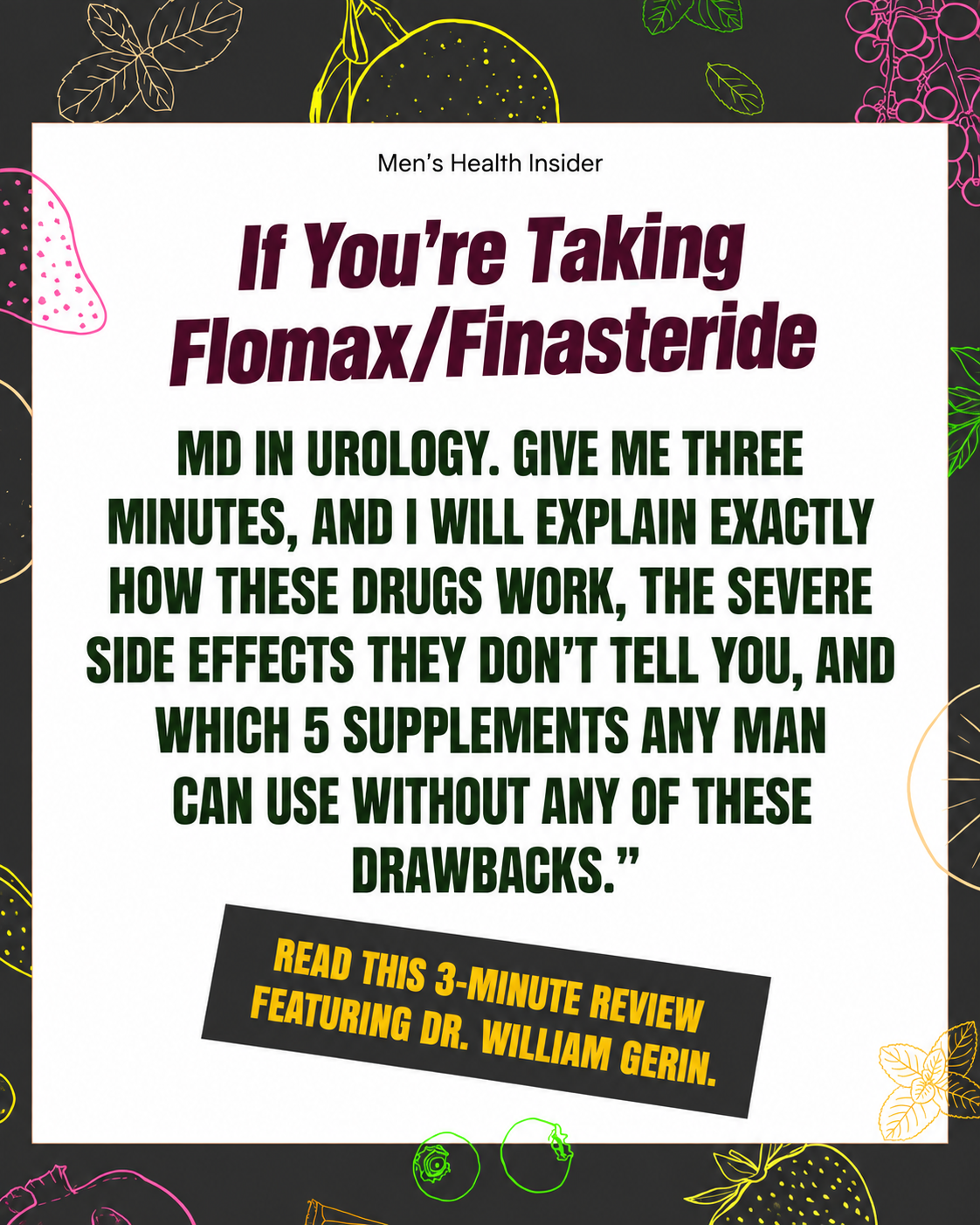
 Facebook ad: “Why Flomax Is The Worst Mistake I See Men Make”
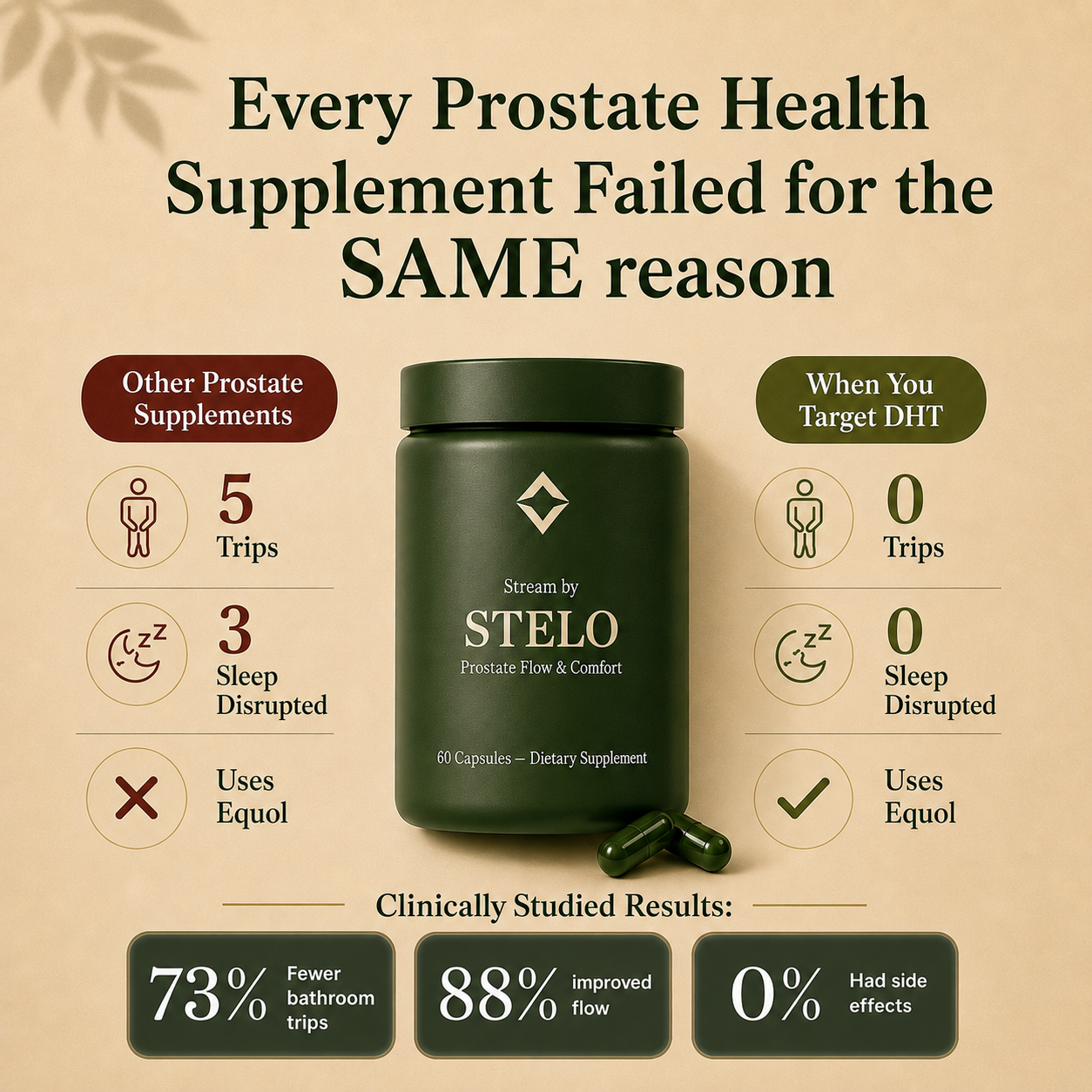
Ran for 46 days, from September 21 to November 6, 2026, the last day Crush saw it.
Run by Dr. William Gerin on Facebook. Crush is not the advertiser and does not verify its claims. See this ad in Meta's Ad Library(opens in a new tab)
Make your own version of this ad
Crush makes it, launches it in your own Meta ad account, scales the winners and pauses the losers.
About this ad
- Meta Ad Library ID
- 1104989612475663
- Platforms
- Facebook, Instagram, Audience Network, WhatsApp and Threads
- Relaunches
- 0
Ad text
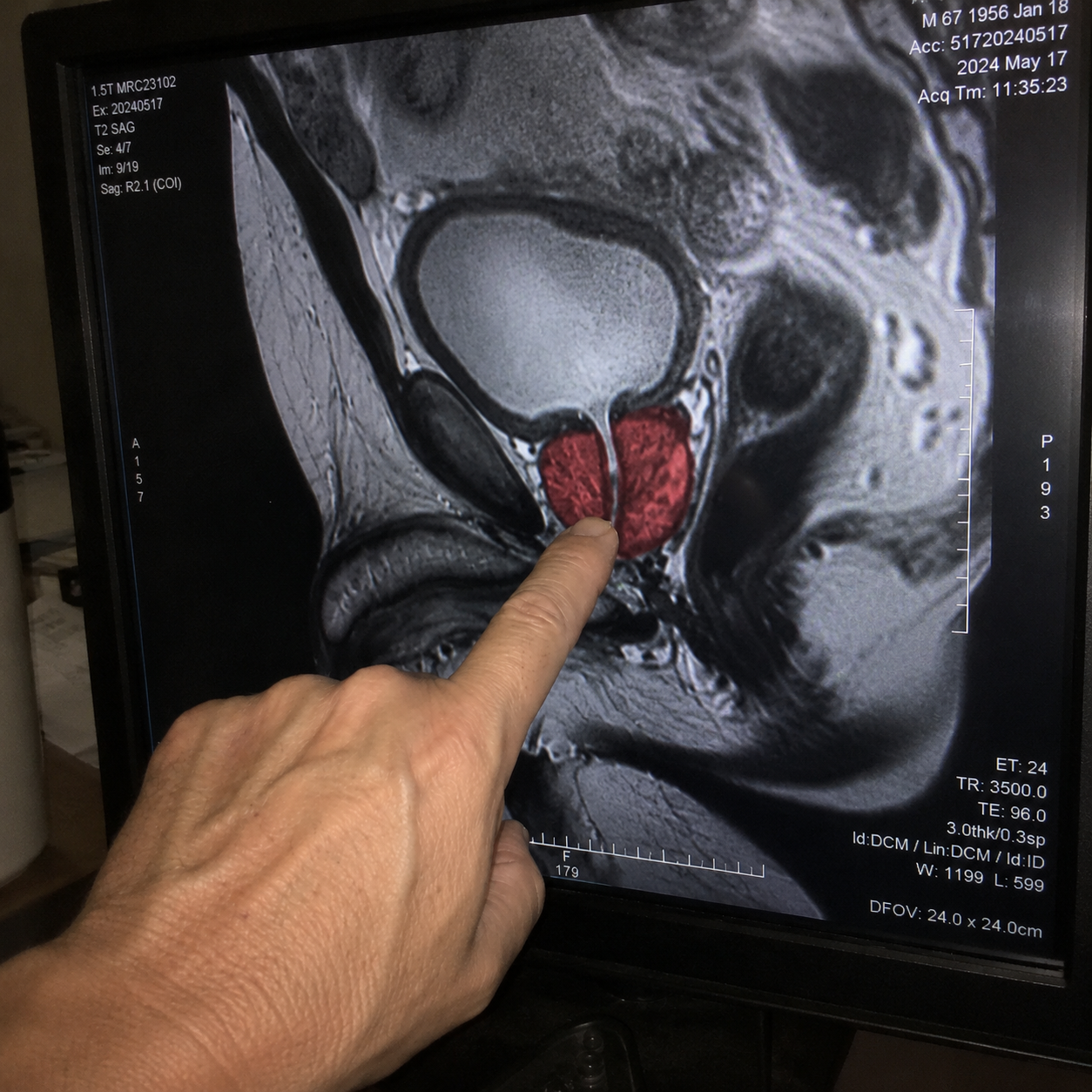
I've read too many prostate biopsies not to share this. If you're taking Flowmax or finasteride, you need to understand something that your urologist isn't seeing. I've reviewed over 4,800 prostate biopsies and bladder scans in 17 years as a urologist. And when a man walks into his urologists office complaining about three trips to the bathroom every night, I already know what his bladder is going to look like in 6 to 8 years before whether his PSA is high or not. Advanced DHT hyperplasia. The same DHT that’s thinning their hair is causing more and more permanent damage to the bladder. Damage that big pharma has quietly been hiding with Flomax and Finasteride. I'm Dr. William Gerin. I'm a urologist specializing in BPH solutions and the long-term consequences of unaddressed prostate enlargement. And when my own nighttime trips started becoming three, four, five a night at 58, I already knew something other urologists would never have told me. My constant bathroom trips weren't “inflammation” or “getting older”. It was my body's screaming warning sign of an overload of DHT build up happening in my prostate. I've been reading prostate imaging for 17 years. I've seen thousands of men planning their life around the nearest bathroom. Thousands who got prescribed Flomax and finasteride and thought their problem was solved. But I've seen the prostate scans that urologists never did years later. They write the Flomax script. They send you home. They don't see you 6 to 8 years later when you're in my surgical suite getting a TURP surgery because your bladder can't empty itself anymore. But I do. Because I see what happens to the men who masked their nighttime bathroom trip warnings with a pill. The 64-year-old retired contractor. Took Flomax for 5 years. Slept fine - pill worked exactly as promised. Came in with acute urinary retention on a Tuesday night. Excruciating pain to go but couldn’t piss a single drop. Needed an emergency catheter. He still self-catheterizes twice a week because the bladder muscle never fully recovered. The 67-year-old. "Get me Flomax, Help me sleep." Then it stopped working. They added Finasteride, recommending a combination therapy. Came to me with a severely oversized prostate. Eighteen months later he had a TURP. Bladder muscles were permanently damaged and had erectile dysfunction effects for life. I see them in follow-up. They don't usually complain. They're grateful I "fixed" them. But I know what they lost. They had years to address the actual cause. Years where the prostate could still be stopped from growing. Years where the bladder muscle was still healthy. Their nighttime trips were screaming the warning the whole time. The Flomax and finasteride just turned down the volume. It wasn’t until I myself went through all this that I found out what I’m about to tell you. What I wish I would have known 6 years ago. Three trips a night. Then four. Then the dribble at the end that took thirty seconds longer every month. My wife woke up every time I got out of bed. By month six she'd started sleeping in the guest room two nights a week just to function at work the next day. Traveling anywhere came with a new anxiety of “would there be a bathroom nearby?” I knew exactly what other urologists would say to me. "Standard protocol. Start with Flomax 0.4mg. Take it before dinner. Should work fine." I knew it would work, at least at first. That's not the point. I didn’t have just a nighttime bathroom trip problem. It was DHT flooding my prostate causing it to get bigger and bigger. All while my bladder got weaker and weaker. While the tube urine passed through got smaller and smaller. Here's what urologists don't tell you because they don't see urological imaging. DHT is basically a more aggressive form of testosterone. Your body creates it to make up for the loss of testosterone as you age. But all that DHT over time accumulates in your prostate causing tissue overgrowth. That tissue keeps growing. The prostate keeps swelling. And eventually it presses on your bladder and urethra (where urine comes out) like a fist around a garden hose. But over the years, your bladder has to push harder and harder to squeeze urine through that closed off tube. And there's a tipping point. After enough years of overwork, the bladder muscle starts to break down. It loses elasticity. It stops being able to fully contract. It stops being able to fully empty. Until one day? It can’t push any urine through at all. And here's the part doctors don’t connect: Flomax doesn't shrink this prostate growth. It just relaxes the muscle around your urethra so urine can slip through the squeeze a little easier. It’s like numbing your hand while the hot stove it’s touching continues to get hotter and hotter, burning you more and more. The prostate keeps growing. The bladder keeps pushing harder. The damage keeps accumulating. Men who take Flomax for 3+ years have measurably greater prostate volume at follow-up than men who address the underlying growth driver early on. The nighttime trips were the screaming warning. The prescription meds just turned down the volume. By the time the pills stop working (and they do stop working) the damage to your bladder is already done. My next step was clear. Not a prescription. Not yet. But I knew where this was heading without intervention. I tried what most men try. Lifestyle changes. Stopping liquids after 7 PM. Cutting back to one cup of coffee before noon. Cutting alcohol with dinner. Didn’t make much of a difference. I then tried a Saw palmetto and pumpkin seed supplement. Great reviews. Promising benefits. But 3 months in and I couldn’t feel a difference. I tried about 6 of them. Prostagenix, Uromen, Super Beta Prostate, Snap Prostate Health, the list goes on. Still waking up to go after every single one. But it killed me to think. How do we have autonomous robots, cancer solutions, and rockets going to space… But we can’t figure out a prostate solution that targeted the root cause with no side effects? I kept thinking about something I'd read in 2019 that hadn't fit into my surgical worldview. There was a published clinical trial showing Japanese men had 73% less prostate problems than American men. For years scientists couldn’t figure out why. And neither could I. What were they doing or consuming that us Americans weren’t? March 14th. 10:38 PM. I was sitting at the kitchen table reviewing journals after getting up for the third time that night. Couldn't go back to sleep. I was scrolling through a PubMed Journal of Urology on Equol - a polyphenolic compound that derived from soy that men make in their bodies. Only 23% of American men can't make Equol on their own. The next part I read stopped me dead in my tracks In Japan, where fermented soy is in the diet from childhood, the equol-producer rate is 60-70%. It's one of the cleanest natural experiments in urology, and it's been hiding in plain sight in epidemiology data for thirty years. The Japanese aren't doing anything magical. Their guts produce the molecule that our bodies need to trap DHT in the prostate. The rest of us don't. I leaned in closer and closer as I started to realize what this meant. Equol binds directly to DHT (the molecule actually driving prostate growth) and locks it up before it can attach to the receptor in the prostate. It doesn't stop your body from making DHT. It doesn't crash testosterone. It just neutralizes the DHT that's already inside the prostate, telling it to grow. But here's what stopped me cold. “Clinical trials with 40 men with severe BPH taking equol over 12 weeks supported 73% less bathroom trips” No reported sexual side effects. I sat at the kitchen table at 10:38 PM staring at the mechanism diagram. Flomax relaxes bladder muscles for 18-24 hours. Then it wears off. All while DHT continues to flood your prostate, growing it bigger and bigger. Finasteride shuts down the enzyme that converts testosterone to DHT system-wide. It can work, but it kills your libido, your morning erections, your mental clarity. It's a hammer. Equol activates a different lever entirely. It traps the DHT ALREADY in your prostate. It doesn’t stop it from being produced like finasteride. The growth signal stops being sent. The gland stops being told to enlarge. The pressure on your urethra eases. The bladder gets to recover. All while sex drive, testosterone levels, blood pressure, everything, stays the same. I've been a urologist for 17 years. I've studied BPH my entire career. And I'd never seriously considered Equol for my own patients. Because urologists are trained to think in prescriptions that 70% of my patients decline. And the supplement industry has so thoroughly poisoned the well with saw palmetto and "twelve-ingredient matrix" formulas that any natural compound gets reflexively dismissed. The next morning I started looking for a clinical-grade Equol supplement where all these studies had stemmed from. There was exactly one in the US that had been used in the published trials from these studies and was third-party tested: Stream by Stelo Health. I was skeptical. But what the study showed about ACTUALLY targeting DHT made more sense than anything I’d read in years. I ordered it that afternoon. I started on a Wednesday. Week 1: No change. Week 2: I woke up once instead of three times on a Monday. Then twice on Tuesday. Then once again on Friday. I thought it was a fluke. So did my wife. Week 4: Down to one nighttime trip on average. I'd forgotten what eight hours of sleep felt like. On a Saturday morning standing over the toilet I noticed my stream actually had pressure behind it for the first time in three years. I almost said something out loud. Week 8: At this point I felt like I had my life back. I re-ran my own BPH workup. Prostate volume: 49 grams (down from 54). PSA: 2.1 (down from 7.2). IPSS score: 8 (down from 19) My prostate had measurably decreased in volume in eight weeks. My bladder was actually emptying. My sleep had returned. I walked into my partner's office on a Monday and put both reports in front of him. He read them. Looked at me. Read them again. "William, what did you do? Prostate volume doesn't drop like this with a supplement." I explained the Equol mechanism. The DHT binding. The maintained testosterone levels. He was quiet for a long moment. "You realize how huge this is for the industry right?" I'm not telling you this because I'm against Flomax. Flomax has its place. So does surgery, when it's necessary. But I've spent 17 years watching men progress to the surgical stage when they didn't have to. Trying supplement after supplement that failed them. Men who got to me at 68, 71, 73 - and the gland is too big now. The bladder is too damaged. And the conservative options are gone. Your nighttime bathroom trips aren’t failing you. They’re warning you. Your prostate is growing right now. While you're reading this. Your bladder muscles are being damaged. While you're reading this. And you have two choices. You can mask the warning with a pill that lets the gland keep enlarging underneath. Or you can address the molecule that's actually driving the growth. I think about what I almost did. Not just accepting the nighttime bathroom trips. That’s not the point. I almost masked the inevitable prostate TURP surgery and severe bladder damage with a prescription that doesn't address the cause. I almost silenced my body's early warning system because I couldn’t live planning my life around the nearest bathroom. I almost became the patient I see in my own surgical suite at 71, wishing someone had told me my nighttime trips meant something bigger than a sleep problem. Because once your bladder muscle decompensates, you don't get it back. Once your prostate grows past 80 grams, you're looking at TURP or HoLEP. Once you self-catheterize for the first time, your life changes forever. You don't get a second early warning. Nighttime trips are the first warning. The only warning you can still act on. I'm sharing this because if you're waking up two, three, four times a night, you deserve to know what I know. Not from a textbook. From thousands of prostate scans I read every single year. Your nighttime trips aren't the problem. They're the symptom. And every month you mask it with Flomax is another month of bladder muscle damage you can't turn back. Your symptoms are your low-fuel light. Flomax is turning off the dashboard. And it’s only a matter of time until the fuel hits empty and you end up in my office. And for the guys that do? They tell me the same thing "I wish someone had told me my nighttime trips meant something bigger." I'm telling you now. Your nighttime bathroom trips are connected to a ticking time bomb for when the tube urine passes through closes shut completely. The same DHT-driven process is causing both. Address the DHT, and you potentially save both your sleep and your bladder. Or ignore the warning signs, and risk surgery five years from now. Eight weeks. That's how long it took my PSA to reduce 6.1 points. Eight weeks of giving my body Equol, something that society's diet has stripped away from our bodies. I have drug reps pushing me to prescribe their medications every month. All with incentives. You want to know how much I get for writing this? Nothing. I tell you this cause I wish someone else 6 years ago would have done the same. Don’t ignore the warning signs. Use them. Eight weeks. That’s all it takes to stop the damage. To get your life back. — Dr. William Gerin, MD Urologist, 17 years Board-Certified in Urology, AUA Fellow P.S. The clinical-grade Equol supplement I used is called Stream by Stelo Health. Single hero ingredient, third-party tested, formulated at the dose used in the published Open Journal of Urology trial. No proprietary blend, no twelve-ingredient matrix, no celebrity endorsement. If you're already on Flomax or every supplement you’ve tried failed you, consider this: Get a baseline IPSS or PSA score from your doctor. Try Equol for 8-12 weeks. Re-test. Let your body show you what happens when you address the cause instead of muffling the alarm. You can always go back to Flomax if it doesn't work. But you can't undo bladder muscle damage if your early warning system tried to save you and you silenced it with a pill.
Where the ad sends people
Stelohealth.com
Why Flomax Is The Worst Mistake I See Men Make
Stream has Equol, a clinically studied natural ingredient to help support your prostate and bladder
Learn more: stelohealth.com(opens in a new tab)