Dr. William Gerin
 Facebook ad: “Why I'll Never Prescribe Flomax Again”
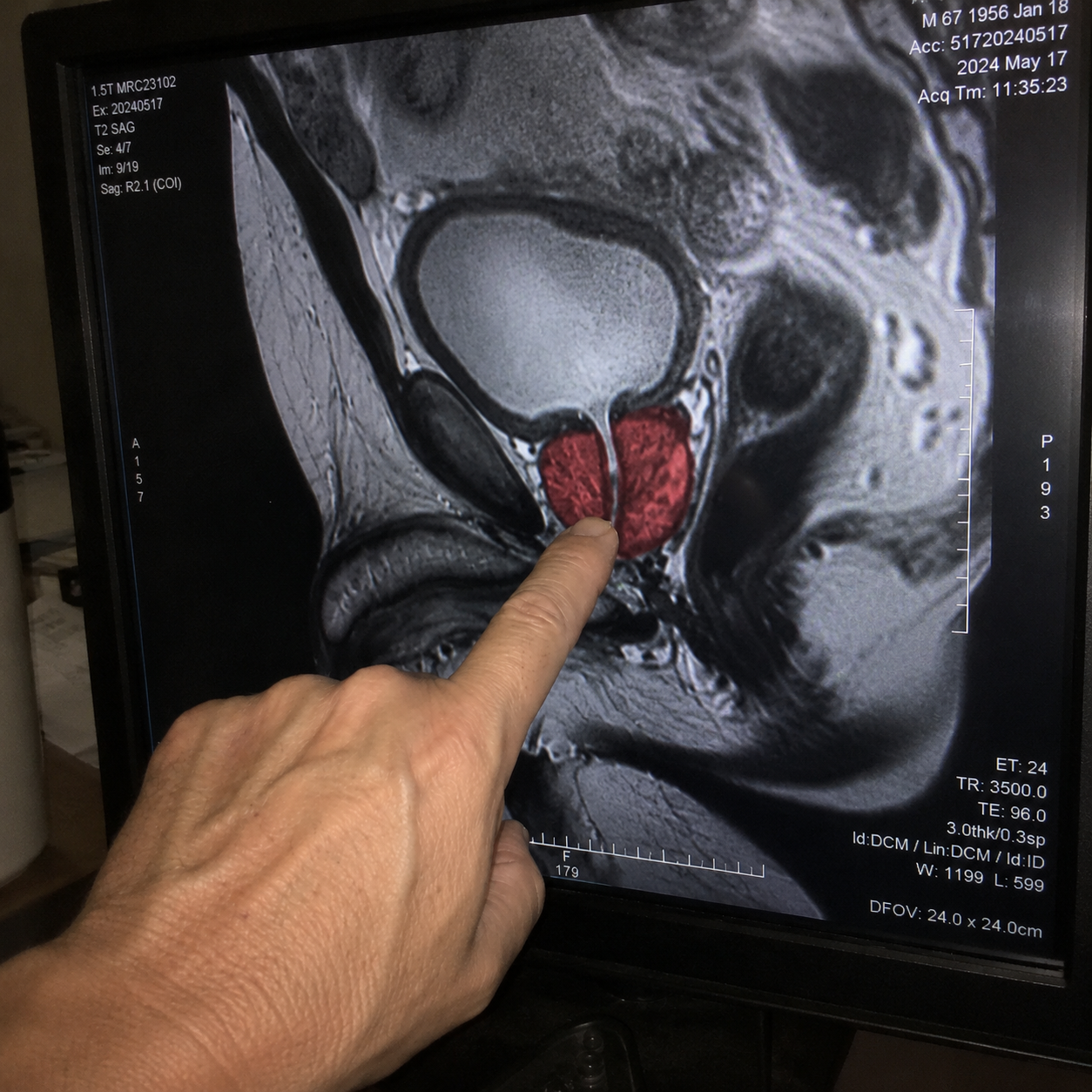
Running for 34 days since October 20, 2026. Crush last saw it on November 23, 2026.
Run by Dr. William Gerin on Facebook. Crush is not the advertiser and does not verify its claims. See this ad in Meta's Ad Library(opens in a new tab)
Make your own version of this ad
Crush makes it, launches it in your own Meta ad account, scales the winners and pauses the losers.
About this ad
- Meta Ad Library ID
- 2327811291366739
- Platforms
- Facebook, Instagram, Audience Network, WhatsApp and Threads
- Relaunches
- 0
Ad text
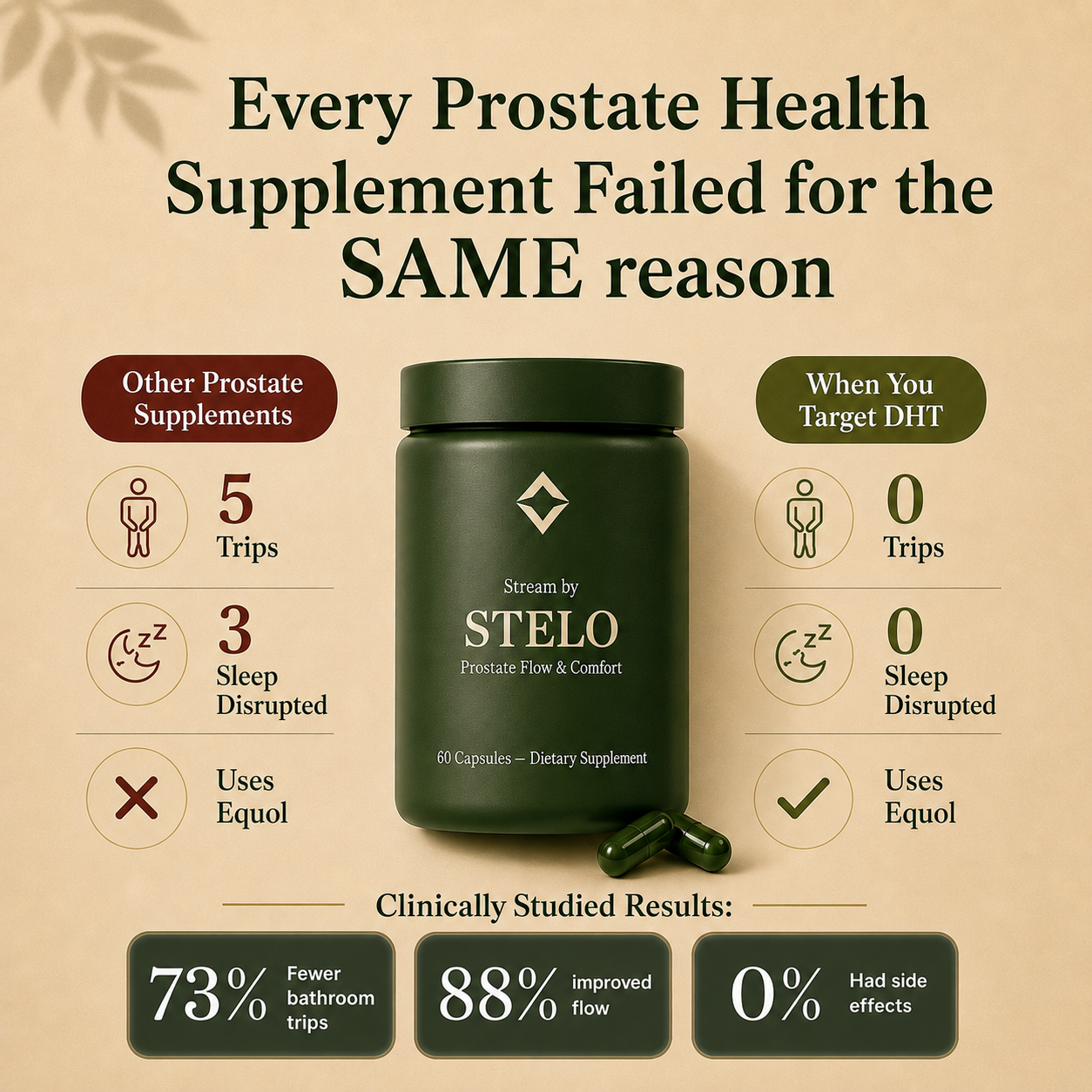
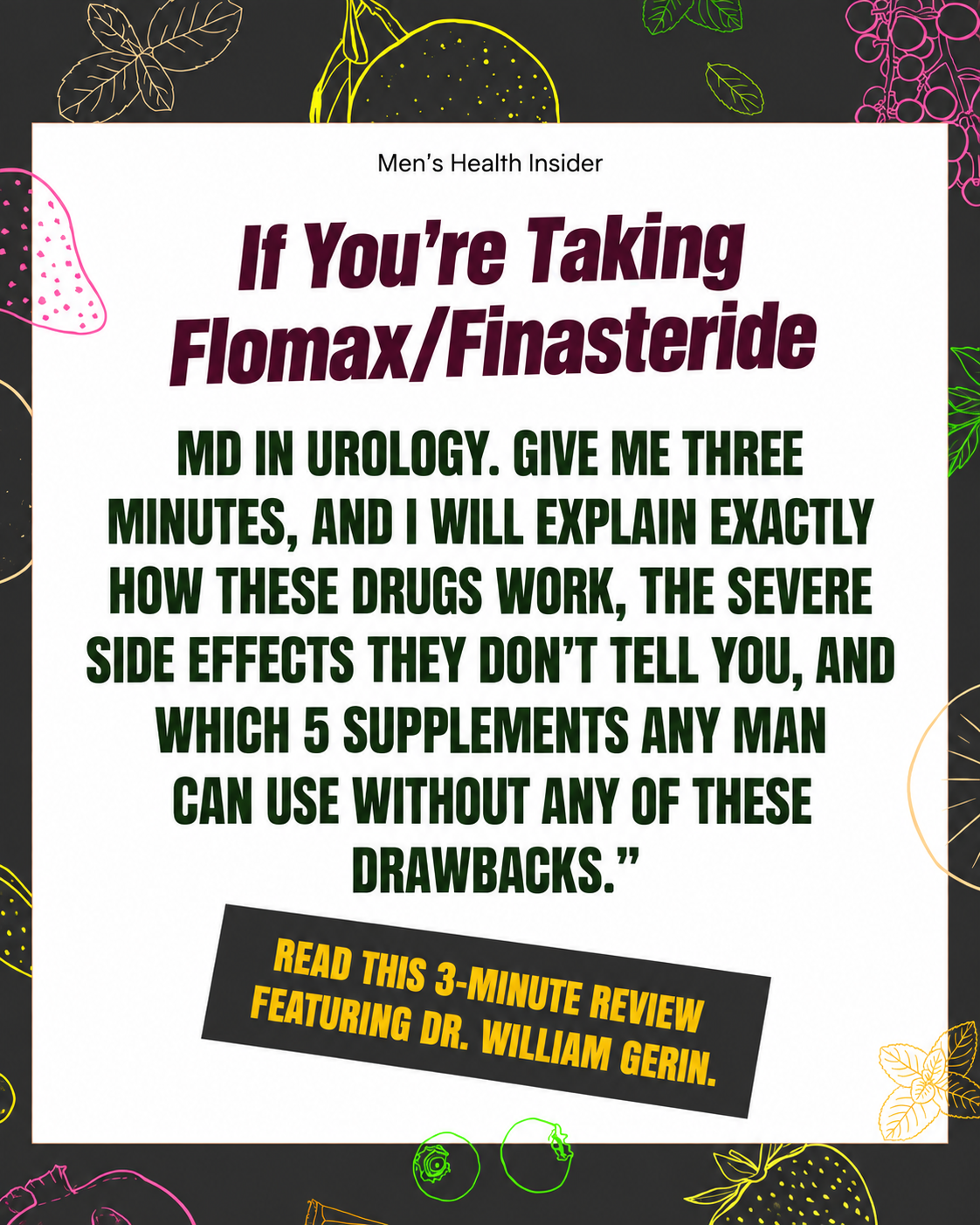
I've read too many prostate scans to stay quiet about this. If you're on Flomax right now, I need to tell you something your urologist isn't saying. I've performed 3,000+ prostate procedures in 17 years as a urologist. And when a man walks into my office tinkering with his dose, timing it around sex, skipping days just to feel human again, I already know what comes next. The dry org*sm, getting up off the couch and feeling dizzy, the brain fog. Sure, those side effects are frustrating. But few people see what I see next. The catheter going in at 3am. A bag strapped to his leg. Then my surgery room. I don’t say this to spread unnecessary fear. But I need you to understand that there is another reality that is so catastrophic if you fall into it, it’s hard to even possibly fathom. These post surgery patients thank me for what I did to help. But most of them taking Flomax don’t know how easily it could’ve been prevented. I'm Dr. William Gerin. Board-certified urologist. 17 years in practice. What I see every day? Men in their 60-70s being sent to surgery who should never have gotten there. Men who switched nighttime bathroom trips for Flomax, suffering dry org*sms, all before any surgery ever happened. And I was part of the system sending them. I've been prescribing Flomax for 17 years. I've seen thousands of men start it. Thousands who felt some initial relief. Better stream, less trips during the night, and thought their prostate was being treated. And I've seen what happens 3, 4, 5 years later when they come back. Their BPH and ED were giving them a warning the entire time. Flomax just turned down the volume while the real problem kept growing underneath. When my own prostate symptoms started at 57, I knew something patients don't. Waking up three, four times a night. That stop-start stream. The constant feeling of never fully emptying. Before Flomax I myself even fell victim to a few supplements. Saw palmetto, beta-sitosterol, pumpkin. Good reviews. Celebrity endorsement. But 3 months in and I was still up at night standing over the toilet waiting for my stream to start. My colleague looked at my symptoms and said what urologists say to every patient. "Standard protocol. Start with Tamsulosin 0.4mg. Should help with the flow." I knew it would help the urinary symptoms. That wasn't the point. I'm a urologist. I started researching what was actually happening inside my prostate and bladder. Because I know what BPH actually is. And I knew Flomax wasn't going to fix it. I spent months going through the research. Journal after journal. Study after study. What I found made me furious that I'd been prescribing Tamsulosin for two decades without addressing any of it. Here's what urologists don't tell you, because we were never trained to. Your prostate is not enlarging randomly. It is responding to a hormone called DHT. A more powerful version of testosterone. And your body makes more of it as you get older to make up for the declining levels of testosterone. But problem is, all that DHT pools up in your prostate causing hyperplasia (unhealthy cell growth). The prostate then grows bigger and bigger over the years squeezing on the bladder and urethra where urine passes through. That’s everything you feel. The stop-and-start stream. The standing over the toilet waiting for something to happen. The feeling of never fully emptying, no matter how long you wait. Getting up at 3am, then 4am, then again at 5. Shaking and dancing and still finding drops in your shorts. One hormone enlarging your prostate. That’s the main culprit. Now here is what I never told patients, again, because I was never trained to. Flomax does not touch DHT. Flomax relaxes the muscle around the tube for 10 to 12 hours so urine passes more easily. All while DHT is still pooling in your prostate and telling it to grow. Finasteride on the other hand does go after DHT and that’s why it works. But it does so by shutting down your body's ability to make DHT entirely. Which is exactly why men on finasteride describe their entire sex life and desire being erased, left with a dead sausage. Because DHT plays a crucial role. Your whole body needs it for libido, muscle, drive, er*ctions. And every natural 16 ingredient prostate blend with loud marketing failed for the same reason. None of them pull DHT off the prostate. Look at the supplement facts of every bottle that failed. They all have the SAME ingredients that marketers have recycled for 40 years. But for the last 17 YEARS as a urologist I’d had an OKAY knowledge of the cause of prostate enlargement. But it still nagged at me that us men were forced between the options of: Keep destroying our sleep with constant bathroom trips. Or lose our manhood. But if DHT was the trigger, and Finasteride targeted the root cause but cost you everything else that made you a man, there had to be something in between. Something that targeted DHT without tanking testosterone. So that night I sat down at my kitchen table with a yellow legal pad and started reading the actual research. Not Reddit. Not reviews. WebMD, actual studies. One in particular stopped me cold: Japanese men over 60 have 73% fewer prostate problems than American men of the same age. Not 10% fewer. Not 30% fewer. Seventy-three percent. I read that line three times to make sure I had it right. The genetics aren't different. But rather their diet. Not only are they not constantly fed processed foods like us Americans, but they have a rich soy-based diet like tofu, miso, natto that allows them to produce a compound called equol. It's not a drug. It's not synthetic. It's a compound men’s bodies are supposed to produce. About 67% of Japanese men produce equol naturally in their gut. But American men? Only 23% of us produce it. And unlike finasteride, equol doesn't block DHT from being made. Instead, it binds directly to the DHT ALREADY produced. DHT that's attaching to and enlarging the prostate. Picture a trap that locks onto the DHT and holds it there. Once equol is bound to a DHT molecule, that DHT can no longer attach to the receptors in your prostate. Your testosterone? Stays exactly where it should be. Your sex drive? Untouched. Because the DHT is still produced like it should be. These were explanations I'd found that were tied to clinically studied numbers. Numbers that were third-party verified. 73% fewer bathroom trips. 88% improved flow strength. 67% improved bladder emptying. I read the studies twice. Then I read them a third time. I couldn’t believe it. But the DHT, equol, Japanese diet, it all made more sense than anything I’d read before. I looked into who produced equol. All these studies I'd found were tied to a brand called Stream by Stelo Health that was built around equol. They were the only ones third-party tested showing ACTUAL studies. Was I skeptical? After everything I'd already wasted money on? Of course I was. But I looked at the 90-day money-back guarantee, the kind where you email in and they refund you the same day rather than go through calls, shipments, and 4 other hoops just to get your money back. So I gave it a shot. Week 1: Honestly, didn’t feel a difference. Week 2-3: My stream got a little stronger. I stood at the toilet and emptied my bladder in one steady flow instead of three broken trickles. Week 4-6: I slept from 11 PM to 4 AM without getting up. First time in over 7 years. I laid there confused for ten minutes before I realized what had happened. Month 2: I felt like I had my life back. Sleeping through the night, my wife and I drove several hours to see our grandkids. I didn't pull over once. After, she looked at me and said, "You used to have to stop halfway. What's different?" I hadn't told her I started Stream. She just noticed. My colleague looked at the numbers. "What are you doing? These do not move without intervention." I told him equol. About the studies on Japanese. I started recommending Stream to patients in my practice who were heading toward surgery. Men on Flomax whose intimacy had already gone quiet. Robert. 68. Retired. Waking up four times a night on maximum-dose tamsulosin. Told me his wife had stopped sleeping in the same room because he kept waking her. Week three on Stream, down to once a night. By week six, his wife was back in the room. He called me on a Saturday morning. "You are not going to believe this. I slept until 6am." James. 71. Six years on Flomax. Retrograde ejaculation had quietly ended his intimate life two years in and he never connected it to the drug. Weak erections. Couldn’t finish even when he managed to get there. We worked together to taper off tamsulosin slowly while he started Stream. Eight weeks later. Getting up once a night. Sometimes not at all. Morning erections returning. Normal ejaculation for the first time in years. He told me on the phone: "I got that part of my life back. That is not nothing when you are 71." I think about the men I scheduled for surgery. Not because surgery was inevitable. Because the DHT was never addressed. Because Flomax turned down the volume on the symptoms. The prostate kept growing. The tube urine passed through kept narrowing. And by the time they came back to my office, the only conversation left was surgical. Here is what they lost on the way to that table. Their sex lives went first. The retrograde ejaculation starts and men do not always connect it to the pill. Then the erections get less reliable. Then intimacy becomes something that used to happen. Then the catheter. Then my operating room. Then the statistics. A 31% chance of needing a second surgery within 10 years. 45 to 70% with permanent erectile dysfunction after TURP. 52% who say they regret it. Your symptoms right now, the 3am trips, the weak stream, the feeling of never emptying, the erections that are starting to need more effort. Those are the warning. Not the end of the road. The warning. If you’re still urinating, even if it is weak. If you’re still getting erections, even if they are not what they were. That means the tissue is not gone. DHT is still the one gripping the gland. And equol is still the one thing that lifts it off. I tell you this not because I get paid to. But because men shouldn’t have to choose between sleeping through the night and their manhood. And I spent 17 years of my life making them. Like I said, if you don’t feel a difference, they have a 90-day money-back guarantee. Not the kind you have to call in, make a shipping label, and jump through hoops. The kind you email in and get your money back the same day. I have never seen a pharmaceutical company offer that. That is how confident I am in what equol actually does. But don't take my word for it. I attached a link to an article showing the clinical study that started all of this. Read it yourself. Dr. William Gerin, MD Board-Certified Urologist, 17 Years in Practice P.S. Give it 60 days. You have nothing to lose except a bottle and eight weeks. The upside is lifting the thing off your prostate that has been driving this since the beginning, without the sexual cost of finasteride, without the valve-and-mask of Flomax, and without a surgery table. P.P.S. You are not at the point of no return yet. You are still waking up, not getting catheterized. You still have the warning. Address the DHT now, before the valve stops working and the only conversation left is which procedure to book. Here's the article if you want to do your due diligence. 👉 https://theprostatejournal.com/prostate-health-guide-flo/
Where the ad sends people
stelohealth.com
Why I'll Never Prescribe Flomax Again
Stream contains Equol, a clinically studied natural ingredient shown to support prostate and bladder health
Learn more: theprostatejournal.com(opens in a new tab)