Claire Mitchell
 Facebook ad: “Read This Before Your Next Vet Bill”
Ran for 20 days, from October 28 to November 17, 2026, the last day Crush saw it.
Run by Claire Mitchell on Facebook. Crush is not the advertiser and does not verify its claims. See this ad in Meta's Ad Library(opens in a new tab)
Make your own version of this ad
Crush makes it, launches it in your own Meta ad account, scales the winners and pauses the losers.
About this ad
- Meta Ad Library ID
- 1105929778887447
- Platforms
- Facebook, Instagram, Audience Network, Messenger and Threads
- Relaunches
- 0
- Niche
- Pets
Ad text
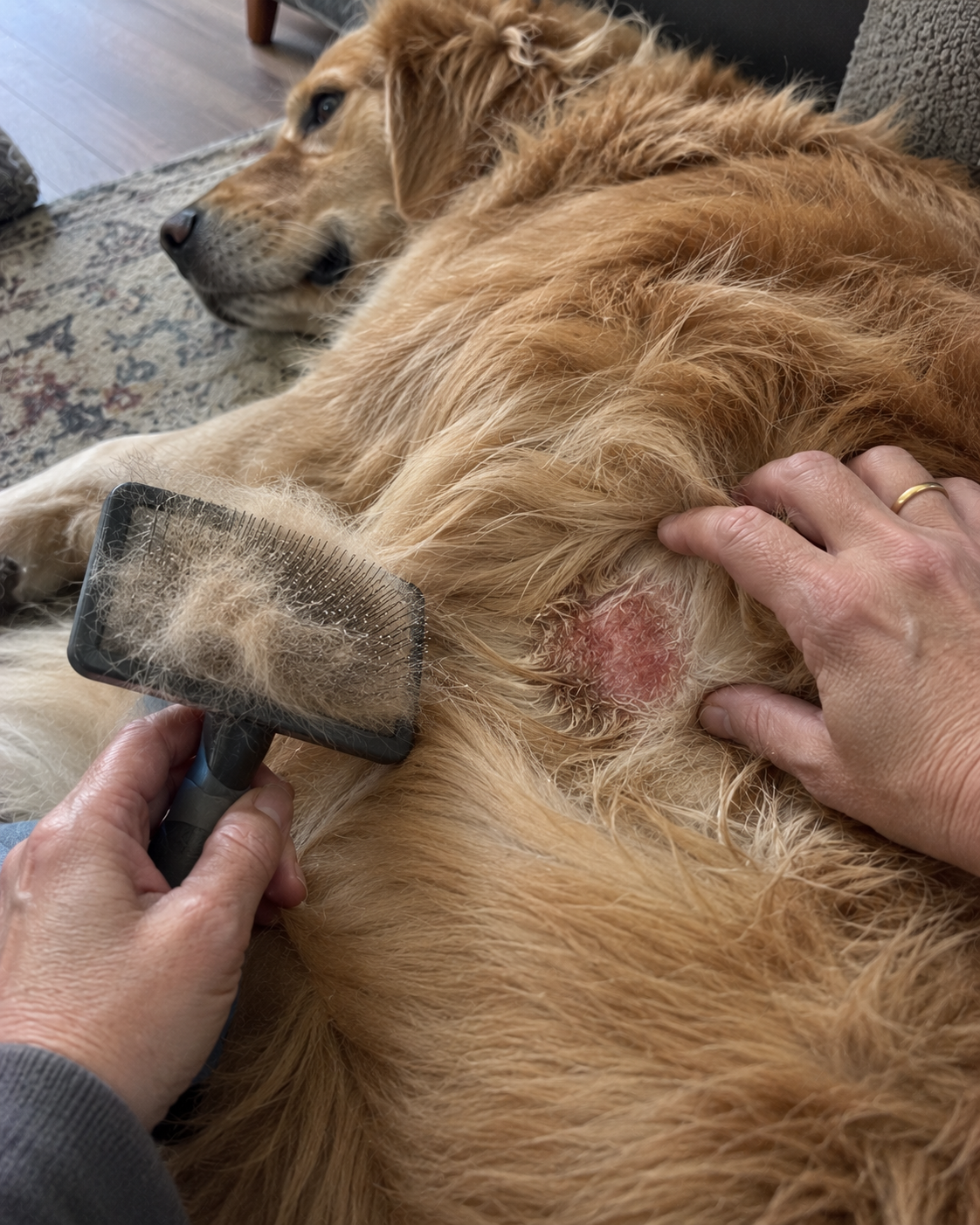
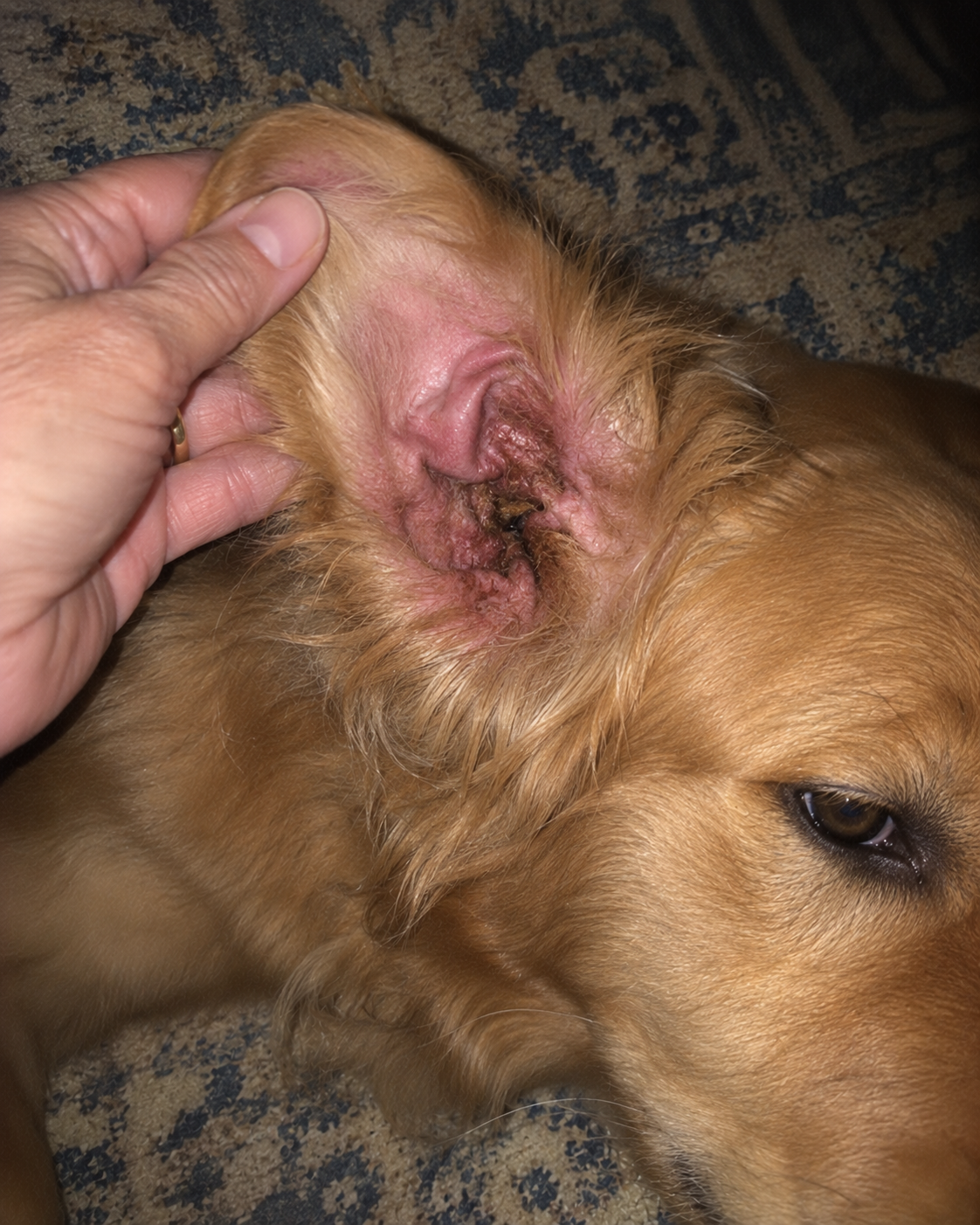
If dogs descend from wolves, and wolves don’t have allergies, WHY DOES MY DOG HAVE THEM?? The same grass. The same pollen. The same dirt to sleep on. And they don’t chew their paws raw. No hot spots. No ears that flare up every six weeks. Your dog has all of that. And someone has probably told you it’s normal for some dogs. That some breeds are just “allergy dogs” and that’s that. That it’s in the genes, and the most you can do is keep it under control. BULLSHIT. IT’S ALL A BUNCH OF LIES. And I’m sorry for the language, but I’m completely sick of them being treated like tools to squeeze our damn money out of us. So please, even if it’s a little long, finish reading this, because all I want is to save your dog. A shelter vet once explained to me why wild dogs don’t suffer like this and our dogs do. Thank God her answer wasn’t Apoquel. Not a stronger dose, not steroids, not another allergy test, not a new protein in the bowl. And she explained why I lost my dog at 9 years old for not knowing something that would have solved the problem at the root for the price of a coffee a week. I’m Carol. I’m sixty-two, retired, and I live just outside Raleigh with my husband Gene and our Golden Retriever, Maggie. Three years ago, there were two dogs in this house. Chop and Maggie. Today there’s only one... And I came close to losing Maggie the same way I lost my beloved Chop. I’m going to tell you what happened. I hope you read this in time. If the pills aren’t stopping your dog’s itching anymore, this is for you. It started with Chop. A Golden. The sweetest soul I’ve ever shared a home with. My son. He’d lean his whole body against your shins and just stay there, so you’d hug him. He was a big goofball, the guy thought my purse was his girlfriend… He was 2 when he started scratching. First he licked his paws. Then, rust-colored stains on the front ones. Then he’d shake his head, and his ears gave off that sour corn-chip smell. In winter it calmed down, and I thought it was seasonal. In spring it came back, worse than before. And from then on it never calmed down again. So I took him to the vet because I wanted to help him. $312 for the first visit. A skin scraping and an ear swab. “Environmental allergies. Very common in Goldens. We can keep it under control.” “Until when?” I asked. “Most likely for life.” Think about that for a second. We started with Apoquel. 16 mg, half a pill in the morning and half at night. The first bottle cost $94.86. Every morning I hid the pill in a little square of cheddar cheese so he’d swallow it. He thought it was a treat. Then I’d go to the sink and scrub my hands. It worked. Like magic. The scratching almost disappeared. He slept through the night. And so did I. Finally. For about three months. Then, little by little, it came back. The vet said we had to raise the dose. Half a pill became a whole one, morning and night. The price of the bottle jumped from $94.86 to $158. Six weeks later we were back at square one. So we added Cytopoint. $200 a shot, every six weeks. The itching would calm down and come back. Calm down and come back. When he had a bad flare-up, steroids. Then a full allergy panel, skin test and blood work: $450. The vet called me with the results: “It could be dust mites, grass, mold, something in his food. We can’t pin it down.” So, immunotherapy. One shot a month, $150 a month, for a year. “Give it time,” they told me. We gave it time. Over four years I watched Chop slowly fade. First he lost his energy. He stopped coming to greet us at the door. He stopped leaning on me. He stopped all those little habits that made him who he was. When I touched his back, he’d pull away. I thought he was stiff. Then, the skin. He got thick, dark patches. The medication was falling behind. No matter what we did, the scratching came back. One Tuesday I walked into the kitchen and there was blood on the rug. During the night he had chewed a front paw open, the poor thing had been like that for hours. In the dark. While we slept upstairs. I sank to the floor next to him and cried. From that morning on I knew where this was going. I knew my poor boy wasn’t going to last much longer… Chop was 9 when we lost him. The vet said his body had simply worn out. The same bastard who said we could control his allergies. He said his skin was too damaged to heal. The infections kept coming back. Four years of Apoquel. Over $15,000 between visits, pills, shots, steroids, tests, immunotherapy, prescription food and treatments. And at the end of it all, he was still scratching. Nothing had worked. Then, at 2 years old, Maggie started scratching. The same breed. The same age Chop had been. I froze. I wasn’t going to give Maggie Apoquel. Not after seeing it fixed nothing for Chop. So first I tried everything else. Raw food. A hypoallergenic kibble. Salmon. Then kangaroo. A new bed. A calming collar. Antifungal spray all over the house. Collagen chews. Then a liquid collagen from Amazon with thousands of reviews. Six months of that. Hundreds of dollars. Nothing worked. She scratched more. She got hot spots on her side. Every few weeks her ears smelled sour again, and at night I’d hear her shaking her head in the hallway. At the next visit, Apoquel came up again. “Carol, this inflammation has to come down. It’s going in the wrong direction.” Afterward I sat in the car, in the parking lot, crying. Because I had heard almost the exact same words with Chop, 4 years before it ended with me holding him on that table while the vet let him go. I’ll never forget it... Shortly after, I went back to the shelter where we’d adopted Maggie, to drop off a bag of donations. While we waited at the entrance, Maggie started scratching. Furiously. That desperate full-body scratching where the back leg becomes a blur and the nails scrape so hard you can hear it from across the room. Someone in scrubs came over to us. “How long has she been like this?” “Almost a year. We’ve tried everything.” Her face changed. “Come with me.” It was Dr. Joan Whitaker, and she’d been running the medical side of the shelter for eleven years. I told her everything. Chop. The doses going up. The shots getting closer together. Losing him. Maggie starting down the same road. The kibbles, the collar, the spray. The collagen chews and the Amazon liquid that hadn’t changed anything. The vet bringing out the medication again. She listened without interrupting me once. When I finished, she leaned toward me. “I’m going to tell you something that’s going to change how you see all of this.” I nodded. She said it slowly: “Wolves don’t have allergies.” I stared at her. “Excuse me?” “Have you ever seen a wolf scratch itself bloody? A coyote covered in hot spots? A wild dog with ears that never heal?” Never. “Of course not. Because it’s not normal. It’s not something dogs are born to put up with. It means something underneath has stopped working.” “And when a dog has been itchy for this long, there’s never just one thing wrong.” “There are THREE. And each one feeds the others.” She grabbed a sheet of paper from her desk and started drawing. “Problem number one is the wall.” She drew a circle at the top. “Your dog’s skin is built on collagen. It’s the main protein that holds the skin together. It’s the framework everything else hangs from.” “In the wild, a dog eats the whole prey. The skin, the cartilage, the tendons, the joints. All of that is packed with collagen. When a wolf eats a rabbit, it’s eating the exact material its own skin is made of, at every meal. So that wall stays thick and strong its whole life.” “Your dog eats food from a bag. Even the expensive stuff. A bowl of kibble isn’t a whole rabbit. She gets a fraction of the collagen a wild dog eats, and what’s there has been through a lot of cooking.” “That’s why the salmon and the kangaroo didn’t change anything. A new protein still isn’t a whole rabbit. It simply doesn’t have the collagen she needs.” “So her wall gets thinner. Little gaps open up.” “And through those gaps come the pollen, the dust, the grass in your own yard. Things that should bounce off get inside, and her immune system finds them where they shouldn’t be and panics.” “That’s why Chop’s allergy test couldn’t pin anything down. It’s not one thing getting in. It’s the gaps, letting everything in.” “That panic sends a signal. And that signal is the itch.” “Blocking that signal is the only thing Apoquel is made for. It stops the message from getting through, and it does it beautifully.” “But it never goes near the wall.” “The gaps stay open. The allergens keep getting in. The immune system keeps panicking. The signal keeps firing, all day, all night.” “Apoquel just makes it so she doesn’t feel it.” “And a wall full of holes doesn’t fix itself while nobody’s looking. It gets worse. So the signal pushes harder month after month, and every month the same pill holds it back a little less.” I interrupted her. “But I’ve given her collagen. Chews for months, and then a liquid from Amazon. It didn’t change anything.” “I believe you. And you weren’t wrong to try collagen.” She tapped the circle. “But a chew is cooked and heat-pressed into shape, and heat isn’t good for collagen. And even a decent liquid that only has collagen does one job: the wall. Let’s say it does it perfectly. Your dog still has two other problems, and that bottle doesn’t reach either of them.” She drew a second circle underneath. “Problem number two is the water.” “Skin that’s been itchy for years loses its ability to hold water. It dries out.” “Think of chapped lips in winter. The drier they are, the more you lick them. The more you lick them, the drier they get.” “That’s what her skin is doing. Dry skin itches on its own, without any allergy involved. So she scratches, the scratching dries it out more, and the itch gets stronger. That’s the dandruff on her back. That’s the paw she licks until it’s red.” “At that point it’s not really an allergy anymore. It’s skin too dry to calm down. And not a single thing they gave you was aimed at that. Not the Apoquel. Not the shots. Not the steroids. Not the new proteins.” Then, a third circle. “Problem number three is the fire.” “After years of itching, the skin stays inflamed. Hot. Red. Swollen.” “And hot, broken, inflamed skin is exactly the kind of place staph and yeast love to move into.” “Once they settle in, they cause their own itch. A separate problem. One Apoquel was never designed to treat.” “That’s where the hot spots come from. And the brown gunk in her ears. And that corn-chip smell coming off her paws.” Then she connected the three circles with arrows. “Now look at what happens between them.” “The gaps in the wall let in more allergens. So the immune system panics more.” “More panic means more inflammation. So the fire burns hotter.” “The fire drives her to scratch. And the scratching breaks the wall and dries out her skin even more.” “And it all starts over, a little worse each time.” She put the pen down. “Apoquel is a person leaning against a door, holding it shut, while the pressure on the other side keeps building.” I didn’t know what to say. “That’s why it gave you three months and then stopped working,” she said. “Every dollar went to one of the three. Nobody ever dealt with what was building up behind it.” I felt the floor sink beneath me. “So in four years, he never actually got better.” “No.” “And if we had treated all three with Chop?” She didn’t answer. She didn’t need to. Chop could still have been with us. “So what do I do with Maggie?” “To break the cycle, you have to work on three things at once.” She wrote them down: REBUILD THE WALL. Give her skin the collagen it’s made of, every day, the way a wild dog gets it from its food, so the gaps close and allergens stop getting in. HOLD IN THE WATER. Help the skin keep its moisture, so it stops drying out and itching on its own. COOL THE FIRE. Calm the inflammation, so the staph and yeast lose the hot, broken skin they live on. “If you skip even one,” she said, “you’re throwing away money and time your dog doesn’t have.” She took a small amber bottle from the shelf behind her. “Every dog that comes through this door takes this. It’s the only thing I’ve found that works on all three at once, and I’ve been using it for years. I’ve tried variations but none are the same.” Canbloom. Liquid collagen. One dropper on the food. I read that label four times. For the wall: 900 mg of collagen types I and III in every milliliter. The same two types her skin is made of, already broken into small pieces so her body can use them. And vitamin C, because the body can’t make collagen without it. For the water: hyaluronic acid. It holds water in the skin, so it stops drying out and cracking. For the fire: UC-II and MSM, to calm the inflammation that keeps the itch going and gives staph and yeast a place to live. No chicken. And since it’s liquid and tastes like bacon, it goes straight on her dinner. No pill. No cheese. No scrubbing my hands afterward. “How is it possible nobody ever told me this?” “You want my honest opinion? Managing it makes more money than fixing what’s underneath. Every flare-up is one more prescription, one more shot, one more infection to treat, one more appointment. A dropper on the food that gets a dog out of that cycle doesn’t bring in the same.” She put two bottles in my hands. “These are on us. Give them to Maggie. It tastes like bacon, so she’ll think it’s a treat.” That same night, Maggie started. The first two weeks, nothing. She was still scratching. Still getting the odd hot spot. I was terrified it would be yet another failure. Then, around the third week, I noticed something. She had stopped licking her paws. Not less intensely, she had stopped completely. Week four: not a single new hot spot. The ones she had were drying up. Week five: clean ears. I kept checking them every morning, braced for the brown gunk and that sour smell. Pink. Clean. And the next morning. And the next. I called Gene. “Come look at her ears.” He crouched down. “Are they… normal?” “They’re normal!” We were so happy. Week six: I realized the house had been quiet for days. No scratching. She slept straight through. Every night. No tags jingling at 3 a.m. No licking. Just her breathing. That was half a year ago. Maggie hasn’t scratched again. Since then, not a single Apoquel pill or Cytopoint shot has come into my house. She’s still on the same kibble she was eating when the scratching started. It was never the kibble itself. It was what the kibble was missing. Two droppers a day. Less than $50 a month. I think about Chop every day. And how much I wish I could have saved my boy. I think about four years watching him scratch and believing that’s just how he was. I think about more than $15,000 spent on a dog who wasn’t getting better, not for a single day. And I think about how close I came to taking Maggie’s prescription to the pharmacy. If I hadn’t gone to the shelter. If Dr. Whitaker hadn’t been working that morning. If Maggie hadn’t scratched in that entrance. Honestly, I don’t know if she’d still be with us. I was very lucky. The same luck you have right now for making it this far. And it’s the least I can do. So if the medication isn’t stopping your dog’s itching anymore, please, listen to me. The problem is never just one problem. Every medication they’ve given you goes after one of your dog’s three problems. That’s why it works at first. And that’s why it stops working. The other two keep growing underneath until they’re strong enough to break through anyway. And please, don’t make my mistake of thinking a collagen chew, or any liquid that only has collagen, covers all three. The format was never the problem. It’s that each one only does one job. I lost months with those things while Maggie kept scratching. Maybe you don’t have that time. Nothing lasts until all three are worked on at once. That’s why I use Canbloom. They offer a 30-day guarantee so you can try it yourself. If you don’t notice the difference, you don’t pay. Please stop spending money on things that don’t work and make your dog suffer. Trust me, trust the doctor, and trust Canbloom. It’s been my lucky charm this whole time. Right now you have 2 options. Down one path: Pick up the next prescription. Move up to the next dose. Shorten the shots from every six weeks to every four. Another round of steroids when there’s a flare-up. Antibiotics every time her ears get inflamed. Accept “under control” as the best she’ll ever be, and live the next four years as a copy of the last four. Down the other: Go after all three at once. Let the wall close. Let the skin hold its water. Let the fire go out. And get your dog back while they’re still young enough to enjoy it, without going broke along the way. Chop is gone, and nothing will bring him back to me. But if your dog is still scratching while you read this, you still have time. Please, don’t let what happened to me happen to you. I’m begging you, save your dog for less than the cost of a coffee a week. https://canbloomstore.com/products/canbloom-premium-liquid-collagen P.S. The reason wolves don’t have this: they’re not missing anything. Every day they eat the collagen their skin is made of. Your dog doesn’t. The wall thins, allergens get in, the immune system panics, the skin dries out, and the inflammation gives staph and yeast a home. Three problems that keep each other going, and every medication you’ve been given only goes after one. That’s why it works at first. And that’s why it stops working. P.P.S. Don’t spend another cent on something that only works on one of the three. It covers a third of the problem, stops working within weeks, and makes you blame yourself all over again. And don’t put it off. Every week those three keep feeding each other, her skin gets more damaged, it gets harder to turn around, and the bills grow. Chop waited four years for me to understand. It cost me more than $15,000, and it cost him. Maggie is on less than $50 a month and hasn’t scratched once in six months. Nota: el original dice «perdí a mi perro» al principio y «Chop» en todo el texto, y la frase «se trate a los como instrumentos» le falta una palabra; la he traducido como «them being treated» sin añadir nada. que ? Perdona, esa nota quedó confusa. Lo único que quería decir es esto: en el original, la frase «estoy completamente harta de que se trate a los como instrumentos» tiene una palabra que falta (probablemente «perros»). Como me pediste no corregir nada, la traduje como «them being treated like tools» sin añadir «dogs». Lo de «perdí a mi perro» y «Chop» no tenía sentido, ignóralo. Si quieres que en esa frase ponga «dogs» explícitamente, la cambio. AÑADE PERROS SI Cambiado. La frase queda así: “And I’m sorry for the language, but I’m completely sick of dogs being treated like tools to squeeze our damn money out of us.” El resto de la traducción sigue igual. PASAME EL COPY ENTERO If dogs descend from wolves, and wolves don’t have allergies, WHY DOES MY DOG HAVE THEM?? The same grass. The same pollen. The same dirt to sleep on. And they don’t chew their paws raw. No hot spots. No ears that flare up every six weeks. Your dog has all of that. And someone has probably told you it’s normal for some dogs. That some breeds are just “allergy dogs” and that’s that. That it’s in the genes, and the most you can do is keep it under control. BULLSHIT. IT’S ALL A BUNCH OF LIES. And I’m sorry for the language, but I’m completely sick of dogs being treated like tools to squeeze our damn money out of us. So please, even if it’s a little long, finish reading this, because all I want is to save your dog. A shelter vet once explained to me why wild dogs don’t suffer like this and our dogs do. Thank God her answer wasn’t Apoquel. Not a stronger dose, not steroids, not another allergy test, not a new protein in the bowl. And she explained why I lost my dog at 9 years old for not knowing something that would have solved the problem at the root for the price of a coffee a week. I’m Carol. I’m sixty-two, retired, and I live just outside Raleigh with my husband Gene and our Golden Retriever, Maggie. Three years ago, there were two dogs in this house. Chop and Maggie. Today there’s only one... And I came close to losing Maggie the same way I lost my beloved Chop. I’m going to tell you what happened. I hope you read this in time. If the pills aren’t stopping your dog’s itching anymore, this is for you. It started with Chop. A Golden. The sweetest soul I’ve ever shared a home with. My son. He’d lean his whole body against your shins and just stay there, so you’d hug him. He was a big goofball, the guy thought my purse was his girlfriend… He was 2 when he started scratching. First he licked his paws. Then, rust-colored stains on the front ones. Then he’d shake his head, and his ears gave off that sour corn-chip smell. In winter it calmed down, and I thought it was seasonal. In spring it came back, worse than before. And from then on it never calmed down again. So I took him to the vet because I wanted to help him. $312 for the first visit. A skin scraping and an ear swab. “Environmental allergies. Very common in Goldens. We can keep it under control.” “Until when?” I asked. “Most likely for life.” Think about that for a second. We started with Apoquel. 16 mg, half a pill in the morning and half at night. The first bottle cost $94.86. Every morning I hid the pill in a little square of cheddar cheese so he’d swallow it. He thought it was a treat. Then I’d go to the sink and scrub my hands. It worked. Like magic. The scratching almost disappeared. He slept through the night. And so did I. Finally. For about three months. Then, little by little, it came back. The vet said we had to raise the dose. Half a pill became a whole one, morning and night. The price of the bottle jumped from $94.86 to $158. Six weeks later we were back at square one. So we added Cytopoint. $200 a shot, every six weeks. The itching would calm down and come back. Calm down and come back. When he had a bad flare-up, steroids. Then a full allergy panel, skin test and blood work: $450. The vet called me with the results: “It could be dust mites, grass, mold, something in his food. We can’t pin it down.” So, immunotherapy. One shot a month, $150 a month, for a year. “Give it time,” they told me. We gave it time. Over four years I watched Chop slowly fade. First he lost his energy. He stopped coming to greet us at the door. He stopped leaning on me. He stopped all those little habits that made him who he was. When I touched his back, he’d pull away. I thought he was stiff. Then, the skin. He got thick, dark patches. The medication was falling behind. No matter what we did, the scratching came back. One Tuesday I walked into the kitchen and there was blood on the rug. During the night he had chewed a front paw open, the poor thing had been like that for hours. In the dark. While we slept upstairs. I sank to the floor next to him and cried. From that morning on I knew where this was going. I knew my poor boy wasn’t going to last much longer… Chop was 9 when we lost him. The vet said his body had simply worn out. The same bastard who said we could control his allergies. He said his skin was too damaged to heal. The infections kept coming back. Four years of Apoquel. Over $15,000 between visits, pills, shots, steroids, tests, immunotherapy, prescription food and treatments. And at the end of it all, he was still scratching. Nothing had worked. Then, at 2 years old, Maggie started scratching. The same breed. The same age Chop had been. I froze. I wasn’t going to give Maggie Apoquel. Not after seeing it fixed nothing for Chop. So first I tried everything else. Raw food. A hypoallergenic kibble. Salmon. Then kangaroo. A new bed. A calming collar. Antifungal spray all over the house. Collagen chews. Then a liquid collagen from Amazon with thousands of reviews. Six months of that. Hundreds of dollars. Nothing worked. She scratched more. She got hot spots on her side. Every few weeks her ears smelled sour again, and at night I’d hear her shaking her head in the hallway. At the next visit, Apoquel came up again. “Carol, this inflammation has to come down. It’s going in the wrong direction.” Afterward I sat in the car, in the parking lot, crying. Because I had heard almost the exact same words with Chop, 4 years before it ended with me holding him on that table while the vet let him go. I’ll never forget it... Shortly after, I went back to the shelter where we’d adopted Maggie, to drop off a bag of donations. While we waited at the entrance, Maggie started scratching. Furiously. That desperate full-body scratching where the back leg becomes a blur and the nails scrape so hard you can hear it from across the room. Someone in scrubs came over to us. “How long has she been like this?” “Almost a year. We’ve tried everything.” Her face changed. “Come with me.” It was Dr. Joan Whitaker, and she’d been running the medical side of the shelter for eleven years. I told her everything. Chop. The doses going up. The shots getting closer together. Losing him. Maggie starting down the same road. The kibbles, the collar, the spray. The collagen chews and the Amazon liquid that hadn’t changed anything. The vet bringing out the medication again. She listened without interrupting me once. When I finished, she leaned toward me. “I’m going to tell you something that’s going to change how you see all of this.” I nodded. She said it slowly: “Wolves don’t have allergies.” I stared at her. “Excuse me?” “Have you ever seen a wolf scratch itself bloody? A coyote covered in hot spots? A wild dog with ears that never heal?” Never. “Of course not. Because it’s not normal. It’s not something dogs are born to put up with. It means something underneath has stopped working.” “And when a dog has been itchy for this long, there’s never just one thing wrong.” “There are THREE. And each one feeds the others.” She grabbed a sheet of paper from her desk and started drawing. “Problem number one is the wall.” She drew a circle at the top. “Your dog’s skin is built on collagen. It’s the main protein that holds the skin together. It’s the framework everything else hangs from.” “In the wild, a dog eats the whole prey. The skin, the cartilage, the tendons, the joints. All of that is packed with collagen. When a wolf eats a rabbit, it’s eating the exact material its own skin is made of, at every meal. So that wall stays thick and strong its whole life.” “Your dog eats food from a bag. Even the expensive stuff. A bowl of kibble isn’t a whole rabbit. She gets a fraction of the collagen a wild dog eats, and what’s there has been through a lot of cooking.” “That’s why the salmon and the kangaroo didn’t change anything. A new protein still isn’t a whole rabbit. It simply doesn’t have the collagen she needs.” “So her wall gets thinner. Little gaps open up.” “And through those gaps come the pollen, the dust, the grass in your own yard. Things that should bounce off get inside, and her immune system finds them where they shouldn’t be and panics.” “That’s why Chop’s allergy test couldn’t pin anything down. It’s not one thing getting in. It’s the gaps, letting everything in.” “That panic sends a signal. And that signal is the itch.” “Blocking that signal is the only thing Apoquel is made for. It stops the message from getting through, and it does it beautifully.” “But it never goes near the wall.” “The gaps stay open. The allergens keep getting in. The immune system keeps panicking. The signal keeps firing, all day, all night.” “Apoquel just makes it so she doesn’t feel it.” “And a wall full of holes doesn’t fix itself while nobody’s looking. It gets worse. So the signal pushes harder month after month, and every month the same pill holds it back a little less.” I interrupted her. “But I’ve given her collagen. Chews for months, and then a liquid from Amazon. It didn’t change anything.” “I believe you. And you weren’t wrong to try collagen.” She tapped the circle. “But a chew is cooked and heat-pressed into shape, and heat isn’t good for collagen. And even a decent liquid that only has collagen does one job: the wall. Let’s say it does it perfectly. Your dog still has two other problems, and that bottle doesn’t reach either of them.” She drew a second circle underneath. “Problem number two is the water.” “Skin that’s been itchy for years loses its ability to hold water. It dries out.” “Think of chapped lips in winter. The drier they are, the more you lick them. The more you lick them, the drier they get.” “That’s what her skin is doing. Dry skin itches on its own, without any allergy involved. So she scratches, the scratching dries it out more, and the itch gets stronger. That’s the dandruff on her back. That’s the paw she licks until it’s red.” “At that point it’s not really an allergy anymore. It’s skin too dry to calm down. And not a single thing they gave you was aimed at that. Not the Apoquel. Not the shots. Not the steroids. Not the new proteins.” Then, a third circle. “Problem number three is the fire.” “After years of itching, the skin stays inflamed. Hot. Red. Swollen.” “And hot, broken, inflamed skin is exactly the kind of place staph and yeast love to move into.” “Once they settle in, they cause their own itch. A separate problem. One Apoquel was never designed to treat.” “That’s where the hot spots come from. And the brown gunk in her ears. And that corn-chip smell coming off her paws.” Then she connected the three circles with arrows. “Now look at what happens between them.” “The gaps in the wall let in more allergens. So the immune system panics more.” “More panic means more inflammation. So the fire burns hotter.” “The fire drives her to scratch. And the scratching breaks the wall and dries out her skin even more.” “And it all starts over, a little worse each time.” She put the pen down. “Apoquel is a person leaning against a door, holding it shut, while the pressure on the other side keeps building.” I didn’t know what to say. “That’s why it gave you three months and then stopped working,” she said. “Every dollar went to one of the three. Nobody ever dealt with what was building up behind it.” I felt the floor sink beneath me. “So in four years, he never actually got better.” “No.” “And if we had treated all three with Chop?” She didn’t answer. She didn’t need to. Chop could still have been with us. “So what do I do with Maggie?” “To break the cycle, you have to work on three things at once.” She wrote them down: REBUILD THE WALL. Give her skin the collagen it’s made of, every day, the way a wild dog gets it from its food, so the gaps close and allergens stop getting in. HOLD IN THE WATER. Help the skin keep its moisture, so it stops drying out and itching on its own. COOL THE FIRE. Calm the inflammation, so the staph and yeast lose the hot, broken skin they live on. “If you skip even one,” she said, “you’re throwing away money and time your dog doesn’t have.” She took a small amber bottle from the shelf behind her. “Every dog that comes through this door takes this. It’s the only thing I’ve found that works on all three at once, and I’ve been using it for years. I’ve tried variations but none are the same.” Canbloom. Liquid collagen. One dropper on the food. I read that label four times. For the wall: 900 mg of collagen types I and III in every milliliter. The same two types her skin is made of, already broken into small pieces so her body can use them. And vitamin C, because the body can’t make collagen without it. For the water: hyaluronic acid. It holds water in the skin, so it stops drying out and cracking. For the fire: UC-II and MSM, to calm the inflammation that keeps the itch going and gives staph and yeast a place to live. No chicken. And since it’s liquid and tastes like bacon, it goes straight on her dinner. No pill. No cheese. No scrubbing my hands afterward. “How is it possible nobody ever told me this?” “You want my honest opinion? Managing it makes more money than fixing what’s underneath. Every flare-up is one more prescription, one more shot, one more infection to treat, one more appointment. A dropper on the food that gets a dog out of that cycle doesn’t bring in the same.” She put two bottles in my hands. “These are on us. Give them to Maggie. It tastes like bacon, so she’ll think it’s a treat.” That same night, Maggie started. The first two weeks, nothing. She was still scratching. Still getting the odd hot spot. I was terrified it would be yet another failure. Then, around the third week, I noticed something. She had stopped licking her paws. Not less intensely, she had stopped completely. Week four: not a single new hot spot. The ones she had were drying up. Week five: clean ears. I kept checking them every morning, braced for the brown gunk and that sour smell. Pink. Clean. And the next morning. And the next. I called Gene. “Come look at her ears.” He crouched down. “Are they… normal?” “They’re normal!” We were so happy. Week six: I realized the house had been quiet for days. No scratching. She slept straight through. Every night. No tags jingling at 3 a.m. No licking. Just her breathing. That was half a year ago. Maggie hasn’t scratched again. Since then, not a single Apoquel pill or Cytopoint shot has come into my house. She’s still on the same kibble she was eating when the scratching started. It was never the kibble itself. It was what the kibble was missing. Two droppers a day. Less than $50 a month. I think about Chop every day. And how much I wish I could have saved my boy. I think about four years watching him scratch and believing that’s just how he was. I think about more than $15,000 spent on a dog who wasn’t getting better, not for a single day. And I think about how close I came to taking Maggie’s prescription to the pharmacy. If I hadn’t gone to the shelter. If Dr. Whitaker hadn’t been working that morning. If Maggie hadn’t scratched in that entrance. Honestly, I don’t know if she’d still be with us. I was very lucky. The same luck you have right now for making it this far. And it’s the least I can do. So if the medication isn’t stopping your dog’s itching anymore, please, listen to me. The problem is never just one problem. Every medication they’ve given you goes after one of your dog’s three problems. That’s why it works at first. And that’s why it stops working. The other two keep growing underneath until they’re strong enough to break through anyway. And please, don’t make my mistake of thinking a collagen chew, or any liquid that only has collagen, covers all three. The format was never the problem. It’s that each one only does one job. I lost months with those things while Maggie kept scratching. Maybe you don’t have that time. Nothing lasts until all three are worked on at once. That’s why I use Canbloom. They offer a 30-day guarantee so you can try it yourself. If you don’t notice the difference, you don’t pay. Please stop spending money on things that don’t work and make your dog suffer. Trust me, trust the doctor, and trust Canbloom. It’s been my lucky charm this whole time. Right now you have 2 options. Down one path: Pick up the next prescription. Move up to the next dose. Shorten the shots from every six weeks to every four. Another round of steroids when there’s a flare-up. Antibiotics every time her ears get inflamed. Accept “under control” as the best she’ll ever be, and live the next four years as a copy of the last four. Down the other: Go after all three at once. Let the wall close. Let the skin hold its water. Let the fire go out. And get your dog back while they’re still young enough to enjoy it, without going broke along the way. Chop is gone, and nothing will bring him back to me. But if your dog is still scratching while you read this, you still have time. Please, don’t let what happened to me happen to you. I’m begging you, save your dog for less than the cost of a coffee a week. https://canbloomstore.com/products/canbloom-premium-liquid-collagen P.S. The reason wolves don’t have this: they’re not missing anything. Every day they eat the collagen their skin is made of. Your dog doesn’t. The wall thins, allergens get in, the immune system panics, the skin dries out, and the inflammation gives staph and yeast a home. Three problems that keep each other going, and every medication you’ve been given only goes after one. That’s why it works at first. And that’s why it stops working. P.P.S. Don’t spend another cent on something that only works on one of the three. It covers a third of the problem, stops working within weeks, and makes you blame yourself all over again. And don’t put it off. Every week those three keep feeding each other, her skin gets more damaged, it gets harder to turn around, and the bills grow. Chop waited four years for me to understand. It cost me more than $15,000, and it cost him. Maggie is on less than $50 a month and hasn’t scratched once in six months.
Where the ad sends people
canbloomstore.com
Read This Before Your Next Vet Bill
Canbloom
Learn more: canbloomstore.com(opens in a new tab)