Claire Mitchell
 Facebook ad: “I Lost My Dog After 4 Years of Apoquel. Here’s What Nobody…”
Ran for 15 days, from November 2 to November 17, 2026, the last day Crush saw it.
Run by Claire Mitchell on Facebook. Crush is not the advertiser and does not verify its claims. See this ad in Meta's Ad Library(opens in a new tab)
Make your own version of this ad
Crush makes it, launches it in your own Meta ad account, scales the winners and pauses the losers.
About this ad
- Meta Ad Library ID
- 2301245580670192
- Platforms
- Facebook, Instagram, Audience Network, Messenger and Threads
- Relaunches
- 0
- Niche
- Pets
Ad text
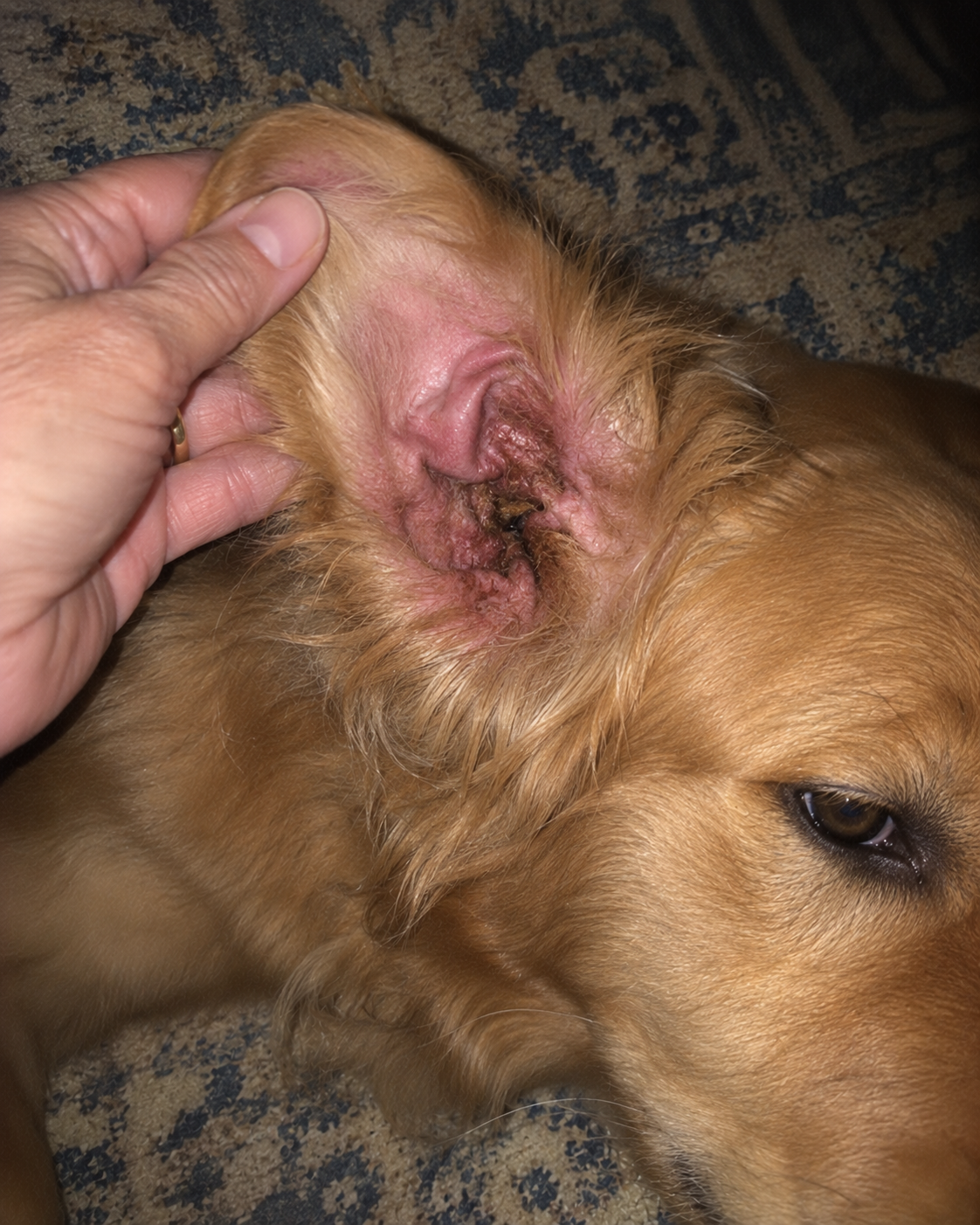
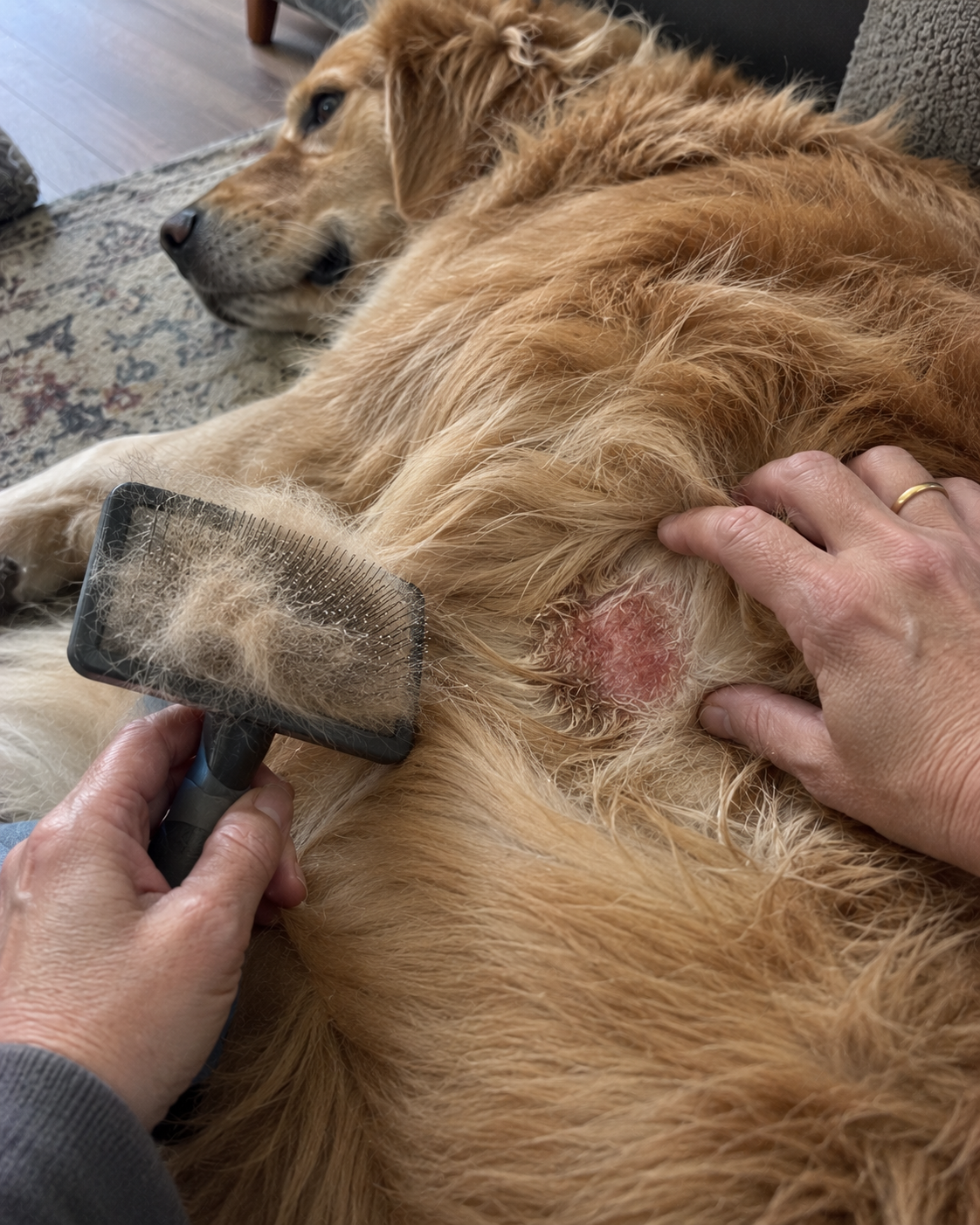
I’m going to say something no owner of an itchy dog wants to hear, and honestly, I don’t care if it makes you angry. Apoquel is not going to cure your dog. Not Cytopoint. Not prescription food. Not the collagen chews or that liquid from Amazon with thousands of reviews that half the Facebook group won’t stop recommending. None of them are going to fix this. How do I know? I tried them all. Every drug. Every food. Every supplement on the shelf. Four years and more than $8,000. And my boy died anyway, at nine years old. Still scratching. They told me it was genetic. That some breeds just get it. That my job was to keep it under control. IT WAS ALL A LIE. And that lie cost me my poor little dog. All because the only thing they want is to squeeze our damn money out of us while we watch our poor babies suffer every single day. So I’m done being polite. If your dog is scratching right now and you’re trying to decide whether to raise the Apoquel, start the shots, or try another elimination diet, you’re wasting time your dog doesn’t have and money that isn’t going to fix anything. I know this is going to be long and hard, but I don’t care, read it to the end because all I want is to save your dog. Three years ago there were two Goldens in this house, Winston and Lulu. Winston is my heart. He’d press his whole weight against my legs and stay there so I’d hug him. Lulu is a clown. She steals socks from the laundry basket so I’ll chase her all over the house. The second I sit down, there’s a tennis ball in my lap. She still thinks the mailman is her boyfriend. Today I only have Lulu. My poor Winston is gone. And I came very close to losing Lulu exactly the same way. Let me tell you how it all happened. Because if your dog is scratching and the medication isn’t keeping up anymore, this is for you. It all started with Winston. He was two when he started scratching. First, the paw licking. Then, the fur on his front paws turned rust-colored. Then, the head shaking and that sour smell, like yeast and corn chips, coming from his ears. In winter it calmed down and I thought it was seasonal. In spring it came back, worse. And from then on it never calmed down again. So I took him to the vet. The first visit cost $312. A skin scraping and an ear sample. “Environmental allergies. Goldens get them a lot. It can be controlled.” I asked until when. “Probably for the rest of his life.” So, Apoquel. 16 mg, half a pill in the morning and half at night. The first bottle cost $94.86. Every morning I hid the pill in a little cube of cheddar so he’d swallow it. Then I’d scrub my hands at the sink. And it worked. Like a miracle. The itching almost disappeared. No more thumping on the floor at 3 a.m. For about three months. Then, little by little, it came back. The vet told me he simply needed more. Half a pill twice a day became a whole pill twice a day. The bottle went from $94.86 to $158. Six weeks later, we were back at square one. Then Cytopoint was added. $200 a shot, every six weeks. The itching would calm down and come back. Calm down and come back. And he suffered and suffered. Over the next four years I watched Winston slowly fade. Without being able to do more than what I was already doing. It was horrible. First his energy went. He stopped greeting us at the door. He stopped leaning on me. He stopped all those little things that made him Winston. He was just surviving. When I put my hand on his back, he’d pull away. I thought it hurt him. Then came the skin. It got thick and dark in patches. Like elephant skin. The medication couldn’t handle it anymore. Whatever we did, the itch broke through. One Tuesday morning I walked into the kitchen and found blood on the rug. During the night he had chewed a front paw raw. He’d spent hours like that, in the dark, while we slept upstairs. I sat on the floor next to my boy and cried my heart out. That morning the end began. I knew there was no going back. Winston was nine when we lost him. The vet said his body had simply given out. His skin was too damaged to heal. The infections kept coming back. Four years of Apoquel. More than $8,000 on vet visits, pills, shots, prescription food and other treatments. And when he died he was still scratching. All the time and money we put in, down the drain. Then, at two years old, Lulu started scratching. The same breed. Exactly the same age as Winston. I panicked. I couldn’t believe I’d have to live through that story again. There was no way I was giving Lulu Apoquel. Not after seeing what it did to Winston. So I tried everything else people swore by in the Facebook groups. Raw food. A hypoallergenic kibble. Salmon, then kangaroo. A new bed. A calming collar. Antifungal spray all over the house. Collagen chews. Then a liquid collagen from Amazon with thousands of reviews. Six months of that. Hundreds of dollars. Nothing helped. The itching got worse. And once again my little girl was suffering and I felt like there was nothing I could do. Helplessness and frustration are the right words. Then the irritated patches started. One afternoon I was brushing her and my fingers touched something wet. I parted the fur and underneath there was a raw, oozing patch. I have no idea how long it had been there. I trimmed the fur around it. Three weeks later another one showed up on her hip. Her ears were never clean. Brown gunk, sour smell. At night, in the hallway, she’d shake her head so hard I could hear her ears slapping against her skull. She couldn’t even chase the ball the way she loved to. She’d take off after it and stop halfway across the yard to scratch. The socks stopped disappearing. She was slowly stopping being herself. The vet brought out the Apoquel again. “We need to get this inflammation under control now. It’s getting worse.” After that visit I sat in the car, in the parking lot, and cried. Because I had already heard those exact words once. With Winston. Right before the cycle that ended with me holding him while the vet put him to sleep. Shortly after, I had to stop by the shelter where we adopted Lulu to drop off a bag of donations. While we waited at the entrance, Lulu started scratching. Hard. That frantic full-body scratching where the back leg becomes a blur and you can hear her nails dragging across her skin from the other end of the room. A woman in medical scrubs came over to us. “How long has she been like this?” “Almost a year. We’ve tried everything.” Her face changed. “Come with me.” It was Dr. Grace Ellison. She’d been running the medical side of the shelter for eleven years. I told her everything. Winston. The Apoquel. The dose going up. The shots getting closer together. Losing him. Lulu starting down the same road. The collagen chews and the Amazon liquid that didn’t change anything. The vet bringing out the pills again. She didn’t interrupt me once. When I finished, she leaned toward me. “I’m going to tell you something that’s going to completely change how you see all of this.” I nodded. “Wolves don’t have allergies.” I stared at her. “Excuse me?” “Have you ever seen a wolf scratch itself bloody? A coyote covered in irritated patches? A wild dog with ears that never heal?” Never. “Of course not. Because it’s not normal. Dogs aren’t born to live like this. It means something underneath has stopped working.” “And when a dog has been itchy for this long, there’s never just one thing wrong.” “There are THREE. And each one keeps the others alive.” She grabbed a sheet of paper from her desk and drew a quick diagram. “Problem number one is the wall.” She drew a circle at the top. “Your dog’s skin is made of collagen. It’s the main protein that holds the skin together. The framework everything else hangs from.” “In the wild, a dog eats the whole animal. The skin, the cartilage, the tendons, the joints. All of that is full of collagen. When a wolf eats a rabbit, it’s eating exactly the material its own skin is made of, at every meal. That’s why that wall stays thick and strong its whole life.” “Your dog eats food out of a bag. Even the premium stuff. A bowl of kibble isn’t a whole rabbit. She gets a fraction of the collagen a wild dog eats, and what’s there is heavily cooked.” “So she never gets the daily dose of collagen a wild dog gets from its dinner. That’s why the salmon and the kangaroo didn’t change anything. A new protein still isn’t a whole rabbit.” “So her wall gets thinner. Little gaps open up. And her immune system panics.” “At the pollen that slips in. At the dust. At the grass in your yard.” “That panic sends a signal. And that signal is what makes a dog scratch.” “Stopping that signal is the only thing Apoquel is made for. It keeps the message from getting through, and it does it beautifully.” “But it never goes near the wall.” “The gaps stay open. The allergens keep getting in. The immune system never stops panicking. The signal keeps firing, around the clock, every day.” “Apoquel just makes it so she doesn’t feel it.” “And a wall full of gaps doesn’t close on its own while nobody’s looking. It gets worse. So, month after month, the signal pushes harder and the same pill holds it back a little less.” I interrupted her. “But I’ve already given her collagen. Two brands of collagen chews and then a liquid from Amazon. It didn’t change anything.” “I believe you. And you weren’t wrong to try collagen.” She tapped the circle again. “But a chew is cooked and hot-pressed into shape, and heat isn’t good for collagen. And even a decent liquid that only has collagen does a single job: the wall. Let’s say it does it perfectly. Your dog still has two other problems, and nothing in that bottle reaches either of them.” Below the first circle she drew a second one. “Problem number two is the water.” “Skin that’s been itchy for years loses its ability to hold water. It dries out.” “Think of chapped lips in winter. The drier they are, the more you lick them. The more you lick them, the drier they get.” “That’s what’s been happening to your dog. Dry skin itches on its own, no allergy needed. A heated room made her scratch. The rug. Her collar.” “And by that point, none of it was really an allergy anymore. It was skin too dry to calm down. And nothing they gave you was aimed at that. Not the Apoquel. Not the shots. Not the elimination diets.” And then, a third circle. “Problem number three is the fire.” “After years of itching, the skin stays inflamed. Hot. Red. Swollen.” “And hot, broken, inflamed skin is exactly where two things love to settle in. Staph and yeast.” “Once they’ve settled in, they cause their own itch. A completely different signal. One Apoquel was never designed to block.” “That’s where the irritated patches come from. And the brown gunk in her ears. And the corn-chip smell from her paws.” Then she connected the three circles with arrows. “Now look at how they feed each other.” “The gaps in the wall let in more allergens. So the immune system panics even more.” “More panic means more inflammation. So the fire burns hotter.” “A stronger fire makes her scratch more. And all that scratching breaks the wall and dries her skin out even more.” “And then it all starts over, a little worse than the time before.” She put the pen down. “Apoquel is a person leaning on a door to keep it shut, while the pressure on the other side keeps rising.” I couldn’t say anything. “That’s why it gave you three months and then stopped working,” she told me. “Every dollar you spent went to one of the three. Nobody ever dealt with what was building up behind it.” I felt the floor sink beneath my feet. “So in four years, he never actually got better.” “No.” “And if we had treated all three with Winston...?” She didn’t answer. She didn’t need to. “So what do I do with Lulu?” “To break the cycle, you have to work on three things at once.” She wrote them down. REBUILD THE WALL: Give her skin the collagen it’s made of, every day, the way a wild dog gets it from its food, so the gaps close and allergens stop getting in. HOLD IN THE WATER: Help the skin keep its moisture, so it stops drying out and itching on its own. PUT OUT THE FIRE: Calm the inflammation, so the staph and yeast lose the hot, broken skin they live on. “If you skip even one,” she said, “you’re throwing away money and time your dog doesn’t have.” She took a little amber bottle from the shelf behind her. “Every dog that comes through this shelter takes this. It’s the ONLY thing I’ve found that works on all three at once.” Canbloom. Liquid collagen. One dropper on her food. I read the label four times. For the wall: 900 mg of collagen types I and III in every milliliter. The same two types her skin is made of. And vitamin C, because the body can’t make collagen without it. And it’s liquid, not a chew, so nothing has been hot-pressed into the shape of a treat. The collagen comes already broken into small pieces, so her body can actually use it. For the water: hyaluronic acid. It holds water in the skin, so it stops drying out and cracking. For the fire: UC-II and MSM, to calm the inflammation that keeps the itch going and gives staph and yeast a place to live. And as the wall closes and the skin holds its water, the allergens stay out, the immune system rests, and the whole cycle starts to die down. I asked her: “How is it possible nobody ever told me this?” “Because managing this makes a lot more money than fixing what’s underneath. Every flare-up is one more prescription, one more shot, one more infection to treat, one more visit. A dropper on her food that gets her out of that cycle doesn’t come anywhere close to making the same.” She gave me two bottles. “These are on us. Give them to Lulu. It tastes like bacon, she’s going to love it.” Lulu started that same night. The first two weeks, nothing happened. She was still scratching. She still got the odd irritated patch now and then. I was terrified this would fail too. Then, around the third week, something caught my attention. She had stopped licking her paws. Completely. Week four. Not a single new irritated patch. The ones she had were starting to dry up. Week five: clean ears. Every morning I checked them out of habit, still expecting the brown gunk and that sour smell. Pink and clean. I checked again the next day, and the next. I called Dale, my husband, into the bathroom. “Come look at her ears.” He crouched down. “Are they… normal?” “They’re normal!” Week six. I realized I hadn’t heard her scratch in days. That Saturday we took the ball out to the yard. She ran to it, brought it back, and stood there, wagging her tail, waiting for the next throw. The socks started disappearing from the basket again. She slept through the night. Every night. No tags jingling at 3 a.m. No licking. Just her breathing. It was wonderful!!!!! That was half a year ago. Lulu hasn’t scratched again. The fur on the bald spot on her hip has finally grown back. She’s never been so happy. Not one Apoquel pill. Not one Cytopoint shot in this house. She’s still eating exactly the same kibble as when the itching started. It was never the kibble itself. It was what the kibble was missing. Two droppers a day. Less than $50 a month. Not a day goes by that I don’t think about Winston. I wish I had known sooner and could have saved my boy. I think about those four years watching him scratch and believing that was just how he was. About the $8,000 that went to a dog who never got better, not for a single day. About how close I came to handing Lulu’s prescription in at the pharmacy to buy those shitty medications. If I hadn’t gone to that shelter. If Dr. Ellison hadn’t been working that morning. If Lulu hadn’t started scratching in that entrance. I don’t know if she’d still be with me. So, if your dog is scratching and the medication isn’t keeping up anymore, please, listen to me. The problem is never just one problem. Every medication goes after one of your dog’s three problems, they treat the symptom, not the cause. That’s why it helps at first. And that’s why it stops working. The other two keep growing underneath until they’re strong enough to break through anyway. And don’t do what I did, assuming a collagen chew, or a liquid that only has collagen, takes care of all three. The format isn’t the problem. What’s inside it is. I lost months on that while Lulu kept scratching. Maybe you don’t have that time. Nothing lasts until all three are worked on at once. That’s why I use Canbloom. They offer a 30-day guarantee so you can try it yourself. If you don’t notice the difference, you don’t pay. Please stop spending money on things that don’t work and make your dog suffer. Trust me, trust the doctor, and trust Canbloom. It’s been my lucky charm this whole time. The only thing you’re risking is another year of vet bills while your dog keeps suffering. Right now you have two options: One path: Buy the next prescription. Move up to the stronger dose. Bring the shots closer, from every six weeks to every four. Add antibiotics when the ears flare up again. Accept “under control” as the most you’ll ever get and spend the next four years as a copy of the last four. The other path: Go after all three at once. See her comfortable and happy again. Watch her fur grow back thick and shiny. See her play without stopping to scratch. And get your dog back while they still have good years left to enjoy. Winston isn’t coming back. But if your dog is still scratching while you read this, you still have time. Don’t leave it until it’s too late. https://canbloomstore.com/products/canbloom-premium-liquid-collagen P.S. Wolves never have this problem, because they’re not missing anything. Your dog is missing the collagen its skin is made of. The wall thins, allergens get in, the immune system panics, the skin dries out, and the inflammation gives staph and yeast a home. Three problems that keep each other going, and every medication you’ve been given only goes after one. That’s why it helps at first. And that’s why it stops working. P.P.S. Don’t spend another dollar on a product that only has collagen. It covers a third of the problem, stops working within weeks, and leaves you blaming yourself all over again. And don’t put it off. Every week those three keep feeding each other, her skin gets more damaged, it gets harder to turn around, and the bills grow. Winston waited four years for me to understand. It cost me more than $8,000, and it cost me my dog. Lulu takes something that costs less than $50 a month and hasn’t scratched in six months.
Where the ad sends people
canbloomstore.com
I Lost My Dog After 4 Years of Apoquel. Here’s What Nobody Told Me
Canbloom
See details: canbloomstore.com(opens in a new tab)