Claire Mitchell
 Facebook ad: “Read this if the scratching won't stop”

Running for 65 days since September 21, 2026. Crush last saw it on November 25, 2026.
Run by Claire Mitchell on Facebook. Crush is not the advertiser and does not verify its claims. See this ad in Meta's Ad Library(opens in a new tab)
Make your own version of this ad
Crush makes it, launches it in your own Meta ad account, scales the winners and pauses the losers.
About this ad
- Meta Ad Library ID
- 1567318491746624
- Platforms
- Facebook, Instagram, Audience Network, WhatsApp and Threads
- Relaunches
- 0
- Niche
- Pets
Ad text
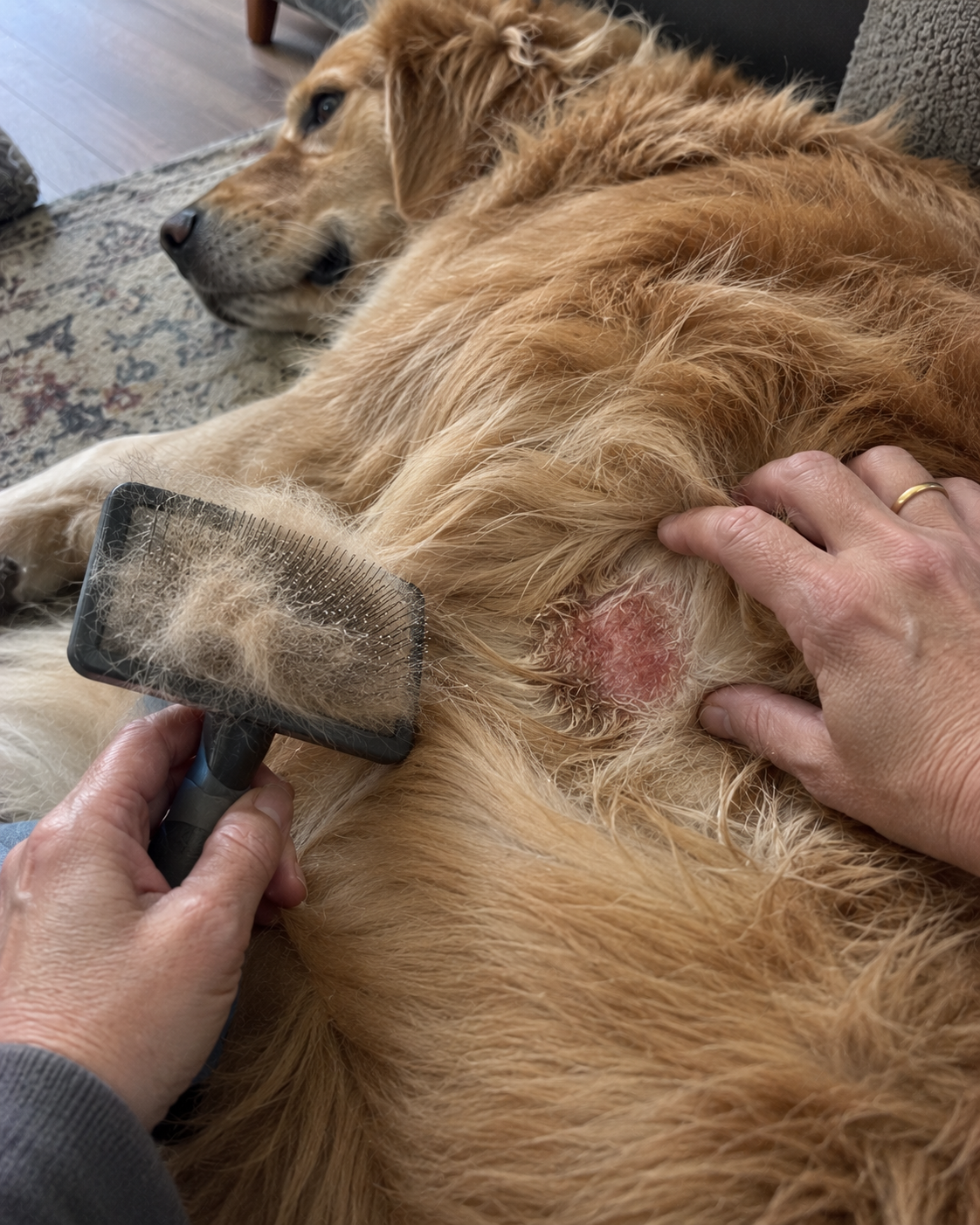
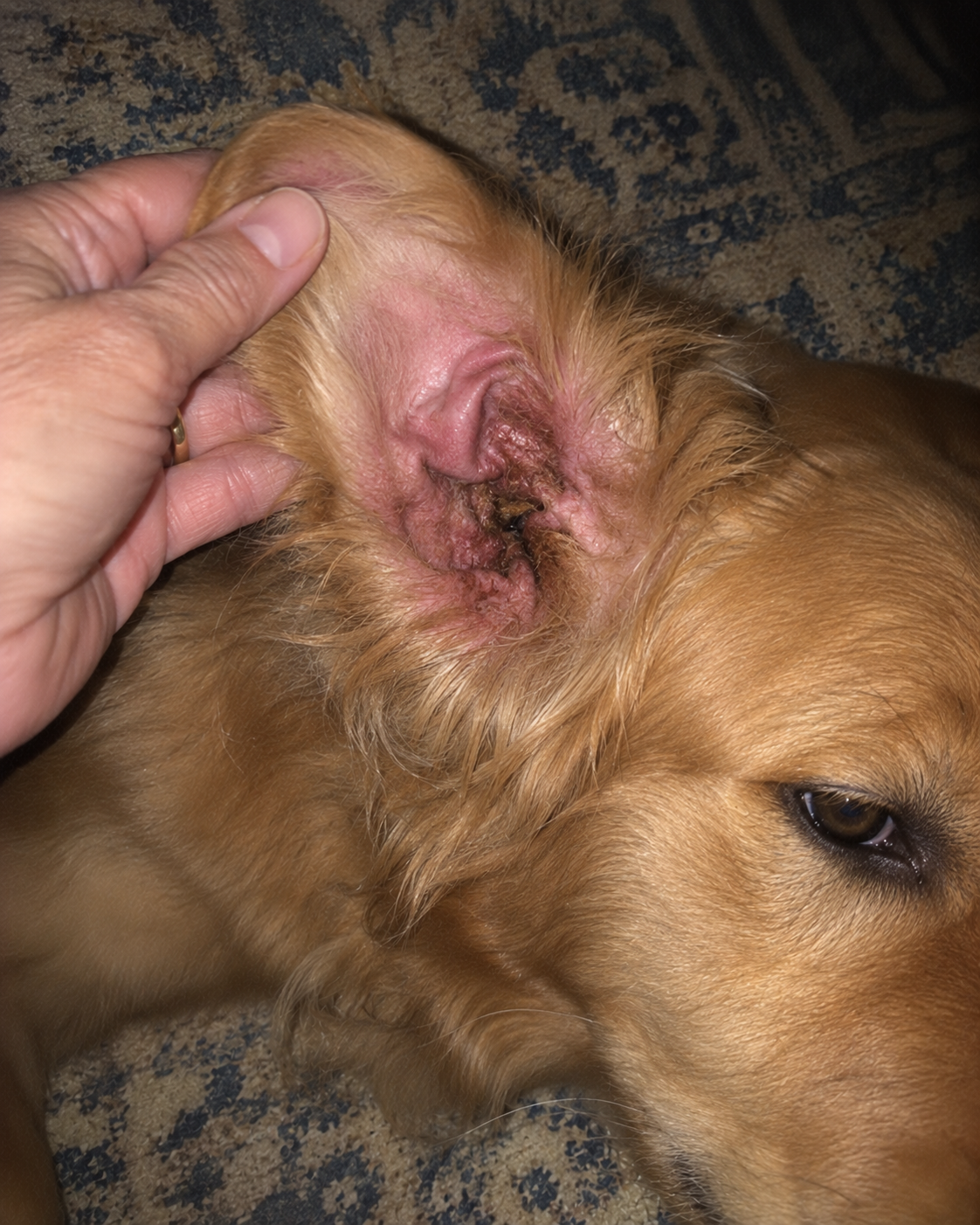
I left my dog with my next-door neighbour for two weeks. When I got home, I didn't recognise her. Not because she looked different. Because she was a completely different dog. No scratching. No paw licking. Coat gleaming. Running around the garden like a puppy. For three weeks I tried to figure out what my neighbour had done while I was away. What I finally found out made my jaw drop. And made me realise my vet has been letting my dog suffer for three years. My name is Margaret. I'm 43. I live in Leeds, West Yorkshire. And I need to tell you what happened because I think your vet is doing the same thing. Let me start from the beginning. Three years ago, I got a Cocker Spaniel called Mia from a rescue. She was perfect. Gentle. Funny. But she scratched constantly. Every single day. All day long. Sometimes she'd have hot spots on her belly. Sometimes between her toes. Sometimes she'd chew her paws until they bled. I took her to the vet. ""It's environmental allergies,"" she said. ""Very common in Spaniels."" She prescribed Apoquel. £140 a month. Mia still scratched. I went back. ""Could be a food intolerance,"" she said. ""Let's try a hydrolysed diet."" £180 for the food. £40 for a medicated shampoo she said would help. Mia still scratched. I tried everything else. Coconut oil. Salmon oil capsules. Oatmeal baths. Antihistamines. A Cytopoint injection. Collagen chews from Amazon. Nothing worked. After three years, I just accepted it. ""Some dogs are just like this,"" my vet said. ""You manage it. You don't cure it."" Then my sister called from New Zealand. She'd been out there for five years. She'd had a baby. She wanted me to come and meet him. I booked two weeks. Work agreed to let me go. I was so excited I barely slept. But then I thought: what do I do with Mia? My mum lives too far away. My friends all work full time. The kennels were full for those dates. Then I thought of my neighbour, Pat. She lives three houses down. Sixty-something. Retired. We'd chatted over the fence a few times. She always asked about Mia. I knocked on her door one afternoon. ""Pat, I know this is a big ask, but I'm going to New Zealand for two weeks. Any chance you'd look after Mia?"" She didn't even hesitate. ""Oh, I'd love to. I miss having a dog around."" ""I have to warn you,"" I said. ""She scratches constantly. She sometimes gets open sores on her paws and belly. My vet says it's just how she is. It can be a lot to deal with."" Pat waved her hand. ""Oh, don't you worry. We'll be fine."" I felt so relieved. I dropped Mia off the night before my flight. Showed Pat the food, the lead, the medication. ""Call me if anything gets bad,"" I said. ""She'll be wonderful,"" Pat said. ""Have a lovely trip."" I flew to Auckland the next morning. The first week, I kept thinking about Mia bleeding all over Pat's sofa. I texted Pat on day five. ""How's Mia? Is the scratching keeping you up?"" Pat texted back: ""She's absolutely fine! Happy as anything."" I assumed she was just being kind. Week two I texted again. ""Seriously Pat, if she's being a nightmare just tell me. I know the itching is non-stop."" Pat: ""She's been brilliant, honestly. Not a bother."" I figured Mia was just calmer because everything was new. I got home two weeks later. Went straight to Pat's. Pat opened the door smiling. ""How was it? How's the baby?"" ""Gorgeous. Tiny. How was Mia?"" ""She was a joy. Come in."" I walked into Pat's front room. And then I saw her. Running. Skidding across the laminate on her little paws. Mia came flying round the corner. No cone. No hot spots. No stopping every few seconds to chew her leg. I actually thought for a moment I had the wrong dog. Her coat was thick and shiny. You could see it from across the room. And she just stood there. Mia never stood still. ""Oh my god,"" I said. ""What did you do to her?"" Pat laughed. ""Nothing! She's been like that the whole time."" ""Did she scratch at all?"" Pat thought for a second. ""Once or twice when she first arrived, maybe. But after that? No. She's just been trotting around being lovely."" I stared at her. ""Once or twice? That's it?"" ""Yes. Why?"" ""Pat, Mia scratches every single day at home. All day. For three years. She had an open sore on her paw when I dropped her off."" Pat looked surprised. ""Really? She hasn't scratched here at all."" ""Did you do anything different? Different water? Different shampoo?"" She shrugged. ""No, nothing like that. She just ate, slept, played. Normal dog stuff."" I took Mia home completely baffled. For two days she was perfect. No scratching. Playing with her toys. Slept through the night without the cone. Then on day three I woke up at half two in the morning to the sound of her licking. Day four, a red patch appeared on her belly. By the end of the first week home, she was scratching multiple times an hour. Coat starting to look dull again. She stopped playing. Back to sleeping in the corner with the cone on. I felt like I was going mad. What had happened at Pat's? For three weeks I was obsessed. I changed Mia's bedding. Still scratched. I tried another oatmeal bath. Still scratched. I bought an air purifier. Still scratched. I tried a calming collar. Still scratched. I posted in a Facebook group for dog allergy owners. ""My dog stayed at my neighbour's for two weeks and didn't scratch once. Now she's back home and it's constant again. What changed?"" Everyone had theories. ""Probably stress. New environments relax anxious dogs."" ""Could be your carpets. Try a HEPA hoover."" ""Calming drops in her water."" I tried everything they suggested. Mia kept scratching. By week three I was so frustrated I could cry. Mia had been completely fine at Pat's for two weeks straight. And I had no idea why. So I gave up trying to figure it out on my own. I walked down to Pat's and knocked on the door. ""Pat. I need to ask you something."" She opened the door. ""Of course. Come in."" We sat down. ""Mia's scratching again,"" I said. ""Constantly. Just like before. But she was perfect at yours. I've tried everything to figure out what you did differently and I can't. Please. What did you do?"" Pat looked at me for a moment. ""Margaret, there's something I probably should have mentioned when you asked me to look after her. I'm a retired veterinary nurse. I worked in rescue centres for 26 years."" My mouth fell open. ""You're a vet nurse?"" ""Was. I retired four years ago. I spent my whole career working with dogs that came in with exactly what Mia has."" ""Why didn't you say anything?"" ""I didn't want to interfere. You'd been managing it with your vet. I just did what I've always done and assumed it would either help or it wouldn't."" I leaned forward. ""Mia was perfect for two weeks. You had to have done something."" ""I did what I did with every dog at every rescue I ever worked in,"" she said. ""It's just automatic after 26 years. I didn't even think of it as doing something special."" ""What do you mean?"" ""At every rescue I worked in, we had a standard protocol. First day for every dog that came through the door: check for parasites, sort their food, and start them on liquid collagen."" ""Liquid collagen? What's that?"" ""A supplement. Most rescue dogs come in with a damaged skin barrier — the protective layer their skin is supposed to have. When that breaks down, allergens get in, moisture gets out, and the itch never stops. We saw it in nearly every dog we took in. So we just started everyone on it from day one."" I stared at her. ""You gave Mia liquid collagen?"" ""Every day, yes. Over her food. It's standard practice at rescues. Chronic scratching, hot spots, dull coats — all signs of a broken barrier — in probably 85% of the dogs we took in."" ""But Mia has collagen chews. My vet recommended them. They're supposed to cover everything she needs."" Pat shook her head. ""The chews might say collagen on the label. But most dogs can't absorb it properly. Especially if the chew uses tapioca starch as a binder — it competes for absorption in the gut."" I pulled out my phone and looked up Mia's chews. Third ingredient: tapioca starch. ""So she's been taking collagen for a year and her body can't use it?"" ""Exactly. At the rescue, we'd take in dogs that had been on expensive collagen chews for months — £40, £50 a bag — and their skin barriers were still completely broken down. That's why we switched everyone to liquid. Didn't matter what they'd been on before."" ""And that's why she itches?"" ""Almost certainly. When the barrier breaks down, allergens that should stay on the surface get through. The immune system reacts. The scratching never stops because the door is still open."" I felt like someone had knocked the air out of me. ""Why didn't my vet ever tell me this?"" Pat was quiet for a moment. ""I don't want to be unfair to your vet. But in 26 years working in rescues, I saw this same thing constantly. Dogs would come in from private vets who'd been on Apoquel for two years. The vet had run tests. Tried different food. But they'd never addressed the barrier. When we did? Almost always improved within weeks."" ""But surely vets know about this?"" ""They should. But it's not how private practice works. At a rescue, our job is to get every dog healthy as fast as possible so they can be rehomed. We can't manage symptoms indefinitely. We have to find the root cause. That's how I learned about liquid collagen — because we had to."" I just looked at her. ""So for three years, Mia's barrier has been broken and no one ever told me?"" ""Probably."" ""Where do I get it?"" Pat got up. Walked to her kitchen. Came back with a bottle. ""This is what I've used since I first started in rescue work. Canbloom. After trying different products over the years, this was the one that was consistently absorbed properly and made the most consistent difference."" She handed it to me. ""Two droppers twice a day over her food. You should see something within a week."" I took it home. Started that same evening. Day 1: She scratched twice. Day 2: No scratching. Day 3: No scratching. Day 4: No scratching. Day 5: Still nothing. By the end of that first week I couldn't believe it. Mia hadn't scratched. The patch on her belly was gone. She slept through the night without the cone. Week two: Still nothing. Week three: Nothing. At week four I walked down to Pat's. ""It's working. She hasn't scratched in a month."" ""Good,"" Pat said. ""That's what we saw at the rescue every time. Give the skin what it needs to rebuild and the scratching just stops."" That was seven months ago. Mia hasn't scratched since. Not once. And I'm so angry I could cry. Because this is standard practice at rescue centres. Every rescue nurse, every shelter vet — they know about this. They give liquid collagen to every dog because they see this problem every single day. But my private vet? Three years. Never once mentioned it. Just kept renewing the Apoquel prescription. Kept selling me the food. Kept telling me this was just how Mia was. I asked Pat why private vets don't do what rescue workers do. She thought for a moment. ""Different pressures. At a rescue we have to get dogs rehomed. We can't have a dog scratching for six months while we try another diet. We have to fix it. That's the job."" ""And private vets?"" ""Private practice works differently. There's an income from ongoing prescriptions, repeat consultations, specialist referrals. There's no income from telling someone to buy a supplement that solves the problem."" ""That's insane."" ""It's just how it's structured. At the rescues I worked in, we used to say that if rescues were run like private practices, no dog would ever get rehomed. They'd all be on Apoquel waiting for the next dietary trial to finish."" I started asking in my Facebook groups. ""Has anyone's vet ever mentioned collagen and the skin barrier?"" Barely anyone. Out of hundreds of replies, maybe four or five had vets who'd ever brought it up. Everyone else? Told it was allergies. Sensitive skin. Just what their breed does. All spending hundreds every year on medication that manages the symptom but never touches the cause. Just like I had been. The pet supplement companies know it too. They know a baked collagen chew has a fraction of the absorption of a liquid. They know tapioca starch blocks what little collagen might otherwise get through. But they use it anyway because it's cheap. And they can still print ""with collagen"" on the packaging. Even though the dog's body can't use it. It's a scam. The whole thing is a scam. And dogs like Mia are suffering because of it. If your dog scratches constantly, ask your vet why they've never mentioned the skin barrier or liquid collagen. If your vet says it's not something they recommend, ask them why every rescue centre in the country gives it to every dog on day one. Or just start giving it yourself. Because that's what people who work with allergic dogs professionally do. Pat saved Mia. Not by doing anything complicated. Just by following the same routine she followed for 26 years at every rescue she ever worked in. Something my private vet should have told me about three years ago. I'm not a vet nurse. I don't work at a rescue. But I can give Mia what she needs now. Two droppers of Canbloom. Twice a day. Over her food. That's it. Mia hasn't scratched in seven months. She's healthy. Happy. Playing. Just like she was at Pat's. If you're reading this and your dog won't stop scratching, I'm telling you what your vet won't. It's probably not just their breed. It's probably not something you just have to manage forever. Every rescue in the country gives liquid collagen to every dog that comes through the door. Because they see this every single day. But your private vet either doesn't know, or doesn't have an incentive to tell you. I'm telling you now because I wish someone had told me three years ago. The liquid collagen I use is what Pat used at every rescue she ever worked in. Canbloom. I order it online. Two days and it's at the door. I don't work for them. I'm not being paid to say this. I'm just someone who spent three years watching their dog scratch herself raw. And finally found out why. Here's where I get Mia's collagen: https://canbloomstore.com/products/canbloom-premium-liquid-collagen-1-1-free Your vet won't tell you this is what every rescue in the country does. The supplement companies won't tell you their chews can't be absorbed. But I'm telling you. Because Mia deserves to be comfortable. And so does your dog. P.S. My neighbour is a retired veterinary nurse who spent 26 years working in rescue centres. She gave liquid collagen to every dog on day one. Standard practice. My private vet never mentioned it once in three years. Ask yourself why. P.P.S. Rescues can't afford to keep dogs on medication indefinitely. They have to fix the root cause fast. That's why every rescue dog gets liquid collagen from day one. Your private vet makes more money managing your dog's itching than fixing it. Two droppers twice a day rebuilds the barrier and stops it.
Where the ad sends people
canbloomstore.com
☝️ Read this if the scratching won't stop
Canbloom
Learn more: canbloomstore.com(opens in a new tab)