
Inactive· since May 21, 2026
- 69
- days it ran
- 0
- relaunches
Ad copy
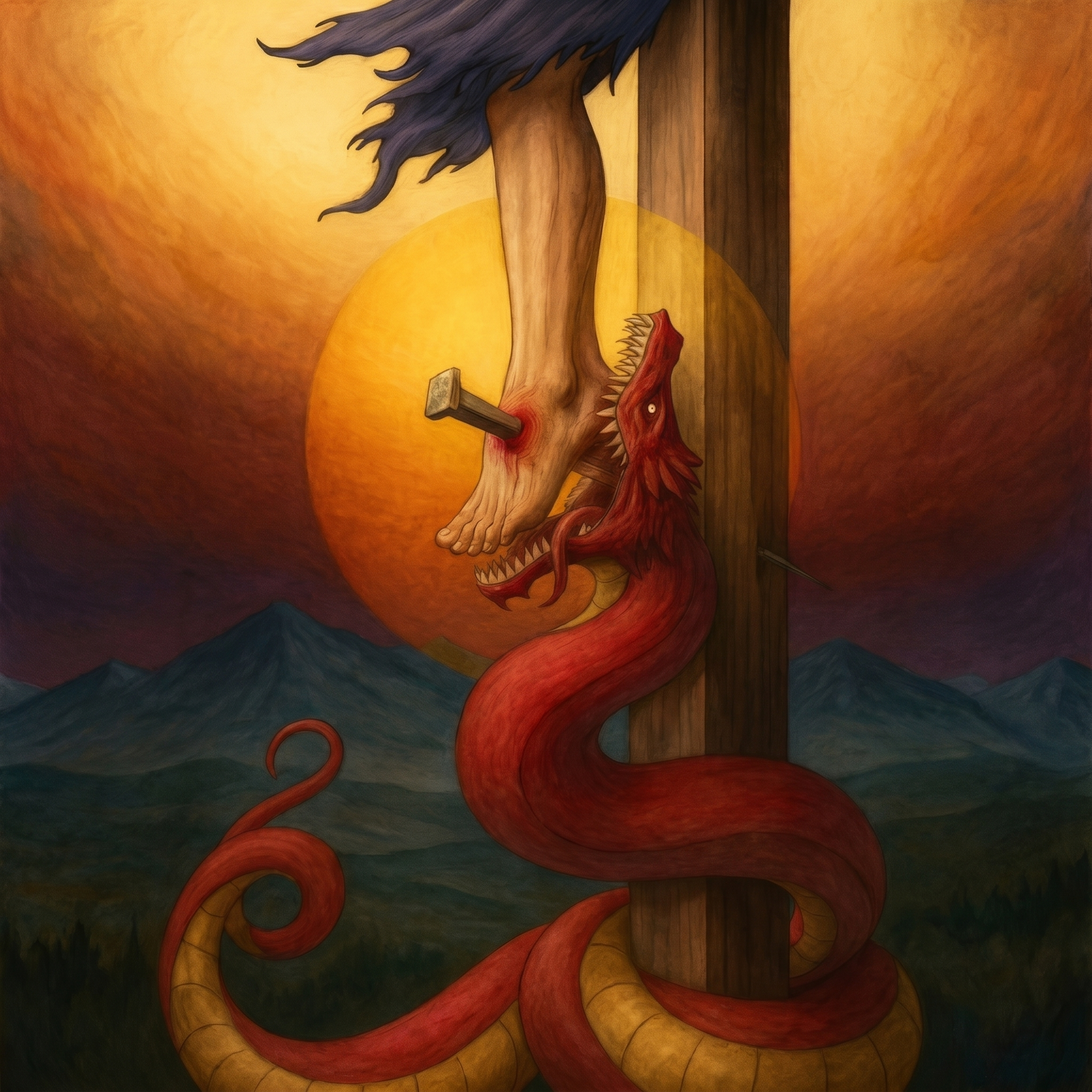
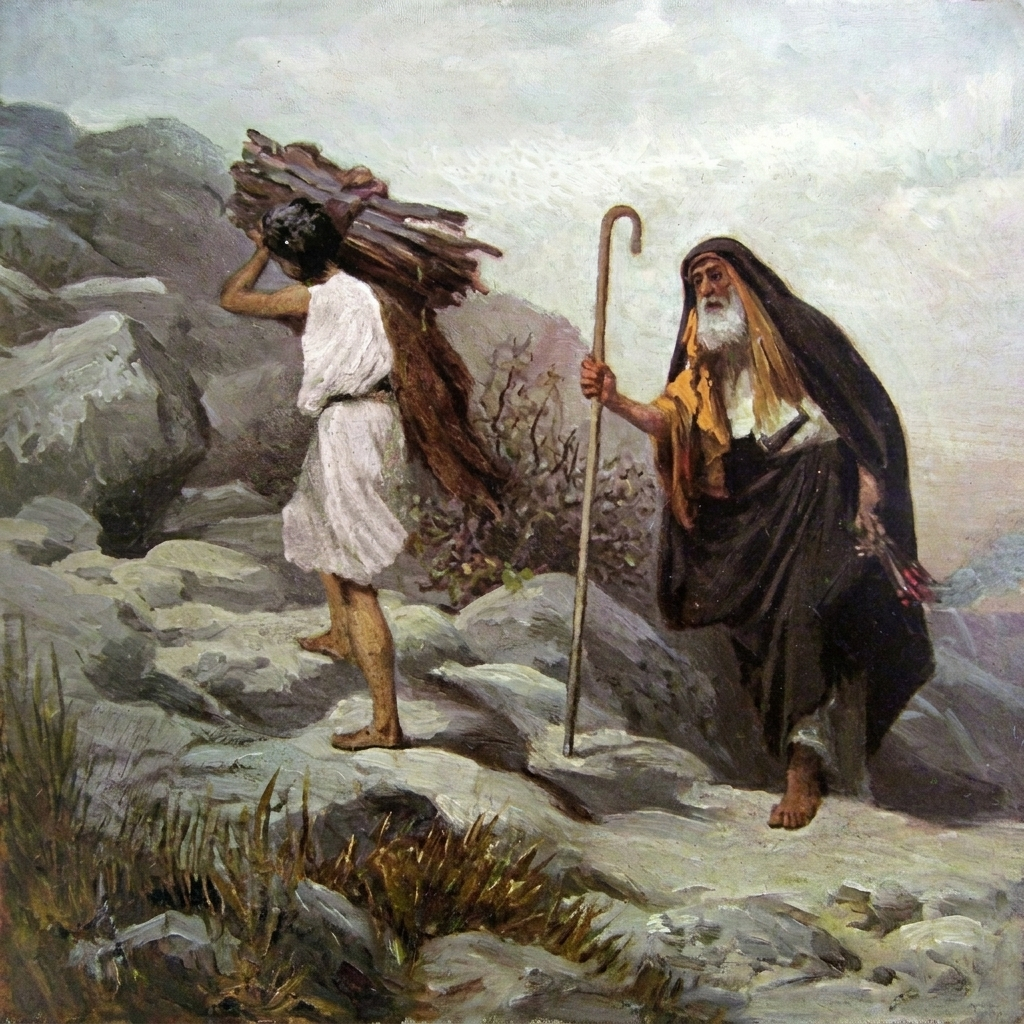
Two thousand years before Calvary, God asked a father to do exactly what He Himself would later do. Abraham was asked to sacrifice his only son on Mount Moriah. At the last moment, God provided a ram. Two thousand years later, on the same mountain, no ram was provided. In Genesis 22, God gave Abraham one of the most disturbing commands in the entire Bible. "Take your son, your only son Isaac, whom you love, and go to the land of Moriah, and offer him there as a burnt offering on one of the mountains of which I shall tell you." Abraham did not argue. He did not negotiate. He saddled his donkey, took his son, and started walking. For three days they walked toward the mountain. For three days Abraham believed his son was going to die. Every detail of what happened on that mountain — and what would happen on the same mountain two thousand years later — was already being written into the moment. Here is what the text actually says. The wood for the burnt offering was placed on Isaac's back. Genesis 22:6: "And Abraham took the wood of the burnt offering and laid it on Isaac his son." Isaac carried the wood for his own sacrifice up the mountain. Two thousand years later, Jesus carried the wood of His own cross up the same range of hills toward the place of execution. The age matters. Rabbinical tradition places Isaac at this moment somewhere between 25 and 37 years old. Abraham was over one hundred. If Isaac had resisted, the elderly Abraham could not have bound him. Isaac was bound to the wood willingly. Jesus said in John 10:18 about His own death: "No one takes it from Me, but I lay it down of My own accord." Both sons submitted. Neither was forced. Then they reached the place. Isaac asked the question every reader of this passage remembers. "My father, behold the fire and the wood, but where is the lamb for a burnt offering?" Abraham answered: "God will provide for himself the lamb." Two thousand years later, John the Baptist would point to Jesus and say: "Behold, the Lamb of God who takes away the sin of the world." The answer to Isaac's question was not the ram on Mount Moriah. The answer was Jesus. Abraham built the altar. He laid the wood in order. He bound his son and placed him on the wood. He stretched out his hand and took the knife. And at that exact moment, the angel of the Lord called out from heaven. "Abraham, do not lay your hand on the boy or do anything to him, for now I know that you fear God, seeing you have not withheld your son, your only son, from me." Then Abraham looked up and saw a ram caught in a thicket by its horns. He offered the ram in place of his son. The ram died. Isaac lived. Two thousand years later, the Father walked His own Son up the same hill. Mount Moriah and Mount Calvary are the same range of hills outside Jerusalem. The Temple was built on the spot where Abraham bound Isaac. The crucifixion happened just outside the Temple walls. But this time, no ram was provided. The Father did not stop the knife. The Father did not turn away the soldier. The Father did not intervene. He watched His own Son die on the same hill where He had once spared Isaac. Paul makes the connection explicit in Romans 8:32: "He who did not spare His own Son but gave Him up for us all — how will He not also with Him graciously give us all things?" The phrase "did not spare" is the exact Greek translation of the words God spoke to Abraham in Genesis 22:12. "You have not withheld your son." The Father remembered the day He stopped Abraham. He remembered the ram caught in the thicket. And when His own moment came, He did not spare His own Son the way He had spared Abraham's. The thing Abraham was almost asked to do was the thing God did in reality. Genesis 22 was not a strange ancient story about a near-tragedy. It was a rehearsal. A preview. A teaching tool God used for two thousand years to prepare His people to understand what He would do on the same mountain. The first time, He stopped the knife. The second time, He let it fall. That is what I realized at a men's Bible study one Saturday morning. I have been teaching Scripture my whole adult life. More than 18 years. And last spring I was leading our Saturday morning men's group through a study on Genesis. There was a man in the group named David. Mid-fifties. A father of three. His oldest son had enlisted in the Marines two years earlier and was currently deployed overseas. We came to Genesis 22. I read the passage aloud. The command. The three-day walk. The wood on Isaac's back. The altar. The knife raised. When I stopped reading, the room was quiet. David — who almost never spoke in the group — set his Bible down. He looked at the floor for a long moment. Then he said: "I dropped my son off at the airport eight months ago. I knew when I drove away I might never see him again. He is twenty years old now and he is in another country with people shooting at him." He paused. "I'd take his place. In a heartbeat. If they would let me go instead of him, I'd go tomorrow." I read him Romans 8:32. "He who did not spare His own Son." David was silent for a long moment. Then he said: "I'd take his place. The Father wouldn't. He let His Son go instead of substituting Himself." I stood at the front of that room and could not speak. I had been a pastor for 18 years. I had preached Genesis 22 a dozen times. I had preached Romans 8 a dozen more. And I had never connected them the way a father with a son deployed overseas had just connected them in five sentences. The Father did what no human father in the room would do. He did not spare His Son so that He could spare us instead. They could not see it. And it was not their fault. Nobody had ever given them the roots. The next morning I opened my computer and started writing. Genesis. Everything someone needs to know before reading Genesis. Who wrote it. When. Why. What was happening. The main themes. How it connects to the larger story. Not a sermon. Not a devotional. Just the roots. Then Exodus. Leviticus. Numbers. Every single book of the Bible. Sixty-six pages. One page per book. It took me three months. Three months of putting 18 years of studying into a format any believer could use completely on their own. No pastor required. I started giving copies to people in my church quietly. One at a time. David was one of the first. He read it cover to cover and mailed a copy to his son overseas. Every single person said the same thing. "This is the first time I have ever understood what I was reading." Not because I am some brilliant teacher. But because I finally gave them what they actually needed. The roots. And once you have those roots, the Bible you thought you knew becomes something you have never actually encountered before. Genesis 22 is just one chapter. There are thousands more moments like it waiting in the pages you have already read. Did you know that when Jesus said "It is finished," the Greek word tetelestai was the same word stamped on receipts in the Roman Empire to mean "paid in full"? His final declaration was not a statement of ending but of completion. Did you know that the name Barabbas literally means "son of the father" and that the crowd was given a choice between two men with the same title — the innocent Son of the Father and the guilty son of the father — and the guilty one went free? Context changes everything. Every single time. I call it FaithSprout. The 66 Roots Journey. 66 pages. One for every book of the Bible. Each page gives you what you need before you read. Who wrote it. When. Why. What was happening. The key themes. The symbolism. And how it connects to your actual life today. Written in plain language. No seminary terms. No complicated theology. Just the roots that make everything you have already read suddenly land with the full weight God intended. The Bible is not confusing because it is unclear. It is confusing because we are reading it without the foundation that made it clear to the people it was first written for. The first Christians knew the geography of Mount Moriah and Mount Calvary. They knew the wood Isaac carried up was the wood Jesus would carry up two thousand years later. They knew Abraham's near-sacrifice was the rehearsal for the only sacrifice that would ever actually be required. We read Genesis 22 as a strange ancient story and miss the Father telling us in advance what He was about to do. This guide gives you that foundation back. If you have ever read about Abraham and Isaac without seeing the Father and the Son. If you have ever read a passage of Scripture and sensed there was something deeper underneath the words that you could not quite reach. If you have ever wondered what you would find in God's Word if someone just gave you the roots first. This is what you have been looking for. Father's Day is in a few weeks. Most Christians will give their fathers the same gifts they gave them last year. A tie. A wallet. A grilling tool. This year, give the father in your life something he has never been given. The foundation to read the book he has been reading for decades and finally see what is actually on the pages. Give him the roots. Or give them to yourself. Because every father reading this is also a son. And the Father who did not spare His Son did it so He could welcome you home. That is what The 66 Roots Journey was created for. And you can start yours by clicking below.
Read this if the Bible feels harder than it should. ☝️
Understand all 66 books of the Bible more easily
SHOP NOWLike this ad? Make it yours.
Crush rebuilds this exact creative around your product — your brand, your colors, your offer — in about a minute.