
Active· since Aug 24, 2026
- 23
- days running
- 0
- relaunches
Ad copy
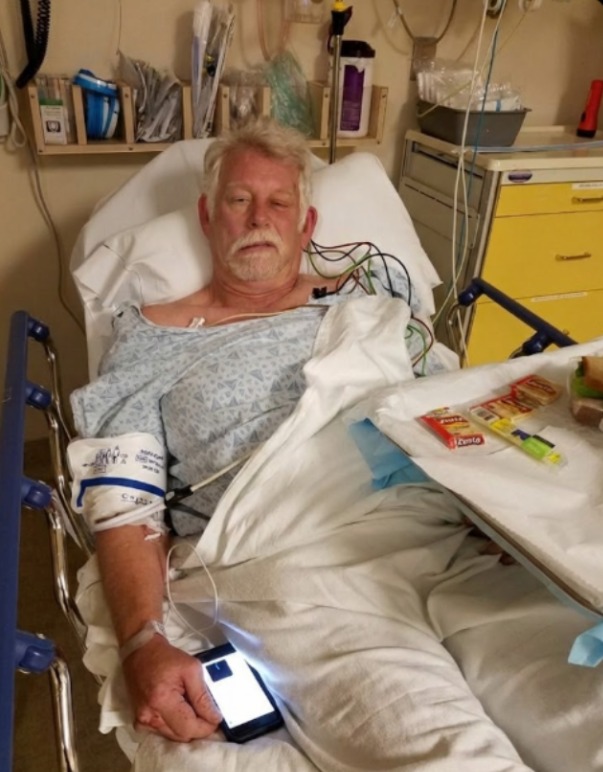
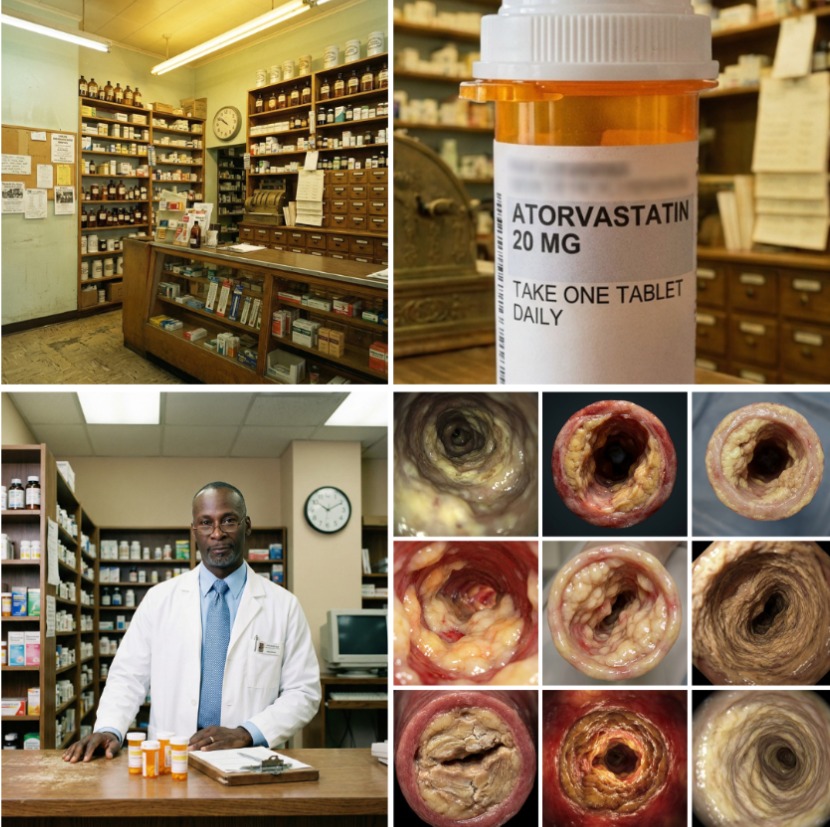
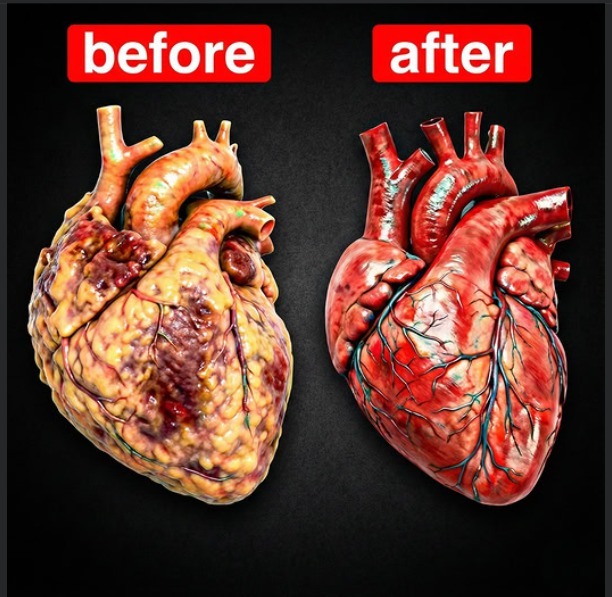
I am in a hospital bed. If you are over 50 and your doctor has told you your cholesterol or your blood pressure is managed, I am begging you to listen to me right now. I had a heart attack nine days ago. I almost did not make it, and I am writing this because if I had seen something like it a year ago, I would not be here. I placed my 1,347th coronary stent on September 14th, 2024. Eleven days later, at 3:12 AM on September 25th, I was on the receiving end of one. I was 58 years old. I am a board-certified interventional cardiologist. Twenty-two years of practice. Two stents placed in my own left anterior descending artery by a fellow I had trained four years earlier. I coded on the table for nine seconds. The hospital bill was $68,000. Cardiac rehab was another $8,400. They will let me operate again. My hospital privileges are intact. But I will never place a stent again without remembering that I was on that same table with someone I had trained running a wire into my own artery because everything I was taught to prescribe had not saved me. I am writing this because I know exactly what my colleagues will say when they see it. I do not care. If you are over 50 and your cholesterol is elevated, or your blood pressure is creeping, or someone you love is on a statin or being told they need one — please read the entire thing. I know it is long. I know you are scrolling. I know you have things to do. Fourteen months ago I would have given anything for someone with my credential to sit me down and tell me what I am about to tell you. Nobody did. I was first told my cholesterol was elevated eight years ago at 50. LDL of 154. Total cholesterol 231. The diagnosis did not surprise me. My father had died of a myocardial infarction at 63. He had been on Atorvastatin and Lisinopril for nine years. His numbers had been controlled the entire time. I had watched the pattern in my own family and I had built my entire career on treating cardiac events in patients who looked exactly like my father. I did what any cardiologist would prescribe for herself. My internist — a colleague at my own hospital — started me on Atorvastatin. She added Lisinopril two years later when my blood pressure crept to 136 over 86. She added low-dose aspirin the year after that. Standard cardiac protocol. The same three medications I had personally prescribed to hundreds of my own patients. I walked four miles a day. I stopped drinking. I lost sixteen pounds in the first year and kept it off. I ate the Mediterranean protocol I recommend to every patient after a stent placement. I ordered a coronary calcium scan on myself the year my cholesterol was first flagged. Score of 16. I checked every box on my own cardiac protocol. By last August, my LDL was 94. My blood pressure was 126 over 78. My resting heart rate was 68. By the standard of the guidelines I had helped write for our hospital's cardiology group, I was managed. Managed. That word. I ordered a second coronary calcium scan on myself last August, eight years after the first one. I did it because a feeling would not leave me alone. The number came back at 814. For context, I have called patients over the phone with scores half that size and used the sentence, we need to talk today, not tomorrow. My coronary arteries had been deteriorating for eight straight years behind every managed number on my chart. No drug I was taking had slowed it. No protocol I was following had interrupted it. Something was destroying the walls of my arteries from the inside while every measurement my colleagues were tracking said I was fine. I called my interventionalist partner and asked her to schedule a CT angiogram for me. She did. I did not go. I want to tell you why. Because sitting in my office at 7 PM staring at my own calcium score on my own screen, I recognized something I had spent my entire career refusing to see. I was doing exactly what my father had done. He had been managed for nine years before the heart attack that killed him. He had been on Atorvastatin and Lisinopril. His LDL had been in range. His blood pressure had been controlled. His cardiologist had used the word managed at every annual follow-up for nine years. And he had died at 63 in the emergency room of the hospital where I did my cardiology fellowship. I did not go to my own CT angiogram because I already knew what it would show. I did not want to see it on film. I told myself I had time. Eighteen days later I woke my husband at 3 AM. The pain started in my chest at 2:58 AM. I remember the time because I looked at my bedside clock and thought, this is not indigestion. It was not. It was the pressure I had described to a thousand patients in follow-up appointments. Central. Substernal. Radiating into my left jaw. David — an orthopedic surgeon — sat up before I could finish the sentence. He is not a cardiac clinician. But he has heard me describe this exact presentation at our dinner table for twenty years. He drove me. We went to a competing hospital, not my own. Because I did not want the fellows I had trained to see me on that gurney. They saw me anyway. The interventionalist on call was a woman I had trained through her fellowship in 2020. She walked into the room, saw me on the gurney, and her face changed. She said my name. — I need a cath, I told her. LAD occlusion. Ninety percent or better. Get me in the lab. — Yes, ma'am, she said. They wheeled me down the corridor I had walked down a thousand times going the other direction. I looked at the ceiling tiles and counted them because I did not want to look at the fellow who was about to run a wire into my heart. I coded on the table thirty-two seconds after they got me on it. My fellow later told me my rhythm went ventricular fibrillation, then flatlined for nine seconds before they shocked me back. Two stents in the left anterior descending. Both placed in the same eighteen-minute window I had performed for other patients hundreds of times. I was in the ICU for three days. Cardiac step-down for four. I came home on October 2nd with my husband, a cane, two stents in my chest, and a shopping bag of prescriptions I had personally recommended to hundreds of patients over twenty-two years. The full workup my colleagues ran before discharge showed what I already suspected. My nephrology colleague pulled my last four creatinine readings up on her screen. They had been climbing quietly for three years. My eGFR was 72 and had been 91 four years earlier. She used the phrase early stage 2 nephropathy. Nobody had flagged it because my chart had read managed. The retinal specialist found small hemorrhages in both eyes. Early background retinopathy. I had been squinting to read echocardiogram reports for six months. I had blamed my reading glasses. The hepatologist found elevated liver enzymes. My ALT had been sitting at 44 for two years. Nobody was tracking it. The neurologist documented measurable cognitive processing delays. I had been searching for words in the middle of patient consultations for eight months. I had blamed stress. I had blamed sleep. Every one of my organs was showing the same pattern I had watched in hundreds of my own cardiac patients after a first event. Not five separate problems. One problem. In five organs. Something had been damaging the tissue of my arteries, my kidneys, my eyes, my liver, and my brain — simultaneously, continuously, for years — while every measurement my colleagues were tracking said I was fine. I sat in my office on October 18th with all five reports in front of me and I understood something I had never let myself understand before. Every drug in my protocol had been treating a downstream measurement. Atorvastatin was suppressing my cholesterol production. But it had never stopped whatever was corrupting the cholesterol I did have into the form that actually builds plaque. My LDL was 94. Controlled. And the arterial walls behind that controlled number were calcifying at a rate I would have called a patient about. Lisinopril was managing the force pushing blood through arteries that were stiffening from the inside. It did not repair the wall. It did not stop the stiffening. It managed the pressure while the wall behind it continued to fail. The aspirin was thinning my blood to prevent clots from forming on arterial surfaces that were being destroyed. It did not stop the destruction. It managed the risk of a clot while the surface underneath kept deteriorating. Three medications. Three downstream measurements. And the thing that was actually destroying every organ in my body — the thing behind all three measurements — none of them touched it. I am a cardiologist. I am supposed to be the person who prevents this. I had prescribed the exact three-drug protocol I was on to hundreds of patients who looked like my father. Every one of those prescriptions had followed the guidelines. Every one had passed peer review. And it had failed me at 58 the same way it had failed him at 63. I sat at my desk that night at 11 PM after David had gone to bed and I did something I had not done since medical school. I opened PubMed and I searched for the actual mechanism. Not the management guidelines. Not the drug interaction studies. The mechanism. What was destroying my arterial walls behind every managed number. The research was not hidden. It was sitting in journals I had had access to for twenty-two years. Circulation. The New England Journal. Free Radical Biology and Medicine. I had read those journals every month for the interventional trials. I had never read them for the mechanism papers because my training had told me the mechanism was managed and the treatment was to manage the downstream measurements. My training was wrong. The research pointed to one molecule. A molecule my body produces naturally. The most destructive molecule the human body makes. It attacks everything — LDL cholesterol, arterial walls, kidney tissue, retinal blood vessels, liver cells, brain cells. It does not discriminate. Every organ on my desk was showing damage from the same molecule. I read for four hours that night. I followed the citations. Study after study, journal after journal, the same mechanism described from different angles. Everything I was seeing in my own five reports had been explained in papers published years before my first symptom appeared. And then, around 3 AM, I found something else. A body of research I had never encountered. Japanese. Over two thousand peer-reviewed papers. Clinical trials. Mechanism studies. Published in journals I recognized — Nature Medicine, Journal of the American College of Cardiology. Research institutions in Tokyo, Osaka, Nagoya. Japanese hospitals using a specific therapy for the exact mechanism I had just spent four hours reading about. The therapy targeted the molecule. Selectively. Without side effects. Without blocking enzymes. Without depleting nutrients. I stared at my screen. I had been a board-certified interventional cardiologist for twenty-two years. I had placed 1,347 stents. I had written protocols for my hospital's cardiology group. And I had never heard of this. I closed my laptop at 3:47 AM. I told myself the research was interesting but preliminary. I told myself I needed pharmaceutical-grade evidence, not mechanism papers. I told myself I would look into it further when I had time. I did not look into it further. I went back to work. I went back to placing stents and writing the same prescriptions I had always written. Three weeks later I saw a patient in follow-up who should not have been in the numbers she was in. Her name was Keiko. Sixty-one years old. She had been my patient for four years after transferring to me following a stent placement. Her LDL at intake four years earlier had been 178. Blood pressure 142 over 88. She had been on Atorvastatin and Lisinopril. I pulled her chart before she came in expecting to increase her statin dose. Her LDL was 86. Her blood pressure was 116 over 72. She had come off Lisinopril fourteen months earlier at her own insistence and her numbers had not climbed back. I looked at her across the exam room and asked her what she was doing. She was quiet for a moment. Then she said, — Doctor, my husband's mother lives in Osaka. She has been telling us for years. I did not bring it up because I did not think you would take it seriously. I asked her what her mother-in-law had told her. — She kept saying, drink the water. In Japan everyone knows about this. She finally started sending us something. Tablets. You dissolve them in water and drink it while it fizzes. I sat very still. Tablets dissolved in water. Japanese. The research I had found at 3 AM three weeks earlier. — How long, I asked. — Fourteen months. I stopped the Lisinopril because I wanted to see if my numbers would hold without it. They did. That night I went home and opened my laptop. I pulled up every paper I had bookmarked three weeks earlier and I did not stop reading. Molecular hydrogen. H2. The smallest molecule in existence. Two hydrogen atoms bonded together. Japanese researchers had been studying it for decades. Over two thousand peer-reviewed publications. More than eighty registered clinical trials. Japanese hospitals had been using it therapeutically for years. An entire country's medical system was ahead of ours on this. And the mechanism — once I let myself actually read it — explained everything I was seeing in my own five reports. I found an email address for one of the principal investigators. Dr. Satoshi Ito. Cardiovascular researcher at Osaka University. Had been studying molecular hydrogen and arterial health for over twenty years. I wrote to him at 1 AM. I did not expect a response. Two days later, my inbox pinged. "Dr. Chen — your question is important. Many of your patients are suffering what your research has shown you. I am happy to explain." We scheduled a video call for 6 AM my time. 10 PM his. When his face appeared on my screen, I saw a man in his early seventies. Sharp eyes. Neat white coat even at 10 PM. A bookshelf behind him lined with journals I recognized. I told him everything. The heart attack. The calcium score. The five reports. The three-drug protocol. My father. He listened without interrupting. When I finished, he nodded slowly. — Dr. Chen. You already understand the problem. You read the mechanism papers. But I want to make sure you understand it the way your patients need to understand it. He held up a hand. — You have cut an apple and left it on the counter. Yes? I said yes. — The apple turns brown. Within minutes. That browning — that is the same chemical reaction happening inside your arteries right now. Inside your kidneys. Inside your liver. Inside every organ whose report is sitting on your desk. The same reaction. The medical term for that browning is a word you know. He paused. — Hydroxyl radicals. The most destructive molecule the human body produces. He leaned forward. — But I want you to forget that term. Your patients do not need it. What they need to know is this: every organ in your body is being rusted. From the inside. Continuously. And nothing in your protocol — the Atorvastatin, the Lisinopril, the aspirin — none of it stops the rust. I thought about the calcium score. 16 to 814 in eight years. Rust. — Your Atorvastatin suppresses cholesterol production, he continued. But the cholesterol you still have — the cholesterol your body needs, your brain needs, your hormones depend on — that cholesterol is being rusted. Changed. Corrupted into the form that sticks to arterial walls and builds the plaques you have been placing stents through for twenty-two years. Your drug manages the amount. It does not protect what remains. He tapped his desk. — Your Lisinopril manages the pressure. But the arterial wall is stiffening because the rust is destroying the lining — the endothelium. The wall loses its flexibility. Your heart pushes harder. The drug manages the force. It does not repair the wall. — I know, I said. — Yes, he said. You know it now. But here is what you do not yet know. He opened a drawer and pulled out what looked like a small white tablet. — In Japan we call this suiso. Molecular hydrogen. The smallest molecule that exists. He set the tablet on his desk. — For over twenty years, our research institutions have been studying what happens when molecular hydrogen enters the body. And what we have found is that H2 does something no drug in your protocol can do. Something no antioxidant your patients are buying at the drugstore can do. He held up the tablet. — When this molecule encounters the rust — the destructive molecule I told you to forget the name of — the reaction produces one thing. He paused. — Water. I was quiet. — H2O. The most destructive molecule your body produces touches hydrogen and becomes water. Plain water. The rust does not get suppressed. It does not get managed. It gets converted. Into the most harmless substance in existence. I sat back in my chair. — And hydrogen does not touch anything else, he said. Your body has molecules it needs — molecules your immune system uses for signaling, for defense. Every other antioxidant — the vitamin C, the vitamin E, the supplements your patients take by the handful — they destroy everything. The carpet bomb. They wipe out the molecules your body needs along with the ones it does not. Hydrogen is selective. It only converts the destructive ones. Only the rust. Nothing else. That is why two decades of research show the same thing: no side effects. He stood and walked to his whiteboard. He drew a small circle. — This is a cell. Any cell. Arterial wall. Kidney. Liver. Brain. He drew a smaller circle inside it. — This is the mitochondria. The engine of the cell. Where the real damage happens. He drew an X through the inner circle. — Every supplement your patients take — every antioxidant, every extract, every capsule — works in the blood. In the gut. On the surface. None of those molecules can pass through the cell wall. None of them can reach the engine room where the rust is burning. They are too large. He drew a tiny dot next to the cell. — Hydrogen is the smallest molecule in existence. Smaller than water. Smaller than oxygen. It passes through the cell wall as if it is not there. Into the cell. Into the engine room. Into the exact place where the damage your five reports are documenting has been accumulating for years. No other molecule can reach it. I thought about the seventeen bottles of supplements on the shelf in my bathroom. The turmeric. The CoQ10. The fish oil. The garlic extract. Every one of them working on the surface while the rust burned underneath. I said, — It is like spraying water on the outside of a burning building. — Yes, he said. And wondering why it will not go out. I asked about the magnesium. He nodded. — This is the part no one connects. The tablet generates hydrogen through a reaction with elemental magnesium. Both are delivered simultaneously. And this matters more than most clinicians realize. He drew a small diagram — an engine with a spark plug. — You have a lawn mower in your garage. It will not start. You check the fuel — the fuel is full. You clean the filter. You prime the engine. Nothing works. Then someone tells you to check the spark plug. You pull it out. Corroded. Dead. You replace it. The engine starts immediately. Not because the fuel was wrong. Because the ignition mechanism was broken. He tapped the spark plug in his drawing. — Up to seventy-five percent of Americans are deficient in magnesium. This mineral is required for over three hundred enzymatic processes in the body — including the enzymes that regulate cholesterol metabolism and cardiovascular function. Without adequate magnesium, your body's regulatory machinery cannot ignite. Cannot function. Your Atorvastatin suppresses cholesterol production, but the enzymes that are supposed to regulate it naturally need magnesium to work. If the mineral is missing, the enzymes are corroded spark plugs. Everything downstream fails no matter what fuel you add. I thought about eight years of Atorvastatin. Eight years of fish oil. Eight years of Mediterranean diet. Every intervention fighting with a corroded engine underneath. — So the hydrogen addresses the rust, I said. And the magnesium restores the engine. — Two fronts, he said. One tablet. One glass of water. I asked him about the delivery. He set down the tablet he had been holding. — This is critical. Hydrogen is the smallest molecule in existence. This is its greatest strength inside the body. But it is also a problem for delivery. Hydrogen escapes through plastic. Through metal. Through glass. The hydrogen water machines and bottles sold in America — by the time a patient drinks from them, the hydrogen has escaped through the container walls. Two to three parts per million at best. Our clinical research uses ten to twelve. — So the machines are useless, I said. — Not useless. Insufficient. The dose that moves the needle on arterial health, on cholesterol markers, on the damage your reports are documenting — that dose requires concentration most products cannot deliver. The only method that matches our clinical threshold is a tablet that generates hydrogen directly inside the body. You swallow it while the reaction is still happening. The hydrogen generates in the stomach. Absorbs through the stomach lining. No time to escape. No concentration loss. Twelve parts per million at the moment of absorption. I asked him if there was a specific product. He said, — I have tested many. Most fail our concentration threshold. There is one American company that sources the clinical-grade magnesium tablet and delivers the concentration we use in research. Twelve parts per million. Third-party tested. Published certificate of analysis. My colleague in the United States has been using it with his cardiac patients for over two years. He wrote a name on a piece of paper and held it up to the camera. PrimeCell. I did not tell my husband what I was doing. I did not tell my practice partner. I did not tell anyone in my institution that a board-certified interventional cardiologist was ordering a supplement from her kitchen table at midnight because everything her medical education and her board certification and her twenty-two years of practice had taught her about how to protect the heart had not protected her own. I ordered PrimeCell that night. The bottle arrived on a Wednesday. I dropped the first tablet in a glass of water that evening. Watched it fizz. Drank it immediately the way Dr. Ito said. Sat on my back porch. Waited. Nineteen minutes. That is when I felt it. A lift. Like someone had slowly been turning down the oxygen in my blood for years and had just turned it back up. The heaviness that had been settling over my brain by evening for months — the word-searching, the fatigue, the fog I had been blaming on stress and sleep and age — it eased. Not dramatically. Not like flipping a switch. Like someone had opened a window in a room I had forgotten was closed. I sat on my porch for a long time that night. Week one. My afternoon energy came back. I had been napping in my office between consults since the heart attack. On day five I read through a stack of journals I had let pile up for seven weeks. Read all four without dozing off. I recognized I felt present for the first time in months. Week two. The word-searching that had been humiliating me in patient consultations began to quiet. Not gone. Quieting. I described a mitral valve prolapse to a patient's wife without pausing to search for the phrase. I had stumbled over that same description three weeks earlier and covered it by pretending to check my notes. Week three. I ran a home blood pressure cuff twice a day. My readings had been sitting at 130 over 82 since discharge. That week they moved to 120 over 74. I had not changed my Lisinopril dose. The arterial stiffness I had been charting in my own body for eight years was easing without any pharmaceutical adjustment. Week four. I ordered my own lipid panel through my hospital's outpatient lab. LDL 81. Down from 94 at discharge — and I had not increased my statin. Triglycerides down 58 points. I ran the panel twice because I did not believe the first one. Both runs matched. Week six. I ordered a comprehensive panel. Blood pressure holding at 116 over 72. Liver enzymes dropping back toward normal range. Creatinine improving. The kidney function my nephrologist had flagged was reversing without any renal intervention. Week eight. Full metabolic panel plus lipids plus renal plus cardiac markers. LDL 74. Triglycerides down 71 points from discharge. Blood pressure 114 over 70. Creatinine back to 0.88. eGFR climbed from 72 to 85. Liver enzymes back in normal range. I called my nephrologist colleague and asked her to repeat the renal panel independently. She did. Same numbers. Week twelve. Complete workup. Everything. LDL 68. Blood pressure sitting at 112 over 68 without any medication change. Creatinine 0.84. eGFR 88. Liver enzymes normal. The cognitive processing delays the neurologist had documented at discharge — I asked for a retest. The delays were gone. I sat in my office at 6 PM staring at my own labs on my screen and I understood that I was looking at something I had not seen in a cardiology chart in twenty-two years. Every marker that tracks arterial health, organ function, and cardiac risk had moved in the same direction at the same time. Not because I had added another drug. Not because I had changed my diet or my exercise. Because the molecule that had been rusting every organ in my body for eight years — the one behind all five reports on my desk — had finally been addressed. Not managed. Addressed. I brought the labs to my practice partner. Another interventional cardiologist. Seventeen years of practice. Someone I had mentored. I put my discharge panel next to the twelve-week panel on her desk and I did not say anything. She read them. She looked at me. — Catherine. What did you do. I told her. The calcium score. The five reports. The PubMed papers at 3 AM. Keiko's impossible numbers. The researcher in Osaka. The rust. The molecule. The tablet in a glass of water. All of it. She listened for forty minutes without interrupting. When I finished she was quiet for a long time. Then she said, — I have not been trained on this. But I want to see this in my own patients. Tell me the name of the product. I gave it to her. She has been using it with eleven of her post-stent patients for the last three months. She called me last week. Seven of them have shown measurable improvement in lipid markers. Four have had blood pressure reductions significant enough for their internists to discuss reducing medication. Two have had follow-up calcium scores that showed no progression for the first time in years. Improving. Not managed. Improving. I am still on the two stents. I am still on Atorvastatin at a reduced dose. My Lisinopril was discontinued at week fourteen by my internist. My last blood pressure reading two weeks ago was 110 over 66. I came within nine seconds on the table of dying at 58. I am writing this because I still have my practice. I still have my husband. And I have watched every marker in my body that tracks arterial health and organ function reverse direction. I am also writing this because I know the truth about what my profession is doing. I did not email a researcher in Osaka at 1 AM because I wanted to. I did it because everything my medical school and my board certification and my twenty-two years of practice had taught me about how to protect the heart had failed me at 58 the same way it had failed my father at 63. I placed 1,347 stents before someone placed one in me. Every one of those stents was in a patient walking the same trajectory I was walking. Every one of them left my cath lab with the same three-drug protocol I was on. Every one of them was told they were managed. I do not know how many of them are already back. I do not know how many of them are already gone. If your husband, your father, your brother, your mother, or you have been told your cholesterol is controlled and your blood pressure is managed while something is quietly rusting every organ in your body from the inside — please listen to what I am telling you. Your Atorvastatin manages how much cholesterol your liver produces. It does not stop the cholesterol you have from being rusted into the form that builds plaque. Your LDL can read 94 while the cholesterol behind that number is being corrupted with every heartbeat. Your Lisinopril manages the force. It does not repair the arterial wall that is stiffening because the lining is being destroyed from the inside. Your aspirin thins the blood. It does not stop the surfaces the clots form on from deteriorating. Fish oil does not stop it. It works in the bloodstream. The rust is inside the cell. CoQ10 does not stop it. It cannot pass through the cell wall. Turmeric does not stop it. Too large to reach the engine room. None of them reach the place where the damage is actually happening. There is one molecule I know of that reaches inside every cell, enters the engine room, and converts the rust into water. The smallest molecule in existence. The only one that can pass through the cell wall and neutralize the destructive molecule without touching anything the body needs. Molecular hydrogen. PrimeCell. Made by Amala Health. A magnesium-based effervescent tablet. Drop it in a glass of water. Drink it while it fizzes. Twelve parts per million of molecular hydrogen — four to six times the concentration of any hydrogen water product on the market. The clinical threshold. The concentration that matches what Japanese researchers have been using for twenty years. Plus 80 milligrams of the magnesium your body's regulatory enzymes need to function. Third-party tested. Certificate of analysis published on their website. Made in the USA. One tablet. One glass of water. Every morning. The system that trained me did not give this to me when I needed it. It is reaching you now. 👉 https://track.getamalahealth.com/2a2a92cc-46a7-47b1-bf8e-826cd6fcc39c P.S. My father was on Atorvastatin and Lisinopril for nine years before the heart attack that killed him at 63. His LDL was in range. His blood pressure was controlled. His cardiologist used the word managed at every follow-up. I built my entire practice on the assumption that I would prevent for my patients what I could not prevent for my father. Instead I watched the same trajectory repeat in my own body. The difference is that I got the nine-second warning my father never got. Please do not let your family's warning come later than mine did. Please share this with anyone you love whose doctor has used the word managed. P.P.S. You will feel it working within 20 minutes of your first glass. Not the cholesterol benefit — that takes weeks to show up on bloodwork. But the clarity. The lift. The fog clearing. That is the hydrogen reaching cells your statin has never reached and never will. If you have taken supplements before and felt absolutely nothing, that is because the molecules were too large to get inside the cell where the damage is happening. This is different. You will know it is different the first time you drink it. P.P.P.S. PrimeCell has a 90-day money-back guarantee. If your numbers do not improve, full refund. No questions asked. In twenty-two years of cardiology I have never seen a pharmaceutical company offer to return your money if their drug did not work. They do not offer it because they know what their drugs do — they manage a number. They are not promising to fix anything. PrimeCell is. P.P.P.P.S. PrimeCell is a small company and they refuse to cut the hydrogen concentration to scale production. They sell out regularly — last restock took eleven days. If you have bloodwork coming up in the next 30 to 60 days and you want your body to have a real shot at better numbers before that draw, check availability now. Every day the rust keeps working is another day closer to the prescription your doctor is already planning to write — or the event that nobody plans for. 👉 https://track.getamalahealth.com/2a2a92cc-46a7-47b1-bf8e-826cd6fcc39c P.P.P.P.P.S. I know this was written by a woman about her own heart. If your husband is the one with the numbers — if he is the one your doctor is pushing toward medication or he is already on it and you are watching and worrying the way my husband watched and worried — this works the same way in his body. The rust does not care about gender. The molecule does not care about gender. The damage is the same. The solution is the same. Show him this. Or just order it and hand him a glass of water tomorrow morning and say, drink this. For me. 👉 https://track.getamalahealth.com/2a2a92cc-46a7-47b1-bf8e-826cd6fcc39c
Fix Yourself at the Cellular Level
PrimeCell H2 is a next-generation molecular hydrogen tablet formulated to support your body's natural antioxidant defenses — helping you feel sharper, more energized, and more like yourself.
LEARN MORELike this ad? Make it yours.
Crush rebuilds this exact creative around your product — your brand, your colors, your offer — in about a minute.