Caroline Moore
 Facebook ad: “One Shift. Then Home.”
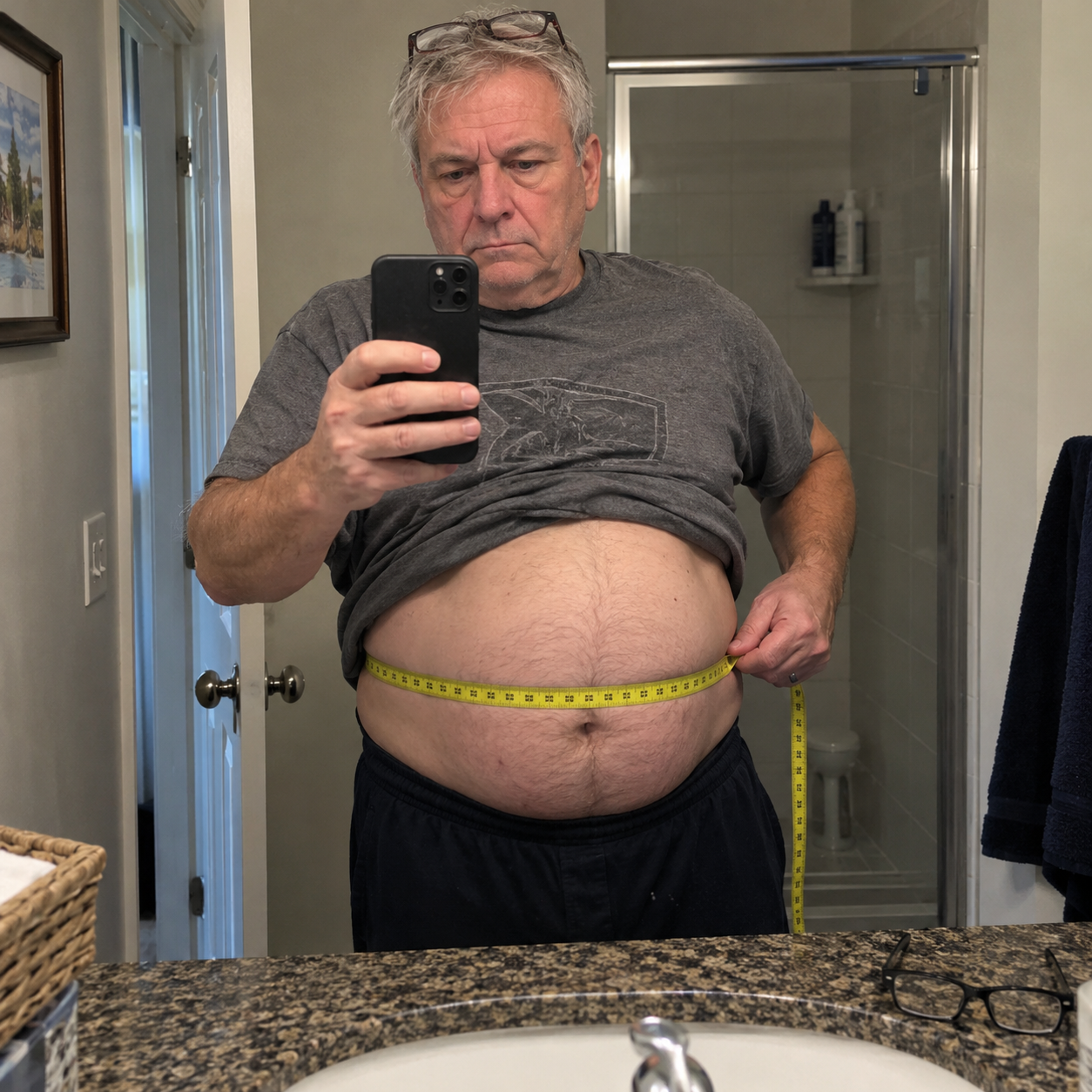
Running for 6 days since October 28, 2026. Crush last saw it on November 3, 2026.
Run by Caroline Moore on Facebook. Crush is not the advertiser and does not verify its claims. See this ad in Meta's Ad Library(opens in a new tab)
Make your own version of this ad
Crush makes it, launches it in your own Meta ad account, scales the winners and pauses the losers.
About this ad
- Meta Ad Library ID
- 1133054769424105
- Platforms
- Facebook, Instagram, Audience Network and Threads
- Relaunches
- 0
Ad text
I compared 6 of the biggest lymphatic supplements I could find. One question mattered more than everything else: Would any of them actually change the weight around my middle, or was I paying $40 a bottle to pee more often? I kept a spreadsheet. Product name, date started, daily dose, morning weight, waist at the belly button, fasting blood sugar, notes. Eighteen weeks of data across six lymphatic and “detox” supplements. 126 rows. Every one of them promised some version of the same thing. Flush the bloat. Drain the puffiness. Drop the stubborn pounds. My name is John Tucker. I’m 60. I spent twenty-eight years as an engineer at a water infrastructure firm, designing systems that had to move water exactly where it was supposed to go. If a component failed testing, you didn’t hope harder. You found out why. So when it came to my own body, I tested. At my last physical, I weighed 228 pounds. My waist measured 42 inches. Five years earlier, it had been 37. My fasting glucose was 112 and my A1C was 6.0. My doctor turned the screen toward me. “You’re edging into the prediabetic range, John. And most of that weight is around your middle. That’s the kind I watch most closely.” She didn’t tell me I needed medication, but she did tell me we needed to keep watching the direction those numbers were moving. I went home and researched. Everywhere I looked, ads were telling me the same story. My problem was water. Trapped fluid, puffiness, a sluggish lymphatic system. Drain it and the belly would follow. It sounded familiar. Clear the blockage. Restore the flow. So I started testing. The first product was an Amazon bestseller. Four herbs in a proprietary blend. No individual doses listed. During the first week, my weight dropped by almost three pounds. I’ll admit it. I was excited. My waist was still 42 inches. A couple of weeks later, most of the weight was back. The second product gave me almost the same result. My weight dropped quickly, I made more trips to the bathroom, and then the number climbed again while my waist stayed exactly where it had been. I tried a liquid, a dandelion-and-cleavers formula, a detox tea, and finally the most expensive one I could find. By the end of eighteen weeks, I had spent $268.40. I kept every receipt. My wife Linda found me at the kitchen table one night with the spreadsheet open and my reading glasses pushed up on my forehead. She picked up the receipt folder. “Two hundred and sixty-eight dollars?” “And not one inch,” I said. “The scale moves for a few days. Then it comes back. The waist never moves.” “Maybe it’s just your age,” she said quietly. “It might be part of it. But something about what I’m measuring isn’t adding up.” Then she said something I wasn’t ready for. “You sound like your father before his first heart attack.” My father carried most of his weight around his middle. He was on blood sugar medication by 64 and blood pressure medication not long after that. He tried diet after diet, losing weight and putting it back on. His health became more complicated as he got older. He died at 74. I was 60. That was what the spreadsheet was really about. I wasn’t trying to lose three pounds for four days. I wanted to know whether I was actually changing the direction of my health. Three weeks before my next appointment, I was awake at 1:47 in the morning. I typed: why do lymphatic supplements make the scale drop then go back up The answer was less mysterious than the ads had made it sound. Some ingredients commonly used in these products, including dandelion, can have a mild diuretic effect. You urinate more and temporarily carry less water. The scale may drop, then fluid balance changes again. That is not the same thing as losing body fat. Every engineer understands the difference between opening a valve and actually lowering the level of a reservoir. My scale had been reacting to short-term changes. My waist was giving me another measurement to watch. And after eighteen weeks, that measurement had barely changed. So I changed the question. If the weight around my middle was not simply trapped water, what else should I be paying attention to? Visceral fat was one part of the answer. That is the deeper fat stored around the abdominal organs. Higher amounts are associated with insulin resistance, type 2 diabetes, abnormal blood lipids, cardiovascular risk, and other metabolic problems. You cannot diagnose visceral fat just by looking at somebody’s stomach, and a hard belly does not prove that is what you are dealing with. But a growing waist can be useful information alongside weight, glucose, blood pressure, lipids, and the rest of the picture. Insulin resistance was relevant too. After we eat, insulin helps tissues take up and use glucose. Skeletal muscle plays a major role in that process, and GLUT4 transporters are involved in glucose uptake in muscle and fat cells. When insulin sensitivity declines, those tissues may respond less efficiently, and the pancreas may compensate by producing more insulin. That can occur alongside changes in abdominal fat, blood sugar, activity, muscle mass, sleep, diet, genetics, and other factors. It is not one simple chain, and it did not mean insulin resistance alone explained my 42-inch waist. What it did mean was that my fasting glucose of 112, my A1C of 6.0, my growing waist, and my family history deserved more attention than another bottle promising to “flush” something out. So I started over. This time I wanted to know what had actually been studied on waist circumference, body composition, and glucose regulation. Cinnamon kept appearing in the published research. I read it the way I would have read a test report at work. One randomized trial involving adults with metabolic syndrome reported a greater reduction in waist circumference in the cinnamon group than placebo. Another trial involving adults with type 2 diabetes reported improvements in BMI, body-fat, and visceral-fat measures. Then I found a meta-analysis pooling 12 randomized trials with 786 participants. Across those studies, cinnamon supplementation was associated, on average, with about 2.2 pounds lower body weight and roughly an inch smaller waist compared with controls. An engineer doesn’t round up. A later review covering 49 trials complicated the picture. It reported improvements in waist circumference, fasting glucose, and insulin-resistance measures. I also found a randomized study using standardized true Ceylon cinnamon extract where fasting glucose was lower than placebo after twelve weeks. They told me there was enough evidence around glucose and waist-related outcomes to make me interested in trying it as one part of a broader plan. This time I did not want to buy the first bottle with a convincing label. Before I started shopping, I wrote down what mattered to me. I wanted the species clearly identified, the source stated, the concentration made obvious, and independent testing I could verify. Those were not clinical requirements handed down by the research. They were simply the criteria I wanted before putting another supplement into my routine. Cassia and Ceylon have both been researched. They are different species, though, and one practical difference mattered to me. Cassia generally contains considerably more coumarin than true Ceylon cinnamon. For something I planned to use regularly, I preferred true Ceylon and wanted to know that the label actually matched what was inside. I compared a number of products. Some simply said “cinnamon” without clearly identifying the species. Others claimed Ceylon but did not provide verification I could find. A few stated the dose clearly but gave me little information about finished-product testing. There was nothing inherently wrong with a dry powder capsule just because it was dry, and I was not looking for an oil-based formula because I believed oil somehow made cinnamon work. I just wanted a product I could identify, verify, and use consistently. That is how I came across Metabolae. I had never heard of the company, so I treated the label like a specification sheet. It used true Ceylon cinnamon, Cinnamomum verum, sourced from Sri Lanka, in a 12-to-1 concentrated extract. Each softgel contained 600 milligrams of extract, equivalent to 7,200 milligrams of raw cinnamon. The species was verified, and the finished product was third-party tested. The extract happened to be suspended in MCT oil. That was part of the formulation, not the reason I chose it. What mattered to me was that I knew what I was buying. Those studies used different cinnamon preparations and doses. I knew that before I ordered it. The bag arrived a few days later. I took one softgel with breakfast, kept my evening walks, and continued eating the same way. I did not suddenly start treating cinnamon like permission to ignore everything else. And because I am who I am, I kept the spreadsheet. At first, not much happened. My weight moved around the way weight always moves around. My waist did not suddenly collapse in the first week. A few weeks in, Linda noticed something before I did. “You haven’t touched the ice cream much lately.” She was right. The evening pull toward something sweet seemed quieter. I wrote it in Column G. Later, my waist measurement finally dipped below the numbers I had been staring at for months. I measured again the next morning before I trusted it, then checked it again the following week. The number was still lower. Over the next couple of months, the general trend continued. It was not a perfectly straight line. Some weeks the scale barely changed, and one week it went up. My waist did not drop on schedule either. But by my next appointment, I weighed 219 pounds, my waist measured 40 inches, and my A1C was 5.7. Those were the numbers I cared about. I brought the spreadsheet to my doctor. Printed and color-coded. She looked through the earlier weeks where my weight bounced and my waist barely moved, then compared them with the more recent measurements. “What changed?” I walked her through the six lymphatic products, the temporary water loss, the walking, the way I was eating, the cinnamon research, and the Metabolae softgel. She looked at the numbers again. “Your waist and your A1C are moving in the right direction,” she said. “Keep doing what is sustainable and we’ll keep monitoring.” That was enough for me. What I could tell her was that the pattern looked different from the eighteen weeks I had spent chasing temporary scale changes. I called Linda from the truck. “Forty inches. A1C 5.7.” She was quiet for a second. Then she said: “That’s better.” It was. A few months later, Linda and I took our first overseas trip in five years. We went to Sri Lanka. I had been putting off long trips without admitting why. Tight seats bothered me, long days on my feet bothered me, and I had started assuming every hill would be harder than it used to be. We stayed near Ella and hiked Little Adam’s Peak one morning. I still stopped. I still breathed hard. I am 60, not a travel brochure. But I made it to the top. Linda held up her phone. For once, I did not turn sideways or suck my stomach in. I just stood there. Before we flew home, a guide walked us through a cinnamon garden. He peeled a thin strip of bark from a young branch and handed it to me. It was papery and delicate, nothing like the thick hard sticks I remembered from the spice cabinet. After eighteen weeks of buying “detox” products, somehow I had ended up standing in Sri Lanka holding actual Ceylon cinnamon. That made me laugh. If you have tried lymphatic or detox supplements and watched the scale drop for a few days before bouncing back, I would not assume you failed. You may simply have been watching a temporary shift in water. For me, the useful question became: What happens after the system settles? That is why I still track my waist. It gives me another piece of information the scale alone cannot give me. And if cinnamon is something you want to try as part of a broader routine, I would approach it the same way I eventually did. Know what you are buying and make sure you can verify it. That is why I stayed with Metabolae. It uses true Ceylon cinnamon from Sri Lanka in a 12-to-1 concentrated extract, with 600 milligrams of extract equivalent to 7,200 milligrams of raw cinnamon in each softgel. The species is verified, the finished product is third-party tested, and MCT oil is part of the formulation. That is enough for me. I know what is in the bag and can use the same formulation consistently. Metabolae is not sold through Amazon, Walmart, or third-party marketplaces, so I get mine through the official Metabolae supply chain. It comes with a 90-day money-back guarantee. I take one softgel with breakfast. I spent eighteen weeks buying products that could make the scale move without changing my waist. That was the clue I had missed. Once I stopped treating every short-term drop as progress, the spreadsheet became much more useful. John Tucker P.S. I still keep it. Not because every week gives me a better number. It doesn’t. I keep it because one reading can fool you, while a trend tells you much more.
Where the ad sends people
metabolae.com
One Shift. Then Home.
Supports healthy blood sugar levels and metabolism with premium Ceylon cinnamon. Shop Metabolae's science-backed supplements. Free shipping available.
Learn more: metabolae.com(opens in a new tab)