Dr. Eleanor Carter
 Facebook ad: “Ceylon Cinnamon 7200mg Equivalent with MCT Oil”
Ran for 6 days, from October 23 to October 29, 2026, the last day Crush saw it.
Run by Dr. Eleanor Carter on Facebook. Crush is not the advertiser and does not verify its claims. See this ad in Meta's Ad Library(opens in a new tab)
Make your own version of this ad
Crush makes it, launches it in your own Meta ad account, scales the winners and pauses the losers.
About this ad
- Meta Ad Library ID
- 1139647165290973
- Platforms
- Facebook, Instagram, Audience Network and Threads
- Relaunches
- 0
Ad text
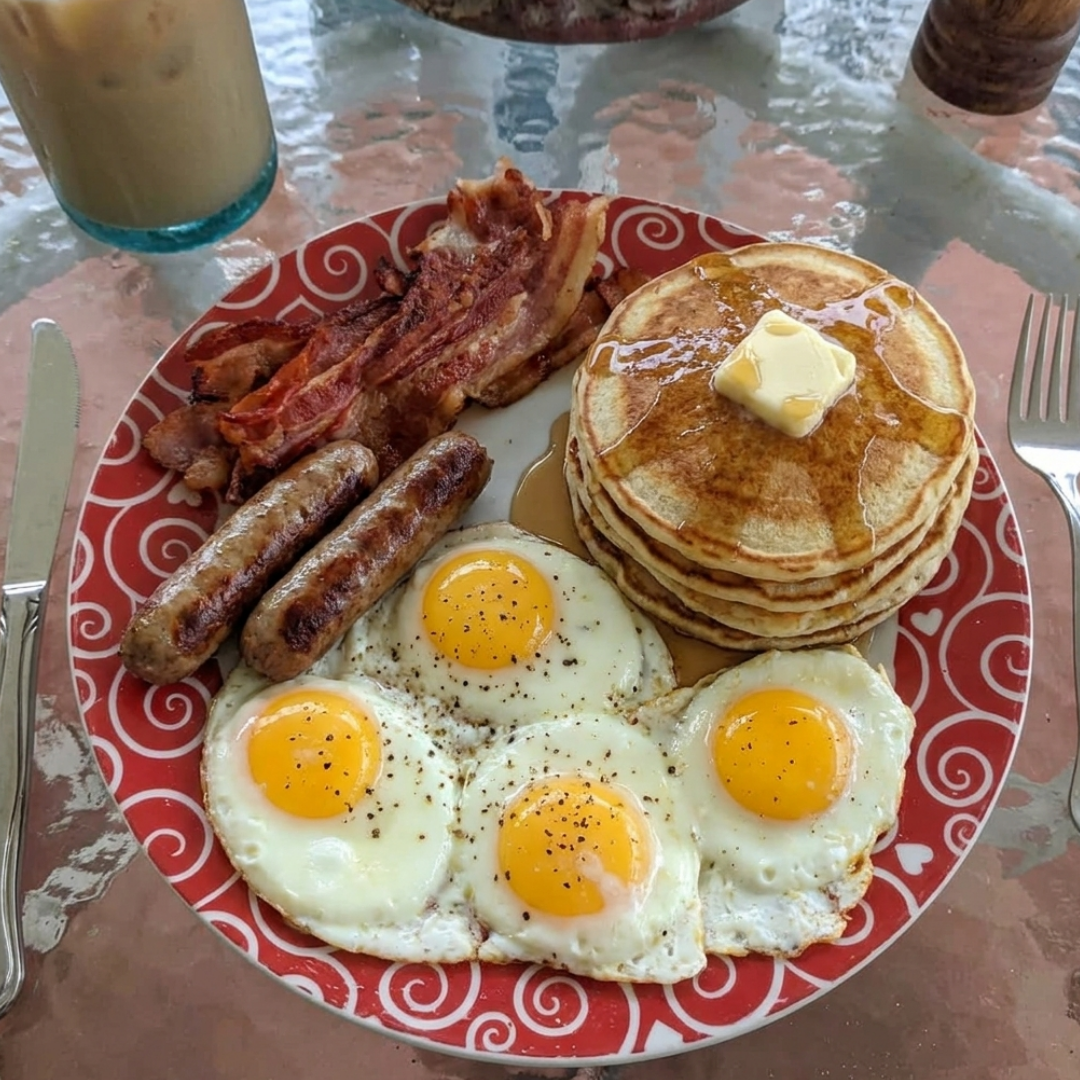
I used to tease my husband that he loved his Saturday bacon and his evening whiskey more than he loved me. He would laugh and say at least the bacon never asked him to paint the bathroom. He was 58. He felt completely fine. He made bacon and sausage every Saturday morning in the same cast iron skillet he had been seasoning since our kids were small, had his glass of whiskey most evenings on the back porch, played dominoes at Frank's house every other Friday night. Nobody in our life was worried about anything. Then one Thursday in March 2023, he went to his annual physical. Four days later his doctor called. He got three numbers from one phone call. LDL cholesterol of 191. Blood pressure 154 over 96. Fasting glucose of 119. I watched the steadiness he had carried his whole adult life leave his face. He sat at the kitchen table for twenty minutes without saying a word. Then he stood up, walked to the liquor cabinet, and started emptying it. I watched him empty that liquor cabinet. But what neither of us understood that day was that the whiskey was not the real villain sitting inside his arteries. He was 60 years old when he died. He stopped drinking on March 16th, 2023. Cut out the bacon and sausage entirely. Went on the Mediterranean diet. Walked four miles every single morning for two years and one month. Lost 28 pounds. Took his statin every night without missing a dose. Took his blood pressure medication every morning. He did everything his doctors told him. The hospital bill was $94,000. The funeral was $12,800. His cast iron skillet is still on the stove. The twelve-inch Lodge he seasoned every week for twenty years. He used to be up before anyone else in the house, bacon popping in that skillet, sausage links lined up on the griddle next to it, eggs scrambled in the bacon grease the way his father taught him in their kitchen in Memphis. Saturday mornings, the whole house smelled like breakfast before the rest of us were even out of bed. The grandkids used to come running down the stairs in their pajamas because they could smell it from the second floor. He stopped making breakfast the week his doctor called. The skillet has not been used since. I cannot move it off the stove. If I move it, he is really gone. I need to tell you what happened to James. Because every week I see posts in the heart health groups my patients forward me. Men writing things like, my doctor put me on a statin and told me to clean up my diet, anyone tried CoQ10? And men who have already cut the drinking, already cut the red meat, already walking every morning, already taking the statin, still asking: my cholesterol came down but my doctor says my risk is still climbing, what else can I do? And it makes me physically ill. I am a cardiologist. I have spent 26 years treating the disease that killed my husband. I know what coronary artery disease looks like on an angiogram. I know what it looks like on a stress test. I know what it looks like at 4 in the morning in a cardiac ICU. I watched it in clinic. I watched it in the family waiting room at the end of a corridor. And I watched it in my own home. If you have been told your cholesterol is high, or your blood pressure is climbing, or your blood sugar is creeping up, or you love someone dealing with any of those things, please read every word of this. I know it is long. I know you are scrolling. I know you have things to do. Two years ago I would have given anything. Everything. For someone to tell me what I am about to tell you. James went in for his annual physical on March 9th, 2023. He felt fine. Better than fine. He had just turned 58. He still ran the Saturday morning breakfast for anyone who wanted to show up. He still played dominoes at Frank's every other Friday. He had never smoked a day in his life. He could still outwork men half his age when something needed doing around the house. His father was 84 and still sharp, still driving himself to the hardware store every Saturday morning in the same Memphis neighborhood where James grew up. A glass of whiskey most evenings on the back porch. Bacon and sausage every Saturday morning. The kind of life nobody would look at twice. Four days later his doctor called. LDL of 191. Blood pressure 154 over 96. Fasting glucose of 119. His internist referred him to cardiology the same week. The cardiologist confirmed it. His endocrinologist the week after that. High cardiovascular risk. Prediabetic. The numbers were all heading in the wrong direction at once. All three landed on the same direction. James, the drinking needs to stop completely. No exceptions. Red meat goes entirely. Mediterranean diet. Lose about ten percent of your body weight. Walk every day. Start the statin tonight. Start the blood pressure medication tomorrow morning. We will retest in six months. James hung up the phone and sat at the kitchen table for twenty minutes without saying anything. Then he stood up, went to the liquor cabinet, and started taking everything out. The whiskey he kept on the counter. The bourbon his brother Robert brought over for the holidays. The six-pack in the refrigerator he had been saving for the game that weekend. The bottle of Scotch a client had given him three Christmases before that he still had not opened. Then the kitchen. The bacon. The sausage links. The breakfast sausage patties in the freezer. The salt. The butter. The cheddar he shredded over his eggs. Gone. That is it, he said. No more. And he meant it. For 25 months, he did not break once. No whiskey on the back porch. No bacon on Saturday morning. Not at Frank's retirement party in June where everyone had drinks and James stood there with a ginger ale and smiled like it was not costing him something. Not at our 33rd anniversary dinner where the restaurant brought out a complimentary glass of wine and he asked them to take it back. Not at his own 60th birthday dinner where I grilled salmon and roasted vegetables and he said it was the best birthday meal he had ever had. He stopped going to Friday dominoes at Frank's house because everyone had drinks and he could not sit in that garage watching his friends pour themselves a glass without feeling like a stranger in the life he had built. He stopped going to his brother Robert's Sunday cookouts because everyone ate whatever they wanted and had beer and sitting there with sparkling water at a table he had been coming to for thirty years felt impossible. Frank told him he was no fun anymore and gradually stopped calling. He lost a piece of himself he had been carrying since his twenties. And he did it anyway. Because his doctors said to. He lost 28 pounds. He walked four miles every single morning before the rest of the house was awake, summer and winter, did not matter. He took his statin every night. He took his blood pressure medication every morning. He took the CoQ10 his cardiologist was not against. He took a fish oil capsule. He drank lemon water every morning. He ate exactly what they told him to eat. And he found a cinnamon supplement at Costco that a man in his heart health forum swore by. Ceylon cinnamon, the label said. Supports healthy blood sugar and cardiovascular function. He took two capsules every day without fail, the same way he did everything else. He did everything right. The follow-up labs came back on September 22nd, 2023. LDL: 128. Down from 191. The statin was working. Blood pressure: 138 over 86. Down. The medication was working. Fasting glucose: 122. Up from 119. His cardiologist focused on the cholesterol and the blood pressure. Great progress, James. The glucose is borderline. Keep doing what you are doing. We will retest in six months. So he did. March 2024 labs. LDL 112. Blood pressure 132 over 82. Fasting glucose 128. Higher. September 2024 labs. LDL 108. Blood pressure 128 over 80. Fasting glucose 134. Higher still. March 2025 labs. LDL 106. Blood pressure 126 over 78. Fasting glucose 141. Higher again. Every number his medications could control was going in the right direction. The one number nothing was controlling kept climbing. His cardiologist said the cholesterol and blood pressure looked excellent. Said to keep an eye on the glucose. Said to keep doing what he was doing. James came home that night and sat at the kitchen table. The same table he had sat at after the first phone call. He did not say anything for a long time. Then he said, Eleanor, I gave up everything. The whiskey. The bacon. The Saturday mornings that were just mine. Two years of walking and grilled fish and ginger ale at every table I sat at. The cholesterol is down. The blood pressure is down. But the glucose keeps going up and nobody can tell me why. I told him to give it more time. I told him the medications were doing their job. I told him to trust the process. I am a cardiologist. I told my own husband to trust a process I now know was missing the most important piece. He nodded. He kept walking. He kept eating the salmon and the spinach. He kept taking his statin and his blood pressure medication. He opened a new bottle of the Costco cinnamon supplement and set it on the counter next to the CoQ10 and the fish oil and the lemon he sliced every morning. And he asked me something I did not have a good answer for. Eleanor. You treat this disease. Is there anything else I should be doing? I told him he was doing everything. I reviewed his chart myself. I said the right things. What I did not tell him was the truth. That I had never framed the one number that kept climbing as the signal it actually was. That the fasting glucose was not a footnote next to two improving numbers. It was an alarm. And I treated it like a footnote anyway. Three weeks later. Three weeks. He woke up at 3 in the morning with a pressure in his chest that would not let him breathe. I drove him to the emergency room. I am a cardiologist. I have watched thousands of ECGs print across a screen. I have read the ST elevation before the emergency team finished attaching the leads. I have called the cath lab before the attending finished her sentence. I had never watched it print across a screen with my husband's name at the top. Massive anterior STEMI. The widowmaker artery. Nearly complete occlusion. They took him to the cath lab at 3:47 AM. The interventional cardiologist placed a stent. But the damage was extensive. The muscle downstream of the blockage had been starved too long. The ejection fraction on the bedside echo was 19 percent. A healthy heart pumps at 55 or above. James, your heart has sustained significant damage, the intensivist said. We are going to do everything we can. But I took my statin for two years, James said. My cholesterol is 108. The intensivist looked at me. She knew what I was. She did not say anything. James spent 9 days in the cardiac ICU. I know the clinical facts of heart failure better than most physicians alive. That week I learned what they feel like from the other side. I learned that when a heart cannot pump enough blood forward, every organ downstream begins to fail. Not all at once. One system after another, quietly, the way lights go out down a hallway. The kidneys slow down first. Then the lungs start filling with fluid because the heart cannot clear it. Then the brain. On day four, James looked at me and asked me twice in ten minutes whether I had checked the oil in his truck. He had not driven in four days. He did not know where he was. I learned that the ICU team starts vasopressors when the blood pressure can no longer sustain organ perfusion on its own. Medications that force the vessels to tighten so the damaged heart can push blood through a smaller space. The nurse told me it was the most they could do at that stage. They were hoping it could keep his organs alive long enough for the heart to recover some function. It did not recover. Day six, his kidneys stopped making urine. The cardiologist I had worked alongside for eleven years came by. She looked at me the way I have looked at families in that same corridor. She did not say what she was thinking. She did not have to. Day seven, they added a second vasopressor. His extremities were cold. His fingers were the color of someone who had been outside in January. Day nine. April 28th. I was in the family waiting room at the end of the corridor. They had asked me to step out. At 4:31 AM I heard the long tone down the hall. At 4:38 AM a physician I had never met walked into the waiting room. I knew. Dr. Carter. I am so sorry. We did everything we could. I drove home at 7 in the morning. His walking shoes were by the back door. The blood pressure cuff on the nightstand. The statin bottle on the bathroom counter, still half full. The Costco cinnamon supplement on the kitchen counter next to the CoQ10 and the fish oil, three-quarters full, and the lemon he had sliced the morning before I drove him to the hospital. His cast iron skillet on the stove. Still there. Still black. Still seasoned. The way it had looked every Saturday morning for twenty years, except nothing had been cooked in it for 25 months. I sat in his chair on the back porch. I did not move for six hours. The backyard was so quiet I could hear the neighbor's sprinkler two houses down. Thirty-three years. And the loudest thing in my world was someone else's sprinkler. The funeral was May 7th. His brother Robert drove up from Memphis. Our son came from Charlotte. Our daughter flew in with the grandkids. The grandchildren wore jackets that were too big for them. My 6-year-old grandson took my hand outside the church and asked, Grandma, who is going to make breakfast on Saturday? I told him Grandpa was in heaven now. He said, Can he still make bacon there? I had to walk around the side of the building. After the funeral I tried to go back to normal. I could not. Because every time I opened my phone I saw men in heart health groups posting exactly what James had posted 18 months before he died. My doctor put me on a statin and told me to clean up my diet, anyone tried CoQ10? And men who had already done what James did, who had already cut the drinking and the red meat and were walking every morning and taking their statin, asking what else they could try. And I knew. I knew some of them were doing exactly what James did. No whiskey. No bacon. Walking every morning. Taking the statin. Taking the CoQ10. Taking the cinnamon supplement from Costco that said Ceylon on the label. And ending up where I was. I am a cardiologist. I could not just sit there. So I started reading the way I had not read since fellowship. Not as a clinician managing a patient. As a wife who needed to understand what had actually happened to her husband. I read for weeks. Papers out of Japan and Germany. Studies I had cited in lectures without ever asking the question James had put to me that April: Is there anything else I should be doing? And one mechanism kept surfacing, over and over, that I had never once framed as the missing piece in James's case specifically. The reason his fasting glucose kept climbing and his cardiovascular risk kept building despite two years of managed cholesterol and managed blood pressure is that the statin addressed what was circulating in his blood. The blood pressure medication addressed the force against his vessel walls. But neither one did anything to repair the cellular machinery his arteries depended on to stay healthy from the inside. That machinery is insulin signaling. And specifically how it governs the endothelium, the thin lining inside every artery in the body. When insulin signaling is working correctly, the endothelium produces nitric oxide. Nitric oxide is what keeps arteries relaxed, flexible, and resistant to damage. It is the reason a healthy artery can handle decades of blood flow without accumulating plaque. The endothelium is not a passive tube. It is an active, living tissue that depends on proper insulin signaling to do its job. When insulin resistance disrupts that signal, the endothelium stops functioning normally. Nitric oxide production falls. The artery wall becomes stiff. Inflamed. Vulnerable. Damaged at a level no statin and no blood pressure medication can reach, because neither one was designed to repair the lining itself. And here is the part that changes everything. Cholesterol does not attack healthy arteries. It deposits on arteries that are already damaged. The damage comes first. The plaque comes second. James's statin brought his LDL from 191 to 108. That is a textbook result. But his endothelium was already damaged from years of insulin resistance before the statin ever entered his system. The statin reduced the cholesterol circulating past that damage. It did not repair the damage itself. Plaque kept building on a wall that was still inflamed, still stiff, still unable to produce the nitric oxide it needed to protect itself. The whiskey was loading a broken system. But the system was already broken before the first glass. And here is what no one told us. Cutting the whiskey removed one stressor. It did not fix the endothelial damage that was already driving plaque accumulation inside his arteries. The damage was still there either way. Cutting the bacon and the saturated fat helped his lipid numbers. It did not repair the arterial lining. The lining was still damaged either way. The statin brought cholesterol down. It did not restore nitric oxide production. The arteries were still stiff and inflamed either way. The blood pressure medication reduced the force on the vessel walls. It did not repair the walls themselves. The endothelium was still broken either way. Twenty-five months of the Mediterranean diet and four miles every morning cannot repair an arterial lining that was never addressed. That is why his risk kept building while his numbers kept improving. He gave up everything he loved to reduce the load on a system that was still broken underneath it all. But nobody ever fixed the system. Read that again. I sat with that for three days. Then I picked up the cinnamon supplement from the kitchen counter. I had it tested. It was Cassia. There are two species of plant sold under the name cinnamon. The species documented in peer-reviewed research to support insulin signaling and endothelial function is Cinnamomum verum. Ceylon cinnamon. Soft, multi-layered bark. It comes from Sri Lanka. The species filling roughly 9 in 10 cinnamon supplements on the market is Cinnamomum cassia. It comes primarily from China. It costs a fraction of what Ceylon costs to produce. And it does not contain the same compound profile. The cinnamaldehyde concentration and the supporting bioactives documented in the insulin signaling and endothelial research come from Cinnamomum verum. Not Cassia. Cassia also contains up to 5 percent coumarin by weight. Coumarin is hepatotoxic at sustained daily doses. The European Union has set a tolerable daily intake specifically because of it. But the liver toxicity is not even the central failure here. The central failure is that James was taking a supplement every single day for 6 months that contained none of the compounds documented to support the insulin signaling his endothelium depended on. The mechanism that was driving plaque accumulation inside his arteries was going completely unaddressed by the capsule he swallowed every morning. He believed it was protecting his cardiovascular system. It was not even in the conversation. I found two more bottles in the pantry he had bought in bulk because the Costco bulk price was lower. I tested both of them. Cassia. He was doing everything his doctors told him. He was taking a supplement he trusted because it said Ceylon on the label. That label was not accurate. I had it tested after he died. There are no verification requirements for what a cinnamon supplier prints on a label in a third-party marketplace. No species testing. No coumarin measurement. No accountability. A supplier sources cheap Cassia from China, prints Ceylon on the label, sells it at a price that sounds credible, and no one is responsible for what is actually inside. He paid more per bottle because the label said Ceylon. It was not Ceylon. I cannot describe what I felt reading those test results. But the Cassia problem was only one of three things failing simultaneously. The dose was a second failure. The research documenting cinnamon's effect on insulin signaling and endothelial function, the studies showing meaningful support for nitric oxide production and arterial health, used multi-gram daily doses. 1 to 6 grams of true Ceylon extract per day. James's supplement contained 500 milligrams of dry powder per capsule. Two capsules per day. 1 gram total. A fraction of the research dose. An amount designed to make the label look credible while delivering a fraction of the concentration that produced any documented result. And dry powder is a delivery failure on top of the dose failure. Cinnamaldehyde, the primary bioactive compound in true cinnamon and the compound the research links to nitric oxide support and insulin signaling, is fat-soluble. It does not dissolve in water. It does not cross cell membranes without a lipid carrier. A dry powder capsule sends most of the active compound through the digestive tract before it is ever absorbed. You get the label. You get the smell when you open the bottle. Your body excretes most of what was inside. Three failures in one product. Wrong species. A fraction of the effective dose. A delivery format that cannot absorb what little is there. And because the species was Cassia and not Ceylon, every single capsule was delivering zero support for the insulin signaling his arteries depended on. For 6 months the mechanism driving his endothelial damage went completely unaddressed while he believed he was doing something about it. He was taking a cardiovascular support supplement that was not supporting his cardiovascular system. I went to the pharmacy the week after I understood this. I stood in that supplement aisle for a long time. CoQ10. Fish oil. Garlic capsules. And cinnamon. 9 cinnamon products on that shelf, 6 of them labeled Ceylon, none with a certificate of analysis visible anywhere, none with coumarin testing listed on the label. I bought every cinnamon product on that shelf. I had them all tested. 6 out of 9 were Cassia. One had a coumarin level that would put a 180-pound man above the EU tolerable daily intake in a single capsule. It was marketed as a heart health supplement. I sat in my car in that parking lot for twenty minutes. The literature kept pointing to the same three non-negotiables. The species had to be verified Cinnamomum verum. Not Cassia relabeled. Third-party confirmed per batch. Sourced from Sri Lanka, not a Cassia-growing region, with a chain of custody that could actually be documented. The dose had to match what the research used. A 12-to-1 concentrated extract delivering the equivalent of 7,200 milligrams of raw Ceylon bark in a single daily softgel. Not 500 milligrams of dry powder. Not 1,000. The dose the clinical studies were actually built around. And the delivery had to be MCT oil suspension. Not dry powder. Cinnamaldehyde is fat-soluble. MCT oil from coconut dissolves it, carries it through the absorption pathway, and gets it into systemic circulation at concentrations dry powder capsules cannot come close to reaching. Most commercial products failed on at least two of the three. The ones that sourced verified Ceylon used dry powder. The ones that used MCT oil did not have published species testing. The ones that tested for coumarin were Cassia underneath the label anyway. 6 weeks into the search, I was working through a stack of European bioavailability papers when I came across a technical presentation from a nutritional ingredients conference in Dusseldorf. Not a marketing document. A pharmacokinetics paper, the kind written by formulators for formulators, never intended for a general audience. The paper compared cinnamaldehyde absorption across three delivery formats: raw powder, standardized dry extract capsule, and a 12-to-1 concentrated extract suspended in MCT oil. The MCT suspension showed meaningfully higher bioavailability at every measured timepoint. The lead author was affiliated with a German specialty raw material supplier. The formulation described in the study was their proprietary extract. I found their technical contact and wrote to them that night. Three days later I had their certificate of analysis in my inbox. Species confirmed: Cinnamomum verum, sourced from Sri Lanka. Extraction ratio: 12-to-1. Coumarin: trace levels, well below the EU tolerable daily intake per serving. The specification sheet listed the finished product format: MCT oil suspension, single daily softgel, 7,200 milligrams of raw bark equivalent per serving. I asked one more question. Which consumer brands were currently formulating with this specific material? They sent me a short list. Metabolae was on it. Verified Ceylon cinnamon. Cinnamomum verum, sourced from Sri Lanka. Third-party tested every batch for species identity, coumarin content, potency, and purity. Certificate of analysis available before you order. 12-to-1 concentrated extract. 7,200 milligrams of raw Ceylon bark equivalent in one daily softgel. The dose the research used. Not a token amount. The actual dose. MCT oil from coconut. The active compound dissolved in a lipid carrier it can actually be absorbed through. No dry powder. No degradation. One softgel per day. 30 softgels per bag. I almost did not order it. After the pharmacy aisle. After the test results. After April 28th. After everything. But James's brother Robert was sitting on a fasting glucose of 138 and a blood pressure reading his GP told him to just monitor. He was still having his whiskey in the evenings. He was stubborn the way James was stubborn. My daughter had just been told her own fasting glucose was elevated at her last physical. I had my own numbers moving in the wrong direction. I ordered it. Robert first. Fasting glucose 138. Blood pressure borderline. Doing what his doctor told him. Watching the glucose climb anyway. I sent him a bag of Metabolae and a note that said, Take one every morning. Do not skip. I mean it, Robert. He took it. He did not stop having his evening whiskey. He is stubborn the way James was stubborn. But he took one softgel every morning with his coffee. He went to his doctor last month for his follow-up. Fasting glucose: 94. Down from 138. In 10 weeks. He had not stopped drinking. He had not changed his diet. He had not started anything new. The only thing that changed was one softgel in the morning. Verified Ceylon at the research dose in the MCT oil delivery that his body could actually absorb. He called me that night. He said, Eleanor. I think James died because nobody told him what was actually in those Costco capsules. I had to put the phone down. My daughter is 36. Two small kids. Mildly elevated fasting glucose at her last physical. Her doctor told her to watch her sugar intake and come back in six months. She started taking Metabolae 7 weeks ago. She says the afternoon heaviness she had been writing off as just life with two young children is different now. The tightness she used to feel in her chest climbing the stairs with the baby, the one her GP told her was probably just being out of shape, is gone. My colleague at the practice. A cardiologist I have worked alongside for 11 years. Her own fasting glucose had been elevated for 8 months. She had tried three cinnamon supplements from Amazon, all labeled Ceylon, none of them third-party tested. None had moved the number. She knows now what I know. She started Metabolae 8 weeks ago. Fasting glucose from 124 to 86. She sent me the result with one line. You should have told me sooner. I told her I did not know sooner. I told James's friends from his heart health forum. I told every patient whose chart shows climbing fasting glucose alongside managed cholesterol and managed blood pressure and a history of doing everything they were told while the risk kept building anyway. I am not a salesperson. I have never recommended a supplement brand in 26 years of practice and I am not doing it now because a company asked me to. I am a 62-year-old widow sitting at her desk at 1 in the morning because she cannot sleep, and because Robert is 61 and still having his evening whiskey and I check in on him every week because I am terrified every time my phone rings. Here is what I know because I lived it from both sides. Stopping the alcohol removes one stressor. It does not fix the endothelial damage that was already driving plaque accumulation inside the arteries. The system stays broken either way. Cutting the saturated fat helps the lipid numbers. It does not repair the arterial lining. The lining stays damaged either way. The statin brings cholesterol down. It does not restore nitric oxide production. The arteries stay stiff and inflamed either way. The blood pressure medication reduces force on the vessel walls. It does not repair the walls themselves. The endothelium stays broken either way. CoQ10 supports mitochondrial function. It does not restore the insulin signaling that governs how the endothelium protects itself. James took it for 25 months. His fasting glucose kept climbing. Cinnamon supplements from Costco, from Amazon, from Walmart, from any third-party marketplace that says Ceylon on the label, are in a significant number of tested cases actually Cassia. I have tested them. I have the results. Cassia does not contain the compound profile documented to support insulin signaling and endothelial function. You may be taking something marketed as heart support that is doing nothing for the mechanism your arteries actually depend on. The insulin resistance driving your endothelial damage may be going completely unaddressed by the supplement you take every morning. James took it for 6 months. I had it tested after he died. Dry powder capsules at 500 or 1,000 milligrams of Cassia relabeled as Ceylon do not reach the bloodstream at the concentration required to do anything the research documented. You are spending money on something that sounds right and does nothing. Or worse. James gave up 25 months of the mornings and evenings that were just his. The whiskey. The bacon on Saturday. The dominoes at Frank's. The cookouts at his brother's table. And the supplement he trusted because it said Ceylon on the label was the wrong species entirely, delivering none of the compounds documented to support the insulin signaling his arteries depended on. The mechanism driving his endothelial damage went unaddressed for every one of those 25 months. Nobody told us. I wish someone had told us before March 9th, 2023. Before the liquor cabinet was emptied. Before the cast iron skillet went cold. Before 25 months of ginger ale at every table he sat at. Before 4:31 AM on April 28th. I cannot go back. James cannot come back. His cast iron skillet is still on the stove and it is going to stay there. But you can still go forward. Your husband can. Your brother can. You can. Metabolae. Verified Ceylon cinnamon. Cinnamomum verum, sourced from Sri Lanka. Third-party tested every batch for species identity, coumarin content, and purity. 12-to-1 concentrated extract delivering 7,200 milligrams of raw Ceylon bark equivalent in one daily softgel. Suspended in MCT oil from coconut for the absorption that dry powder capsules cannot achieve. No Cassia. No hidden coumarin. Certificate of analysis available before you order. No proprietary blends. No hidden anything. One softgel per day. 30 softgels per bag. 90-day money-back guarantee. If your numbers do not move in 90 days, every dollar back. No questions. Open the bag, take one softgel every morning, give it the full 90 days. If it does not work for you, send back what is left and get every penny back. James used to say, Eleanor, you cannot undo what already happened. But you can change what happens next. You can change what happens next. ~ Dr. Eleanor Carter, Cardiologist, 26 years P.S. His cast iron skillet is still on the stove. His whiskey glass is still on the shelf above it. I still cannot move either of them. Every morning I walk past both and for one second I forget. For one second I think he is about to come downstairs. He is not. $94,000 in hospital bills. $12,800 for the funeral. 25 months of him giving up the whiskey and the Saturday bacon and the evenings that were entirely his. And a Costco bottle that said Ceylon on the label and was Cassia inside. 6 out of 9 products from a single pharmacy shelf were Cassia. One exceeded the EU tolerable daily intake for coumarin in a single capsule. They were marketed as heart health supplements. Please. Do not buy cinnamon supplements from Amazon, Walmart, Costco, or any third-party marketplace and trust the label. The only way to know what you are actually getting is to buy directly from a company that publishes its testing. Metabolae does. That is the only place I am directing you. P.P.S. I do not work for Metabolae. I receive nothing from this. I am writing this at 1:47 AM because I cannot sleep and James's brother Robert is 61 and still having his evening whiskey and I check in on him every single week because I am terrified every time my phone rings. Share this with any man you love who has been told his cholesterol is high or his blood pressure is climbing or his blood sugar is creeping up. Even if he is already doing what his doctor told him. Even if he has already cut the drinking and the red meat and started walking. Especially then. The cinnamon supplement he may be taking from Costco or Amazon is, in too many tested cases, not what the label says. And the cellular mechanism his arteries depend on, the one that statins and blood pressure medications were never designed to fix, may be going completely unaddressed. Please.
Where the ad sends people
metabolae.com
Ceylon Cinnamon 7200mg Equivalent with MCT Oil
Supports healthy blood sugar levels and metabolism with premium Ceylon cinnamon. Shop Metabolae's science-backed supplements. Free shipping available.
Learn more: metabolae.com(opens in a new tab)