Mariam Ansari
Mariam Ansari Facebook ad: “Every Muslim Parent Should See This”
Ran for 106 days, from February 24 to June 10, 2026, the last day Crush saw it.
Run by Mariam Ansari on Facebook. Crush is not the advertiser and does not verify its claims. See this ad in Meta's Ad Library(opens in a new tab)
Want an ad like this for your product?
Crush makes new ad images for your product from this ad: your logo, your product photo, your offer.
Trials from $19.95 USD, then $79.95 USD a month. Cancel anytime.
About this ad
- Meta Ad Library ID
- 1204106211793731
- Platforms
- Relaunches
- 0
- EU reach
- 49,480
- Niche
- Parenting & Kids
Ad text
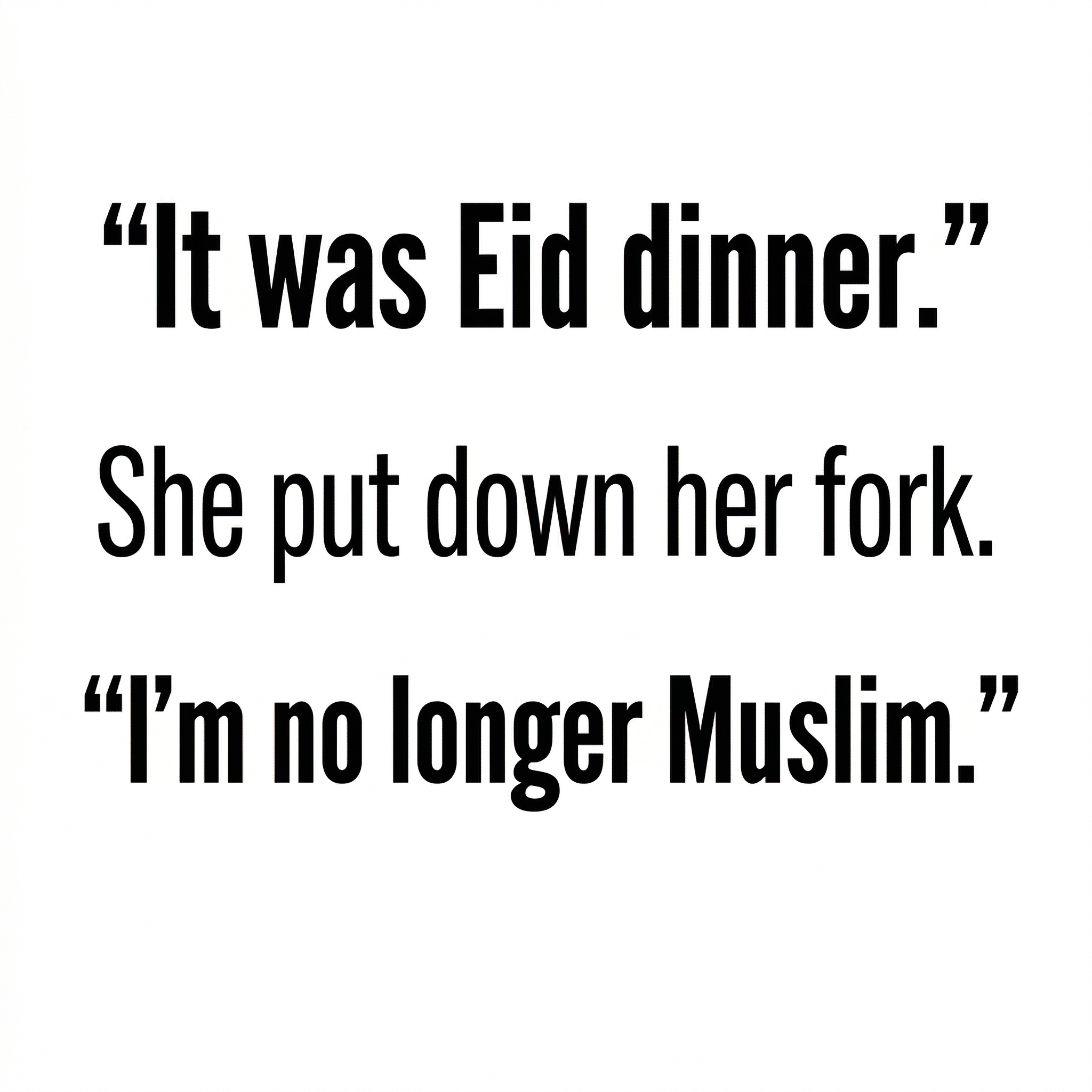
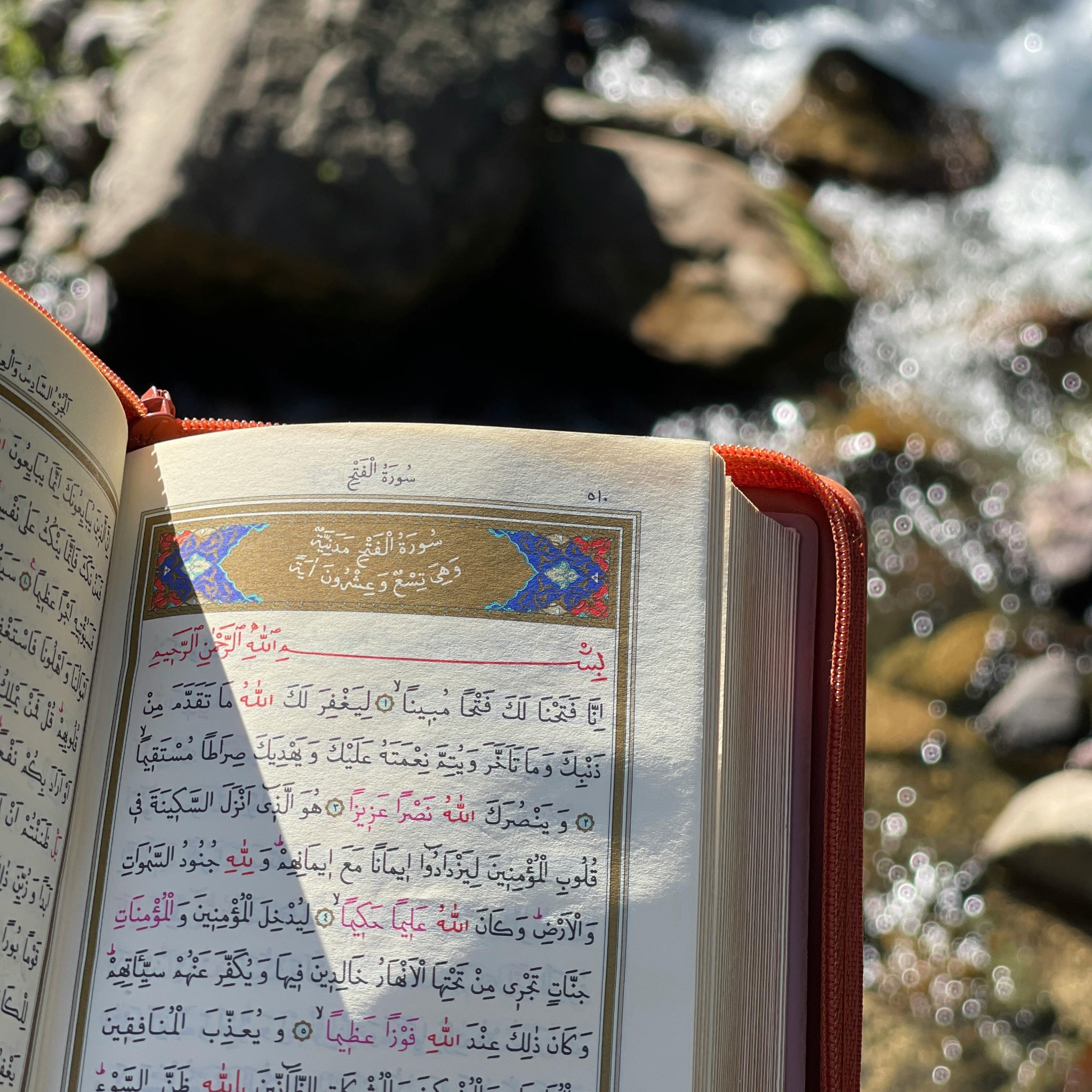
I used to pity parents whose children drifted away from the faith. Until I became one of them. I always took pride in my “model” Muslim family. My husband sits on the Masjid board. I’ve taught weekend school for ten years. My eldest son is a Hafiz. In our community, I was the mother younger women came to for parenting advice. Until three months ago. One evening after dinner, I was scrolling through Facebook, half paying attention to community updates. Then a profile appeared in the “People You May Know” section. The face looked familiar. So familiar that my heart actually skipped a beat. I didn’t recognize the username. But call it a mother’s intuition. I clicked. For the next ten minutes, I stood under the cold kitchen lights, feeling like the ground had disappeared beneath me. It was her. My youngest daughter. In the photo, she wasn’t wearing her hijab. There was a streak of blue dye in her hair. But that wasn’t what scared me most. It was the captions. They weren’t shallow selfies or teenage jokes. They were sharp. Thoughtful. Full of doubt that clearly hadn’t formed overnight. In a post from six months earlier, she wrote: “Today at school, a classmate challenged me on inheritance law (4:11). I wanted to defend it. I wanted to say Allah is just. But when I read ‘two shares for the male, one for the female,’ I had nothing to say.” In the comments, strangers pushed back hard. I noticed the timestamps. The criticism came at 4:02 PM. Her reply didn’t appear until 4:50. In that forty minute gap, I could almost see her typing, deleting, then typing again. Eventually, she wrote just one line: “I believe there is a reason. I just haven’t found it yet.” My heart broke reading that. That was the moment I realized I was losing her. Not her body, but her mind. I wanted to help. Desperately. And for the next month, I did everything wrong. The first thing I tried felt obvious. I took her to speak with a respected scholar. He was kind and sincere, and he explained the issue using traditional language I had trusted my entire life. But as he spoke, I watched my daughter’s eyes slowly lose focus. She nodded politely, but she wasn’t really there anymore. She could hear him, but nothing was landing. For a child raised on YouTube and TikTok, his explanation felt like trying to stream a high definition movie on dial up internet. So I assumed the problem was resources. I started buying books. Classic English Tafsirs. Thick, respected, highly recommended. The result was walls of dense text, full of “Verily” and “Thou.” She forced herself through two pages, then looked up at me and asked, half joking and half exhausted, “Mom, why does Allah’s word read like a vacuum cleaner manual?” She closed the book, set it aside, and never touched it again. Then came my biggest mistake. One evening, she asked again about inheritance, about why men receive double the share. I was tired. I was scared. And I answered the worst possible way. “Because Allah said so,” I told her. “It’s a test of our faith.” She didn’t argue. She didn’t push back. She went quiet. It wasn’t the quiet of understanding. It was the quiet of surrender. I could feel a door closing somewhere inside her. I felt completely helpless. A few weeks later, at a small parent gathering, I found myself talking to a friend I trust deeply. She has worked in education for years and is raising teenagers herself. I poured everything out. My fear. My guilt. The feeling that I was failing my child. She didn’t quote a verse. She didn’t give me a lecture. She paused and asked me a question that stopped me cold. “Why are you giving her only things to listen to, but never anything to actually see?” She explained that this generation processes meaning visually. Through structure, context, diagrams, and logic. We were giving them conclusions without showing them the reasoning. Sound without a map. “This isn’t about weak iman,” she said gently. “It’s about using the wrong tools.” Before I left, she pulled a book from her bag. It wasn’t an old black and white volume. It looked like a modern textbook, almost like a DK encyclopedia. The title was Qur’an Made Simple. I remember stopping her immediately. “Who wrote this?” I asked. “Where is this coming from?” She explained that it wasn’t the opinion of one individual scholar. It was a special illustrated edition carefully compiled by a UK-based Islamic education team with experience in curriculum development. The English translation is faithfully adapted from Saheeh International, a translation recognized by Abul Qasim Publishing House, ensuring the meaning remains true to the original Arabic text while being easy to read. The goal, she told me, wasn’t to simplify the Qur’an itself, but to remove unnecessary barriers. Clear, modern English instead of archaic language. Short explanations placed directly alongside the verses. Visual aids that support understanding without depicting prophets or violating Islamic values. “As a parent,” she said, “this is one of the safest and most thoughtful editions I’ve seen for families, reverts, and non Arabic speakers.” I was still skeptical. Simple sounded childish. My daughter didn’t need cartoons. She needed depth. But I opened it. I froze. I turned to Surah Al Fil. Instead of long paragraphs, there was a tactical map. Abraha’s route, the terrain, the distances, the political context. A story I had recited for forty years suddenly felt historical instead of abstract. Surah Yusuf wasn’t presented as a wall of text, but as a clear timeline aligned with Egyptian dynastic history. The Qur’an wasn’t reduced. It was contextualized. That night, I didn’t hand it to her. I just left it on the kitchen table where she does homework. Day one, she ignored it. Day two, she flipped a page while eating cereal. Day three, I walked past her room and stopped. She wasn’t scrolling TikTok. She was reading. A week later, something extraordinary happened. At dinner, she looked up and said casually, “Mom, did you know the inheritance system in the Qur’an was actually revolutionary for its time?” I just stared at her. She pulled out the book and pointed to a detailed pie chart. “Before this, women got nothing. This system guaranteed women assets with no financial obligation. It actually protects women more than men. It’s kind of genius.” Genius. Not holy. Not because Allah said so. Genius. Later, I noticed she started posting again on that Facebook account I wasn’t supposed to know about. This time, she wasn’t doubting. She was explaining. She still has questions. She isn’t perfect overnight. But she no longer believes faith is at odds with reason. I still teach weekend school. I still lead prayers. But I don’t hand parents dry, unreadable books anymore. I hand them Qur’an Made Simple and say, “This is a language they understand.” Because our children don’t need more lectures. They need a map. If your child is asking questions that make you sweat. If you feel them drifting into a digital world you can’t reach. If your shelves are full of books no one opens. Don’t blame their iman. The Qur’an is a perfect treasure. But if we keep using old keys, we will never open the door for them.
Where the ad sends people
tryterre.com
Every Muslim Parent Should See This 👆
Don't just recite. Understand. Your journey to connecting with the Quran starts here. Many of us struggle to move beyond recitation. We want to understand the message, but traditional texts can feel overwhelming or complex. The TERRE Edition is thoughtfully compiled to solve this. We have bridged th...
Shop now: tryterre.com(opens in a new tab)