Mariam Ansari
Mariam Ansari Facebook ad: “99% Of Muslim Parents Need To Read This”
Ran for 42 days, from February 4 to March 18, 2026, the last day Crush saw it.
Run by Mariam Ansari on Facebook. Crush is not the advertiser and does not verify its claims. See this ad in Meta's Ad Library(opens in a new tab)
Want an ad like this for your product?
Crush makes new ad images for your product from this ad: your logo, your product photo, your offer.
Trials from $19.95 USD, then $79.95 USD a month. Cancel anytime.
About this ad
- Meta Ad Library ID
- 1551662282780123
- Platforms
- Relaunches
- 1
- Niche
- Parenting & Kids
Ad text
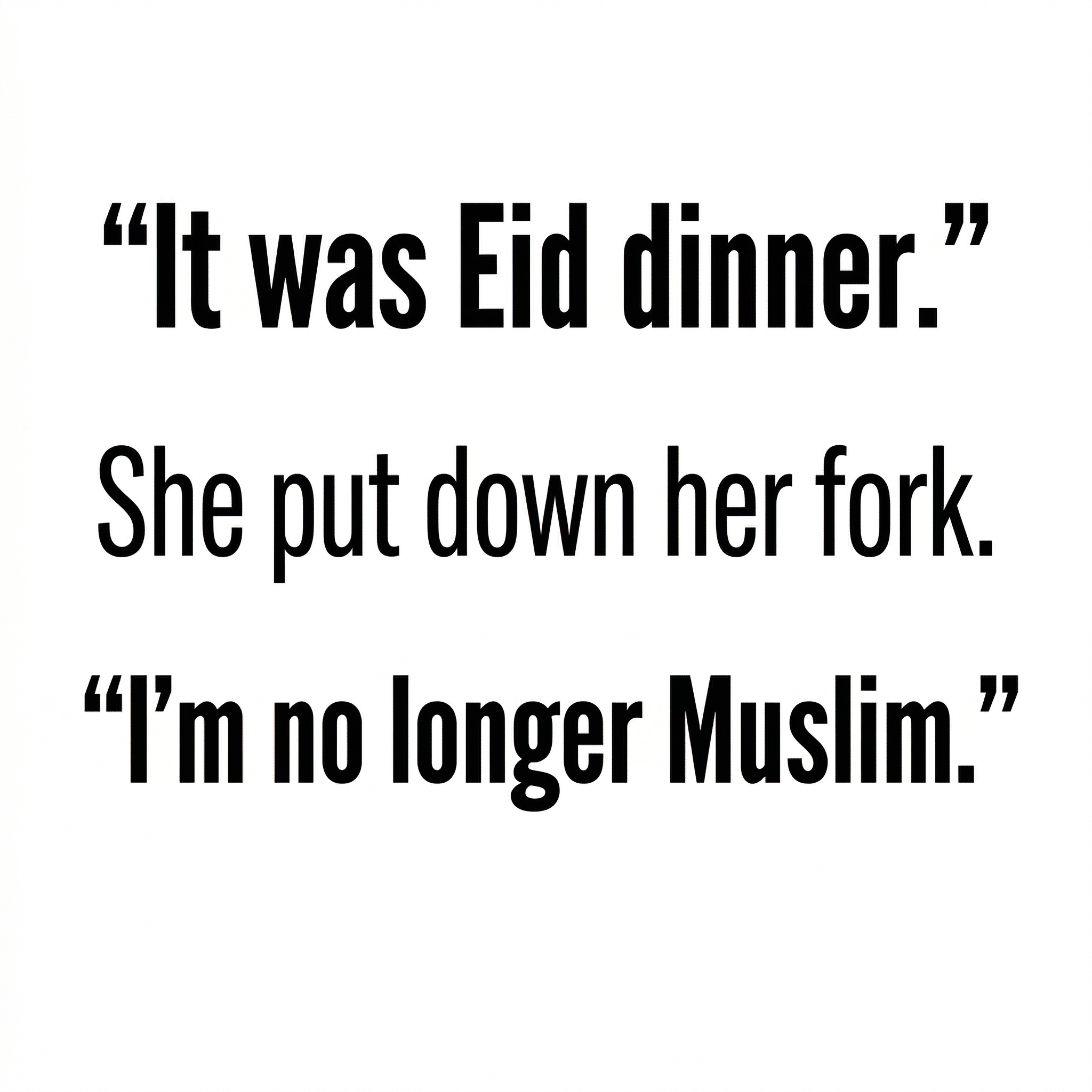
"If Adam and Eve were the first humans, how do we explain the fossils of hominids that existed 200,000 years ago? And if evolution is real, is the Quran wrong?" My daughter asked me this six months ago, over a Tuesday night dinner. She didn't ask it aggressively; she asked it with the same genuine curiosity she applies to her AP Biology homework. I froze. I frowned, put down my fork, and gave her the only answer I had at that moment: "We do not question the wisdom of Allah. Science changes, the Quran does not. You just have to have faith." She didn't argue. She just looked down at her plate, nodded slowly, and went silent. But I saw the light in her eyes dim. I knew, logically, that I hadn't answered her. I had dismissed her. "You shut down her intellect to save her soul." A Muslim child psychologist said this to me at a community dinner last weekend. We were standing off to the side, balancing paper plates near the dessert table, after I had quietly confessed that interaction to him. He didn't look at me with judgment. He looked concerned. "But for a smart kid," he continued, lowering his voice so the other parents wouldn't hear, "that’s not safety. That’s a signal that her faith cannot survive scrutiny." His words stung because they were true. And I was asking for his advice because of what I had found just three weeks prior. I found my daughter's second Instagram account. I wasn't snooping. Not really. Her phone was on the kitchen counter, face up, and a notification popped up. A username I didn't recognize. I picked it up to bring it to her room, and I saw the preview. It was her. But different. No hijab. Different clothes. But it wasn't just the appearance. It was the captions. They were witty, secular, full of references to philosophers and scientists we never discussed at home. I stood there in my kitchen for maybe ten minutes just staring at the lock screen, trying to process the data in front of me. The girl in those photos was confident. She was engaging in debates in the comments. She seemed completely unburdened by the mental gymnastics she performed at home. And I realized I hadn't seen that version of my daughter in years. Not at home. Not at the masjid. Not anywhere I was present. I didn't confront her immediately. I needed to analyze this. As an educated professional, I pride myself on logic, but I was overwhelmed by a data point I couldn't reconcile. Anger? Betrayal? Fear? All of it. But mostly, I felt a sinking realization that I didn't actually know my own daughter's mind. The version of her I see every day—the one who prays, who fasts, who sits quietly during Quran lessons—that version might be a facade. A way to avoid the uncomfortable silence that follows her difficult questions. I kept thinking about all the times I'd been proud of her. How she memorized Surahs without complaint. How she seemed so grounded. But now I was wondering if that wasn't piety. It was just conflict avoidance. A script she'd learned to recite because she knew I couldn't handle the unscripted questions. I didn't sleep that night. I kept running a simulation in my head. When did the gap start? When did she decide that Islam and Intellect were mutually exclusive? And then the harder question: Why? A few days later, I sat down with her. Not to yell. Not to punish. I approached it like a peer review. I just asked her about it. She cried. Not because she was scared, but because, in her words, she was "exhausted." Exhausted from the cognitive dissonance. She said she didn't hate Islam. She didn't want to leave. But she couldn't make it make sense. "I know how to pray," she said, her voice shaking. "But I feel like a hypocrite. How can I believe in something that feels so disconnected from the reality I learn about in school? It feels... irrational." And that broke something in me. Because I realized I'd spent years teaching her the how—the rituals, the rules, the pronunciation—but I’d never equipped her with the why. I had raised a critical thinker, but I expected her to turn off her brain when she entered the prayer room. I'd given her the dogma, but never the foundation. So when her friends at school questioned things, or when her own logic found a contradiction, she had no framework to process it. Instead of coming to me, the person who shut her down, she built a second life where she didn't have to defend the indefensible. I didn't know how to fix it. I thought about sending her to more lectures, but I knew traditional sermons would just push her away. She didn't need emotional appeals; she needed intellectual respect. A friend of mine, a fellow academic, noticed I was off. I admitted I was struggling to connect my daughter’s modern education with her ancient faith. She recommended a resource I hadn't heard of. A book called Quran Made Simple. I was skeptical. I've bought Islamic books before. They're usually full of circular logic or flowery language that doesn't hold up to scrutiny. My daughter is fifteen. She reads Orwell and Hawking. She needs substance, not platitudes. But my friend insisted. She said this was different. It focused on context—historical, sociological, linguistic. It explained the logic behind the revelation. I ordered it that week. When it arrived, I didn't preach. I just left it on the coffee table in the family room, like any other reference book. My daughter picked it up a few days later. I saw her look at the cover skeptically, flip through the index, and then put it back down. But the next day, she picked it up again. And then again the day after that. I didn't ask her about it. I didn't want to bias the experiment. About a week later, she came into the kitchen while I was making dinner and asked me a question. "Did you know Surah Al-Asr was revealed as a response to the specific social decay of that era?" I stopped chopping and looked at her. "Not exactly," I admitted. She explained it to me. Not as a mystical chant, but as a sociological argument. The context. The logic. Why it mattered to the people who first heard it, and how it applies to the human condition now. I asked her where she learned that. "That book you left out," she said. "It... actually makes sense. It’s logical." I didn't push. I just said, "I'm glad." Over the next few weeks, something shifted. Not dramatically. Not overnight. But the nature of her questions changed. They weren't "gotcha" questions anymore. They were research questions. "Why do we fast? Is it just obedience, or is there a psychological benefit?" "What was happening politically when this verse was revealed?" For the first time in years, we were having intellectual conversations about faith. I realized that the problem wasn't that she was a skeptic. The problem was that she was starving for reason. And how could she not be? I'd given her the command but not the rationale. It's like asking a mathematician to accept a formula without showing the proof. Eventually, they stop using the formula. I'm not going to sit here and say everything is resolved. She still questions. She still has doubts—which the expert told me is actually healthy. She still has that second Instagram account. But she's not hiding as much. And more importantly, she's not pretending. Last week, she asked if we could read a Surah together and analyze it. Not because I forced her. Just because she wanted to understand the logic. That's the part that got me. She wanted to know. I think about all the years I spent worrying about the wrong things. Worrying about whether she was praying on time. Whether her hijab was styled correctly. But I wasn't worried about whether she actually understood the system she was part of. And without understanding, for a mind like hers, faith is just friction. Because the second they leave your house, the second they step into a university classroom, they have to choose for themselves. And if they don't know why they believe, if they can't defend it intellectually, they won't keep it. They'll just build another version of themselves that fits the world they understand. I don't know if my daughter will always stay connected to her faith. I can't control the data she encounters. But at least now, her choice is based on understanding, not just a reaction to silence. If you have a child who asks the hard questions—the ones that make you uncomfortable—don't shut them down. It's not about being stricter. It's not about blind obedience. It's about respecting their mind enough to give them the one thing we forgot to give them. The reason why.
Where the ad sends people
tryterre.com
99% Of Muslim Parents Need To Read This 👆
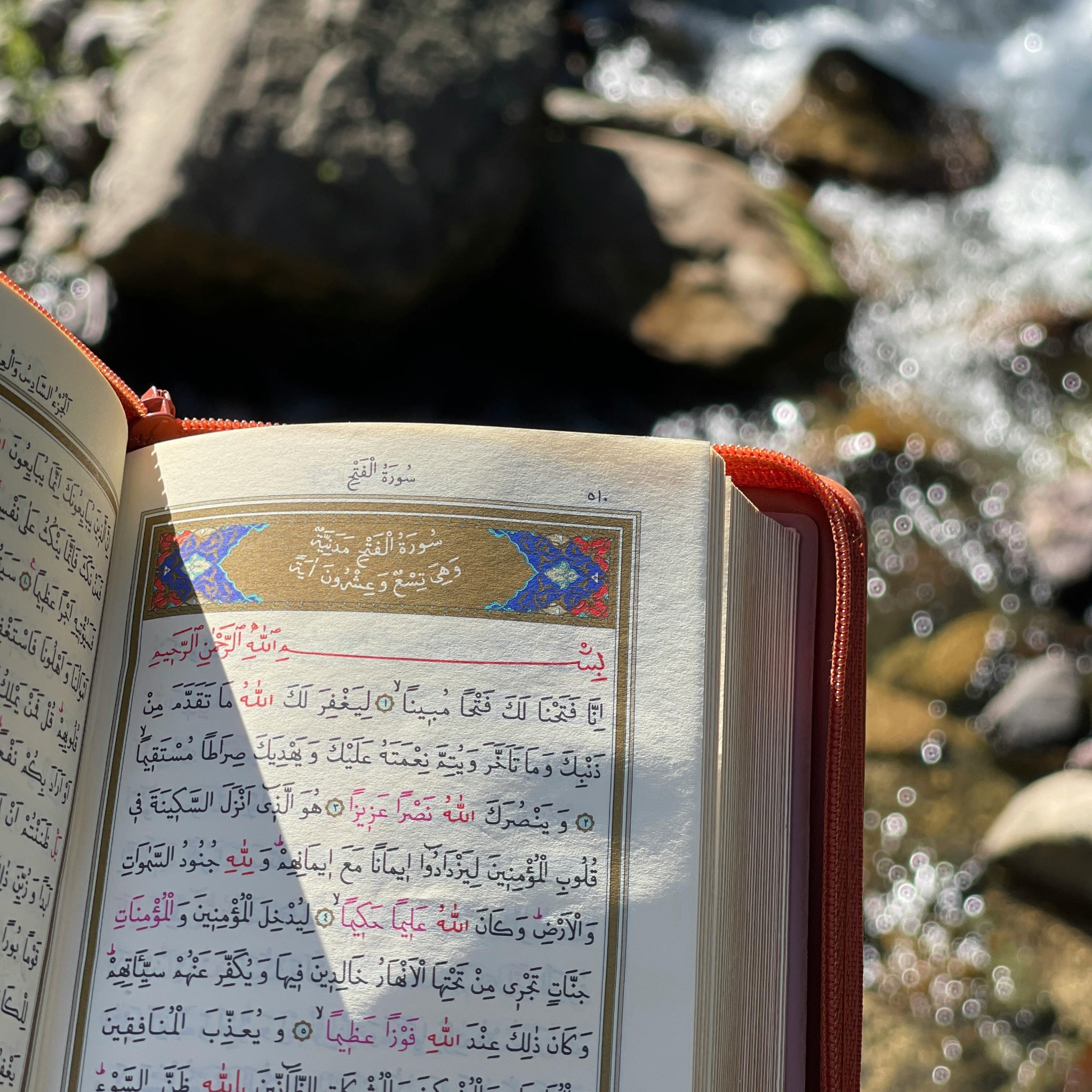
Don't just recite. Understand. Your journey to connecting with the Quran starts here. Many of us struggle to move beyond recitation. We want to understand the message, but traditional texts can feel overwhelming or complex. The TERRE Edition is thoughtfully compiled to solve this. We have bridged th...
Shop now: tryterre.com(opens in a new tab)