Tasha Williams
Tasha Williams Facebook ad: “5 problems with kid saffron nobody talks about”
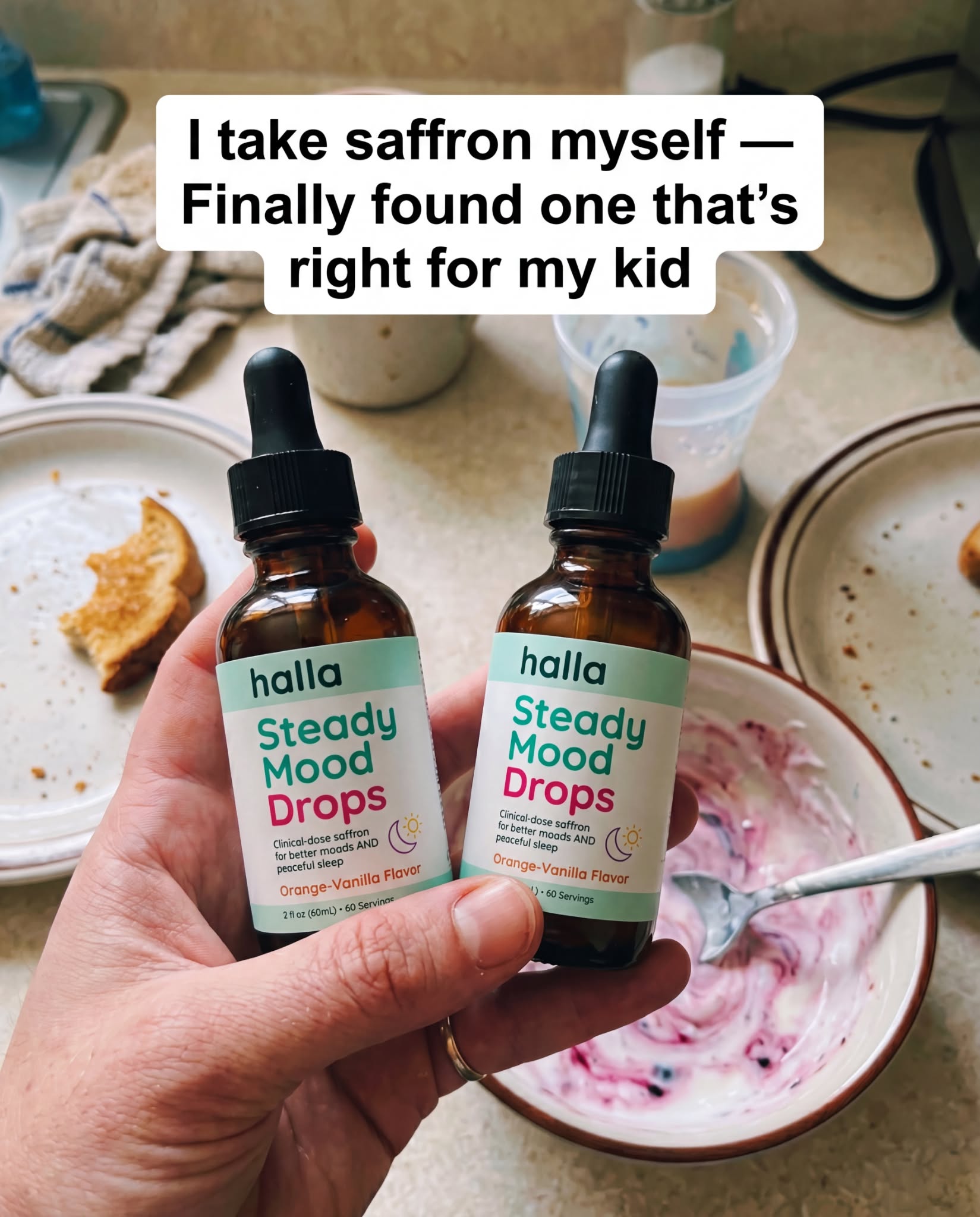
Ran for 2 days, from August 7 to August 9, 2026, the last day Crush saw it.
Run by Tasha Williams on Facebook. Crush is not the advertiser and does not verify its claims. See this ad in Meta's Ad Library(opens in a new tab)
Want an ad like this for your product?
Crush makes new ad images for your product from this ad: your logo, your product photo, your offer.
Trials from $19.95 USD, then $79.95 USD a month. Cancel anytime.
About this ad
- Meta Ad Library ID
- 1211483205224187
- Platforms
- Facebook, Instagram, Audience Network, Messenger and Threads
- Relaunches
- 0
- EU reach
- 154
- Niche
- Parenting & Kids
Ad text
This is what happens when a child who struggles with attention and focus takes saffron, maritime pine bark, phosphatidylserine, and magnesium L-threonate — in liquid form, at the clinical dose — every single morning with breakfast. ⠀ The only combination that does what no single ingredient, no gummy, and no behavior chart can do alone: stabilize focus, mood, and emotional regulation at every layer of the brain at the same time. ⠀ Saffron, specifically the safranal compound inside it, works on the serotonin and dopamine pathways — the same systems most prescription medications target, but without forcing the response. It evens out the emotional baseline that crashes mid-morning at school and again at 4pm at home. ⠀ Maritime pine bark increases blood flow to the prefrontal cortex, the part of the brain responsible for impulse control and sustained attention. This is the layer most "focus" supplements miss because they treat focus as a stimulant problem instead of a circulation one. ⠀ Phosphatidylserine regulates cortisol — the stress hormone that runs hot in kids with sensory and attention differences. When cortisol is dysregulated, every small frustration feels like a five-alarm fire. PS quiets that response at the source. ⠀ Magnesium L-threonate is the only form of magnesium that actually crosses the blood-brain barrier. Regular magnesium calms the body. L-threonate calms the brain. Most kids' "calm" supplements use citrate or oxide, which is why they barely move the needle. ⠀ Together, they cover every layer of the dysregulation cascade — and in the only head-to-head pediatric trial done on saffron at this exact dose, the response was comparable to the most commonly prescribed pediatric medication for these symptoms, without the appetite, sleep, or growth tradeoffs. ⠀ Here's where it gets complicated for kids. ⠀ Everything you just read applies to your child too. Same compounds, same logic. ⠀ But the second you try to actually source this stack for them, you hit five problems that nobody talks about online. ⠀ Because almost everything written about these ingredients was written for adults. ⠀ Problem 1: The saffron dose adults take is wrong for kids. ⠀ Adult saffron supplements run 88–176mg per serving. The clinical studies done on children — including the Baziar 2019 trial that compared saffron directly against the most-prescribed pediatric medication — used 30mg. Anything higher isn't more effective. It's just more expensive and harder on a developing system. Halving an adult capsule doesn't solve this, because most adult capsules use cheap saffron extract with no standardized safranal content at all. ⠀ Problem 2: Safranal percentage is the entire game. ⠀ Saffron's active compound is safranal. The clinical research uses extract standardized to 6% safranal. Most supplements on the market are 0.3% to 2% — and almost none disclose it on the label. Without the right concentration, you're paying for expensive saffron tea. This is why so many parents try saffron once, see nothing happen in four weeks, and give up. They never got the dose that was actually studied. ⠀ Problem 3: Gummies look kid-friendly but they're a delivery disaster. ⠀ Gummies absorb at roughly 30% because the gelatin matrix slows compound release to a crawl. Liquid in an MCT oil carrier absorbs at roughly 85% because MCT bypasses the standard digestion route. On top of that, gummies need sugar to taste tolerable — and sugar spikes are the exact opposite of what a dysregulated child needs in their bloodstream. Capsules solve the sugar problem, but most kids won't swallow them, and crushing them destroys the absorption profile most are formulated for. ⠀ Problem 4: Saffron alone is one leg of a four-legged stool. ⠀ The Baziar study used saffron as a monotherapy because that's how clinical research works — isolate the variable. But real kids don't have one variable. They have stress (cortisol dysregulation), attention (blood flow), and emotional baseline (neurotransmitters) all firing wrong at the same time. A real-world formula needs to hit all three pathways simultaneously. Saffron does the neurotransmitter layer. Pine bark, phosphatidylserine, and magnesium L-threonate cover the rest. Stacking these manually with four separate bottles is what most informed parents end up doing — and it costs three times more, with no guarantee the dosing is right. ⠀ Problem 5: Timing is the silent failure point. ⠀ Most parents dose at bedtime because that's when they remember. But the whole point of saffron's emotional regulation effect is daytime — the school meltdown, the homework crash, the after-school transition. Saffron has a compounding window of four to six weeks before full effect kicks in, and that compounding requires daytime exposure to actually rewire the response. A bedtime dose gets you better sleep (nice bonus) but misses the entire reason you started. ⠀ The only formula I've found that gets all five of these right is Steady Mood by Halla. ⠀ Most companies don't invest in this level of formulation work for a children's product. ⠀ Halla did, because they built it after their own kid stopped responding to the standard approaches. ⠀ One bottle. One morning dose. The simplest a complete protocol can be. ⠀ 30mg of saffron extract standardized to 6% safranal — the exact dose and concentration used in the pediatric clinical research. ⠀ 100mg maritime pine bark for circulation to the focus centers. ⠀ 150mg phosphatidylserine for cortisol regulation. ⠀ 100mg magnesium L-threonate for the brain layer of calm. ⠀ All delivered in an MCT oil carrier for ~85% absorption, in an orange-vanilla liquid you add to juice or water. ⠀ I do one dropper in my daughter's apple juice every morning before school. She doesn't taste a thing. ⠀ When it's working, here's what starts to shift: ⠀ ✨ The morning meltdowns lose their edge — shoes go on without three rounds of negotiation ✨ The 4pm crash softens — homework happens without a war ✨ The reports from school thin out — the calls home stop ✨ Sleep deepens as a bonus, not the headline — bedtime stops being a fight ✨ The kid you remember from when she was little starts showing up again ⠀ The compounding window is four to six weeks. Most parents don't see much in week one. By week three, the small shifts start. By week six, you stop noticing the absence of the meltdowns because the new baseline has just become the baseline. ⠀ "I'd tried gummies. Tried separate bottles of magnesium and L-theanine. Tried the elimination diet. Nothing held. Started Halla in October. By Thanksgiving my husband asked me what was different about her — and I hadn't told him I'd started anything new. She wasn't a different kid. She was just finally herself." — Sarah K., mom of one ⠀ A child whose brain has the support it needs isn't a different kid. They're the kid they were always supposed to be. ⠀ That's what this is for. ⠀ Halla sources its saffron from Iran where safranal content runs highest and bottles in small batches so every dropper is fresh. ⠀ They won't rush production to keep up with demand. ⠀ If you're seeing this, grab it now. ⠀ https://quiz2.tryhalla.com/ ⠀ P.S. If you don't see a shift in your child within 60 days, email their support and they'll refund the full order. You keep the bottle.
Where the ad sends people
quiz2.tryhalla.com
5 problems with kid saffron nobody talks about
Halla Steady Mood Drops
Learn more: quiz2.tryhalla.com(opens in a new tab)