Dr. Richard Torres
Dr. Richard Torres Facebook ad: “Real Reason For Gum Recession”
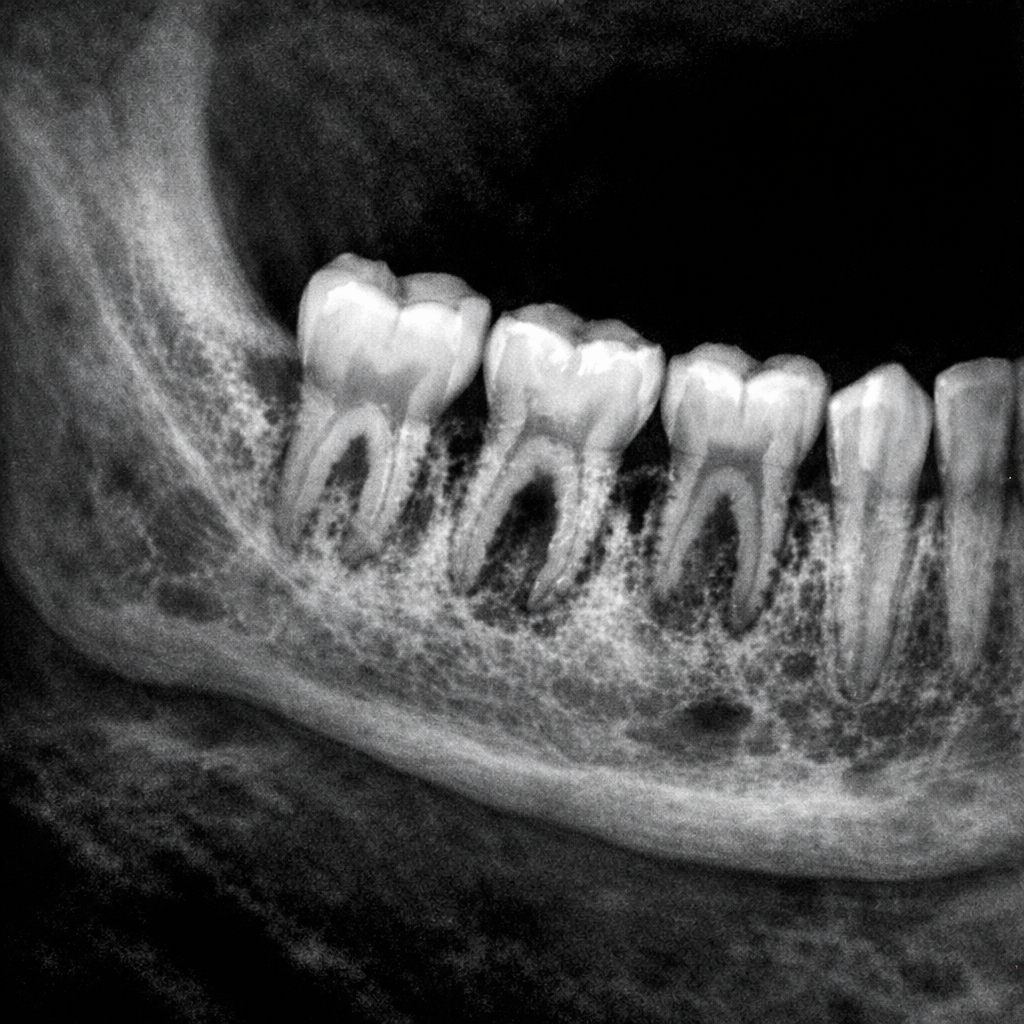
Ran for 88 days, from March 4 to May 31, 2026, the last day Crush saw it.
Run by Dr. Richard Torres on Facebook. Crush is not the advertiser and does not verify its claims. See this ad in Meta's Ad Library(opens in a new tab)
Want an ad like this for your product?
Crush makes new ad images for your product from this ad: your logo, your product photo, your offer.
Trials from $19.95 USD, then $79.95 USD a month. Cancel anytime.
About this ad
- Meta Ad Library ID
- 1218577597028910
- Platforms
- Facebook, Instagram, Audience Network, Messenger and Threads
- Relaunches
- 1
Ad text
I've treated gum recession in Switzerland for 20 years without surgery. When I moved to America, I couldn't believe what dentists here were telling their patients. I've been a periodontist for 22 years. The first 20, I practiced in Zurich. I moved to the United States two years ago when my wife's company transferred her to Chicago. I joined a periodontal practice here. Good practice. Good dentists. And in my first three months, I saw something that kept me up at night. Women in their 50s and 60s coming in with significant recession. Roots exposed. Tissue paper-thin. Every one of them said the same thing. "My dentist has been monitoring it for years." Monitoring it. In Switzerland, we don't monitor recession. We treat the cause. Because by the time it's severe enough to require grafting, something has already failed — structurally, systemically — and grafting won't fix that. It only patches what's already gone. Here's what your dentist probably hasn't told you about what gum recession actually is. Your gum tissue is not soft tissue the way skin is. It's a highly structured collagen matrix. Collagen makes up approximately 60% of gum tissue by dry weight. It's the scaffolding — the physical architecture — that keeps your gums thick, dense, and firmly attached to your teeth. When that matrix is intact, your gums hold. They resist. They don't pull away. When that matrix breaks down, the tissue thins. It loses its grip. It begins to recede. After age 30, your body produces less collagen every year. By the time you're 50, you're producing approximately 70% less than you did at 25. Your gum tissue is starving for the structural protein it's made of. No amount of brushing replaces that protein. Good hygiene removes bacteria. It does not rebuild collagen scaffolding. So the tissue keeps thinning. The recession keeps progressing. And your dentist keeps measuring and telling you to keep brushing. The Journal of Clinical Periodontology published a 2019 meta-analysis of 11 studies across 2,847 patients. It confirmed that collagen depletion — not bacterial infection — drives recession in patients over 45 with otherwise healthy oral hygiene. Not bacteria. Collagen depletion. Your hygiene isn't the problem. The protocol treating your hygiene as the problem is. I want to be honest about gum grafts. Because most of my Chicago patients had been told grafting was their next step. Some had already had it done. A graft takes tissue from the roof of your mouth and stitches it over the area of exposed root. It covers the recession that's already occurred. What it doesn't do is address why the recession happened. The collagen deficiency is still there. The structural breakdown is still progressing. In the adjacent tissue, in the surrounding teeth — the same process continues underneath, untouched. Grafting is like repainting a wall that's crumbling from inside. The surface looks good. For a while. I've seen it in patients who came to me after grafts. Beautiful surgical results. And 18 months later, the recession had migrated. Because nothing had changed structurally. This is what nobody tells you about where recession leads if the underlying cause goes unaddressed. It doesn't stay at the gum line. The tissue continues to thin and recede. Eventually the recession reaches the bone — the bone that holds your teeth in their sockets. When bone begins to resorb, teeth loosen. They shift. They can no longer be saved. I've had the conversation that follows more times than I should have. With women who did everything their dentist told them. Who had their grafts done correctly. Who never missed a cleaning in 20 years. Who still, over time, lost their teeth. The graft addressed the symptom. The cause kept advancing. Silently, structurally — until the damage wasn't patchable anymore. When I arrived in the US, I assumed the research on structural collagen therapy simply hadn't made it here yet. In Switzerland, we'd been working with topical collagen supplementation protocols for over a decade. It emerged from German and Austrian research in the early 2010s — periodontists studying why some patients responded to grafts and others didn't, despite identical surgical technique. What they found was that non-responders had measurably lower collagen density in the surrounding gingival tissue. The graft had nothing healthy to anchor to. It wasn't surgical failure. It was structural failure. That research led to trials on whether rebuilding collagen density could stabilize recession without grafting — in early-to-moderate cases. The University of Heidelberg published a study involving 612 patients with moderate recession over 14 months. Two groups. Same hygiene protocol. Same cleaning schedule. Group B also applied hydrolyzed Type I collagen peptides directly to the gum line twice daily. At 12 weeks: Group A continued to recede. Group B showed tissue stabilization in 89% of patients. 34% showed measurable improvement in gum thickness. The study conclusion: "Topical collagen supplementation addresses the structural deficiency underlying age-related gingival recession, independent of bacterial load." Independent of bacterial load. Your hygiene doesn't determine this outcome. Your collagen does. I want to tell you about one patient. Because her results are what I see when people finally address the right problem. She was 57. Had been monitoring recession since 52. Two teeth with significant root exposure. Her previous dentist had recommended grafting her four front teeth. She came to me for a second opinion. Her hygiene was excellent. The recession was real. In Switzerland, before we ever reach for surgical instruments, we ask one question: have we addressed the root cause? Grafting patches the hole. It doesn't fix why the hole appeared. I recommended 12 weeks of topical collagen therapy before making any surgical decisions. She was skeptical. Five years of perfect hygiene hadn't stopped anything. She didn't believe something applied to her gums could change what five years hadn't. I explained it simply. Brushing removes bacteria. That's what it's designed to do. It does not rebuild tissue. Your gums aren't breaking down from bacteria. They're breaking down because the structural protein they're made of is no longer being produced in sufficient quantity by your body. You can clean a building perfectly. If the steel framework is corroding, the building still falls. She agreed to try. Week 2: Gums felt less tender during brushing. Week 4: Less sensitivity to cold water for the first time in years. Week 8: No bleeding at the gum line. She said she couldn't remember the last time that had been true. Week 12: Her hygienist measured the recession at each site. Then measured again. Site 1: reduced from 4.2mm to 2.8mm. Site 2: reduced from 3.8mm to 2.6mm. Site 3: stabilized at 3.1mm — no further progression. Site 4: stabilized. She didn't need the four-tooth graft. In Switzerland, this is where we start. Not with surgery. With the structure. I share this because I spent two years quietly frustrated by what I see here. Women who came to me after years of being told to keep up the good work — while their gum tissue slowly disappeared. Women who felt like they were failing. Like their bodies were betraying them despite everything they did right. They weren't failing. The protocol was failing them. American dental training focuses on bacterial control and surgical repair. Structural therapy — nutritional support for the tissue itself — isn't part of standard training. Most American dentists graduated before this research was published. They practice what they were taught. That's not a criticism. It's just where the knowledge gap sits. But the research exists. And you don't have to wait for your dentist to find it. If you've been monitoring recession for years with nothing to show for it but continued progression — if you've had grafts and watched recession return nearby — if you've been told your hygiene is excellent but your gums keep pulling away — The answer isn't to brush differently. It's to give your tissue what it's been missing. I'll leave a link below to the product I recommend to my own patients. I have no financial relationship with this company. I recommend it because the mechanism is sound, the research supports it, and I've seen it work. You've spent years doing what you were told. It's time to address what you were never told.
Where the ad sends people
grxystudio.com
Real Reason For Gum Recession 👆
GRXY STUDIO
Learn more: grxystudio.com(opens in a new tab)