
Inactive· since Jan 5, 2026
- 53
- days it ran
- 0
- relaunches
Ad copy
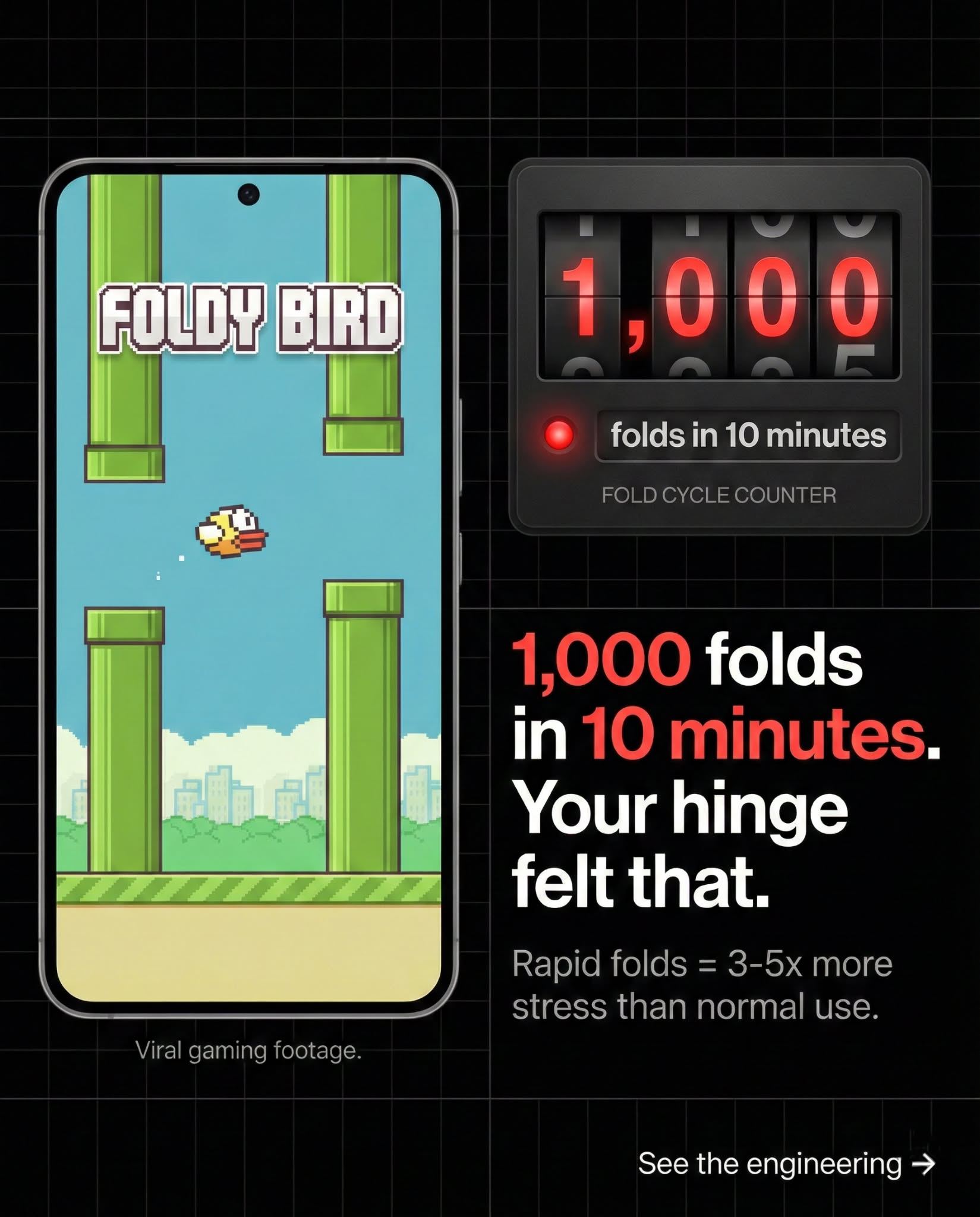
Remember "Foldy Bird"? That viral trend where people speed-folded their phones to see who could hit 100 folds fastest. Some hit 1,000 folds in under 10 minutes. TikTok loved it. Your hinge didn't. Here's what nobody talked about: rapid folding creates 3-5x more stress on your hinge mechanism than normal use. Let me explain. Your foldable's hinge is precision-engineered for gradual, deliberate movements. When Samsung and Huawei test "200,000 folds," they're testing at controlled speeds—roughly one fold every 4-5 seconds with consistent pressure distribution. Speed-folding breaks those conditions. The faster you fold, the more asymmetrical force you apply. One side closes faster than the other. The hinge compensates. Micro-stresses compound. After testing 18 different foldable cases, I found most brands completely ignore hinge protection. They focus on back panel scratches and screen bezels. Important, sure. But the hinge is the single most expensive repair on any foldable—₱15,000-25,000 depending on model. The cases that actually work share three features: reinforced spine channels that distribute closing force evenly, precision cutouts that don't interfere with hinge alignment, and materials that absorb micro-vibrations rather than transferring them directly to the mechanism. Most "foldable cases" are just regular cases with a split design. That's not engineering. That's marketing. If you've ever speed-folded your phone—even once during that trend—your hinge has already experienced accelerated wear. The question isn't whether damage occurred. It's whether you're preventing more. Full engineering breakdown linked below 👇
Your Hinge Felt Every Rapid Fold (Here's The Science)
LEARN MORELike this ad? Make it yours.
Crush rebuilds this exact creative around your product — your brand, your colors, your offer — in about a minute.