Sarah’s Everyday Wellness
Sarah’s Everyday Wellness Facebook ad: “Every woman with foot pain should read this”
Ran for 8 days, from April 3 to April 11, 2026, the last day Crush saw it.
Run by Sarah’s Everyday Wellness on Facebook. Crush is not the advertiser and does not verify its claims. See this ad in Meta's Ad Library(opens in a new tab)
Want an ad like this for your product?
Crush makes new ad images for your product from this ad: your logo, your product photo, your offer.
Trials from $19.95 USD, then $79.95 USD a month. Cancel anytime.
About this ad
- Meta Ad Library ID
- 1229385596053745
- Platforms
- Facebook, Instagram, Audience Network, Messenger and Threads
- Relaunches
- 0
Ad text
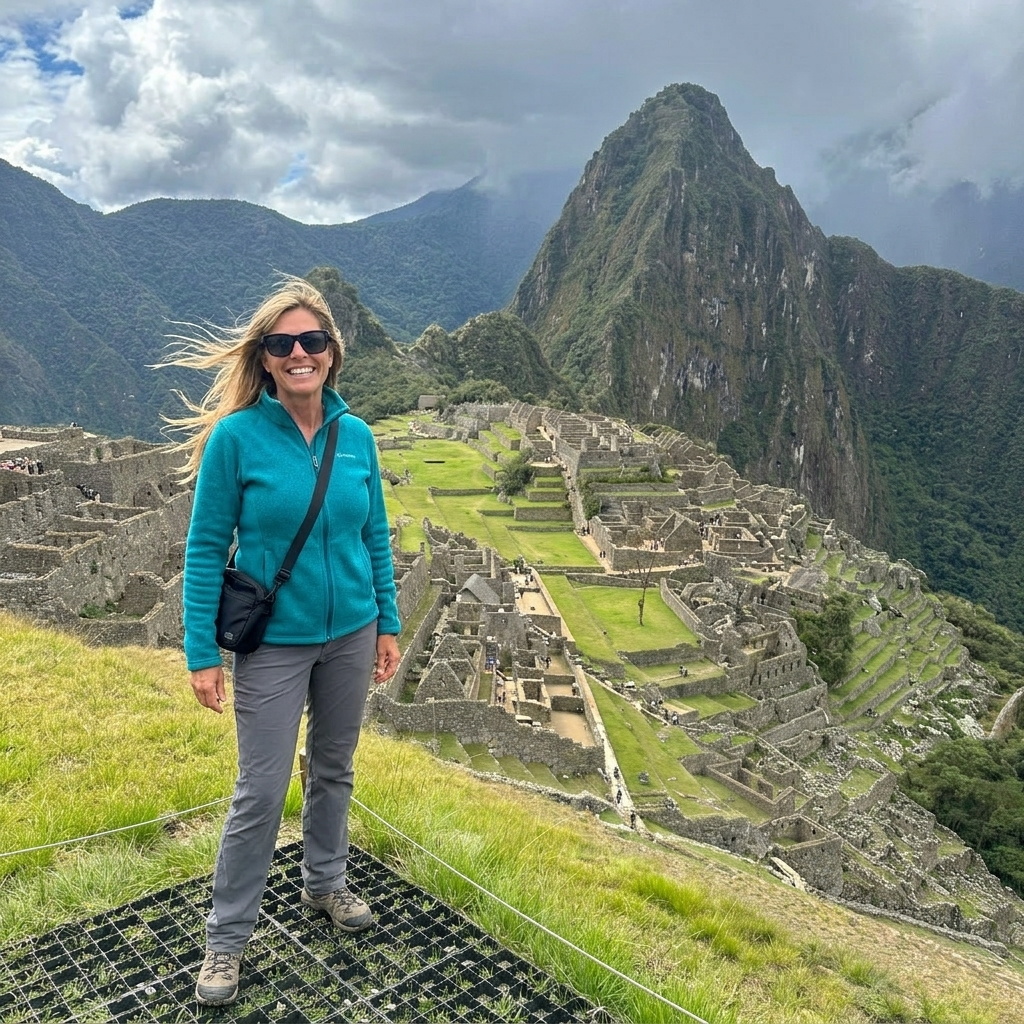
I restructured my entire life around a foot problem. Then I learned it wasn’t the foot problem I thought it was. I missed it. The Narrows. Zion Canyon. Three days through the river. The trip I’d been saying “next year” to for four years running. Last August I finally drove there. Got out of the car at the trailhead. Took three steps toward the group. And I already knew. That specific pain in the heel. The one that tells you exactly what three days of canyon hiking will cost. I got back in the car. My husband knocked on the window. “You sure?” I was sure. I watched them disappear up the trail. That trip happened without me. I can’t get it back. I can’t redo it. It happened. Without me. After that, they stopped asking if I was coming. They already knew. I used to be the one who planned trips like that. Texted everyone the start time. Asked every morning: How many miles can we do today? Somewhere in three years of trying to fix my feet, I became someone else. I know what you’ve tried because I tried it too. Dr. Scholl’s. Superfeet. PowerStep. Custom orthotics at $600. Good Feet Store at $1,800. HOKAs and Brooks. Cortisone injections, three rounds. PT. Night splints. Shockwave therapy. Stretching protocols before my feet hit the floor every morning. Nothing got me back on a trail. My husband started packing his day bag without saying anything. Not because he was hiding it. Because we both knew the conversation we weren’t going to have. I deleted the hiking app on a Tuesday in March. No particular reason. Just finally being honest with myself. A friend told me: “You seem different lately.” She was looking at me the way you look at someone who’s lost something they won’t talk about. I told myself my feet had just worn out. Fifty years of hard use. This is what it looks like now. I was wrong. Here’s what I kept coming back to. Three different arch support insoles at three different price points all failed the same way. If Superfeet was just a bad product, PowerStep should have worked differently. If $600 custom orthotics couldn’t do it, $1,800 should have been different enough to matter. But they all failed in the same way. Then the injections. First round: three weeks of relief. Second: less. Third: barely anything. Every category. Same failure pattern. I stopped asking which product I hadn’t tried yet. I started asking what all of them were missing. I found the answer on a night I was supposed to be canceling a trip. Maya had texted the group: Final headcount for Sedona by Friday. I opened my laptop to write the message. Instead I typed something into the search bar I’d been avoiding for months. “Why do women develop plantar fasciitis more than men.” It was 11:43 PM. My husband was already asleep. I sat at the kitchen table for the next ninety minutes reading about estrogen. Not estrogen and menopause the way you usually read about it. Estrogen and blood vessels. Estrogen and connective tissue. Estrogen and feet. Here’s what I found. Estrogen isn’t just a reproductive hormone. It keeps blood vessels dilated throughout the body. Including the tiny vessels that supply the soft tissue in your feet. When estrogen drops at perimenopause, those vessels constrict. Circulation to foot tissue decreases. The plantar fascia, which already has limited blood supply compared to muscle, gets even less. Estrogen was also the scaffolding for collagen production. The building material of the plantar fascia itself. Of the fat pad under your heel. In the first five years after menopause, collagen drops by roughly 30%. The fat pad can thin by up to 50% by your early fifties. Women develop plantar fasciitis at six times the rate of men. I read that number three times. Not because we’re harder on our feet. Because of what happened to our hormonal infrastructure when estrogen dropped. And because nobody connected it to our feet. Now I understood the pattern. Every product I tried was designed for pre-menopause feet. Feet where estrogen was doing its job. Arch support assumes enough collagen in the ligaments to respond. Cushioning assumes enough fat pad left to work with. Cortisone reduces inflammation. But inflammation isn’t the primary driver when the underlying issue is circulatory and structural. PT strengthens the surrounding muscles. But it can’t restore blood supply to tissue that isn’t receiving it. None of them added circulation. And circulation was the piece my feet had stopped generating on their own after estrogen dropped. That’s what brought me to Thriv. Thriv has three components: Arch support, Deep cushioning, And circulation massage points built directly into the footbed. Raised points that stimulate blood flow through the plantar fascia tissue with every step. Not passive cushioning sitting under your foot. Active circulation. The piece the entire category had been skipping. I texted Maya before I went to bed. Not to cancel. “Still in. Count me.” The morning calculation, The one that runs before your feet hit the floor, It started to quiet. Week four: My husband mentioned a Saturday trail. I said yes before I thought about it. He went to find his boots without saying a word. That was the moment I knew something had actually changed. Not the absence of pain. The absence of calculation. Month two: Sedona. On a trail by 7am the second morning. I stood at a lookout two miles in and realized I hadn’t thought about my feet once since we’d left the trailhead. Not once. Not the whole way up. Month three: I re-downloaded the hiking app. Sent the first group text I’d sent in two years. “Anyone up for the canyon loop in April?” Three people said yes before noon. The person I’d been quietly grieving for three years was still there. She just needed circulation. My feet hadn’t worn out. The hormonal infrastructure that kept them resilient had shifted at perimenopause. And every product I tried was built for feet that still had all of that working. If you’ve spent years trying things that should have worked and haven’t, there’s a reason. You weren’t doing it wrong. The solutions were missing something your body stopped providing on its own. The category was built before anyone connected perimenopause to what happens to circulation and collagen in the feet. That’s not a gap any amount of arch support can fill. If the morning calculation doesn’t quiet down, If you’re not saying yes to things you’ve been turning down, If you’re not back on the trail or the trip or wherever you stopped going, Send it back. Full refund. No questions. No pressure. P.S. The night I found that research, I was about to cancel a trip I’d been sitting on for three days. I didn’t cancel it. I went. I stood at a lookout two miles in and didn’t think about my feet once. The one that finally worked was built for the feet I actually have now. Ninety days to find out if that’s the piece you’ve been missing.
Where the ad sends people
shopthriv.com
Every woman with foot pain should read this
Podiatrist-recommended massage insoles designed for women ready to reclaim pain-free feet — by restoring the circulation most insoles ignore.
Shop now: shopthriv.com(opens in a new tab)