Rooted Remedies
 Facebook ad: “Natural Support for Your Daily Routine”
Running for 67 days since August 26, 2026. Crush last saw it on November 1, 2026.
Run by Rooted Remedies on Facebook. Crush is not the advertiser and does not verify its claims. See this ad in Meta's Ad Library(opens in a new tab)
Make your own version of this ad
Crush makes it, launches it in your own Meta ad account, scales the winners and pauses the losers.
About this ad
- Meta Ad Library ID
- 1249047927136931
- Platforms
- Facebook, Instagram, Audience Network, Messenger and Threads
- Relaunches
- 0
Ad text
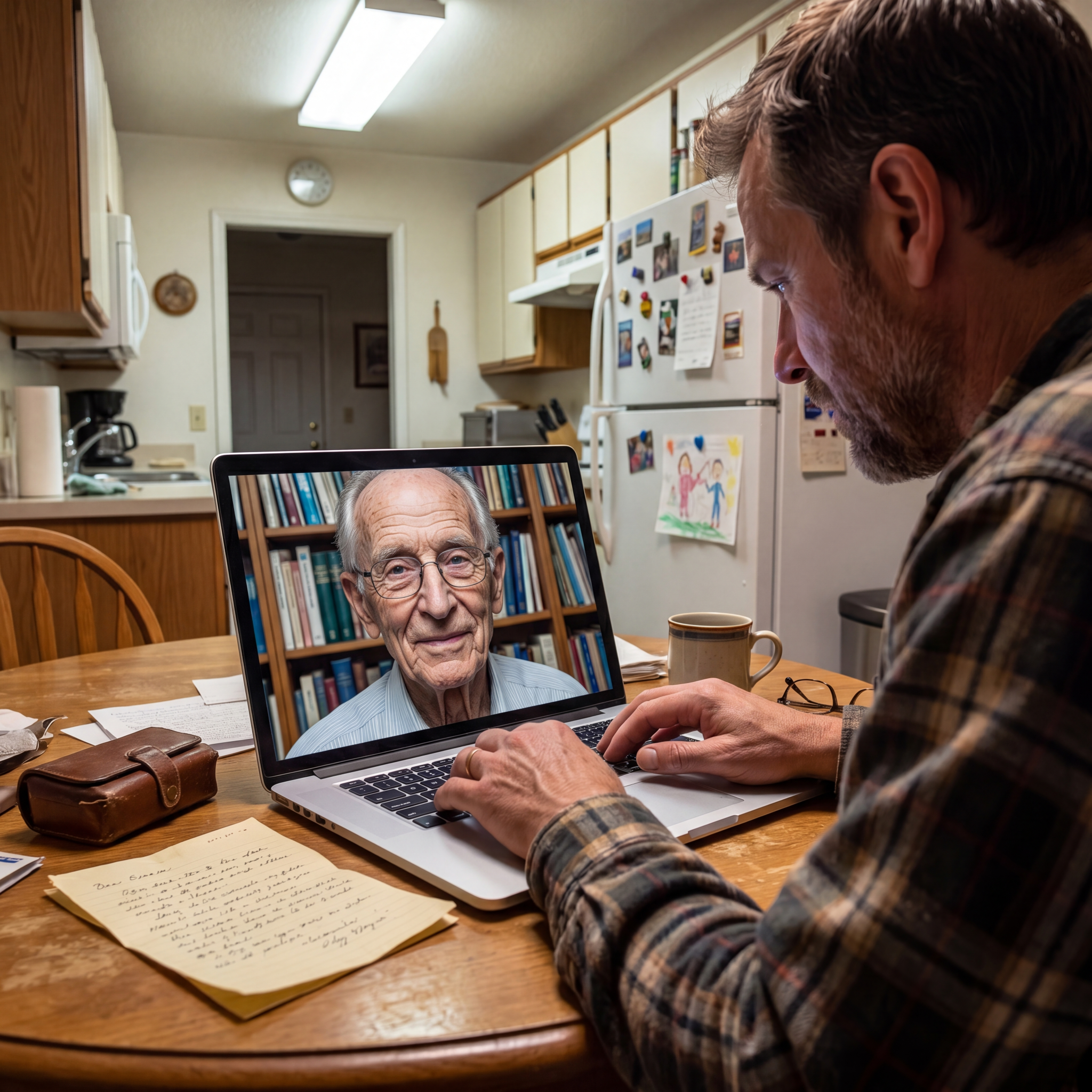
When I was nine years old, my father took me to the barbershop on Haddon Avenue for the last time. He sat me in the chair next to his — the one with the cracked leather and the chrome armrest that was always cold — and while Sal trimmed my hair, my father sat in his chair and stared at himself in the mirror. He didn't say anything. Sal didn't say anything. I remember the sound of the scissors and the radio playing something I was too young to recognize and the smell of Barbicide and talcum powder and the particular silence of two men who both know something they're not going to talk about. On the drive home, my father reached into his glovebox and handed me a leather case. Small. Dark brown. Worn soft at the edges. "This was your grandfather's," he said. "Shaving brush. Comb. The whole kit. I want you to have it." "Why?" He looked at the road. "Because a man takes care of himself every morning, Robert. That's how you know he hasn't given up." I was nine. I didn't know what giving up looked like. I just liked the weight of the leather case in my lap and the brass snap that clicked when you opened it and the smell inside — soap and cedar and something old I couldn't name. That was the last time my father went to Sal's. And I didn't understand why until fifty-three years later, when Sal — eighty-seven years old and still cutting hair — told me what happened in that chair after I left for college. But I'm getting ahead of myself. I should tell you where I was when Sal's story found me. Because if you're reading this, you're probably standing in the same place I was standing — and you need to know there's a door you haven't seen yet. I'm sixty-two. Retired from the trades — thirty-four years as an electrician. Two kids. Five grandkids. My wife Karen and I live in the same house in Collingswood, New Jersey, where we raised our boys. And for the last three years, I've been getting up to pee four, five, sometimes six times a night. It started slow. The way everything starts slow when you're past fifty. One bathroom trip at 2 AM. You barely notice it. You tell yourself it's the water you drank before bed. You adjust. Go back to sleep. Then it's twice. Then three times. Then you're setting your feet on the cold floor at 11:30, 1:15, 3:00, and 4:45 — and the alarm goes off at 6:00 and you've slept in fragments, never deep enough to dream, never long enough to rest. The exhaustion builds. Not the kind you fix with coffee. The kind that lives behind your eyes. The kind that makes you cancel plans, skip your grandson's Saturday soccer games, sit in the truck in the driveway for ten minutes because you don't have the energy to walk inside. Karen started sleeping in the guest room. She didn't make a thing of it — just said she was a light sleeper and my getting up kept waking her. But I saw her face. I saw what she wasn't saying. She was watching me become my father. And the hair. God, the hair. I'd always had thick hair. Dark. The kind barbers comment on. Karen used to run her fingers through it in the early years, and even at fifty it was still there — thinner, sure, graying at the temples, but there. Then the drain started catching more. Then the pillow. Then I looked at a photograph from our grandson Matty's birthday — the one where I'm holding him on my shoulders — and I saw the back of my head for the first time in years. A circle of scalp. Pink. Visible. The size of a silver dollar. I stood in the bathroom and held a hand mirror behind my head and looked at the reflection of the reflection and felt something I hadn't felt since I was young. Shame. Not vanity. I'm sixty-two. I know what aging looks like. Shame because I recognized it. The exact same pattern. The exact same thinning at the crown, the same recession at the temples, the same slow erasure that happened to my father — starting in his late forties and accelerating until there was almost nothing left. And because I knew what came with it. For my father, the hair was just the visible part. Underneath, invisible, his prostate was swelling. Slowly. Silently. Pressing on his bladder like a fist closing around a water balloon. He was up every hour by the time he was sixty. My mother told me that. "Your father barely sleeps anymore," she'd say. Like it was weather. Like it was something that just happened to men. And I'd inherited it. All of it. The hair. The nights. The slow compression of a life into smaller and smaller spaces — can't travel because you need to know where every bathroom is, can't sit through a movie, can't drive more than an hour without stopping, can't sleep next to your wife. I went to my doctor. Dr. Patel. Good man. Thorough. He'd been watching my PSA creep up for two years. "Robert, your prostate is enlarged. BPH — benign prostatic hyperplasia. It's pressing on your urethra, which is why you're getting up at night. It's also likely contributing to your hair thinning — the mechanism is related." "Related how?" "There's an enzyme in your body called 5-alpha reductase. It converts your testosterone into something called DHT — dihydrotestosterone. DHT is what's causing your prostate to grow. And it's the same compound that's miniaturizing your hair follicles. Shrinking them until they can't produce a visible hair." "So the same thing that's destroying my sleep is destroying my hair?" "Essentially, yes. Same root cause. Same enzyme. Same hormone." He leaned back. "I'd like to start you on finasteride. Five milligrams daily. It blocks the enzyme. Should reduce your prostate size over time, improve your urinary symptoms, and may slow the hair loss." "Side effects?" He paused. The kind of pause doctors give when they're deciding how much truth fits in the room. "Some men experience sexual side effects. Decreased libido. Erectile dysfunction. There are reports of depression. Brain fog. Most of these resolve if you stop the medication, though some studies suggest they can persist." I sat there. "How long would I take it?" "Indefinitely. It works as long as you take it." Indefinitely. I told him I wanted to think about it. He wrote the prescription anyway. I drove home with it in the console and a feeling I couldn't name. Not quite fear. Something heavier. Something inherited. That night, after Karen went to the guest room, I got up to pee for the third time. Stood in the bathroom at 2:47 AM. Looked at my face in the mirror under the fluorescent light. The eyes were my father's. Tired. Dark underneath. The look of a man who hasn't slept properly in years and has started measuring his life in bathroom trips. And the hair. Thinner every month. The crown exposed. The temples retreating. Same face. Same decline. Same trajectory. My father was put on medication when he was fifty-four. I know this because my mother told me, exactly once, when I was thirty and my first son was a baby. We were sitting at her kitchen table and she said — out of nowhere, like she'd been holding it for years and it finally slipped: "They put your father on pills for his prostate. After that, nothing was the same." Then she stood up and made coffee and we never spoke of it again. Nothing was the same. I grew up watching a man disappear. Not all at once. In pieces. The way a shoreline erodes — so slowly you don't see it happening until you look up and realize the ground you were standing on is gone. My father was a foreman. Concrete. Built things that are still standing. Hands like leather. Voice that could carry across a job site without raising it. The kind of man who walked into a room and the room rearranged itself around him. Then the medication started. First it was the quiet. Not peaceful quiet — empty quiet. The jokes stopped. The stories at dinner stopped. He'd sit in his chair after work and stare at the television without watching it, and if you asked him a question he'd take three, four seconds to respond, like the words had to travel a long distance to reach his mouth. My mother said it was stress. Work. Getting older. Then the distance. From her. From us. The bedroom door closed earlier each night. I was young, but I understood something had shifted between them. A warmth had gone out. The way he looked at her changed — not anger, not coldness. Absence. Like the part of him that reached for her had been chemically removed. My mother never talked about it directly. But I heard her on the phone with her sister one night, her voice low, and the only words I caught were: "He doesn't even try anymore, Carol. It's like living with a ghost." A ghost. That's what finasteride made him. A ghost in his own house. Walking the hallways at night because his prostate kept swelling anyway — the medication slowed it but didn't stop it. Getting up four times, five times, just like me. Losing his hair anyway. The medication was supposed to stop that too. It didn't. Not really. It slowed the loss the way a dam slows a river — the pressure just builds behind it until something breaks. He died at sixty-eight. Heart attack. Sitting in his chair on a Sunday morning. My mother found him when the coffee got cold. The medication he took for fourteen years was supposed to give him his life back. Instead, it took everything that made his life worth living — his energy, his clarity, his connection to the woman he loved — and left behind a body that still had to get up five times a night. His prostate was the size of a plum when they did the autopsy. The medication hadn't fixed it. It had just made the decline quieter. So when Dr. Patel handed me that prescription, I wasn't just holding a piece of paper. I was holding my father's trajectory. The same medication. The same promise. The same slow erasure. I put it in the glovebox. Next to the leather case. And I drove to Sal's. I hadn't been to the barbershop on Haddon Avenue in twenty years. Karen cuts my hair now — has since the boys were little. Easier. Cheaper. One less errand. But that morning I needed to sit in that chair. I needed to smell the Barbicide and the talcum powder and hear the scissors and feel the leather under my hands. I needed my father's barbershop because I needed to feel close to the man he was before the pills turned him into the man he became. The shop was still there. Same awning. Same pole. The letters on the window had been repainted, but the shape of them was the same. The bell rang when I walked in. Sal was behind the first chair. Eighty-seven years old. Thinner. Slower. But the same Sal — same eyes behind the same style of glasses, same white barber's coat, same comb tucked behind his ear like a carpenter's pencil. He looked at me for a long time. "Bobby Delvecchio." Nobody had called me Bobby in forty years. "Sit down." I sat in the chair. The same chair. The cracked leather had been reupholstered at some point, but the chrome armrest was still cold. Sal put the cape around my neck. Picked up the comb. Started working through what was left of my hair without commentary. The way a man who's been cutting hair for sixty years can read a scalp the way a doctor reads an X-ray. "You look like him," Sal said. "Same pattern." "I know." "You getting up at night?" I turned to look at him. He was looking at my reflection in the mirror. "How did you know?" "Because your father sat in this exact chair and told me about it for ten years. Every month. Sat right there and told me about the pills and the nights and everything they took from him." Sal set down the comb. "Bobby, your father came to me for forty years. I watched him go from the strongest man in the shop to a man who could barely stay awake in the chair. And I watched him try to fix it the way his doctor told him to — with a pill that shut down the wrong thing." "The wrong thing?" Sal pulled a stool over and sat across from me. The way old men sit when they're about to tell you something they've been carrying. "Your father's doctor gave him finasteride. Told him it would block the hormone that was swelling his prostate and thinning his hair. And it did — it blocked it. But it didn't just block it in his prostate. It blocked it everywhere." He held up his hands. "DHT. That's the hormone. Your father told me the name a hundred times. Dihydrotestosterone. His doctor explained it like it was poison. Like the only answer was to shut it down." "But DHT isn't poison, Bobby. Your body makes it on purpose. It's what makes a man feel like a man — the drive, the energy, the sharpness, the connection. When that medication blocked the enzyme that produces DHT, it didn't just shrink his prostate. It killed the fire in his eyes." Sal looked at the mirror. At both of us reflected in it — me in the chair, him on the stool, two men separated by forty years having the same conversation my father should have had. "He told me something the last time he sat in this chair. Two months before he died. He said, 'Sal, if I'd known then what I know now, I would have gone after the DHT differently. There's a way to block it just in the prostate. Just where it's doing damage. Without shutting down everything else.'" "I asked him what he meant. He reached into his coat and pulled out an article. A study. Something he'd found. He said a researcher in Austria had identified a compound in pumpkin seeds — the oil, specifically — that blocked DHT at the prostate level without affecting it systemically. Without the brain fog. Without the sexual side effects. Without turning a man into a ghost." Sal's jaw tightened. "He said, 'Sal, I found the answer too late. The damage is done. But if Bobby ever sits in that chair and tells you the same story I told you — you tell him. Tell him there's another way. Tell him not to take the same road I took.'" I gripped the armrests. "He knew I'd end up here?" "He knew you'd end up in this chair because you're his son. Same blood. Same enzyme. Same trajectory. He watched himself in you the way you're watching yourself in him." Sal reached under the counter. Pulled out a folded piece of paper. Yellowed. Creased. Fifteen years in a drawer. "He left this for you. Asked me to keep it. Said you'd come when you were ready." I unfolded it. My father's handwriting. Small. Precise. The handwriting of a man who worked with his hands but kept his records clean. A name: Dr. Heinrich Maren. Department of Urology, Medical University of Graz, Styria, Austria. A compound: Beta-sitosterol. A sentence: "The oil blocks the conversion at the tissue level. The prostate shrinks. The hair comes back. The rest of the man stays intact." And at the bottom, underlined twice: "Cold-pressed. Not roasted. The heat destroys it." I sat in that barber chair for a long time after Sal finished. The cape still around my neck. The paper in my hand. My father's words. His handwriting. His last attempt to save me from the road he walked. He couldn't save himself. The medication had already taken too much by the time he found the research. But he left a trail. A name. A compound. A warning. Fifteen years in Sal's drawer, waiting for me to sit in that chair and hear the scissors and need the answer. I drove home. Sat at the kitchen table. Opened my laptop. Dr. Heinrich Maren. Medical University of Graz. I found him in four minutes. He was still there. Semi-retired. Seventy-nine years old. Still publishing. One of the leading researchers on phytosterols and male urological health. I wrote him an email at midnight. Told him who I was. Told him my father had kept his name on a piece of paper for fifteen years. Attached a photograph of the note. He responded by morning. "Mr. Delvecchio — I am deeply moved. Your father contacted me once, many years ago. His letter was extraordinary. He understood what most urologists still do not. I would be honored to speak with you." We scheduled a video call. His face filled my laptop screen — a thin man with kind eyes and a bookshelf so dense with journals it looked like the wall was made of paper. "Your father was asking the right questions," Dr. Maren said. "He simply asked them too late." I told him everything. The nighttime urination. The hair loss. The prescription in my glovebox. The fourteen years of medication that turned my father into a ghost. He nodded like he'd heard this story a thousand times. "May I explain what your father understood? Because once you see it, you cannot unsee it — and you will understand why the prescription approach failed him and will likely fail you." "Please." He pulled up a diagram. A cross-section of a prostate. Simple illustration. "Your prostate is not your enemy. Your body built it on purpose. It is a gland — the size of a walnut in a young man — that produces fluid essential for reproduction. It sits beneath your bladder, wrapped around your urethra like a ring around a pipe." He traced the image. "The problem begins with an enzyme: 5-alpha reductase. This enzyme converts your testosterone — the hormone that gives you energy, drive, muscle, and clarity — into DHT. Dihydrotestosterone." "DHT is not poison. In your twenties, it was what built your body. But after forty, something changes. The receptors in your prostate become hypersensitive to DHT. They absorb it like a sponge. And the prostate responds by growing." He clicked to a new image. The same prostate, now swollen. Three times normal size. Pressing against the bladder above and choking the urethra running through its center. "This is BPH. Benign prostatic hyperplasia. Your prostate is not cancerous. It is simply growing in response to a hormone that your body is still producing — but that your prostate can no longer handle in the same quantities it once could." "The swelling compresses your urethra. Your bladder cannot empty fully. So it fills faster. You wake up at night. Your stream weakens. You feel urgency during the day. And because your bladder is under constant pressure, the wall thickens and becomes irritable — sending signals to urinate even when the bladder is not full." I thought about every night for the last three years. Every 2 AM trip. Every 4 AM trip. The fragments of sleep. The exhaustion behind my eyes. "Now. Here is what your father's doctor did — and what your doctor is about to do." He clicked to a new diagram. The enzyme. 5-alpha reductase. An arrow pointed to a red X over it. "Finasteride blocks this enzyme. Systemically. In your entire body. It stops the conversion of testosterone to DHT everywhere — in your prostate, yes. But also in your brain. In your muscles. In the tissue that governs your sexual function. In the follicles of your hair." "Your doctor will tell you this shrinks the prostate. And it does — by twenty to thirty percent, over six to twelve months. The number improves." He paused. "But the cost is everything else." "When you block DHT production in the brain, you lose clarity. Motivation. The ability to think quickly, to feel present. Your father described it as fog. That is not a metaphor — it is a neurochemical consequence of systemic DHT suppression." "When you block it in sexual tissue, you lose function. Libido disappears. Erections become difficult or impossible. And for a significant percentage of men, these effects persist even after stopping the drug — a condition now formally recognized as Post-Finasteride Syndrome." "When you block it everywhere, your body loses the hormonal foundation that makes a man feel alive. You don't just lose symptoms. You lose yourself." He looked at me through the screen. "Your father took this drug for fourteen years. His prostate still grew — slower, but it grew. His hair still thinned — slower, but it thinned. And the things the drug took from him — his sharpness, his energy, his connection to your mother — those did not come back." "He died with a swollen prostate and a medicated body and a life that had been chemically narrowed to fit inside a shrinking box." I pressed my hand flat against the desk. "Now. Here is what your father found in his last years. What he left for you on that piece of paper." Dr. Maren clicked to a new slide. A photograph of dark green pumpkin seeds. The Styrian variety — hulless, dark, oily. "In the Styria region of southern Austria, where I have spent my career, there is a pumpkin that has been cultivated for over four hundred years. The Cucurbita pepo var. styriaca. Its seeds contain the highest natural concentration of a compound called beta-sitosterol." "Beta-sitosterol is a plant sterol — a molecule whose structure is almost identical to cholesterol. And because of that structural similarity, it fits into the DHT receptors in your prostate tissue like a key in a lock." He highlighted the molecular structure on his screen. "But here is the critical distinction — the thing your father understood that most doctors still don't. Beta-sitosterol does not block the enzyme. It does not stop your body from making DHT. It blocks the DHT from binding to the receptors in your prostate. Only in your prostate." "Your brain still gets its DHT. Your muscles still get their DHT. Your sexual function remains intact. The fog doesn't come. The drive doesn't leave. You stay who you are." "But your prostate — the specific tissue where DHT is causing damage — is protected. The receptors are occupied. The DHT circulates past without binding. The prostate stops receiving the signal to grow. And over weeks, it begins to shrink." "The swelling goes down. The urethra opens. The bladder empties fully. You sleep through the night." I stared at the screen. "And the hair?" "The same mechanism. DHT miniaturizes your hair follicles by binding to receptors at the follicle base. Beta-sitosterol competes for those receptors. The follicles are shielded. The miniaturization slows. In many cases, follicles that have not yet been permanently destroyed begin to recover. Hair thickens. The shedding stops." "Same compound. Same mechanism. But targeted — at the tissue level, not systemically. Your body keeps making DHT. Your prostate and your follicles stop absorbing it." "This is what your father found. This is what he left on that piece of paper." I thought about the note. Cold-pressed. Not roasted. The heat destroys it. "Dr. Maren — my father wrote something about cold-pressed. That the oil has to be cold-pressed. Why?" His face changed. Something between frustration and resignation. "Because this is where the supplement industry fails you. And this is where most men who try pumpkin seed oil and see no results are being quietly cheated." He pulled up two images side by side. Two softgel capsules. One pale yellow. One deep red. "The capsule on the left is roasted pumpkin seed oil. The one you find in ninety percent of the supplements on Amazon. The seeds are heated to high temperatures during extraction — roasting degrades the beta-sitosterol. The compound that your prostate needs — the one that blocks the DHT receptors — is destroyed by heat. What remains is a pale yellow oil that is nutritionally interesting but therapeutically empty." "The capsule on the right is cold-pressed virgin pumpkin seed oil. The seeds are pressed mechanically, at low temperature, without heat or chemical solvents. The beta-sitosterol survives intact. The oil is dark — deep red, almost crimson — because the phytochemicals have not been burned away." He pointed at the screen. "You can see the difference with your eyes. If the softgel is pale yellow, the beta-sitosterol is gone. If it is deep red, it is intact. The color is the proof. Nature made the quality signal visible." "Your father wrote 'cold-pressed, not roasted' because he understood this. Most men don't. They buy the pale yellow capsule, take it for three months, notice nothing, and conclude that pumpkin seed oil doesn't work." "It works. The research is conclusive. But only if the compound that does the work has survived the extraction." I sat at that kitchen table for a long time after the call ended. My father spent the last years of his life searching for this answer. He found the researcher. He found the compound. He found the warning about heat. And he ran out of time — the medication had already taken too much, his prostate had already grown too large, and the damage to his body and his marriage and his sense of himself couldn't be reversed. But he left the note. He left the note for me. I wasn't going to waste it. I opened Amazon. Typed "pumpkin seed oil capsules." Top result — thirty thousand reviews, five stars, yellow label. Best seller. I ordered it. Two-day shipping. The capsules arrived. I held one up to the light in the kitchen window. Pale yellow. Translucent. The color of cooking oil. I took two capsules every morning for three weeks. Nothing. Still up four times a night. Stream still weak. Hair still falling. The drain still catching what used to be on my head. I went back to Dr. Maren's words. The color is the proof. If it is pale yellow, the beta-sitosterol is gone. I was taking expensive yellow cooking oil in a capsule. The heat had destroyed exactly what I needed, and the label didn't tell me that. The label said "pumpkin seed oil." It just didn't say the thing that mattered was already dead inside. I found the Facebook group the same way the answer finds everyone — not by searching for it, but by complaining in the right place. I'd posted in a men's health forum: "Tried pumpkin seed oil for three weeks. No change. Still up five times a night. Is this stuff actually real or is it a gimmick?" Fourteen responses in an hour. The first one stopped me. A man named Dennis had posted photographs. Two capsules, side by side. One pale yellow. One deep, dark red. Almost crimson. He'd cut them both open and squeezed the oil onto a white plate. "The yellow one is what you bought," he wrote. "Roasted. Heat-extracted. The beta-sitosterol is destroyed during processing. You're taking dead oil. The red one is cold-pressed — virgin extraction, no heat. The active compound is intact. That's why the color is different. That's why one works and the other doesn't." He'd had his urologist run a PSA panel before and after switching. Before — with the yellow capsules — no change in six weeks. After switching to the red: PSA dropped. Nighttime trips went from five to two in the first month. I scrolled through the thread. Man after man posting the same story. Same yellow capsule. Same nothing. Then switching to a cold-pressed brand. Then results. And one name kept surfacing. In Dennis's posts. In the follow-up comments. In the before-and-after bloodwork screenshots. Everly. Cold-pressed virgin pumpkin seed oil. Styrian variety. Combined with saw palmetto — another DHT receptor blocker that works synergistically with beta-sitosterol to amplify the prostate-level blockade. 3,000 milligrams per serving. Sixty deep red softgels per pouch. And the deep red — I recognized it immediately. The color Dr. Maren had shown me. The color that means the beta-sitosterol survived. The color my father was pointing to when he underlined "cold-pressed, not roasted" on that piece of paper fifteen years ago. The pouch arrived on a Wednesday. I stood at the kitchen counter. Tore it open. Shook two softgels into my palm. Deep red. Almost crimson. Heavy for their size. Nothing like the pale yellow capsules sitting in the cabinet from my failed Amazon experiment. I held one up to the kitchen window the same way I'd held the yellow one three weeks ago. The red was dense. Opaque. Alive with color. Like the difference between a glass of wine and a glass of water with food coloring in it. I swallowed two with a glass of water. Sat down at the kitchen table. And I waited. The first thing I noticed wasn't dramatic. It was an absence. That night — the first night — I woke up twice instead of five times. Twice. I remember looking at the clock: 1:40 AM and 5:10 AM. Two trips. And each time, the stream was different. Not the thin, interrupted dribble I'd been struggling with for three years. Stronger. More complete. The bladder actually emptied. I went back to sleep after the 5:10 trip and woke up to the alarm at 6:30 and felt something I hadn't felt in years. Rested. Not perfect. Not a miracle. But rested — the way you feel when your body has actually slept instead of just lying horizontal between bathroom trips. I took two softgels the next morning. And the next. By the end of week one, I was down to one trip a night. One. At 3:30 AM. And Karen heard me getting up — once — and the next night she was back in our bed. She didn't say anything. She just came back. I tracked everything. Week one: One nighttime trip. Stream noticeably stronger. Energy during the day — subtle, but there. The fog behind my eyes had lifted by two or three degrees. Week two: Still one trip, now closer to 4 AM. Sleeping five to six hours straight before it. The exhaustion that had been my baseline for three years started to ease. I drove to Matty's soccer game on Saturday and stayed for the whole thing. Didn't leave early. Didn't sit in the truck. Week three: Zero trips two nights that week. Zero. I woke up at 6:00 AM both mornings having slept through the night — something that hadn't happened since I was fifty-eight years old. I stood in the bathroom and stared at myself in the mirror and felt tears on my face and didn't wipe them off. And the hair. By week three, the drain was catching less. Not a dramatic change — not yet. But less. I'd run my hand through my hair and my fingers would come away clean instead of carrying three or four hairs with them. Week four: Karen noticed. She was standing behind me while I brushed my teeth and she said — casually, the way she says things she's been thinking about for days: "Bobby, your hair looks different. Is it... thicker?" I looked in the mirror. At the crown. The circle of scalp that had been pink and exposed for two years. It was still there. But the edges were less defined. Softer. There was coverage — not full, not restored, but present. Fine hairs that hadn't been there a month ago. Growing. My six-week follow-up with Dr. Patel confirmed it. He ran the panel. Pulled up my chart. Looked at the screen. "Robert." "Yeah?" "Your PSA was 6.2 six weeks ago. It's 3.8." He scrolled. Clicked. Scrolled again. "And your free testosterone — it was 9.4. It's 14.1." He turned to look at me. "Your prostate markers have improved significantly, and your testosterone hasn't dropped. In fact, it's gone up. That doesn't happen with the medication I offered you. Finasteride would have lowered your PSA, but it would have tanked your free testosterone in the process." "What changed?" I told him. The oil. Beta-sitosterol. Cold-pressed, not roasted. DHT receptor blockade at the tissue level — not systemic enzyme suppression. He typed notes. Slowly. The way someone types when they're rethinking something they were sure about six weeks ago. "I want to see you at twelve weeks," he said. "But Robert — whatever you're doing, your numbers say to keep doing it." I reached into the glovebox on the drive home. Found the prescription he'd written six weeks ago. The one I'd been carrying like my father carried that note for fifteen years. I pulled it out. Looked at it. Thought about my father in his chair at Sal's — getting thinner, getting quieter, getting up six times a night with "excellent compliance" to a drug that was hollowing him out. I tore it in half. Put it in the trash at a gas station on Route 130. I didn't need it. My father did need it — he needed the answer I found, the one he'd spent his last years searching for, the one that didn't exist in a form he could access before the medication took everything. But he left the note. And the note led to Sal. And Sal told me the story. And the story led to Dr. Maren. And Dr. Maren led me to the compound. And the compound — taken as two deep red softgels every morning with a glass of water — gave me back my nights. It's been four months now. I sleep through the night. Every night. No trips. No fragments. No cold floor at 2 AM. My stream is strong. Complete. The kind of stream I had at forty and had forgotten existed. My hair is filling in. Not all the way — I'm sixty-two, and some of those follicles are gone for good. But the thinning has stopped. The crown has coverage it didn't have four months ago. Karen runs her fingers through it again. And the fog — the dull, heavy fog that I'd attributed to aging and poor sleep and just getting old — is gone. My thinking is clear. My energy is back. I play with Matty on Saturdays and I'm not sitting on the bench pretending I'm watching when really I'm just too tired to stand. Karen is back in our bed. Every night. That alone is worth everything. Last month I went back to Sal's. Not for a haircut this time. I brought Matty. My grandson. Seven years old. Wild curly hair that sticks up in every direction. Loud. Asks why about everything. Sal sat him in the chair. The same chair. Put the cape around his neck. Picked up the comb. Matty looked at himself in the mirror — the way kids do, all wonder and no judgment — and said, "Grandpa, am I gonna have hair like you when I'm old?" Sal looked at me. Smiled. "Kid, you're gonna have hair like your great-grandfather. Before the pills." I stood there watching my grandson in the same chair where my father sat for forty years. The same mirror. The same scissors. Three generations connected by a barber chair and a piece of paper with a dead man's handwriting on it. The leather shaving case is on my dresser now. I open it every morning. Not to use the razor — I use an electric. But I hold the comb. The one my grandfather used. The one my father used. The one he gave me in the car when I was nine because he knew what was coming and wanted me to have something that mattered before it arrived. The comb goes through my hair now. All the way through, without resistance. Without catching on thin patches. Without reminding me of what I was losing. I'm writing this because my father searched for this answer and ran out of time. He died at sixty-eight with a medicated body and a swollen prostate and hair that was mostly gone and a marriage that had been chemically quieted and a note in a barbershop that nobody read for fifteen years. He left that note because he loved his son more than his pride would let him say. Because he couldn't undo what the medication had done to him. Because the answer he found came too late to save him — but not too late to save me. If you're reading this, you're standing where I stood. You have two paths. One path: you fill the prescription. You take the pill. Your DHT drops everywhere — your prostate, your brain, your bedroom, your follicles, your fire. Your doctor watches the PSA number improve and tells you it's working. And for a while, you believe it. But the fog comes. The flatness. The distance from the person sleeping next to you. The chair in the living room where you sit and stare at the television without watching it. The slow, quiet disappearance of the man you were. Your prostate still grows — slower, but it grows. Your hair still thins — slower, but it thins. And every year, the number on the chart looks better while the man behind the number gets smaller. That's the path my father walked. For fourteen years. With good compliance and declining everything else. Another path: you block the DHT where it's doing damage — in your prostate tissue, at your hair follicles — while leaving the rest of your body intact. You take two deep red softgels with water in the morning. You watch the nights get longer. You feel the stream get stronger. You see the drain catch less. You wake up next to your wife and feel like yourself — not a medicated version of yourself, not a quieter version, not a ghost. Sit across from your doctor and watch his face when your PSA drops and your testosterone goes UP. Walk out of that office without a prescription. Drive home in daylight, rested, clear-headed, with enough energy to play with your grandkids. And be there. For all of it. Without wondering when the pill is going to take the next piece. My father didn't have this choice. The cold-pressed oil didn't exist in capsule form in his time. The research was there — he found it — but the delivery wasn't. He couldn't walk into a store or open a pouch and hold the answer in his hand. You can. Everly. Two softgels. A glass of water. Cold-pressed virgin pumpkin seed oil from Styrian pumpkin seeds — the same variety Dr. Maren has studied for thirty years. Combined with saw palmetto to amplify the DHT blockade at the tissue level. 3,000 milligrams per serving. Deep red softgels — the color that tells you the beta-sitosterol survived extraction. The color that means it works. My father found the question. I found the answer. And I'm not keeping it in a barbershop drawer. https://try.shopeverly.shop/esl P.S. — If your doctor has been watching your PSA climb and the word "finasteride" has entered the conversation — trust what you're feeling. That hesitation isn't ignorance. It's instinct. My father trusted his doctor for fourteen years and died with a medicated body that still got up five times a night and hair that was still thinning and a marriage that was still quiet. You're closer to the truth than the PSA number is. You've always been. P.P.S. — Here's what I'd tell you to do. Take two deep red softgels with water in the morning. The beta-sitosterol begins reaching your prostate tissue within the first few hours — occupying the DHT receptors, blocking the binding, starting the process of reducing the pressure that's been building for years. Most men notice a difference in their nighttime trips within the first two weeks. By week four, you'll know. You'll know because you'll wake up and look at the clock and realize you slept five, six, seven hours without getting up. And that's not placebo. That's a prostate that's finally receiving less DHT for the first time in years. P.P.P.S. — Everly has a 30-day money-back guarantee. If your trips don't decrease, if your stream doesn't improve, if nothing changes — every penny back. No questions. No fighting with insurance. No pharmacy calls. You take it, you track your nights, and if nothing changes, you get your money back. In fourteen years of my father's medication, nobody offered him that. The system doesn't do refunds. Everly does. P.P.P.P.S. — For the women reading this — my wife Karen shared this with her sister, who'd been dealing with bladder urgency and hair thinning since menopause. Same root cause. After menopause, women's estrogen drops and their DHT becomes proportionally dominant — attacking the bladder wall, thinning the hair, disrupting sleep. Same enzyme. Same hormone. Same mechanism. Karen's sister started Everly the same week I did. By week three, she was sleeping through the night without a single trip. Her hair dresser asked what she was doing. The mechanism doesn't care about gender. DHT is DHT. If your bladder is running your nights and your hair is running down the drain and your doctor is telling you it's "just menopause" — it's not just menopause. It's DHT. And Everly blocks it where it counts. Same deep red softgels. Same 30-day guarantee. P.P.P.P.P.S. — Everly is a small company and they sell out. I tried to reorder my second pouch and waited eleven days. If you're losing sleep now — if you're getting up three, four, five times a night now — check availability today. I keep two pouches in the house at all times. One active, one backup. My father ran out of time because the answer didn't exist in his hands. You have the answer. Don't run out of supply. They have a Buy 2 Get 1 Free deal ($79.99) and a Buy 3 Get 2 Free deal ($119.99) — that's what I use to stay stocked. https://try.shopeverly.shop/esl
Where the ad sends people
try.shopeverly.shop
🎃 Natural Support for Your Daily Routine
“I’ve been feeling stronger and more balanced since taking Everly Pumpkin Seed Oil. My bladder feels so much calmer, I’m sleeping through the night again, and my hair feels thicker than it has in years. I love how natural it feels — just pure support for my body.”
Learn more: try.shopeverly.shop(opens in a new tab)