
Inactive· since May 28, 2026
- 63
- days it ran
- 0
- relaunches
Ad copy
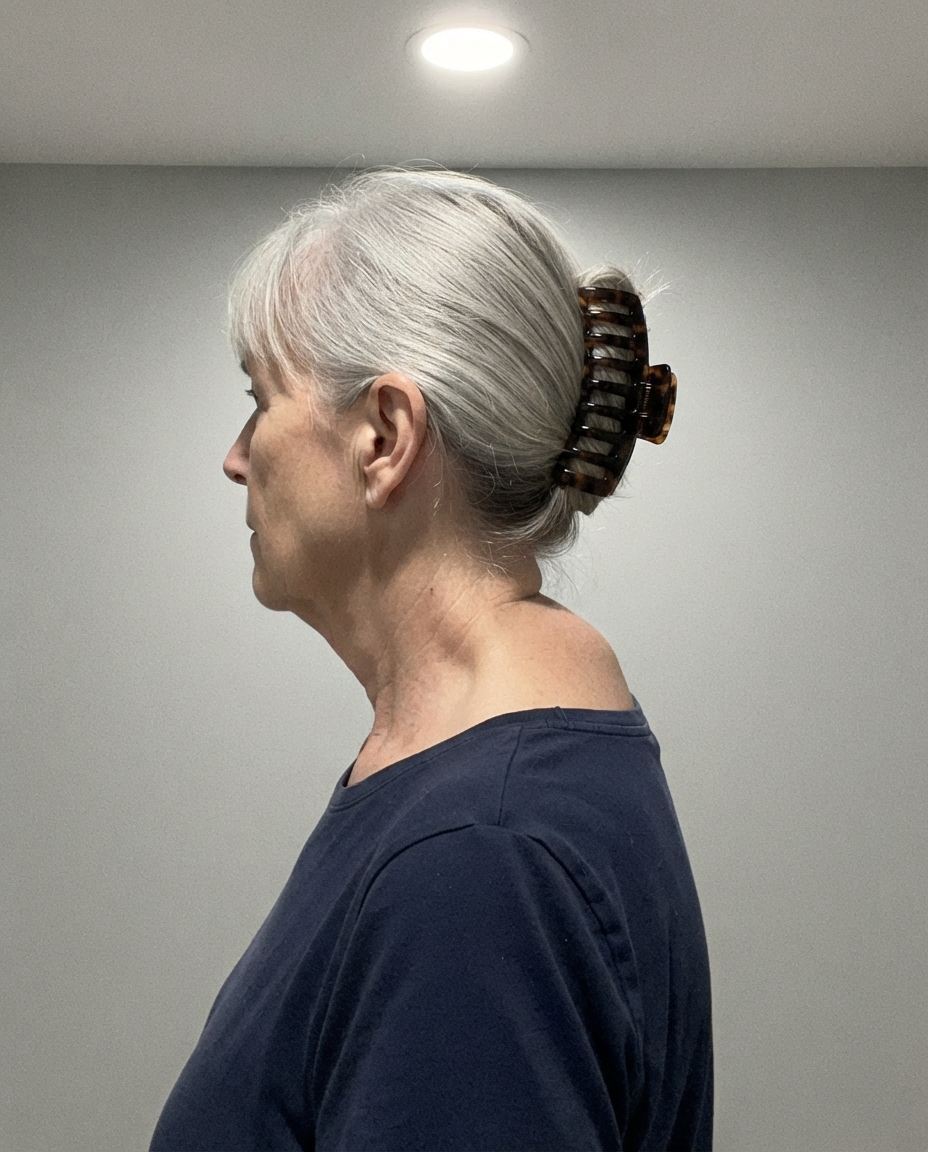
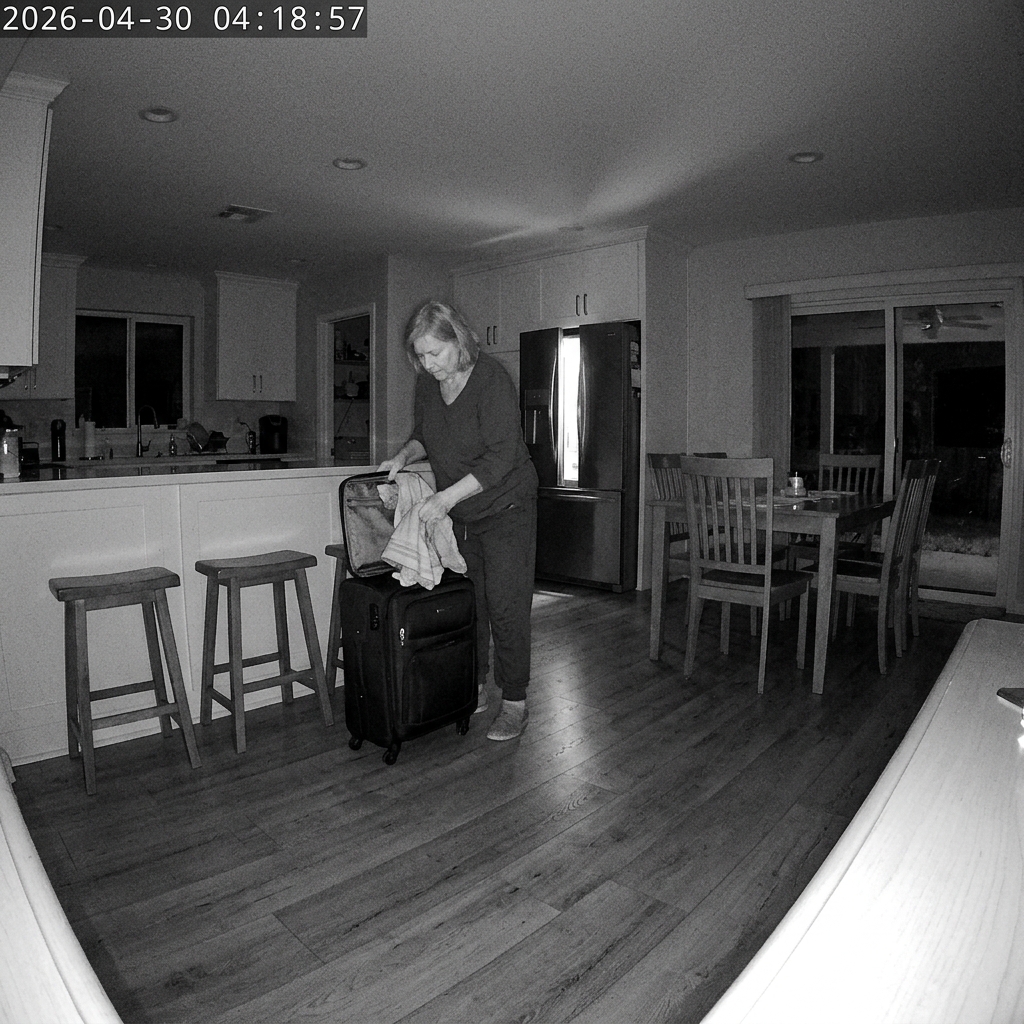
I manage an Airbnb. Last week, I received a message from a guest that brought me to tears. Not a complaint. Not a question about check-in. Not a request for extra towels. A photo. And five words I can't stop thinking about. Let me start from the beginning because this story is going to take a turn you won't expect. My husband Craig and I have been running a five-star vacation rental for the past 4 years. Lake house, sleeps six, wraparound deck, the works. We've hosted hundreds of guests. We've dealt with red wine on white couches, a guy who somehow broke the hammock on the first night, teenagers who thought the fire pit was a trash incinerator. Normal stuff. But about 6 months ago, something started happening that we'd never experienced in four years of hosting. Guests started asking about the device on the bathroom counter. Not the hairdryer. Not the extra towels. Not the coffee maker. The small device next to the hand cream. See, I keep a small wellness tray in the master bathroom for guests — a hand cream, a few essential oil rollers, and a small EMS device. There's a handwritten card next to it that says: "Posture device — 15 minutes whenever you want. Great after long drives or travel days." Most guests try it the way they'd try a complimentary coffee pod or a mint on a pillow. It's hospitality. Nobody thinks twice about it. But the checkout reviews started shifting. "The morning neck stiffness I've had for years was completely gone by day two. Don't know what you put on that bathroom counter but I'm taking the card home." "My forward pull was noticeably lighter by day three. That has NEVER happened on vacation." "Felt more loose in my neck in 3 days at your place than I've felt in the past year. What's that little device on the bathroom counter?" Now — I knew what was in that device. I'll explain why later. But what I didn't expect was guests feeling anything from a three-night stay. It took my husband weeks to see real changes. I figured a few days of 15-minute sessions wasn't enough time to move the needle for anyone. I was wrong. The comments kept clustering around the same thing. And they were too specific. Morning stiffness gone. Forward pull lighter. Necklines they hadn't considered reaching for in months. Getting dressed without the usual calculation. That wasn't vacation. That wasn't the lake air. That was the shift I'd seen happen once before — in my own bathroom — happening to strangers who had no idea what they were using. One couple — both in their late 60s — rebooked for the following month specifically because the wife told her husband she hadn't felt her neck that free in years and she wanted to come back "to whatever was on that counter." A retired teacher extended her stay by two nights because she said she'd worn a scoop neck for the first time in over a year. She kept looking at herself in the bathroom mirror like she was seeing someone she'd forgotten. Something was happening. Something real. Then last month, something happened that still keeps me up at night. A woman named Diane checked in on a Thursday with her husband. Nice couple. Mid-60s. She was warm, chatty, organized — had the kind of energy where you could tell she was the one who held everything together. Her husband was quieter. Moved carefully. Smiled politely but there was something behind it. Something he'd accepted. They stayed three nights. On checkout morning, Diane left the place spotless. Towels folded. Dishes done. A thank-you note on the counter. But when I went to flip the house for the next guest, something was wrong. The device was gone. Not the hand cream. Not the essential oil rollers. The small EMS device that sits on the bathroom counter. Gone. It wasn't in the recycling. Wasn't in the cabinets. Wasn't behind the coffee maker. I checked every drawer, every shelf, every bag in every trash can. The device was simply missing. I pulled up the camera footage from the common area — we have a disclosed camera in the living room that guests know about. Standard Airbnb security. Nothing hidden. And there it was. 4:18 AM on checkout day. The living room was dark. Diane walked out of the bedroom, crossed the living room, went straight toward the hallway. She came back thirty seconds later carrying something wrapped in a dish towel. Put it in her suitcase. Zipped it shut. She took the whole device. My first reaction was frustration. Not because the device was irreplaceable — it wasn't, really. But because the next guest was arriving in four hours and I'd have to drive 40 minutes to my house to grab the spare. But that frustration lasted about ten seconds. Because I thought about the retired teacher looking at herself in the mirror. The couple who rebooked. Every review from every guest who'd used it for fifteen minutes expecting a neck massager and walked out three days later moving differently. This woman used that device for three nights. And whatever happened to her — or to her husband — was enough that she couldn't leave without it. That's not theft. Not really. That's someone who found something and was terrified of losing it. I texted her: "Hi Diane — hope you and your husband had a wonderful stay. I noticed the device is missing from the bathroom counter. Everything okay?" Forty-five minutes later, my phone rang. She was crying. Not the polite kind. The ugly kind. The kind where someone has been holding something in for a long time and it finally comes out. "I'm so sorry," she said. "I know it was wrong. I'll pay for it. I'll pay you whatever you want. I just —" She stopped. Took a breath. Started again. "My husband Don has been attending twice-weekly adjustment sessions for almost five years. His practitioner says his measurements look great. Every six months they reassess and every six months the practitioner says 'looking great, Don, keep doing what you're doing.'" Her voice got harder. "But he's NOT great. He hasn't been great in years." "His neck started first. About a year into the protocol. Stiff in the morning. Then the tissue started building. Then I could see it from across the room — the way his head sat forward, the way the base of his neck had changed. He used to be the one who stood at the back of photos and now he steps to the edge before anyone even picks up a camera. He pretends he doesn't notice." "Then the wardrobe. That's what I call it. The wardrobe. His wife — me — had slowly stopped suggesting certain outfits. Not because he'd changed. Because I'd started planning around the same problem automatically." "Last Thanksgiving he turned down a family photo entirely. Said he was tired. He wasn't tired. I know what tired looks like on him. He was embarrassed." I sat down on the bed. My legs went weak. "His practitioner says the tissue buildup is normal for his stage. Says it happens sometimes with long-standing forward head compensation. Recommended more frequent sessions and told him to do more exercises. The visible hump? 'That's just aging, Don. You're 64. It happens.'" Her voice broke. "It's not aging. I've been married to this man for 38 years. I know what aging looks like. This isn't aging. This is something else. Something is being taken from him. I've been watching it happen for four years and nobody will listen to me." I was gripping the phone so hard my knuckles were white. "That device on your bathroom counter," she said. "I didn't know what it was. I thought it was a massager. Don used it Thursday evening because his neck was stiff from the drive. He used it for 15 minutes while we sat on the deck." "Twenty minutes later he looked at me and said, 'Diane, my neck feels different.'" "I said, 'Different how?'" "He said, 'Like something switched back on that I didn't know was off.'" She was sobbing now. "That night he slept through until morning without waking up from neck tension. He hasn't done that in two years." "Friday morning he came downstairs and his neck wasn't stiff. He turned his head to look at something across the room — fully, without bracing — and didn't even notice. But I noticed. I've been watching that neck for four years. I noticed." "By Saturday the forward pull he carries everywhere was lighter. He stood at the kitchen counter making coffee and his head was back. Not dramatically. Just... back. Where it's supposed to be." "And Sunday morning — checkout morning — I was packing the suitcase and I looked at that device on the bathroom counter and I thought: I cannot go home. I cannot take him back to what he was before we got here." "I panicked. I knew it was wrong. I took it anyway. Because I'd watched my husband come back over three days and I could not — I could NOT — let that end." She was crying so hard I could barely hear her. "I haven't seen him like that in years. I forgot what he looked like when his neck wasn't carrying him forward. I got him back for three days and then checkout was going to take him away again." I was crying too. Sitting on the edge of the bed in my own rental property, tears running down my face, listening to this woman describe my own life back to me. She could have been telling my story. Word for word. Because two years ago, I was Diane. Craig started attending twice-weekly adjustment sessions at 57. Different practitioner. Same slow acceptance. His first specialist called it manageable. Six months in, the measurements were stable. The specialist was satisfied. And every morning I sat across from a man who was adjusting himself into a smaller and smaller version of who he used to be. The details were different but the shape was the same. Don turned down a family photo. Craig stopped being in photos at all — he was always the one behind the camera. Don's practitioner said "that's aging." Craig's said the same thing. Same script. Same dismissal. Same woman sitting across from a practitioner knowing in her bones that something else was happening and that the protocol wasn't reaching it. What I need to tell you is what I found when I went looking for answers. Because that's the part nobody told me. And it's the reason that device is on my bathroom counter. One night — 1 AM, couldn't sleep — I was sitting at the kitchen table with my laptop. Craig was in his recliner again. Not because he wanted to be. Because he'd given up on the mirror and given up on the photos and somewhere along the way given up on fighting it. The TV was still on. His posture brace was still on the armrest where he'd left it after his evening session. Coiled up. Waiting for tomorrow. The man I married used to stand at the back of every photo and grin. Now he stood in front of the camera only when I specifically asked him to, and even then he'd angle himself. I'd watched that angle develop over three years and his practitioner called it management. I started researching. Not "posture tools." I'd already wasted months on that — foam rollers, cervical pillows, traction devices, posture apps. None of it touched the forward pull or the tissue or the quiet way he'd stopped fighting it. I researched WHY. Why was the protocol not reaching the root cause? And I found something that changed everything. It was a long post on a health forum. Written by a retired manual therapy specialist. Twenty-two years of practice. She'd left her clinic because she said she couldn't keep recommending protocols that she now understood were managing a symptom while the root cause kept advancing untouched. I almost scrolled past it. The internet is full of anecdotes. But her credentials checked out. Her writing was precise. Clinical. Not angry — just tired. Like a woman who'd spent two decades doing something she'd finally realized wasn't enough. She started by explaining what adjustment protocols actually do inside your neck. "Joint mobilization addresses the position above the inhibited muscles," she wrote. "That's how adjustments temporarily improve forward head measurements. But the same session that moves the joint never reaches the deep cervical motor nerves where the inhibition is actually occurring." I thought about Craig's neck. The one that kept drifting forward despite three years of faithful attendance. "When you mobilize the joint above inhibited muscles, you improve the measurement temporarily. But the muscles that were switched off — by decades of accumulated forward load, by a nervous system that shut them down to protect them — those muscles never receive the signal they need to switch back on. The inhibition continues. The head drifts back. The tissue keeps building." I thought about Craig's practitioner saying "looking great" every six months while Craig stood further from every camera. "The standard medical response is to add more frequent sessions. But no amount of joint mobilization can restore a broken brain-muscle signal. The signal isn't in the joint. It's in the motor nerves. And motor nerves respond to one thing: direct electrical activation." That's exactly what Craig's practitioner had done. Added sessions. Recommended exercises. Checked the box. Then this specialist wrote something that made me physically sick. "But the joint mobility improvement — as temporary as it is — is not the most dangerous thing adjustment protocols fail to address." "The most dangerous thing is what's happening to the deep cervical muscles while the sessions continue." Deep cervical muscles aren't passive, she wrote. Your body keeps them active on purpose — they hold your head back, control your posture, resist the forward load of daily life. The problem isn't that they went quiet. The problem is what happens when they stay quiet while external mobilization gives the appearance of progress. "When the joints above the inhibited muscles are repeatedly mobilized," she wrote, "the nervous system learns to rely on that external input. The inhibited muscles atrophy further. The dormancy deepens. The measurements may look stable. But the muscles that are supposed to be doing the holding have been getting quieter the entire time." Not poor posture. Not genetics. ADVANCING INHIBITION. "Adjustment protocols manage the measurement while the inhibition advances underneath. This is why patients with decades of faithful attendance still end up with consolidated tissue. They were compliant. They were consistent. They were attending the wrong target." My hands were shaking. "This is why the clinical research on adjustment-only protocols shows almost zero tissue reduction at 12 and 18 months in women with established cervical progression. The measurements look managed. The inhibition keeps advancing. The tissue keeps building." Not the joint. THE INHIBITED MUSCLES. "Adjustment protocols manage the joint above the problem. They do nothing to prevent the deep cervical muscles from going more and more silent while the measurements look stable." Then she wrote something I will never forget. "I had a patient. Sixty-one years old. On twice-weekly adjustments for nine years. Forward head position of 2.6cm at baseline. Perfect compliance. Her husband brought her to every appointment. He told me once that she'd stopped suggesting family photos because she was embarrassed. I told him the tissue was 'manageable with consistency.' She came back nine years later with tissue that had consolidated past the point of easy reversal. Her deep cervical muscle activation — which I had never once directly tested in nine years of treatment — was 14% of normal. I had watched the wrong measurement for almost a decade. And her husband had watched me watch it." I looked across the room at Craig. Brace on the armrest. Eyes on the TV. Head forward. His practitioner had never directly tested his deep cervical muscle activation. Not once. In three years. Never even mentioned it. Every six months they measured the position, said "stable," and booked the next appointment. Craig was 60. The specialist's patient was 61. They were watching the wrong measurement. While the real damage built up where nobody was looking. I kept reading. The anger was keeping me awake now. "The question becomes: if inhibition is the actual driver of progression, what reverses it?" "Over the past two decades, researchers have published extensive studies on direct cervical muscle reactivation via electrical muscle stimulation — EMS. Unlike joint mobilization, which addresses the position above the inhibited muscles, EMS delivers electrical pulses directly to the inhibited muscle fibers. The muscles are forced to activate regardless of what the brain is or isn't signaling." "Unlike standard posture tools — braces, rollers, exercises — which ask inhibited muscles to respond, EMS bypasses the broken signal entirely. It reaches the motor nerves where the inhibition is occurring. It forces activation. And when the inhibited muscles activate repeatedly over time, the brain-muscle signal begins to restore." I read that paragraph three times. The foam roller I'd bought Craig? Never reached the inhibited motor nerves. The exercises his practitioner recommended? Asking muscles that weren't listening to respond. The brace on the armrest? External repositioning around an inhibition it never touched. Nobody was addressing the signal. Nobody was reaching the inhibited muscles directly. This specialist had walked away from a 22-year practice because she'd watched her patients accept tissue consolidation on protocols that managed the measurement while the inhibition kept advancing underneath. She couldn't do it anymore. I closed my laptop at 3 AM. Opened it again at 5. I found the product she'd referenced in a follow-up post. A clinical-grade EMS device engineered specifically for the deep cervical muscles. 8 unique massage programs and 19 adjustable intensity levels. Not a generic TENS unit. Not a surface massager. Direct EMS reactivation calibrated to reach the inhibited motor nerves — the exact delivery method used in the clinical research showing tissue reduction. Most EMS devices deliver surface stimulation. Generic frequencies. They activate sensory nerves, not motor nerves. By the time the signal reaches the depth where the inhibition is occurring, it's too weak to matter. This device delivers directly to the motor nerve pathway. The specific neural circuit responsible for firing the deep cervical muscles. The exact nerves silenced by years of compensation and atrophy. At 19 graduated intensity levels so the reactivation builds as the inhibited nerves begin to respond. I ordered Cevera that morning. Craig thought it was another massager. I didn't correct him. I just set it on the bathroom counter that evening and said "try this for 15 minutes." He looked at it. Looked at me. Shrugged. Used it. Nineteen minutes. He was reading in his chair — the one he'd retreated to every evening. Most nights he'd get to page thirty and set the book down. Drift into the brace routine. Give up on the evening. Nineteen minutes after that first session, he looked up. "Jenna. My neck feels different." "Different how?" "Like something's holding it back. Like I'm not carrying it forward anymore." He went back to his book. Read until 10 PM. Didn't stop once. I went into the bathroom and cried. By week two, his morning stiffness had stopped waking him up. I heard him in the kitchen one afternoon — a sound I hadn't heard in over a year. He was making coffee and turned his head to look out the window. Fully. Without bracing. Didn't even look self-conscious. Just looked. It wasn't nothing. I stood in the doorway and watched him and my throat closed up. By week three, he started standing differently in the kitchen. Not dramatically. Just — back. His head was back where it belonged and he wasn't fighting to keep it there. By week six, we had his measurements taken. I went with him. Sat in the room while his practitioner ran the assessment. She measured. Stopped. Measured again. Then she took off her glasses and looked at Craig. Really looked at him — not at the chart. "You look different," she said. "Before I even ran the numbers. You walked in here differently." Craig shrugged. "I feel different." She put her glasses back on. Read the numbers to us. Forward head position: 3.1cm to 1.8cm. Down 1.3 centimetres. Without changing the adjustment frequency. She was quiet for a while. Then she said: "Craig, I don't know what you changed. But these measurements are moving in the right direction and you clearly feel better. Keep doing what you're doing." She didn't ask what it was. Didn't endorse anything. But she didn't argue either. And she didn't book more frequent sessions. That was eight months ago. Craig's been using Cevera every day for seven months. His measurements stay consistent. His neck stays back. He's in photos again — standing at the front, not angled at the edge. He slept through a whole family gathering last month without once adjusting his collar or angling away from a camera. He's not the man on the adjustment protocol. He's the man I married. A few weeks after Craig's measurements came back, we were at the rental doing a maintenance weekend between guests. Craig used Cevera on the bathroom counter out of habit — it's just part of his morning now. I watched him finish his session. And I thought about all the guests who come through this house. The ones who move carefully. The ones whose husbands hover near them with that look I know too well. The ones who pause at the bathroom mirror a beat too long before going to breakfast. I went home that afternoon and put a spare Cevera on the bathroom counter. Wrote a card: "Posture device — 15 minutes whenever you want. Great after long drives or travel days." Set it next to the hand cream. Didn't overthink it. Just did it. That was six months ago. And those guest reviews I told you about at the beginning? Now you know why they don't sound like massager reviews. Because it's not a massager. It's what gave me my husband back. So here's what I told Diane on the phone that day: "Keep the device. But let me send you the link so you can order your own. Because that device will need charging and eventually replacing. And when it does, I don't want Don to go back to the way he's been." She laughed through her tears. "Deal." I sent her the link that afternoon. She ordered two. Last week — exactly three weeks after their stay — she texted me a photo. Don standing in the kitchen making breakfast. Head back. Shoulders open. Standing the way he used to stand. Five words underneath the photo: "I have my husband back." That's the message from the beginning of this story. That's what made me cry. Not the theft. Not the confession. A photo of a man standing in his own kitchen with his head back, sent by a wife who thought she'd lost him. I printed it. It's on my fridge next to the thank-you note she left on the counter. If you're reading this, I know exactly where you are. You've been watching someone you love disappear. The posture that used to be easy. The ease of getting dressed without calculating. The presence he used to carry — really carry — at family dinners, in photos, in rooms full of people. And the practitioner keeps saying the measurements look stable. The chart looks fine. Keep coming in. But the chart isn't married to him. You are. You've been watching the wrong measurement. The whole time. One path: keep attending the sessions. Keep watching the slow acceptance. Keep hearing "that's just aging" while you know in your bones it isn't. Keep hoping the protocol that's mobilizing the joint above the inhibition will somehow reach the inhibition — even though the mechanism says it can't. Another path: give his body what it's actually missing. Address the inhibition that the adjustment doesn't touch. Restore the brain-muscle signal that keeps his head back. Track the measurements. Watch them improve. Watch HIM improve. Verify the results yourself. I chose the second path. Diane chose the second path. Craig is living proof. Don is becoming proof. 👉 https://trycevera.com/pages/adv2-womens-wellness-report — Dorothy Callahan P.S. — Diane left us a five-star review last week. It didn't mention the lake or the deck or the coffee maker. It said: "This place gave me my husband back. I don't know how to rate that. Five stars isn't enough." Craig read it over my shoulder and stood a little straighter — with the neck that used to carry him forward for three years. If your husband has been on adjustment protocols and you've been watching him accept the hump, the forward pull, the wardrobe calculation that's become automatic — the device on my bathroom counter is Cevera Posture Release Pulse. That's what Diane took. That's what Craig uses every morning. That's what I leave for every guest who walks through our door. I'm dropping the link again below because I want you to have it. P.P.S. — Here's my challenge for you: have him use it for 15 minutes. Whenever it suits him. Set a timer for 20 minutes after. If you don't notice something shift — a lightness in how he's holding his head, a quiet in how he's carrying himself — then maybe this isn't for you. But if you notice it — and almost everyone who's used the one on my counter has noticed it — that's not placebo. That's the brain-muscle signal being restored for the first time. Something his adjustment protocol has never done and never will. Something the exercises his practitioner recommended can't do because they're asking inhibited muscles to respond to a signal that isn't reaching them. The tissue improvement takes weeks to show up on assessment. But that first-session shift? That's his body telling you: finally — something that actually gets where it needs to go. P.P.P.S. — Cevera has a 90-day money-back guarantee. If his measurements don't improve, every penny back. No questions asked. Compare that to the adjustment protocol on his calendar — which comes with an indefinite commitment, sessions that manage the joint while the inhibition advances, and a practitioner who watches the chart instead of the man. Craig was on twice-weekly sessions for 3 years. Nobody offered a refund when it managed his position while his muscles went quieter every month. The system doesn't do refunds. Cevera does. P.P.P.P.S. — Cevera is a small company. They sell out. I know because I tried to reorder for the Airbnb after Diane took the device and had to wait 9 days for a restock. I keep two devices in the house now — one for Craig, one for the rental. If his next assessment is in 30 to 60 days and you want him to walk into that appointment with real measurements instead of the same managed acceptance — check if they have stock today. Not next week. Now. Every day without addressing the inhibition is another day the signal stays broken. Don't let checkout day be the thing that takes him back. P.P.P.P.P.S. — Do not forget about their 90-day money-back guarantee. 👉 https://trycevera.com/pages/adv2-womens-wellness-report
Fix Your Neck Hump at the Source
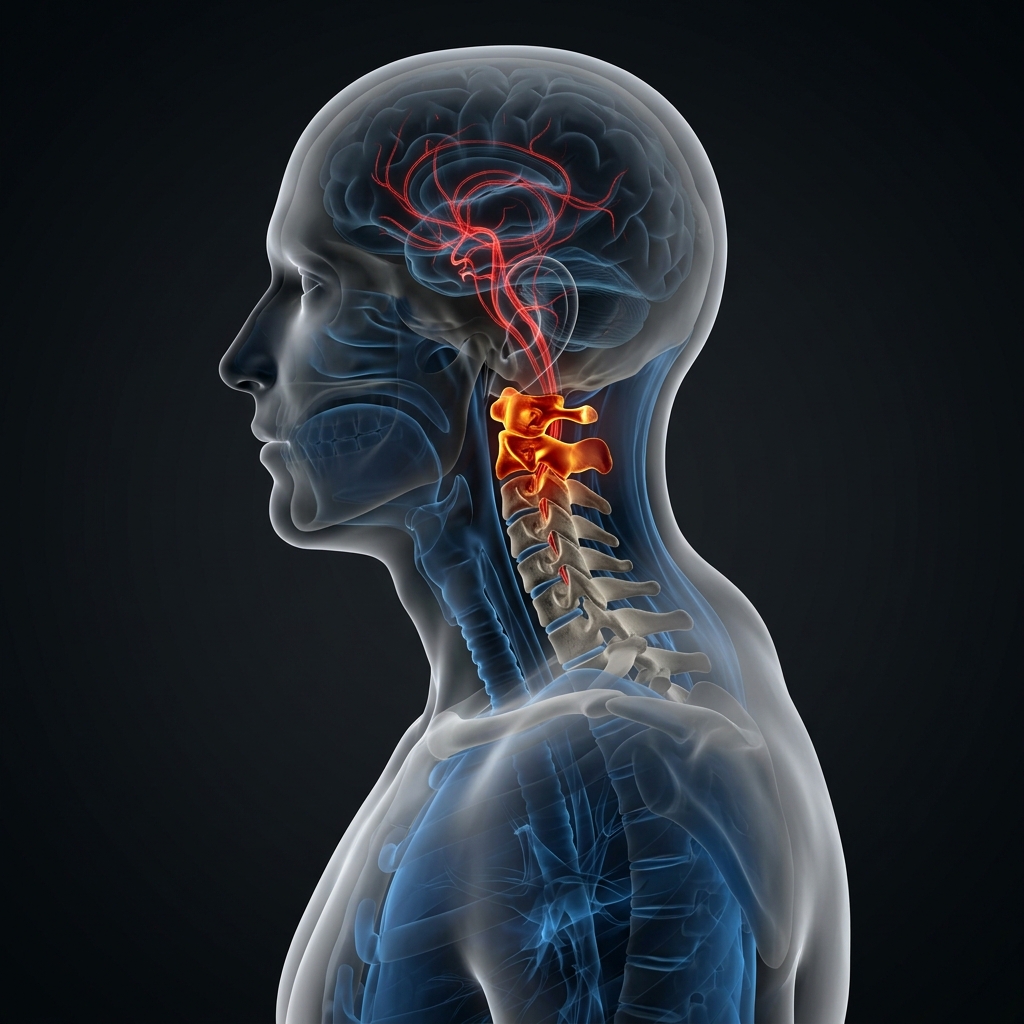
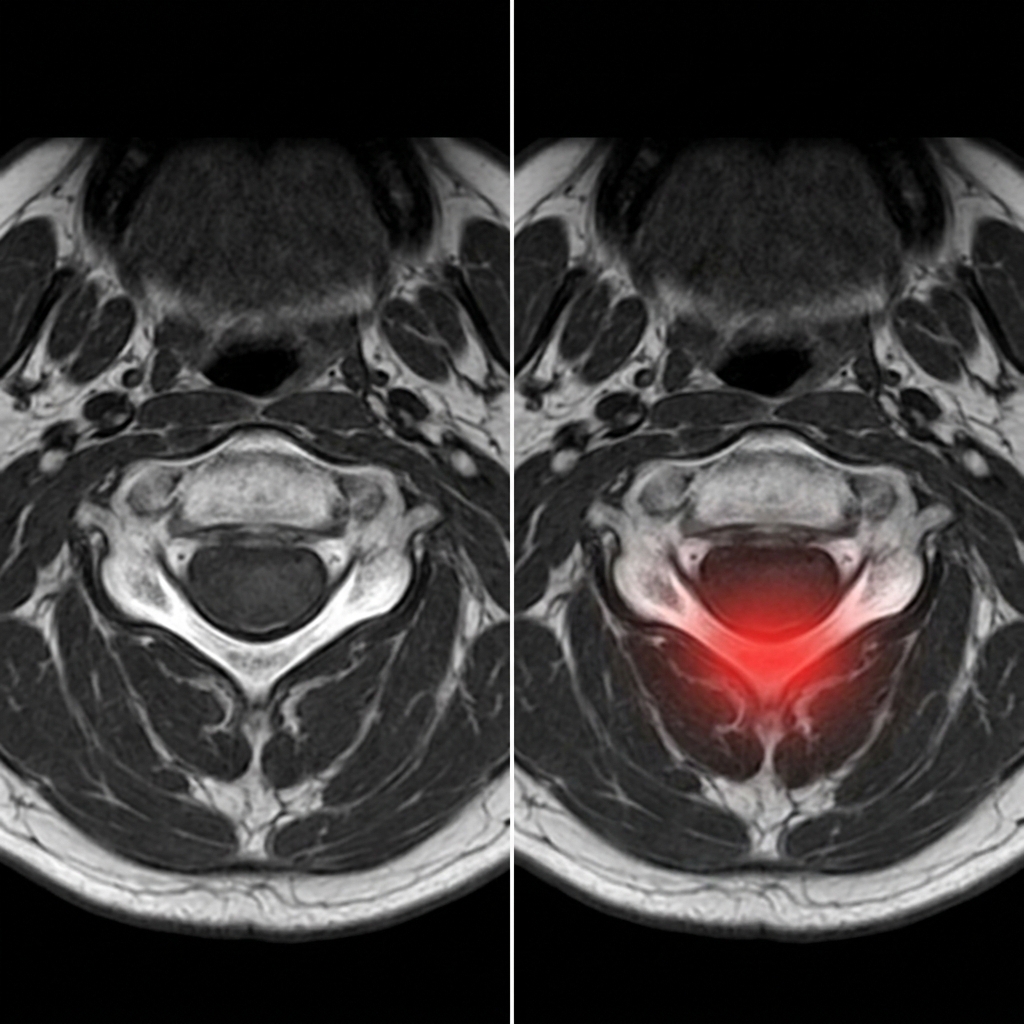
Cevera Posture Release Pulse is a next-generation EMS device designed to selectively reactivate the inhibited deep cervical muscles in your neck — at the source, right where neck hump progression actually starts.
LEARN MORELike this ad? Make it yours.
Crush rebuilds this exact creative around your product — your brand, your colors, your offer — in about a minute.