
Inactive· since Aug 8, 2026
- 21
- days it ran
- 1
- relaunches
Ad copy
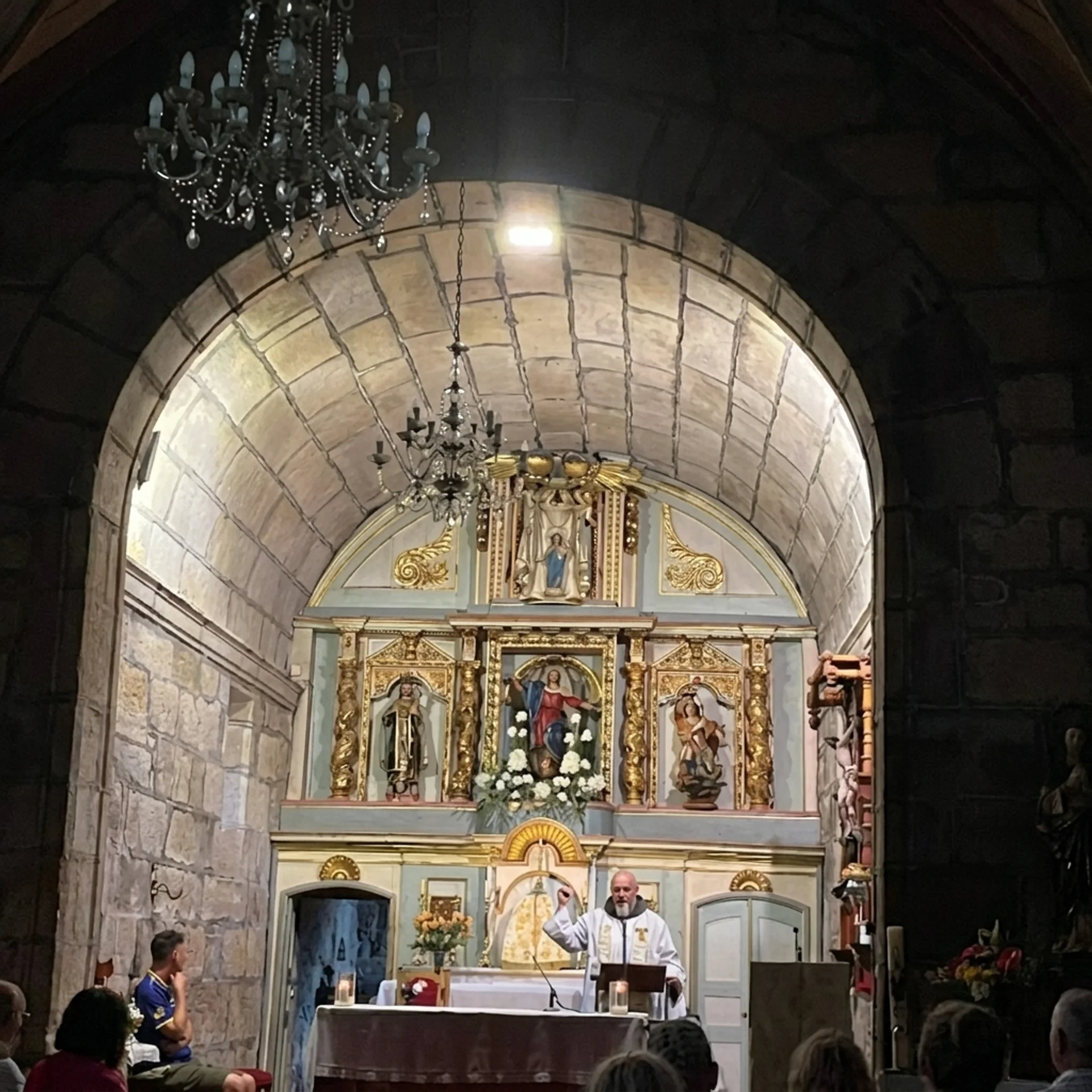
I almost had a heart attack on a mountain trail in Spain. The doctor who treated me was from Sweden. She asked me ONE question that made my American doctor look fifteen years behind. I'm 64 years old. My husband and I had been saving for this trip for almost three years. The Camino de Santiago. The old pilgrim road across the north of Spain. Two weeks of walking, village to village, the way people have done it for a thousand years. We'd talked about this walk since the kids were in college. The kind of trip you plan in your forties for your sixties. The reason you keep showing up to a job you stopped loving years ago. Day six, late afternoon, we were climbing the long steep pull up to O Cebreiro — the stone mountain village at the top of the pass, where the trail leaves the valley and goes almost straight up. You've seen the pictures. Green hills folding away in every direction. Stone huts with thatched roofs older than my country. Cattle bells somewhere below in the mist. The whole valley dropping away behind you as you climb. The kind of place you put on a wall when you finally get home. My husband was walking ahead of me. He had his phone out taking pictures. Laughing at something another pilgrim had said in broken English. I was about thirty feet behind him. I'd noticed the climbing starting to get to me about halfway up. My heart was pounding hard. Not just the regular hard you'd expect on a steep hill. The deep pounding I'd been feeling at home for the last six months walking up the stairs to our bedroom. I'd been telling myself it was just getting older. Just being out of shape from a winter at a desk. I'd been telling my husband the same thing. I stopped on the trail to catch my breath. Put my hand on a stone wall along the path. Tried to slow my breathing. It didn't slow. The pounding got worse. My chest started to feel tight — not painful exactly, but like someone was pressing a hand against my sternum. I started to sweat through my shirt. I felt the blood drain out of my face. I sat down in the dirt against the wall. I tried to call out to my husband but my voice wouldn't come. Other pilgrims kept walking past me. A few glanced down. Most just kept climbing, poles clicking on the stones. I sat there with my hand on my chest thinking about my father. My father died of a heart attack at 72. He was sitting at his kitchen table on a Sunday morning reading the sports section. He just slumped forward. I was 39 when that happened. And here I was, 64 years old, on a mountainside in Spain four thousand miles from home, doing the same thing. My husband turned around. I will never forget his face. He'd been laughing one second. The next second he shoved his phone in his pocket and ran back down the trail to me. "Marianne. Marianne, what's happening." I couldn't speak. He grabbed my arm. Yelled down the hill for help. A Spanish man in his sixties who ran the little café at the top came down with a folding chair. Two younger pilgrims helped get me into it. Somebody brought water. The café owner made a call. The trail is too narrow and steep for anything but a four-wheel-drive that services the village. They got one, eased me into it, and drove us down the back road into the valley to the health clinic in the next town. My husband held my hand the whole way down. He didn't say anything. Just held my hand and looked at me with the face I'd been seeing in nightmares for twenty-five years since my father died. I told him I was okay. I wasn't. The doctor was waiting when they brought me in. Someone had phoned ahead. Her name was Dr. Lindqvist. Swedish accent. White hair cut short. Maybe early sixties. She had me lie down on the exam table. Hooked me up to a monitor. Took my blood pressure twice. Frowned at the reading. Drew blood. Looked at the numbers as they came up. "You did not have a heart attack today," she said. "But you came close." I was lying there with my husband holding my hand. I just looked at the ceiling. "Your blood pressure is 176 over 102. Your pulse is irregular. And your inflammation markers are high — the kind of high I see in a person whose body has been burning for years. You have arthritis, yes?" "Osteoarthritis. Thirteen years. I'm on a daily anti-inflammatory." "How long has your American doctor been calling your arthritis managed?" The question hit me sideways. I said something about how my joints had been "under control" for years, that the pill took the edge off, that my doctor always said we were on top of it. That he'd been talking about moving me to an injection at my last visit because the pill wasn't holding the pain as well anymore. Dr. Lindqvist looked at me for a moment. Then she set down her stethoscope. "How long has your American doctor been telling you your arthritis is managed while your blood pressure has been climbing?" I tried to answer. Couldn't. Because the answer was years. My blood pressure had been creeping up at every annual for at least five years. My doctor kept saying we'd watch it. Maybe add a blood pressure pill next year if it didn't come down. It never came down. "I want to tell you something I have spent the last two years quietly frustrated about," she said. "I trained in Sweden. I practiced for almost twenty years in Gothenburg before I came to run this clinic. And what I see when American walkers come through that door is the same thing every time." She pulled up a chair. "American pilgrims come to me from all over. Different states. Different insurance. Different doctors. And so many of them tell me the same story. Their arthritis is under control. Their doctor has been watching them for years. They are doing everything they were told." "And so many of them are sitting in front of me with stiff hands, climbing blood pressure, exhaustion that sleep does not fix, and hearts straining to push blood through arteries that have been quietly damaged for a decade." "The American system has decided that monitoring a patient is the same thing as treating one. It is not. Monitoring is watching the damage happen and writing it down. Treating is addressing what is causing the damage in the first place. American doctors are very good at the first one. They are not trained for the second." She paused. "That is not a criticism of your doctor. He is doing what he was taught. He looks at your pain. He looks at your blood pressure. He adjusts the doses. He writes the next prescription. That is the protocol. And the protocol is what is failing you." "And what I see, every time, is what just happened to you on that hill. A 64-year-old woman with 'managed' arthritis, on an anti-inflammatory for thirteen years, with climbing blood pressure her doctor has been watching, who came within a hair of a cardiac event on what should have been the walk of her life." I asked her what I should have been told. "You should have been told that arthritis is not really a joint problem. The stiffness and the swelling — that is only where the fire is close enough to the surface for you to feel it. What is actually happening is that your body has been running an inflammation response that never shuts off. For years. It began in the joints. But inflammation does not stay where it starts. It travels. In the blood. To everywhere the blood goes." She held up her hand. "It burns along the inside lining of your arteries. It damages the lining. And once the lining is damaged, the cholesterol riding past in your blood does not simply flow by — it catches on the damaged wall, and the fire oxidizes it. Turns it rancid. Sticky. Rusted. That rusted, sticky cholesterol is what builds the plaque. And plaque in the arteries feeding your heart is what causes a heart attack." She looked at me. "That fire is what causes every part of what is happening to you. Not the joints. The joints are just the room where you can see the smoke. The fire is in the walls. And it has been spreading for years before your doctor told you anything was wrong." I wanted to say something but she held up her finger. "The things you feel first are small. Do your hands ache in the morning — worse and longer than they should for a woman your age?" "Yes." "Are you tired in a way that a full night of sleep does not fix?" "Yes." "Has your blood pressure been creeping up at every visit while your doctor said you would keep an eye on it?" "Yes." "Has your cholesterol been 'a little high' for years — the kind they keep saying they will get to later?" "Yes." "Do you lose words. Walk into a room and forget why you went in." I just looked at her. She read me like a book. "And then," she said. "The arteries feeding your heart muscle." She paused. "What happened on that trail today was the same fire that has been in your hands for thirteen years. It reached your heart. The climb demanded more blood than your stiffened arteries could deliver fast enough. Your heart pounded because it was straining to make up the difference. You came close to a cardiac event." My husband was crying silently next to me. I could feel his hand shaking against mine. "My father died of a heart attack at 72," I said. Dr. Lindqvist nodded. "Then you have known what this looks like. And you have been walking toward it for thirteen years while your doctor told you everything was fine." I asked her what the anti-inflammatory had been doing for me, then, if all of this was happening underneath it. "It blocks the pain signal in the joint. That is its job. The joint hurts less. The one number your doctor watches — how much pain you report — improves. He is satisfied. But it does nothing to put out the fire. The inflammation travels to your arteries whether you take the pill or not. The drug quiets the alarm while the fire keeps burning." "And there is something your doctor should have told you and did not. That class of drug — the daily anti-inflammatory — carries a warning on its own FDA label that it raises the risk of heart attack and stroke. It pushes blood pressure up. So the one pill you take every day to manage your joints is, on its own label, adding to the exact danger that put you on that trail today." "It is like disconnecting the smoke alarm because the noise bothers you. The fire does not care that the alarm has gone quiet." I sat with that. "And the injection," I said. "My doctor wanted to move me to an injection next." She nodded slowly. "The stronger prescription anti-inflammatories — the injections they move you to when the pills stop holding. Some patients get real relief. They are powerful. But they work by shutting down parts of your immune system, they carry their own serious risks, and they cost a fortune. And even they are aimed at the symptom, not at what is feeding the fire. You would be trading a pill that raises your heart risk for an injection that suppresses your immune system — and the thing actually driving the fire, nobody addresses at all." She let that land. "I have seen it. Patients who came to me after starting the injections. Good early relief. And underneath, the fire still spreading toward the heart. Because nothing had turned it down at the source." I asked her what addresses it, if the medications don't. "In Sweden, and across Scandinavia, we have spent more than a decade studying what the deep-red pigment in tart cherries and dark berries does to inflammation. The pigment is called anthocyanins." She pulled a small notebook from her pocket. Started writing. "Two things this pigment does. First, it calms the fire itself — the inflammation, at the source, in the joints and in the blood. Not by numbing a pain signal. By turning down the overactive response that is producing the fire in the first place." She kept writing. "Second — and this is the thing your anti-inflammatory can never do — the same pigment is one of the most powerful antioxidants ever measured. It neutralizes the free radicals. It stops the fire from rusting the cholesterol against your artery walls. One pigment. It calms the fire, and it stops the rust the fire leaves behind. That is the whole disease, addressed where it actually lives — instead of a number managed on a chart." I started to ask the question everyone asks and she was already ahead of me. "And before you say turmeric — because someone always says turmeric — yes, turmeric has a real anti-inflammatory compound in it. The problem is your body can barely absorb it. Even the versions with black pepper extract added to help it along still absorb terribly. You would have to eat it by the spoonful to reach what the research uses, and even then most of it never reaches your blood. The cherry pigment does not have that problem — if it is prepared correctly." She tore off the page and handed it to me. "There is one catch. It has to be real Montmorency tart cherry — the sour cherry, not the sweet cherry you eat in summer, which has almost none of the pigment. And it has to be cold-extracted. Heat destroys the anthocyanins. Which is why the cherry juice in the grocery store, and the dried cherries, and the cheap heat-processed capsules do almost nothing — the heat has already killed the very thing you are taking it for. And no sugar. The sugary cherry juice everyone drinks feeds the exact fire you are trying to put out. You need real Montmorency, cold-extracted, concentrated to match the dose in the research, no sugar, and third-party tested so you know what is actually in the capsule." She named a company her colleague — a rheumatologist back in Gothenburg — had been recommending to his patients for two years. Masadena. She wrote that name down too. "I called this company myself before I ever recommended it to a patient," she said. "That is how I was trained in Sweden. You do not put your name behind a supplement any more than you would put it behind a medication whose file you had not read. They sent me everything within a day. Montmorency tart cherry — the real sour variety — grown in the cherry country around Traverse City, in Michigan. Cold-extracted in small batches so the pigment survives. Concentrated to match the dose in the research. Zero sugar. Third-party tested. Made in the USA. The variety was real. The extraction was real. The labs were clean." She looked at me one more time. "Your body is not failing you. The protocol that treats being watched as the same as being helped is failing you. The fire is the disease. The pill quiets the alarm. The pigment is what actually turns the fire down and repairs the damage it has already done. That is what we do in Sweden. That is what you should be doing in the US." I asked her what I should do for the rest of the walk. She told me to stop climbing. No more passes. She gave me something to bring the blood pressure down, told me to rest two days, eat simply — fish or chicken and vegetables, no heavy food, plenty of water. She'd check me again before we moved on. She also said something I have not been able to forget. "You did not have a heart attack today. But your body is telling you it is preparing for one. Your doctor has been monitoring you. He has not been treating you. There is a difference." My husband and I took a room in the valley town that night. I sat on the edge of the bed for a long time and just stared at the wall. My husband sat next to me without saying anything. He finally said, "Your father died at 72. We have eight years if we do nothing different." I told him I knew. We did not finish the Camino. We took the bus into Santiago and sat in the square in front of the cathedral and watched the other pilgrims arrive on foot, the way we were supposed to. I did not feel sorry for the missed miles. I felt sorry for the thirteen years. The rest of the trip was different. I kept thinking about what Dr. Lindqvist had said. About the fire. About how it started in my joints and how the same thing that had been stiffening my hands every morning had just made my heart pound on that mountain. I had been treating those things like separate problems for years. The morning stiffness in my hands I had blamed on "just arthritis," the way you'd blame gray hair. The exhaustion that a full night of sleep never touched, I had blamed on my job. The blurry, foggy afternoons where I lost the thread of a sentence, I had blamed on getting older. The cholesterol that had been "a little high" for six years that nobody ever did anything about. The blood pressure I kept telling myself I'd deal with at some point. The heart pounding on the stairs at home I had blamed on being out of shape. Dr. Lindqvist had connected all of it in twenty minutes. My American doctor had been seeing me twice a year for thirteen years. He had never once connected any of it. We got home on a Sunday. That night I could not sleep. My husband was already in bed. I went downstairs at 11:30 and opened my laptop. I typed in what Dr. Lindqvist had written down. Montmorency tart cherry. Anthocyanins. Inflammation. CRP. I went down the rabbit hole. Study after study. Tart cherry lowering the inflammation marker CRP in real human patients. Anthocyanins protecting the lining of the arteries. Research out of Boston University. Johns Hopkins. UC Davis. Sitting there on PubMed at one in the morning, published years ago, in journals my doctor should have been reading while he wrote me the same prescription every year and watched my blood pressure climb without ever once asking what was making it climb. The mechanism was exactly what Dr. Lindqvist had described. The fire that starts in the joints. The oxidized cholesterol. The rust on the artery walls. The pigment that calms one and neutralizes the other. All of it published. All of it sitting in the medical literature the whole time. I felt something rising in my chest. Not anger. Something else. The same thing I'd felt sitting against that stone wall in Spain knowing my father had died this way. I started searching for the brand Dr. Lindqvist had named. Masadena. Most of what came up was garbage. Sweet-cherry powders with almost none of the pigment. Sugary cherry juice in a jug. Heat-processed capsules that had cooked the anthocyanins out before they ever reached a bottle. Nothing matching what the research used. Masadena was the only one I found that matched what Dr. Lindqvist had described. Real Montmorency, the sour variety. Grown in the Traverse City cherry country in Michigan. Cold-extracted in small batches so the pigment survives. Concentrated to the dose in the research. Zero sugar. Third-party tested. Made in the USA. I read the reviews. People describing exactly what I'd been going through. Years of an anti-inflammatory that quieted the joints and never touched the fatigue or the fog or the creeping numbers. Then, months after starting the cherry, describing the thing coming down that no pill had moved. I ordered three bags at 2:15 in the morning. I was not going to do this halfway. The bottles arrived six days later. Two capsules a day. One with breakfast, one with dinner. That was the whole protocol. Week one. I want to be honest about what the first week felt like. It wasn't much. No buzz. No surge. A cherry capsule doesn't announce itself. Except the sleep. The first night, I slept the way I hadn't in years — deep, all the way through, no waking at 3 a.m. with my hands aching. I came down the next morning and told my husband I'd slept like the dead. Tart cherry carries its own natural melatonin, I read later, and when the fire finally quiets, the body can rest. That first night was the first sign it was reaching me. Week two. The bone-deep afternoon exhaustion I'd been pushing through for years started lifting. I came home from work on a Wednesday and didn't collapse into the recliner the way I had every weekday for a decade. I cooked dinner with my husband. Sat at the table. Watched a whole movie awake. Week three. The morning stiffness in my hands started easing. I woke up one day and my hands were just my hands — not two claws I had to run under hot water and flex open before I could make a fist. Just hands. Week four. The afternoon fog started lifting. I read a full page of a report at work without losing the thread halfway down. Week six. I bought a blood pressure cuff at the same pharmacy that filled my prescriptions. Checked it that morning. 138 over 84. Down from 176 over 102 in that Spanish clinic. A week later, 129 over 80. Then 124 over 78. Week eight. The stairs. I came up the stairs to our bedroom one night and realized halfway up that my heart was not pounding. The same stairs that had been making me stop at the landing for months. The same pounding that had nearly killed me on the mountain in Spain. I went up. Then back down. Then up again. Just to be sure. My husband was already in bed reading. He looked up, confused. I told him what I'd just done. He set his book down. We both just sat there for a minute. Week twelve. I went to my regular doctor's office for a follow-up. Full panel. CRP — the inflammation marker, the one that's a joint number and a heart number both: down from high into the normal range. On its own. With no drug forcing it. Blood pressure: 122 over 76. LDL: down 21 points — the cholesterol nobody had ever been able to nudge. The nurse ran the CRP twice because the first result came back so different from my old numbers she thought the lab had made a mistake. My doctor walked in. Pulled up my chart. Stopped. Scrolled. Looked at me. "Marianne. What did you change?" I told him. The Swedish doctor. The mountain in Spain. The fire that starts in the joints and reaches the heart. The pigment that calms it and the rust it neutralizes. The research out of Boston University and Johns Hopkins that had been sitting on PubMed for years. I talked for twenty minutes. He did not interrupt once. He was quiet for a long time. Then he said, "I haven't been trained on this. But your inflammation is the lowest I've ever seen it, and your pressure and your cholesterol came down without me changing a thing. Let's cut your anti-inflammatory in half and watch where it holds." I walked out of his office with my prescription halved. I never started the injection. I am writing this because I almost died on a mountain in Spain and my American doctor would never have known why. If I'd had the heart attack that day, my husband would have flown my body home and buried me next to my father. The report would have said the same thing my father's did. Cardiac event in a patient her age. Nothing that could have been done. Nobody would have asked why a woman with "managed" arthritis had been quietly losing her hands and her energy and her mind and her heart for thirteen years while her doctor wrote prescriptions for a drug that only quieted the one thing she could feel. It took a Swedish clinic doctor twenty minutes to explain what my American doctor never explained in thirteen years. It took a mountain in Spain to make me listen. If you have arthritis and take a daily anti-inflammatory, and your energy is fading, and your blood pressure is creeping, and your hands are stiff, and your mind is foggy, and your doctor keeps saying "your arthritis is managed" — please listen. The same fire that almost killed me on that mountain is doing the same thing to you right now. The anti-inflammatory is not stopping it. The injection will not stop it. They quiet the one thing you can feel. They do nothing about the fire traveling to your heart — and the daily pill, on its own FDA label, adds to the danger. There is something that turns the fire down instead. Masadena is the product Dr. Lindqvist wrote on a piece of paper in that clinic. The same one her colleague — a rheumatologist in Gothenburg — had been recommending to his patients for two years. Real Montmorency tart cherry. The sour variety, grown in the Traverse City cherry country in Michigan. Cold-extracted so the anthocyanins survive. Concentrated to match the dose in the research. Zero sugar. Third-party tested. Made in the USA. No fillers. Two capsules a day. One with breakfast, one with dinner. That is the whole protocol. 90-day money-back guarantee. If your numbers don't move, you get every penny back. https://masadena.com/products/tart-cherry-extract I have been ordering Masadena monthly since I got home. It is backordered more often than not — Montmorency comes from one narrow harvest window up in Michigan, and they cold-extract in small batches to keep the pigment intact. There are also cheap knockoffs flooding the marketplaces — the same kind of bottle, sweet-cherry powder or sugary concentrate inside instead of real cold-extracted Montmorency. The sweet-cherry stuff barely has the pigment, and the sugar feeds the very fire you're trying to put out. Only order through the official site. If it's in stock when you click, don't wait. Right now they're running a buy 3, get 2 free deal. I used it to stock up — one set for me, one for my husband, because after everything I learned I started him on it too. The fire doesn't care about gender. If you have a doctor's appointment in the next 30 or 60 days and you want to give your body a real chance before that visit — check availability now. Don't wait. Every day the fire keeps burning toward your heart is another day closer to the prescription escalation your doctor is already planning. And another day closer to the hill that might not have a Swedish doctor at the bottom of it. — Marianne K. P.S. — If something in you has been dimming for years and every doctor keeps calling it "managed" — you are not imagining it. You've been watching something real. Your doctor has been watching the chart. You've been living in the body. You're closer to the truth than the chart is. I needed a Swedish stranger on a mountain in Spain to say out loud what I already knew. I'm telling you now so you don't have to wait for your own mountain.
Like this ad? Make it yours.
Crush rebuilds this exact creative around your product — your brand, your colors, your offer — in about a minute.