
Inactive· since Nov 28, 2025
- 92
- days it ran
- 0
- relaunches
Ad copy
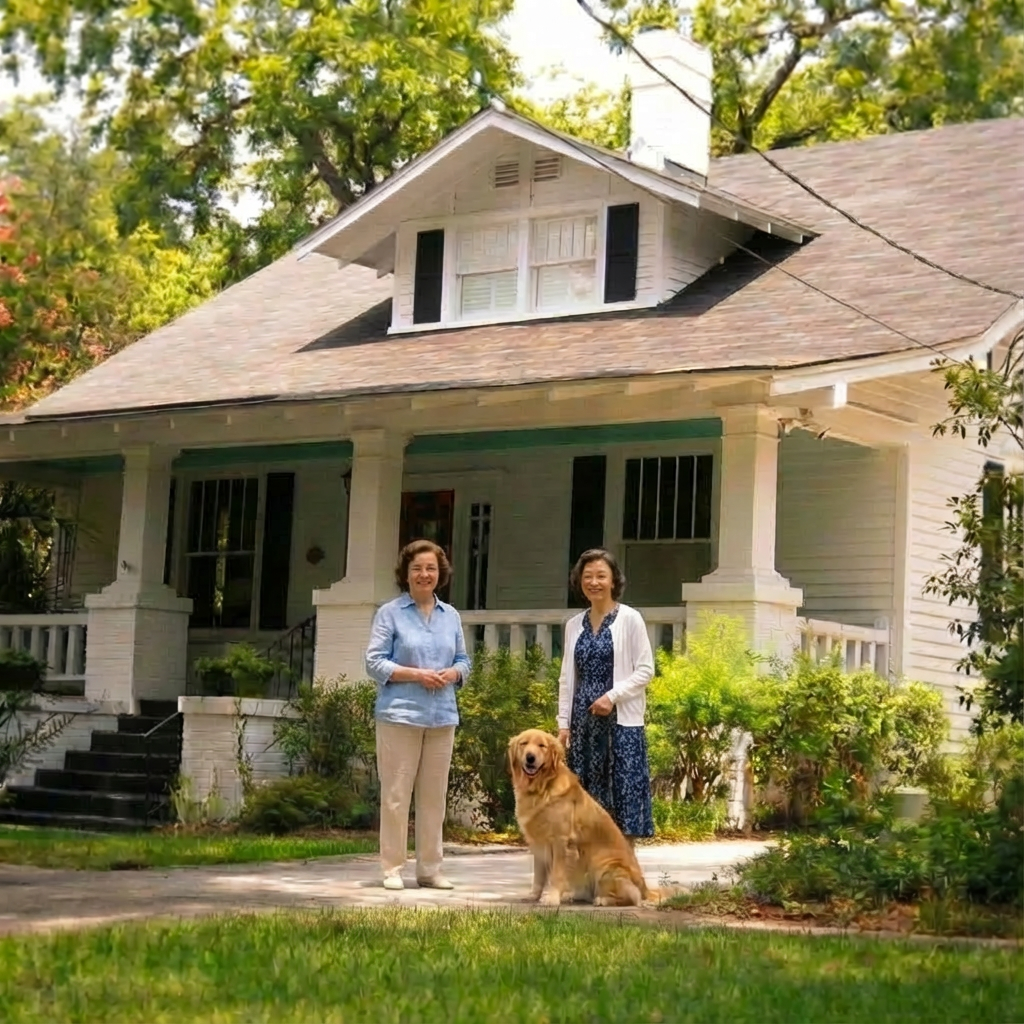
My son called a "family meeting." They wanted to sell my house against my wishes. I'm Lou-Ann. I'm 71 years old. And last Tuesday, I sat in my own living room while my children discussed my "financial situation." "Mom, we need to be realistic about your future," David said, setting his laptop on my coffee table. "What about my future?" I asked. "Well, you're living on a fixed income. This house is expensive to maintain. The property taxes alone…" "I manage just fine." I rebutted. "But what if you need care?" Jennifer interrupted. My daughter. "Long-term care is $8,000 a month. Your savings won't last two years. But if we sold the house now, while you're still healthy enough to make decisions, we could set you up somewhere more... manageable. And protect the asset." Protect the asset. Not protect me. Protect the money. "I don't need long-term care," I said. "I'm perfectly capable of—" "Mom, you're tired all the time. You can barely make it up the stairs without stopping halfway. Last month you told me you were too exhausted to drive to Sarah's birthday party." That was true. I had been exhausted. "We're not trying to be mean," David said, pulling up some numbers on his laptop. "We're trying to be smart. Look—your house is worth $320,000. Assisted living runs $4,500 a month. That's 160 months of care, plus you'd have money left over for—" "For you to inherit," I said. Silence. Jennifer's face flushed. "That's not fair." "Isn't it? You're calculating how much my house is worth while I'm still living in it. You're planning my care budget like I'm already incapacitated. You're sitting here with numbers about liquidating my life." "We're trying to plan ahead," he said. "Before you can't make these decisions yourself. Before something happens and we're stuck scrambling to—" "To what? Pay for my care out of your own pocket? God forbid." Jennifer stood up. "You're being unreasonable. We're trying to help you." "You're trying to help yourselves," I said. "You see me slowing down and you're scared I'm going to drain the inheritance with medical bills. So you want me to sell now, while there's still equity to preserve." "That is not what this is about," David said, but he wouldn't meet my eyes. They left twenty minutes later. Frustrated with me. The unreasonable old lady who wouldn't cooperate with the sensible financial plan. I sat in my living room—the one with the fireplace we installed in 1989, the built-in bookshelves my husband made before he died—and stared at the wall. Because here's what I couldn't tell them: They weren't wrong about me being tired. I was exhausted. All the time. By noon, I was ready for a nap. By 3 PM, even sitting felt like work. The stairs were a nuisance. I'd grip the railing with both hands, pulling myself up. I'd cancelled bridge club twice last month because I just couldn't muster the energy. And my mind felt foggy. Names took longer to remember. I'd walk into rooms and forget why. Simple decisions felt overwhelming. I was declining. And they could see it. Which meant they had their excuse. I wasn't crying because they were wrong. I was crying because they were right. And if I couldn't prove I was capable, I'd lose everything I'd worked forty-three years to pay for. The next morning, I went and knocked on Linda's door. I just needed someone to talk to. Linda had been as fit as a fiddle ever since she moved next door, 20 odd years ago—which makes sense considering she made a living from being a holistic health nutritionist. I told her everything, from the beginning—half expecting her to feel sorry for me and tell me it wasn't going to be that bad. But what she said next totally shocked me. "Lou-Ann…they're building a case for incompetence. But you can stop this." "How?" I said. "I can barely make it up my stairs without stopping. David's right—I am declining. Which means they have every excuse to take my house and split the money between them." I started crying then. Because that's what this really was. "They're not worried about me needing care. They're worried about losing their inheritance. David even sat there calculating how long my house value would last in assisted living. $720,000 divided by $4,500 a month. He had it all planned out." Linda's face went hard. She'd seen this pattern before. "Do you know how many of my clients over the years have come to me with this exact story?" she said. "Adult children who suddenly care deeply about 'financial planning' the moment a parent seems even slightly less capable?" "But I am less capable," I said. "That's the problem. I can barely function anymore." "That's not a you problem, Lou-Ann. That's a cellular energy problem. And cellular energy can be fixed." That's when she gave me one of her infamous science lessons. Over the years there had been many—usually at backyard barbecues or over morning coffee. Linda loved explaining how the body actually worked. "Your mitochondria," she said. "Your cellular power plants. They determine everything. Strength. Balance. Mental clarity. Energy. When they decline, you decline." "So I'm just supposed to accept declining? Accept that they're right about me?" "No. That's my point. Mitochondrial function can be improved. At any age." I must have looked skeptical because she leaned forward. "Lou-Ann, have you ever wondered why some cultures age so differently than we do?" I hadn't, but now I was curious. "Take the Okinawans in Japan," she continued. "These people stay completely independent into their 90s. Not just alive, but thriving. Walking. Gardening. Working. Researchers got curious and tested their cellular function." Linda leaned forward. "You know what they found? These 90-year-olds had mitochondrial function that was decades younger than their actual age. Their cells were producing energy like they belonged to people in their 60s or even 50s." "How is that possible?" I asked. "That's what the researchers wanted to know. So they studied everything—diet, lifestyle, environment. Turns out, certain specific foods and herbs were consumed daily for generations. Not occasionally. Daily. Like medicine." She got up and put the kettle on, speaking over her shoulder. "Particularly—saffron." I'll admit, I was skeptical. Saffron? The cooking spice? Linda explained that the Okinawans didn't use just a pinch for color. They consumed therapeutic doses. The compounds present in saffron—crocin and safranal—actually help to regenerate mitochondria. "I've read dozens of studies on this over the years," she said, pouring the tea. "They all point to the same thing." She handed me a cup and sat back down. "There was one study in particular that stuck with me. They took people in their 70s and 80s and gave them therapeutic doses of saffron extract for twelve weeks. Not regular saffron—concentrated extract with standardized compounds." "And?" I leaned forward. "Their grip strength improved. Their walking speed increased. Their cognitive function sharpened. But most importantly, their cellular energy production went up significantly. They measured it directly at the mitochondrial level." I felt something I hadn't felt in weeks. Hope. "The problem," Linda continued, "is that real therapeutic saffron is expensive. We're talking hundreds of dollars for proper doses." My heart sank. Of course. The things that actually work are always out of reach. "But," she said, getting up and walking to her kitchen cabinet, "I found a company that figured out how to make it affordable. Founded by someone who went through something similar with her own mother." She handed me a small bottle. "88.5mg standardized extract. Same potency as what the researchers used. I've been taking it for five years. At my age, I should be slowing down. Instead, I'm thriving." "What brand is this?" I asked. "It's called Nutrissa. Small US company. Third party tested for purity and potency. They work directly with growers to keep prices reasonable because the founder believes this shouldn't only be available to wealthy people." Linda smiled. "Take this bottle. I have more. Start today." I stared at the bottle in my hands. Part of me thought it was too simple. Too easy. There had to be a catch. But another part of me—the part that had survived widowhood, raised four kids alone, built a life through sheer determination—that part knew I had nothing to lose. Because the alternative was watching my children liquidate everything I'd worked for while I was still alive. So at 10:47 AM, in Linda's kitchen, I made my decision. If my cells were failing, I'd fix them. I wasn't going down without a fight. I took the first two gummies right there. They tasted slightly sweet, with a subtle floral note. I didn't expect miracles. Day one: Nothing. I slept okay. Woke up tired like usual. Day three: Slept through the night without waking up. That hadn't happened in months. Day five: Woke up clearheaded. Not foggy. Actually clearheaded. Day seven: Made it to 4 PM without needing to sit down. Without that crushing afternoon exhaustion. Day ten: The moment that made me realize something real was happening. I was putting away groceries. Picked up a gallon of milk. Usually I'd need both hands and careful maneuvering. This time I just... lifted it. One hand. Put it on the top shelf. Didn't think twice about it. I stood there staring at the refrigerator, milk carton in hand, realizing my strength was coming back. Week two: Vacuumed the entire upstairs. Both bedrooms. The hallway. Didn't need to stop. Didn't need to sit down. Just... vacuumed. Like a normal person. Week three: The moment everything changed. I walked up my stairs. Didn't grip the railing. Didn't stop halfway. Just walked up. Got to the top. Wasn't winded. I turned around and walked back down. Then back up again. Just to prove I could. I started crying on my staircase. Not from exhaustion. From relief. Week four: Jennifer stopped by unannounced. Probably checking on me. Hoping to find evidence for her case. Found me cooking. Real cooking. Chicken, roasted vegetables, rice. Three dishes happening simultaneously. "Mom, you're cooking?" "I was hungry." She looked around my kitchen. Clean. Organized. Dishes put away. "Have you been feeling better?" "Much better." She left fifteen minutes later. Confused. The narrative of my decline wasn't matching what she was seeing. Week six: I went to book club for the first time in three months. Drove myself. Participated in the discussion. Stayed until 7 PM. Drove home. Wasn't exhausted. Carol pulled me aside. "Lou-Ann, you seem different. More energetic." "I feel like myself again." Week eight: My doctor appointment. Annual physical. I didn't tell David about it. Didn't want him there with his concerned faces and leading questions. Blood pressure: Perfect. Down from borderline high. Cognitive test: Perfect score. Every word recalled. Every pattern completed. Every sequence correct. "Mrs Rogers," Dr. Krautz said, studying my chart, "I'm looking at your results from last year. These are significant improvements. What changed?" "I started taking care of myself," I said. "Well, whatever you're doing, don't stop. Your biological markers look ten years younger than your last visit." I asked for copies of everything. Took them home. Week ten: David called another family meeting. "Mom, we need to finalize some decisions about your living situation." "Come over Saturday," I said. "2 PM." Saturday came. David arrived with Jennifer. Both carrying folders. Probably more numbers. More calculations about my declining value. I'd made coffee. Baked scones. That morning. From scratch. They sat down. "Before you start," I said, "I want you to look at something." I handed them my medical records. Recent ones. With Dr. Krautz's notes. David read in silence. Then looked up at me. "These are your results from last month?" "Yes." "But... you're healthier than you were last year. Significantly healthier." "Yes." Jennifer was reading over his shoulder. "Mom, these are really good results." "I know." "What changed?" David asked. "I decided I wasn't going to let you take my house without a fight," I said. "You saw me declining and you started planning your inheritance. So I fixed the decline." "Mom—" "You brought your laptop with numbers calculating my home's value. You discussed my financial situation like I was already incompetent. You were building a case for why I needed to sell—not to help me, but to lock in the asset before I drained it with medical bills." Jennifer's face went red. "That's not—" "That's exactly what it was," I said. "And I understand why. I was weak. I was tired. I looked like someone who was going to need expensive care soon. But I'm not that person anymore." I stood up. Walked to my staircase. Climbed to the top. Walked back down. No railing. No stopping. No heavy breathing. "I'm 71 years old. I'm in excellent health. I manage my home perfectly. I'm mentally sharp and physically capable. And I'm not selling." "Mom, I... we were worried." David said. "You were protecting your inheritance. There's a difference." Silence. "If you want to help me," I said, "then help me stay independent. Don't help yourself to my house." They left thirty minutes later. No numbers discussed. No living situations finalized. No assets protected. Just my son crying in my hallway. Apologizing. "I convinced myself I was being practical," he said. "But really I was just being greedy. I'm sorry, Mom." Six months later: I still live in my house. The one I paid for. The one that's mine. I drive everywhere. Tend to my garden. Host book club at my place monthly. Cook real meals every night. Last week, David called asking if I'd watch his kids for a weekend. They wanted to take a trip. "Of course," I said. Because that's what changed. They don't see me as a liability anymore. They see me as capable. And capability is the only currency that matters when people are deciding your fate. I still take two gummies every morning. Linda checks in weekly to see how I'm doing. "You saved my house," I told her last week. "No," she said. "You saved it. I just told you how." What Linda explained in her kitchen that morning changed everything. Learning about mitochondria. Understanding why some cultures age so differently than we do. Finding out that therapeutic saffron extract could make that kind of difference. I still take my two gummies every morning. Think of them as my independence insurance. Because here's what I know now: You don't have to accept decline as inevitable. Your cells want to work properly. They just need the right support. If you're facing your own family meeting about selling your house… If your children are calculating your home's value while pretending to worry about your safety… If you're tired of being talked about instead of talked to… If you're watching your children plan your future without asking what you want… Maybe you don't need acceptance. Maybe you need information. The same information that kept me in my own home. Where I plan to stay. You already know what helped me. I'll leave it at that because you can make your own decisions about your own life. That's the whole point, isn't it? Making your own decisions. Staying in your own home. Living your own life. Not because someone decided you still can. But because you never stopped.
read this if your family thinks you're "too old" to live alone
Two sneaky processes that have been accelerating in modern life due to processed foods, environmental toxins and chronic stress...
LEARN MORELike this ad? Make it yours.
Crush rebuilds this exact creative around your product — your brand, your colors, your offer — in about a minute.