The Pet Ear Health Foundation
The Pet Ear Health Foundation Facebook ad: “The Grooming Step Causing Your Dog's Infections”
Ran for 2 days, from June 14 to June 16, 2026, the last day Crush saw it.
Run by The Pet Ear Health Foundation on Facebook. Crush is not the advertiser and does not verify its claims. See this ad in Meta's Ad Library(opens in a new tab)
Want an ad like this for your product?
Crush makes new ad images for your product from this ad: your logo, your product photo, your offer.
Trials from $19.95 USD, then $79.95 USD a month. Cancel anytime.
About this ad
- Meta Ad Library ID
- 1260223975975609
- Platforms
- Facebook, Instagram, Messenger and Threads
- Relaunches
- 0
Ad text
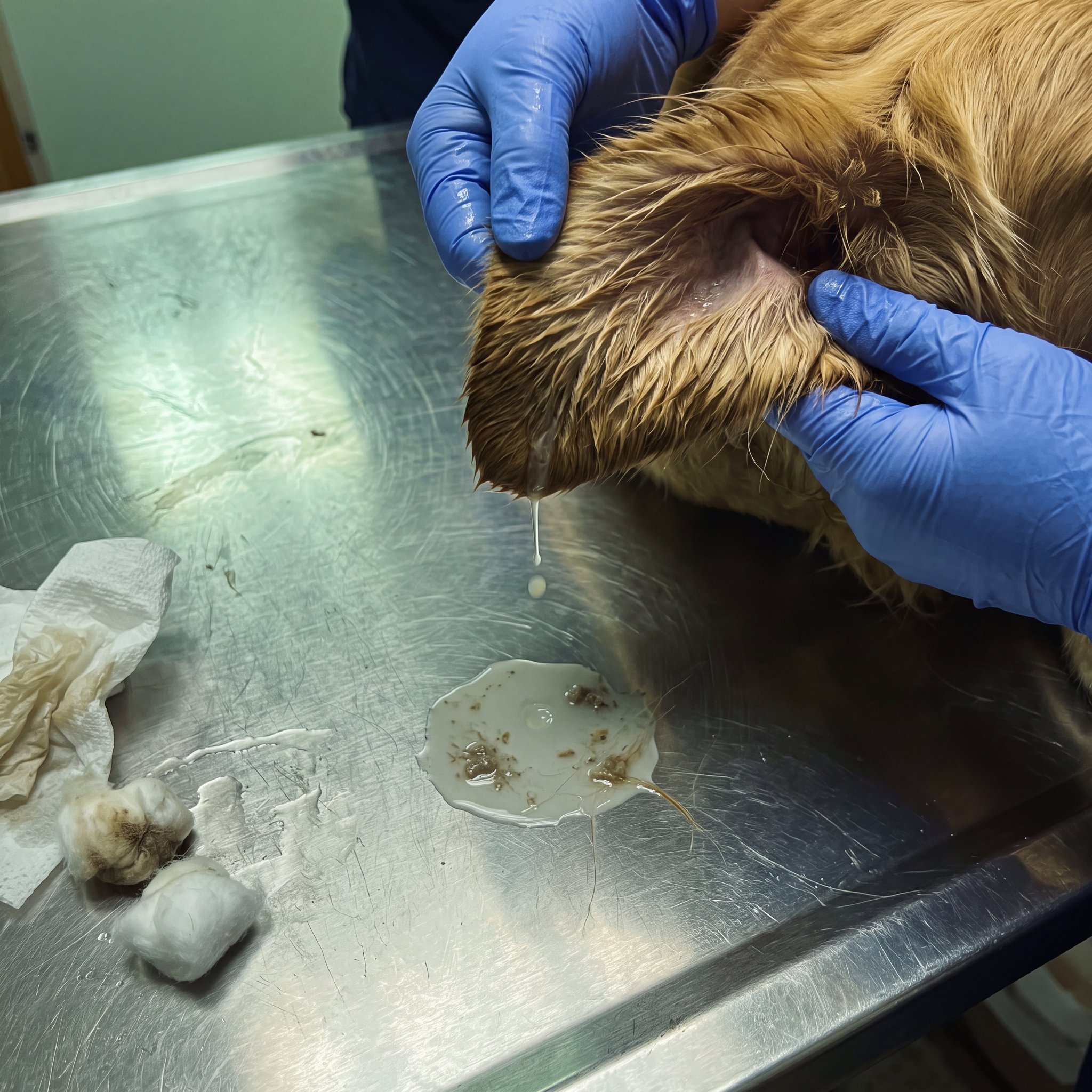
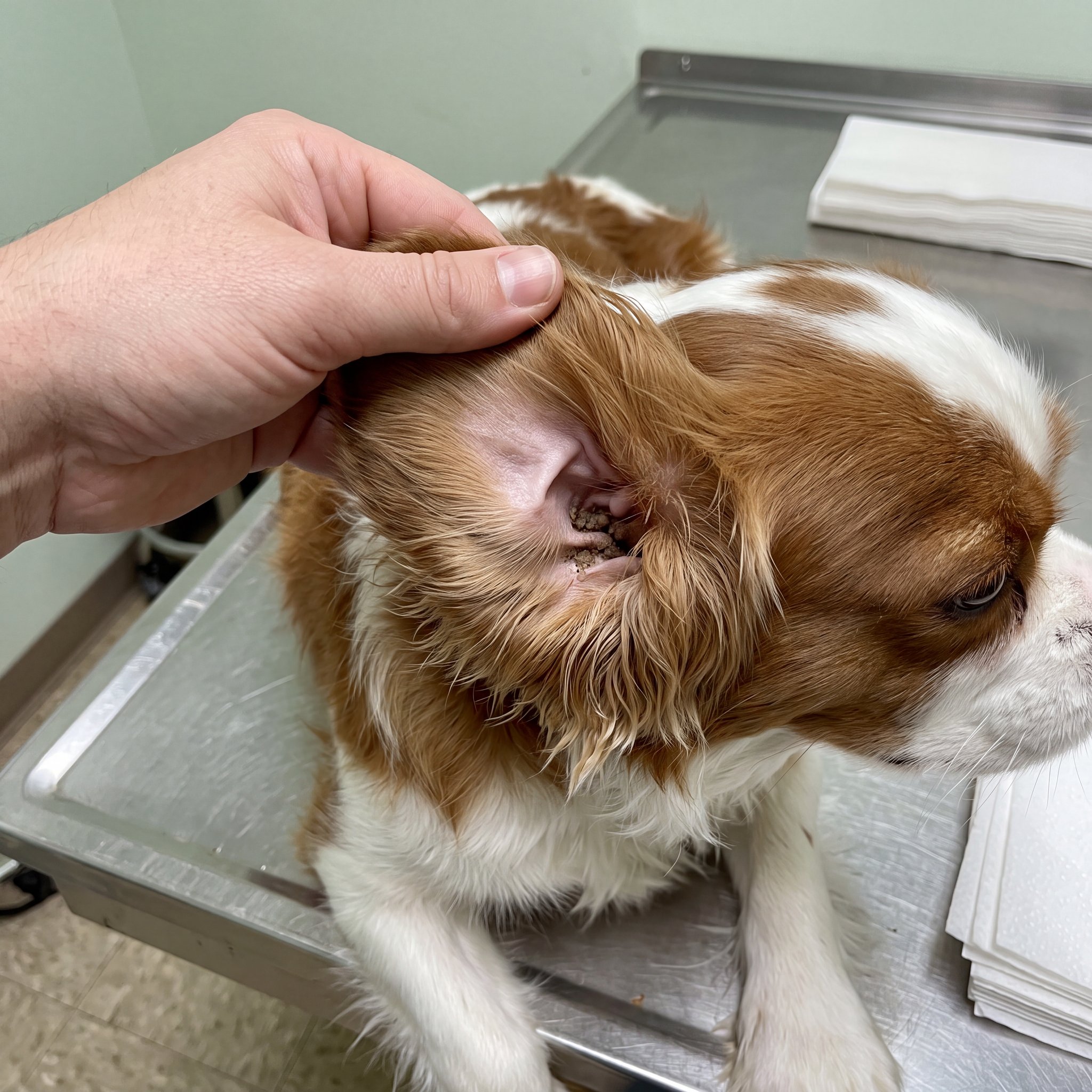
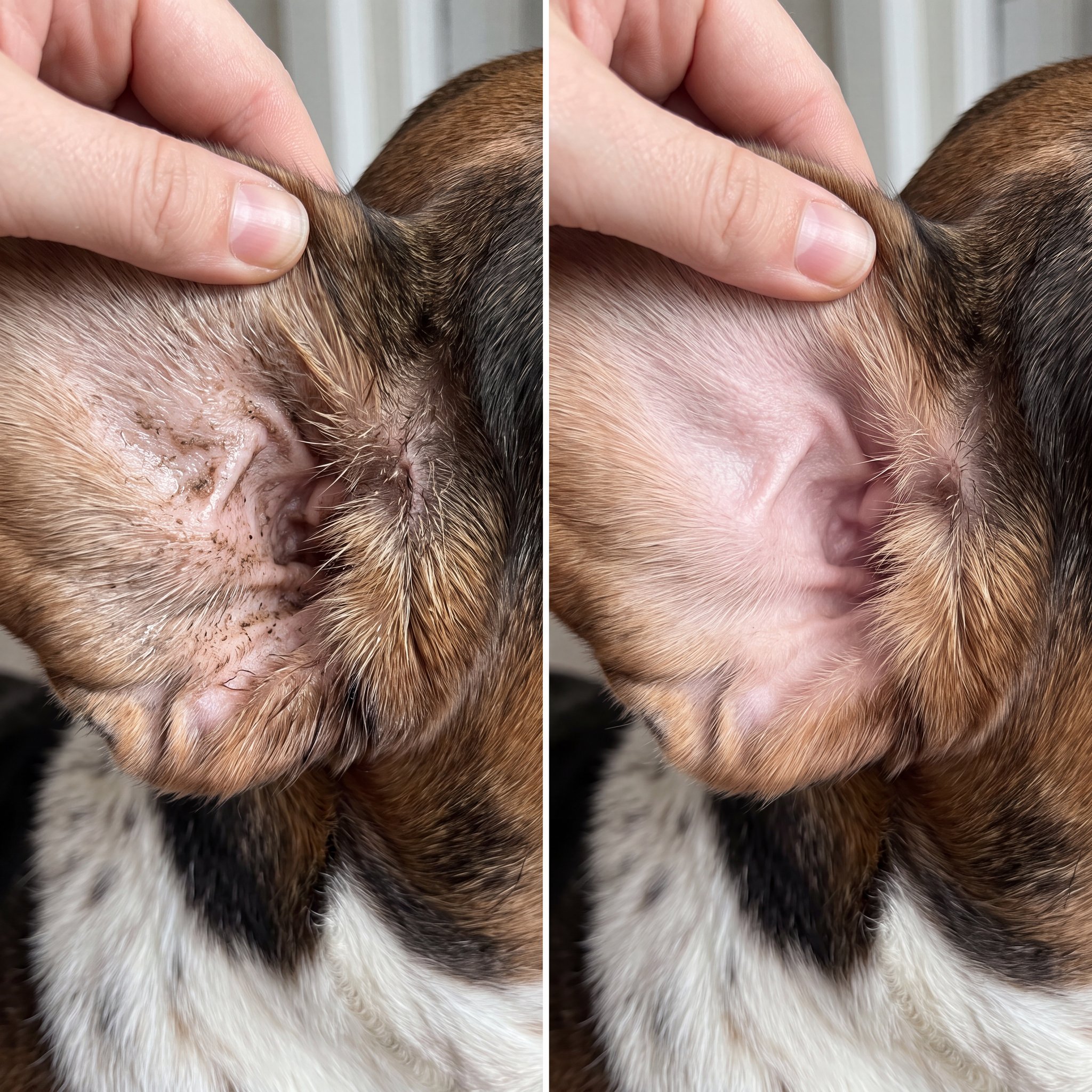
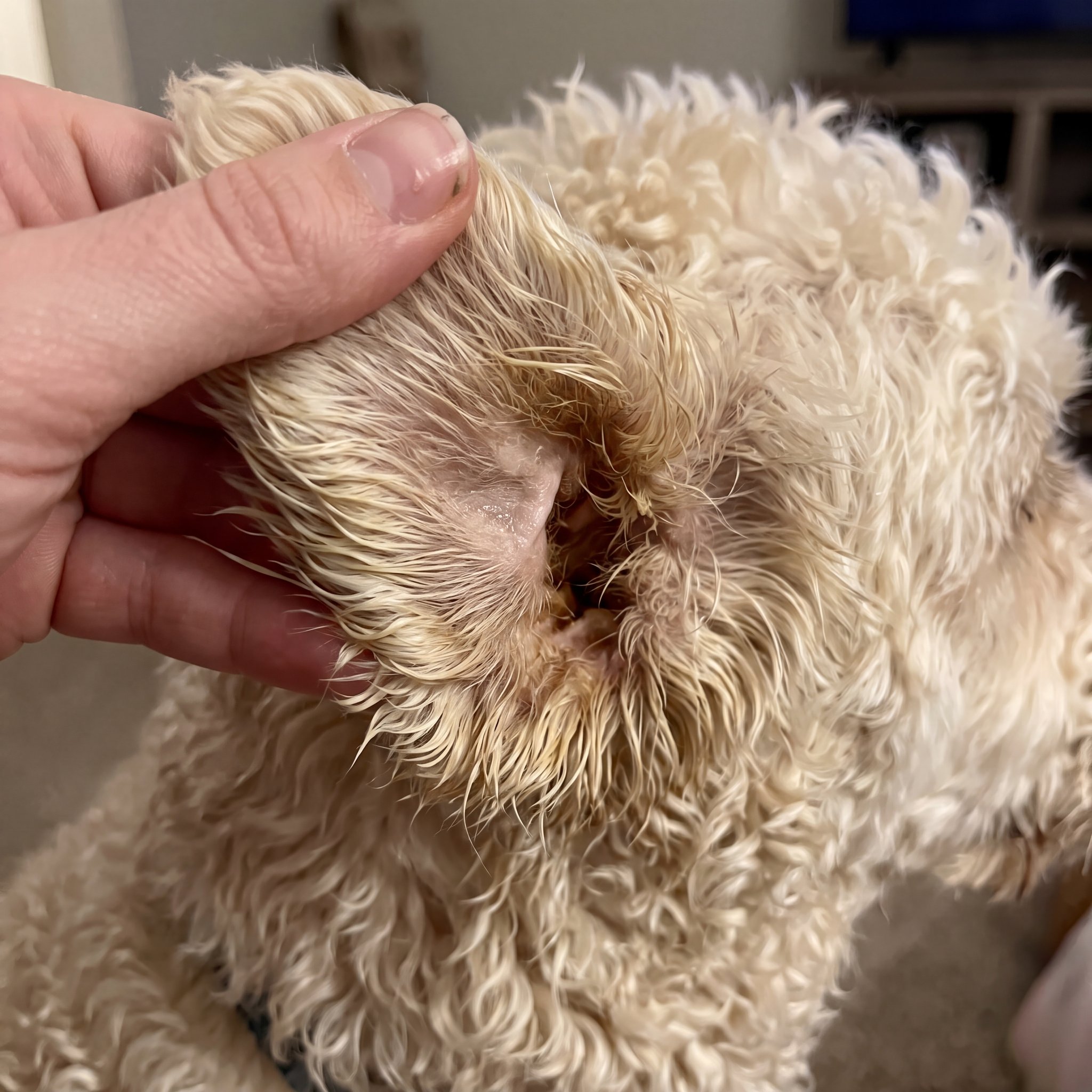
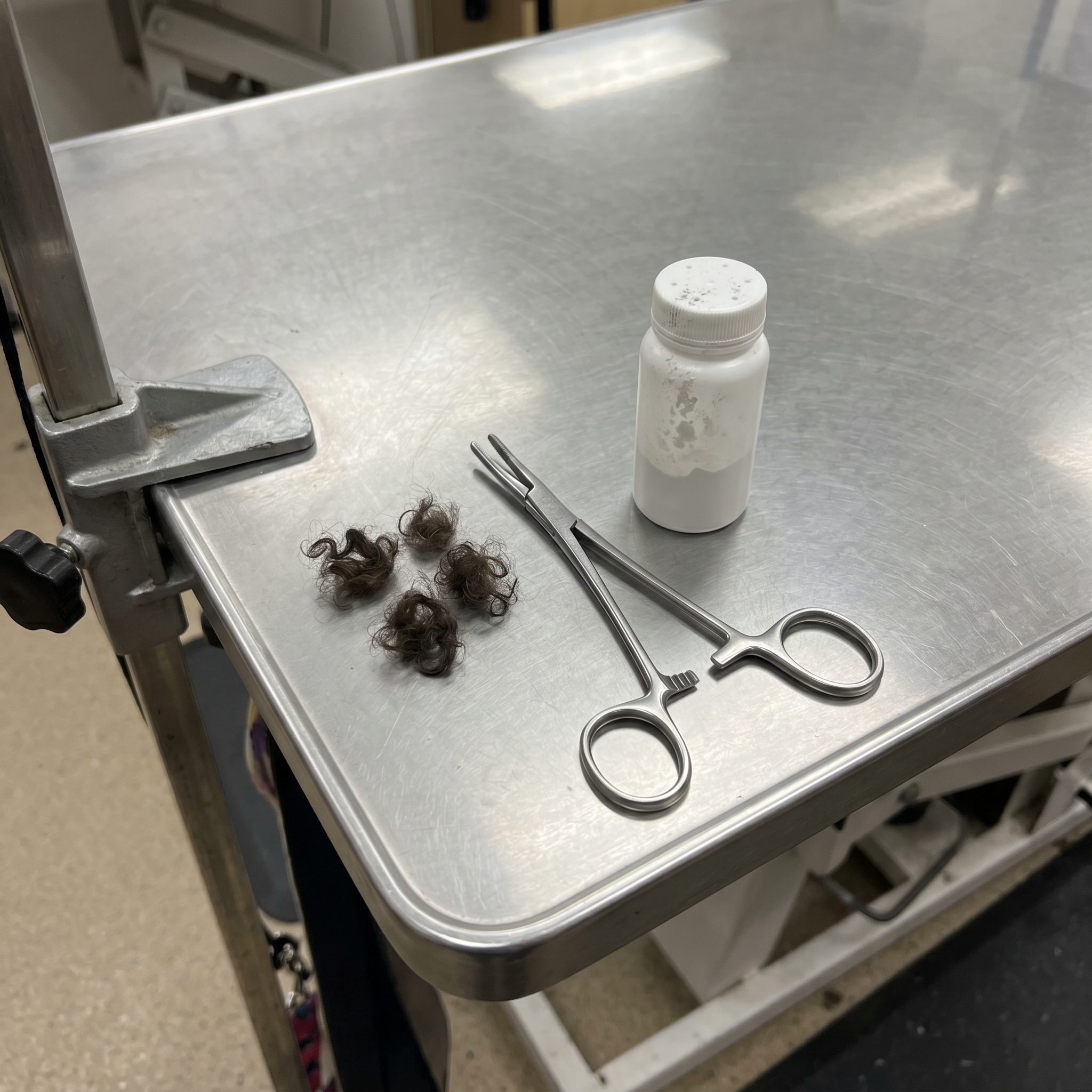
I am a professional groomer, 18 years in the chair, and 5 years ago, I stopped plucking ear hair on every dog that walked into my shop. I lost about a third of my clients in six months over it, and I would do it again tomorrow. If your dog gets an ear infection roughly a week after every groom, you need to read this, because that pattern is not a coincidence, and your groomer is almost certainly not going to be the one to tell you why. I've been a professional groomer for 18 years, and I've owned my own shop in Portland, Maine, for the last nine of them. I see about 35 dogs a week on my table, which works out to somewhere north of 15,000 grooms over my career. For 13 of those 18 years, I plucked ear hair on every hair-in-canal breed that came through my door, because that is what I was taught and that is what the industry told me was right. And then a Standard Poodle named Murphy showed me, in the worst possible way, that we had all been wrong about it He came in on a Tuesday afternoon for a regular full groom, and I did his ears the way I had done them on a thousand dogs before, which was to dust the canal with a little ear powder for grip and then pluck the hair out of the canal opening with my fingers, the way I had been taught at grooming school in 2007 and the way the senior groomers in every shop I had ever worked in had told me was just part of doing the job right. Murphy was good for it. He always was. He let me do both ears without flinching, and his owner picked him up that afternoon. I didn't think about him again until the following Monday morning, when his owner called the shop and told me Murphy had been at the emergency vet over the weekend with a ruptured eardrum from head-shaking. She wasn't blaming me. She was just telling me, the way you tell your kid's teacher that your kid is homesick. The vet wasn't blaming me either. Nobody was blaming me. But I sat at the front counter of my shop after she hung up, with the lights off and the closed sign on, and I started doing math in my head that I did not want to do. How many of my regular clients came in every six to eight weeks like clockwork, because their dogs got ear infections every six to eight weeks like clockwork. I knew the answer before I finished the question… A lot of them. Most of them on the hair-in-canal breeds. I want to tell you what I did next, because if I had not done this, I would still be plucking, and I would still be telling myself the story every groomer tells themselves about this, which is that floppy-eared breeds just have bad ears and the plucking is helping. I started tracking it. I am not a researcher, I am a groomer with a notebook, but I kept a column in my appointment book for the next six months that said, infection in the last 30 days, yes or no. I asked every client at check-in. I wrote it down. At the end of six months, I sat at my kitchen table with the notebook and I counted. 73% of the dogs I was plucking had had at least one vet-confirmed ear infection in the previous thirty days. 12% of the dogs I trimmed instead of plucked, or didn't do ear work on at all, had. The gap was not subtle. The gap was the entire story. I took the data to a grooming industry conference in Boston that fall, because I thought, naively, that the data would speak for itself. The senior groomer on the panel, a woman with 30 years in the industry and a lot of credentials after her name, told me in front of about two hundred people that I was misinterpreting correlation, and the room laughed a little, in that polite uncomfortable way, and I drove home from Boston that night in the rain on I-95 seriously considering going back to plucking, because plucking is easier, plucking is what clients expect, and plucking is what the industry says is right. I didn't go back to it. Instead, the next morning, I called a veterinary dermatologist whose research I had cited in the Q&A, Dr. Yuki Tanaka at UC Davis, and I left a message at her office. To my absolute shock, she called me back two days later on her lunch break. I told her what I had found in my notebook, and I asked her if I was crazy, and she was quiet for a second on the phone and then she said, no, you're not crazy, this is established literature, the mechanism is follicle-level micro-trauma and there's a 48-hour window where the open follicles are highly susceptible to bacterial colonization, and we've been telling the grooming industry this for years and they don't want to hear it because the income from ear plucking is built into the price structure of a groom. She told me the mechanism in about 90 seconds. I'm going to tell it to you in plainer language, because I'm a groomer with a notebook, not a researcher. When a groomer plucks the hair out of your dog's ear canal, every single hair that comes out leaves behind an open follicle, which is basically a tiny puncture wound in the lining of the canal. You can't see them with your eye, but if you looked at the canal under magnification right after a plucking session, you would see dozens of little red dots, sometimes hundreds, depending on how hairy the breed is and how aggressive the plucking was. Each of those dots is a wound. The ear canal is warm. It's dark. It's moist. It is, microbially speaking, one of the most hospitable environments on the dog's entire body. And you have just given the bacteria and yeast that already live there at low background levels dozens of fresh open wounds to colonize. The published window on that colonization is about forty-eight hours. So a dog who gets plucked on Saturday morning is in the highest-risk window for an active ear infection from Sunday through about the following Friday, which is exactly the seven-to-fourteen-day post-groom infection pattern that owners describe to me in my shop every single week. Trimming is the alternative. You take a small pair of round-tipped scissors, you trim the visible hair at the canal opening, and you leave the follicles intact. The canal stays open, air still circulates, the dog still gets the cosmetic and functional benefit, and there are no open wounds. It takes about 90 seconds longer per ear. That is the entire difference. . The reason most groomers won't make the switch is honestly not malice. It's a habit, it's training, it's what their mentor taught them, and it's the fact that plucking is faster and a busy grooming shop runs on the clock. I understand it because I was that groomer for 13 years. I'm not mad at the groomers. I'm mad at the industry that trained us and at the conferences that still teach plucking as standard practice in 2025. But here is the part I want you to actually hear, because the plucking conversation is only half of it. Even if your groomer stops plucking tomorrow, your dog's ears need something between grooms. 6 to 8 weeks is a long time for a hair-in-canal breed. Wax builds up, dead skin cells slough off, moisture from baths and humid weather sits in the L-bend of the canal, and the substrate that microbes feed on accumulates, whether your groomer plucked or not. The actual prevention isn't what happens on the grooming table once every 6 weeks. It's what happens in the 5 weeks and 6 days in between. I started recommending a textured finger-shaped wipe to my clients about 3 years ago, after Tanaka mentioned it in passing on the phone as something her research clinic had started using on chronic cases. You slide your index finger inside it like a thimble, and the wipe itself is pre-soaked with two ingredients that handle the substrate problem, caprylhydroxamic acid and tetrasodium GLDA. CHA binds up the iron and copper that bacteria and yeast need to metabolize, so they can't replicate even if they do try to colonize, and GLDA breaks apart the biofilm scaffold that anchors microbial colonies to the canal wall. The texture of the wipe does the physical lifting that a flat wipe or a cotton ball can't do, because a dog's ear canal has folds and ridges, and a flat surface just slides over them. I told my regulars, the ones who stayed with me after I stopped plucking, to use it two or three times a week between grooms, thirty seconds per ear, while the dog is calm. That was it. That was the whole protocol. 18 months later, I sat down with my notebook again, and I counted, and my ear-infection-rate-per-client had dropped from 73% annually to 9%. Not 9% reduction, 9% total. The clients who had left over the no-plucking policy started coming back, slowly, because word got around in the local dog community that, as one of my long-time clients put it to a neighbor at the dog park, Brindle's dogs don't get ear infections. I'm not telling you any of this to brag, and I'm definitely not telling you to fire your groomer. I'm telling you because if your dog is a Poodle, a Doodle, a Bichon, a Shih Tzu, a Schnauzer, or any breed with hair growing inside the canal, and she gets an ear infection roughly a week to two weeks after every grooming appointment, that is not a coincidence, and it is not bad luck, and it is not just how the breed is. It's a mechanism. There's a name for it. There's literature on it. And there's a fix. So here is what I would tell you, if you were sitting across from me in my shop right now while I finished your dog's groom. First, ask your groomer to trim, not pluck. You don't have to explain yourself, you don't have to cite Dr. Tanaka, you don't have to bring printouts. You just say, please trim her ears today, don't pluck them. A good groomer will say okay. A groomer who pushes back or makes you feel difficult about it is telling you something about their practice that you should probably listen to. Second, handle the in-between yourself. The product I keep on the shelf at my shop and recommend to every regular with a hair-in-canal breed is called Uproot Ear Wipes. It's the same wipe I described earlier, the finger-shaped one with the CHA and GLDA pre-soak. The protocol I give every client fits on a sticky note. Sunday night and Wednesday night, while your dog is eating dinner or sitting next to you on the couch. 30 seconds per ear. Index finger inside the wipe, into the L-bend of the canal, and that's it. No bottle. No cotton balls. No wrestling match in the bathroom at seven in the morning. No cold liquid hitting the canal and triggering the head shake that sprays brown gunk across your bathroom mirror. For my clients, two nights a week is the difference between a Doodle who gets four infections a year and a Doodle who gets none. That's the entire protocol. That's what eighteen months of my notebook showed me. That's the change. I’ll leave the link below to see the ear wipes and the 30-second routine I give every client https://uprootclean.com/products/uproot-ear-wipes Your groomer isn't going to tell you any of this. I know because I was that groomer for 13 years. I'm telling you now because someone has to, and because Murphy, the Standard Poodle whose ruptured eardrum changed my entire career, deserves at least that much from me. If your dog gets infections after groom day, that is not a coincidence. That is a mechanism. And now you know what to do about it
Where the ad sends people
uprootclean.com
The Grooming Step Causing Your Dog's Infections
Ingredients and Their Benefits Aqua/Water/Eau: Base for a smooth, gentle formula. Propylene Glycol: Hydrates and prevents dryness. Caprylyl Glycol: Moisturizes with antimicrobial benefits. Glycerin: Softens and conditions sensitive ear skin. Citric Acid: Balances pH for gentle, non-irritating cleani...
Shop now: uprootclean.com(opens in a new tab)