The Health Haven
 Facebook ad: “Support stamina and heart health every day”
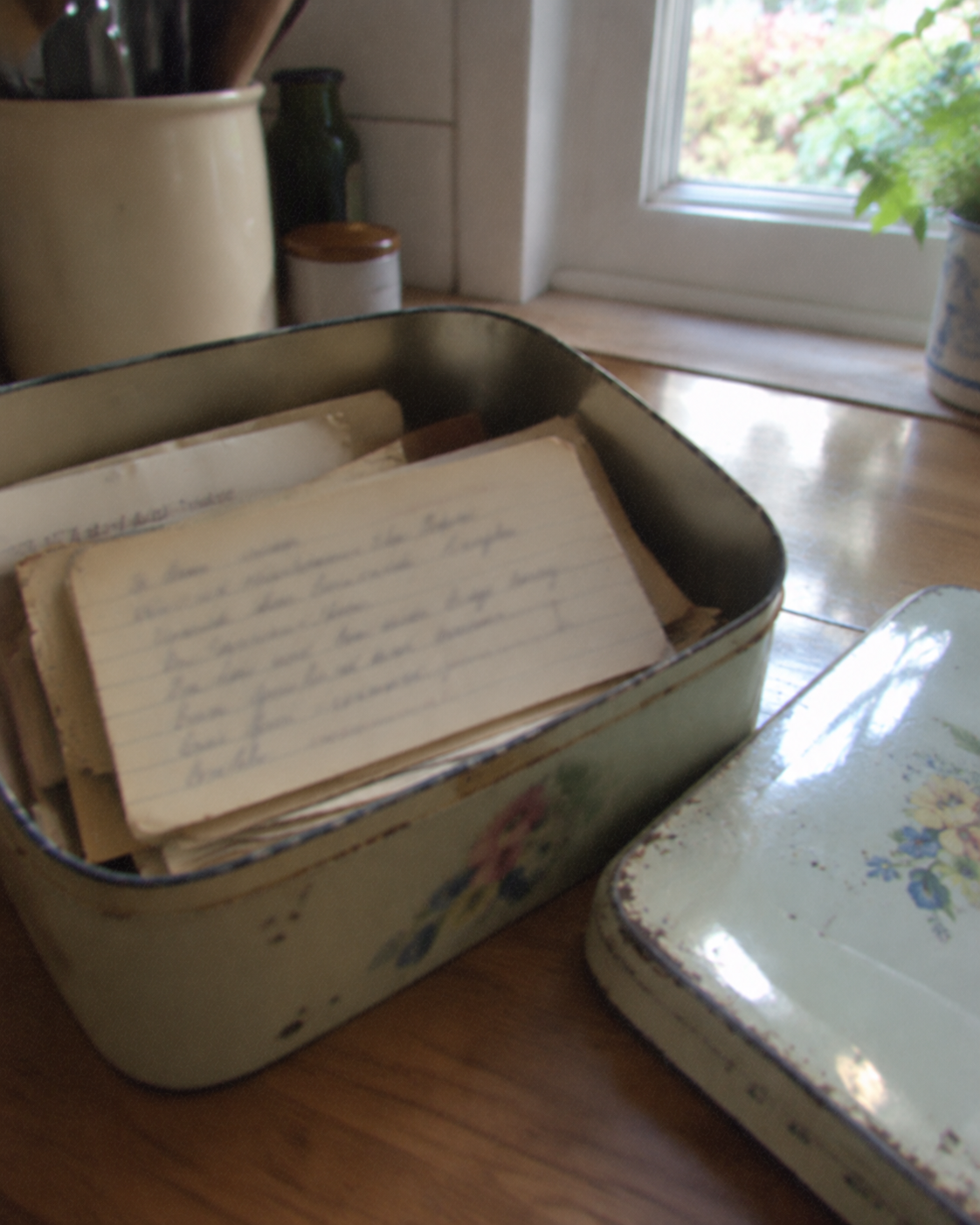
Running for 40 days since September 30, 2026. Crush last saw it on November 9, 2026.
Run by The Health Haven on Facebook. Crush is not the advertiser and does not verify its claims. See this ad in Meta's Ad Library(opens in a new tab)
Make your own version of this ad
Crush makes it, launches it in your own Meta ad account, scales the winners and pauses the losers.
About this ad
- Meta Ad Library ID
- 1277440697841912
- Platforms
- Facebook, Instagram, Audience Network, WhatsApp and Threads
- Relaunches
- 0
- EU reach
- 119
Ad text
Look at an Old Handwritten Recipe and Notice What Isn't on It. Find an old handwritten recipe. Yours, if you have one — the card in the tin, the page in the back of the book, the one in a hand you'd know anywhere. Or picture one, if you don't; the shape is the same in most houses. Now read it for what isn't there. Here's what's on it. The list. Flour, butter, sugar, two eggs. Or beets, vinegar, sugar, a pinch. In the order they go in, usually, and in amounts that assume you own a cup and a spoon. The method. Cream the butter. Boil till the fork goes in. Wait. Sometimes a name — whose it was before it was yours. Sometimes a note in the margin: don't overbake, or more vinegar than you think. And that's the card. That's the whole card. Now here's what isn't on it, and it's a longer list. There's no sentence about what the dish will do for you. The card doesn't say the cake is comforting or the soup is nourishing or the beets are anything except beets. There's no adjective in front of the ingredients. Not farm-fresh butter. Not golden sugar. Butter. Sugar. There's no audience. The card isn't for busy families or for people who care about anything. It's for whoever's holding it. There's no promise. Nothing about how you'll feel afterward, or how quickly, or compared to what. There's no new, no improved, no now with. The card has been the same card for as long as anyone can remember, and it doesn't apologize for that. Here's an observation, made by a brand, which you can check against the nearest old card you can find. The card is missing all of those things for one reason, and it's a plain one. It was written for someone who was going to make it. Not for someone who needed to be talked into it. When the reader has already decided to cook the thing, there's nothing to sell. The only questions left are what goes in and what do I do — so those are the only questions the card answers. Everything else would just be in the way of the stove. That's the whole difference between a recipe and an advertisement, and it's worth saying out loud because it's easy to forget. A recipe assumes you're already in the kitchen. An advertisement assumes you're not, and has to get you there. So an advertisement grows a front — the describing, the persuading, the who this is for — and a recipe never does, because a recipe was never trying to get anyone anywhere. It was just telling them what to do once they'd arrived. Here's the thought, hedged the way an observation should be: The oldest recipes may be the shortest not because people knew less, but because the card was written for a cook and not for a customer — and a cook only ever needed two things: the list and the method. Whether that's a better way to write anything is not something this essay can decide. Some things need a front. Nobody walks into a kitchen they've never heard of. But it may be worth noticing, when you next hold an old card, how much a piece of writing can leave out when it isn't trying to convince you of anything. Where the beet fits — through the heritage door, with the care the door requires. The beet's card, in most houses that have one, is among the shortest. Beets, vinegar, sugar, a pinch. Boil till the fork goes in. Beetroot has been eaten as a food for thousands of years. That history is a fact about kitchens, not about bodies. Longevity isn't proof of a health effect, and we're not offering it as one. Now step out of the observation, and let us be the brand. Nothing above is about a supplement, nothing above is evidence for one, and the observation about recipe cards doesn't change when the subject is one. But this is an advertisement, and the essay just said what advertisements do. So we're going to try, for one section, to write ours the way the card is written — the list and the method, and nothing that would be in the way of the stove. The list. Organic beetroot powder — 1,300mg per serving, a serving being two capsules. One active ingredient, with the amount printed plainly on the label — nothing to decode. The other ingredients, also from the label: hypromellose, which is the vegetable capsule; microcrystalline cellulose; and magnesium stearate. The method. Two capsules, once a day. Follow the directions on the label. The margin. Non-GMO, third-party lab tested, produced under Good Manufacturing Practices, made in the USA from globally sourced ingredients. It contains no caffeine. Sixty capsules in a bottle; thirty days. Beetroot naturally contains dietary nitrates. And what isn't on our card, on purpose — because the essay would be worthless if we put it back: No sentence about what it'll do for you. No adjective in front of the ingredients. No audience. No new. We're not going to tell you what you'll feel or when. Bodies are different, and yours doesn't owe an advertisement anything. If it joins your kitchen at all, where it sits — beside something already there, or nowhere in particular — is up to you. One thing before anything goes in a cart: talk to your doctor or pharmacist before adding any supplement, especially if you take any medication. This goes alongside the rest of a routine — the meals, the walks, the sleep — not in place of any of it. 4.4/5 from 16,970+ Amazon ratings (as of September 30, 2026) What we provide is a format, stated as a fact. The format is capsules. The labeled serving is two capsules, once a day. P.S. If you'd like the essay's habit for your own reading, it takes a second: when something is trying to tell you what it is, look for the list and the method — and notice how much of the rest is there to get you into the kitchen. There's no rule. Some fronts are honest and useful. It may just be worth knowing which part of the page is the card. P.P.S. What it is, plainly: organic beetroot powder in capsules — 1,300mg per two-capsule serving, one active ingredient, amount printed on the label, no caffeine, non-GMO, third-party lab tested. Thirty days a bottle. Those are the basics. P.P.P.S. Not satisfied for any reason? Return the product within 90 days of delivery for a full refund. Individual experiences vary. https://track.tryrosabella.com/cdc16426-3e48-40a7-9fad-21098084f6cf These statements have not been evaluated by the Food and Drug Administration. This product is not intended to diagnose, treat, cure, or prevent any disease.
Where the ad sends people
get.tryrosabella.com
Support stamina and heart health every day
Learn more: track.tryrosabella.com(opens in a new tab)