
Inactive· since Apr 5, 2026
- 80
- days it ran
- 0
- relaunches
Ad copy
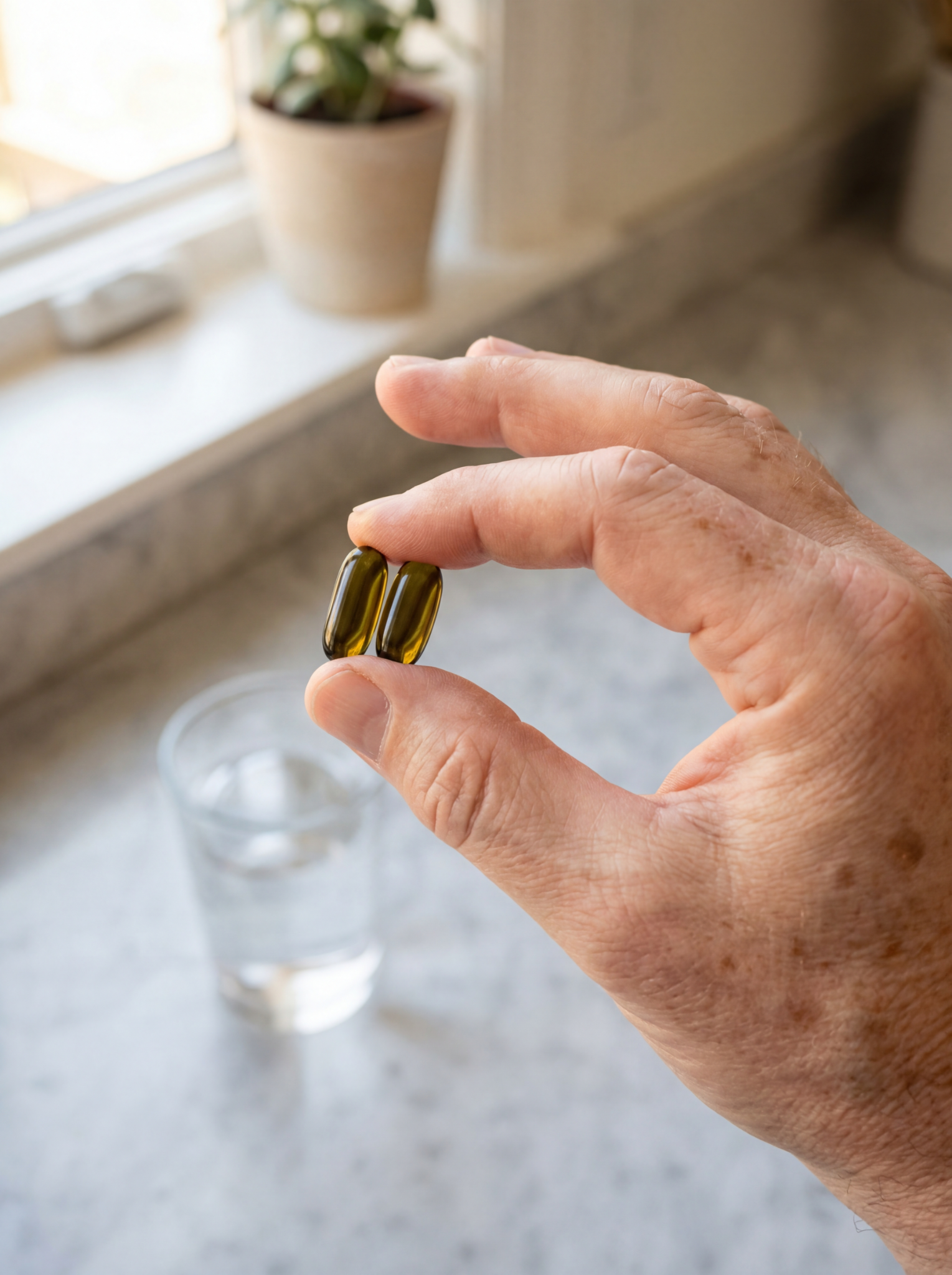
There's a question urologists don't love answering. It goes like this: "If my kidneys are working at 60%... why am I just told to drink more water and wait?" Not a hypothetical scenario. Men over 40 hear this every day. Stage 2 kidney decline. Stage 3. Maybe even Stage 4. And the advice is always the same: hydrate, watch your diet, we'll monitor it. Monitor what? The slow decline? Here's a harder question: Why do prescription medications for prostate and bladder issues — the ones that cause dizziness, sexual dysfunction, and fatigue — get prescribed so readily, while addressing the root cause gets ignored? Tamsulosin, finasteride, oxybutynin — these are pills with side effect profiles that make most men pause. Dry mouth. Brain fog. Retrograde ejaculation. Long-term dependency. And they don't fix anything. They manage symptoms while the underlying dysfunction continues. Think about that for a moment. You're being medicated for symptoms while the engine keeps breaking down. That should tell you something fundamental about how the medical system approaches men's health after 40. Most people — and most treatments — approach kidney and prostate problems as isolated organ issues. Your prostate is enlarged. Your bladder is overactive. Your kidneys are declining. So the logic follows: suppress the symptom. Take something to shrink the prostate. Take something to calm the bladder. Take something to mask the kidney numbers. Every one of these approaches treats the body as if it's a collection of malfunctioning parts that need pharmaceutical intervention — not a connected system that's sending signals about what it actually needs. This is the fundamental misunderstanding. And it's why the recurrence rate for these issues, even after "successful" treatment, runs so high. The symptoms come back. The night wakings return. The foamy urine persists. The decline continues. Because the underlying dysfunction was never addressed. Here's what most men don't understand about what happens after 40. It's not one thing failing. It's a cascade. Your prostate starts to enlarge. Not because of some random genetic lottery — but because of accumulated inflammation, hormonal shifts, and oxidative stress that have been building for decades. That enlarged prostate presses on your bladder. Now you're waking up 3, 4, 5 times a night. Your sleep architecture is destroyed. Your recovery suffers. Your testosterone drops further because you can't get into deep sleep. Your kidneys, meanwhile, are filtering blood that's increasingly inflammatory. They're working harder. Showing early signs of strain. The foam in your urine isn't nothing — it's protein that shouldn't be escaping. And every night of broken sleep, every day of fatigue, every bathroom trip that interrupts your life is telling you the same thing: the system is under stress. The prostate, the bladder, the kidneys, the sleep — they're all connected. Same inflammatory cascade. Same hormonal disruption. Same systemic dysfunction. Treating the prostate alone while ignoring the kidneys is like mopping one room while the pipe leaks into three others. This is where an ancient remedy becomes remarkably relevant. Pumpkin seed oil — specifically the oil extracted from Styrian pumpkins, grown in the volcanic soils of southern Austria — has been used for prostate and urinary health for over 300 years. The science behind it isn't mysterious. Pumpkin seed oil contains delta-7-sterols — plant compounds that inhibit 5-alpha-reductase, the enzyme that converts testosterone to DHT. DHT is the hormone that drives prostate enlargement. Block its formation, and you address the root cause of benign prostatic hyperplasia. This is the same mechanism that finasteride uses. Same target. But pumpkin seed oil achieves it through a natural phytosterol pathway — without the sexual side effects, the brain fog, or the long-term dependency. In clinical studies, men taking pumpkin seed oil showed significant reductions in International Prostate Symptom Score (IPSS) — the standard measurement of urinary difficulty. Improvements appeared within 12 weeks and continued to strengthen over time. But here's where pumpkin seed oil becomes something more than a prostate supplement. The same delta-7-sterols that calm prostate inflammation also reduce systemic inflammation markers. The same antioxidants that protect prostate tissue also protect kidney nephrons. The same fatty acid profile that supports hormonal balance also repairs sleep architecture. Pumpkin seed oil doesn't treat one organ. It addresses the cascade. Let's talk about what's actually happening in your kidneys. When you see foam in your urine, you're seeing protein escaping through your kidney filtration system. The technical term is proteinuria. And while doctors often dismiss it as "just drink more water," persistent foam is a signal that your kidney barrier function is compromised. Your kidneys filter 180 liters of blood every day. They're supposed to keep protein in and let waste out. When protein starts leaking, it means the microscopic filters — the glomeruli — are under stress. What causes that stress? The same inflammatory markers that drive prostate enlargement. The same oxidative damage that disrupts hormonal balance. The same systemic dysfunction that fragments your sleep. Pumpkin seed oil's high concentration of zinc supports the structural integrity of kidney tissue. Its antioxidant compounds — particularly gamma-tocopherol — neutralize the free radicals that damage glomerular membranes. Its anti-inflammatory fatty acids reduce the cytokine cascade that accelerates kidney decline. Men who start taking pumpkin seed oil often report that the foam in their urine decreases within 2-3 weeks. Not because the underlying damage is instantly reversed — kidney tissue heals slowly — but because the inflammatory insult is reduced. The kidneys get a chance to recover. Clinical markers often follow. GFR numbers that had been declining start to stabilize. Sometimes they improve. The doctor visits become less grim. The night wakings are the symptom men hate most. Not because waking up to pee is inherently terrible — though it is — but because of what it steals. Every time you get up at 2am, 4am, 5:30am, you're fragmenting your sleep cycles. You're never completing the deep sleep phases where testosterone is produced, where growth hormone is released, where cellular repair happens. A man who wakes up 4 times a night doesn't just feel tired. He accumulates a recovery deficit that compounds over months and years. His hormone production suffers. His cognitive function declines. His metabolic health deteriorates. This is why so many men over 50 describe a general sense of decline that they can't quite pinpoint. It's not one thing. It's the accumulated damage of years of broken sleep caused by nightly bathroom trips. Pumpkin seed oil addresses this through multiple pathways. By reducing prostate inflammation, it decreases the pressure on the bladder that creates urgency. By supporting bladder muscle tone through its magnesium content, it increases capacity. By improving kidney filtration, it reduces the volume of fluid processed during sleeping hours. The result men report is striking: instead of 4-5 bathroom trips per night, they're down to 1 or none. The difference in how they feel is not subtle. Energy returns. Mental clarity improves. The vague sense of aging-too-fast begins to lift. One man described it simply: "I forgot what uninterrupted sleep felt like until now." What alternatives actually exist? Let's be honest about what you're choosing between. Prescription alpha-blockers (tamsulosin, alfuzosin) relax the smooth muscle of the prostate and bladder neck. They work for urgency — temporarily. But they cause dizziness, orthostatic hypotension, and retrograde ejaculation. They do nothing for the underlying inflammation. When you stop taking them, the symptoms return immediately. Prescription 5-alpha-reductase inhibitors (finasteride, dutasteride) block DHT production. They actually do address root cause — but with side effects that include loss of libido, erectile dysfunction, depression, and potential permanent sexual dysfunction even after stopping the drug. The FDA has warned about these risks. Saw palmetto is the most common natural alternative. It has some evidence for mild prostate symptoms. But most commercial saw palmetto products are weakly standardized, and the clinical results are inconsistent. Some men respond; most don't notice much. Drinking more water is what doctors tell you to do. It dilutes urine, which can reduce foam temporarily. But it also increases bathroom trips. It does nothing for the underlying inflammation, the hormonal cascade, or the kidney stress. Pumpkin seed oil occupies a unique position: clinically validated mechanism of action targeting the same pathway as finasteride, without the side effect profile. Systemic benefits that extend beyond the prostate to the kidneys, bladder, and sleep architecture. A 300-year history of use in one of the healthiest regions of Europe. Here's the timeline you can expect. Pumpkin seed oil isn't a stimulant. You won't feel it kick in after your first capsule. What you will experience is a gradual restoration of normal function as the inflammatory cascade calms and your organs begin to recover. Week 1-2: Sleep begins to consolidate. Instead of 4-5 bathroom trips, men typically report dropping to 2-3. Not dramatic — but noticeable. Morning puffiness around the eyes begins to decrease as kidney function improves overnight. Week 3-4: Urine foam decreases. Stream strength improves. The urgency that had you rushing to bathrooms starts to ease. Energy levels begin to lift as sleep quality improves. Month 2-3: Full benefits emerge. Many men report sleeping through the night completely — or waking only once. Brain fog lifts as sleep architecture normalizes. Libido often improves as testosterone production recovers in deeper sleep cycles. Joint discomfort sometimes decreases, a surprise benefit of the systemic anti-inflammatory effect. Month 4+: Maintenance phase. The improvements stabilize. Some men get blood work done and see improved kidney function markers. The trajectory that had been pointing toward decline is redirected. The pattern is consistent: the first thing to improve is sleep, because that's where the body does its repair work. Everything else follows. Everly Pumpkin Seed Oil Softgels deliver 3000mg of cold-pressed Styrian pumpkin seed oil per serving. This dosage matters. Most studies showing clinical benefits used doses between 1000-3000mg daily. The studies showing minimal benefit typically used doses under 500mg. Concentration determines results. The cold-pressing matters too. Heat extraction damages the delicate polyunsaturated fatty acids and phytosterols that make pumpkin seed oil effective. Styrian pumpkin seeds, grown in the mineral-rich soils of southern Austria, have been cultivated for oil production for centuries — the plants themselves are bred for seed quality, not flesh. The softgel delivery ensures bioavailability. Unlike capsules packed with powder, the oil form is absorbed through the intestinal wall intact. The active compounds reach the bloodstream, travel to the prostate and kidneys, and do their work. Two softgels daily. Taken with food for best absorption. Simple protocol. No cycling, no loading phases, no complicated timing. Here's the thing about the symptoms men live with: None of them are life-threatening. Doctors will tell you that. And they're right. Getting up 4 times a night won't kill you. Foam in your urine is "probably nothing." The slow decline in energy, the brain fog, the sense of aging-too-fast — these aren't emergencies. But you already know that. You're not worried about dying from frequent urination. You're exhausted. You haven't slept through the night in years. You've tried drinking less water before bed, tried limiting caffeine, tried every behavioral modification — and you still wake up at 3am with urgency that won't wait. You're watching your body decline and being told that decline is normal. That this is just what happens after 40. That you should expect less energy, less clarity, less vitality. And nobody can tell you why it keeps getting worse. Now you know. It keeps getting worse because the inflammatory cascade driving your prostate, bladder, and kidney dysfunction has never been addressed. Every treatment you've tried has targeted a symptom while the root cause continued unopposed. The reason pumpkin seed oil has been used for over three centuries isn't because Austrians lacked access to pharmaceuticals. It's because they observed something we're only now able to measure: systemic restoration that addressed the whole picture, not just one organ. Your body is sending signals. The night wakings. The foam. The fatigue. The decline. It's asking for something other than symptom suppression. Everly Pumpkin Seed Oil. 3000mg per serving. Cold-pressed Styrian pumpkin seed oil. Two softgels daily. 90-day money-back guarantee. The prostate, the bladder, the kidneys, the sleep — they're all connected. Treat them like they are. try.shopeverly.shop/esl
The "Triple Relief" Solution No One Talks About
"I've been feeling stronger and more balanced since taking Everly Pumpkin Seed Oil. My bladder feels so much calmer, I'm sleeping through the night again, and my hair feels thicker than it has in years. I love how natural it feels — just pure support for my body."
LEARN MORELike this ad? Make it yours.
Crush rebuilds this exact creative around your product — your brand, your colors, your offer — in about a minute.